
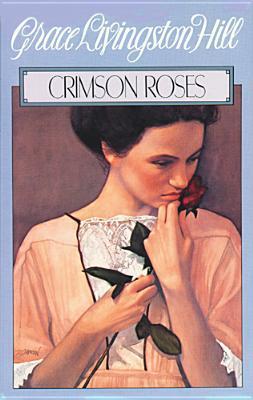
In Grace Livingston Hill’s novel, Crimson Roses, Marion Warren has been taking care of her ill father for five years. They had always planned that she would go to normal college and become a teacher, until his accident.
Now he has passed away. They had discussed that she would have the house and her brother the life insurance money. But a will can’t be found. So her brother, Tom, feels the best thing to do is sell the house and buy a farm in Vermont (which his wife strongly wants to do). They plan that Marion will always have a home with them, where she can help with the housecleaning and teach their children (basically, act as unpaid live-in help).
Marion’s practical mother, who died years before, always called her husband a visionary, not necessarily meaning it as a compliment. Marion takes after her father, while Tom is more like their mother. Marion mildly protests that she doesn’t want to live on a farm in Vermont, she wants to stay in the city, go to school, attend lectures and concerts and such. Tom says these are “foolish notions,” and she’s too old to go to school now anyway. Tom and his wife, Jennie, think that Marion is just being grumpy and will come around by the time they leave.
As Marion considers her options, she truly feels it’s best for her to stay in the city. Since Tom and Jenny won’t listen, Marion finds a job and small apartment on her own. She plans not to take any of her father’s assets so they will be able to buy their farm.
When they find out her plans, there is a big blow-up. Jennie (who gets my nomination for worst sister-in-law ever) feels Marion is being selfish. Tom finally concedes that the only way Marion will learn is to let her have her way. In time, when she realizes she can’t make it on her own, she’ll come to the farm with them.
But Marion thrives in her new situation. She’s been out of circulation for several years while caring for her father, and some of her coworkers help her update her look and clothes. Marion draws a line at some of their suggestions, though, not wanting to look like a “flapper.”
Marion’s intense loneliness almost sends her to Vermont. But she hears of a local weekly symphony concert series. If she manages her money carefully, she can afford it.
On the night of the second concert, Marion finds a beauitful crimson rose on her seat. Thinking the rose has been placed there by mistake, she tries to find who it belongs to. But no one claims it. She decides to take it home and enjoy it.
But the next week, a crimson rose is again at her seat. And the next week, and so on throughout the concert series.
Later in the book, when a young man shows interest in Marion, some “mean girls” in the church think Marion’s station is beneath his and act unkindly toward her (fueled by the interest in one of the girls in the young man).
This book was published in 1928, and, of course, is very old-fashioned in style and content. It’s a clean, sweet story–maybe a smidgen too sweet, but just a smidgen. Some of the 20s slang is amusing.
Marion seems a little naive for a twenty-three year old young woman. But that might have been the case in those times. Plus she had been mostly at home for five years.
The theme of the story might be that faithfulness wins out in the end. Through all her tribulations, though Marion struggles, she remains humble and sweet and tries to do the right thing.
I listened to the audiobook nicely read by Anne Hancock. Though the audiobook was released in 2024, the narrator’s style and accent matched the setting in the book.
(Sharing with Bookish Bliss)
 Stray Thoughts
Grace Livingston Hill is one of my all-time favorite authors. Thank you for sharing her writing. 🙂
I had heard of her for years but only recently started reading her.
Good for Marion and her manipulating brother and sister in law! I used to read Grace Livingston Hill. This sounds like a great book. Thanks for the review.
GLH! Hadn’t heard that name in years, but in childhood I remember lots of the church ladies reading/checking out her books from the church library 🙂 Enjoyed your review and I’d probably enjoy her books; I’m getting a Dean Street Press or Gene Stratton Porter vibe …
Great review, Barbara! I stumbled across Grace Livingston Hill several years ago when googling “Beauty for Ashes” to see if that title had been used yet. (It has been, many times.) Found and read several of her books, including Crimson Roses. You’re so right — she’s just a tad too sweet, but I loved her writing anyway. And I do think this unabashed innocence was typical of that era; I’ve read a ton of Kathleen Thompson Norris, my mom’s favorite author, and her pre-1940s heroines are much the same.I’ll have to try more GLH, just as soon as I get through with the irresistible oeuvre of another author you introduced me to, Lynn Austin — a truly incredible writer!
I had not heard of Kathleen Thompson Norris. I’ll have to look her up. I a glad you’re enjoying Lynn Austin!
Be sure you find this one, and not the contemporary Kathleen Norris who writes about monks :–))) https://en.wikipedia.org/wiki/Kathleen_Norris. Kathleen Thompson Norris was apparently the best-selling female novelist in the first half of the 20th century.
I just looked her up on Amazon and got a couple of her books for the Kindle for free! It’s funny, I just saw her book Mother mentioned on Instagram. That’s one that I got.
Oh, I’m so glad, Barbara! Mother was the first KTN I read — and I think it was her first book. As a recovering feminist atheist, it really hit home for me! But that was just the start. Here’s an essay I posted on her work on one of my blogs, in case you’re interested: https://www.everlastingplace.com/golden-years-a-blog-about-the-elderly/a-glimpse-into-my-friends-lives
Grace Livingston Hill was always my favorite author when I was young. I have read so many of her books (and own a few). Willow
Sounds like a fun read. Thank you for the review, Barbara.
I read a lot of Grace Livingston Hill (and Emilie Loring) years ago. Such sweet stories. As you say, perhaps a bit too sweet, but nothing wrong with that, as I do prefer clean reads!
Pingback: May Reflections | Stray Thoughts
Thanks for sharing your review with the Historical Fiction Reading Challenge