31 Days of Inspirational Biography: Sarah Edwards As a Mother

Yesterday I wrote about the marriage of Jonathan and Sarah Edwards from the book Marriage to a Difficult Man by Elisabeth M. Dodds. As I mentioned then, the writer doesn’t mean that Mr. Edwards was “difficult” in the sense of being hard to get along with: she classifies him as a genius (which she feels made him misunderstood by some) but also lacking somewhat in social skills and willing to strongly preach unvarnished truth, which some would have trouble accepting. It is written from a historical viewpoint, so there are all sorts of neat little tidbits about life in that time. In fact, I am fairly sure that the writer is not saved and is writing from a historical interest rather than a Christian one, yet she still conveys the truth of Edward’s beliefs.

Today I want to just focus on a few passages about Sarah as a mother. She had 11 children, which was not unusual for the 1700’s: but what was unusual for the times was that they all lived past childhood. “Every account of the Edwards house has the same ring. All visitors seem to have been impressed that eleven children managed to be lively and individual as personalities, yet could act courteously with one another and function as a coordinated unit…[Sarah’s] way was not at all permissive. The requirements were completely clear. But she at the same time allowed the children areas of flexibility that were unusual for that day.” “A curious feature about the Edwards children is that this firmness did not squash individuality.”

The following four paragraphs are observations of Samuel Hopkins, one of many houseguests of the Edwards’, who lived with them for several months:

She had an excellent way of governing her children; she knew how to make them regard and obey her cheerfully, without loud angry words, much less heavy blows. She seldom punished them; and in speaking to them, used gentle and pleasant words. If any correction was necessary, she did not administer it in a passion; and when she had occasion to reprove and rebuke she would do it in a few words, without warmth and noise…In her directions in matters of importance, she would address herself to the reason of her children, that they might not only know her…will, but at the same time be convinced of the reasonableness of it. She had need to speak but once; she was cheerfully obeyed; murmuring and answering again was not know among them.

In their manners they were uncommonly respectful to their parents. When their parents came into the room they all rose instinctively from their seats and never resumed them until their parents were seated; and when either parent was speaking…they were all immediately silent and attentive. The kind and gentle treatment they received from their mother, while she strictly and punctiliously maintained her parental authority, seemed naturally to…promote a filial respect and affection, and to lead them to a mild tender treatment of each other. Quarreling and contention…were in her family unknown.

She carefully observed the first appearance of resentment and ill will in her young children, towards any person whatever, and did not connive at it…but was careful to show her displeasure and suppress it to the utmost; yet not by angry, wrathful words, which often provoke children to wrath…Her system of discipline was begun at a very early age and it was her rule to resist the first, as a well as every subsequent exhibition of temper or disobedience in the child…wisely reflecting that until a child will obey his parents he can never be brought to obey God.

For [her children] she constantly and earnestly prayed and bore them on her heart before God…and that even before they were born.

“The management of a large busy household took leadership and efficiency. Mothers then had to be administrators, because the food and clothing depended on the mother’s ability to produce it. Sarah had to learn to assign chores…Children then had the advantage of knowing that their chores were indispensable.”

“The Edwardses saw that the children learned to be orderly about money…[Sarah] herself took care to save anything of trifling value, or directed her children…to do so, or when she saw them waste any thing, she would repeat the words of our Savior — ‘THAT NOTHING BE LOST.'” (emphasis the author’s.) Edwards himself wrote sermons on the backs of shopping lists. Paper was precious in those days.

“The Edwardses made it a point to single out individual children from the humming family hive, to get to know each one in turn by himself.”

“Sarah’s way with their children did more than shield [him] from the hullabaloo while he studied…[He] poured his feelings about this in sermons which eventually appeared as a book, Christian Love as Manifested in the Heart and Life,which I have not yet read.

I am sure the Edwards weren’t perfect and wouldn’t claim to be. Modern biographies tend to show “warts and all” to provide a more real picture of the subject, whereas older biographies did not want to appear unkind or gossipy. In addition, most of the author’s material came through others, as Sarah was not much of a letter-writer and was too busy to keep a journal, and those sources probably did not know or were too kind to spread their faults. Mrs. Dodds does not present them as perfect: she claims they were both very complex individuals. So I think we can assume that all was not idyllic and there was an occasional misunderstanding or cross word, but we can still take inspiration from their walk with God knowing that though they were sinners just like we are, God gave them grace and wisdom in their marriage and the raising of their family.

I mentioned yesterday that the book was out of print, but used copies were available online. I did just find what appears to be a free audio version of the book here. The audio quality is not great – but it’s free. 🙂

photo 3(2)

For the 31 Days writing challenge, I am sharing 31 Days of Inspirational Biography. You can find others in the series here.


31 Days of Inspirational Biography: The “Uncommon Union” of Jonathan and Sarah Edwards

Marriage to a Difficult Man by Elisabeth D. Dodds is a story of what Jonathan Edwards called on his deathbed his “uncommon union” with his wife, Sarah. The author does not mean Edwards was “difficult” in a negative sense, but rather that his lack of social skills combined with what she calls his “genius” made him perhaps a little hard to adapt to.

In fact, when Edwards “first showed an interest in Sarah, he scared her.” “Already it was clear that this glowering young man was touched by the fatal ingredient of greatness.” He had “entered college at the age of thirteen,” had been the “valedictory orator, and was “collecting a reputation as a formidable intellect.” “Often people who turn out to be the most interesting adults are the ones least acceptable to their adolescent peers.” “But it is remarkable that these two survived their courtship. Moody, socially bumbling, barricaded behind the stateliness of the very shy, Edwards was totally unlike the girl who fatefully caught his eye. She was a vibrant brunette, with erect posture and burnished manners. She was skillful at small talk — he had no talent for it at all. She was blithe — he was given to black patches of introspection.” Over four years, as Edwards had opportunity to participate in various ministries, he learned and grew. He and Sarah discovered mutual interests in books and nature (she was educated beyond the norm for the times). They married when she was seventeen and he was twenty-four (it was customary in those days for girls to be married before they were sixteen).

This book is full of details of everyday life in this period of history. This was the age of the Puritans, and modern-day conceptions of them are often wrong. What would have been involved for Sarah in housekeeping and the hospitality she was known for exercising are detailed as are also the customs of church life.

Jonathan and Sarah had eleven children, and their lineage is outlined (for example, a study made in 1900 revealed 13 college presidents, 66 physicians, 100 lawyers, 65 professors, 30 judges, and 80 holders of public office from the Edwards line). With just a handful of exceptions, their descendents were productive citizens.

Some of the most enjoyable passages in the book provide glimpses into Jonathan and Sarah’s relationship. The author writes, “The town saw Edwards’ composed dignity. Only his wife and closest friends knew what storms slammed about in the controlled exterior of him. What was driving him? [His sermons] were models of reason and rhetorical power, but they were more. Though the people in Northampton did not realize it, they were witnessing a great mind pushing out the frontiers of thought almost as drastically as other men in that day were pushing back forests.” A longtime houseguest and family friend, Samuel Hopkins, writes,

It was a happy circumstance that he could trust everything…to the care of Mrs. Edwards with entire safety and with undoubting confidence. She was a most judicious and faithful mistress of a family, habitually industrious, a sound economist, managing her household affairs with diligence and discretion. While she uniformly paid a becoming deference to her husband and treated him with entire respect, she spared no pains in conforming to his inclination and rendering everything in the family agreeable and pleasant; accounting it her greatest glory and there wherein she could best serve God and her generation, to be the means in this way of promoting his usefulness and happiness.

Jonathan “treated her as a fully mature being — as a person whose conversation entertained him, whose spirit nourished his own religious life, whose presence gave him repose.” Many days at about 4:00 in the afternoon, Jonathan would come out of his study and Sarah would “join him for a horseback ride… She often visited him in his study, and at night they had prayers together after everyone else…had gone to bed. As their days began with thanks to God for the return of the miracle of morning, so they ended with the consecration of their sleeping selves to the Lord of both their lives.”

After they began having children, Jonathan saved an hour of each day to focus just on his family, “entering freely into the concerns of his children and relaxing into cheerful and animate conversation accompanied frequently with sprightly remarks and sallies of wit and humor…then he went back to his study for more work before dinner.” Edwards also believed in educating his girls, which was unusual for the times, so he tutored them at home while the boys went to school in town. He took turns taking one child at a time with him on his travels.

Edwards pastored in Northampton, Massachusetts for about 24 years until an increasing difference of many opinions caused him to sadly resign. (Interestingly, his famous sermon, “Sinners in the Hands of an Angry God” did not yield much response in his own church: it was when he preached it elsewhere that it caused such a stir.) He then ministered in Stockbridge for about six years to a small English congregation and a great number of Indian families. This at first may have seemed a strange assignment, but it offered a time of recuperation for the family from the stresses of Northampton and afforded Edwards opportunity to write some of his greatest works.

Edwards had just accepted the presidency of Princeton when he received a smallpox inoculation, which was new and controversial and proved deadly for him. Sarah died a few months later at he age of 49.

I’m not sure of the author’s spiritual state due to some of her comments and conclusions, but still the truth of what Edwards preached and what he and Sarah lived comes though clearly and reveals two hearts dependent on God and cherishing one another.

Unfortunately the book is out of print, but used copies are available from $1.78 and up through Amazon and other booksellers online.

For more about Sarah Edwards as a mother, see this post.


photo 3(2)

For the 31 Days writing challenge, I am sharing 31 Days of Inspirational Biography. You can find others in the series here.

(This will also be linked to Semicolon‘s Saturday Review of Books.)

31 Days of Inspirational Biography: Anne Bradstreet, Puritan Poetess

 Anne Bradstreet has been one of my favorite poets since I first “discovered” her in my college sophomore American literature class. She and her husband and her parents emigrated from England to America in 1630 with other Puritans. Her heart and spirit that shines through her poems refute the premise that the Puritans were dour and humorless. She was one of America’s first poets and the first women to have a book published in the United States. She hadn’t sought publication herself, but her brother-in-law collected some of her poems to have them published under the title The Tenth Muse Lately Sprung Up in America, By a Gentlewoman of Those Parts. Feminists like to claim that she was an early feminist, since poetry writing and publishing was outside the norm in that time, especially for Puritan women, but the content of her poems would contradict feminist leanings.

Probably one of her most well-known and favorite poems is To My Dear and Loving Husband, which begins with the lines, “If ever two were one, then surely we. If ever man were lov’d by wife, then thee.” Another of my favorites is The Author To Her Book, which begins, “Thou ill-formed offspring of my feeble brain…”  By Night While Others Soundly Slept touched my heart with her seeking communion with her Lord late at night:

By night when others soundly slept
And hath at once both ease and Rest,
My waking eyes were open kept
And so to lie I found it best.

I sought him whom my Soul did Love,
With tears I sought him earnestly.
He bow’d his ear down from Above.
In vain I did not seek or cry.

My hungry Soul he fill’d with Good;
He in his Bottle put my tears,
My smarting wounds washt in his blood,
And banisht thence my Doubts and fears.

What to my Saviour shall I give
Who freely hath done this for me?
I’ll serve him here whilst I shall live
And Loue him to Eternity.

A few years ago my friend Bet pointed me to one of Anne’s poems with which I was not familiar, Verses Upon the Burning of Our House. The title clearly states the subject. The first lines describe the surprise and fear of finding her home in flames with earnest prayer for the Lord’s comfort. Job-like, “I blest his grace that gave and took,” and she acknowledges God’s ownership of all she has and His right to do with it as He will.

Yet she begins to grieve for the special, precious things lost, the particular familiar and treasured bits of a woman’s nesting instinct.

My sorrowing eyes aside did cast
And here and there the places spy
Where oft I sate and long did lie.
Here stood that Trunk, and there that chest,
There lay that store I counted best,
My pleasant things in ashes lie
And them behold no more shall I.

Then she reminds herself of the impermanence of treasures here on earth and “sets her affection of things above“:

Then straight I ‘gin my heart to chide:
And did thy wealth on earth abide,
Didst fix thy hope on mouldring dust,
The arm of flesh didst make thy trust?
Raise up thy thoughts above the sky
That dunghill mists away may fly.
Thou hast a house on high erect
Fram’d by that mighty Architect,
With glory richly furnished
Stands permanent, though this be fled.
It’s purchased and paid for too
By him who hath enough to do.
A price so vast as is unknown,
Yet by his gift is made thine own.
There’s wealth enough; I need no more.
Farewell, my pelf; farewell, my store.
The world no longer let me love;
My hope and Treasure lies above.

Often as I have read older stories and biographies I’ve been struck by how closely they lived with loss. We have fires, floods, and such now, too, of course, but such catastrophes happen much less often now due to safety factors implemented as a result of previous disasters. Yet even though materials things may last longer now, they still won’t last forever, and our treasures are best laid up in heaven.

A lot of modern online biographical sketches of Anne’s work tend to view her through a modern, biased lens rather than taking her work at face value and in context. Some see her as rebelling against her community and religious restrictions, but she was truly using her artistic gifts to express her faith rather than to rebel against it. One recent article I saw described her as ambivalent about her faith. I had never seen any ambivalence in her poems that I had read. I sent one such link to my friend Ann, who teaches about Anne in her high school English classes and knows much more about her than I do, and asked about the perspective. One of the poems quoted as “proof” in the article in question has this section:

Then higher on the glistering Sun I gaz’d
Whose beams was shaded by the leavie Tree,
The more I look’d, the more I grew amaz’d
And softly said, what glory’s like to thee?
Soul of this world, this Universes Eye,
No wonder, some made thee a Deity:
Had I not better known, (alas) the same had I.

Ann comments, “She’s saying that nature is so beautiful that she could be like others who do worship nature, if she didn’t know better. The fact that Cotton Mather praised her says volumes, as he was a leading Puritan preacher. I think Anne Bradstreet was a strong Christian and the author of this article is trying to weaken that testimony to fit her own purposes.  Yes, that’s from my own biases – but believe the evidence of her life and writings fits that model better.” Ann also recommends Beyond Stateliest Marble: The Passionate Femininity of Anne Bradstreet by Douglas Wilson, which I had not heard of before but have put on my wish list.

I’m thankful and inspired that Anne used her poetry to reflect not only her love of home and family but of her God.

photo 3(2)

For the 31 Days writing challenge, I am sharing 31 Days of Inspirational Biography. You can find others in the series here.

31 Days of Inspirational Biography: Margaret Paton, Missionary to Cannibals in the South Sea Islands

Margaret PatonI wrote last year about John Paton, a missionary to the New Hebrides in the 1800s and a great man of God, who is the source of one of my all time favorite missionary quotes. Before he went to the field, some regarded him as foolish for going to minister where there were cannibals. To one man’s warning about his potential fate, he replied, “Mr. Dixon, you are advanced in years and your own prospect is soon to be laid in the grave, there to be eaten by worms. I confess to you that if I can but live and die serving and honoring the Lord Jesus, it will make no difference to me whether my body is eaten by cannibals or by worms.”

Some time ago I happened upon a book titled Margaret Paton: Letters From the South Seas, which, as its name implies, is a collection of letters that John Paton’s wife sent out over the years. The letters were written primarily to family back home, though there are a few to other individuals. They are quite long, but that is because they did not have the opportunity to send and receive mail very often. Since they were written to family, they contain more personal glimpses and anecdotes than a prayer letter to supporters would, and Margaret (or Maggie, as she signs herself) often had an amusing way of telling them. But there were also times of tragedy and perplexity that they experienced, and Maggie’s letters convey the situations and the wrestlings of heart they had in trying to discern the Lord’s will and His grace through every trial.
Rather than trying to summarize the whole book, I just want to give you a few excerpts here and there.

Maggie was John’s second wife: his first wife and son had died of malaria on the island of Tanna. When Maggie first came to the island with John, he pointed out “that Sacred Spot [the grave of his wife and child], so indelibly photographed on his memory. Oh, how I longed to spend a quiet hour by the grave of her whose footsteps I feel so unfit to follow, and who met her trials so unshrinkingly and alone — alone, so far as regards female companionship and sympathy!”

They were going to another island to labor and dropping off fellow missionaries at their respective islands on the way. On one island, “Great crowds of people came to look at us, as I believe we are the first white women who eve landed on Fotuna. The ladies were, in consequence, very curious to have us examined properly; and they went about it in a business-like way, as I can testify from the pokes and thumps received. They always felt themselves at the same time, to see how far we were alike. Poor things, they had yet to learn that we were sisters, resting under the same penalty and equally in need of and entitled to the same Saviour.” Then she mentioned having to “escape” when “their examinations” became “rather too minute.”

One thing that some missionaries struggle with, especially in primitive areas, is whether their living arrangements should be just like the natives or closer to what they are used to. There is no one right answer: it depends on the place, the people, health issues, and the leading of the Lord in each circumstance. The Paton’s home would have been nothing really like European homes, but Maggie writes, “I am trying my best to make it the prettiest and most inviting home I know — as refined, as civilized, and as nearly what we have been accustomed to, as our limited resources will permit. We must not let ourselves ‘down’ because we are among Savages, but try rather to lift them up to our Christian level in all things. One’s home has so much influence on one’s work, and on life and character; and it is due to our two wee boys to make it a bright one…it is no part of my creed to believe that…everything pleasant in sinful.” She then writes that, before she left for the field, one lady told her, “that missionaries’ wives were expected to live and dress in the most primitive way, and to set an example of great gravity and solemnity, else they would get to be talked about.” After wrestling with the “old Adam” in her, Maggie “controlled myself to retort, that in my Bible there was no separate code of rules for missionaries’ wives, any more than for other Christian gentlewomen.” She then wonders “that any one can be blind to the fact that our kind Creator has given us such wealth of beauty in Nature.” He could have made everything just useful, yet He chose to scatter beauty and charm throughout creation. This could probably be a separate post, but it all comes back to balance: I’ve read other stories of missionaries trying to find the right balance. I’m thinking of Isobel Kuhn in particular, who had some nice things from her wedding in her new home in a primitive area of China only to have them ruined by such practices the people then had of blowing their nose in their hands and then wiping them on the (new!) furniture, or letting babies use the bathroom on the beloved rug. She had to learn that though it isn’t wrong to “nest” or have nice things, it’s wrong to let them have priority over people’s souls or the work they were called to. I don’t think Maggie went too far the other way, but I’m just offering the other side of the balance for perspective.

In struggling to learn the language, she writes, “How the Apostles must have appreciated the gift of tongues on the Day of Pentecost! I wonder if it was accorded to their wives as well!” She writes how “provoking” it s to think you’ve mastered enough to converse a little, only to see them “looking at each other wonderingly.” “I got Mr. Paton’s help in any great difficulty — though he did not at all times enjoy the interruption, especially if the point in question turned out to be only about a needle and a thread, while he had been called away” from his work.

To some children who had given toward the Dayspring, the mission ship that transported people and supplies to the islands, she wrote, ”Now, if I tell you how really grateful all the missionaries are to the children who give their money so willingly to keep the Dayspring in nice order, and how the little vessel actually helps to keep the missionaries alive, as well as those so dear to them, by bringing them food and medicine and all they require, I am sure you will not grudge having denied yourselves many little gratifications to help in so important a work.”

There is a section I wish I had space to include answering some who criticize a missionary having a family. “The life of the Christian home is the best treatise on Christianity — a daily object lesson, which all can…’read, mark, learn, and inwardly digest.’” She also has a good section answering the comments some make that “ seem to grudge a man of burning enthusiasm and magnetic eloquence going to the foreign field, as if it were so much power and genius being wasted.” She argues convincingly for sending our best to the field.

I’ll forewarn you that there is a bit of perspective that’s not what we would think of as politically correct by today’s standards but I think is probably common for the times.

All of this comes just from the first third of the book! There’s so much more I wish I could include. I hope I’ve inspired you to read it for yourself.

photo 3(2)

For the 31 Days writing challenge, I am sharing 31 Days of Inspirational Biography. You can find others in the series here.

(This will also be linked to Semicolon‘s Saturday Review of Books.)

31 Days of Inspirational Biography: One Woman Against the Reich

photo 3(2)

Sometimes, when we hear of the possibility of future hard times or even persecution, our greatest concerns are for our loved ones. We know from Scripture that God is in control, that He won’t allow anything that He won’t give us the grace to handle, that the “trial of our faith” works patience and endurance in us and glorifies the Lord. From time to time we also hear testimonies of God’s keeping grace during trial.

One WomanOne such book I discovered some years ago is titled One Woman Against the Reich: The True Story of a Mother’s Struggle to Keep Her Family Faithful to God in a World Gone Mad by Helmut Ziefle. Mr. Ziefle’s parents lived in Germany during WW II; in fact, he was born in April 1939. In the previous years, the Nazi regime had grown, and trials and persecutions had grown for anyone not in agreement with them. There were two older brothers and a sister already in the family before Helmut made his appearance. His brother Kurt, 11, rushed home excited one day to tell his parents he had joined the Hitler Youth Organization. His mother reminded him that he belonged first to Jesus. But he was carried away with excitement. Of course, the youth organization happened to meet at the same time the rest of the family went to church. Hitler is quoted as saying, “In my Teutonic order, a youth will grow up which will frighten the world. I want a fierce, masterful, fearless and ferocious youth. It can’t show any weakness or tenderness. The free and magnificent beast of prey must finally glow again from their eyes.” Can you imagine such a man after the young people of our homes and churches?

Maria, Helmut’s mother, had many concerns to deal with in those days: her children being carried away with Nazism; the possibility of persecution from neighbors when she did not return their “Heil Hitler;” threats against her husband; safety for herself and her family during air raids and bombings; severe scarcity of food; having a baby during all of this; the safety of her two older sons when they became old enough to go into military service, one fighting for Nazism, one against it but having to go nonetheless (the latter son ended up in a Russian POW camp for 5 years, sadly, ironically, for a cause he did not believe in); being turned out of their home so that soldiers could use it; her own poor health with phlebitis; the uncertainty of being separated from the rest of her family for a time. Yet in each situation her heart instinctively turned to her Lord. And in each situation she found Him faithful.

For the 31 Days writing challenge, I am sharing 31 Days of Inspirational Biography. You can find others in the series here.

(This will also be linked to Semicolon‘s Saturday Review of Books.)

31 Days of Inspirational Biography

For the past few years Myquillyn Smith (The Nester) has hosted 31 Days on her blog, a writing challenge wherein bloggers can choose a topic to write on every day in October in 9 different categories. It has gotten so big that this year it has its own site: 31 Days. You can find more information at What is 31 Days?

I really enjoyed participating for the first time last year with 31 Days of Missionary Stories. I decided this year to write about 31 Days of Inspirational Biography. I was originally going to call it Christian Biography, but rather than just give you an overview of someone’s life that you can find on Wikipedia, I want to share what inspired me about that person’s life. It may be an overview in some cases, or it may be one incident.

photo 3(2)

Reading Christian biographies has been one of the most influential activities of my life: I’ve learned so much by seeing faith in action, growth, example, victories as well as defeats, all of which has aided me in my own walk with the Lord.  I hope to share some of that with you.

I got several comments last year about how much time it must take to write these posts: most of them will come from newsletter articles I’ve already written. For nine years in a previous church I compiled a newsletter for our ladies’ group with a biographical section, for the same reasons listed above, and the Lord has opened the door for me to do something similar in our current church. I’ll be editing and tweaking them, but for the most part I won’t be writing these “from scratch,” so it is not taking as much time as it might appear to be.

I hope you’ll join me! As I post each day, I’ll put the links on this post so that they’ll all be in one place.

And in the meantime you might check out the 31 Days site and see if you’d like to participate. Let me know if you do!

Day 1: Frances Ridley Havergal’s Response to a Rude Waitress.
Day 2: If I Perish. Refusing to bow down to falsehood.
Day 3: A Sense of Him: One of Isobel Kuhn’s “Second Mile People
Day 4: Facing the Darkness.
Day 5: Lady Huntingdon. Saved by an “M”
Day 6: One Woman Against the Reich: The True Story of a Mother’s Struggle to Keep Her Family Faithful to God in a World Gone Mad.
Day 7: Bill Maher, “Missionary to the Handicapped
Day 8: Mimosa: Great Faith From Small Seeds.
Day 9: Dr. Sa’eed of Iran.
Day 10: Margaret Paton, Missionary to Cannibals in the South Sea Islands
Day 11: Walter Wilson, Caring Ambassador For Christ.
Day 12: Georgi and Natasha Vins, Christianity Behind the Iron Curtain
Day 13: William Tyndale, Bringing the Scripture to the People at Risk to Himself
Day 14: Anne Bradstreet, Puritan Poetess
Day 15: The “Uncommon Union” of Jonathan and Sarah Edwards
Day 16: Sarah Edwards As a Mother
Day 17: Rosaria Butterfield: How a Leftist, Feminist, Lesbian Professor Who Hated Christians…Became One.
Day 18: Darlene Deibler Rose learns “faith stripped of feelings, faith without trappings
Day 19: Corrie Ten Boom Repurposes a Concentration Camp
Day 20: Louis Zamperini: Olympian, POW, Christian
Day 21: Ann Judson, Brave and Faithful First American Woman Missionary
Day 22: Margaret Baxter, Overcoming Natural Fear to Face Persecution and Hardship
Day 23: Mrs. C. H. Spurgeon
Day 24: Rosalind Goforth: How I Know God Answers Prayer
Day 25: Rosalind Goforth Learns Submission
Day 26: Rosalind Goforth As a Young Mother Tries to Find Time For Bible Reading
Day 27: The Last CIM Missionaries in Communist China
Day 28: Charlie Wedemeyer, Living With ALS and Giving Hope to Others
Day 29: Nabeel Qureshi: A Devout Muslim Encounters Christianity
Day 30: A list of several other good biographies
Day 31: Why Read Biographies?

Strong Women

Several days ago I was discussing with a friend the two half-sisters in The Woman in White by Wilkie Collins. Marian Halcombe is gracious, smart, strong, and capable, but ugly. Laura Fairlie is pretty and sweet, but somewhat weak and fragile. You can guess which one gets the guy. 🙂

That led to a discussion about the Victorian ideal woman and “damsel in distress” literature. I am not a feminist by any means, but I do like to see a female protagonist who does have some umph to her, who adds more to the story than a pretty face.

Being strong is not an unfeminine trait. In fact, Proverbs 31 says of the virtuous woman, “She girdeth her loins with strength, and strengtheneth her arms,” and “Strength and honour are her clothing.”

She is strong in character: excellent, or virtuous in some versions (verse 10), trustworthy (verse 11), does her husband good (verse 12), kind and compassionate (verses 20, 26), characterized by honor (or dignity in some versions) (verse 25), praiseworthy (28-31).

She is strong in industriousness and initiative: She “works with willing hands” (verse 13), she gets up early to start work and serve others (verse 15) – she’s not still in bed late in the morning waiting on someone to serve her (except maybe on special occasions 🙂 ), she weaves and knows her products are good (verse 18-19), she works into the evening (verse 18), she makes nice clothing (verse 21-22, 24), she makes products to sell (verse 24), she looks well to the ways of her household and is not idle (verse 27).

She is strong physically (verses 17, 25): she plants (verse 16),

She is strong mentally and intellectually: she seeks good products and prices (verses 13, 14, 16), she plans ahead for bad weather (verse 21), she is wise (verse 26).

She is strong spiritually: she fears the Lord (verse 30).

We can sometimes get discouraged looking at her, but as I like to say, she didn’t do all of that in a single day. 🙂 And I don’t think we have to take up weaving, plant a vineyard, or have a home business to become virtuous women. But taken as a whole, the tenor of her life is that of strength, industry, and honor. She is definitely not a “damsel in distress,” but she doesn’t need to assert her strength by challenging her husband or stepping into his role.

Admittedly there will be times of weakness, when she is sick, pregnant, or just tired and weary. And there is nothing wrong with a husband helping and serving his wife: if he loves as Christ loves the church, Christ helps and serves us in many ways. And admittedly there are times she needs “rescue.” I’ve so appreciated the times my husband has come to my rescue when I’ve gotten stuck or over my head in a project, behind in getting ready for company, overwhelmed with a ministry activity, etc. As a family we all pitch in and help wherever needed rather than standing back and saying, “That’s your responsibility, not mine.” But I did have to struggle in early marriage with wanting my husband to help me in every little thing and having to remember that I am supposed to be a help meet for him. We are supposed to depend on our husbands in many ways, but he needs us to be able to stand strong in the Lord’s strength in many ways as well.

Back to literary examples, I think of Dora, the first love of David Copperfield. She was pretty, sweet, and charming, but childish and totally inept as a household manager. She even told him to think of her as a “child wife.” Her husband had to just accept and love her as she was. But Agnes, his friend whom he later came to love, was steady, capable, strong, and mature, and they could support and help each other. Lucie Manette from A Tale of Two Cities came up in the aforementioned discussion as a weak Victorian ideal, but I disagreed: I think she had to be very strong to take in a father she thought had been dead and nurse him back to health in the mental state he was in after so many years locked up unjustly in the Bastille and then to go to France at the height of the French Revolution to find out what had happened to her husband when she feared he was in danger. Elinor Dashwood in Sense and Sensibility is another strong literary woman. She was steady, had to manage the household frugally even when the rest of the family complained, had to reign in her emotions to do the honorable thing, as opposed to her sister, Marianne, who gave free reign to her emotions and whims. Ma Ingalls is another: I honestly don’t know how she dealt with the sheer hard work of her life as well as the loneliness of being away from other people so much.

Besides literary examples, we have a plethora of strong women in the Bible. How could Mary, the mother of Jesus, endure all she did without His strength? There is Deborah, a judge who went to battle; Hannah, in grief over her barrenness, yet knowing to whom to turn; Priscilla, who helped her husband in business and in discipling; Mary and Martha, strong in different ways; Joanna and the other women who ministered to Jesus’s needs, and so many more.

We don’t usually step up to the brink of adulthood or marriage strong in all the ways we need to be. Strength of character has to be developed just as physical strength does. When you first start exercising physically, the first thing you notice is how weak and out of shape you really are, but starting to exercise even in weakness is the first step to developing strength. Often God develops strength in us by putting us in situations where we are totally weak. I could not have endured my husband’s many travels without learning to lean on the Lord for strength, but I was pretty much a basket case at first. I can remember the dismay of realizing as a young mother that I couldn’t just take to my bed when I was sick when I had little ones to take care of. I was probably overly dependent on my husband at first, but had to learn how to make decisions and take care of things while he was at work and out of reach.

In Climbing, Rosalind Goforth wrote:

It was while I had a large family of little children about me and mission work was pressing heavily upon me, while feeling burdened and that strength was insufficient, I sought to find in God’s Word whether there were any conditions to be fulfilled for the receiving of divine strength. The result of this study was a surprise and joy to me, and later a blessing and help to many to whom I passed it on, for every condition the weakest could fulfill!

Conditions of receiving strength

1. Weaknesses. II Cor. 12:9-10
2. No might. Isa. 40:29
3. Sitting still. Isa. 30:7
4. Waiting on God. Isa. 40:31
5. Quietness. Isa. 30:15
6. Confidence. Isa. 30:15
7. Joy in the Lord. Neh. 8:10
8. Poor. Isa. 25:4
9. Needy. Isa. 25:4
10 Dependence on Christ. Phil. 4:13

The key is in Hebrew 11:32-34: “And what shall I more say? for the time would fail me to tell of Gedeon, and of Barak, and of Samson, and of Jephthae; of David also, and Samuel, and of the prophets: Who through faith subdued kingdoms, wrought righteousness, obtained promises, stopped the mouths of lions, Quenched the violence of fire, escaped the edge of the sword, out of weakness were made strong, waxed valiant in fight, turned to flight the armies of the aliens.”

Jesus said, “My grace is sufficient for thee: for my strength is made perfect in weakness” (II Cor. 12:9-10).

The song “I Could Not Do Without Thee” by Francis Ridley Havergal says it well:

I could not do without Thee,
I cannot stand alone,
I have no strength or goodness,
No wisdom of my own;
But Thou, beloved Savior,
Art all in all to me,
And weakness will be power
If leaning hard on Thee.

May you “be strong in the Lord, and in the power of his might” (Ephesians 6:10) today.

Book Review: The House Is Quiet, Now What?

House Is QuietI came across The House Is Quiet, Now What? Rediscovering Life and Adventure As a Empty Nester by Janice Hanna and Kathleen Y’Barbo a few years ago on a clearance table at a Christian bookstore. My “nest” wasn’t quite empty yet, and still isn’t, but I thought it would be worthwhile to look ahead.

For what it’s worth, I haven’t been worried about that time: I have a lot of interests and won’t have any problem finding things to do with myself. The hardest part of the empty nest, I think, is just missing those people who have been an everyday part of your life for 20+ years. I had a taste of that when we first moved to TN 3 1/2 years ago. My oldest son was still living with us until then and decided it was time for him to step out on his own. My middle son was married and out of the house but lived close by, and we saw them often. They stayed behind in SC at first when we moved, so it felt like 2/3 of the kids left at once, and that was hard. The intensity does lessen over time – being able to keep in touch frequently via Facebook, texts, and Skype or Face Time has helped, as opposed to the time when I left home and we could only afford long distance phone calls once a month or so.

Plus I haven’t really mourned that that part of my life is almost over. Maybe it will hit when my youngest leaves. 🙂 There was a bit of that with menopause, but it was also mixed with relief (I had friends who had babies during middle age and didn’t think I was quite up for that, though I knew God would give grace if that’s what He allowed. So, there was some relief that I didn’t have to think about any surprise pregnancies any more). I actually thought about or dreaded the empty nest more when everyone was home. There were pangs when my middle son started packing up his room before his marriage (he had been away for summers working at a camp or for mission trips, but this packing-up was much more permanent!), when we left SC with only one son, when I made my last high school lunch, etc. But I was also looking a bit forward to a more relaxed schedule, more quiet, less housework, more free time to pursue interests that had been on the back burner.

So starting this book with that mindset, I found it to offer a little more hand-holding than I personally needed, but then again, some women do go through deep depression during that time, so I understand the author’s tone (and I may have appreciated it a bit more if I had read the book that first summer after my oldest two moved out.)

This book did make a lot of good helpful points: that there is a lot you can do, from traveling to taking lessons to starting a new career (they list several women’s achievements occurring after age 40); that God will help you; that you need to find balance so as not to be overcomitted, etc. There were some good thoughts about still being a mom to adult kids yet letting them be adults and make their own decisions (and when to advise if their decisions appear to be taking them in a wrong direction) as well as things to consider if the kids move back home or if you have to move in with them. The chapter that was probably the most helpful to me at this time was the one on the “sandwich generation,” when one has nearly grown kids and then has a parent who needs care. When the kids move out, we can look forward to having some “me time,” only to have a parent then move in. But the authors pointed out that there have always been “sandwich generations”: this is not a new phenomenon. And I have learned over and over that looking for and feeling I “deserve” “me time” only makes me feel contentious, but trusting God to provide it when He knows I need it allows me to go on and accomplish what He wants me to. This is my ministry for this time in my life, and if God wants me to do anything else, He will open up the way.

All in all I’d say it is a pretty useful book. There were definitely things about it that rubbed me the wrong way, but they were more a matter of personality rather than right vs. wrong. It was excessively perky and bubble (and I am not. 🙂 But I know that would appeal to some readers), and there was a lot of repetition. It was overly thematic. I like themes in decorating, parties, and even books, but one can go overboard. Calling the reader “Mama Bird” often and having a number of avian illustrations got irritating after a while. The chapters were divided up into sections titled “Bye-bye, Birdie,” which discussed the main subject matter of the chapter, “Flight Patterns” with stories of several women in relation to the chapter, “Spreading Your Wings,” a list of issues to consider, “Liftoff,” which discussed the list from “Spreading Your Wings” in more detail (which, in my opinion, rendered the list section unnecessary), and “Smooth Sailing,” which focused on a few Scripture verses connected with the chapter subject matter. The different sections not only overdid the bird theme, but they also incorporated some of the excess repetition. I think the book would have been more cohesive and provided a sharper focus without the cutesy theme, but, again, that may not bother anyone but me.

I was also a little surprised that with all of the things they suggested a woman with an empty nest could do, they only mentioned the one thing the Bible gives older women to do (Titus 2:3-5) in one poem (other than saying that she could get involved in and teach a Bible study).

Despite my nitpicking, I do think the book had a lot of good advice to offer and good food for thought.

Related:

Why Don’t Older Women Serve?
How Older Women Can Serve.
Mentoring Women.

(This will also be linked to Semicolon‘s Saturday Review of Books.)

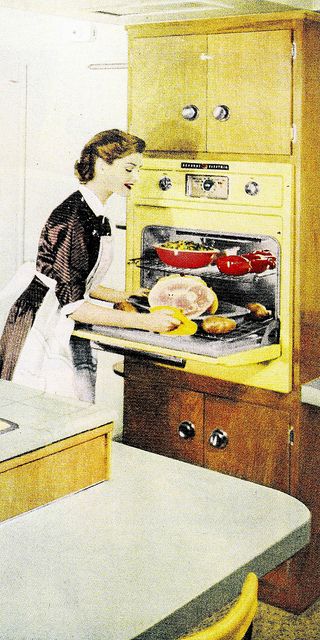
The Value of Homemakers

cooking2I didn’t know, until I saw a link at Bobbi’s, that an article was going viral called I Look Down on Young Women With Husband and Kids and I’m Not Sorry by someone writing under the name of Amy Glass.

“Amy” starts out provocatively by saying, “Every time I hear someone say that feminism is about validating every choice a woman makes I have to fight back vomit. Do people really think that a stay at home mom is really on equal footing with a woman who works and takes care of herself?”

She goes on to say that “If women can do anything, why are we still content with applauding them for doing nothing?” that when a woman “stays inside the box and does the house and kids thing” it “is the path of least resistance,” that “women secretly like to talk about how hard managing a household is so they don’t have to explain their lack of real accomplishments,” that “Men don’t care to ‘manage a household.’ They aren’t conditioned to think stupid things like that are ‘important’” that “Doing laundry will never be as important as being a doctor or an engineer or building a business.”

I’ve been thinking about this article for several days and trying to decide how to respond to it.

I could respond to the irony that in a society whose watchword is tolerance someone would manifest such intolerance, not to mention arrogance, towards another person’s differing life choices.

I could share the value of service to others. If you’ve ever lamented walking into a hotel room that has mold in the shower stall or stained sheets, or sat down at a restaurant with dirty silverware on the table or a waitress who couldn’t care less about getting your order to you correctly and in a timely manner, you’ve shown that you value good service. No matter what a company’s reputation or net worth is, if “the little” things aren’t taken care of, customers turn away. In that sense, the maid, the cook, the person at the front desk, etc., are all as important as the CEO. If we value such service in business, why should we despise it at home? G. K. Chesterton is quoted as saying, “Feminism is mixed up with a muddled idea that women are free when they serve their employers but slaves when they help their husbands.”

Even the Lord Jesus demonstrated the value of “lowly” service when He took on the role of a servant and washed His disciples’ feet.

I could point out just how much work a homemaker does. The division of labor varies from household to household, but most homemakers’ tasks include all or most of the following: planning meals, cooking, washing dishes, cleaning the rest of the kitchen (refrigerator, microwave, stovetop, etc.), sweeping, vacuuming, mopping, cleaning toilets and showers, mirrors, dusting, shopping for groceries, clothes, and household items, making appointments and reminding family members of them, washing, drying, and sometimes ironing clothes, taking some to and from the dry cleaners, organizing and maintaining household goods, and decorating. Investopia in January of 2012 estimated the worth of a homemaker’s services at above $96,000 per year. And, if one has children, all of the above increases and includes wiping noses and bottoms, teaching and training children and all that that involves, chauffeuring them to all the places they need to go, keeping on top of schedules and needs, etc.

If someone wants to hire a maid or cook, or eat out all the time so they don’t have to cook or wash dishes, that’s their prerogative, and that’s fine. But if someone wants to do these things in her own home for her own family, she should not be thought of as stupid, lazy, or in any way less of a human being.

I could answer Ms. Glass by sharing my own experience. As I was growing up, my mom was at home for long stretches and then worked outside the home for a while at intervals. When she worked, we had various babysitting situations, from someone coming to our home, to our being cared for in someone else’s home, to daycare (the worst, in my opinion, though my more gregarious sisters didn’t mind it as much). There was just nothing like mom at home.

When my husband and I were first married, I worked outside the home, and when I worked full time, we both worked on making dinner and washing dishes and other household chores. I don’t remember accomplishing much else in those days except work, dinner, kitchen clean-up, and laundry.

When I had my own children, I wanted more than anything else to stay at home with them. Not only did I want to be the one to teach and train them, but I didn’t want to miss out on their first smiles, first words, first steps, and time spent with them every day. When they went to school, I wanted to be the one to pick them up and hear all about their day and help them with their homework.

The Bible doesn’t say all women should get married or that no married woman should work outside the home, nor does it delineate who should take out the garbage, but it does say that older women should teach younger women “to be sober, to love their husbands, to love their children, To be discreet, chaste, keepers at home, good, obedient to their own husbands, that the word of God be not blasphemed” (Titus 2:4-5) and that it is good for young women to “marry, bear children, guide the house, give none occasion to the adversary to speak reproachfully” (I Timothy 5:13-14). Our own household has fallen into more or less traditional roles. My husband doesn’t mind pitching in with household duties if need be, but he works 50-60 hours a week, so I don’t expect him to. I try to make home as peaceful a place as possible for him to come home to, something I couldn’t do if I was out working, too.

Some years ago I contracted transverse myelitis and couldn’t do much of anything on my own for the first few weeks. If I had ever had any doubts about my value as a homemaker before, they were put to rest then, as I saw the pressure my husband was under to try to work plus do everything that needed to be done at home.

Personally I have loved my life as a homemaker, and I wouldn’t want to do anything else. I’ve even been able to engage in a certain number of creative outlets and volunteer efforts, something I could not have done if I had been working full time.

I would say to Ms. Glass that homemakers and doctors each invest themselves in the lives of other people. It doesn’t matter what level that investment takes or how many people’s lives are involved. If the next generation is valuable, then the people who teach and train those children are valuable.

I could also share with Ms. Glass voices other than my own:

Homekeeping is a fine art. It grasps with one hand beauty, with the other utility; it has its harmonies like music and its order like the stars in their courses. Miriam Lukken in Mrs. Dunwoody’s Excellent Instructions for Homekeeping

We have our own small square of life on this planet, and it’s our choice to do with it what we will. We can bring order and beauty to that place we have been given. We can touch the people who come within our sphere of influence with love and care and comfort. ~ Claire Cloninger

The ordinary arts we practice every day at home are of more importance to the soul than their simplicity might suggest. ~ Thomas Moore

Homemaking—being a full-time wife and mother—is not a destructive drought of usefulness but an overflowing oasis of opportunity; it is not a dreary cell to contain one’s talents and skills but a brilliant catalyst to channel creativity and energies into meaningful work; it is not a rope for binding one’s productivity in the marketplace, but reins for guiding one’s posterity in the home; it is not oppressive restraint of intellectual prowess for the community, but a release of wise instruction to your own household; it is not the bitter assignment of inferiority to your person, but the bright assurance of the ingenuity of God’s plan for the complementarity of the sexes, especially as worked out in God’s plan for marriage; it is neither limitation of gifts available nor stinginess in distributing the benefits of those gifts, but rather the multiplication of a mother’s legacy to the generations to come and the generous bestowal of all God meant a mother to give to those He entrusted to her care.” ~ Dorothy Patterson

No ordinary work done by a man is either as hard or as responsible as the work of a woman who is bringing up a family of small children; for upon her time and strength demands are made not only every hour of the day but often every hour of the night. She may have to get up night after night to take care of a sick child, and yet must by day continue to do all her household duties well; and if the family means are scant she must usually enjoy even her rare holidays taking her whole brood of children with her. The birth pangs make all men the debtors of all women. Above all our sympathy and regard are due to the struggling wives among those whom Abraham Lincoln called the plain people, and whom he so loved and trusted; for the lives of these women are often led on the lonely heights of quiet, self-sacrificing heroism. ~ Teddy Roosevelt, 1905

But housekeeping is fun……It is one job where you enjoy the results right along as you work. You may work all day washing and ironing, but at night you have the delicious feeling of sunny clean sheets and airy pillows to lie on. If you clean, you sit down at nightfall with the house shining and faintly smelling of wax, all yours to enjoy right then and there. And if you cook—that creation you lift from the oven goes right to the table. ~ Gladys Taber, Stillmeadow Seasons

The preparation of good food is merely another expression of art, one of the joys of civilized living. ~ Dione Lucas

Cooking is at once child’s play and adult joy. And cooking done with care is an act of love. ~ Craig Claiborne

Great thoughts go best with common duties. Whatever therefore may be your office regard it as a fragment in an immeasurable ministry of love. ~ Bishop Brooke Foss Westcott, b. 1825

The human being who lives only for himself finally reaps nothing but unhappiness. Selfishness corrodes. Unselfishness ennobles, satisfies. Don’t put off the joy derivable from doing helpful, kindly things for others. ~ B.C. Forbes

The best things in life are nearest: breath in your nostrils, light in your eyes, flowers at your feet, duties at your hand, the path of right just before you. Then do not grasp at the stars, but do life’s plain, common work as it comes, certain that daily duties and daily bread are the sweetest things in life. ~ Robert Louis Stevenson

What you do in your house is worth as much as if you did it up in heaven for our Lord God. We should accustom ourselves to think of our position and work as sacred and well-pleasing to God, not on account of the position and work, but on account of the word and faith from which the obedience and the work flow. ~ Martin Luther

Order and beauty are contagious. So are disorder and ugliness. I want my house to reflect the peace and order of heaven. T. Sparrow

The job of keeping a home is an honorable one. There is a difference between a housekeeper and a homekeeper. A hired housekeeper will keep the home clean and do the duties as expected of her employer, but a homekeeper does the duties in her home from her heart. She does it out of love for her family. She looks upon her duties as the most important job in all the world. It takes a lot of patience, skill, commitment and love to be a keeper of your home. Be faithful; in due time, your familoy will rise up and call you blessed. I am honored to be the keeper of my home. ~ Mrs. Martha Greene, from Treasury of Vintage Homekeeping Skills

In these notes, I have endeavored to impart knowledge necessary for keeping a neat, well-ordered home. But beyond that, I wish for you to understand the larger issues of homekeeping — creating an environment in which all family members grow and thrive, a place where each member may evolve to the full extent our Creator intended. ~ Mrs. Dunwoody’s Excellent Instructions for Homekeeping

The sheer Quantity of time I’ve spent on these endeavors is astronomical. People making doesn’t happen overnight or just in the evenings and on weekends. To those who say it’s only quality that counts, I suggest trying the quality time approach with the garden. As anyone who’s ever had one knows, a garden requires a lot of work. What counts is being there, through thick and thin. Nobody, and I mean nobody can pay someone to do what only a mother will do for free. ; You can’t buy that kind of nurturing, protection, and interaction on a 24 hour, 7 day a week basis. ~ Debra Evans, Heart and Home

Seen from the outside, housework can look like a Sisyphean task that gives you no sense of reward or completion. Yet housekeeping actually offers more opportunities for savoring achievement than almost any other work I can think of. Each of its regular routines brings satisfaction when completed. These routines echo the rhythm of life, and the housekeeping rhythm is the rhythm of the body. You get satisfaction not only from the sense of order, cleanliness, freshness, peace and plenty restored, but from the knowledge that you yourself and those you care about are going to enjoy these benefits. ~Cheryl Mendelson, Home Comforts: The Art and Science of Keeping House 

I would hope that some of these thoughts would be enough to convince Ms. Glass of the value of homemakers and the right for women to exercise their freedom of choice in such an occupation. But there will always be Amy Glasses in the world, some who have said much worse. Whether or not some women denigrate the role and worth of homemakers, I hope that these words encourage you who are reading who have chosen that path.

See also:

Wanting things to be “perfect.”

I confess: I don’t really like to cook.

A Real Home.

A Homemaking Meme.

Another homemaking meme.

A prayer for home.

Two views of housework.

Meditations for daily tasks.

Thy list be done.

The Blue Bowl.

31 Days of Missionary Stories: Not Only Preachers Are Called to be Missionaries

“Missionary work” isn’t always just preaching and soul-winning.

In 1891 when Mary Slessor was in Scotland on furlough, she told a church, “We need dedicated, affectionate women missionaries who are not afraid to work. After all, whitewashing a wall or patching a roof is almost as important as teaching a child to read or conducting a church service. And we want women who can tend a baby or teach a child to wash his face and hands — as well as teach him to read and write. We want women with tact who can smooth things over or even cheerfully ignore a snub if they have to. These women must be willing to work anywhere, do any job for Christ. Smile and persevere. In the wilds like Okoyong, we must teach the first principles of everything!” (Mary Slessor, Queen of Calabar by Sam Wellman.)

After Amy Carmichael became aware of the plight of children being sold to temples for immoral purposes, she felt led to intervene to rescue those children. Then, of course, those children needed to be cared for. There was a Tamil proverb which said, “Children tie the mother’s feet,” and she found that to be true, and began to question whether God had really called her to be a “nursemaid” when there were so many other needs and ways she could be used. “It was then that she read the words from John 13, how the Lord of glory ‘took a towel and girded Himself.’…never again did she question whether her gifts were being wasted. She knew that the Master never wastes the servant’s time.” (Amy Carmichael of Dohnavur by Frank Houghton)

Mr. Houghton also writes that, “Occasionally someone suggested that character-training of boys and girls…or, still more, the erection of buildings to house them, was not evangelistic work, and therefore not worthy of support.” Amy wrote, “Well, one cannot save and then pitchfork souls into heaven…and as for buildings, souls (in India, at least) are more or less securely fastened into bodies. Bodies cannot be left to lie about in the open, and as you cannot get the souls out and deal with them separately, you have to take them both together.”

file7981265474219

Photo courtesy of morgueFile.com

I’ve been glad to see contractors taking people to mission fields for short-term building projects in recent years and teachers going overseas to minister, sometimes to a missionary family’s children, sometimes in a school or even a college. One friend teaches composition in the music department of a college started by missionaries. Medical missionaries have been going for a long time: doctors, nurses, and all the other personnel needed to run a clinic or hospital. Some fields have, or need, printing ministries. We knew one woman who started a crisis pregnancy center in an Eastern European country. Some people go as “tentmakers,” an idea taken from Acts 18: 1-4, where Paul worked at making tents for a while with Priscilla and Aquila. These folks might work at a secular job to support themselves but then help in a church or ministry.

Of course, missionaries train some of the people there on the field for some of these positions just as they train them to become teachers and preachers and workers in the church.

A former pastor once said something to the effect that we need to send not just preachers and evangelists to the mission field but rather “the whole body of Christ” — those gifted in other areas of ministry as well.

(You can see other posts in the 31 Days of Missionary Stories here.)