

Laudable Linkage

Laudable Linkage

I found quite a few thought-provoking reads this week:

How Do I Leave My Sin at the Foot of the Cross? “Whatever it is, even when you’ve consciously given it to Jesus, you wake up the next morning and it’s back. Or it reappears because you gave in to temptation during moments of stress or exhaustion, even though you thought you’d fully surrendered the struggle to the Lord. What then? When you feel caught somewhere between the guilt that clings to you and the truth of Scripture, what does it actually mean to leave a sin struggle at the foot of the cross?”

If You Never Become a Mother: Truths to Anchor Your Hope. “They have learned to rest in truth––the kind that gently offers them a reminder that their value is not tied to motherhood nor do their lives lack meaning, beauty, or purpose. They’re merely grounded in a different kind of fullness.”

William Carey and the Power of a Second Chance. “Sometimes, life does require a ‘do-over.’ A second chance at a project, person, or path in life. Again, these can be frustrating, humiliating, and discouraging, but necessary. William Carey found himself in such a situation.”

Graduate, Step Up to More than the Podium. “When I graduated, I had to rethink what graduation means. I’d come to see it as a finish line, but I needed to see it as a launching pad. The graduate (whether from kindergarten or college) is stepping up from one level of formation, education, and aptitude to another. You may be graduating with a diploma or degree in engineering or nursing, but when you step up to the podium, you shouldn’t neglect to move forward in your Christian walk as well.”

She Forgot Our Names, But Not the Rock of Ages, HT to Challies. “My grandmom’s story taught me about the power of music for remembering and reproducing truth. The songs that Grandmom learned as a barefoot girl in a little mountain church stayed with her – for eight decades. They stayed with her when almost everything else was being forgotten.”

The Woman Who Saved Capitol Hill Baptist Church, HT to Challies. “She did not need a formal leadership role in the church to know that every member has the responsibility to protect a church’s life and doctrine. A sign of a church’s health is not simply how well the church’s leaders know their Bibles but how well the members do.”

The One Life Dream That Makes a Girl Blush, HT to Challies. “But the souls that move in bodies in and around my home? They are a legacy and an investment that I do not ever regret giving it all for. When I’m weary and feeling empty, when my life goals feel lifetimes away and my body isn’t the one I hoped I’d have, I can promise you that I wouldn’t give them up for a thousand trips around the world, a perfect waistline, or a name linked to fame.”

Reading Widely and Well. “The lack of reading and ensuing limited vocabularies lead to a limited ability to interpret rightly and wrestle well with ambiguity. I find students more likely to categorize an author immediately as friend or foe. They quickly determine whether they are supposed to blindly agree with, or set themselves in opposition to, a given text, often as a result of the author’s known or assumed political or religious persuasion. This approach doesn’t require close reading skills; it just requires quick judgment.”

You Don’t Need AI. You Can Just Tell Your Kids Stories. HT to Challies. “In my experience, the biggest challenge to telling bedtime stories is the difficulty of making up a plot and dialogue and characters. This is where A.I. is offering to save you time and effort. Don’t buy it. You can do this.”
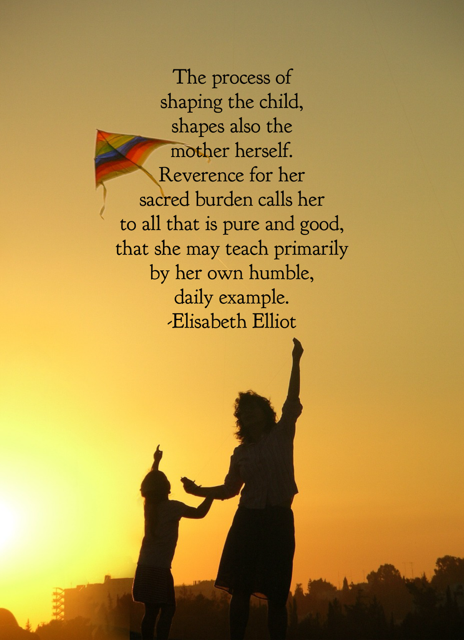
Elisabeth Elliot quote about mothers

The process of shaping the child, shapes also the mother herself. Reverence for her sacred burden calls her to all that is pure and good, that she may teach primarily by her own humble, daily example. Elisabeth Elliot

Do We Have to Choose Between Nice and Right?

I often see little memes extolling the virtues of being nice rather than right. And I wonder why we set up such a false dichotomy. Why does it have to be either/or? Why can’t it be both/and?

Most of us want to be right. No one wants to be misinformed or hold opinions that are known to be wrong or foolish. But most of us have at least enough humility to realize that we might unwittingly be wrong sometimes.

But we all know people who, no matter what topic you bring up, have a better idea or a superior way of doing things than what you just expressed. And there are some who have to have everything their own way because of course that’s the only right way. They can make everyone else miserable over the way the toilet paper is put on the roll or the way the toothpaste tube is squeezed. We each have our little idiosyncrasies and preferences for how certain things are done, but we need to learn to compromise and to be less self-centered.

However, in some cases, being wrong can be deadly. The wrong wire cut on the bomb. The wrong medical procedure or medicine. The wrong path to a broken bridge. The wrong opinion about who Jesus is or how one can know Him.

Unfortunately, people can sometimes use truth like a steamroller or bullhorn or club. Arrogance does not make the gospel winsome or inviting; harshness can turn people off to the truth. “The wisdom that is from above,” James says, “is first pure, then peaceable, gentle, open to reason, full of mercy and good fruits, impartial and sincere” (James 3:17).

There are scores, maybe hundreds of issues where Christians can give each other grace, where they don’t have to agree on every little factor. Unfortunately, we waste a lot of time arguing over those issues, hotly defending them, stirring up discord and strife. “One who sows discord among brothers” is in the list of things God hates in Proverbs 6:16-19. Paul lists among the works of the flesh “enmity, strife, jealousy, fits of anger, rivalries, dissensions, divisions” (Galatians 5:19-26).

It’s okay to talk about them, if we can do so without heat. It helps sometimes to probe others’ minds as we think through an issue. But sometimes it’s best to let them go. Romans 14 says especially of “one who is weak in faith, welcome him, but not to quarrel over opinions.” Paul then gives some classic guidelines for handling some of those issues: don’t despise or judge the person with a different opinion (verse 3); .be fully convinced in your own mind (verse 5); do whatever you do as unto the Lord (verses 6-9); remember the other person is your brother (verse 10); remember we will all give an account to God (verses 10-12); don’t “put a stumbling block or hindrance in the way of a brother”—walk in love (verses 13-15, 21); “pursue what makes for peace and for mutual upbuilding.” (verse 19); do whatever you do in faith (verses 22-23).

There are biblical issues, however, where a line is drawn in the sand and crossing it leads to heresy. Jesus corrected people’s grave errors in theology all the time. The apostles had to deal firmly and sharply with errors in the early churches in the epistles. Paul says at least three times (2 Thess. 3:6, 2 Thess. 3:14-15, 1 Cor. 5:9-11) that there are spiritual issues worth separating over. Paul tells the Corinthains to deliver one unrepentant member in serious sin (incest), “to Satan for the destruction of the flesh, so that his spirit may be saved in the day of the Lord” (1 Corinthians 5:5). The end he wanted was not the man’s destruction, but his eventual salvation. To avoid showing someone where their beliefs don’t line up with Scripture, to the point that their soul is in danger, is not the nice or loving thing to do.

Also, Jesus rebuked the disciples for being fearful and not having faith in a situation where fear would seem like a natural response: being in a boat in a storm at sea. Through Old and New Testaments, God is longsuffering and patient. But at times He had to deal firmly—sometimes seemingly harshly—when His people had long instruction and opportunity to do right but kept clinging to their own stubborn way.

The apostles could also seem harsh in their warnings against false teachers, but the truth in question was so vital, and error in its regard so eternally deadly, that strong warnings were needed.

Likewise, human authorities aren’t being kind by avoiding correction that might help one of their charges.

Sometimes Jesus shared truth that the other person did not receive, and He let him walk away, like the “rich young ruler.” He didn’t call him back, soften the message, or backtrack so the relationship could continue. When God brings a person to confront their dearest idol, it’s a crisis, and He wants them to see it for what it is and repent. Thankfully in His grace He’ll often bring a person to that point a number of times (I’ve always hoped that that man came back to the Lord at another time). Chris Anderson makes the point that in our day, there is a rush to get such a person to the “sinner’s prayer” and gloss over their heart issues: “How many such men have been led in a sinner’s prayer that salved their consciences but didn’t save their souls? How many have thus been unwittingly inoculated against the truth? How many have left churches lost and relieved rather than lost and sorrowful?” We need to allow time for godly sorrow to do its work toward repentance unto salvation.

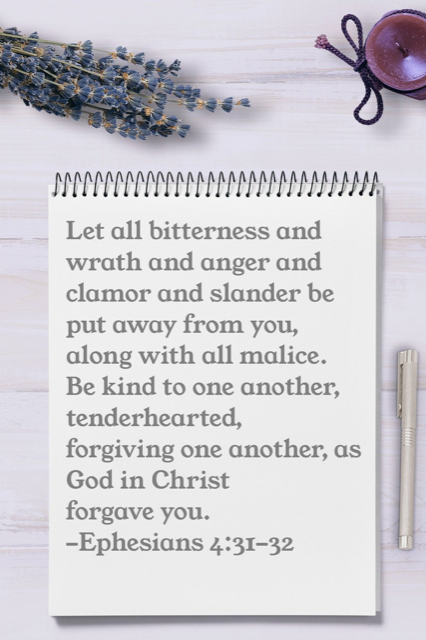
So is it more important to be nice or to be right? It depends on the issue in question and the needs of the people involved. It’s best to be both if possible. The Bible speaks often of God’s kindness and admonishes us in many places to be kind. In interpersonal relationships, especially, we’re to “Put on therefore, as the elect of God, holy and beloved, bowels of mercies, kindness, humbleness of mind, meekness, longsuffering; Forbearing one another, and forgiving one another, if any man have a quarrel against any: even as Christ forgave you, so also do ye” (Colossians 3: 12-13). When a right view is essential, we don’t need to convey or defend truth in an unnecessarily harsh, negative, gripy, or cynical way. But cutting corners on the truth in an effort to be nice is neither kind nor loving.

How we need God’s discernment and wisdom to know when to speak up, when to be silent, when to take a stand, when to let something go, when to rebuke or warn, when to cover someone’s foibles in love. How we need to soak our minds in Scripture to be guided His truth. How we need His discipline to deal with the logs in our own eyes before attempting to deal with the specks in others. How we need His love to look on others’ needs before our own. How we need His grace to speak the truth, yes, but in love.

(Revised from the archives)

(Sharing with Hearth and Home, Sunday Scripture Blessings, Selah,
Scripture and a Snapshot, Inspire Me Monday, Senior Salon,
Remember Me Monday, Tell His Story, InstaEncouragment,
Recharge Wednesday, Let’s Have Coffee, Heart Encouragement,
Grace and Truth, Faith on Fire, Blogger Voices Network,
Faith and Worship Christian Weekend)