Unknown's avatar

About Barbara Harper

https://barbarah.wordpress.com

Friday’s Fave Five

Friday's Fave Five

Another week has zoomed by, and I’m pausing to remember the week’s blessings with Susanne and friends at Living to Tell the Story.

1. New flowers. For some reason, most of the flowers in our hanging baskets died. We looked at one store last week to see if they had either hanging baskets or perennials to plant in them marked down–we didn’t want to pay full price when they’ll only last until the first freeze. The first store (Home Depot) didn’t have much of a selection, and only one kind was marked down. But Lowe’s had some nice hanging baskets marked down to about $6.50. It’s nice to see flowers from my back windows again.

2. Labor Day is primarily an excuse to grill burgers. 🙂 The kids came over for dinner and games.

3. A curved shower rod. I know it’s odd, but I don’t like the shower curtain liner to touch me, even if it has just been cleaned. Somehow, the air currents in the bathroom blow the liner in. Jim recently installed a curved shower rod (a birthday gift from Jason and Mittu–thanks!), and I love it.

4. A long-awaited lunch. Melanie and I usually get together every four to six weeks, but due to health issues for both of us and then my oldest son’s visit, it’s been about three months since we saw each other. We remedied that by going out to Cracker Barrel this week. None of the rumored changes have taken place at our location so far. It was so nice to catch up in person and enjoy good food. And a bonus: their rewards program gave me a free dessert for my birthday! Since it’s a few weeks past my birthday, I wasn’t sure if the offer was still good, but it was.

5. Another round of put-off phone calls has been completed.

Happy Friday!

Review: The Bitter End Birding Society

The Bitter End Birding Society

In Amanda Cox’s newest novel, The Bitter End Birding Society, Bitter End is a small town in eastern Tennessee with a variety of legends about how it got its name.

Ana Leigh Watkins, the most recent newcomer to Bitter End, plans to spend the summer helping her great aunt Cora sort through her belongings in preparation for selling her house and moving to a retirement community. In reality, Ana needs time away to recuperate from her year of teaching kindergarten. She’s regarded as a hero for confronting a school shooter who entered her classroom. But she remembers the fear in the young man’s eyes and feels she escalated a situation that could have been resolved peacefully. She can’t forgive herself for the young man’s fate and the trauma caused to her students. The praise she receives only weighs her down further.

Ana gets adopted by a stray dog. While taking him for a walk one day, she runs into a neighbor with a group of birdwatchers who invite her to join them. She learns her aunt is bitter enemies with the head of the bird-watching group. As Ana gently investigates further, she discovers a story over sixty years old of a moonshiner’s daughter, Viola, who falls in love with a preacher’s son. The tragedies that befell them are still having repercussions.

The narrative switches back and forth between Ana’s and Viola’s points of view.

I just discovered Amanda a few years ago and have read all of her books except a novella. I’ve loved every one. The stories are well-written and the characters are easy to identify and empathize with and root for. Their situations tug on the heartstrings, but gentle humor is laced throughout as well. Grace and redemption are underlying themes.

Some of the quotes that stood out to me:

I thought I could fit everything into tidy boxes and sort right from wrong. But now I see that sometimes a saint acts like a sinner. And sometimes a sinner acts like a saint.

Those lines can seem pretty blurry sometimes. One can look just like the other from the outside. I’d say that the difference comes down to the heart. A lost sheep wants to come home but can’t for some reason. Something is getting in their way. But a prodigal is running in the opposite direction on purpose. You can’t make someone come home if they don’t want to. 

It was a mystery how some trinkets and knickknacks were alive with meaning and memory while others were soulless souvenirs. 

Did he know that what he needed for his pain was healing, not an anesthetic? The numbness he felt was not a cure. Anesthesia was not the sort of thing a body could live on.

Healing was an ongoing journey without a fixed destination.

Sometimes things don’t come to a tidy conclusion. Words are left unsaid. Things are left undone. But this life is not the end. . . . . Our present circumstances, our perceived failures, they are not final.

I loved that the birding society visited the Seven Islands State Birding Park, which I have been to.

I listened to the audiobook read by Rachel Botchan, who had a distracting habit of taking a breath in odd places. But otherwise, I enjoyed her narration.

The audiobook does not include the author’s notes, but Amanda has linked to a few interviews she did about this book here, and I found another one here.

What God’s Sovereignty Does Not Mean

What God's Sovereignty Does not Mean

As Christians, we believe in God’s sovereignty, the fact that He is the Creator and supreme ruler of all. God’s rule is all over the Bible, but here are just a few verses about it:

Our God is in the heavens; he does all that he pleases (Psalm 115:3).

Let the heavens be glad, and let the earth rejoice, and let them say among the nations, “The Lord reigns!” (1 Chronicles 16:31).

The Lord has established his throne in the heavens, and his kingdom rules over all (Psalm 103:19).

Many are the plans in the mind of a man, but it is the purpose of the Lord that will stand (Proverbs 19:21).

The heart of man plans his way, but the Lord establishes his steps (Proverbs 16:9).

I am the Lord, and there is no other, besides me there is no God; I equip you, though you do not know me, that people may know, from the rising of the sun and from the west, that there is none besides me; I am the Lord, and there is no other. I form light and create darkness; I make well-being and create calamity; I am the Lord, who does all these things (Isaiah 45:5-7).

For I am God, and there is no other; I am God, and there is none like me, declaring the end from the beginning and from ancient times things not yet done, saying, ‘My counsel shall stand, and I will accomplish all my purpose (Isaiah 46:9b-10).

But then we wonder, if God is sovereignly ruling and reigning from heaven, why do such atrocities like murder and rape occur? Why do hurricanes and tornadoes and fires decimate cities and take so many lives? 

The good world that God created has been broken since sin entered. “The whole creation has been groaning together, waiting for its redemption” (Romans 8:22).

Jesus died for the sins of the world, that whoever believes in Him can receive forgiveness.  Someday, after Jesus returns, sin will be defeated and everything will be made right. Until then, He gives grace to help in time of need (Hebrews 4:16). He even redeems our circumstances, working all things together for good to them that love God (Romans 8:28).

People have argued for centuries over what God allows vs. what He ordains and how His sovereignty and our responsibility work together. Those are subjects too big for this blog post, and there are people much more qualified than I am to write about them.

But through years of talking with other Christians and reading Christian writing, it seems to me there are some things God’s sovereignty does not mean.

God’s sovereignty does not mean:

Passivity.

When William Wilberforce was confronted with the horrors of slavery, he didn’t sit back and say, “Well, it must be God’s will.” He fought slavery his whole life. Others who joined him saw slavery as the ultimate in not loving our fellow humans as God taught us to.

When Elisha stayed with the Shunammite woman in 1 Kings 4, he wanted to make some return to her for her hospitality. When he found she was childless, he foretold that she would have a son. When the son died, he raised him up. In neither case did he say, “Well, God allowed it, so I can’t do anything about it.”

Sometimes God brings people’s needs to our attention for the very purpose that He might use us to meet them. We can’t do what Elijah did, but we can help as God enables.

Fatalism

Some years ago when a national election hadn’t gone the way most Christians preferred, I wrote a post saying all was not lost because we still had a voice in America. We could stay informed, vote our consciences, write to our officials, let our views be known on issues, etc. Someone commented that because God was sovereign, fate was sealed and nothing we did would change anything. I responded that we have several instances in the Bible of people influencing officials: Joseph, Daniel, Esther, John the Baptist. This reader kept arguing, and  I finally had to ask him to stop.

God knows what is going to happen, and it’s true our actions won’t change something He has ordained. Yet it is also true that somehow, He works through our actions as He leads us. 

Lack of regret.

Though David was forgiven for his sin with Bathsheba and her husband, and God used his heartbroken expression of repentance in Psalm 51 in countless lives since then, I have no doubt that he regretted his actions, especially as the consequences played out in his family. I’m sure Peter regretted denying the Lord Jesus. We all have regrets–actions and words we wish we could take back, opportunities missed, and so forth.God forgives and redeems our regrets, but we wish we would have done right in the first place. 

Stoicism.

When a fellow Christian is troubled over something God has brought into his or her life or some good thing He has not given, we can get a little impatient, thinking, “You just need to accept that this is God’s will and move on.” And maybe, ultimately, acceptance of God’s will is needed. But often acceptance is not a one-time event. Sometimes we have to wrestle our desires or emotions into submission. And though God allows circumstances for a reason, He also calls us to come alongside, encourage, help others gain perspective, and help bear their burdens.

I think in situations like school shootings or major disasters, Christians can jump immediately to God’s sovereignty in their efforts to find meaning and hope. But there are times to just weep with those who weep over the effects of living in a fallen world. Yes, ultimately we find comfort in His care and purpose. But He knows this world will have its share of sorrow and calls us to comfort each other. Our ultimate comfort comes from the promise that, in His kingdom to come, there will be no more sorrow, death, crying, or pain.

Nonchalance

I’ve known some people with the attitude that it doesn’t matter what choices they make in life, because God will guide them to the right choice. God promises to lead us in the way we should go, but He tells us to seek His will, pray, be careful, walk wisely, be diligent, and so many other things. Scripture shows people praying for God’s direction: Abraham’s servant, Jehoshaphat. Even Jesus spent the night in prayer before naming His disciples.

That there is no need for prayer.

Another mystery in the Bible is why we’re to pray when God knows the need and knows what He will do about it. One reason God calls us to pray is for our fellowship and our growth and submission to His will. And though He can and does act apart from our prayers, there are things we won’t have if we don’t pray. “You do not have, because you do not ask” (James 4:2b).

That there is no need for self-examination

Some years ago, a missionary letter told of many details and preparations involved in special meetings at his church. Visitors came, but no one visibly responded. One of the Christians asked why. The missionary replied that the unsaved people who came were not elect.

I was stunned. I think the better response would have been that sometimes we plant the seed of the gospel and sometimes we water it (1 Corinthians 3:6). Maybe people didn’t respond to the gospel then, but they heard it. And maybe some did respond in their hearts even though they did not come forward at the invitation.

But it still concerned me that a lack of response was deemed God’s “fault,” with no examination about whether the Christians there could have done anything differently. Did people welcome the visitors? Were they friendly? Was the gospel explained clearly? Were there distractions like heat, cold, bugs (in open air meetings), etc.? Yes, God is the one that brings the gospel to fruition in a life, and the Holy Spirit can work in spite of hindrances. But we can also do everything in our power to have as few hindrances as possible.

When missionary Amy Carmichael was once sharing the gospel with someone, the woman seemed to be listening, until she noticed Amy’s fur gloves. Such gloves were not common in her country, and she got distracted examining them. Amy never wore the gloves again. 

That we can’t make wrong decisions.

There’s an odd story in 2 Kings 13 where Elisha told the king to take his arrows and strike the ground with them.

And he struck three times and stopped. Then the man of God was angry with him and said, “You should have struck five or six times; then you would have struck down Syria until you had made an end of it, but now you will strike down Syria only three times” (2 Kings 13:18-19).

The Israelites had been promised a land for their people. But when the time came to go in and take the land, most of the people balked and refused. Instead of relying on God’s promised help, they held back in fear. So God sent them into the wilderness for forty years.

When Mordecai warned Esther about Haman’s wicked scheme to kill the Jews, he asked her to go speak to the king about it. The problem was that Esther would be risking her life by going to the king uninvited. He might welcome her, but if he didn’t, he could have her killed. Mordecai responded:

Do not think to yourself that in the king’s palace you will escape any more than all the other Jews. For if you keep silent at this time, relief and deliverance will rise for the Jews from another place, but you and your father’s house will perish. And who knows whether you have not come to the kingdom for such a time as this? (Esther 4:13-14).

Of course, in each case, God knew what people would do and what He would do in response. The Bible doesn’t teach open theism, the concept that God doesn’t know what’s going to happen or that He’s waiting to see what we’ll do before He acts. But humanly speaking, we can make wrong decisions. The Bible is replete with warnings about following God’s revealed will.

That we don’t need to plan

We trust God to take care of us, but we also seek wisdom for life decisions. God often works to take care of us through the counsel of others. In speaking of counting the cost of discipleship, Jesus said, “For which of you, desiring to build a tower, does not first sit down and count the cost, whether he has enough to complete it?” (Luke 14:28).

Proverbs 24:27 says “Prepare your work outside; get everything ready for yourself in the field, and after that build your house.” 

I knew someone who didn’t want to schedule her time because she wanted to be open to God’s leading throughout the day.  But God can work through schedules as well as through interruptions. 

God’s sovereignty doesn’t negate our responsibility to seek His will and guidance and make wise choices based on His Word. We can take comfort in the fact that God knows everything going on in our lives and nothing can happen unless He allows it. If He allows it, He promises His grace and help to deal with it. 

1 Timothy 6:15

(I often link up with some of these bloggers.)

Laudable Linkage

Laudable Linkage

I’m still behind in my blog reading from when the family was here, but I found these good reads this week:

The Transformative Power of Love: A Story of Umbrellas and Grace. “Mama smoked constantly. Her TV blared at all hours of the night. My peaceful home would be turned upside down. So I bought a “No Smoking” sticker for the car. My feeble attempt to make things comfortable before stepping into my role as the hands and feet of Jesus. Mama needed to know God’s love. But my response to the situation revealed I also needed to experience God’s love on a deeper level.”

The Times When You Are Most Vulnerable. “Our minds don’t always work very well when they are under duress. Our emotions can overwhelm us and our instincts become unreliable. Just when we are most needy, we become most vulnerable—vulnerable to making poor decisions and acting in ways that are unwise or even unbiblical.”

Encouragement In a World of Opinions. “Unfortunately, we live in a world where our own opinions have grown to idol status. Social media has us sharing our opinions as if the world just really needs to know our every thought. We’ve come to believe that what’s on our mind is what this world needs, and it affects the way we interact with others. We’re quick to criticize. Quick to make judgments. To offer up ‘unpopular opinions,’ or to add our voice to a shouting throng of opinion spewers.”

We Were Made for Less, HT to the Story Warren. “A popular line in Christian contemporary songs is ‘You were made for more.’ The audience I conjure is the careworn mom with her hands in dishwater or a man aimlessly walking through a dreary urban landscape. But don’t we all suspect from time to time that God’s plan for us involves more glamor, appreciation, and gratification than we’re currently experiencing? Actually, we might do better to think in terms of ‘less.’”

The Gift of Grace Wrapped Up in a Simple Greeting. “Without literally using the words, what would ‘grace to you’ sound like in the paper towel aisle at Wal-Mart? In the hallways of a Sunday-morning church? I am pondering the notion that my greetings, though not inspired as Paul’s were, can truly mediate grace to my sisters in Christ.”

How Jesus Reached the Pharisees. “The Pharisees are, in many ways, the main bad guys of the gospel accounts. They were the ones who rejected Jesus because He called out their sin, and they were the ones leading the charge to have Him arrested and crucified. They were evil, and in some ways they were the worst kind of evil, because they were the kind of evil that genuinely thought they were good. The Pharisees are the foil for the true purity and holiness of Jesus. They seem to be almost without hope. But there is one little verse in Scripture that throws this nice, clean little paradigm on its head.”

Dealing With the Praise of Men, HT to Challies. “The popularity [Spurgeon] experienced meant that he had to be on constant guard against pride. This was a battle that he fought throughout his 40 years of pastoral ministry.”

The High Price of Watching Nudity, and twelve reasons not to. HT to Challies.

You Can’t Bubble Wrap Your Boy: And That’s a Good Thing. “Not all of our sons are this drawn to danger (thank you, Jesus!), but I pray that all of them realize that following Jesus is the grand adventure their hearts were made to crave. I believe that there is something inside every man, and therefore something inside every boy, that longs to push past self-centered living and give their lives to something bigger. One of the greatest challenges of being a boy mom is fighting the temptation to envelop my sons in perpetual Bubble Wrap and instead accept the hard-to-swallow truth that my boys were made for more than safe. “

Questions Every Pastor on Social Media Should Ask Themselves, HT to Challies. These questions are good for all of us.

Quote

Keep out of your life all that will keep Christ out of your mind (Unknown).

Friday’s Fave Five

Friday's Fave Five

Here on this last Friday of August, I’m joining with Susanne and friends at Living to Tell the Story to share five highlights from the week. This is more than “looking on the bright aside”: it’s a deliberate cultivation of gratefulness by looking at God’s hand in our days.

1. More family time. My oldest son was in town from the 13th through this last Sunday. We so enjoyed the time together, though it went by all too fast. Jesse had us over to his place Friday night for ginger pork that was so good. Then Saturday night we had pizza and games at our house. I loved this expression from Timothy as we played Poetry for Neanderthals.

And yes, the inflatable club Jesse is holding is part of the game. 🙂 You divide into teams, then take turns choosing cards and giving clues to get your teammates to guess what’s on your card. You can’t use any of the words on the card and you have to speak in one-syllable words. A person from the other team observes your card while it’s your turn, and if you make a mistake, they get to bop you with the club. 🙂 This game provides for lots of laughter.

2. Family photos. We try to get a picture when we’re all together. We just barely made this before it started raining.

3. Lovely weather. We’ve been in the high 70s this week, with lows overnight in the 50s and 60s. I know we’ll get back into the 90s before autumn arrives, but I’ll enjoy this weather while I can.

4. Time with Timothy when his parents had a meeting to go to. Watching him is different from when he was younger, but still fun.

5. A new air fryer/toaster oven combo wasn’t on my radar when my family asked for birthday gift ideas. But Jason and Mittu had recently gotten one, and it sounded so good, Jim got one for me. We had a small older one, but it was so small and noisy, we rarely used it. This one is big enough to make a whole meal in and runs much more quietly.

How was your week?

August Reflections

I know I comment way too often on how fast time passes–but, wow, August sure went by in a blur.

Regular readers know I spent about three weeks in atrial flutter and then three days in atrial fibrillation, resulting in a cardioversion in the ER when my cardiologist didn’t have a cardioversion slot open for another two and a half weeks. I’m not at full capacity when my heart is beating too fast and out of rhythm, so that time involved a lot of resting and support from my wonderful family.

The latter half of the month was much happier, though. My oldest son came in from RI on August 13th and just left on the 24th. My youngest took a few days off as well, so we had lots of enjoyable family time together. My oldest son and I both celebrated birthdays during that time, and the guys had a few days’ camping trip with swimming, kayaking, fishing, and food.

Jason and Mittu celebrated their sixteenth anniversary this month. Timothy started sixth grade and a newly-formed Sunday School class for middle schoolers. He’s growing up way too fast!

Creating

This was for Jason and Mittu’s anniversary. The Cricut machine did all the heavy lifting, including the words:

anniversary card

This was for a baby shower, also done by the Cricut:

baby shower card

And this was for Jeremy’s birthday. He likes foxes, and I found this design looking through fox images on the Cricut. The “Happy Birthday” is a sticker.

Fox birthday card

Reading

Since last time, I have finished (titles link to my reviews):

  • Exalting Jesus in 1 & 2 Thessalonians (Christ-Centered Exposition Commentary) by Mark Howell, not reviewed. I gleaned a few nuggets from it, but it was not my favorite commentary.
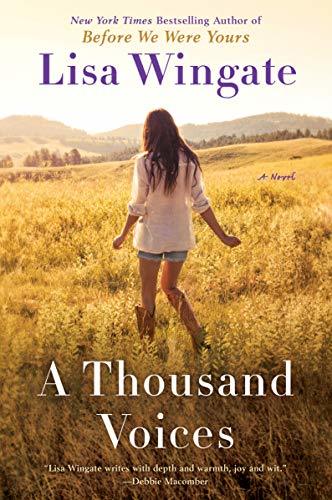
  • Wildwood Creek by Lisa Wingate, audiobook. The last and best of her Shores of Moses Lake series. A college student majoring in film gets a prime opportunity working on a reality show based on a community that disappeared in the 1860s. But there are some surprising parallels between the two timelines.
  • Where We Belong by Lynn Austin, audiobook. Two Victorian women defy convention by traveling extensively, even by camel in Egypt. They find a codex of the gospels in an old monastery. Based on a true story.

I’m currently reading:

  • 1 and 2 Timothy for You by Phillip Jensen.
  • Van Gogh Has a Broken Heart: What Art Teaches Us About the Wonder and Struggle of Being Alive by Russ Ramsey
  • North! or Be Eaten, the second in the Wingfeather Saga by Andrew Peterson. I should be done with this now, but I keep picking up other things instead. I enjoy it while reading it but I’m not driven to keep going.
  • A Face Illumined by Edward Payson Roe
  • The Island Bookshop by Roseanna M. White
  • The Bitter End Birding Society, audiobook, hot off the press by Amanda Cox

Blogging

Besides the weekly Friday Fave Fives, Saturday Laudable Linkage, and book reviews, I’ve posted these since last time:

  • Do You Need a Fresh Word from the Lord? “We don’t need something new and fresh from God. What He has given us is more than sufficient for our spiritual needs. Why doesn’t it always feel that way?”
  • What I Learned from a Traumatic Illness. “I’ve been jotting down several things I have learned through this experience, and I thought I’d share them with you. I know many of you are going through physical trials or have in the past. Though our details might vary, I hope you’ll find camaraderie and encouragement here.”
  • When People Are Late to Church. “We just don’t know what it takes for some people to get to church. While we don’t want to have a casual attitude about arriving at church (or anywhere else) on time, we shouldn’t have an overly judgmental attitude, either.”
  • Is Your Testimony Dramatic? “Such exciting accounts can make some of us feel our testimonies are a little lacking. But consider what salvation is: a new birth. . . . Every birth is a miracle to those involved. Parents greet their newborns with love and joy no matter what details led to the baby’s arrival.” Similarly, Jesus said, “Just so, I tell you, there is joy before the angels of God over one sinner who repents.”

Writing

Not much besides the blog. But our writing critique group just started up again after a few weeks’ hiatus, and my submission is due in a few weeks.

Looking ahead to September, we plan to enjoy Labor Day with the family, Jesse’s birthday later in the month, and a 50th anniversary with friends . . . and hopefully more fall-like weather.

Do you have any highlights from August?

(I often link up with some of these bloggers.)

Is Your Testimony Dramatic?

Is your testimony dramatic?

Adoniram Judson, one of America’s first missionaries in the early 1800s, has one of the most dramatic testimonies I ever heard. He came from a Christian home, but in college fell in with a group who didn’t believe as he had been taught. His best friend was Jacob Eames, a “free-thinker” who was a skeptic. Though Jacob believed there was some type of God, he rejected the Bible.

Adoniram’s departure from the faith broke his parents’ hearts. His father tried to talk with him, but could not match Adoniram’s brilliant reasoning.

Adoniram wanted to go into the theater and perhaps become a playwright. But when the theater group he found had appalling morals.

He traveled more, ending up one night at an inn that had only one room left. The innkeeper apologized, saying the man in the next room was dying. Adoniram assured the man he would not be bothered. But he could hear the man’s groaning all through the night. Adoniram was shaken with thoughts of what happens after death.

As Adoniram sought the innkeeper the next morning to settle his account, he asked about the dying man. The innkeeper confirmed that the man did die. As they discussed the situation further, it came out that the dead man was Adoniram’s friend, Jacob Eames.

Adoniram was stunned–not only because Eames was so young and his friend, but because he wondered for the first time if he might be wrong. He felt that only God could have orchestrated events that led him to this time and place.

He wasn’t saved immediately, but this was the first step in his coming to true faith in God.

I’ve heard other thrilling conversion stories through the years: twin brothers in a former church and half-brothers in our current church who were miraculously saved from drug addiction, a man caught in a piece of machinery who would have died without God’s intervention, the apostle Paul’s Damascus Road experience.

Such exciting accounts can make some of us feel our testimonies are a little lacking.

But consider what salvation is: a new birth. We’ve known people with exciting birth stories as well: One friend made it to the hospital, but not past the lobby when her baby came. My brother was born at home, too quickly to go anywhere, even though the doctor had told my mother that day that the baby wouldn’t come for a few days yet. Another friend planned to deliver at a small university hospital, but complications led to being transported by ambulance to a larger hospital in town.

Yet every birth is a miracle to those involved. Parents greet their newborns with love and joy no matter what details led to the baby’s arrival.

Jesus told about a man leaving ninety-nine sheep behind to find the one lost one and rejoicing when he found it. He went on to say, “There will be more joy in heaven over one sinner who repents than over ninety-nine righteous persons who need no repentance” (Luke 15:7). He told of a woman finding a lost coin and then calling her friends in to rejoice with her when she found it. Then He reiterated, “Just so, I tell you, there is joy before the angels of God over one sinner who repents.”

The little child who comes to saving faith at home, in Sunday School, or in VBS causes just as much joy in heaven as the hardest criminal who believes.

We tend to think of drug dealers, prostitutes, gangsters, and such as the “worst” sinners. Proverbs 6:16-19 says, “There are six things that the Lord hates, seven that are an abomination to him: haughty eyes, a lying tongue, and hands that shed innocent blood,
a heart that devises wicked plans, feet that make haste to run to evil, a false witness who breathes out lies, and one who sows discord among brothers.” Pride, lying, and discord are right up there with shedding innocent blood.

When Jesus was asked which was the greatest commandment, He replied, “You shall love the Lord your God with all your heart and with all your soul and with all your mind and with all your strength” (Mark 12:30). If that’s the greatest commandment, it follows that the greatest sin is breaking that commandment. And all of us do so every day.

Salvation is turning from darkness to light, becoming God’s child, receiving forgiveness and eternal life, and beginning a personal relationship with God. That’s pretty dramatic in itself, no matter the circumstances that led to it.

Acts 26:18

(I often link up with some of these bloggers.)

Laudable Linkage

Laudable Linkage

Here are some of the good reads found this week:

A Biblical Message for Children of Aging Parents. “What I’ve seen time and again is that even the most loving, conscientious children are often riddled with guilt — especially when decisions feel impossibly hard. But Scripture offers clarity, comfort, and guidance for those walking this sacred path.”

To Be Almost Saved Is to Be Completely Lost. “I sometimes wonder how many people in your church and mine have heard the gospel, have thought about its claims, and have perhaps even found themselves agreeing with many of them—yes, Jesus existed; yes, he died for sins; yes, he died for people like me—but have still refused to trust in him. It is one thing to assent to facts, but an entirely different thing to trust in Jesus.”

Learning to Have Conversations with God. “I have often spoken to people who struggle to know how to integrate prayer and Scripture in such a way that they can carry on a conversation with the Lord.” Tim Challies gives some tips for doing that.

One Pentecost Was Enough, HT to Challies. “The lyrics repeatedly declare, ‘We need another Pentecost.’ This simple refrain raises an important theological question: Is this how we should think about Pentecost? Should Christians be praying for another one? Or has God already given us what we’re asking for?”

6 Ways to Lead Better Bible Study Discussions, HT to Challies. I wince when the primary question in a Bible study is “What does this passage mean to you?” This article shares better ways of thinking through the text and drawing out its meaning.

Am I a Mission Colonizer? HT to Challies. “Many people believe that a missionary should never go in the first place. Or that if he does, his work should only be humanitarian. He should never dare to try to persuade someone to change their beliefs. That’s sort of the mantra of our culture today, isn’t it? You can believe whatever you want as long as you don’t impose it on someone else. Kind of ironic, actually. The people who say we shouldn’t impose our beliefs on other people are, in fact, imposing that very belief on other people. They are making personal autonomy the highest value. But who gets to decide that’s the highest value?”

How to Execute: The Discipline of Following Through, HT to Redeeming Productivity. “Most people can make a plan. Planning is fun. You get to dream, scheme, and visualize a future where everything is awesome. But executing plans? A lot of people struggle with that.”

Salvation

Thank God my salvation does not depend on my frail hold on him,
but his mighty grasp on me. Martyn Lloyd-Jones

Friday’s Fave Five

Friday's Fave Five

It’s been a full week! I’m jumping right in with its blessings, along with Susanne and friends at Living to Tell the Story. Feel free to join in!

1. Family time. My oldest son is here from RI and my youngest took a few days off. Jason had to work but has a more flexible schedule. We’ve enjoyed lots of talking, laughing, feasting, and game-playing.

2. Jeremy’s birthday. I’m so glad he could be here for it!

Jeremy's birthday

3. My birthday. My family made it a very special day.

Note to self–close the door to the garbage can cabinet before pictures. 🙂

3. Guys camping trip. All the guys except Jesse went camping Monday through Wednesday. Mittu went up for a while Monday, and she, Jesse, and I went up Tuesday and enjoyed Jim’s grilled burgers. They had a lovely campsite near a lake.

fishing

I didn’t want to do the full camping experience for a number of reasons, but I also felt a little left out of the time together. But maybe with all the health issues of the last few weeks, it was good to have a quiet day at home Monday.

4. Timothy’s thank you card. Timothy loved the camping excursion, especially fishing with Granddad. Mittu drew this picture and Timothy wrote a thank-you note inside to Jim for taking them camping.

I love that she included the little bat (on the left) who flew into the grass of their site, yelped, and died.

5. Power restored. Our power went out about 1:30 this morning. The community Facebook group said it was due to a wreck involving a telephone pole. I was pleased to see many people post comments about praying for those involved in the accident. Thankfully, the temperatures weren’t bad without AC, and Jim has a lot of camping devices to help. Power was just restored a short time ago (thus the lateness of this post).

And that’s it for us! We have a few more days together, and we’re going to enjoy them thoroughly!

How was your week?

Review: Where We Belong

Where We Belong

In Lynn Austin’s novel, Where We Belong, sisters Rebecca and Flora Hawes are traveling across the Sinai Desert on camels.

That’s particularly unusual for 1892. But neither sister is a conventional Victorian woman.

Rebecca was often bored in school as a child, thirsting for adventure. She convinced Flora to go with her to the train station and shipping line to amass information to persuade their father to take them on a trip overseas. He listened to their reasoning and planned a trip for the following summer. Rebecca found she had an affinity for languages, learning French and a little Italian for the trip. Later she added Greek so she could read Homer in his native tongue and Arabic for another trip.

She thought each journey would get the traveling and adventure bug out of her system. Instead, each journey made her want to travel more. Her father had always urged his daughters to find God’s purpose for their lives. But what could God do with a woman who loved travel, adventure, and learning and had enough wealth to finance any journey she wanted to undertake? The answer came in a surprising way.

Flora was a little more pliable and gracious than Rebecca. Flora didn’t usually initiate adventures, but she could be talked into going and always enjoyed them. She, too, struggled with assessing God’s plan for her life and almost let herself be molded into someone else’s plan for her. But then God’s leading became clear.

Each woman’s story is told in a series of flashbacks, always returning to their current desert trek. Their mother died shortly after Flora was born. They live through a meddling aspiring stepmother, the death of their father, and the Great Chicago Fire. A chance purchase of an ancient manuscript in Cairo turns out to be from an early copy of Scripture, fueling Rebecca’s desire to find more. With the recent publication of Darwin’s book and the tide of scientific discovery turning against the Bible’s truths. Rebecca feels that finding proof of such old copies of Scripture will help prove its validity and reliability. Along the way, she finds a much more personal reason for her quest.

The story is divided into five parts, each told from a different point of view: first Rebecca’s, then Flora’s, then Soren’s and Kate’s, two troubled young people that the sisters help, then back to Rebecca’s. At first Soren’s and Rebecca’s stories just seemed added on, but they did end up blending well with the overarching narrative.

Themes include the nature of Christianity, the Bible’s veracity and reliability, the responsibility of privilege, compassion for the less fortunate, being your own unique person, and finding your purpose in the world and the family of God.

I listened to the audiobook narrated by Mary Beth Light, speeding the rate up to 1.2 since the recording was a bit slow.

I saw that the novel was based on two real-life sisters, but the audiobook didn’t include the author’s notes, and my library didn’t have the book for me to look up that information. I didn’t find much information online except for a reference to twin sisters Agnes Smith Lewis and Margaret Dunlop Gibson, who also traveled, spoke many languages, and found one of the earliest copies of the gospels at Saint Catherine’s Monastery in Egypt. It looks like the novel included many details of the sisters lives but changed some, making them sisters rather than twins, describing different men from their real-life husbands, and detailing different charitable work than what’s listed.

I enjoyed the book and the trajectory of the characters’ lives.