Unknown's avatar

About Barbara Harper

https://barbarah.wordpress.com

November Reflections

November Reflections

It’s a little early for an end-of-month wrap-up, but between Thanksgiving tomorrow and other posts over the weekend, this seemed like the best time for it.

It’s still hard to believe it’s time for Thanksgiving, and December will be here Sunday!

We’ve had a relatively quiet month, which is appreciated right before the busiest month of the year.

Family Funnies

Our Alexa often doesn’t respond to me, even though I try to speak to it loudly and clearly. One night, after I tried unsuccessfully to get it to do something, Jim strolled in, spoke to it, and it responded. I said, “I don’t think it likes me.”

Jim said, “Alexa, you behave.”

Alexa responded, “Hmm. I’m not sure how to help you with that.”

Creating

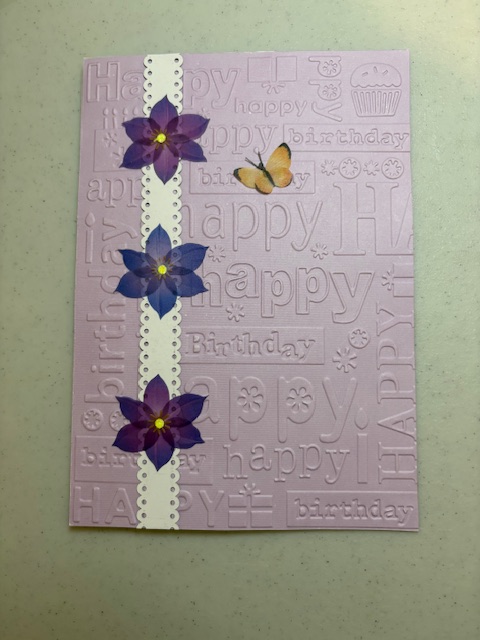
I only made one card this month, for my friend Melanie. Her actual birthday is tomorrow, but we got together yesterday. She likes purple. 🙂
Card for Melanie

Reading

Since last time, I finished:

  • The Edge of Belonging by Amanda Cox, fiction, audiobook and library book. I loved this one! A homeless man finds an abandoned baby girl and tries to care for her himself, naming her Ivy. The story shifts back and forth from this timeline to 24 years later, when Ivy tries to find out how her patchwork family came together.
  • The Secret Keepers of Old Grocery Depot by Amanda Cox, fiction, audiobook. Three generations of Tennessee women try to protect each other with secrets, but instead strain their relationships. Good.
  • Mrs. Tim Carries On by D. E. Stevenson, classic fiction, audiobook. A fictionalized journal of a young wife’s doings during WWII while her husband is overseas. This was okay.
  • Write a Must-Read: Craft a Book That Changes Lives—Including Your Own by A. J. Harper, nonfiction. Some bad language, but otherwise good writing advice.

I’m currently reading:

  • 2 Corinthians for You by Gary Millar with our ladies’ Bible study (one chapter to go!)
  • Ezekiel: The God of Glory by Tim Chester
  • What’s a Disorganized Person to Do? by Stacey Platt
  • The Collected Letters of C.S. Lewis, Volume 3: Narnia, Cambridge, and Joy, 1950 – 1963, compiled by Walter Hooper. I’m just reading a few pages of this at a time.
  • Waking Up In the Wilderness: A Yellowstone Journey by Natalie Ogbourne
  • The Painted Castle by Kristy Cambron
  • Across the Ages by Gabrielle Meyer, audiobook

Blogging

Besides the weekly Friday Fave Fives, Saturday Laudable Linkage, and book reviews, I’ve posted these since last time:

  • God Knows What You Can Take. God does give us more than we can handle, but not more than He can. Yet even within that framework, He knows our weaknesses and what would be too much.
  • Praying for the Election.
  • Achy Joints. The body of Christ is held together by joints and a surprising lubricant.
  • Enjoy the 80 Percent. We tend to fixate on small irritants instead of enjoying the vast majority of things to like about a person or situation.

Writing

I did get some good time in on my manuscript, but that will probably take a back seat next month. I want to get things done for Christmas first, and then we’ll see if there is any time left.

I’ve mentioned Ciara Dierking a couple of times, the young wife and mother who lost all four limbs after a horrific illness. She said something in her interview with Revive Our Hearts that stood out to me: “What we deserve is God’s cup of wrath, and what we’ve been given . . . Even if He gave us nothing else beyond just not giving us the wrath, He has given us so many blessings.” What a perspective for thanksgiving. God has blessed us so much with salvation and forgiveness and the presence of Christ and the Holy Spirit in our hearts, we’d have enough to be thankful for eternity. But He heaps on more blessings every day.

Happy Thanksgiving to my American friends. I hope you have a special day with people you love.

Happy Thanksgiving

A Surprising Reason to Be Thankful

A Surprising Reason to Be Thankful

From our earliest years, we’re taught the good manners to thank someone when they give us something or do something for us. Thanking them shows we recognize and appreciate the kindness, consideration, time, trouble, and expense they’ve gone to.

How much more should we thank God for so many undeserved blessings? Thanksgiving praises Him and acknowledges that “Every good gift and every perfect gift is from above, coming down from the Father of lights, with whom there is no variation or shadow due to change” (James 1:7).

But recently I came across a surprising reason to be thankful.

Ezekiel 16 is an extended metaphor comparing God’s care of Jerusalem to the care of a man who found an abandoned baby girl, cared for her, fed her, and clothed her royally. When the baby grew up into a beautiful woman, the man loved her and wanted her to be his. In verse 14, God said, “And your renown went forth among the nations because of your beauty, for it was perfect through the splendor that I had bestowed on you.”

But instead of being thankful, Jerusalem “trusted in your beauty” and then became promiscuous with just about anyone she could find, taking God’s gifts and making idols, even sacrificing her children.

This passage reminds me of King Uzziah, who “was marvelously helped, till he was strong. But when he was strong, he grew proud, to his destruction. For he was unfaithful to the Lord his God” (2 Chronicles 26:15-16).

It’s a sad facet of our human nature that we can take God’s good gifts and use them for our own glory or gain.

We become prideful, forgetting anything good in us comes from Him. And then we turn from Him to false idols like the people in Romans 1:

For although they knew God, they did not honor him as God or give thanks to him, but they became futile in their thinking, and their foolish hearts were darkened. Claiming to be wise, they became fools, and exchanged the glory of the immortal God for images resembling mortal man and birds and animals and creeping things. Therefore God gave them up in the lusts of their hearts to impurity (Romans 1:22-24).

When we thank God for what we have, we remind ourselves that everything is a gift from Him. In 1 Corinthians 4:7, Paul reminds us, “What do you have that you did not receive? If then you received it, why do you boast as if you did not receive it?”

It’s not that God wants to lord it over us or browbeat us with the reminder that we should be thankful to Him. But He knows our hearts are “prone to wander,” as the old song says.

So thanking God not only gives Him proper praise, but it keeps our own souls healthy. We remind ourselves that everything we have comes from Him and is to be used for Him. We respond with humility, appreciation, and loving service.

Psalm 92:1-2

(I often link up with some of these bloggers.)

Laudable Linkage

Laudable Linkage

I came across quite a few good reads this week:

What Would Happen if You Became a Christian? A Thought Experiment, HT to Challies. “Let me invite you into a thought experiment. What if you became a Christian? What would change? I’m talking about an actual disciple of Jesus, not a Christian in name only. What would be different if you became a Christian?”

He No Longer Sleeps. “Do you remember that Jesus is in your boat? He’s with you. He sees you. And He’s not asleep or unaware or busy with someone else.” (This post has Mendelssohn’s “He, Watching Over Israel” from Elijah in my thoughts this week.)

When You Long for Justice, HT to Challies. Mixed emotions after a sexual assault.

When Offenses Come: How to Forgive and Move On, HT to Challies. “The air of our Father’s home is grace — grace from basement to attic and floor to ceiling, grace in every room. He crowns us with grace, clothes us with grace, sings over us with grace (Romans 5:2). Far be it from us, then, as the children of this God, to replace his grace with malice, gossip, passive-aggressive paybacks, or bitter distancing from a brother or sister whom God has forgiven.”

Do Children Need to Consent to Puberty? HT to Challies. I am continually amazed at the world’s warped thought processes. This article explains why the answer to the title question is “No.”

On Winning the War: The World. This is the second in a series of fighting against a Christian’s enemies: the world, the flesh, and the devil.

On the Other Side of the Wall. A lovely tribute and a great way to think about loved ones who have passed on.

The Messages We Receive, HT to Challies. “Messages about who we are—our identity—are powerful. They can shape how we see ourselves, how we see the world, and how we see God. It is a matter that regularly comes up in counseling conversations. When people have hard experiences in their lives or have been mistreated by others, it always proves valuable to explore what messages those experiences have communicated about who they are.” I especially like her examples of reframing messages with God’s truth about us.

What Is My Spiritual Gift? Maybe You’re Asking the Wrong Question, HT to Challies. “In view of the ink spilt and bytes downloaded on the matter of discovering one’s spiritual gift, you might be surprised to learn that such introspection is completely absent in all these passages. Either Paul and Peter failed to answer such a vital question . . . or we are asking the wrong question. I think the latter is the case.”

The Plimsoll Line, HT to Challies. “’The Plimsoll line is a reference mark located on a ship’s hull that indicates the maximum depth to which the vessel may be safely immersed when loaded with cargo.’ . . . . Years ago I decided to include the Plimsoll line in my marriage.” In this case, the Plimsoll line has to do with one being an extrovert and one being an introvert.

10 Correctable Mistakes We Make When Preaching and Teaching, HT to Challies. Some of these would apply to writing as well.

67 Screen-Free Activities for Kids, HT to Redeeming Productivity.

Amy Carmichael Quote

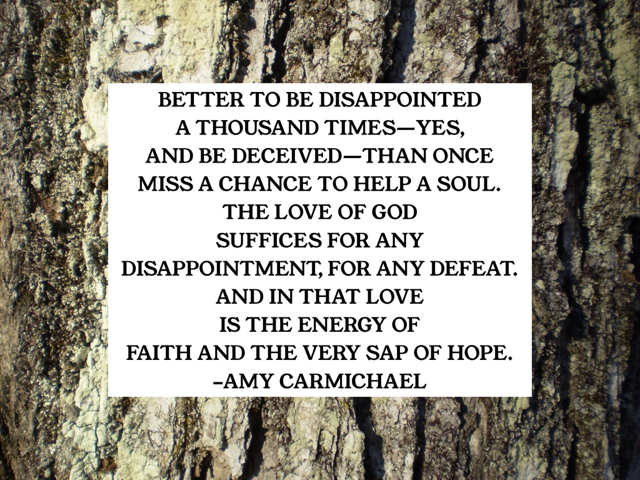
“Better to be disappointed a thousand times—yes, and be deceived—than once miss a chance to help a soul. The love of God suffices for any disappointment, for any defeat. And in that love is the energy of faith and the very sap of hope.” Amy Carmichael

Friday’s Fave Five

Friday's Fave Five

This has been a cold, blustery week. Thanksgiving is coming up quickly. I’m pausing with Susanne and friends at Living to Tell the Story to reflect on some of the blessings of the week. If you’d like to join in or visit others who do this exercise, Susanne has a place to share a link to your post.

1. Operation Christmas Child. I love this concept of sending useful and fun supplies to children in another country. We turned our OCC boxes in this week. I heard of some families filling a box with their children to help turn their focus on others.

2. A production of A Christmas Carol. The Christian school associated with our church is doing Dickens’ Christmas story this year. They invited the church and home school community to their dress rehearsal before the regular performances start. There were a few chuckles over missed cues or prop malfunctions, but overall, everyone did a great job. I appreciate the school giving these young people an opportunity to hone their talents.

3. A quick dinner with Jason, Mittu, and Timothy. The play rehearsal was on a Wednesday afternoon, and went overtime–and we have children’s ministries and adult Bible studies Wednesday evenings. So we dashed out for a quick dinner at McAlister’s Deli in-between.

4. An artificial Christmas tree. After 40+ years of choosing a live tree every Christmas, we finally caved in and bought an artificial one. The prices of live trees were so exorbitant last year, we figured an artificial one will pay for itself in a couple of years. I’ll miss the excursion to choose just the right tree and the fragrance it brings. But we’re already looking forward to not having to string lights and water it. We haven’t put it up yet but hope to do so soon.

5. A gift card solution. I receive a lot of gift cards from my family. They fit in a pocket in my purse, but when I need one, I have to pull out the whole stack of loose ones and shuffle through them at the cash register. Then it dawned on me to look for a small credit card-type wallet to keep them in, and I found one here–on sale and pink!

To those of you in the US, I wish you a joyous Thanksgiving with those you love.

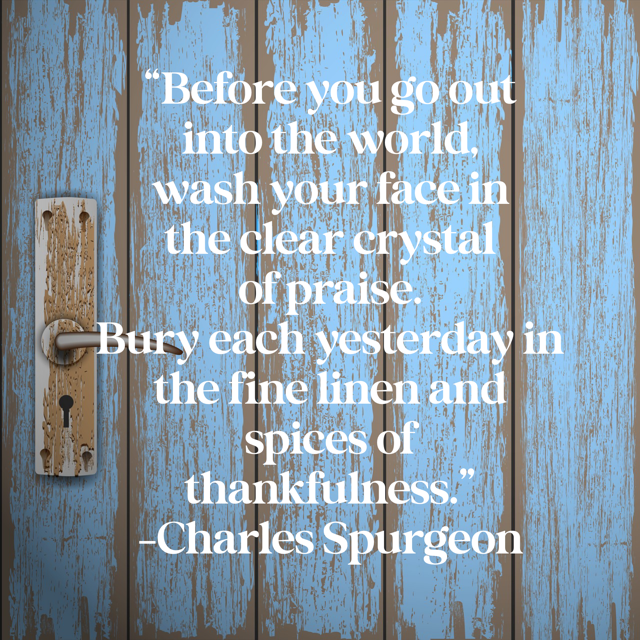
Charles Spurgeon on thankfulness

Review: The Secret Keepers of Old Depot Grocery

The Secret Keepers of Old Depot Grocery by Amanda Cox

In The Secret Keepers of Old Depot Grocery, a novel by by Amanda Cox, Sarah Ashby’s husband has just died. She returns to Brighton, TN, where she grew up and where her mother and grandmother still run the Old Depot Grocery Store which her grandfather began. All she wants to do is settle back in Brighton and help run the store she loves so much.

But her mother, Rosemary, doesn’t want Sarah to feel stuck in Brighton like she did. She keeps pushing her to move on and see the world.

And even if Sarah stayed, the old grocery isn’t doing well since the big new chain store opened nearby. Rosemary is pushing her mother, Glory Ann, to sell while they have interested buyers. Besides, Rosemary has urgent reasons to sell, reasons Sarah and Glory Ann know nothing about.

But the Old Depot was Glory Ann’s husband’s legacy, his way of ministering to the community. He never gave up. How can she?

The novel is told with a dual timeline, the second one in 1965 detailing Glory Ann’s life from her teen years. She was engaged to her blue-eyed farmer boy, Jimmy. But he was called up to fight in Viet Nam and was killed not long after. She didn’t have a chance to tell him that she carried the baby conceived from their one night of indiscretion.

Glory Ann’s father was a preacher who arranged for Glory Ann to marry Clarence, the son of an old-time friend. Clarence has been told the situation and is willing to marry Glory Ann. She resists, but her father says her sin will destroy his reputation and ministry as well as hers if it becomes known.

Glory Ann, Rosemary, and Sarah each have secrets that they think are protecting the others. Instead, misunderstandings and assumptions strain their relationships.

I love the way Amanda wove the different threads of this novel. As with her first novel, which I loved, The Edge of Belonging, the story has multiple layers: unplanned pregnancies, the nature of true love, the nature of everyday ministry, the damage secrets can cause and the freedom truth brings, PTSD. (Her first novel had a character with PTSD, too, making me wonder f someone in her family did.)

I listened to the audiobook, which was free from Audible’s Plus Catalog and read by Stephanie Cozart. The narration was well-done except the fake Southern accents were a little overwrought and grating to me. I think I would have liked this better in print.

But I did love the story and highly recommend it.

Enjoy the 80 Percent

Enjoy the 80%

Many of you know that writer Elisabeth Elliot has been my “mentor from afar” for over forty years.

One of my favorites quotes comes from her book Love Has a Price Tag:

My second husband once said that a wife, if she is very generous, may allow that her husband lives up to eighty percent of her expectations. There is always the other twenty percent that she would like to change, and she may chip away at it for the whole of their married life without reducing it very much. She may, on the other hand, simply decide to enjoy the eighty percent, and both of them will be happy

That’s so true, isn’t it? We tend to fixate on the small things that bug us rather than the great majority of things we love.

I was thinking recently that this principle applies to more than marriage.

Take friendship, for instance. My best friend in high school had a lot of good qualities, but she was slow-moving, especially when we were to go somewhere together. Any attempts to hurry her led to even more slowness. Constant harping on this one issue would only have driven a wedge between us.

Or neighbors. A good neighbor is a treasure. A bad neighbor is a pain. We don’t want to offend the person who is going to live right next door to us for years, maybe decades. So we pick our battles. We can live with some irritants to keep peace.

We might love our work, but it’s not all sunshine. Even with the best job, there are always a couple of unpleasant aspects.

And what about churches? None is perfect. You’ve probably heard the old cliche: “If you find a perfect church, don’t join it, because then it won’t be perfect any more.” No one church will be and do everything we might like.

When I hear of people leaving church because of some disappointment, I often think of the Corinthians, the epitome of dysfunctional churches. If we had visited such a church in our searches, we would not have gone to this one twice.

Yet every time I read 1 and 2 Corinthians, I am amazed at how patient the apostle Paul is in dealing with them. They had much more than 20 percent that needed to be dealt with, but he never gave up on them.

Enjoying the 80 percent of any relationship doesn’t mean we can never address the aspects we don’t enjoy. But sometimes, as the KJV puts it, we need to forbear with one another. Other translations say bear with, make allowance for, tolerate, or even put up with each other.

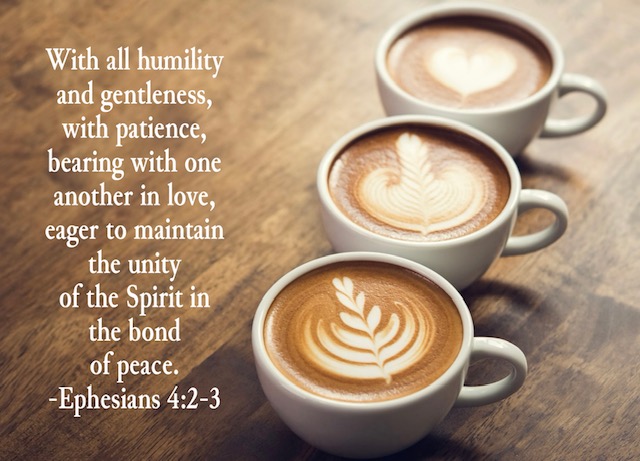
And the Bible goes beyond just bearing with each other. Ephesians 4:1-3 says: “I therefore, a prisoner for the Lord, urge you to walk in a manner worthy of the calling to which you have been called, with all humility and gentleness, with patience, bearing with one another in love, eager to maintain the unity of the Spirit in the bond of peace.”

Humility, gentleness, patience, love, unity, and peace: these are all more important than whatever irritates us about each other.

A couple of other thoughts that help me with this: there’s probably more than 20 percent about me that others have to “put up with,” yet they graciously do. My husband and friends don’t constantly find fault and criticize or insist I do things their way. I can extend that grace to them.

Also, even though God is in the business of correcting and sanctifying us, He does it with patience and grace. He doesn’t pile up everything we need to deal with all at once. We’d be crushed under the load.

One caveat to this 80 percent principle: it depends on what’s in the 20 percent. If a wife likes everything about her husband except the fact that he beats her, that behavior is not something that should be overlooked or ignored. If one friend learned that the other was embezzling his company, or cheating on his wife, he would be wise to step in. If we love the music, fellowship, people, and preaching of a church, yet the leadership denies that Jesus is God, or tells us we get to heaven by doing good works, then we need to find another church.

But in most cases, the 20 percent we don’t like is comprised of smaller issues. Can we not overlook them, for God’s glory and for the love and fellowship of His people?

Ephesians 4:2-3: bear with one another in love

(I often link up with some of these bloggers.)

Laudable Linkage

Laudable Linkage

I hope you’ll find something of interest in this collection of good reads.

Love the Church Like Jesus, HT to Challies. “Imagine you see a bride early on the morning of her wedding day — and she is a mess.” But she’ll look very different at the wedding, and it would be wrong and foolish to tell others how awful she looked that morning. The author provides an interesting comparison to the imperfections of the church and what it will be someday, and how we look at it as Jesus does.

Why Am I So Spiritually Dry? HT to Challies. “As I crunched my way through my neighborhood and watched the clouds for rain, I realized that dry seasons can be for our good. Sometimes spiritual dry spells come with a diagnosis and sometimes they don’t, but the only way through them is through them.”

Do You Feel Overwhelmed When You Pray? 3 Reasons not to Lose Heart. “Take heart, weary prayer warrior. When our feelings overwhelm us and the trials of life threaten to drown us, we can look to the unchanging truths of the Bible for strength and hope.”

Responding When Those We Respect Disappoint Us, HT to Challies. “While we understand intellectually that every person we meet is fallen and desperately needs God’s grace, that knowledge gets tested when someone we deeply respect disappoints us.”

The Spiritual Gift Inventory I Believe In. “In many churches, it is standard practice to have Christians take some kind of a spiritual gift inventory. Through a series of questions that probe an individual’s interests, passions, and successes, these tests claim to help people discover the ways the Holy Spirit has gifted them to better love and serve his people. Much has been written about such inventories and many people have expressed a degree of skepticism about their usefulness or accuracy.”

Marriage Happy, Marriage Holy. I really don’t like the saying that marriage is to make us holy, not happy. Scripture depicts marriage as happy. Yet when two sinners live together, they are bound to have differences and irritations. Tim Challies shares some of the surprising ways marriage can help sanctify us.

God’s Good Gift of Hobbies, HT to Redeeming Productivity. Steve Lindsey discusses many valuable benefits of hobbies. .

Why I’m Grateful to Live in 2024. Though there’s a lot wrong in the world, we’re also immeasurably blessed.

The Criticized Leader, HT to Challies. Good advice even for followers.

I mentioned a couple of weeks ago Ciara Dierking, who lost all four limbs after a near-fatal illness. Revive Our Hearts has two episodes of a podcast with her. You can listen to or read the transcript of Part 1: What Did I Do to Deserve This? here, and Part 2: More Grateful Than Before, here.

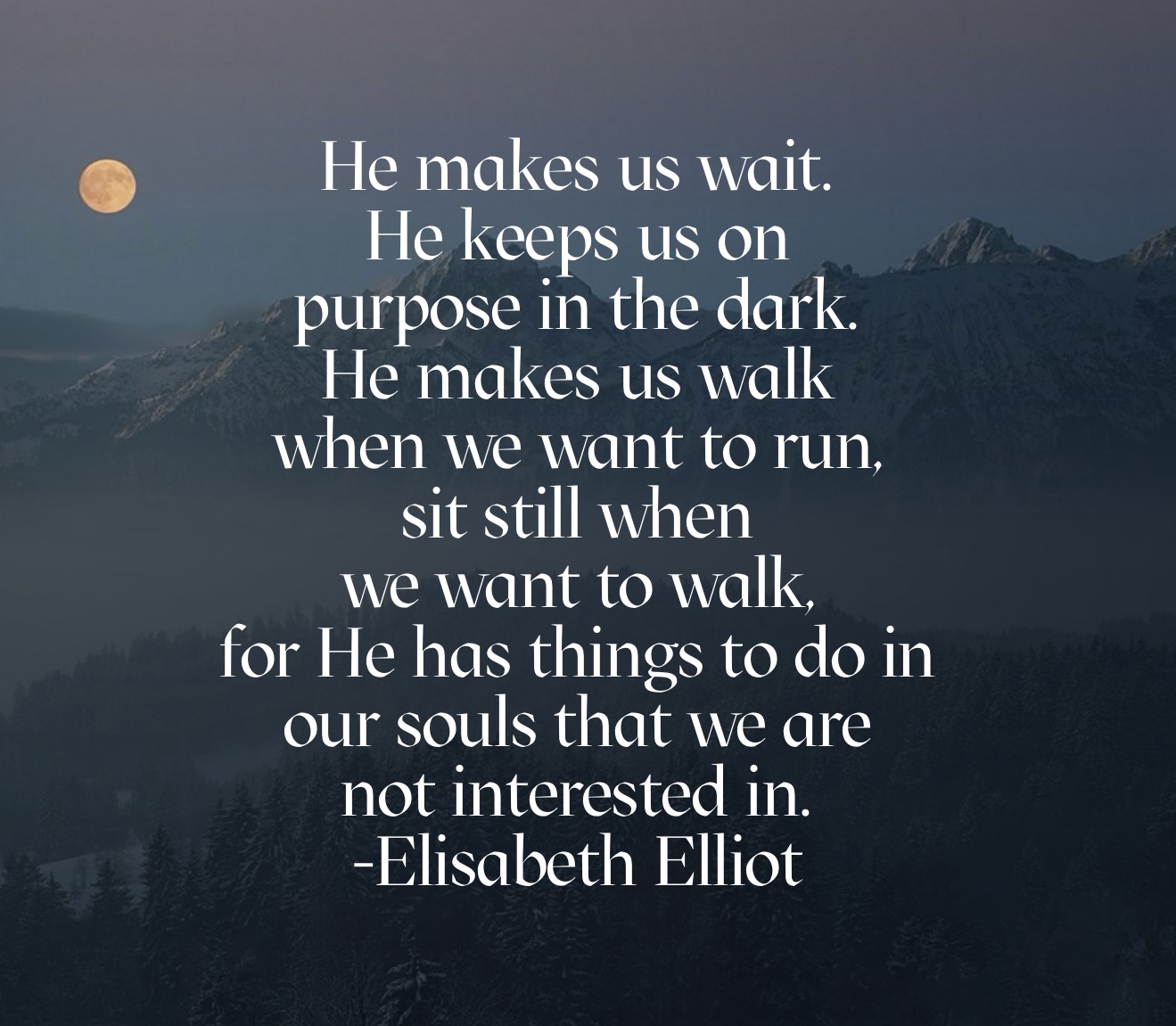
He makes us wait. He keeps us on purpose in the dark. He makes us walk when we want to run, sit still when we want to walk, for He has things to do in our souls that we are not interested in. Elisabeth Elliot, Secure in the Everlasting Arms

He makes us wait. He keeps us on purpose in the dark. He makes us walk when we want to run, sit still when we want to walk, for He has things to do in our souls that we are not interested in. –Elisabeth Elliot, Secure in the Everlasting Arms

Friday’s Fave Five

Friday's Fave Five

I am astonished that we’re halfway through November already. I wish there was a way to slow time down. The best alternative is to pause for a few moments and savor the blessings along the way. Some of us do so by joining in with Susanne and friends at Living to Tell the Story on Fridays. Feel free to join in!

1. Puttering is what I call doing a series of odd jobs around the house, the kind that are useful but not urgent. For me, puttering this week included cleaning out the catch-all basket on the counter, assembling items to take to the thrift store, removing things from an old frayed purse into a new one while cleaning out and sorting through them, etc.

2. Veteran’s Day. I am so thankful for those willing to serve our country in the most sacrificial ways.

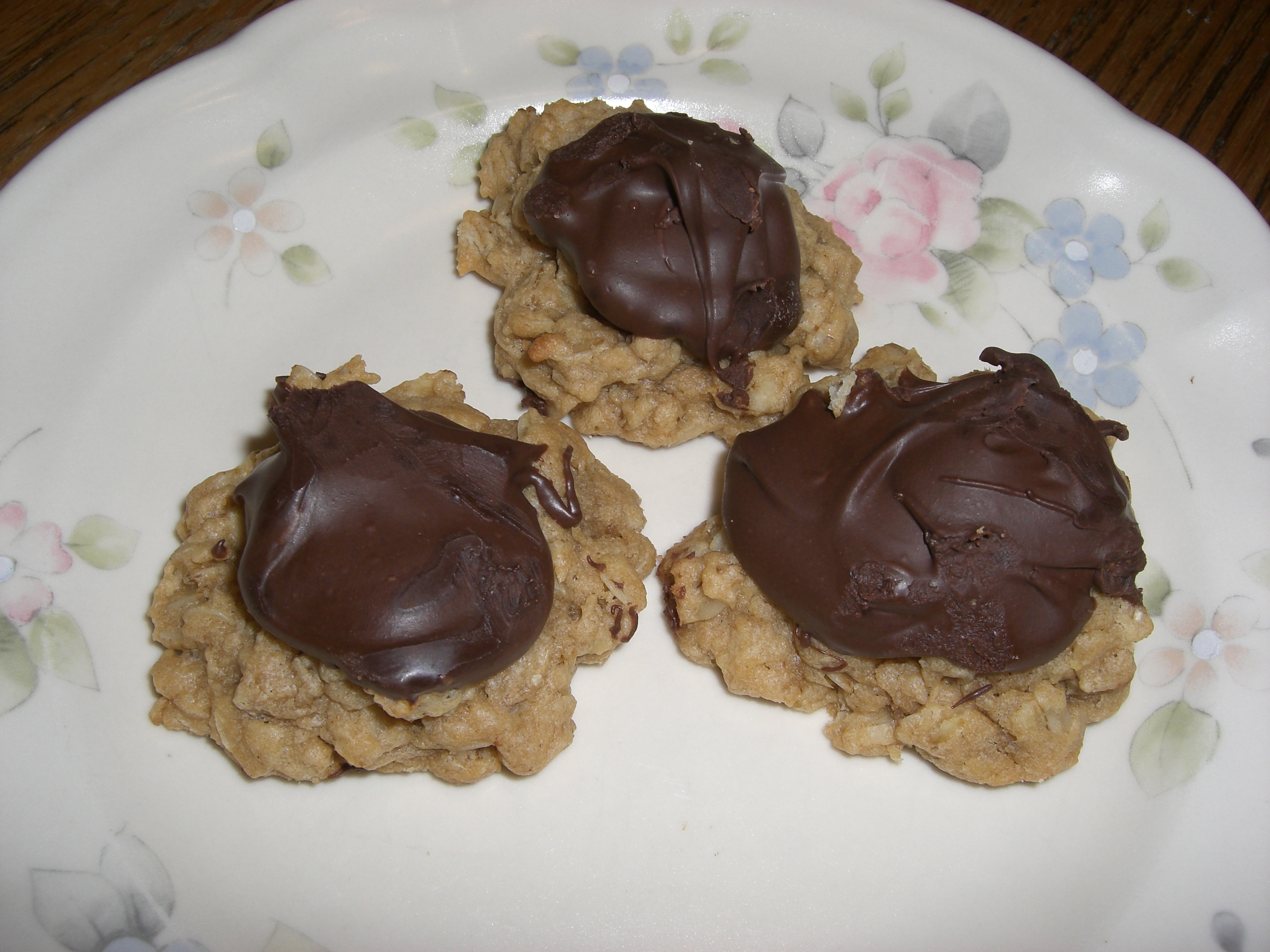
3. Dinner with Jesse. We don’t see Jesse, my youngest, as often as we see Jason, Mittu, and Timothy. He lives a bit farther away. When we found out he had Veteran’s Day off, we invited him over for dinner. J&M couldn’t make it. While we missed them, and we enjoy time all together, it’s also nice to visit one-on-one. Jesse likes salmon, and we had some in the freezer from a half-price sale, so Jim grilled those while I made Red Lobster-style baked potatoes and mixed vegetables. I make Choco-Peanut Butter Dreams about once a year in the fall and decided to do that as well. I sent several home with Jesse and brought some to J&M Wednesday and still had several to munch on through the week. (The recipe is included with My Favorite Cookie Recipes.)

Choco-Peanut Butter Dream Cookies

4. Easy fixes for weird technological glitches. One day my Word grammar checker suddenly started making suggestions in French, including marking words as misspelled and giving me French alternatives. Of all the weird things! I poked around, trying to find the place to reset the language for it, then finally Googled it. Then my phone stopped receiving e-mail from either account. A quick search and reentering of my password had it working again. I am learning to search first before texting my children for help. 🙂

Then, right before leaving for an appointment Thursday, my computer started making weird tapping noises. Jim rebooted it, and that took care of whatever the problem was—or at least stopped the noise.

5. A good eye doctor appointment. Everything is about the same as last year, except I’ve had an odd shape in my vision for a few weeks. He didn’t see any problems when he dilated my eyes, so that was a relief.

Bonus: My youngest sister has been unemployed for ages after being laid off. After much prayer and searching, she got a job this week!

Review: Write a Must-Read

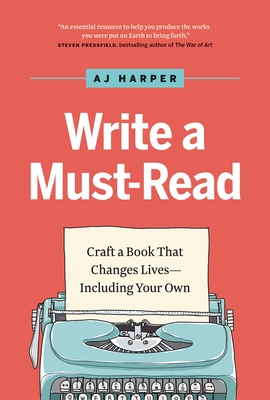
Write a Must-Read by A. J. Harper

A. J. Harper (no relation) has had a varied career as a ghostwriter on multiple books, publisher, editor, coach, co-writer, teacher, and more. Clients urged her to teach other writers how to write transformational nonfiction books. A nudge from a co-writer and an author retreat helping writers caused her to realize maybe she could write such a book. The result is Write a Must-Read: Craft a Book That Changes Lives—Including Your Own.

Harper’s main theme is “Reader first.” Often writers get started because they feel they have something to say. But writing to impact others isn’t just focused on imparting the writer’s story or information. Even a memoir or biography needs to have a take-away for the reader; otherwise, unless the author is famous, a reader won’t be interested in reading it.

First Harper helps writers identify their ideal reader and what their need is. I appreciated the distinction that the ideal reader is not an avatar, with multiple specific characteristics down to the cereal the reader eats (I’ve seen some writing advice that seems to lead this way). Rather, “Ideal Readers may come from different backgrounds and circumstances (demographics), but their problems, desires, and challenges in pursuit of their desire (psychographics) are the common denominator” (p. 46).

Then she helps writers craft their Core Message: what’s the “foundational truth that your entire book is built on” (p. 65). From there, writers craft the promise they make their readers.

Harper talks about teaching points,stories, anecdotes, case studies, outlines, sequencing, and much more, all under the umbrella of what would best serve the reader.

She includes a multitude of helpful questions to ask while editing and ends with a crash course in the process of publishing and need for marketing.

All her points are illustrated with stories and anecdotes from the authors she has worked with.

Many of the chapters end with exercises to work through and links to her web site for more information or to download worksheets or lists.

Some of the quotes that most stood out to me:

Writing a book is not about organizing content. It’s about creating an experience for the reader (p. 119).

The best outline for your book is the one that meets your reader where they are and takes them on a journey that leads to your Promise, delivered (p. 119).

You are not the hero of this book. They are. You are not the focus of this book. They are. And they need you to help them get where they want to go (p. 121).

Your book is not a collection of stories and knowledge. It is a journey—a quest (p. 130).

With nonfiction, specifically personal and professional development books, the aim is transformation. My singular goal is to help the reader change their life (p. 138).

A book is not about something. A book is for someone (p. 200).

I first read this in the evenings, a chapter or less at a time, before closing out the night with fiction before bedtime. That wasn’t the time I wanted to work through exercises and such. So I am going back through the book now at my desk, making notes, printing out worksheets and filling them out.

Some of my readers would want to know that there’s a smattering of profanity through the book, and the author comes from a completely different worldview than mine.

But the writing advice is excellent all throughout.

Achy Joints

Achy Joints

Can you imagine a body without joints? It wouldn’t even be able to move.

We don’t usually appreciate the joints in our body until they start to give us problems.

I’m at the age where various joints take turns stiffening, aching, tingling, creaking, or even going out on me. If they all ganged up on me at once, I’d be in real trouble.

What happens when a joint doesn’t work right? An achy joint limits mobility. If the joint is stiff or painful enough, it could stop movement altogether. The Bible likens an unreliable person to an unreliable joint: “Confidence in an unfaithful man in time of trouble is like a broken tooth, and a foot out of joint,” (Proverbs 25:19, KJV).

There are multiple passages comparing Christians to a body, with Christ as its head. And that body is held together and moves by way of its joints.

After telling about the gifts God has given to the church in teachers, shepherds, and evangelists to help the church mature and equip the saints for the work of the ministry, Paul says:

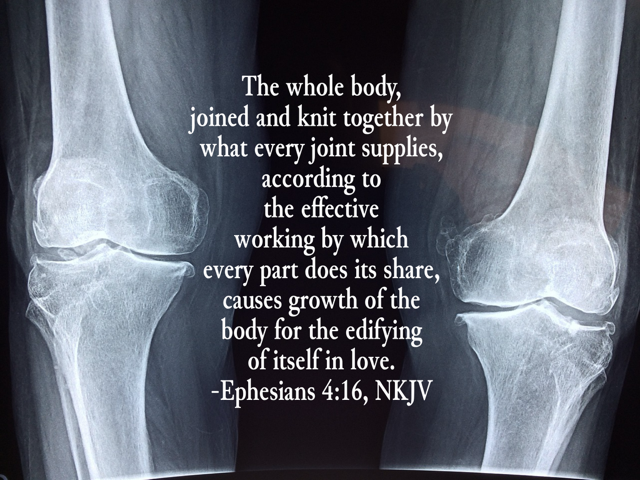
Speaking the truth in love, we are to grow up in every way into him who is the head, into Christ, from whom the whole body, joined and held together by every joint with which it is equipped, when each part is working properly, makes the body grow so that it builds itself up in love (Ephesians 4:15-16).

Colossians has similar imagery:

Holding fast to the Head, from whom the whole body, nourished and knit together through its joints and ligaments, grows with a growth that is from God (2:19).

In looking up the anatomy of joints, I was surprised to find just how complex they are. But one significant part of a joint is the synovium, which secretes synovial fluid, which in turn provides lubrication and nourishment for the joint, according to this article

Interestingly, that article also says, the synovium “not only has its own specific functions but also interacts with other tissues in the joint both structurally and functionally.” That’s just like the body of Christ, too, isn’t it? 1 Corinthians 12 says we each have our own gifts and areas of usefulness, but we also interact as different parts of the same body.

What’s the synovial fluid among God’s people?

Ephesians 4:15 says we should be “speaking the truth in love.”

Jesus said, “A new commandment I give to you, that you love one another: just as I have loved you, you also are to love one another. By this all people will know that you are my disciples, if you have love for one another” (John 15:34-35).

Peter said, “Above all, keep loving one another earnestly, since love covers a multitude of sins” (1 Peter 4:8).

Paul wrote, “Love is patient and kind; love does not envy or boast; it is not arrogant or rude. It does not insist on its own way; it is not irritable or resentful; it does not rejoice at wrongdoing, but rejoices with the truth. Love bears all things, believes all things, hopes all things, endures all things” (1 Corinthians 13:4-7).

Wouldn’t our interactions as a body go so much more smoothly if we expressed that kind of love?

The synovial fluid also nourishes joints. Colossians says we’re “nourished and knit together through its joints and ligaments.

How do we nourish each other? What’s our spiritual food? Job said God’s Word was more than his necessary food, and the author of Hebrews speaks of God’s Word as milk and meat.

As we take in God’s Word and grow in Him, we share it with each other, so that we help others grow as well.

Adrian Rogers* calls this activity within the body “flexible harmony.” “When each part is working properly, [it] makes the body grow so that it builds itself up in love” (Ephesians 4:16).

May we avoid spiritual achy joints by loving and nourishing each other in Christ.

Ephesians 4:16

*(This post was inspired by a couple of paragraphs near the end of Adrian Roger’s message, Faithful in Ministry, heard on BBN Radio 10/25/24. The link contains a summary, along with tabs to listen or download the transcript.)

(I often link up with some of these bloggers.)