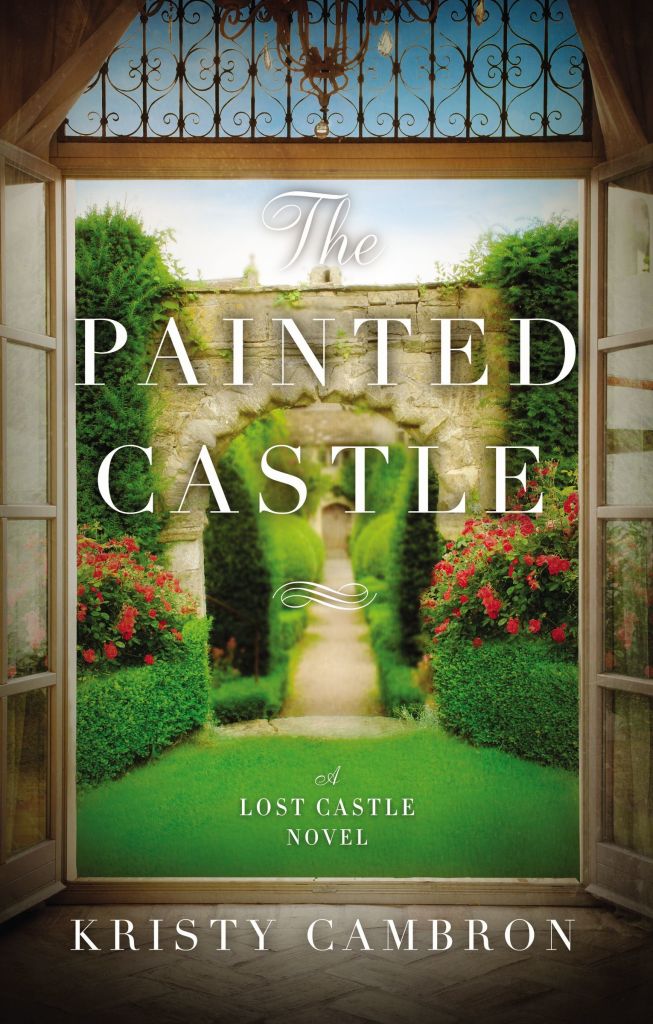
In modern-day Dublin, Keira Foley is the sister of the two main characters in the previous books. She is an art historian but lost her job, and her fiance broke up with her. She’s working in her brother’s pub for now, until she’s asked to authenticate a portrait of Queen Victoria painted by Franz Xaver Winterhalter. It was discovered in an old manor home whose owner just wants to sort through and sell everything. But Keira doesn’t know if she can trust the man asking: a rumored American art thief. She decides to go with him, and uncovers more questions than answers.
In 1833 England, Elizabeth Meade is shattered when her beloved father is killed. He left her and her mother in dire financial straits, which her mother tries to hide from society. Elizabeth’s only goal in life to to find the man who killed her father and take revenge. Her favorite pastime, painting, is not approved by her mother, but brings Elizabeth joy. When Elizabeth is grown, her mother arranges her marriage to a Viscount Huxley, and Elizabeth is startled to learn he is the very man she thinks murdered her father.
During WWII, Amelia Woods turned the estate into a haven for refugee children after her beloved Arthur died. But now she’s ordered by the English military to house a group of American pilots. Amelia does her best in a difficult situation, trying to shelter the children from the war as much as she can and manage amidst rationing. She and the American captain bond over the books in her husband’s library.
A main character in each timeline is recovering from some kind of loss. Many of the characters learn that though our path isn’t always what we’d planned, we can trust God through it.
Partway through the book, I began to wonder if Winterhalter was a real artist. He was! And the portrait of Victoria was real as well, commissioned by her for her husband’s birthday. It was unconventional for the time, showing Victoria with her hair down and a bit more shoulder uncovered than usual. Albert loved it, but felt it was too intimate for public display, and hung it in his study.
Much historical fiction these days is written with two timelines. Kristy is the only writer I’ve known to weave together three, and though she does it well, I hope this does not become a trend. 🙂 She does a good job keeping us from getting confused by naming the date and location at the beginning of each chapter and orienting us quickly with pertinent details.
I enjoyed the settings and stories as well as the way details were unfolded throughout the book. Each of the characters seemed relatable.
A couple of favorite quotes:
Books are a completely personal kind of journey. On the first page, they ask us not only to be willing but to be moved, changed, persuaded, even made new by the time we reach the end. Everyone’s walk-through is different (p. 104).
Parham Hill seemed to own the strange combination of both peace and pain. Beauty and bitterness. A lavishness surrounded by a coldness . . . They were strange bedfellows to find hidden in the shadow of Framlingham Castle and its quaint little country hamlet (p. 131).
In her author’s notes, Kristy shares that her father was an American pilot in WWII who flew in the very area she wrote about here. And she shares other bits and pieces that inspired her plots.
There are also some interesting bits in the book about H. A. Rey and his wife, Margret. He was born in Germany, and he and his wife were Jews living in France. They escaped on bicycles not long before Paris fell, taking their manuscript of Curious George with them, which became an instant success when they got it published.
Though it’s been a while since I read the previous two books, I felt the last chapter pulled everything together very well and was a fitting conclusion.
Jim and I are celebrating our 45th wedding anniversary in a few days. I’m not an expert at marriage, even at this stage. I don’t say a lot about marriage here for that reason. But I thought I’d share a hodgepodge of lessons learned, advice gleaned, and favorite poems and quotes concerning marriage.
1. I *hate* don’t like the saying “Marriage is designed to make you holy, not happy.” Almost every reference to marriage in the bible presents it as a happy union. Yes, we have to battle our selfishness, and God uses marriage to sanctify us. But happiness and holiness are not mutually exclusive.
2. One of my favorite books about marriage is The Ministry of Marriage by Jim Binney. To be honest, I read it so many years ago, I can’t remember much of the content now. But I like the emphasis in the title.
3. Humor helps. “A man without mirth is like a wagon without springs, in which everyone is caused disagreeably to jolt by every pebble over which it runs” (Henry Ward Beecher). Humor can diffuse tense situations and make life easier.
4. But be careful with humor. Poking fun at each other can hurt, even if the other person laughs. They will likely wonder, “Is that what he really thinks?” Also, if someone is pouring her heart out over something, and the other person makes a joke of it, she’ll feel unheard and not taken seriously. When something crosses from gentle teasing into something hurtful is probably different for each couple.
5. Appreciate the 80%. Elisabeth Elliot once said that a wife may appreciate and agree with 80% of what her husband says and does, yet harp at the 20% she doesn’t like, making them both miserable. I assume the same could be said of the husband regarding his wife. No spouse will be perfect: We need to spend more time appreciating what we have.
6. Marriage is not 50/50. It’s 100/100.
7. Love songs speak of climbing mountains or swimming oceans. Who really does those things for love? It’s easy to say, or sing, because no one expects anyone to actually do them. Real love is shown in the everyday giving oneself for the other.
8. Not the grand gestures. Lisa-Jo Baker shared in The Middle Matters that a teenager quoted in the Huffington Post felt her love life would never be adequate “until someone runs through an airport to stop me from getting on a flight.” The girl probably saw that in a movie somewhere. Her romantic life is going to be difficult if she sets up a test scenario in an airport every time she thinks she’s in love. Everyday thoughtfulness and kindness goes much further than the occasional sweeping romantic (and unlikely) moment.
9. Love languages. There’s something to be said for love languages coined by Gary Chapman. We perceive love differently. If a husband compliments his wife all day long or buys her piles of gifts, and her love language is acts of service, she’s not going to feel loved unless he helps wash the dishes. But I agree with Tim Challies here that love languages are just a way to understand and communicate with each other, not something to demand as a right or use to manipulate.
10. Don’t take each other for granted. This can be easy to do after a number of years together, in the busyness of everyday life. It helps to take time to consciously think of what we appreciate about each other.
11. Maintain good manners. Please, thank you, etc., still go a long way and help #10.
12. Assume the best. A former pastor said 1 Corinthians 137 (“Love bears all things, believes all things, hopes all things, endures all things”) means we cherish the best expectations of each other. If the other is late, leaves something undone, does something in a way we don’t like, talk about it kindly and graciously. Don’t jump to conclusions.
13. Date nights are nice, but not, as some would say, essential. The important thing is to spend time together one on one, whether that involves going out or being at home.
14. Be aware of introversion and extroversion. My husband and I are pretty similar in this respect, though I am more of a homebody than he is. But when there are differences, we need to understand that introverts are energized by time alone and drained by time with people, and extroverts are just the opposite. We need to be balanced and considerate with each other.
15. Rituals. Every couple develops their own little rituals in everyday life. But, like I said recently regarding traditions, we need to be flexible with them and not binding. One couple we knew decided that all through their married life, they would get up at the same time and go to bed at the same time. I wonder if they both got up for babies’ nighttime feedings. That meant a lot to them, but my husband and I could not have sustained that with his work schedule and leaving way early for travel. If we start something like that and find it doesn’t work after a while, it’s okay to adjust.
16. Don’t expect the other to read your mind. We might wonder how the other could not know our preferences or desires, but they can’t unless we express them.
17. Speak plainly. This could work both ways, but I think women are more prone to hint rather than plainly say what they want, and then get frustrated when he doesn’t get it.
18. Don’t make special days a test. I heard this from Gregg Harris some thirty years ago, and he’s the only person I have known to say it. He cautioned against using anniversaries, birthdays, Valentine’s Day, etc., as tests of a spouse’s love, and then feeling angry or hurt if he/she doesn’t remember them. Instead, remind the other, or ask, “What would you like to do for” the day beforehand, etc.
19. We all need appreciation. A friend shared that her husband had done a lot of yard work, then came to the door to ask her to come out and see what he had done, saying he needed an “Atta boy.” We smiled, but it’s true–we need to know someone appreciates our work and it pleases them.
20. Respect. I cringe when I hear husbands talking down to wives or wives talking to husbands the same way they talk to their children. We shouldn’t demean or ridicule each other.
What about when a husband doesn’t act in a way that invites respect? I like to turn this around: the same passage that mentions respect in marriage mentions love (Ephesians 5:22-33). Do we want our husband only to show love to us when we act deserving of it? No! We want him to understand when we’re not very lovable and love us anyway. So we can do the same for him. We may not respect every action or sentence, but we can respect him as a person and give him grace when he’s not perfect.
21. Remember you marry a sinner. As Elizabeth Elliot said, there is no one else to marry. While on one hand we hold each other to the highest, on the other, we acknowledge that the other is only human.
22. Be careful how you talk to others about your spouse. This is not only a matter of respecting our spouse, but of being a good testimony about marriage to others. We don’t have to pretend the other is perfect and never does wrong. But what is it saying to younger people about marriage and relationships if a husband getting together with the guys or a wife with the girls if it’s a time to complain about the other?
23. It’s okay to have separate interests. I think we actually benefit when we are enriched creatively in other ways and then come together. Plus, we shouldn’t expect the other to be interested in every little thing we are.
24. But it’s good to share some interests as well, or to listen to a conversation on a topic we’re not interested in or go to an event the other likes but we don’t care for sometimes. There are some family outings where I might not really be interested in the activity, but I go for the family togetherness.
25. Adapt to your own spouse. I read of a woman who heard that a good wife is a good housekeeper. When she got around to discussing housecleaning with her husband, she was surprised to find that he didn’t really care about a pristine house. He didn’t want a sloppy home, but he didn’t feel it needed all the extra touches she was giving it. In fact, he’d much rather she spent more time with him than more time cleaning. I’ve benefited much from good books about home, marriage, and family, but we need to check them with the real live person in our home and his preferences.
26. Don’t lie. I don’t know if there is an easier way to destroy trust than to lie to someone. Sometimes we don’t outright lie, but we manipulate details to get ourselves off the hook.
27. Remember a spouse is a brother or sister in Christ. How many times have you heard of a couple fighting in the car on the way to church, and then pasting on smiles when they get there? All those one-another passages in the Bible apply to our family members as well as other people at church.
28. Don’t put a spouse in God’s place. I had a hard time when my husband worked an overnight shift a few years into our marriage and even more when he started traveling for his job. Evidently I am not alone in that, because Coping when a husband is away is one of my most often-viewed posts. God uses husbands in our lives as our protectors, providers, and companions–but for Him to work through, not for us to look to instead of Him.
29. Find your security in Christ, in the fact that He created you and gifted you for His calling. We all need encouragement and reassurance at times, but we shouldn’t be needy in the sense of needing constant affirmation.
30. Manage your expectations.
31. Avoid “always” and “never,” especially in an accusatory way.
32. Attack the problem, not the person during disagreements.
Favorite Quotes about Marriage.
33. C. S. Lewis has a long quote from Mere Christianity, included here, the gist of which is that the intense “feeling” of love in the beginning can’t be expected to last. “Who could bear to live in that excitement for even five years? What would become of your work, your appetite, your sleep, your friendships?” But “love as distinct from ‘being in love’ is not merely a feeling. It is a deep unity, maintained by the will and deliberately strengthened by habit; reinforced by (in Christian marriages) the grace which both partners ask, and receive, from God. They can have this love for each other even at those moments when they do not like each other.” “It is on this love that the engine of marriage is run: being in love was the explosion that started it.”
34: Jane Eyre. “To be together is for us to be at once as free as solitude, as gay as in company. We talk, I believe, all day long: to talk to each other is but a more animated and an audible thinking.”
35. Booth Tarkington. “It is love in old age, no longer blind, that is true love. For love’s highest intensity doesn’t necessarily mean its highest quality. Glamour and jealousy are gone; and the ardent caress…is valueless compared to the reassuring touch of a trembling hand. . . the understanding smile of an old wife to her husband is one of the loveliest things in the world.”
36. Mignon McLaughlin. “A successful marriage requires falling in love many times, always with the same person.“
Favorite Songs about Love and Marriage. I’m not a big fan of sappy love songs, except around Valentine’s Day. 🙂 That’s probably because many of them are unreal–the whole climbing mountains and swimming oceans thing mentioned earlier. But here are a couple I especially love:
37: The Voyage. Jim made this video for me in 2008. Jason and Mittu were recently engaged but not married yet, and of course Timothy wasn’t here then. The song is “The Voyage,” sung here by John McDermott, then in the Irish Tenors:
38: My Cup Runneth Over with Love. This was popular when I was a kid, and I still love it.
44. Pray for each other. Though we meet each other’s needs as much as we can, with God’s help, only He can strengthen and enable us day by day.
45. 1 Corinthians 13 is, of course, the best description of love.
When I started, I wasn’t sure if I could come up with a list of 45. Now that I’ve got the ball rolling, even more things are coming to mind. I’d sum up most of what I’ve learned about marriage with this: be kind, gracious, forgiving. Build each other up; don’t tear each other down. Appreciate the little things. Put God first, then each other.
Do you have any favorite marriage advice, quotes, or poems?
This is a busy time of year, but here are a few good reads you might find thought-provoking when you have a moment:
Uncomfortable Christmases, HT to Challies. I saw this last year after Christmas and saved it for this year. “But for some of us, going to a holiday gathering (or hosting one) can be fraught with spiritual tension when few (or none) share our Christian faith. And given numerous trends in our society, the tension may only get worse in the days ahead.”
Thinking About Bruce Willis and Jesus, HT to Challies. “We often talk as Christians about the suddenness of death. We talk to unbelievers about how important it is to not put off a decision for Jesus until later, because what if death comes calling when you don’t expect it. I wonder though have often we talk about or think about for ourselves, the suddenness of debilitation or disablement; how fast we can go from a fully functioning person, to our arms not working, our legs not working, our kidneys not working or even our mind not working.”
How to Read and Remember, HT to Challies. “Someone recently asked me how to stay focused and retain what they read. It’s an important question, especially for anyone devoted to a life of profitable reading and learning.”
Wrap Up Some Stuff this Christmas, HT to Challies. “Our consumer-driven mentality is out of control, and we feel it everyday as more and more waste piles up around us. Sometimes a good answer is to slow down, cut back, and remove the unused things in our lives. But sometimes it’s not. Because you and I were created for a world full of things.”
More Than a Feeling: Be Ruled by Peace. “I’ve often fallen into the trap of thinking that peace is primarily a feeling. So when circumstances outside my control arise—my kids’ health situations, strained relationships, or some other crisis—peace feels elusive . . . drowned out by anxiety, sadness, anger, or overwhelm. This is why it’s important to understand peace as a reality that does not change when we encounter trials and suffering. Peace originates in the unchanging person of Jesus, and it never runs dry, regardless of what we’re facing or what our emotions might tell us.“
I sometimes think of changing the name of my “Laudable Linkage” posts, and one reason is that it seems weird to include links back to my own posts under such a title. But there are two that I think might be helpful this time of year:
Christmas Grief, Christmas Hope, Christmas Joy. Both of my parents and my grandmother all died in December, in different years. It seems every year I know of someone with a fresh loss during the holiday season. Even “old” grief can flare this time of year.
You Don’t Have to Choose a Word for the Year. Some do this rather than New Year’s resolutions and find great benefit in it. If it’s helpful, great. But it’s not a must. “What’s more vital than a word for the year is daily seeking God in His Word.”
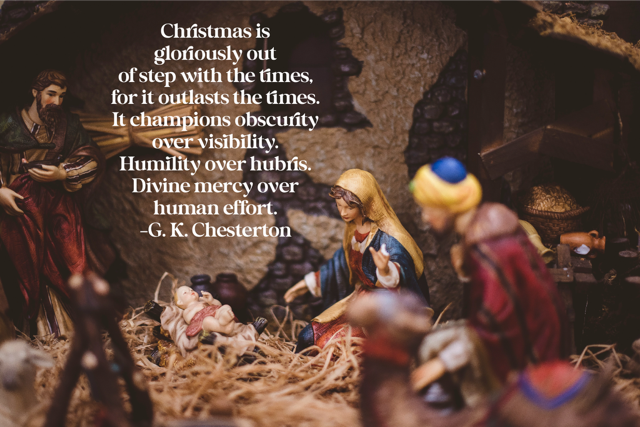
Christmas is gloriously out of step with the times, for it outlasts the times. It champions obscurity over visibility. Humility over hubris. Divine mercy over human effort. –G. K. Chesterton
It’s been an up and down week. I began the week with lower back pain, then on Wednesday I was in atrial fibrillation for about 13 hours. Now I have developed a cold and feel bleah. But it’s even more important to cultivate gratefulness when the blessings aren’t so obvious, as we do with Susanne and friends at Living to Tell the Story each Friday.
1. Turkey bone soup with the family last weekend, an annual after-Thanksgiving favorite.
2. Christmas tasks getting checked off. I felt a strong urge to push through and get a lot done earlier in the month so I could relax and enjoy the rest of the month. I’m so glad I did–I hadn’t factored sickness into the equation.
3. Medicines. Icy Hot and acetaminophen for the back. Cough drops and acetaminophen for the cold (I can’t take decongestants due to the heart rhythm issues). Various meds for atrial fibrillation. Rest.
4. Snow that didn’t stick. 🙂 We’re not equipped to deal with snow down here like some of you up North are. We got some Wednesday morning, but it melted off by that afternoon. I’m glad we didn’t get any precipitation when temperatures were in the teens.
5. A thoughtful husband who took care of dishes and such and brought take-out dinner a couple of nights this week when I wasn’t feeling well.
Mittu and Timothy were sick last week, so we’re hoping everything runs its course before Jeremy comes next week.
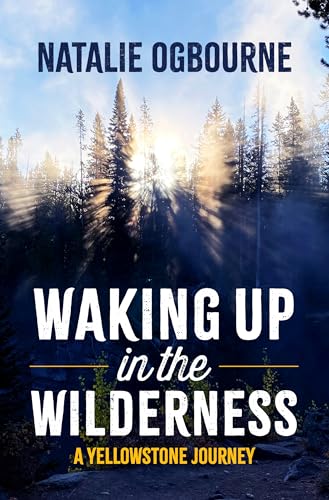
Natalie Ogbourne has been to Yellowstone National Park over 30 times. And not because she lives close to it: she lives 1,000 miles away in Iowa.
Natalie’s parents first took her and her brother to Yellowstone when she was twelve and he was eight, to show them “there was more to life that malls and movies” (p. 30, Kindle version). Natalie wasn’t impressed at first. But eventually she grew to love the place, working there when she was a little older and taking her own family back several times in all seasons.
Natalie shares her experiences and observations in a memoir titled Waking Up in the Wilderness: A Yellowstone Journey. She writes in her prologue, “Waking Up in the Wilderness is more than a story of me and my family doing what we love, in a place we love, with people we love. It’s a sign saying ‘Look at this!’ so readers can experience the park and see what there is to see for themselves” (p. 10).
When I think of wilderness, I think of a barren place. But Natalie helped me realize wilderness is wildness: it can be teeming with life. Though there are touristy areas of Yellowstone, paved roads, shops, and cabins, there is also an abundance of wild flora, fauna, and geological wonders.
Natalie often says, “What’s true on the trail is true in life.” “Creation speaks–more often in a whisper than a shout” (p. 69). Yellowstone taught her many lessons applicable to all of life, but she shares them naturally, not in a “moral of the story” way. Lessons like trusting that your guide knows more than you do when he’s taking you somewhere you don’t want to go, or the conflict between wanting to “take the road less traveled” while also wanting to “feel comfortable and safe.” She notes,”Rarely is this the same road” (p. 96).
I thought one of the most profound experiences came near the end of the book, when Natalie and her father found new signs in Yellowstone, after a couple of people had died there the previous year. In all caps, the sign read: “THERE IS NO GUARANTEE OF YOUR SAFETY WHILE CAMPING OR HIKING IN BEAR COUNTRY.” Natalie didn’t want a tame Yellowstone, with everything behind barriers. But how can one navigate in areas where a bear might be around the next bend? “If safety isn’t the point, and fear isn’t the answer, I don’t know what is” (p. 192). I don’t want to spoil the book, but the conclusion she came to had me thinking all afternoon after I read it.
There are funny moments in the book, like when a visitor asks where the animals are kept at night. There are tense moments, when surrounded by a herd of bison or coming uncomfortably close to a bear. And there are poignant moments of insight.
Natalie and I are in the same critique group, so I got a sneak peek at a couple of her chapters. It’s been such a joy to see the book come into being and go out into the world.
The only thing that would have made the book even better is photos. But I imagine that adds another whole layer to the publishing process. She has plenty of pictures at her blog, along with other resources. I also looked up YouTube videos for some of the specific places she mentions.
Though Natalie’s book isn’t overtly Christian, her faith in God’s hand and care is evident throughout, especially the last half of the memoir.
I’m not a hiker, a traveler, or an adventurer, and I prefer indoors to out, but I still enjoyed Natalie’s treks into Yellowstone. I am happy to recommend her book to you.*
*There’s one little word I wish wasn’t there, but I suppose it was understandable in the context.
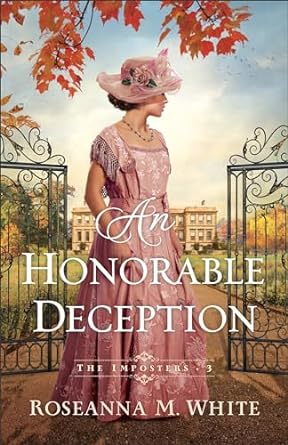
An Honorable Deception is the third in Roseanna M. White’s Imposters series about an aristocratic English pair of siblings in the early 1900s whose father left them nearly penniless. One of the father’s extravagant expenditures was a circus, whose residents now make their home at the Fairfax tower and whose staff taught the siblings, Yates and Marigold, skills to help them in their venture as private investigators
Yates heads to the church of a friend, James, who allows him to conduct interviews with potential clients in the confessional booth. Yates poses as “Mr. A” with an accent, Scottish this time. A “Miss B” on the other side of the booth asks him to help find her ayah, Samira. Miss B had been raised in India when her father was a viceroy there. Samira was with the family until they moved back to England, and since then she has traveled back and forth in several similar situations. Miss B. and Samira have remained close and meet whenever Samira is in town. But Samira missed their scheduled meeting, and so did a friend who was supposed to give Miss B. some news.
As Mr. A. and Miss B talk, they hear banging doors and hurried footsteps. Before Yates can stop her, Miss B leaves the confessional, says, “You!” and is shot three times.
Yates is in danger of blowing his cover, but he has to help Miss. B. As he leaves the confessional, the men have gone, and he discovers Miss B. is none other than Alethia Barremore, daughter of one of London’s leading families.
James and Yates bring Alethia to the Fairfax’s London home for her safety, fearing her attackers would find her in a hospital. As she slowly recovers, they learn more of her story and start looking into her case.
Also with the Fairfax siblings is a longtime friend, Lavinia Hemming.Yates had loved Lavinia when they were teenagers, but she developed scarlet fever which damaged her heart, leaving her ill for several years. Then when Yates discovered he had no money, he knew her parents would never consent to him asking for her hand. And Lavinia herself seemed totally uninterested in him.
In one of the previous books, Lavinia discovered her mother was a traitor who threatened her life, her father’s and Yates’. Her mother was killed, leaving Lavinia to recover from the disillusionment of her deception. With her father away, Lavinia accompanies the Fairfax siblings to their Northumberland tower, where she accidentally learns that they are the Imposters. She recruits herself into the group to help.
Their investigation turns out to be involve more than a missing ayah as they uncover some of society’s seedier secrets.
I don’t want to spoil the story, but some readers would want to know the last half of the book shares details of child abuse and sex trafficking. However, nothing explicit is shown.
As almost always, I loved Roseanna’s story. Though dealing with a serious subject, there are moments of lively banter. And Lavinia and Alethia wrestle with several emotional issues in the wake of their parents’ sins.
A fun surprise in this book was the appearance of Barclay Pearce from Roseanna’s Shadows Over England series about a group of street kids who form their own family.
There’s an interview with Roseanna about this new book here. I assume this is the last of the Imposters books–Roseanna’s series all seem to form groups of three. If so, I’ll miss these characters.
Christmas brims with traditions. Some point back to long centuries: lights to represent the light of the world, stars to remind us of the one that led the wise men, gifts exchanged in commemoration of the gifts brought to the Christ child.
Martin Luther is often credited with the first Christmas tree. Charles Dickens (perhaps unwittingly) set in motion our modern-day idea of Christmas with feasting and charity.
But personal traditions that form within families or individual lives are often the dearest.
One of the things I love best about decorating the Christmas tree together as a family is the memories inspired by the ornaments as we bring them out of boxes and hang them.
Once, one of the boys hung a snowflake ornament on the ceiling when I wasn’t looking. It took me a while to notice it, and then I couldn’t reach it to take it down. Now the plastic snowflake ornament shows up in various places almost every year: a curio cabinet, among figurines on the mantle, and all sorts of ceiling spots.
Of course, Christmas isn’t the only time for traditions. On our anniversary, my husband and I place cards for each other under the other’s pillow, and we read them last thing before we go to sleep.
One Valentine’s Day, I made mini meat loaves in the shape of hearts one year, and now it’s a tradition to have “meat hearts” that day.
Each holiday and season has its own rhythms and rites.
Traditions can form around everyday occurrences, too–football game snacks, bedtime rituals, celebrating milestones like graduation, raises, and promotions, etc.
Traditions enhance our celebrations, strengthen our relationships and sense of belonging, give us cheerful practices to anticipate and look back on with fondness. Traditions within a larger culture can help form a cultural identity.
But traditions can sometimes be a problem:
When one person wants everything the same and another wants something new. A few years ago, a friend on Facebook asked what new things people were making for Thanksgiving. I thought “New? For Thanksgiving?” 🙂 We look forward to having the same things each year. But we’ve made some adjustments as needed and are open to other suggestions. Maybe, if there’s conflict, the main dishes could be agreed upon with the side dishes changing each year.
When seasons of loss or sorrow overshadow the holidays. Sometimes it’s a comfort to do the same familiar things even when the person you did them with is no longer there. But for some, those same rituals would be painful. And there might be different tendencies within the same family. There is no one right answer except to be sensitive to each other.
Sometimes a loss can trigger a new tradition. We knew a couple whose daughter was killed by a drunk driver. They helped host a yearly holiday dinner for other families who had suffered through a similar loss. One friend’s widowed grandmother missed the rose her husband used to give her on their anniversary. The family made sure someone brought her a rose every year after that. After my mother passed away, my family in TX met to go together to the cemetery every year with a small Christmas tree or arrangement.
When new additions are added to the family. A friend was talking with her oldest son and new daughter-in-law about the holidays. Things seemed to be up in the air, and with three more young people at home who would be marrying over the next few years, my friend felt she needed to set some boundaries so the yearly celebration wasn’t an upheaval. She simply shared when they had their usual Christmas dinner and went from there.
When children marry (or parents remarry), each couple has another whole side of the family with its traditions to deal with. Hopefully, new blendings of traditions will come into the mix. But each couple will not be able to do all the things both families always do.
When circumstances interfere. For several years, our Thanksgiving tradition was to get together with a family my husband was close to from his home church. One year, we visited friends in one state overnight before traveling on to the other friends’ home for Thanksgiving. Our car broke down in the first friend’s driveway. We had to find someone to tow it away and fix it plus rent a car for the rest of the trip. We ate at Burger King on the way. Our youngest got carsick on winding mountain roads. We finally arrived just as the family we were visiting was having their evening leftovers from the noon meal.
Sometimes you just have to go with the flow and make the best of it. But those holidays that turned out different than expected are sometimes the most memorable ones.
When there are too many traditions to keep up with. We can add things to do each year until we’re over-scheduled, stressed, and frustrated. If traditions are making us tired, irritable, and wanting to be left alone, they’re doing the opposite of what they’re supposed to.
When my kids were little, December was stuffed with school programs, piano recitals, church group get-togethers, and so much more. One year we just didn’t get around to making Christmas cookies. No one seemed to notice, so we skipped that activity for several years.
I love Christmas cards and letters, but I know many who have stopped sending them due to expense and time.
Perhaps a family meeting is needed to discern what activities mean the most to each person, and some traditions can be removed or rotated from year to year.
When a tradition has outlived its usefulness or no longer carries meaning, but we can’t let go of it. I heard of a family who was discussing who was going to make a particular traditional dish for Christmas when they realized that none of them liked that dish. It was started by someone who had passed away years ago.
Sometimes we maintain a tradition for one or a few people as an expression of love to them. But if everyone is doing the same things just because “That’s what we always do,” it’s okay to let some traditions go.
A tradition is not an end in itself. We shouldn’t regard an occasion as ruined if we don’t get to incorporate a particular tradition. We need to be flexible; as life changes, we need to change and adapt with it.
And we need to remember what the tradition is for: to celebrate, to show love, to draw people together, and to make fond memories.
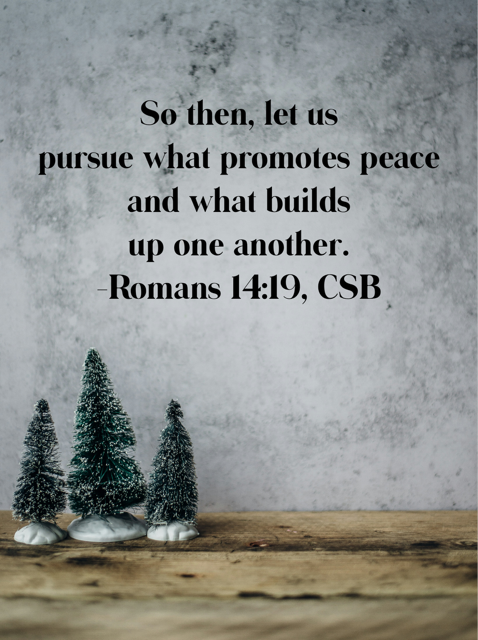
If some traditions are more of a burden than a blessing, we can remember to “pursue what promotes peace and what builds up one another.” (Romans 14:19, CSB).
How to Have a Perfect Christmas. “The longer I live, the more I realize perfect Christmases only appear in movies. No surprise, really, because real Christmases are never perfect.”
The Other Christmas Story. “We all love the Christmas story in Matthew’s gospel. . . . What we seldom notice, however, is that there is another Christmas story in Matthew, another version of how Jesus was born to Mary and Joseph. This overlooked account is squeezed between a list of Jesus’ ancestors and the familiar story.”
8 Proofs that the Bible Is One Story. “Does the Bible sometimes seem random to you? What does Hezekiah have to do with Philemon? How is Enoch connected to Ruth? What do battles in ancient Mesopotamia have to do with the church? Is the Bible really all one story?”
5 Tips to Reinforce Your Bible Study and Prayer Routine, HT to Knowable Word. “No church leader wants to admit it, but for many of us it’s true: we still don’t have a sustainable habit for personal Bible study and prayer. Here are five ways forward—true for anyone, church leader or not.”
You Can Read the Bible to Your Kids. “And one day, out of the blue, she asks me an innocent question that cuts me deeply. ‘Papa, how can I tell people about Jesus when I grow up, unless you first read the whole Bible to me?’”
Modesty Requires Looking Away. “When we talk about modesty we usually speak about the way people present themselves in public with their dress or demeanor, with their words or their actions. We speak about the immodest ways people may draw attention to themselves, whether to their bodies, their wealth, their power, or any other attribute. But no sin has just one side. If one side of modesty is refusing to display what should remain private, the other side is refusing to pay attention to what is not our concern.”
13 Ways to Redeem Small Pockets of Time. “Too often, however, we overlook the potential of small pockets of time. They seem too short to get anything meaningful done in them. But with a pinch of discipline and a dash of strategy, you can train yourself to redeem these little bits of time for the glory of God.”
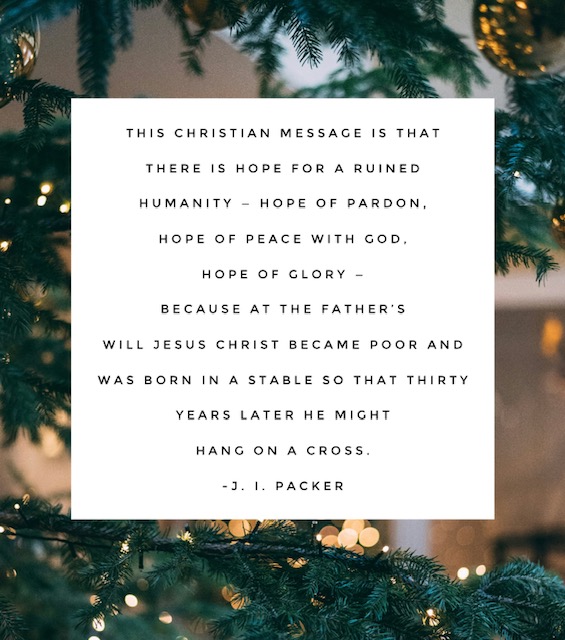
This Christian message is that there is hope for a ruined humanity — hope of pardon, hope of peace with God, hope of glory — because at the Father’s will Jesus Christ became poor and was born in a stable so that thirty years later he might hang on a cross. –J. I. Packer
Although the first day of winter is two weeks from now, it seems to have crept in early. We’ve had nights in the teens and evenings feeling twenty degrees colder than the temperatures.
But we’re keeping our hearts warm by counting our blessings along with Susanne and friends at Living to Tell the Story.
1. Christmas decorating as a family. I’m so thankful all the kids still come for that. We’ve usually done it on a Saturday morning, but this time we started mid-afternoon. Mittu made dinner for us all.
I love the memories, stories, and laughter that come forth with the ornaments.
I mentioned getting an artificial tree for the first time. Though we were reluctant to for a long time, we’re glad we did. It went together much more easily that I thought it would, and there was no wrangling with lights since it was prelit. And we don’t have to water it (though I am still fighting the impulse to have it checked) or sweep up pine needles for weeks afterward. Plus this one was big enough that most of our ornaments fit on it.
2. Commemorative ornaments. I don’t really need any more ornaments, but this owl caught my eye at Cracker Barrel. My mom collected owls, and I thought I’d get this one in her memory. Then I saw the boots and cowboy hat and thought of my dad. He was something of a cowboy in his younger years, even riding in the rodeo before he was married. The ornaments were on a buy 2, get 1 free sale, so I got a little church ornament as well.
3. A new microwave. I mentioned that our microwave died on Thanksgiving Day. It was a wall-mounted one over the stove, so the replacement had to fit within certain parameters. My husband looked online, but the ones he liked wouldn’t arrive for a week in one case, and several weeks in another. He looked a couple of places in town and found one in stock. He installed it this week, and we’re quiet pleased!
4. Good sleep. I often wake up once or twice during the night, and always have to get up to go to the bathroom when I do. The past three nights in a row, I’ve slept for about five hours straight. That makes such a difference!
5. A productive week. I had prayed for grace and help to get certain things done this week, and God answered. I think the sleep helped. One goal was to get the Christmas letter and cards out this week, and they are just about ready to be sent..
Bonus: Warmth by way of sweaters, winter coats, and central heating.
The Corinthian church was one of the messiest ever known. Factions divided over favorite preachers. Their church dinners became feasts for the well-off members, while the poor ones were left out. Some were involved in such blatant sin as a man sleeping with his mother-in-law. Their culture honored eloquence in public speaking and scorned Paul because he didn’t speak or write that way. They rejected his authority as an apostle.
Most of us would avoid a church like that. But God hadn’t given up on them. He inspired Paul to lovingly rebuke, plead with, teach, and encourage them toward a right relationship with God, each other, and himself.
2 Corinthians is actually the fourth letter Paul wrote to the church. 1 Corinthians was the second. We don’t have the first and third, but Paul refers to them. Between the second and third letter, Paul made a “painful visit” to them to try to set things right and sent some of his coworkers to them as well. His care was evident: he didn’t just dash off a rebuke and leave it at that.
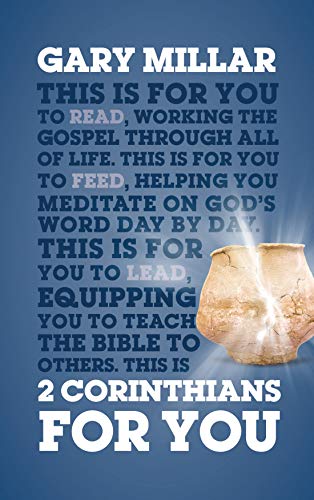
Gary Millar guides us through Paul’s letter in 2 Corinthians for You. He takes an expository approach, covering anywhere from a few verses to a chapter and a half from 2 Corinthians in each of his chapters. He explains the culture of Corinth at that time, a Grecian city with heavy Roman influence and a large number of Jewish exiles. He puts the pieces together from 1 Corinthians and Acts to help us understand this letter of Paul’s better.
Though he gives us a lot of helpful information, his style is easy to read and not academic. He does an excellent job pulling out application from the Corinthians and Paul to our lives hundreds of years after 2 Corinthians was written.
One of the themes throughout the book is weakness. The Corinthians thought Paul was weak, and he said, in effect, “That’s right.” He refers to his weakness thirteen times in this letter. One reference is the famous passage many of us lean on in 12:9-10, where, after praying three times for God to remove whatever his “thorn in the flesh” was, Paul writes, “But he said to me, ‘My grace is sufficient for you, for my power is made perfect in weakness.’ Therefore I will boast all the more gladly of my weaknesses, so that the power of Christ may rest upon me. For the sake of Christ, then, I am content with weaknesses, insults, hardships, persecutions, and calamities. For when I am weak, then I am strong.”
Paul repeatedly points out to the Corinthians that the church is God’s, to be conducted the way He wants. And ministry is done for Him and through His power.
Throughout both letters, Paul demonstrates Christian love, which mourns over sin, rebukes when needed, pursues even those who think we’re enemies, and gives of itself. One of many verses that stood out to me was “I will most gladly spend and be spent for your souls” (2 Corinthians 12:15). At times I have felt utterly spent after ministering in some way, and this verse reminds me, yes, it’s supposed to feel that way. As God pours into us, we give out to others.
I have mnay places underlined and noted in Millar’s book, but here are a few quotes that stood out to me.
When the gospel is our absolute priority, we will be predictably, reliably faithful to the gospel, even if it means that our plans may change when the progress of the gospel demands it. And how can we pull that off? Once again, it’s because God hasn’t simply told us to be like Christ, he has intervened in our lives powerfully and dramatically to enable us to be like Christ (p. 35).
When Christ is preached, God works by the Spirit to show people how stunningly, gloriously beautiful Christ is. We should keep going because the ministry which God has given us reveals the glory of God in the face of Christ, and there is no greater beauty, no greater privilege, no greater experience for human beings than this (p. 57).
A basic step in a lifetime of gospel ministry is to get over ourselves, to realise that ultimately whether people like us or not doesn’t really matter. Whether we’re perceived as successful or not doesn’t matter. Whether we’re recognised or not doesn’t matter. All that matters is preaching Christ as Lord. We keep going because it’s about him, not us (p. 67).
Ministry that isn’t borne out of love for people will be miserable for you and miserable for the people you are supposedly serving! (p. 114).
Investing in people is costly and time-consuming. The hardest this about ministry is always people. It doesn’t matter how extrovert or introvert you may be, it doesn’t matter how much you like the person or you struggle with them. Investing in people always drains energy and sucks up time. But remember—people don’t take you away from your ministry; they are your ministry (p. 115).
We must do everything in our power to remember that we never get past needing God to work in us (and through us) by his grace (p. 146).
Every time we look at another person and measure ourselves against them—we are throwing the door wide open to pride (if we can find a way to score ourselves higher than them) or its twin sister, self-pity (if we can’t). Every time we compare, we throw living by grace through faith out the window and start to run with a gospel of good works. Every time we compare, we swap living to please God with living to please ourselves, under the guise of impressing other people—and it stinks! (p. 151).
Let me challenge you right now to set yourself to hold onto the truth, and to ask God to give you a highly sensitive theological radar for the sake of the church in years to come. Be ready to think through the implications of every new idea, and be ready to fight for the truth . . . don’t swap the truth for lies (p. 160).
Real ministry is always accountable to God, saturated in and motivated by Christ himself, and has the clear aim of building up the church. Everything Paul did was done with the clear purpose of building up the Corinthians (p. 178).
There were a couple of minor points where I disagreed with Millar, but overall, I thought this book was a great companion and aid in getting the most out of 2 Corinthians.






 Stray Thoughts