Book Review: The Christmas Heirloom

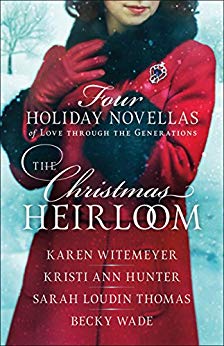
Christmas Heirloom The Christmas Heirloom: Four Holiday Novellas of Love through the Generations by Karen Witemeyer, Kristi Ann Hunter, and Becky Wade follows a family brooch handed down through generations.

“A Legacy of Love” by Kristi Ann Hunter takes place in 1827 England. Sarah Gooding came about her job as a lady’s companion in an unusual way, and she and her employer have a close relationship. Sarah is attracted to her employer’s grandson, but their different stations in life would prohibit anything more than friendship between them. Yet they do come to each other’s attention in protecting Lady Densbury’s interests, and she’s unconventional enough to help their relationship along. She bequeaths Sarah a brooch that had been given to her by her husband when they first married.

“Gift of the Heart” by Karen Witemeyer takes place several generations later in 1890. Ruth Fulbright is a young widow starting a new chapter in life with her daughter. They travel several miles via stage coach to a new job as a cook in Hope Springs, TX. She carries her heirloom brooch in an bag embroidered with her initials plus those of its three owners before her. Not having quite enough money for accommodations, she proposes giving the brooch as collateral to her landlord until she can earn enough to buy it back. Normally he would not accept such an arrangement, but she does not take no as an answer, and he sees how much it means to her. He has been almost a recluse since an injury and disfigurement of his arm in his youth changed his mother’s perception of him. He thinks everyone must feel about his handicap the same as she did. But Ruth’s bright spirit draws him out.

In “A Shot at Love” by Sarah Loudin Thomas, Fleeta’s parents have passed away, and she lives with an aunt and uncle in Bethel, West Virginia in 1958. Her main interest in life is guns: known as a crack shot, she also loves building them and carving designs into them. Her hope is to have her own gun store. Fleeta’s aunt brings out the brooch and tells Fleeta about it, saying her mother had wanted her to have it “when the time was right for [her] to find true love.” Fleeta doesn’t have much interest in love. Grief for her father hastened her mother’s demise, and other women seem to be held back by the romantic relationships in their lives. But then a stranger comes to town, a friend of a friend, who is just as good a shot and has just as much an interest in guns as she does. And he’s not put off by her unconventional femininity.

“Because of You” by Becky Wade tales place in modern-day Merryweather, Washington. Maddie Winslow had a crush on Leo Donnelly, but Leo married her friend, Olivia. But Olivia has passed away, leaving behind a young son as well as a grieving husband. Maddie still loves Leo but feels loyalty to Olivia places him “off limits.” Maddie and Leo are paired together for their church’s “Mission Christmas,” in which the different participants work together to help a family without means during the holidays. Maddie comes across the brooch while looking in the attic for items for a fund-raising rummage sale. She asks her mother about it and learns the story. Thankfully someone’s family history research reveals the brooch’s past. Leo had had no thoughts of loving again, but as he gets to know Maddie, he begins to think his heart can love again. The only thing I didn’t like about this one was multiple mentions of going to bars and drinking alcohol. I know Christians have a variety of opinions these days as to what exactly is acceptable in the realm of drinking, but I’d rather it was not “pushed” as normal. Having had an alcoholic father and visited a few bars before my salvation, to me, alcohol is part of the old life. There are any number of other places the folks in the story could have met.

There’s some mention of the brooch bringing its owners love, but the authors dispel the notion of it as something of a good luck charm, saying rather than love comes from God’s leading and provision.

This was a sweet, clean, enjoyable holiday read.

(Sharing with Literary Musing Monday, Carole’s Books You Loved)
Literary Christmas Wrap-Up

e7f96-a-literary-christmas-banner-2017

Here’s what I finished reading for Tarissa’s Literary Christmas Challenge this year (each title links back to my review):

I enjoyed them all, but my hands-down favorite was The Christmas Hirelings.

I didn’t end up reading everything on my original list. However, I did add a couple not on my original list that I received for free this month (can’t beat that!) I tended to read more from my Kindle app and listened to a couple on audiobook. My paper book reading was taken up by trying to finish a non-Christmas library book. I did start Baby, It’s Cold Outside by Susan May Warren and will finish, but probably after the end of the year. Everything else I’ll save for next December.

Thanks, Tarissa, for hosting the challenge! I like to read a few Christmas books in December anyway, but it’s nice to link up with others doing the same thing and see what they’re reading.


Mount TBR Reading Challenge Wrap-up 2018

mount-tbr-2017
I’ve already posted the books I read this year and my favorite books of 2018, but I wanted to share this final wrap-up of the Mount TBR Challenge.

Bev hosts the Mount TBR Challenge to encourage us to read what we already have on our shelves, and every twelve books is one more level.

I had only committed to to Mount Blanc (24 books). But I made it past the next level at Mt. Vancouver (36 books), with a grand total of 39.

Bev also proposes taking the first part of some well-known sayings and pairing them with titles of some of the books we read:

A stitch in time…[keeps] The Pattern Artist in business.
Don’t count your chickens..[in] The Secret Garden.
A penny saved is…. Emma’s Gift.
All good things must comeWhen the Morning Glory Blooms.
When in Rome… [I long to come] Back Home Again.
All that glitters is not…[is not] Julia’s Hope.
A picture is worth a… [a] Journey to the Center of the Earth.
When the going gets tough, the tough getTea With Emma.
Two wrongs don’t make…[a] Mountain Between Us.
The pen is mightier than.Invincible Louisa.
The squeaky wheel getsSomeday Home.
Hope for the best, but prepare forScrapping Plans.
Birds of a feather flock…[at] My Father’s House.

Here are the already-owned books I finished, listed on order of completion.

  1. Ghost Boy: The Miraculous Escape of a Misdiagnosed Boy Trapped Inside His own Body by Martin Pistorious (Copyright 2013, Finished 1/8/18)
  2. The Man Who Was Thursday by G. K. Chesterton (1908)(Finished 1/17/18)
  3. Conscience: What It Is, How To Train It, and Loving Those Who Differ by Andrew David Naselli and J. D. Crowley (2016)(Finished 1/24/18)
  4. 20,000 Leagues Under the Sea by Jules Verne (1870)(Finished 1/26/18)
  5. Mozart’s Sister by Nancy Moser (2006)(Finished 1/28/18)
  6. The Secret Garden by Frances Hodgson Burnett (Finished 2/3/17)
  7. The Austen Escape by Katherine Reay (2017)(Finished 2/5/18)
  8. Journey to the Center of the Earth by Jules Verne (Finished 2/17/18)
  9. Trust: A Godly Woman’s Adornment by Lydia Brownback (2008)(Finished 2/28/18)
  10. Sins of the Past by Dee Henderson, Dani Pettrey, and Lynette Easton (2016)(Finished 3/28/18)
  11. The Story of My Life by Helen Keller (1903)(Finished 3/31/18)
  12. Reading People: How Seeing the World Through the Lens of Personality Changes Everything by Anne Bogel (2017)(Finished 4/5/18)
  13. He Fell in Love With His Wife by Edward Payson Roe (1866)(Finished 4/8/18)
  14. Anchor in the Storm by Sarah Sundin (2016)(Finished 5/6/18)
  15. Drawing Near to the Heart of God by Cynthia Heald (2012)(Finished 5/16/17)
  16. Adam Bede by George Eliot (Mary Anne Evans)(1859)(Finished 5/19/18)
  17. The Illusionist’s Apprentice by Kristy Cambron (2017)(Finished 5/22/18)
  18. The Mountain Between Us by Charles Martin (2011)(Finished 6/3/18)
  19. Invincible Louisa by Cornelia Meigs (1933) (Finished 6/25/18)
  20. Looking Into You by Chris Fabry (2017)(Finished 7/10/18)
  21. My Father’s House by Rose Chandler Johnson (2016)(Finished 7/7/18)
  22. When the Morning Glory Blooms by Cynthia Ruchti (2013)(Finished 7/23/18)
  23. The Pattern Artist by Nancy Moser (2016)(Finished 8/4/18)
  24. Back Home Again: Tales of the Grace Chapel Inn by Melody Carlson (2008)(Finished 8/5/18)
  25. Reshaping It All: Motivation for Physical and Spiritual Fitness by Candace Cameron Bure (2011)(Finished 8/18/18)
  26. Full Assurance by H. A. Ironside (1968)(Finished 8/11/18)
  27. Before We Were Yours by Lisa Wingate (2017)(Finished 8/23/18)
  28. Tea With Emma by Diane Moody (2013)(Finished 9/19/18)
  29. Julia’s Hope by Leisha Kelly (2002)(Finished 9/23/18)
  30. Emma’s Gift by Leisha Kelly (2003) (Finished 9/29/18)
  31. Hidden Places by Lynn Austin (2001)(Finished 11/5/18)
  32. Coming Unglued by Rebeca Seitz (2008)(Finished around 10/20/28)
  33. Scrapping Plans by Rebeca Seitz (2009)(Finished 10/30/18)
  34. Perfect Piece by Rebeca Seitz (2009)(Finished 11/3/18)
  35. Someday Home by Lauraine Snelling (2015)(Finished 11/10/18)
  36. Florian’s Gate by T. Davis Bunn (1992)(Finished 11/24/18)
  37. Come Back, Barbara by C. John Miller and Barbara Miller Juliani (1988)(Finished 11/30/18)
  38. I’ll Be Home for Christmas by Lenora Worth, Belle Calhoune, Jill Kemerer, and Allie Pleiter. (2017)(Finished 12/12/18)
  39. A Spectacle of Glory: God’s Light Shining Through Me Every Day by Joni Eareckson Tada (2016)(Finished 12/29/18)

Thanks, Bev, for this fun motivation to finish off those books in our stacks and Kindles. I look forward to the challenge next year, too!

Book Review: A Spectacle of Glory

I don’t usually do book reviews on Sunday, but I wanted to get this in before the end of the year for those who are considering a devotional book for next year.

SpectacleJoni Eareckson Tada explains that the title for A Spectacle of Glory: God’s Light Shining Through Me Every Day comes from a quote of John Newton’s:

Some Christians are called to endure a disproportionate amount of suffering. Such Christians are a spectacle of grace to the church, like flaming bushes unconsumed, and cause us to ask, like Moses: ‘Why is this bush not burned up?’ The strength and stability of these believers can be explained only by the miracle of God’s sustaining grace. The God who sustains Christians in unceasing pain is the same God — with the same grace — who sustains me in my smaller sufferings. We marvel at God’s persevering grace and grow in our confidence in Him as He governs our lives.

Joni, as most of you know, broke her neck in a diving accident in her teens and has been in a wheelchair the 51 years since. In addition she’s had breast cancer, chronic pain, and has recently been diagnosed with a second bout of cancer. So she knows about suffering, and she has spent many years seeking God’s grace and purposes through them. The book is not exclusively about suffering, but many of the entries do deal with that and related subjects.

The pages are small, about 4×6″. Each day’s reading takes just one page and includes a Bible verse, a couple of paragraphs of Joni’s related thoughts, and a prayer at the end. So this book is easily readable through the year and tremendously meaty.

I have many more places marked than I can possibly share, but here are just a few samples:

God is our refuge and strength, an ever-present help in trouble.” When you are in trouble, God doesn’t just send help; He is your help. And this help is ever-present. God is closer than your troubles and stronger than all your fears. Fix your thoughts on Him, and He will sustain you (p. 28).

When God gives you some extraordinary blessing, don’t clutch it with a white-knuckled grip, or you may destroy the very thing that makes it a blessing to you…Be willing to let the blessings go, should God choose to take them away. One day He will return what He has removed–or replace it with something better (p. 47).

Show people how someone changed by the gospel actually responds to the rough edges of life (p. 110).

It takes spiritual discipline, as well as consuming adoration for the Savior, to not become weighed down and distracted by the hard work of energetic service. Don’t shrink from serving the Lord today; just be certain to keep Jesus and His glory as your goal (p. 114).

Lord, You have never asked me to go where You haven’t gone Yourself. If I find myself on a path of pain or sorrow, I can see Your footprints ahead of me. And I know where this path leads–to joy! Just around the bend, all of the suffering will be over forever–little more than a dim memory on a fresh, eternal morning (p. 135).

If these are mere flashes and keyhole glances of heaven, what will the reality be? Every earthly beauty that moves your heart is a God-sent gift to whet your appetite for the next life (p. 314).

The robust hope of the believer is not that we will escape hurts and sorrows, but that God will make every one of them an instrument of His mercy to do us good–both now and in eternity (p. 168).

Don’t ever tolerate low thoughts of a barely adequate, minimalist Savior who might “keep you going” but not much more. Jesus has riches to bestow on you right now. He will not only give you heaven above, but heaven-hearted joy in serving Him here on earth (p. 242).

Some of Joni’s thoughts spurred my own into posts here:

Why Isn’t God Winning?

Dark Valleys and Fiery Furnaces

Don’t Plug In: Abide

I can heartily recommend this devotional book to you.

(Sharing with Literary Musing Monday, Semicolon’s Saturday Review of Books, and Carole’s Books You Loved)

Favorite Books of 2018

Yesterday I shared a list of the books I read this year. Now I want to highlight my favorites from that list. Only a few were actually published in 2018, but all but one were new to me.

It’s hard to choose! Some had great subjects, great characters, great plots, or great writing. These are the ones that resonated with me the most.

In no particular order, here are my favorite books read this year:

Nonfiction:

ConscienceConscience: What It Is, How To Train It, and Loving Those Who Differ by Andrew David Naselli and J. D. Crowley. Many people are confused about what exactly a conscience is, and what’s for, and how it works. This book was highly helpful, readable, practical, and informative. One quote: “Feeding excuses to your conscience is like feeding sleeping pills to a watchdog” (p. 64).

TrustTrust: A Godly Woman’s Adornment by Lydia Brownback is a treasure of short but purposeful chapters. “Out of his love for you, he is well able to prevent the thing you are so afraid of, and out of that same love he might allow it. Either way, whatever happens, he only allows what is going to work for your eternal happiness and blessing and his glory” (p. 26).

ScarsThe Scars That Have Shaped Me: How God Meets Us in Suffering by Vaneetha Rendall Risner. Vaneetha is one of those people, like Job or Joni Eareckson Tada, about whom you wonder, “How much more can they take?” She was once bitter toward God for what He allowed. But once she realized He had a purpose in everything and trials were His tools, she began to view them in a different light. “I’ve often been devastated when he tells me no, but as I submit to his will in those situations—even with disappointment and tears—he assures me he’s working for my good. I see only part of the picture. He has a purpose in his denials. The Father said no to the Son [in Gethsemane]. And that no brought about the greatest good in all of history. God is not capricious. If he says no to our requests, he has a reason—perhaps ten thousand. We may never know the reasons in this life, but one day we’ll see them all. For now, we must trust that his refusals are always his mercies to us” (emphasis mine).

Anger

A Small Book About a Big Problem: Meditations on Anger, Patience, and Peace by Edward T. Welch. Though I wish this had been laid out like the author’s Running Scared (one of my favorite books of 2015), it’s packed full of great and convicting content. “Jesus…enlarged the boundary of murder so that it includes all kinds of anger. In order to do this, He links them at the level of the heart, where they share the same lineage of selfish desire. We want something–peace, money, respect–and we aren’t getting it. The only difference is in our choice of weapons” (p. 18).

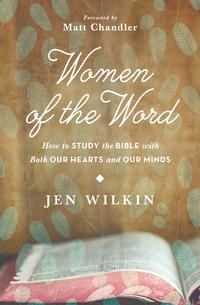
WOTW

Women of the Word: How to Study the Bible With Both Our Hearts and Our Minds by Jen Wilkin was a reread for me, but it’s still my favorite book of its kind.

Classics:

He Fell In Love With His Wife

He Fell in Love With His Wife by Edward Payson Roe. This 1886 novel is not the first or last about a marriage of convenience in which the participants actually do fall in love with each other, but it’s full of humor, warmth, and pathos. I loved the characters and the story and bought more of Roe’s books after reading this one.

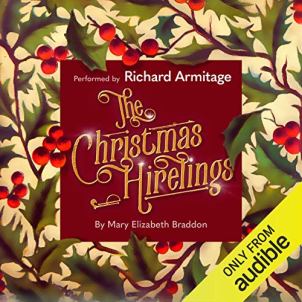
Christmas HirelingsThe Christmas Hirelings by Mary Elizabeth Braddon. An 1894 classic Christmas story that I think could rival Dickens’ Christmas Carol.

Fiction:

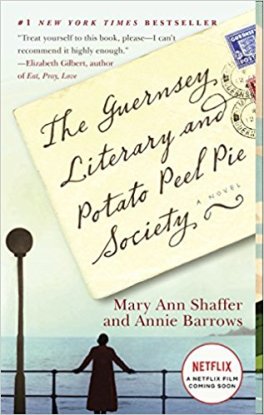
Guernsey
The Guernsey Literary and Potato Peel Pie Society By Mary Ann Shaffer and Annie Barrows. I’ve heard for years how good this is, but I just got to it this year. And it’s every bit as good as I’ve heard. An author discovers that the island of Guernsey was occupied by Germans during WWII. A group of neighbors there invented a literary society first as a cover for getting together to eat a pig which was supposed to have been given to the Germans. Then they had to continue meeting to keep up the ruse. In the meantime, they got to know each other. The author comes to visit them and learn more about their stories. (The movie is wonderful. too!)

Hands
My Hands Came Away Red by Lisa McKay. This is another that was well-spoken of a few years ago, but I just got to it in time for its re-release this year. A group of teens on a backpacking mission trip to Indonesia is stranded when fighting unexpectedly breaks out and their hosts are killed. The kids have to hike through the jungle, facing all kinds of dangers, pushing themselves beyond their limits, struggling with their faith.

JuliaJulia’s Hope by Leisha Kelly. Set in the Depression, a family without resources whose one hope falls through finds an abandoned house. They ask the owner, an elderly woman who could no longer live there alone, if they could live in the home in exchange for fixing it up. In time they offer for her to come back to the home as well, eventually forming a new family. There are many great layers to this one: the father and husband earning back his self-respect, his wife learning to forgive, neighbors helping even when they don’t have much to give. I loved the way the author got me into the characters’ heads and got them into my heart.

Fly AwayFly Away by Lynn Austin. An uptight, introverted Christian professor retired against her will is resentful and depressed and doesn’t know what to do with herself. A laid-back, gregarious atheist grandfather pilot finds he has cancer, and plans to “take off and forget to land” rather than put his family through his slow, painful demise. When they meet, sparks fly. But when she learns his situation, she knows she needs to tell him about the Lord. Her various attempts, first to find someone else to do it, then trying and failing to give him a tract, are comical but sad. I loved the journey on both sides.

Before we were yoursBefore We Were Yours by Lisa Wingate. This novel is based on true circumstances. In the first half of the twentieth century, Georgia Tann operated a children’s home by stealing poor children and brokering adoptions for a price – effectively selling children. This story involves one family’s being torn apart, scattered, and trying to find each other again. Some commented on my review that the book sounded too sad to read, especially when one gets emotionally invested in characters. But it ends in a good place. And, sadly, human trafficking still goes on today, and we need to be aware of it. Besides being a riveting story, the writing is gorgeous.

It took a lot of thought to reduce my favorites to the top twelve above. But there were so many good books I read this year, I can’t help including a few more “honorable mentions”:

  • Adam Bede by George Eliot didn’t sound like something I’d be interested in with its love triangle. But I loved Eliot’s other books so much, I gave this one a chance – and I am glad I did. I love the way Eliot gets us into her characters’ heads.
  • Alvin York: A New Biography of the Hero of the Argonne by Douglas V. Mastriano. True story of a man who went from a conscientious objector due to his faith to winning the Medal of Honor for capturing 132 Germans in WWI. Fascinating story, both for his personal growth, the incident in the Argonne, and his life afterward.
  • Amazing Grace: William Wilberforce and the Heroic Campaign to End Slavery by Eric Metaxas. The author got in the way of his story a bit, but otherwise this was a great biography of Wilberforce.
  • Come Back, Barbara by C. John Miller and Barbara Miller Juliani. Father and daughter tell her prodigal story. Probably most valuable for what he learned about his own mistakes and limitations.
  • Ghost Boy: The Miraculous Escape of a Misdiagnosed Boy Trapped in His Own Body by Martin Pistorius. Hard to read in places, but an amazing story.
  • The Illusionist’s Apprentice by Kristy Cambron. I love that Kristy tackles subjects no one else in Christian fiction does.
  • The Lost Castle by Kristy Cambron covers three different timelines, all connected to a castle in France.
  • The Pattern Artist by Nancy Moser. A maid with a knack for clothing design leaves her employer during a visit to America to try to make her own way.

What were some of your favorite reads this year?

(Sharing with Semicolon, who invites us to share our end-of-year book lists for her last Saturday Review of Books, and Literary Musing Monday, and Carole’s Books You Loved)

Books Read in 2018

I like to read with some intentionality rather than picking books up at random through the year, but I also need flexibility for the unplanned. I enjoy chipping away at the books already on my shelf and Kindle app, but it’s fun to get in on the buzz of a favorite author’s new release or a book currently making the rounds. This year I felt that I hit the perfect reading balance between all those factors. Some of the reading challenges I participated in helped me read with purpose, but I left room this year to incorporate new finds or whims along the way.

I’ll probably finish a couple more books before the end of the year, but I wanted to get my list finished in time for Semicolon‘s last Saturday Review of Books, in which we can post our end-of-year book lists. Today I’ll share all the books I read this year: tomorrow I’ll choose the top 10 or 12 or so. The titles link back to my reviews.

Classics:

Adam Bede by George Eliot

Ben-Hur: A Tale of the Christ by Lew Wallace

The Christmas Hirelings by Mary Elizabeth Braddon

The First Four Years by Laura Ingalls Wilder

Frankenstein by Mary Shelley

He Fell in Love With His Wife by Edward Payson Roe

The Hunchback of Notre Dame by Victor Hugo

Journey to the Center of the Earth by Jules Verne

The Man Who Was Thursday by G. K. Chesterton

The Secret Garden by Frances Hodgson Burnett

20,000 Leagues Under the Sea by Jules Verne

Villette by Charlotte Bronte

Where the Red Fern Grows by Wilson Rawls

Nonfiction:

Alvin York: A New Biography of the Hero of the Argonne by Douglas V. Mastriano

Amazing Grace: William Wilberforce and the Heroic Campaign to End Slavery by Eric Metaxas

Classics of British Literature by John Sutherland was not a book, but a series of lectures about British literature. But since a PDF of his lectures was also provided, and I consulted them frequently, I’m going to count this as a book.

Come Back, Barbara by C. John Miller and Barbara Miller Juliani

Conscience: What It Is, How To Train It, and Loving Those Who Differby Andrew David Naselli and J. D. Crowley

Daily Light on the Daily Path compiled by Samuel Bagster, not reviewed, read yearly for decades now.

Drawing Near to the Heart of God: Encouragement for Your Lifetime Journey by Cynthia Heald

Finding Christ in Christmas by A. W. Tozer

Full Assurance by Harry A. Ironside

Gospel Meditations for Mothers by Chris Anderson, Joe Tyrpak, Hannah Anderson, and others

Ghost Boy: The Miraculous Escape of a Misdiagnosed Boy Trapped in His Own Body by Martin Pistorius

Helen Roseveare: On His Majesty’s Service by Irene Howat

Heaven Without Her: A Desperate Daughter’s Search for the Heart of Her Mother’s Faith by Kitty Foth-Regner

The Highly Sensitive Person by Elaine N. Aron

Homebody by Joanna Gaines

Invincible Louisa by Cornelia Meigs, a biography of Louisa May Alcott

More Than These: A Woman’s Love for God by June Kimmel

Overcoming Your Devotional Obstacles: 25 Keys to Having Memorable Devotions by John O’Malley

Reading People: How Seeing the World through the Lens of Personality Changes Everything by Anne Bogel

Reclaim Your Life from IBS: A Scientifically Proven Plan for Relief without Restrictive Diets by Melissa G. Hunt

Reshaping It All: Motivation for Physical and Spiritual Fitness by Candace Cameron Bure

The Scars That Have Shaped Me: How God Meets Us in Suffering by Vaneetha Rendall Risner

A Small Book About a Big Problem: Meditations on Anger, Patience, and Peace by Edward T. Welch

A Spectacle of Glory: God’s Light Shining Through Me Every Day by Joni Eareckson Tada

The Story of My Life by Helen Keller

Susie: The Life and Legacy of Susannah Spurgeon, Wife of Charles H. Spurgeon by Ray Rhodes, Jr

30 Days of Hope When Caring for Aging Parents  by Kathy Howard

Trust: A Godly Woman’s Adornment by Lydia Brownback

Women of the Word: How to Study the Bible With Both Our Hearts and Our Minds by Jen Wilkin

Christian fiction:

Anchor in the Storm by Sarah Sundin

Another Way Home by Deborah Raney

The Austen Escape by Katherine Reay

Back Home Again: Tales from the Grace Chapel Inn by Melody Carlson

Before We Were Yours by Lisa Wingate

Borders of the Heart by Chris Fabry

The Christmas Bride by Melanie Dobson

The Christmas Heirloom: Four Holiday Novellas of Love through the Generations by Karen Witemeyer, Kristi Ann Hunter, Sarah Loudin Thomas, and Becky Wade

Coming Unglued by Rebeca Seitz

Emma’s Gift by Leisha Kelly

Florian’s Gate by Davis Bunn

Fly Away by Lynn Austin

Hidden Places by Lynn Austin

I’ll Be Home For Christmas: Four Inspirational Holiday Novellas by Lenora Worth, Belle Calhoune, Jill Kemerer, and Allie Pleiter

The Illusionist’s Apprentice by Kristy Cambron

Homeless for the Holidays by P. S. Wells and Marsha Wright

Julia’s Hope by Leisha Kelly

Looking Into You by Chris Fabry

The Lost Castle by Kristy Cambron

The Mountain Between Us by Charles Martin

My Hands Came Away Red by Lisa McKay

My Father’s House by Rose Chandler Johnson

The Pattern Artist by Nancy Moser

Perfect Piece by Rebeca Seitz

Scrapping Plans by Rebeca Seitz

Sins of the Past by Dee Henderson, Dani Pettrey, and Lynette Eason

Someday Home by Lauraine Snelling

The Song of Sadie Sparrow by Kitty Foth-Regner

Tea With Emma by Diane Moody

Twelve Days at Bleakly Manor by Michelle Griep

When the Morning Glory Blooms by Cynthia Ruchti

Other Fiction:

The Incorrigible Children of Ashton Place: Book VI: The Long-Lost Home by Maryrose Wood

Little Blog on the Prairie by Cathleen Davitt Bell

A Long Fatal Love Chase by Louisa May Alcott

The Guernsey Literary and Potato Peel Pie Society By Mary Ann Shaffer and Annie Barrows

Mozart’s Sister by Nancy Moser

I dipped into, but did not read completely Foods That Harm, Foods That Heal by the editors of Reader’s Digest, The Christian Writer’s Market Guide-2018 edited by Steve Laube, Elements of Style by William Strunk and E. B. White.

I laid aside two books I had started, but found enough objectionable content that I did not want to finish.

By my count, that’s 78 books. I’ll have to double check, but that may be a record! Usually I am in the 50-60 range.

It’s been a wonderful year for reading!


Book Review: Finding Christ in Christmas

Tozer ChristmasTozer wrote the words contained in Finding Christ in Christmas, but he didn’t actually write the book. Someone pulled together quotes relating to Christmas and the Advent season from Tozer’s other writings. Thus there’s no flow of logical thought from one entry to the next, (at least, I didn’t pick up on it if it was there). Each is taken out of context, and some leave the reader hanging a bit. Whoever compiled these did not note what writings each of the entries comes from, so there is not a way to look up the context of the entry unless you google a phrase and find a reference online.

Despite those failings, the book contains some nuggets worthy of consideration. I’ve never found Tozer to be a warm, cozy devotional speaker. Rather, he makes us think with his incisive rhetoric. And that, to me, is what gives this book value.

Here are just a few samples:

Thousands each year find their desire for salvation and holiness becoming too acute to bear, and turn to the One who was born in a manger to die on a cross. Then the fleeting beauty that is Christmas enters their hearts to dwell there forever. For who is it that imparts such beauty to the Christmas story? It is none other than Jesus, the Altogether Lovely.

He sacrificed many pure enjoyments to give Himself to the holy work of moral rescue…He pleased not Himself but lived for the emergency; and as He was so are we in this world.

The Law was given by Moses, but that was all that Moses could do. He could only “command” righteousness. In contrast, only Jesus Christ produces righteousness. All that Moses could do was to forbid us to sin. In contrast, Jesus Christ came to save us from sin. Moses could not save anyone, but Jesus Christ is both Savior and Lord.

[On Isaiah 53:2 portraying the Messiah being “a root out of dry ground] Had Israel been like a young woman at the peak of her reproductive powers, the rising of such a prodigy as Jesus from within her might have had some logic in it; but He was born of Israel when her powers had waned and her strength had withered. By no stretch of fancy could anyone who knew Israel in that day have visioned Jesus as her offspring. Israel was dry ground —politically, morally and spiritually effete.

The theology of Christmas too easily gets lost under the gay wrappings, yet apart from its theological meaning it really has none at all.

Though we are keenly aware of the abuses that have grown up around the holiday season, we are still not willing to surrender this ancient and loved Christmas Day to the enemy.

Man is lost but not abandoned. Had men not been lost, no Savior would have been required. Had they been abandoned no Savior would have come.

In our mad materialism we have turned beauty into ashes, prostituted every normal emotion and made merchandise of the holiest gift the world ever knew. Christ came to bring peace and we celebrate His coming by making peace impossible for six weeks of each year. Not peace but tension, fatigue and irritation rule the Christmas season. He came to free us of debt and many respond by going deep into debt each year to buy enervating luxuries for people who do not appreciate them. He came to help the poor and we heap gifts upon those who do not need them. The simple token given out of love has been displaced by expensive presents given because we have been caught in a squeeze and don’t know how to back out of it. Not the beauty of the Lord our God is found in such a situation, but the ugliness and deformity of human sin.

The editors ended the compilation with the last quote, which, though convicting, ends the book on a note of condemnation. I wish they had ended with a quote of hope.

There are readings for December 1 – 25, and each day’s reading ranges from just a paragraph to little more than a page. So the selections are easily readable.

Despite the frustrations I mentioned, I found the book highly beneficial.

(Sharing with Semicolon‘s Saturday Review of Books, and Carole’s Books You Loved)

Book Review: The Christmas Bride

Christmas Bride The Christmas Bride by Melanie Dobson is based on her own ancestors five generations back who were married by lot. That’s how things were done in the Moravian community, known then in the 1750s as the Unity of the Brethren under Count Nicolaus Zinzendorf. If a man wanted to marry, he went to the brethren with his request. They consulted the lot, which, for them, was a tube with three pieces of paper in it. One said “Yes,” one said “No,” and one was blank, indicating “Wait.” If the answer was yes, the woman still had the opportunity to accept or decline. Sometimes the couple knew each other beforehand and were in love: other times they did not know each other or didn’t really have a relationship, but the man needed to marry to participate in certain forms of ministry. Melanie writes in her afterword that many women were reluctant to marry in this way but accepted it as the will of God. Her own ancestors were married for fifty-eight years. The couple in her book were not based entirely on her ancestors, as she did not know much else about them, but she researched the Moravian customs at the time and represented them faithfully.

This story opens with the wedding of Susanna and Christian Boehler – and several couples in a group wedding. Susanna had seen Christian from afar and admired him, but she did not know him. She was excited about their upcoming ministry to Indians in Pennsylvania and willing to accept marriage as part of God’s will. She was understandably concerned about what her relationship with her husband would be like, but she was willing to be a good wife. Yet, at the end of the ceremony when Christian simply nodded to her and left the building, she was disappointed. What she didn’t know was that Christian had loved another, who was marrying someone else in the same ceremony.

Married couples in the Brethren did not live together at this time in Moravian history. The community was divided into “choirs” – not singers, but groups divided by gender and marital status. the single woman lived in one house, the married women in another, etc. Married couples had the opportunity for a one-hour private meeting once a week in a room for that purpose. Children live in the community nursery.

At first Christian and Susanna were married in name only and lived much as they has as singles. They’re awkward with each other, and Susanna is dismayed when she’s too ill to accompany Christian on his first mission. He’s gone for more than six months, but she finds ways to be useful. She befriends an Indian woman in the community, begins to learn the language, and enjoys visiting the children in the nursery.

Most of the Indians that the Moravians visit are not interested in their message. Some are friendly: others are openly hostile, not just due to a message about a different religion, but because of other issues with the French and British. The Moravians aren’t associated with the fighting and practices of the other white men, but it’s hard for the Indians to distinguish between them. But a few do believe – an individual or a handful here and there.

The rest of the book details the growing ministry to the Indians with its problems and blessings, Christian and Susanna’s getting to know each other amidst fits and starts, and a subplot with Susanna’s friend, Catherine, who comes from a more refined family and has trouble adjusting the the hardships of their life – and who, unbeknownst to Susanna at first, was the woman Christian originally loved.

Melanie’s afterword shares that the separation of families only lasted for about twenty years altogether. The purpose of that separation was so that people couple serve the Lord and community without the problems and distractions of family life. But, as Melanie shows, that separation strained family relationships, and some began to wonder at the wisdom of it.

I don’t know much about Zinzendorf. I heard bits and pieces from his life in a presentation on BBN Radio produced by Moody Bible Institute, but not enough to have a firm grasp of it. From what I understand, he preached and taught the gospel. But I would differ from him in many aspects, family living being a major one.

The physical side of the Boehler’s relationship is an issue in the story, because there was none at first. When they finally do come to love each other in that way,  there’s just a bit more description leading up to it than I care for, but nothing explicit.

This book was originally published under the title Love Finds you in Nazareth, Pennsylvania. Melanie graciously offered the Kindle version of it free under its new title to subscribers of her newsletter.

It was interesting to learn of this background of the Moravians, and I enjoyed the different plotlines. I especially enjoyed the way Christian and Susanna and Catherine grew in their faith through their circumstances.

Book Review: The Christmas Hirelings

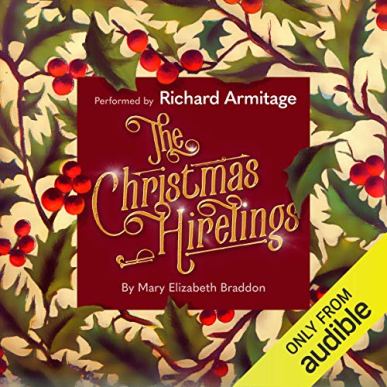
Christmas Hirelings I had never heard of The Christmas Hirelings, written in 1894 by Mary Elizabeth Braddon, but an audiobook of it was Audible‘s free Christmas gift to members, so I tried it out. I loved it! Braddon is known for more “sensational” writings: from what I understand, this is the only story of its kind that she wrote. But it hits all the right notes for a classic Victorian Christmas tale.

The story opens with Sir John Penlyon, his niece Adela, and his good friend Danby. As Sir John grouses about how boring Christmas is, Danby says “Nobody knows how to enjoy Christmas if he has no children to make happy. If one has no children of one’s own, one ought to hire some for the Christmas – week.” He then proposes to do just that, with Sir John’s permission. There’s much discussion about what kind of children should be brought, and Sir John finally tells Danby he can do anything he likes as long as he doesn’t bother Sir John about it.

Then the author switches to Sir John’s backstory and how he came to be a gruff old man alone in his mansion, and his story unexpectedly touched my heart. He was no Scrooge: he was generous and kind, unless crossed. But life’s circumstances had sapped all the joy from his life. At one point he said, “My life was barren, but peaceful. What more did I want?” Much later in the book, Danby said one reason he proposed this experiment was to prove to Sir John that he did indeed have a heart.

The children and Sir John get off on the wrong foot at first until the youngest, four-year-old Moppet, bravely attaches herself to him. One of my favorites of their exchanges:

Moppet: “Little girls sit on their fathers’ knees, don’t they ?”

Sir John: “Sometimes.”

“I mean good little girls. And that isn’t being forward, is it ?”

“No, Moppet, no. Fathers are made to be sat upon.”

The joy of having children around and doing for them enlivens the whole house and all its occupants, until tragedy strikes.

I had an idea where the story was going and who the children actually were by chapter three, but I still enjoyed seeing if I was right (I was) and how everything would play out (not like I expected!)

Oddly, there’s not a Kindle version, but the text is online here. The audiobook was superbly read by Richard Armitage (Thorin Oakenshield in Peter Jackson’s Hobbit movies). I nearly forgot at one point that one man was voicing all the characters. Here’s a bit of background for Audible’s recording with Armitage:

Another free audiobook is available from Librivox. Although the narration can’t compare to Armitage’s, it does have the advantage of a preface from Braddon telling how the book came to be and who Danby and Moppet are based on. The Librivox narration is also on YouTube here.

Thanks so much to Audible for introducing me to this lovely story.

(Sharing with Semicolon‘s Saturday Review of Books and Carole’s Books You Loved)

Book Review: I’ll Be Home for Christmas

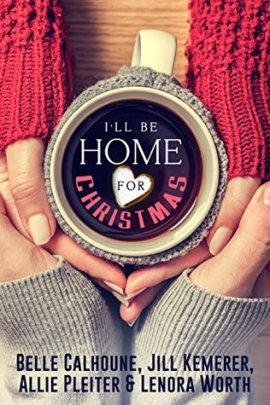
Home I’ll Be Home For Christmas: Four Inspirational Holiday Novellas by Lenora Worth, Belle Calhoune, Jill Kemerer, and Allie Pleiter contains, as the title suggests, four stories that involve coming “home” in some way.

In A Hope Valley Christmas by Belle Calhoune, Mallory Jefferson is visiting her family over the holidays. The one person she hopes she doesn’t run into is Colton James. She’d had a serious crush on him back in the day, and her youthful exuberance and infatuation had led to some pretty embarrassing attempts to get his attention and show him her feelings. Yet who should walk into her father’s mechanic shop, just when she’s helping out, disheveled, and greasy, but Colton. Her father suggests she give Colton a ride home. As Colton and Mallory talk, Colton tells her his grandfather isn’t doing well. His grandfather wants to see Colton happy and settled with someone he loves. To ease his grandfather’s mind, Colton told him he did have a girlfriend. Then Colton gets the bright idea that Mallory can stand-in as his pretend girlfriend at an upcoming family dinner. Reluctantly, Mallory agrees, and they get to know each other as they are now, and not as they were in their high school memories.

In Sugarplums and Second Chances by Jill Kemerer, Chase McGill is a former NFL star trying to recover from mistakes in his past. In a fit of vengeance he had assaulted his wife’s killer and served time. Now he’s trying to make up for lost time with his son as well as help out another young man. Courtney Trudesta is the widow of his former teammate and wrote him regularly to encourage him while he was in prison. Courtney stops by on her way to a new job to visit with Chase for a few days. As they try to help each other deal with their losses and find their purpose in life, they wonder if those purposes might include each other.

In A Brilliant Christmas by Allie Pleiter, Zoe Walters’ passion is the community arts center that she runs. She has mixed feelings about the new artist-in-residence for the next six weeks: Nigel Langdon, a famous animator who has fallen from Hollywood graces. Besides the fact that he’s not currently popular, his gruffness doesn’t promise good things for his time with “her kids.” His first session does get off to a rocky start. But Zoe begins to fathom the hurt and the heart underneath his crusty exterior, and her devotion to her kids and program opens his eyes.

Seashell Santa by Lenora Worth is a different kind of Christmas in Key West, Florida. Navy Seal Rick Houston‘s beloved grandfather, Pappy, has died and requested that Rick come to his old cabin at Christmas and disperse his ashes. Who else should show up at the cabin but Willa Kincaid, Rick’s ex-girlfriend, who had received the same request. Realizing Pappy’s trick, they decide to put aside their differences to honor his wishes. In the meantime, as their arguing gives way to further discussion, they each realize they didn’t know everything about the other’s motives for their previous actions.

I’m not a fan of romances in general, both because of the silliness of tingling sensations and such, descriptions of kisses, and the end-all of romances being the declaration of true love (when, in real life, that’s just the beginning.) However, I do like when the characters have to learn or overcome something in the process of coming into a relationship, and that happens in each of these stories. Some of the stories have more of a faith element than the others. A couple of them contain characters from the authors’ other series, but the stories were complete enough in themselves that I didn’t feel I was missing pieces.

My favorite was Allie Pleiter‘s Brilliant Christmas. Both the story itself and the writing were refreshingly different. I’ll be looking up more of her work in the future. My favorite line from the book came from her story:

Our job is to bring out whatever talent or self-expression is there. Help them see that picking up a paintbrush might just be more powerful than picking up a knife. Get their emotions out in ways that don’t involve sending each other to the emergency room.

My least favorite line in the book came from Lenora’s story, about a character who “put out feelers to the Big Guy in the sky.” Big Guy in the sky? Seriously?

This collection is not showing up on Amazon anymore, but Sugarplums and Second Chances and A Brilliant Christmas are available individually. I’ve not read any of these authors, but I used to follow a blog that Lenora contributed to, so that’s probably what prompted this purchase. All in all it was a nice Christmas read.

(Sharing with Semicolon‘s Saturday Review of Books, Literary Musing Monday, and Carole’s Books You Loved)