Two Reading Challenge Wrap-ups

I have been finished with these two challenges for months, but just have not written the wrap-up posts for them until now.

Karen at Books and Chocolate hosts the Back to the Classics Challenge for reading classics at least 50 years old.

I enjoy this challenge because I was not exposed to many classics as I grew up, and this challenge inspires me to expand my horizons and explore books I might not otherwise read. I’m happy to report that I have read all 12 classics on my list (I actually read 13, but no extra points for extra books. 🙂 ). The titles link back to my reviews:

  • A 19th century classic. Villette by Charlotte Bronte (1853)(Finished 6/30/18)
  • A 20th century classic (published before 1968). The Story of My Life by Helen Keller (1903)(Finished 3/31/18)
  • A classic by a woman author. Adam Bede by George Eliot (Mary Anne Evans)(1859)(Finished 5/19/18)
  • A classic in translation (Any book originally written published in a language other than your native language.) 20,000 Leagues Under the Sea by Jules Verne (1870)(Finished 1/26/18)
  • A children’s classic. The Secret Garden by Frances Hodgson Burnett (1911)(Finished 2/3/18)
  • A classic crime story, fiction or non-fiction, which she goes on to say can be a detective or spy novel. The Man Who Was Thursday by G. K. Chesterton. (1908)(Finished 1/18/18)
  • A classic travel or journey narrative, fiction or non-fiction. Journey to the Center of the Earth by Jules Verne (Finished 2/17/18)
  • A classic with a single-word title (no articles). Frankenstein by Mary Shelley (Finished 3/12/18)
  • A classic with a color in the title. Where the Red Fern Grows by Wilson Rawls (1961)(Finished 3/17/18)
  • A classic by an author that’s new to you. He Fell in Love With His Wife by Edward Payson Roe (1866)(Finished 4/8/18) and Invincible Louisa: The Story of the Author of Little Women by Cornelia Meigs (1933) (Finished 6/25/18)
  • A classic that scares you (due to its length or it intimidates you in some way). The Hunchback of Notre Dame by Victor Hugo. (1831)(Finished 8/4/18).
  • Re-read a favorite classic. Ben-Hur: A Tale of the Christ by Lew Wallace, (1880)(Finished 4/17/18)

Karen allows for three children’s classics, and I am counting Where the Red Fern Grows, The Secret Garden, and Journey to the Center of the Earth for those. I’m not counting 20,000 Leagues Under the Sea because nothing I read about it indicated it was written for children.

Karen likes for us to let her know how many entries we earned for her drawing: I earned three. She also requests an email here: mine is barbarah06 (at) gmail (dot) com.

I enjoyed all of these except Journey to the Center of the Earth, but I think my favorite is He Fell in Love With His Wife. Adam Bede would be a close second. Frankenstein was the biggest surprise.

2018tbrbutton
Adam at Roof Beam Reader hosts the TBR Pile Challenge to encourage us to get to those books on our shelves, Kindles, or TBR lists. For this one we had to name the books we were going to read, along with two alternates (in case we couldn’t get through a couple on our list). The books for this challenge had to have been published 2016 and earlier.

I read thirteen books altogether. Titles link back to my reviews.

  1. The Secret Garden by Frances Hodgson Burnett (Finished 2/3/18)
  2. The Man Who Was Thursday by G. K. Chesterton (Finished 1/18/18)
  3. Frankenstein by Mary Shelley (Finished 3/12/18)
  4. Where the Red Fern Grows by Wilson Rawls (Finished 3/17/18)
  5. Adam Bede by George Eliot (1859)(Finished 5/19/18)
  6. He Fell in Love With His Wife by Edward Payson Roe (1866, Finished 4/8/18)
  7. 20,000 Leagues Under the Sea by Jules Verne (1870, Finished 1/26/18)
  8. Journey to the Center of the Earth by Jules Verne (Finished 2/17/18)
  9. Ghost Boy: The Miraculous Escape of a Misdiagnosed Boy Trapped Inside His own Body by Martin Pistorious (2013, Finished 1/8/18)
  10. Going Like Sixty by Richard Armour. Set this one aside, disappointed in the content.
  11. Sins of the Past by Dee Henderson, Dani Pettrey, and Lynette Easton (2016, Finished 3/28/18)
  12. Another Way Home by Deborah Raney (2015, Finished 4/16/18)

Alternates: Anchor in the Storm by Sarah Sundin (2016, Finished 5/7/18) and Mozart’s Sister by Nancy Moser (2006)(Finished 1/28/18)

I enjoy both of these challenges and plan to participate in them again next year. Karen already has the 2019 Back to the Classics Challenge categories here.

I’m still working on the Mount TBR Challenge and the Literary Christmas Challenge.

Book Review: Twelve Days at Bleakly Manor

BleaklyTwelve Days at Bleakly Manor by Michelle Griep is the first in her Once Upon a Dickens Christmas series set in Victorian England.

Clara Chapman’s family has lost its fortune, and the person seemingly to blame was her former fiance, Benjamin Lane. Not only did Ben abscond with the family fortune, but he left her at the altar with no explanation. She’s been living with an aunt, trying to survive in reduced circumstances.

Out of the blue Clara receives an invitation from an unnamed host to Bleakly Manor. If Clara can stay the entire twelve days of Christmas, she’ll receive 500 pounds. At her aunt’s urging, Clara accepts the invitation.

Clara finds no host at Bleakly Manor, but she is surprised to see an assortment of people there who have all been promised various rewards if they will stay twelve days. A late and most startling arrival is none other than Ben!

As the participants get to know one another, personalities clash. The host remains absent. And odd occurrences begin happening: one person’s jewels go missing, strange foods are served at mealtimes, accidents happen that turn out not to be accidents. And then the group is informed that only one of them will win what they were promised.

This book started out as a cozy mystery, dragged just a bit in the middle for me, and then took a darker turn as the “accidents” increased in intensity.

I had to look up my review of Dickens’ Bleak House to remind myself of the characters there and see the parallels. This story is not meant to be a point-for-point retelling, but it does contain elements of the plot and some characters.

All in all an enjoyable Christmas read.

(Sharing with Semicolon‘s Saturday Review of Books, Literary Musing Monday, and Carole’s Books You Loved

Book Review: Susie: The Life and Legacy of Susannah Spurgeon

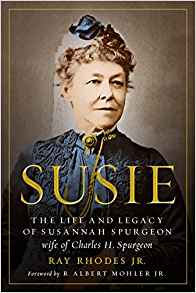
SusieSusie: The Life and Legacy of Susannah Spurgeon, Wife of Charles H. Spurgeon is a new biography by Ray Rhodes, Jr. Susannah’s life can’t be told apart from apart from her husband’s, but Rhodes doesn’t describe her just in relation to Charles. He tells her own story fully.

Susie, as she was called because her mother and an aunt were also Susannah, “shared a lifetime” with Queen Victoria. “Susie was five when Victoria was crowned, and she died two years after Victoria’s death.” She was a city girl, living in London all her life and traveling often to Paris.

She became a Christian at about age 21, but experienced a lot of doubts for a while thereafter. She was not impressed with Pastor Spurgeon at first. He came from a rural background, and:

Charles violated her preconceived notions of what was appropriate for a polite young man in Victorian times, and a preacher at that. Susie found Charles’s hair, suit, mannerisms, and his provocative preaching style offensive. Later, reflecting on her earlier sentiments, she wrote:

Ah! How little I then thought that my eyes looked on him who was to be my life’s beloved; how little I dreamed of the honour God was preparing for me in the near future! It is a mercy that our lives are not left for us to plan, but that our Father chooses for us; else we might sometimes turn away from our best blessings and put from us the choicest and loveliest gifts of His providence.

Charles’ counsel and gift of Pilgrim’s Progress helped Susie. It wasn’t long before his pastoral concern turned romantic. The sections about their courtship are sweet, but Susie had a cold splash of reality one day. Charles was asked to preach somewhere and Susie accompanied him. They got separated in the crowd, but Charles never noticed. Lost, alone, and upset, Susie went home. Her mother “wisely reasoned that my chosen husband was no ordinary man, that his whole life was absolutely dedicated to God and His service, and that I must never, never hinder him by trying to put myself first in his heart.”

Charles and Susie married and enjoyed home life, travel, and togetherness. They had twin sons, Charles and Thomas. But both Charles and Susie developed health problems. He suffered from gout, kidney problems, and depression. It’s not known exactly what Susie’s health issues were, but severe endometriosis is suspected. She had surgery at one point but spent much of her life in pain. Sadly, she usually could not accompany Charles to places he was advised to go for his health. But he wrote to her every day, and their letters to each other are often delightful. In one of his letters from before they were married, Charles wrote:

I shall feel deeply indebted to you if you will pray very earnestly for me. I fear I am not so full of love to God as I used to be. I lament my sad decline in spiritual things. You and others have not observed it but I am now conscious of it; and a sense thereof has put bitterness in my cup of joy. Oh! what is it to be popular, to be successful, to have abundance, even to have love so sweet as yours, if I should be left of God to fall and to depart from His ways? I tremble at the giddy height on which I stand, and could wish myself unknown, for indeed, I am unworthy of all my honors and my fame. I trust I shall now commence anew and wear no longer the linsey-woolsey garment; but, I beseech you, blend your hearty prayers with mine, that two of us may be agreed, and thus will you promote the usefulness and holiness and happiness of one whom you love.

Once Susie wished aloud that one of Charles’s books could be sent to poor pastors who could not afford a much-needed library. Charles said, not in these words but to this effect, “What are you going to do about it?” That was the beginning of Susie’s book fund, which grew far beyond what she envisioned at the beginning. In one particular month, Feb. 1883, Susie received 657 letters. In 1886 she distributed 9,941 volumes. Correspondence as well as packaging, sending books, and seeking donations was a blessed ministry yet took time and energy. This ministry spawned others, like a pastor’s aid society for sending money and clothes, an auxiliary book club for lay preachers, and the Home and Foreign Sermon distribution. She said, “It is the joy of my life thus to serve the servants of my master.” She felt that the confinement necessitated by her illness enabled her to minister in these ways.

Though Susie knew some congregations were themselves poor and could not provide for their pastors, she encouraged those who could to do so in her book Ten Years of My Life in the Service of the Book Fund:

Keep your minister’s table well provided, and you shall be fed with the finest of the wheat; see that his earthly cares do not press on him painfully, and your own hearts’ burdens will be lifted by his heavenly teachings; supply him with this world’s needful comforts, and he will not fail to bring you solace and consolation in the time of your extremity. If he has sown unto you spiritual things, is it a great thing if he shall reap your carnal things?

Susie did a fair amount of her own writing, and, after Charles’s death, was instrumental in planting a church and edited The Sword and the Trowel magazine.

I’ve read Mrs. C. H. Spurgeon by Charles Ray several times, and this book draws heavily from that one. But Ray’s book was written in 1903, not long after Susie’s death. I’m sure more resources were available to Rhodes than Ray might have had, plus over 100 years of perspective adds to Rhodes’ book.

I did get just a bit frustrated at times with how the book was laid out. Though Susie’s life is covered chronologically, at each point Rhodes goes backward and forward in time to pull details about that point. So there’s a lot of back-and-forth and repetition. It helped to think of the book as a documentary. I listened to the audiobook, but I think this book would be better read than listened to.

Nonetheless, this is a great resource. I enjoyed so much hearing again the parts of Susie’s life that I knew and learning what I did not know. I appreciated the historical context, something Ray’s book could not have given as effectively since it was written in the same era. I especially enjoyed both Charles and Susie’s letters. And I was blessed by her heart and her walk with God. One phrase that stood out in many of her writings was “the glory of God.” Everything she did was ultimately for His glory.

(Sharing with Semicolon‘s Saturday Review of Books, Literary Musing Monday, and Carole’s Books You Loved)

Book Review: Come Back, Barbara

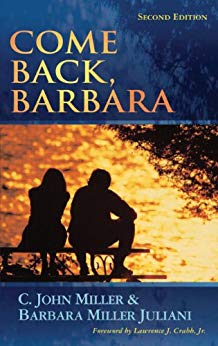
Come backFather and daughter C. John Miller and Barbara Miller Juliani team up to share Barbara’s prodigal daughter story from both sides in Come Back, Barbara. In each chapter John – also known as Jack – shares situations from his point of view at the time, then Barbara shares hers.

Miller and his wife, Rose Marie, thought they had a fairly normal Christian family until Barbara suddenly announced at eighteen that she wanted nothing to do with their rules and their Christianity any more. She wanted freedom on every level. The Millers were stunned. They had caught Barbara in a few lies over the years but thought those were isolated incidents. Her outward conformity for most of her life had fooled them into believing her heart was right as well. They realized they had been mistaken in not looking below the surface.

For a time they puzzled over comparing what they had always thought about her and the “new Barbara” emerging now. It just didn’t seem to fit – she had seemed like a genuine Christian. They thought at first that perhaps she was just going through a rebellious phase and would hopefully come out of it soon. Gradually they realized that her rebellion and deception went further than they had ever guessed. They had to accept, by her words and actions and reactions, that she was not a Christian, though she had once professed to be.

There’s no five-step foolproof plan to winning back a prodigal, but Jack shares some of what he learned. First, he had to realize he was truly powerless. All his efforts backfired. Often control is the first weapon against rebellious children. Of course, some degree of control is necessary in raising children, but parents “have to confront your own manipulative techniques of consolidating power” (p. 160).

Many fathers and mothers are simply more satisfied with a child’s conformity and less concerned with the youngster’s motivation and hidden desires, with what the Bible calls “the thoughts of the heart.” Often unconsciously, the self-centered parent labors to form an orderly child who performs well in public and does not shame the family by disturbing the status quo. The problem, of course, is not with the orderliness of the child, but with the shaping of a person with a desensitized conscience, a performer who has never learned to love God or people from the heart (pp. 160-161).

He had to give up control to God and depend on Him to draw Barbara to Himself. He also had to confront his own sins, realizing the irony of God’s using a rebellious child to show him his own heart.

And he had to genuinely apologize to Barbara. Even though he felt wronged and wounded, he could not hold on to victim status. He had to confess his wrongs whether she did or not. And that humility and honesty was a step in the right direction in their relationship.

The constant practice of forgiveness leaves no room for self-righteousness. Frustrated condemnation of others and treasuring of old wrongs are not part of the artillery of God, but the slithering, slimy, deadly creatures of the Prince of Darkness (pp. 79-80).

Jack and his wife wrestled for a long time over whether Barbara had apostatized and how to respond if she had. Finally they just had to accept that she was not a believer and treat her as they would any other unbeliever. They just had to show her Christ’s love. That didn’t mean accepting everything she did, but she knew where they disagreed. They asked that some things not be done in their house.

Showing such love in the face of disdain and rebellion is exactly what God has done for us. “God demonstrates His own love toward us, in that while we were yet sinners, Christ died for us” (Romans 5:8, NASB). Drawing from His love and grace enabled them to show love and grace to Barbara.

We were facing the death side of the Christian life, but there was a resurrection waiting to take place as we stepped into the grave. Today it is my conviction that no matter how heavy the blow inflicted by circumstances, each negative experience is part of the heavenly Father’s perfect plan for each believer. He allows the hour of destruction for the purpose of building something better in its place. Our part is not to run away from the pains but to walk through the briars and thorns and let Christ teach us how to turn each scratch into positive learning about the depths of God’s love (p. 67).

There is no more impenetrable barrier to God’s love than the sense of being right. So often self-righteousness controls a parent’s attitudes toward a rebellious offspring (p. 150).

He’s not saying to ignore right and wrong: they had to stand up for right and truth often. But they had to “speak the truth in love,” not from a sense lofty condescension.

Many parents tend to turn out an erring child, and sometimes indeed that’s the only option. The prodigal in Scripture left his father’s house in rebellion, and Barbara did that for a while, too. But Jack and his wife felt they needed to be open to Barbara, and when she moved back in their area, the Millers welcomed Barbara and her friends in their home, to show love and kindness to them as Jesus did with “tax collectors and sinners.”

At one point Barbara had “come back” in the sense of “settling down,” becoming responsible, not engaging in destructive behaviors. But she still was not a believer. As Jack pressed that point, it led to a major battle between him and Barbara.

Barbara, meanwhile, began “groping for the light while still resisting it” (p. 139). “Many painful things happened to me during this period, but the work of the Holy Spirit was to gently lead me from darkness to light” (p. 167). She described it like walking into a large, dark room, turning on the nearest lamp, moving to another area and turning on another lamp, continuing until there’s enough light to clearly see. She didn’t think she could have stood it if God had turned all the lights on at once. “Instead, God showed me the truth about myself bit by bit, in pieces I could handle” (p. 167.) One “light” was the realization that the things she thought would bring her happiness and allay her insecurities and anxiety could not. She was still unhappy, anxious, and insecure though at one time she had everything she thought she wanted. Another “light” was realizing her tendency to deceive and blame-shift. One by one God opened her eyes to the needs of her own heart and to His love.

I’ve noticed that C. John Miller has written some other books, but I don’t know anything about his theology other than what is in this book. One aspect that I was a little wary of was what he called “praying with authority.” In my experience, people using that kind of terminology advocate “demanding” answer to prayer, which to me seems to contradict the humility and surrender manifested in Scripture. But from what’s said in this book, that didn’t seem to be what they were talking about. Jack’s wife had said in the beginning of their troubles that she felt like an orphan. But gradually she realized she could come to God as a child to her Father, basing her requests on Scriptural truths. If that’s what they mean by praying with authority, then, yes, I agree. I was also a bit cautious when they talked about “claiming” certain things, associating that with the “name it and claim it” culture. But, again, in the context here that doesn’t seem to be what they are referring to.

I found this book on a sale table at a Christian bookstore years ago: the name in the title caught my eye. 🙂 I don’t know why I haven’t gotten to it before now, but I am glad I finally did. I marked many more places in the book than I have space and time to share here. I’d highly recommend it to anyone with a prodigal friend of family member or anyone who wants to read how God worked in lives to bring people to Himself.

(Sharing with Carole’s Books You Loved, Semicolon‘s Saturday Review of Books, Literary Musing Monday)

Literary Christmas Reading Challenge

e7f96-a-literary-christmas-banner-2017

Tarissa hosts the Literary Christmas Challenge in December: actually, it started in November, but I like to hold off on Christmas reading til after Thanksgiving. The main rule: read Christmas books! And link up your posts about them (via a blog, Goodreads review, etc.).

Here’s what I am planning to read this month:

Finding Christ in Christmas by A. W. Tozer (99 cents for the Kindle app as of this writing. Tozer always makes one think.)

Tozer Christmas

Homeless for the Holidays by P. S. Wells and Marsha Wright.

Homeless

Christmas Stitches by Judith Miller, Nancy Moser, and Stephanie Grace Whitson. I’ve read many of Judith and Nancy’s books, so I am looking forward to this Christmas collection.

Stitches

Baby, It’s Cold Outside by Susan May Warren

Cold Outside

I’ll Be Home For Christmas: Four Inspirational Holiday Novellas by Lenora Worth, Belle Calhoune, Jill Kemerer, and Allie Pleiter. This is not showing up on Amazon anymore, but you can read more about it on Goodreads here. I’ve not read any of these authors, but I used to follow a blog that Lenora contributed to, so that’s probably what prompted this purchase.

Home

If I should finish all these and I’m not tired of Christmas stories at that point, I’d love to get Terri Blackstock’s Catching Christmas and Michelle Griep’s Once Upon a Dickens Christmas series, Twelve Days at Bleakly Manor and A Tale of Two Hearts. I’m trying to read what I have already accumulated through sales before I add any more.

And that’s it for this year! Do you plan to do any Christmas-themed reading this month?

Book Review: Florian’s Gate

FlorianIn T. Davis Bunn’s novel, Florian’s Gate, American Jeffrey Sinclair is bored in his job. His mysterious uncle, Alexander Kantor, has a glowing reputation in the antiques business in London. Alexander never reveals where his exquisite pieces come from, but their high quality always fetches good prices and willing buyers. When Alexander invites Jeffrey to become his assistant, Jeffrey jumps at the chance, quickly learning both the details and the instincts needed.

Jeffrey hires a part-time helper who rapidly becomes a valuable assistant, Katya. Jeffrey falls head over heels for her, but she is guarded around him. He senses her past contains pain, but she’s not willing to reveal it to him yet. Plus she is a believer, but he has turned his back on God after a family tragedy.

When Alexander asks Jeffrey to take a trip to Poland, Jeffrey is thrilled to be trusted enough to be asked. There he meets Alexander’s brother, Gregor, and begins to learn some of Alexander’s sources. Poland is still reeling from being trampled underfoot by WWII and then Soviet occupation. At first Jeffrey thinks everyone looks sad and depressed, understandably. But he soon finds an underlying resilience in their character. Alexander, Jeffrey, and Gregor visit some of the most unlikely places to find some of the poorest people with great treasures they’ve been holding on to for years but are now in desperate enough straits to sell.

Surprisingly, Alexander comes face to face with his own painful past, which Jeffrey learns of for the first time. When Alexander is incapacitated for while, Katya comes to assist and translate. What Jeffrey learns through all these experiences helps him understand his uncle and Katya and helps him come to grips with his own past as well.

A few quotes from the book:

Dissatisfaction tends to lift one’s eyes toward the horizon. Those who are comfortable rarely make the effort to search out something better. They may yearn for more, but they do not often receive it. They are too afraid of losing what they already have, you see, to take the risk. And there is always risk involved, Jeffrey. Always. Every major venture contains a moment when you must step off the cliff and stretch your wings toward the sky.

Even in the darkest of hours, people have a choice. They can turn toward self, or they can turn toward God. They can turn toward hate, or they can turn toward forgiveness and love.

The world says there is no greater tribute you can grant yourself than to say, I can make it on my own. My perspective says there is no greater deception. The power within our own will and our own body and our own confined little world is comfortable, and it is tempting. It gives us a wonderful sensation of self-importance. Thus most of us will try to live outside of God until our own strength is not enough. Yet the way of the cross is the way of inadequacy. We need what we do not have, and therefore we seek what is beyond both us and this world.

There are an infinite number of lessons to be drawn from the cross, my boy….All human hope lies at the foot of the cross. In the two thousand years since it first rose in a dark and gloomy sky, it has lost none of its luster, none of its power, none of its divine promise.

Normally Bunn’s stories involve quick-moving plots and page-turning intrigue. There was intrigue here, but a different sort than I am used to from him. His mother’s former ownership of an antiques gallery and management of others informed his knowledge of antiques. He says at the beginning of the book that each piece he describes is real. The different Polish people and stories that he shares are based on real people and situations in his wife’s family in Poland.

I thought the story ended somewhat abruptly, but then I found that this book is the first of three in the Priceless Collection series. So maybe some day I’ll find out what’s next for Jeffrey, Katya, and the others.

(Sharing with Semicolon‘s Saturday Review of Books, Literary Musing Monday, Carole’s Books You Loved)

What’s On Your Nightstand: November 2018

Nightstand82

The folks at 5 Minutes For Books host What’s On Your Nightstand the last Tuesday of each month in which we can share about the books we have been reading and/or plan to read.

A few sick days this month afforded more reading time than usual.

Since last time I have completed:

Alvin York: A New Biography of the Hero of the Argonne by Douglas V. Mastriano (audiobook), reviewed here. How a Christian conscientious objector stopped an onslaught of the Germans in WWI, captured 132 of them, and won the Medal of Honor. Well-researched, good true story.

Amazing Grace: William Wilberforce and the Heroic Campaign to End Slavery by Eric Metaxas, reviewed here. Good.

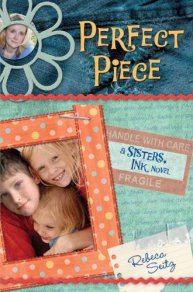
Perfect Piece by Rebeca Seitz, fiction, reviewed here with the rest of the series about four grown adopted sisters of different ethnicities. Good.

Fly Away by Lynn Austin, fiction, reviewed here. A disgruntled retiree crosses paths with an unbeliever with a terminal diagnosis. Loved this one.

Hidden Places by Lynn Austin, fiction, reviewed here. A young widow struggles to support herself and her children when a mysterious stranger arrives to lend a hand. Very good.

Someday Home by Lauraine Snelling, fiction, reviewed here. A widow opens her home to share with two other ladies. Okay.

Florian’s Gate by Davis Bunn. Review coming soon.

I’m currently reading:

Reading the Bible for Life: Your Guide to Understanding and Living God’s Word by George Guthrie.

Christian Publishing 101: by Ann Byle

Susie: The Life and Legacy of Susannah Spurgeon, Wife of Charles H. Spurgeon by Ray Rhodes, Jr., audiobook

Come Back, Barbara by C. John Miller and Barbara Miller Juliani

Homeless for the Holidays by P. S. Wells and Marsha Wright

Up Next:

In the next few days I’ll be rustling up a list of Christmas reads for Tarissa’s Literary Christmas Challenge. I’ll also need to choose a new audiobook soon but have no idea which one yet. (Update: My Christmas reading picks are here.)

Happy reading!

Book Review: Amazing Grace: William Wilberforce and the Heroic Campaign to End Slavery

WilberforceA few years ago a video titled Amazing Grace and a companion book, Amazing Grace: William Wilberforce and the Heroic Campaign to End Slavery by Eric Metaxas, were published to commemorate the 200th anniversary of the abolition of the slave trade in Great Britain.  I saw and enjoyed the film, but somehow was not aware of the book until this year.

Wilberforce did not accomplish abolition single-handedly, of course, but he was the driving force behind abolition and a host of other social causes.

William was born into a well-to-do family. He was always small, with poor eyesight and stomach issues (modern historians think he suffered from ulcerative colitis all his life). But he had a sparkling wit, an entertaining personality, and loads of ambition.

As a boy he stayed for two tears with an aunt and uncle to attend school nearby. Unbeknownst to William’s parents, these folks were Methodists whose frequent guest was John Newton. Methodists were thought at the very least to carry religion too far, as evidenced by the nickname used for them, Enthusiasts. Others thought they were radicals. Newton and Wilberforce seemed quite fond of each other, but William’s mother whisked him away as soon as she became aware of the religious climate of her relatives’ home.

Before long William forgot his early religious leanings and became the life of many parties. If he wasn’t hosting, he was a frequent guest. Deaths of his grandfather and uncle had left him wealthy. His friend William Pitt, who was planning to enter into politics (and eventually became Prime Minister), urged William to enter politics as well. William became a Member of Parliament (MP) as an independent at the age of 21. Then he set his sights on “the most coveted seat in all of Parliament” (p. 42), Yorkshire, and was elected to it at the age of 24.

That same year, William was on a holiday with friends and spent most of the journey with the brilliant Isaac Milner. As they traveled, they read and discussed The Rise and Progress of Religion in the Soul by Phillip Doddridge. William had a tendency to think through every aspect of a decision before making it. He came to an intellectual agreement of Christianity’s doctrines first, then heart and will yielded to what he thereafter called “the Great Change.”

At first he thought such a change would necessitate his leaving government. John Newton encouraged him to “stay his post” and assured him God could use him where he was. Newton wrote to his friend, William Cowper, of Wilberforce: “I hope the Lord will make him a blessing both as a Christian and a statesman. How seldom do these characters coincide!! But they are not incompatible” (p. 61).

As William began to be convicted with how he used his resources and time, his attention was drawn to those in need. Slavery was just a given fact in Britain then. The entire economy was built upon it. Because most of the slaves were in the West Indies, they were hardly thought of. But as word began to get out of their harsh and inhumane treatment, various individuals began to call for action on their behalf. Writers and poets like Hannah More and William Cowper used their pens. Artist and industrialist Josiah Wedgwood, of Wedgwood pottery fame, produced medallions with a cameo of a slave kneeling and asking, “Am I not a man and a brother?” People who had been aboard slave ships reported their findings. Others circulated and signed petitions. They thought Wilberforce should be their voice in Parliament, and after giving the matter his characteristic thorough consideration, he agreed.

They thought it would be an easy victory. Who, after all, would disagree with their cause? The ones who benefited from the slave trade, first of all, not only opposed any reforms but used lies and other tactics to sway public opinion. Then when the French Revolution broke out, anything smacking of liberty and equality was decidedly unpopular.

It was twenty long years before legislation passed to outlaw the slave trade. But even then there was still work to be done in enforcing it, dealing with smugglers who would fly other countries’ flags so as not to be stopped, etc. Those fighting for abolition realized they could not stop there: they needed to fight for emancipation.

Abolition of slavery was one of two main objectives in Wiliiam’s life: the other was the “reformation of manners.” By “manners” he did not mean etiquette and politeness. The Clapham Sect or society was a group of people who want to change some of the cruelties common in society then, like hangings for small offenses, public dissection of criminals’ bodies, and even bull-baiting and bear-baiting. Wilberforce financed schools for the poor run by Hannah More and her sisters even though society at large thought their education would either be fruitless or would upset “the order of things.” He was involved in penal reform, improving conditions for laborers, and a host of other causes. Yet he felt he had not done enough. He wrote to a friend:

I am filled with the deepest compunction from the consciousness of my having made so poor a use of the talents committed to my stewardship. The heart knows its own bitterness. We alone know ourselves the opportunities we have enjoyed, and the comparative use we have made of them…. To your friendly ear… I breathe out my secret sorrows. I might be supposed by others to be fishing for a compliment. Well, it is an unspeakable consolation that we serve a gracious Master, who giveth liberally and upbraideth not…. I always spoke and voted according to the dictates of my conscience, for the public and not for my own private interest…. Yet I am but too conscious of numerous and great sins of omission, many opportunities of doing good whether not at all or very inadequately improved.

In his later years he turned his attention to India and the East India Company’s abominable practices like keeping underage mistresses (what we would call a child sex trade today, only it was legal at the time) and the country’s inhumane practices like burning widows at their husband’s funeral pyres.

By the end of his life, most of his wealth was gone. He had heavily invested in his oldest’s son’s business venture, which failed. But before that he had given much to various causes and needs. He had to sell his home and take turns living with his two other sons.

Though most of the book focuses on Wilberforce’s public life, the author gives us glimpses into his private life as well. William married later in life, but was absolutely smitten once he found his wife. Visitors to the Wilberforce home would find the family in the midst of mild but happy bedlam with children and animals running around indoors and out.

Wilberforce was sometimes called the moral conscience of the nation. He did not ask for that position nor think of himself that way, but his character was such that, when he saw a wrong he could help to right, he felt obligated to do so.

My only complaints with the book were with some aspects of the author. Though Wilberforce is an admirable man, and even Lincoln and Frederick Douglass cited him as inspiration, Metaxas laid the praise on a little thick at times. Plus I felt too conscious of Metaxas as the author: usually in a biography the author does not insert himself into the subject’s story so much. Part of that insertion was evidenced in seeming attempts to be witty and clever. Plus, everything I have ever read about writing encourages using recognizable words, not in an attempt to “dumb down” the text, but to make it more accessible to the average reader. But this author sprinkled his narrative with words like uxoriousness that did increase my vocabulary but interrupted the text while I looked them up.

Oddly, Metaxas does not have a list of footnotes or endnotes with citing the sources he used, though he does close with a list of other worthy Wilberforce biographies.

However, overall I thought this was a very good book. I knew a bit about Wilberforce from the Amazing Grace film, Hannah More‘s biography, and assorted other references, but I was glad to hear about the rest of his life and to have a fuller picture of the character of the man himself. He is an example for all of us to use our resources and influences to help others.

(Sharing with Semicolon‘s Saturday Review of Books, Literary Musing Monday, Carole’s Books You Loved)

Book Review: Someday Home

Someday HomeIn the novel Someday Home by Lauraine Snelling, Lynn Lundberg is adjusting to widowhood. She loves that her home is the central gathering place for the children and grandchildren who all live nearby, but otherwise it’s too large for just one person. She reads about a concept called house sharing in which rooms are rented out to others and everyone shares responsibilities. After doing some research and convincing her children that the idea is a good one, she begins to seek two other ladies to share her home.

She finds one through her son’s friend. His mom, Angela, was blindsided by her husband’s request for a divorce. She had spent years remaking herself into the kind of wife he wanted, even weighing less than she did in high school – but all for naught since he found someone else. Needing a place to stay, heal, and figure out her next steps, she accepts Lynn’s offer.

A chance meeting leads to another tenant. Judith spent all of her adult life caring for her ailing father, setting aside college and other dreams. Upon his death, she learns he willed the family home not to her, but to the historical society to be made into a public venue. So she also needs a quiet place to stay and time to decide what to do next.

Naturally there are some bumps along the way. Lynn is used to being the family matriarch and has to learn that independent middle-aged women don’t appreciate being “mothered.” The other ladies have not had their own voice for years and have to learn how and when to use it. They all have anger issues and wrestle with the need to forgive those who have wronged them. But ultimately they learn to work together and appreciate each other’s differences.

This story caught my eye both because it was a Kindle sale, plus I had read some of this author’s historical fiction. I enjoyed the aspects of each of these women learning to live together and having to determine in their middle years what to do with the rest of their lives and in

But there are a number of awkward sentences, like this one:

Fighting back the tears—again, she stumbled through her morning routine—and after dressing (which took some serious self-talk; the bed had looked so inviting, or at least oblivion did), she made her way down the split-log stairs and into the kitchen, where the cat was sniffing the dog dish, water bowl, and then looking out the window to the deck.

Thankfully there are only a half-dozen or so, but they are a bit jarring. I don’t remember coming across that kind of thing in her other books, but then it has been a long time since I read them. I thought at first perhaps they were all connected with Lynn, who is in the throes of menopause: maybe this was supposed to reflect her scattered thinking. But they don’t seem to be limited to her scenes.

Other than that, and one minor theological quibble in one sentence, I thought the writing, the characters, and the story were all good.

(Sharing with Semicolon‘s Saturday Review of Books, Literary Musing Monday, Carole’s Books You Loved)

Book Review: Sisters, Ink Series

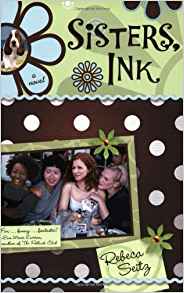
The Sisters, Ink series (also called the Scrapbooker’s series) by Rebeca Seitz is made up of four books focusing on four sisters of different ethnicities adopted by Jack and Marian Sinclair in the small town of Stars Hill, TN. The sisters are adults now and Marian passed away ten years ago. Their father, a pastor, is seeing a new lady named Zelda, but the sisters are having a hard time accepting her, not only because they don’t want their mother replaced, but Zelda is so unconventional and different from their mother. That subplot and others carry over each of the four books, but each focuses on one particular sister. The girls call a “scrapping night” in a room set up for that purpose in their father’s home when they need to talk and solve problems.

Sisters

 Sisters, Ink. spotlights Tandy, a lawyer living in FL. She had been adopted after spending her first eight years on the streets with a junkie parent. I read this book several years ago, but for whatever reason did not review it. But her story involved an extended leave at work, visiting TN, running into and clashing with an old flame. The sisters decide to turn their love of scrapbooking into an online business called Sisters, Ink.


Unglued Coming Unglued focuses on Kendra, an African-American woman who is an artist and sometimes jazz singer. She was also adopted at the age of 8 from a mother whose addiction was men. Because she has her mother’s genes and because some of those men molested her as a child, Kendra struggles with self-worth. She’s dating a great guy named Darin, but she feels that if he really knew her background, he’d drop her in  flash. When a married man at a jazz club is attracted to her, she struggles with knowing that relationship is not right, but feeling flattered by it and  wondering if that’s all she’s good for, if she has no right to rise higher.

On one hand I had a hard time being patient with Kendra as she kept deciding not to see the married guy yet kept being drawn back. But, then, we all do that with different things, don’t we? “I need to cut down on sugar” on Monday, and by Tuesday, “What can a couple of cookies hurt?” So we each struggle with our particular temptations. And people do wrestle with that mindset of being “damaged goods” and “not good enough.”

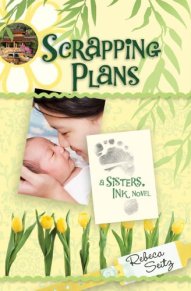
Scrapping Scrapping Plans features Chinese sister Joy. Joy was left on the door of an orphanage in China as a baby and doesn’t know anything of her family and background. She’s the ultimate hostess and most organized of the group, described as a Martha Stewart rival. She and her husband have been trying to have a baby for over a year with no success, and her husband is resistant to testing. She and her husband take a trip back to China to explore her roots.

I liked the play on words with the title, fitting into the scrapbooking theme yet also illustrating the need to realize that God’s plans might be different from ours. I also appreciated the facets of Joy’s experience in grieving over not conceiving, then becoming obsessed with the desire to have a child, and how that impacted her husband.

Perfect Piece brings the story back to Meg, the oldest, married the longest, with three kids. Meg was always the quiet but steady influence of the group. But she has been struggling with headaches through everyone else’s story. In this book, she is diagnosed with a brain tumor. Since the tumor is in an area of the brain that affects personality, everyone is warned that Meg may not be the same after surgery, whether the tumor is benign or malignant. Even knowing this, her husband, Jamison, has a hard time with the bitter, angry Meg that emerges on top of the stress of her illness, taking care of the house, dealing with the children, etc. A breakfast at a diner to get away by himself for a bit results in a pleasant conversation with a waitress which leads to regular meetings.

 I thought the sisters might have been a little too up in each other’s business. I have four sisters, and though we love each other and would do anything we could to help each other, I don’t think we’d confront each other like these did. But we’re different personalities and don’t live in the same town, so that makes a difference. I thought the girls were way too harsh concerning Zelda. I understand the issues involved in getting used to a new step-mom, but they all evidenced a lack of grace in dealing with her, until they came to an understanding in the end. Though there were no explicit scenes, there was a bit too much reference to some of the couples’ sexual lives for my tastes. I also didn’t like repeated references to older women in the church as “bluehairs.” It’s sad that there are rampant gossipers in the church and no one ever deals with that, but I doubt every older woman in one church would be gossipy. There seems to be a fundamental disrespect to older people in general except the girls’ parents.

But I liked several themes that emerged through the series: being there for each other, helping each other, adjusting lives and thinking to align with God’s Word. I liked several instances when seeing a situation from a different viewpoint, or understanding the circumstances instead of assuming them, diffused misunderstandings. So, all in all I enjoyed the series.

(Sharing with Semicolon‘s Saturday Review of Books)