Review: The Return of the King

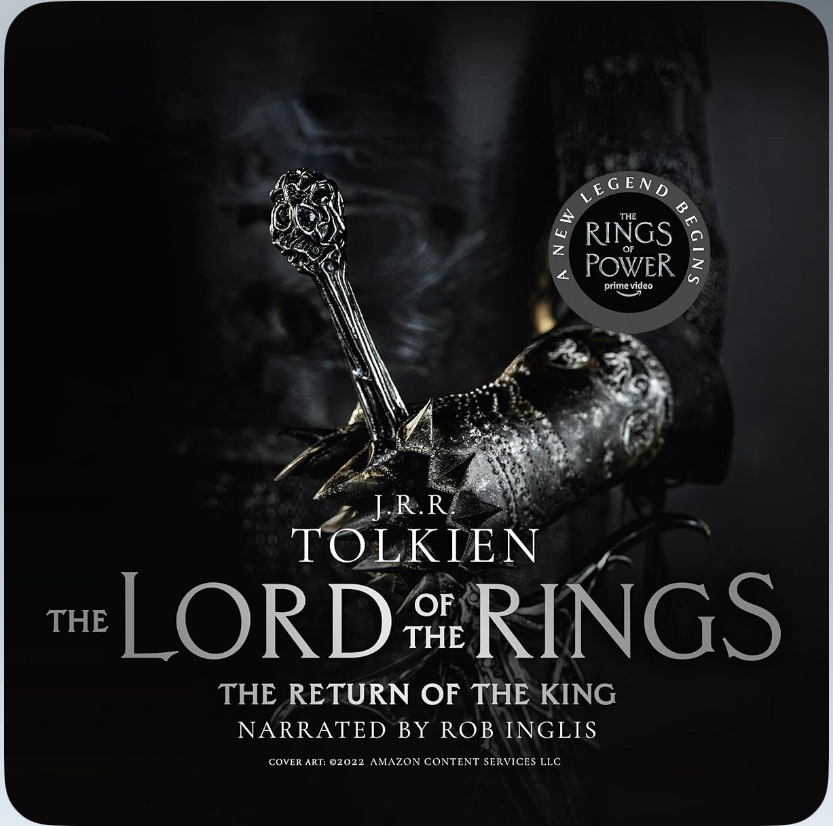
The Return of the King

The Return of the King is the third in J. R. R. Tolkien’s trilogy, The Lord of the Rings.

If you’re not familiar with the story, the ring in question was created by Sauron, originally an angelic-type creature who rebelled against his creators. There were actually nine rings made, but that’s a different story. The “one ring” somehow had the power to influence those who had the other rings and would grant Sauron dominion over everyone in Middle Earth. The ring and its power could only be destroyed by being tossed back into the fires of Mordor, from which it was made.

The ring had been lost for thousands of years, but was found by Bilbo Baggins in The Hobbit.

The Fellowship of the Ring told of a group of nine companions on a mission to take the ring to Mordor: Gandalf the wizard; Frodo, the designated ring-bearer and Bilbo’s nephew; Samwise Gamgee, his friend and servant; two more hobbits, Merry and Pippin; one elf, Legolas, a dwarf, Gimli; and two men, Boromir and Aragorn. Aragorn is also know as Strider and is the long-awaited heir to the throne of Gondor, though not everyone knows that at first.

The rest of FOTR and the second book, The Two Towers, tell what happened to the group on their long and dangerous journey.

At the beginning of The Return of the King, Frodo and Sam have been separated from the rest to continue their journey to Mordor. But Frodo had been captured and imprisoned. Sam braves various dangers to rescue him.

Meanwhile, Sauron has sent a great army or orcs (vile creatures) and other beings to Gondor. Gandalf and Pippin go there to warn the steward.

Aragorn, Legolas, and Gimli gather help from an unusual source and Merry joins them to battle Sauron’s troups.

There are a number of subplots with the steward of Gondor and his son (Boromir, his favorite, died, and Faramir, his younger son, isn’t appreciated until almost too late); the area of Rohan with its famous riders and their joining in to help, Merry and the king of Rohan’s daughter being severely wounded, and all kinds of other things going on.

The one ring negatively affects those who have it, especially if they wear it for any length of time. The ring grants the wearer invisibility but builds a craven desire to keep it, plus awakens Sauron to its presence. Frodo is beyond weary with all he has suffered on his long journey plus the increasing influence of the ring the closer he gets to Mordor.

After the last great battle, the fellowship splits up and we see each one as he goes back to his land and people. I didn’t realize that there would be a fairly long section when the hobbits arrive back to the shire. It had been taken over by “ruffians,” and took some time and effort to set right again. The hobbits were not very adventurous folks, but Merry and Pippin had fought orcs and other evil beings. They were not about to put up with some ruffians!

Tolkien said he disliked allegory and didn’t write his saga of the rings that way. But he did feel fairy stories and myths could convey truth. It’s not hard to see Sauron as an instrument of Satan. And the king of Gondor coming into his long-awaited throne has some parallels with Christ, especially in this quote:

But when Aragorn arose all that beheld him gazed in silence, for it seemed to them that he was revealed to them now for the first time. Tall as the sea-kings of old, he stood above all that were near; ancient of days he seemed and yet in the flower of manhood; and wisdom sat upon his brow, and strength and healing were in his hands, and a light was about him (p. 121).

Some of my other favorite quotes:

Yet it is not our part to master all the tides of the world, but to do what is in us for the succour of those years wherein we are set, uprooting the evil in the fields that we know, so that those who live after may have clean earth to till (p. 73).

In that hour of trial it was the love of his master that helped most to hold him firm; but also deep down in him lived still unconquered his plain hobbit-sense: he knew in the core of his heart that he was not large enough to bear such a burden, even if such visions were not a mere cheat to betray him (p. 83).

As a sweet rain will pass down a wind of spring and the sun will shine out the clearer, his tears ceased, and his laughter welled up, and laughing he sprang from his bed (p. 111).

It must often be so, Sam, when things are in danger: some one has to give them up, lose them, so that others may keep them (p. 154).

And this from the appendix: “Let us not be overthrown at the final test, who of old renounced the Shadow and the Ring. In sorrow we must go, but not in despair. Behold! we are not bound for ever to the circles of the world, and beyond them is more than memory” (p. 174).

My favorite quote of all comes when Frodo has reached the end of his strength, and Sam says, “Come, Mr. Frodo! I can’t carry [the ring] for you, but I can carry you and it as well” (p. 105).

On a side note, for many years, we avoided anything to do with witches, wizards, magic, etc., in stories and film. I had to think through those things when the LOTR films came out and the kids wanted to see them. I wrote more about that here, but I concluded most “fairy tale magic” is a different thing than the occult. Gandalf is more like a wise superhero than what we think of as a wizard. But these things require caution and discernment: I’ve seen some alarming aspects of some stories containing “magic.”

Both the audiobook (nicely read by Rob Inglis) and the Kindle version have appendixes at the back, but they are not the same. The audiobook has sections explaining the different races and their characteristics, a history of the kings, a more detailed account of Aragorn’s and Arwen’s lives and romance, a brief account of events in The Hobbit, and a few others. The Kindle ebook has “Annals of the Kings and Rulers,” family trees, a shire calendar, and information about writing and spelling in some of the languages of the book.

I read The Hobbit and the first two books of this trilogy years ago. I had started The Return of the King, but then didn’t finish it when the Peter Jackson films came out. I always meant to get back to it but never did. After I read The Silmarillion (Tolkien’s history and mythology of the world he created in these books), I thought about reading The Return of the King. I wasn’t sure I wanted to get into another lengthy foray into Middle Earth. But then I thought it might be good to read the last book while all the information in The Silmarillion was still fresh. That turned out to be true: I “got” many references that I think I would have otherwise missed.

I almost wish I had started again at The Hobbit and read all the books through. But I am sure I’ll read them again some time.

I thought it would take a little while to get back into Tolkien’s world. But it didn’t: I was caught up in it again right away.

There are many things to love about these books. Yes, they go into much more detail than if they had been written in modern times. But the older style of writing fits in with a story of ancient lore. Tolkien put so much time and thought into the stories, even inventing different languages for the different races.

But what I love most of all is the truth of human nature they contain, and the bravery, heroism, and overcoming evil as well as one’s own limits to accomplish a great quest. And the books contain a couple of sweet love stories as well.

(I often link up with some of these bloggers.)
Review: The Silmarillion

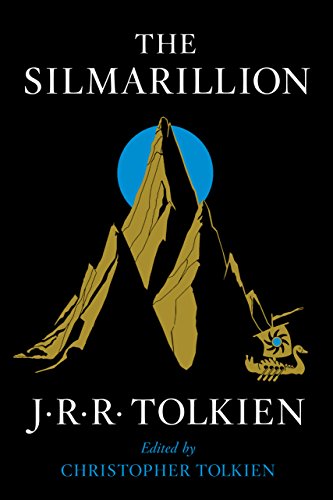
The Silmarillion by J. R. R. Tolkien is a collection of stories and history which precedes The Hobbit and The Lord of the Rings in its setting. Wikipedia says a draft of it was written after The Hobbit’s success, but it was rejected by the publisher. Tolkien went on to write The Lord of the Rings trilogy. After his death in 1973, his son, Christopher, edited, arranged, and added material to publish this book in 1977.

My volume has a foreword by Christopher, in which he says the notes and stories in The Silmarillion, though it wasn’t called that at the time, date back half a century earlier and were added to by his father even in his last years. Christopher writes that his father came to view this book as seeming like a compendium from different (fictional) characters, added to through the years. That helps account for differences of style and tone through the book. It also contains a few separate works and a short summary of The Lord of the Rings at the end. One of these stories was “The Rings of Power,” which the recent series is based on. Taken all together, this provides the history of Tolkien’s mythology.

This edition also contains a very long letter from Tolkien to an editor friend “justifying and explaining” why he thought The Silmarillion and the Lord of the Rings should be published together (for what it’s worth, I think it was wise to separate them). Christopher said he thought this letter was “a brilliant conception of his conception of the earlier ages,” so he included it here are well.

Tolkien says here that he dislikes allegory and writes in the style of myth and fairy tales, though he acknowledges both of those genres use allegorical language. These stories have to do with “Fall, Mortality, and the Machine,” though also with “Art (and Sub-creation) and Primary Reality.” (p. 2, Kindle version). He writes “I believe that legends and myths are largely made of ‘truth’, and indeed present aspects of it can only be received in this mode” (p. 2). C. S. Lewis said something similar: after he had written directly about spiritual truth in Mere Christianity and other books, he wove some of the same truths in stories.

The Silmarillion covers the first two “ages” of Tolkien’s stories, beginning with the creation of the world by Eru, also called Ilúvatar. The angelic-type being he created, the Ainur, then created other things through music. But “it came into the heart of one of them, Melkor [also called Morgoth], to interweave matters of his own imagining that were not in accord with the theme of Ilúvatar; for he sought therein to increase the power and glory of the part assigned to himself” (p. 4).

Some of the Ainur went to live on the world their music created. Later came Elves, called the Firstborn, and later still Men, called Followers.

Much of the book is good vs. evil, the rise and fall of individuals and empires. Some of it is written as history, but a few stories are interwoven.

I thought these lines were particularly apt:

Reward on earth is more dangerous for men than punishment! (p. 2).

There are three phases in their fall from grace. First acquiescence, obedience that is free and willing, though without complete understanding. Then for long they obey unwillingly, murmuring more and more openly. Finally they rebel–and a rift appears between the King’s men and rebels, and the small minority of persecuted Faithful (pp. 2-3).

The title comes from three rings, called the Silmarils crafted with the light of the Two Trees of Valinor before Melkor destroyed them. Melkor stole them and put them in his crown, but battles are fought for them later on.

In the latter part of the book, Sauron, something of a disciple of Melkor, becomes the main villain. He creates the “one ring to rule them all” which figures into The Lord of the Rings.

The wizards and hobbits don’t come into the story until the last few pages. Gandalf shares a line which will become a theme in LOTR: “Help shall oft come from the hands of the weak when the Wise falter” (p. 307).

I listened to the audiobook, read well by Andy Serkis, who played Gollum/Smeagol in the Peter Jackson LOTR films several years ago. I also have the Kindle version, and I think it might have been better to read it than listen to it. Though I enjoyed the audiobook, I found my attention wavering in the historical parts. Plus I think seeing all the names would have helped cement them in my mind.

Many individuals and groups have more than one name, which makes for some confusion at first.

Christopher Tolkien added an index of names as well as “family trees” of some of the main characters in the back of the book.

I was inspired to read this book after seeing the first two seasons of The Rings of Power. I’ll never be an expert on Tolkien lore, but that wasn’t my aim. There are several sites online where we can look up particular people, groups, or events in his books. But reading this did give me a better understanding of events in the LOTR. Some things clicked into place, like Aragorn’s heritage, the buried shards of a sword which are found in the later books, the ancestor of the evil giant spider Shelob, who attacks Frodo, the giant eagles who come to various people’s rescue, etc.

So, though this book doesn’t flow as well as The Hobbit and The Lord of the Rings, I’m glad I finally read it.

(I often link up with some of these bloggers.)
Three Christmas Reads

I thought I’d group together short reviews of three books I enjoyed this December.

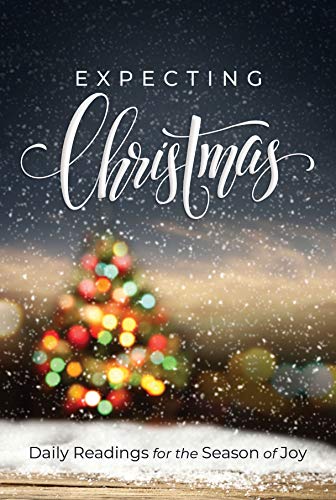
Expecting Christmas is a 40-day devotional book by multiple authors. I didn’t know any of the author names except one (Jennifer Dukes Lee). It’s put out by New Hope Publishers.

The selections are short, which is appreciated in a month like December. Each began with a verse or two of Scripture, a page and a half to two pages (at least in the Kindle version) of text, then three questions for refection.

The readings cover a variety of Christmas topics, though several deal with light.

A couple of samples: Day 15 talks about how horses in past years were seen as “labor animals, forms of transportation, and even weapons of war” (p. 44). After describing war horses, the writer points out Zechariah 9:9-10: Jesus did not come as an overthrowing conqueror, at least as the kind of conqueror society expected. His second coming will be more like that. But this time, He came humbly on a donkey. The author concludes, “Take time now to thank the Lord for being both just and humble, for bringing salvation instead of condemnation, for riding peacefully on a colt rather than on a warhorse. Ask Him to help you trust Him, especially when you don’t understand His ways. When you find yourself confused by His methods, remember the salvation He brought and the joys of that great gift” (p. 46).

In mediating on Jesus being given “the tongue of the learned” (Isaiah 40:4-5), another writer says, “Jesus didn’t use His deep knowledge and gift for oratory to make a name for Himself or climb social ladders. Rather, as seen in the Gospel accounts of His ministry, Jesus used His words to unburden people, free minds from the lies they had learned from false religions, and draw weary hearts closer to the Living God” (p. 54).

Another points out that people responded differently in praise and worship of the Savior, and that’s okay. “Mary’s response was one of quiet introspection as she treasured the good news of the gospel in her heart. The shepherds, on the other hand, left young Jesus, glorifying God and praising Him with outward enthusiasm and passion. People celebrate the gospel in different ways” (p. 77).

I only wish this book was 25 or 31 days so it would fit within the month of December. I didn’t get started 40 days ahead, so I have a bit yet to finish up. But I wanted to mention it before the month was over. Overall, I enjoyed it.

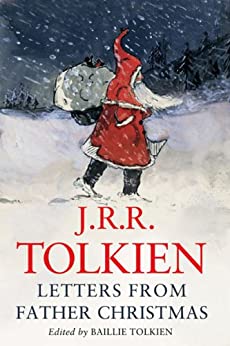
The second book I mentioned in my top twelve post yesterday. I had never heard of Letters From Father Christmas by J. R. R. Tolkien. I discovered it while looking for a short Christmas audiobook to finish out the year. This fit the bill nicely.

Tolkien sent letters and drawings as if from Father Christmas to his children from 1920 to 1943. He wrote with a shaky script because he was so old, he said (probably also to disguise his handwriting). The letters would comment on happenings in the children’s lives as well as at the North Pole. The North Polar Bear was Father Christmas’s helper and companion, a cheerful but bumbling fellow who unwittingly caused a lot of accidents. Polar Bear adds his own commentaries with a thick script because of his paws. Later an elf named Ilbereth acts as Father Christmas’s secretary. The last few letters mention “this horrible war” (WWII) and the people displaced, the shortage of supplies even at the North Pole, etc.

I got the audiobook superbly narrated by Derek Jacobi as Father Christmas and a couple of others for the infrequent voices of the bear and elf. But when I realized the book had photos of the letters and drawings, I had to get the Kindle version, too.

I thought in passing of Tolkien’s penchant for languages but figured that wouldn’t have a place in this book. But he did come up with a made-up language called Arktic that is spoken at the North Pole, and Polar Bear shares a few lines of it.

He also included some battles with goblins, who at times liked to raid Father Christmas’s supplies.

These letters are wonderfully imaginative. I especially loved the banter between Father Christmas, Polar Bear, and Ilbereth.

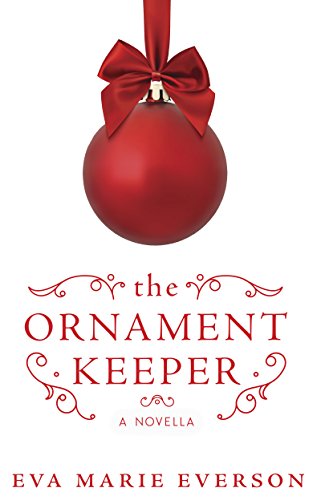
My last Christmas book this year is The Ornament Keeper, a contemporary fiction novella by Eva Marie Everson.

It’s Felicia Morgan’s custom to begin decorating the Christmas tree with the special, customized ornaments her husband has given her, one each year except for the last year. Each represented something special about their year: their first Christmas together, their children, her job advancement, etc.

This year, though, Felicia is dragging her feet. She and Jackson have separated after twenty years of marriage. Her daughter convinces Felicia to put up decorations as usual, but the memories are painful.

As Felicia hangs each ornament, we see a flashback to the circumstances surrounding each of them. Felicia’s marriage began with a mistake which has haunted the couple’s twenty years. Though God has redeemed and worked together for good their indiscretion, seeds of resentment and unforgiveness threaten to destroy what they have. Can they find their way back to each other before it’s too late?

I enjoyed the story and the truths brought out. I appreciated that the book wasn’t superficial or treacly.

Have you read any of these? Did you read any Christmas books this year?