Why Read Biographies?

You would think a post like this would come at the beginning of a series titled 31 Days of Inspirational Biography rather than the end. That would have been more logical – but I didn’t think of it then beyond the few remarks in my introductory post. However, having been steeped in biographies all this month, I have been reminded of several good reasons to pursue them.

I’ve always been interested in people’s stories, in what makes them tick. The very first book I remember checking out at my school library in first or second grade was a biography of Martin Luther (that may not have been the first book I ever actually checked out, but it is the first I remember). I’m sure I read more through my school years, but it was at college that an older woman spoke to a group of us involved in praying for missionaries about her years of reading missionary biographies and the benefit they were to her. That got me started reading Christian and missionary biographies, and that practice was reinforced at the first church we attended after we were married, where a part of the monthly ladies’ meetings included a book report by one of the officers from one of the books in the group’s lending library. So I have been purposefully reading biographies for some 35+ years.

The first benefits that come to mind from reading biographies are the same first benefits gained from reading anything: learning about other places, times, cultures, people, gaining empathy for the people in the story, and understanding how other people think and react.

While you can derive these benefits even from fiction (I have another post in the works about the benefit of reading fiction), biographies and “true life” stories have the advantage of being real. Though spiritual truth can be conveyed even in fiction, in a biography there is no arguing with how the story should have ended or what directions the plot should have taken. If you believe in God, as I do, part of reading a biography is tracing His hand in people’s lives, even, perhaps especially, when the circumstances are different from what we would have thought they would or should be. Though I primarily read Christian biographies, I enjoy some secular ones, and it is interesting to see not only what has influenced them, but they also often have some brush with spiritual truth (Robert Burns‘ story, for example).

We learn history for a number of reasons, among them: to better understand our current times, to appreciate our heritage, to avoid repeating mistakes. There are heroes in our national history who inspire us to a love of country and duty and courage. There are heroes of our spiritual heritage who inspire us in love and dedication to God and to greater faith in remembering that the God they served and loved and Who provided for and used them is the very same God we love and serve today and Who will provide for and use us. Though times and culture change, human nature at its core doesn’t change much, and God never changes.

For me the primary  reason for reading Christian biographies is to follow others as they follow Christ, as Paul said. No, they won’t be perfect, but we can learn from their mistakes just as we learn from David’s or Peter’s in the Bible. Missionaries would never want to be thought of as super-Christians or a step above anyone spiritually, but by and large there usually is a seriousness and maturity in their walk with the Lord, some wrestlings and overcomings, if they have gone through everything they need to in order to get to a mission field. Even though I am not called to “the” mission field (it’s my belief that every Christian is called to “a” mission field, whether on foreign soil or in their own homes and neighborhoods), I can still learn much from what Christians who have gone before me have learned and experienced.

Some people, including a former pastor of mine, don’t like to read older biographies because they made the subjects seem almost too good to be true. Even Isobel Kuhn, whose writing I love, put Amy Carmichael’s books, which I also love, back on the shelf because she thought she was too high and unattainable (I think Amy would either be highly dismayed or would laugh that anyone thought such about her). Admittedly some older Christian biographies can seem unrealistically perfect. I think there are several reasons for this: I think a “warts and all” type of biography was not the fashion in older times like it is today, even in secular biographies, and since Christians are generally instructed to give each other the benefit of the doubt, love each other, overlook each other’s faults, and not gossip or “backbite,” I think that would come into play in writing a biography as well. Yet the Bible shares people’s faults and sins in a realistic and not malicious way. I think we relate to people better when we can see that they are as human as we are, but they acknowledge their faults and are growing in sanctification. I think many of them would probably blush to read the glowing reports people wrote after their deaths.

Let me share, as well, some points to keep in mind when reading Christian biographies.

When reading any book, of course we filter everything through our own frame of reference. But an author can’t possibly know what every reader’s frame of reference will be even in her own time, much less hundreds of years later. So it is the reader’s responsibility to try to figure out the author’s frame of reference or at least to give the benefit of the doubt.

Different times and cultures will yield different practices. It’s fairly common in older missionary biographies for them to speak of servants. That doesn’t mean they were living upper class Western lifestyles while ministering to more primitive people. In more primitive cultures especially, sometimes they would hire help in the kitchen or for certain household tasks so the couple, particularly the wife, could teach or minister in other ways. (Even in modern times I had a missionary friend who mourned over having to spend so much time in the kitchen instead of  in ministerial pursuits: if that is so today, imagine what it would have been like 100+ years ago). Too, in some cultures where becoming a Christian could cost someone their job or family standing, sometimes missionaries would hire them in order to help them out.  Today they might say they hired help or employed someone; likely no one would use the word “servant” today. Another example would be schooling situations. In a lot of older biographies, missionaries sent their kids off to a mission school at a fairly young age because there was no appropriate school available and home schooling as it is known today was unheard of.  Often it was agonizing for both parents and children, and some stories share how God gave grace for the parents to cope. We can’t really hold it against parents then for sending their kids off if that’s all they knew to do at the time. I think the hardships involved as well as the realization that educating and raising their kids was a part of their ministry and testimony led to the changes we see today, where most missionaries home school and some send their kids to public schools in town. But we can understand that God could give grace to people who sent their kids away to school even while that is not a choice most of us would make today.

Even in the more glowing missionary books, you won’t agree with everything. You likely wouldn’t agree with everything even in a biography of your best friend or closest loved one. No two of us is going to agree on every little point of faith and practice. One of the things that stood out to me in 50 People Every Christian Should Know by Warren Wiersbe is that a lot of those people would be on opposite sides of certain fences from each other, yet God used them all. That doesn’t mean the fences and sides don’t matter: each of us is responsible to search out issues and take the stands we feel most faithfully represent Scripture. There are fundamental or foundational issues on which we cannot budge, but there are some beliefs and practices where we can give each other room to differ.

On the other hand, there are those foundational issues to consider. If someone is preaching a false gospel which is going to lead his followers to hell, we need to be aware of that and even warn people about it even though some of what they might say sounds compatible with Scripture, which tells us to “rebuke them sharply,” “mark them and avoid them,” “receive him not. ” Even the devil uses Scripture and appears as an “angel of light.”

I think to sum up what I have been verbosely trying to say in the last few paragraphs, we need to be discerning but not critical.

On the other hand, you might find practices you want to emulate, but don’t feel you necessarily need to change everything with every biography you read. In my early years of reading them, I might be inspired by how one had their time in the Bible, and in the next book I’d see a different way and wonder if I should try that. Feel free to try some of those things and glean what works best for you, but don’t feel tossed about or feel you have to do something just like they did.

Instruction. Encouragement. Inspiration. Illustration of the Christian life in action – overcoming difficulties, growing, seeking God’s wisdom, help and grace. Comfort from that which has comforted others. Warning from their mistakes. These are among the many reasons I enjoy reading Christian biographies.

I’ve often said that reading Christian biographies has been the most influential impact in my Christian life, next to the Word of God itself. I’ve posted this poem before, discovered by an unknown author in the first pages of Rosalind Goforth’s Climbing, but I post it here again as it embodies what Christian biographies have been to me:

Call Back!

If you have gone a little way ahead of me, call back-
It will cheer my heart and help my feet along the stony track;
And if, perchance, Faith’s light is dim, because the oil is low,
Your call will guide my lagging course as wearily I go.

Call back, and tell me that He went with you into the storm;
Call back, and say He kept you when forest’s roots were torn;
That when the heavens thunder and the earthquake shook the hill.
He bore you up and held where the very air was still.

O friend, call back, and tell me for I cannot see your face;
They say it glows with triumph, and your feet bound in the race;
But there are mists between us and my spirit eyes are dim,
And I cannot see the glory, though I long for word of Him.

But if you’ll say He heard you when your prayer was but a cry,
And if you’ll say He saw you through the night’s sin-darkened sky-
If you have gone a little way ahead, O friend, call back-
It will cheer my heart and help my feet along the stony track.

Robert Murray McCheyne said of Jonathan Edwards, “How feeble does my spark of Christianity appear beside such a sun! But even his was a borrowed light, and the same source is still open to enlighten me.” May we learn from these “borrowed lights” to seek the same Light they did.

photo 3(2)

For the 31 Days writing challenge, I have been sharing 31 Days of Inspirational Biography. You can find others in this series here.

(Sharing with Literary Musing Monday)
31 Days of Inspirational Biography: A Short List of Several

photo 3(2)

For the 31 Days writing challenge, I am sharing 31 Days of Inspirational Biography. You can find others in the series here.

As we near the end of the 31 Days writing challenge, I find I have many more inspirational biographies I’d like to share than days left in the month, so I’d like to share a short list of the ones I didn’t get to with a few comments on each.

Last year I wrote about 31 Days of Missionary Stories and ended with a list of the favorites I had read over some 37 or so years. In addition to those, plus the ones I have listed for 31 Days of Inspirational Biography this year, I can recommend these (those with links are ones I have reviewed and linked back to):

Kitty, My Rib by E. Jane Mall is story of the wife of Reformer Martin Luther. He was a former priest, she was a former nun. She was a well-suited complement to his personality.

Ida Scudder: Healing Bodies, Touching Hearts by Janet and Geoff Benge. The Benges actually have a series of biographies aimed primarily at younger people, but I have enjoyed the ones I have read. Ida was a daughter of a missionary doctor in India and had absolutely no plans of being a missionary herself until one night when three different women died whom her father could have helped but who were not allowed to be seen by a male doctor. She eventually became a doctor herself and went back to India.

Bruchko: The Astonishing True Story of a 19-Year-Old American, His Capture by the Motilone Indians and His Adventures in Christianizing the Stone Age Tribe by Bruce Olson. I really wanted to talk about this one this month, but it has been too many years since I read it and I did not have time to reread it this month. I do remember thinking he was perhaps a little headstrong, but overall it was a great book.

Dorie, The Girl Nobody Loved by Dorie N. Van Stone. It has been years since I’ve read this one, too, and I’d like to reread it some time, but the story of a grueling, abusive childhood overcome by God’s grace was very touching.

Gifted Hands by Ben Carson. I’m not sure if Dr. Carson is a Christian, but this is a great book about overcoming difficulties in childhood and changing direction in life. He grew up in poverty, did not do well in school, and had a horrible temper, but ended up being a pioneering neurosurgeon.

The Valley Is Bright by Nell Collins, the story of her salvation, her training as a nurse and plans to go to Africa, and the disruption (as it seemed) of her life by a serious cancer diagnosis. Part of her testimony is here.

Walking From East to West: God in the Shadows by Ravi Zacharias. You may have heard his radio broadcasts or benefited from his apologetics ministry. This is the story of how he came to the Lord and some of the difficulties in doing so for those from an Eastern mindset.

The God I Love by Joni Eareckson Tada. I’d also recommend When God Weeps by Steve Estes and Joni, not a biography but a book about why God allows suffering, and Joni and Ken: An Untold Love Story by Ken and Joni Eareckson Tada.

The Titanic’s Last Hero about John Harper, who told people about the Lord while clinging to debris from the ship. A testimony of him is here.

Same Kind of Different As Me by Ron Hall and Denver Moore. How one man’s reluctant service in a homeless shelter led to a lifelong friendship. This was riveting.

Heir to a Dream by Pete Maravich. I mentioned in an earlier post that I wasn’t really a sports fan, but I loved this autobiography of “Pistol Pete.” His dad groomed him to play basketball, even tucking a basketball into his bed instead of a teddy bear. He achieved great success and acclaim, but it was all empty until he found Christ. I first heard a bit of his testimony on some news show – 20/20, I think – and he seemed so genuine that I had to read the book. I could not find that interview online, but I did find this one:

The Autobiography of George Muller. Wonderful testimony of his rescue from a debauched lifestyle to an exercise of faith in supporting orphanages by depending on God alone.

Mistaken Identity by Don & Susie Van Ryn, and Newell Colleen & Whitney Cerak. Another riveting story of two girls in a horrific accident, and the surviving one was identified as the other.

In Trouble and In Joy by Sharon James, short biographies of Ann Judson, Margaret Baxter, Ann Steele, and Frances Ridly Havergal.

Faithful Women and Their Extraordinary God by Noel Piper, short biographies of Sarah Edwards, Gladys Aylward, Lilias Trotter, Esther Ahn Kim, and Helen Roseveare.

Thunder Dog: The True Story of a Blind Man, His Guide Dog, and the Triumph of Trust at Ground Zero by Michael Hingson

50 People Every Christian Should Know: Learning From Spiritual Giants of the Faith by Warren Wiersbe

Infinitely More by Alex Krutov, about an abandoned orphan in Russia whom God brought to Himself.

A Severe Mercy by Sheldon Vanauken, about his relationship with his wife, their conversion after originally having no interest in Christianity, her cancer, and his letters to C. S. Lewis.

The Reel Story by Larry D. Vaughn. Wonderful story about how someone outside the “bubble” of the conservative Christian world ended up a Christian. Larry was a film buyer, and his pastor and almost everyone else said he should continue in his job to be a witness to the film community, but Larry felt his conscience pricked and provoked enough that he finally had to leave the business.

The Hiding Place by Corrie ten Boom about her family’s involvement in helping to hide Jews during WWII and the consequences.

More Precious Than Gold, the Fiery Trial of a Family’s Faith by John and Brenda Vaughn. A garage fire had devastating consequences for Mrs. Vaughn and her young daughter. This book details the circumstances and how God helped the family through this trial.

As I have shared biographies that have inspired me this month, I tried to include some from people of various walks of life and some that were older as well as some modern ones. I hope you’ve found something to inspire you in some of these posts as well.

Tomorrow I want to write about “Why Read Biographies.” I know, a post like that should probably have come at the beginning of this series. I didn’t think about it then, beyond the remarks in my introductory post, but as I have been steeped in biographies this month, some thought came to mind I thought I’d share.

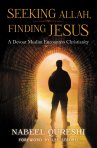
31 Days of Inspirational Biography: A Devout Muslim Encounters Christianity

SeekingIn Seeking Allah, Finding Jesus: A Devout Muslim Encounters Christianity Nabeel Qureshi first gives a window into a loving and devout Muslim home, with all its practices, disciplines, and teachings, as well as a peek into the perspective of growing up Muslim in a non-Muslim culture.  Wanting to be a faithful representative of Islam, having been taught critical thinking in school and having a mind geared for it, he often turned the arguments of some of his Christian classmates on their heads, bringing up aspects they had not thought about before and were not ready to defend.

In college God brought to him “an intelligent, uncompromising, Non-Muslim friend who would be willing to challenge” him, someone who was “bold and stubborn enough” to deal with him but also someone he could trust “enough to dialogue…about the things that mattered to [him] the most.” Nabeel and his friend, David, were both on the forensics team and knew how to get to the heart of an argument and draw out and refute key points. For the most part they did this with each other’s worldviews good-naturedly, but when a given topic became too heated, they’d table it for a while. Muslims particularly have trouble with the reliability of the Bible, the deity of Christ, the Trinity, and the connection between Christ’s death on the cross and how it atoned for others’ sins. For three years Nabeel studied the Bible and its claims and others’ claims about it, fully confident that he’d be able to disprove those claims, and then to study the history of Mohamed and the claims of the Quran, fully confident that Islam would be justified. Though he was obviously biased toward the Quran, he really wanted to know the truth. He discovered the Bible’s claims were justified and Islam’s to be on shaky ground.

For some time he resisted acting on this knowledge. Being a Muslim was a matter of identity as well as religion: his whole life, everything he had always believed, his relationship with his family and community, everything would be turned upside down if he became a Christian. Yet he could not continue on, knowing what he now knew. In one of the most beautiful and touching passages in the book, he was seeking time to mourn before making the decision he knew he had to, and he opened the Bible for guidance this time, not simply to look for information to refute. He came to Matthew 5:4, 6:

Blessed are they that mourn: for they shall be comforted.

 Blessed are they which do hunger and thirst after righteousness: for they shall be filled.

Nabeel writes further:

There are costs Muslims must calculate when considering the gospel: losing the relationships they have built in this life, potentially losing this life, and if they are wrong, losing their afterlife. It is no understatement to say that Muslims often risk everything to embrace the cross.

But then again, it is the cross. There is a reason Jesus said, “Whoever wants to be my disciple must deny themselves and take up their cross and follow me. For whoever wants to save their life will lose it, but whoever loses their life for me and for the gospel will save it” (Mark 8:34-35).

Would it be worth it to pick up my cross and be crucified next to Jesus? If He is not God, then, no. Lose everything I love to worship a false God? A million times over, no!

But if He is God, then yes. Being forever bonded to my Lord by suffering alongside Him? A million times over, yes!

All suffering is worth it to follow Jesus. He is that amazing.

I feel I must comment on one aspect of the story that I questioned at first and I am sure other readers might as well: When Nabeel mentioned early on being “called to Jesus through visions and dreams,” I admit I inwardly winced and wondered what kind of story I’d be reading. For reasons too long to go into here, I am of those who believe that once God gave us His completed Word in writing, then dreams, visions, tongues, and the like fell away as unneeded.  The few modern instances I have ever heard or read of that seemed most in line with Bible truth were in cultures which didn’t have the Bible, often didn’t have a written language at all. Another problem with relying on dreams Nabeel discovered himself: one questions what it really means (his Muslim mother and Christian friend had completely opposite interpretations for what Nabeel’s dreams meant), wonders how much was due to wishful thinking, asks “Could I really hinge my life and eternal destiny on a dream?” etc. If that’s all he had to go on to become a believer, I would question what he was really trusting, but these dreams came after years of intense searching and study. In an appendix by Josh McDowell on this topic, he states, “Dreams and visions do not convert people; the gospel does,” but he explains, “In many Muslim cultures, dreams and visions play a strong role in people’s lives. Muslims rarely have access to the scriptures or interactions with Christian missionaries.” As in Nabeel’s case, “the dreams lead them to the scriptures and to believers who can share Jesus with them. It is the gospel through the Holy Spirit that converts people.”

One of many passages that stood out to me was in the chapter “Muslims in the West,” which described how Muslims view the West and Christians and, because they think both have corrupting influences and Westerners they are against Islam, they tend to keep to themselves. “On the rare occasion that someone does invite a Muslim to his or her home, differences in culture and hospitality may make the Muslim feel uncomfortable, and the host must be willing to ask, learn, and adapt to overcome this. There are simply too many  barriers for Muslim immigrants to understand Christians and the West by sheer circumstance. Only the exceptional blend of love, humility, hospitality, and persistence can overcome these barriers, and not enough people make the effort.”

I didn’t agree with everything Nabeel’s Christian friend said in the section about the Bible, in regard to believing some sections in the Bible were added later and not part of the original canon, but I do acknowledge that some do believe that.

There are multiple good aspects of this book: the window into another culture and mindset and the understanding of the difficulties a Muslim would have in coming to Christianity; the example of David and other friends who shared truth kindly and politely rather than belligerently or condescendingly, who genuinely cared about Nabeel as a friend rather than a “project”; the  wealth of information Nabeel found and shared from his studies which give a valuable apologetic (supplemented by several appendices>); and the touching yet agonizing conversion of a soul truly hungering and thirsting after the one true God.

(Reprinted from the archives. I hope regular readers will forgive my doing so with so recent a post. I was going to just summarize but then didn’t feel I could leave anything here out.)

photo 3(2)

For the 31 Days writing challenge, I am sharing 31 Days of Inspirational Biography. You can find others in the series here.

31 Days of Inspirational Biography: Charlie Wedemeyer, a Motivational Speaker Who Couldn’t Speak

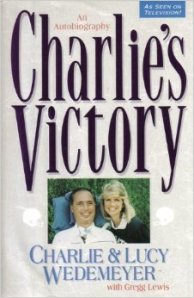
Charlie's VictoryI have never been a sports fan (except during the Olympics), so I don’t remember what first brought Charlie and Lucy Wedemeyer’s book, Charlie’s Victory, to my attention. But it has been one of my favorite biographies.

Charlie grew up in Hawaii, where he was a star athlete and quarterback. He went on to play football for Michigan State University and eventually ended up as the head football coach at Los Gatos High School in CA. (His brother, Herman Wedemeyer, was an actor and played Duke on the old Hawaii Five-O series.)

When Charlie was diagnosed with amyotrophic lateral sclerosis (Lou Gehrig’s Disease), he began to lose the use of his body bit by bit, and he was originally given one year to live. He wanted to keep coaching as long as possible. PBS made an Emmy-wining documentary about Charlie and Lucy called One More Season, which documents the time up until Charlie had to retire, his very last game closing with an almost fairy-tale ending.

After retiring from coaching, Charlie and Lucy began public speaking, even though by this time he could not speak much. Lucy “interpreted” for him.

The courage of both of them on this journey was inspiring and heart-warming. Lucy told him early on, “This isn’t your disease, it’s our disease.” One incident that stood out to me was when Charlie began to feel he was being a burden and it would be better for his family if he had died. Lucy said, “We’d rather have you this way than not at all.” Another incident was when Charlie was rushed to the ER, unable to breathe. A nurse told Lucy that this was the natural path with ALS patients, and she needed to be willing to let him go. Another nurse told her about portable respirators (like we saw Christoper Reeve and others using years later). When Lucy asked the first nurse about them, she actually got angry with Lucy, but Lucy prevailed, and Charlie had several more years on the portable respirator, even traveling to see his family in Hawaii.

One of their main goals in the years since Charlie’s diagnosis was to give others hope. One of Charlie’s nurses was able to show him and Lucy how they could invite the Lord Jesus Christ to be their own Lord and Savior, and not long afterward a friend came for a visit and spent some time of intense discipling, which Charlie soaked up like a sponge. They are very honest in the book about the struggles they endured as well as the faith that sustained them.

A short video about them is here:

What made the biggest difference in their lives was their faith, which is discussed here:

Charlie lived over 30 years with ALS, far beyond the original one year diagnosis.

A news report at his death in 2010:

See also the Charlie Wedemeyer Family Outreach site.

photo 3(2)

For the 31 Days writing challenge, I am sharing 31 Days of Inspirational Biography. You can find others in the series here.

(This will also be linked to Semicolon‘s Saturday Review of Books.)

What’s On Your Nightstand: October 2014

 What's On Your NightstandThe folks at 5 Minutes For Books host What’s On Your Nightstand? the fourth Tuesday of each month in which we can share about the books we have been reading and/or plan to read.

This has been a busy month, but thankfully I have gotten in some good reading.

Since last time I have completed:

How I Know God Answers Prayer by Rosalind Goforth for Carrie’s  Reading to Know Classics Book Club for October, reviewed here. A multiple reread, I always get a lot from her testimony.

Why We Are Not Emergent: By Two Guys Who Should Be by Kevin DeYoung and Ted Kluck, reviewed here. Once I got going with this one, I really got a lot from it. I think it is good reading even if you’re not interested in the emergent movement in particular. A lot of the different kinds of thought discussed in the book are going on throughout Christendom.

The Princess and the Goblin by George MacDonald for Carrie’s  Reading to Know Classics Book Club for September, reviewed here. Enjoyed it!

Somewhere Safe With Somebody Good, newest Mitford book by Jan Karon, reviewed here! Loved it! Good to visit Mitford again.

In Perfect Time by Sarah Sundin, reviewed here. Always enjoy her books.

Gospel Meditations for Missions. Not reviewed, but very good.

The Old Curiosity Shop by Charles Dickens, reviewed here. Mixed emotions, but mostly I enjoyed it.

I’m currently reading:

The Pound a Day Diet by Rocco DiSpirito

The Last Bride by Beverly Lewis, 5th in her Home to Hickory Hollow series

The Return of Sherlock Holmes by Arthur Conan Doyle

Walking in the Spirit: A Study Through Galatians 5 by Steve Pettit

Next up:

Weight of Glory by C. S. Lewis

I’ll probably get a head start on To Kill a Mockingbird for Carrie’s  Reading to Know Classics Book Club for December. I haven’t decided about the November selection yet.

I’ve had both Unlimited and The Straights of Hormuz by Davis Bunn on hand for some time and will probably delve into one of those – probably the latter since I have read the two previous books in that series.

Other than that – I am not sure. I have scores of books in my Kindle app and scores more on an ongoing TBR list, so I have plenty to choose from.

Also this month I’ve been sharing  31 Days of Inspirational Biographies as part of The Nester’s 31 Days writing challenge.

Book Review: The Old Curiosity Shop

Old Curiosity ShopThe Old Curiosity Shop by Charles Dickens was his fourth novel, originally published as a serial in his weekly periodical, Master Humphrey’s Clock. It was said to have been so popular that people clamored to the boats when the last shipment arrived, asking the sailors, who may have read it on the way, what happened to little Nell.

The story involves a girl of thirteen named Nell and her grandfather, who is never named. They live in her grandfather’s shop, which is kind of an odds and ends store. Her parents died long before, and she is content to live with and help her grandfather, even though it is something of a lonely existence for her. She rarely sees anyone her own age except Kit, who works for her grandfather and can make her laugh. Unbeknownst to her, Kit watches for her when she goes out on errands for her grandfather at night until she is safely home in bed.

The grandfather goes out at night as well, but no one knows where for several chapters. Later it is revealed that he has been gambling in order to try to give Nell what she deserves, but he has lost what money they had.

A dwarf named Daniel Quilp has loaned Nell’s grandfather money, and when he can’t repay, he takes over the curiosity shop and makes overtures to Nell about becoming his wife when she is older. He is already married but apparently doesn’t think his wife will live that long. Nell’s grandfather has something of a nervous breakdown, and when he recp0vers sufficiently, Nell convinces him that they should run away, that even if they have to beg for a living, they’ll be freer than they are now. Her grandfather agrees, and since he is weak and still not entirely in his right mind, Nell leads them and makes all the major decisions, at least for a time.

A great deal of the book deals with the different characters and situations they run in to. With Dickens’ penchant for unique characterizations, both good and villainous, you can imagine some of the ups and downs their path might take.

Quilp still seems to think they have a hidden fortune somewhere, so he tries to find them, and then sets his sights on Kit, whom he thinks is hindering him. He sets rather an elaborate scheme in motion to frame Kit for theft and have him imprisoned. The storyline spends a lot of time with Kit for much of the book before tying his situation back to Nell’s.

Meanwhile, someone else who is only called, at first, the Single Gentleman, comes to look for Nell and her grandfather, and it is not until later in the book that we discover what his purposes are.

Some of the quotes that stood out to me in the book:

For your popular rumour, unlike the rolling stone of the proverb, is one which gathers a deal of moss in its wanderings up and down.

There are chords in the human heart–strange, varying strings–which are only struck by accident; which will remain mute and senseless to appeals the most passionate and earnest, and respond at last to the slightest casual touch.

In the majority of cases, conscience is an elastic and very flexible article, which will bear a great deal of stretching and adapt itself to a great variety of circumstances.

From the death of each day’s hope another hope sprung up to live to-morrow.

The day was made for laziness, and lying on one’s back in green places, and staring at the sky till its brightness forced one to shut one’s eyes and go to sleep.

“Ahem!” coughed Miss Brass interrogatively.

“Places lie beyond these,” said the child, firmly, “where we may live in peace, and be tempted to do no harm. We will take the road that promises to have that end, and we would not turn out of it, if it were a hundred times worse than our fears lead us to expect. We would not, dear, would we?”

“The invading army of bricks and mortar whose station lay for the present nearly at his feet…” [I was amused at characterizing buildings as brick and mortar — I had thought that was a modern appellation!]

There is much I like about the book. Dickens characterizations are always rich, and there is a running note of sly irony connected with some of them that is quite amusing. Some sections are very touching. There is a lot of suspense both in what happens to Kit and and in the Single Gentleman’s pursuit. I especially liked how Richard Swiveller grew though the book : he started out as a friend of Nell’s brother, who was a ne’er-do-well who also thought the old man had money and was holding out on him, but the brother, Frederick, only has a small part. Richard, however, reminds me of the “simple” person in Proverbs – naive, easily swayed, in danger of going down the wrong path, but due to the circumstances he goes through, his eyes are opened to a great deal and he becomes a force for good. I could not stand him at first, but he grew to be one of my favorite characters.

But I am mad at Dickens for how the story ended. 🙂 And though Quilp is thoroughly villainous, it was hard for me to take him seriously. Maybe he was a little too villainous. No offense to little people, but I couldn’t comprehend how Quilp could intimidate all these people when any one of them could have taken him down.

But despite those complaints, I enjoyed the book and am glad to have read/listened to it. I had not known anything about it before except that I had heard about it being serialized and people were clamoring to know what happened at the end – understandable, especially when the end didn’t come for 73 weeks.

(This will also be linked to Semicolon‘s Saturday Review of Books.)

31 Days of Inspirational Biography: The Last CIM Missionaries in Communist China

In 1950, Arthur and Wilda Mathews and their 13 month old baby, Lilah, traveled to Hwangyuan, China. China had fallen to Communism, and other missionaries were leaving, yet the Chinese church had invited them to come, with the approval of the Communist government. They felt this was a miraculously opened door God would have them go through. Yet, when they arrived, they could sense that all was not well. The Christians pastors who met them were strained, and they discerned that between the time of their invitation and arrival, the Chinese learned that association with the white people would be a liability under Communism, not a asset. The Mathews then thought perhaps, if they could not be a help to the church, they could endeavor to evangelize the unreached Mongols in the area and nearby. They had a few weeks in which to minister, but soon found that they were restricted in ways they could help. They endeavored to set up an inn with which to reach the Mongols, but Chinese troops took it over the day before it was to open. Arthur protested, but soon found it would have been wiser to have said nothing. In two days a policeman came to the mission compound to announce that no one there could do village work without permission, and the white people were forbidden everything: they could not have meetings outside the compound, they could not give out tracts or dispense medicine. They were restricted to the mission compound.

They finally decided that since they were more of a hindrance than a help, they would apply for exit visas. They thought, since the government did not want them, they would be allowed to leave quickly, and so gave away or sold dishes, curtains, etc., keeping just the bare minimum to function until they could leave. Arthur was summoned to the police station and asked to sign a statement that he was for world peace. He had heard of another missionary having to sign some document before leaving, so he signed without thinking much of it. The government official then asked what contribution Arthur was then willing to make toward world peace, outlining a plan in which Arthur would go to India and essentially be a Communist spy. Arthur realized that the Communist definition of world peace was a world dominated by communism, and of course could not consent.

A government official called Arthur in and promised his exit visas if he would do something for them, like write a report of five other missionaries. At first Arthur did write glowing reports of the missionaries in question, but someone told him he dare not turn that in: the Communists would change what he had written but keep his signature. So Arthur threw his report in the fire and told the official he could not be a Judas. The official then told him that he could have given him a pass, if he had cooperated, but now a charge had been laid against him which must be investigated, and “investigations take a long time.”

Thus began a two and a half year ordeal. Their provisions from their mission were frozen by the government, which made Arthur submit a report of what he would need, and then they doled out to him much less than what the report said he needed. Every victory they mentioned in a letter seemed to be immediately challenged by the enemy of their souls: once when they wrote what a blessing Lilah was, she then came down with scarlet fever, and they almost lost her. All of them had turns being ill. Eventually they were told that no one could speak to them, and they could only leave home to draw water from the creek and get food.

They wrestled with the “what-ifs” and the frustration of what they called “second causes,” finally coming to the conclusion that they had to trust that the Lord was in control and had them there for a reason, though it was hard to discern that reason when they were so restricted. Yet the Lord did use them even when they could not speak to the people. The few weeks they had had to minister before restrictions set in, people knew their hearts and saw their love. When the Mathews could no longer speak openly, the people saw them in tattered clothes, persecuted, attacked by illness without much medical aid, laughed at, jeered, humiliated, doing menial, degrading work just to survive, tantalized by the government offering release and then not giving it or doling out money that was theirs in the first place. They saw the Lord provide miraculously for them in many ways. Yet more than that, they saw them endure graciously and joyfully until, finally, the Mathews became the last CIM missionaries to leave China.

Green-Leaf-in-DroughtHow the Lord provided for them and ministered through them in unexpected ways are some of the most exciting parts of the book Isobel Kuhn wrote of their story titled Green Leaf in Drought. She says,

But most amazing of all was their spiritual vigour. Whence came it? Not from themselves: no human being could go through such sufferings and come out so sweet and cheerful. As I was in a small prayer meeting… one prayed thus: ‘O Lord, keep their leaf green in times of drought!’ I knew in a moment that this was the answer. Jeremiah 17:8: “He shall be as a tree planted by the waters, and that spreadeth out her roots by the river, and shall not see when heat cometh, but her leaf shall be green; and shall not be careful in the year of drought, neither shall cease from yielding fruit.” That was it! There was an unseen Source of secret nourishment, which the Communists could not find and from which they could not cut them off…That is needed by all of us. Your drought may not be caused by Communism, but the cause of the drying up of life’s joys is incidental. When they dry up — is there, can we find, a secret Source of nourishment that the deadly drought cannot reach?…Is it possible for a Christian to put forth green leaves when all he enjoys in this life is drying up around him?

The answer, by God’s grace, is yes!

(Reposted from the archives.)

photo 3(2)

For the 31 Days writing challenge, I am sharing 31 Days of Inspirational Biography. You can find others in the series here.

Laudable Linkage

Here are some noteworthy reads online discovered in the last few weeks:

Voices That Haunt Us, ways to respond.

The Opposite of the Proverbs 31 Woman.

But Why Does She Get Babies?

Behold Your Mother. Quotes: “Care of parents, particularly in the latter years, is difficult, grueling, and offers little tangible reward. The elderly seem like speed bumps on the road to relevance. But if we really believe each human life was made in the image of God, if we really believe that every human has intrinsic worth, regardless of utility, we’d do better at embodying this ethic when it comes to equipping our people to care for their elderly parents.” “This is why care for the elderly is not simply “the right thing to do” but a vivid portrait of the gospel story. The Holy Spirit in us renews our self-centered motivations, reminding us that Christ cared for our spiritual disability while we were spiritually dead and “yet sinners.”

Ten Things To Do Differently *Before* You Lose Your Temper.

Bleep! Why Christians Shouldn’t Cuss.

5 Bad Substitutes For Discipline.

Dear Moms, Jesus Wants You to Chill Out.

Love Letters. HT to The Story Warren. Quote: “Today all around me I see a stark, utilitarian focus in writing in this age of technology: all must be said to purpose—briefly and efficiently; effortless interaction seems the primary goal as though thoughts are like footballs that simply need punting. Writing is regarded as a chore. Often, so is reading. Extra words, like Mozart’s famous “too many notes,” are regarded as distractions, time-consuming, even burdens on the reader. “Why does Melville ply us with his dense prose so packed with allusions? That is so boring,” I hear my students complain. “Why does Tolstoy carry on endlessly chasing one description after the other? Why can’t he just cut to the chase?” “Why does Tolkien play at length with interwoven plot lines in his wordy fantasies? Why can’t he get to the point?” Why? For one thing, I think it is because ‘the point’ is not the only thing that matters.”

And finally, something fellow book lovers will empathize with:

Waiting for sequel

Happy Saturday! 🙂

Book Review: How I Know God Answers Prayer

How I Know God Answers PrayerI think I first read Rosalind Goforth’s first book, How I Know God Answers Prayer, maybe in my twenties, so about 30 years ago. I don’t remember how many times I have read it since. It is a testimony of how God has answered prayers both small and great in her life through the years, spurred by people’s occasional response that perhaps what seemed an answer to prayer was just a coincidence that would have happened anyway. She wanted to demonstrate through a lifetime of her walk with God that prayer is just a child of God asking her Father for what she needs, and seeing Him answer – not always just the way she originally wanted, but with love and wisdom nonetheless. Of her three books, including Goforth of China (a biography of her husband) and Climbing (a book she was asked to write concerning some of her own experiences and perspectives), Climbing is my favorite, but this book is very good as well.

Since I was reading it this time for Carrie’s  Reading to Know Classics Book Club, I tried to view it as others might who have not read it before.  For the first time I thought perhaps a little of the effect of what she relates might have been lost by the description of events taken out of context. For instance, when she writes near the end about finding “that the Lord could guide me even in trimming my hat to his glory,” some people might think, “What?” In Climbing, one of the difficulties she underwent was criticism of her dress when she would come home on furlough. There was no Internet, Facebook, or even Wal-Mart in those days to keep up with what was going on in the fashion world back home, and she had no idea what would be stylish or out of style or different from the last time she had been there. It is really ridiculous that people would criticize under such circumstances, but they do. Once when a lady offered to get new outfits for her when she was home, she was relieved, until the lady brought her garments entirely in black, which she evidently thought was appropriate for missionary ladies. Jonathan told her she looked like she was in mourning, but she felt she couldn’t refuse the gifts without causing offense. She didn’t necessarily want to be up-to-the minute in the latest styles (in fact, when Merry Widow hats were in style at one point, she thought they were ridiculous and tried to find a way not to wear them), but she didn’t want to be a distraction, either, as they visited churches and conferences. In that book she relates some of God’s leading and answers to prayer regarding that whole issue, represented here just by the sentences, “I found the Lord could guide me even in trimming my hat to his glory! That is, so that I could stand before an audience and not bring discredit to my Master.”

She mentions the anti-foreigner sentiments and some of the dangers involved, but I don’t know if readers will understand just how pervasive and dangerous it was. China was a very closed-off country then, and anything “foreign” was suspicious (one reason why Hudson Taylor advocated dressing like Chinese rather than British). She does mention here that one of the ways she and her husband tried to combat this was to hold “Open House” where they’d let their neighbors come in and tour the house so they could see there wasn’t anything dangerous about them. In one of her other books she writes that one of these times, someone saw her daughter’s dolls in her bed and spread the word that the Goforths kidnapped children and shrunk them. It seems ridiculous now that anyone would think that, but it was a very superstitious and suspicious time. Rumors like that could at the very least cause people to avoid them, and at the worst set off a powder keg of anger. Sudden mob violence was not uncommon, especially leading up to the time of the Boxer rebellion. I remember reading in another book (I forget whose) about a missionary having in her school a skeleton for educational purposes, and then trying to decide how best to dispose of it so people wouldn’t think they had killed someone. Trying to preach a gospel that the people were probably going to react negatively against at first in such a setting indeed required a lot of prayer and faith.

But even with some events taken somewhat out of context, she presents a testimony full of grace in how the Lord dealt with her. Some of the answers she relates were major –  a sudden breakthrough in her husband’s grasp of the language when he was discouraged and near giving up, found later to have happened right at the time that a group in his old college had met to pray for him, response in meetings found to have happened when others were praying (incidents that should remind and encourage us to pray for others), healing when all other help had been exhausted, protection from danger, especially in their escape during the Boxer rebellion. Of the last, she was asked why God spared them so miraculously but not others. She responded:

Truly a vital question, which could not lightly be set aside! Humbly and prayerfully we pondered this “Why” in the light of Scripture. In the twelfth chapter of Acts, we read of Herod’s succeeding in putting James to death by the sword, and directly after comes the story of how Herod was hindered in carrying out his intention to kill Peter who was delivered by a miracle. Then who could read that marvelous eleventh chapter of Hebrews with its record of glorious martyrdom and miraculous deliverances without being thrilled? In face of these and many other passages, while still unable to answer the “why,” we saw our Almighty God used His own prerogative to glorify His name whether in the glorious martyrdom of some or in the miraculous deliverance of other.

I referenced this a few months ago in a post on our pastor’s cancer, how God heals some but not others, for reasons only He knows.

Such big and dramatic answers to prayer can be thrilling, but what touched my heart even more were the smaller, “everyday” answers: a lost key found, provision for clothes, a gift of fresh fruit, the need for a telephone and a coat and help during a speaking engagement when she felt ill.

Some of the incidents were deeply personal, such as the time her husband wanted to go touring out among the people, and she said no at first, for the safety of the children (smallpox was rampant and the Chinese then had no thought of keeping sick people home). She had to learn that “‘the safest place’ for myself and the children ‘was the path of duty.'” Though several of her children died from other causes, none died during this time in their ministry once she yielded to the Lord about it. Another personal situation was finally understanding what it was to rest in the Lord and trust Him for salvation from the power of sin and not just the penalty of it, after feeling like she had been on something of a roller coaster spiritually for 40 years.

Something else I thought some people might have a problem with in reading her book were the times she mentioned prayer being hindered by a wrong attitude or bitterness on her part, or, in one instance, the fact that she felt God allowed something to bless her for responding in a right way. These days what we often hear is that God deals with us on the basis of His grace, not our “performance.” That is true. Yet there are instances in Scripture, even in the New Testament, of disobedience hindering. We’re told that some people are sick and some have died because of partaking of the Lord’s Supper in a wrong manner, that we should reconcile with our brother before offering a gift to God, that confession of sin is a part of praying for healing, that we can’t expect forgiveness if we don’t forgive. We’ll never be perfect, but we can’t expect the Lord’s blessing if we are hanging on to known sin. As to the other, does God ever do a special little something for us when we obey in some area or do the right thing? I don’t know – I can’t think of a Scripture reference that deals with that exactly in the New Testament. We tend to think, especially when reading the Old Testament, “Be good and God will bless me, mess up and He will come after me hard.” But even there Job experienced great calamity even though he was doing everything right, and the wicked seem to prosper even when they are not obedient. Ultimately everything that God allows comes from His wisdom, love, and grace. But I have felt at times, especially in my very early days as a Christian, that some blessing or answer to prayer came just after taking an important step in the right direction, not as a reward or as God patting me on the head for doing right, but just as a little encouragement from a Father to His child. Don’t we do the same for our children? When we see them struggle in an area and do the right thing, don’t we give them some kind of encouragement, even if it is just a smile or a nod or a thumbs up or a “Well done”? Of course, we need to do right even if no one seems to notice or care or no “blessing” comes in response. I don’t think this nullifies the fact that it all comes from God’s grace because we can only obey and make right decisions with His grace. (I’ve written earlier that grace does not nullify the need for obedience but rather enables it. See Of grace, law, commandments, rules, and effort and What grace does not mean). God blesses us far beyond our ability to obey as it is, and obedience should be an outgrowth of love and reverence for Him rather than a “work” to “earn” blessing. This is too involved a topic for this post, but I feel sure she isn’t advocating that prayer and obedience are like vending machines where we put in out part and then expect God to do His – not at all.

Since this is a testimony of answered prayer, naturally most of the anecdotes involve those answers. Yet she also shares some times when God didn’t answer, at least not in the way she prayed for. In one instance, years later she could see and was thankful for the fact that He hadn’t granted a particular request, one that would have changed the path of her life away from China. In other instances, like healing that did not come and the deaths of several of her children, she continued to trust even though she couldn’t understand.

I don’t think Rosalind shared any of these answers to prayer with the attitude, “Look at me and my wonderful answers to prayer. Aren’t I special?”  I think she would have been horrified that anyone would think that. I think rather, she just wanted to show forth His provision and willingness to take care of His dear children’s needs, like the psalmists, whose testimony was, “Hear what great things the Lord has done and how He delivered me.” Every Christian walking and talking with God would have a record like this whether written or not, though admittedly probably not with situations like being delivered from an angry mob on the list. But like the Ebenezers I mentioned a few weeks ago, we should all be able to look back on those times where God met with us, provided for us, and answered prayer for us in a way that only He could. It’s good to share things like this with our families, so they know God didn’t just meet people’s needs back in Bible times, but He still does today. Such things redound to His praise and encourage us in the Lord when “when I remember you upon my bed, and meditate on you in the watches of the night;  for you have been my help, and in the shadow of your wings I will sing for joy.  My soul clings to you; your right hand upholds me” (Psalm 63:5-8).

photo 3(2)

For the 31 Days writing challenge, I am sharing 31 Days of Inspirational Biography. You can find others in the series here.

Reading to Know - Book Club

(This will also be linked to Semicolon‘s Saturday Review of Books.)

Book Review: In Perfect Time

Perfect TimeIn Perfect Time by Sarah Sundin is the third in her Wings of the Nightingale series about three friends who were flight nurses during WWII (The first was With Every Letter, the second was On Distant Shores, both linked to my reviews).

They didn’t start out as friends: they had their differences. Kay Jobson was probably the hardest to get to know for the other girls. They were Christians and she was not. She liked to flirt, to have half a dozen boyfriends at a time, was decidedly unchristian, and liked to run around with other girls who felt the same way she did. But circumstances in the previous two books have led to something of a friendship between Kay, Mellie, and Georgie.

Someone in the book called Kay a floozy, and honestly, that’s what I thought of her in the other books. But I was convicted of being judgmental. She doesn’t get physical with her boyfriends – in fact, that’s one reason she keeps so many, so that none will get too serious. When he does, she drops him. Finding out her back story and mindset was eye-opening. Girls who are flirtatious and even promiscuous are souls Jesus died for with stories and heartaches of their own.

I won’t unfold her story here except to say that part of it involved a father who only preached condemnation and who condemned her about things that weren’t her fault and were beyond her ability to change. Her life now is all about control. Her view of Christians has been shaped by her father.

Guys seem to melt like around her, except for pilot Roger Cooper. He keeps his distance and is known not to date. He has his reasons, noble to him, as we soon discover. He is a Christian anyway, which Kay doesn’t like. But one encounter opens both of their eyes a bit to the other, with a glimpse that there may be more to the other than each had thought.

Roger is a great pilot, courageous, daring, thinking outside the box, but he is not good with details like filling out forms and being on time, and he loves to pull pranks on the other guys. His father told him he would never amount to anything, which becomes kind of a self-fulfilling prophecy.

Both Roger and Kay have to learn that other people’s expectations and misjudgments and even past failures don’t define us. When Kay learns that she is, in fact, redeemable, for the first time she begins to want to be redeemed. They also have to learn that though it is okay to dream, ultimately we have to give our dreams and desires over to God. If He fulfills them, it will be better than anything we could have done. If He redirects them, it will be better than going our own way would have been.

I loved Kay and Roger’s story on several levels. I will forewarn some that this book is perhaps a little more physical than Sarah’s others, but nothing is explicit. One of the characters wrestles with sexual temptation, but that is a common temptation, and I thought Sarah handled it well.

Though characters from the other two books are in this one, I think this one can be enjoyed alone (though I’d encourage you to read the others as well. 🙂 )

(This will also be linked to Semicolon‘s Saturday Review of Books.)