Book Review: The Sign of Four

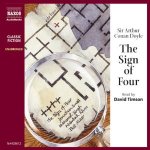
sign of fourThe Sign of Four by Arthur Conan Doyle is the second Sherlock Homes novel. It was originally published in a magazine as The Sign of the Four and later published as a novel. Later publications shortened the name to The Sign of Four.

Sherlock and Watson are visited by a Miss Mary Morstan. Her father had disappeared ten years earlier and she began receiving a valuable pearl from an anonymous source every year for the last six years. She’s just received a note saying she is a wronged woman and requesting a meeting. She can bring two friends as long as they are not police. Sherlock and Watson agree to go. Mary shows them an odd paper found among her father’s things that appears to be a map with four crosses and four names, three of them English and one Indian.

When they arrive at their destination they are greeted by one of two twin brothers who were sons of an associate of Mary’s father. I’ll leave what he told them and what they found there for you to discover if you read the book. πŸ™‚

Hearing that Holmes engaged in drug usage caused me to hold his stories at arm’s length at first, but Wikipedia explains that the drugs he uses are not illegal at the time. He uses them when he is extremely bored or when he feels his brain needs the stimulation. This book introduces the habit and Watson’s disapproval, which he finally works up the nerve to express to Holmes. According to Wikipedia, in later stories Watson is eventually able to “wean” Holmes off of them. The drug use doesn’t play a major role in this book, but it’s there, mainly at the beginning.

This book also delves more into Holmes’s pysche and personality, which I found as interesting as the mysteries. We saw in the first book that Holmes had a brilliant intellect and developed his skills for deductive reasoning and crime solving almost to the exclusion of others, even to the point of not knowing that the earth revolved around the sun or caring since it didn’t affect his work. Some years ago I saw an documentary on Einstein which showed him to have a horrible relationship with his wife. I almost wondered then whether becoming a genius in one area required one to be out of balance in other areas. I don’t know – I’ll have to explore that idea further if I read about any more geniuses. πŸ™‚ But it appears to be true in Holmes’ case: if he is not solving a crime or developing a skill which will help in the future, he’s utterly bored and doesn’t know what to do with himself. This book humanizes him a bit and we see him as more than just a brilliant intellect.

Part of my interest in reading Holmes’ stories is spurred by some modern adaptions of them, mainly the BBC television production of Sherlock starring Benedict Cumberbatch, which depicts Holmes as a modern London city-dweller and adapts the stories in the current culture and technology.Β  I’ve only seen the first three episodes and have been advised that the fourth (or actually the first episode in the second season, concerning Irene Adler) is best avoided. But I’ve enjoyed the three I’ve seen and thought they were quite well done. They don’t follow the original stories exactly but there are enough similarities to make the modern Sherlock as much like the original as possible within a modern framework.

But even though the TV series touched off my reading of the Holmes books, they are interesting enough that I want to continue to read them for themselves. For this book I listened to the audiobook ably narrated by David Timson. The text of the story can be found online here.

(This will also be linked toΒ Semicolonβ€˜s Saturday Review of Books.)

Laudable Linkage

Here are some noteworthy reads recently discovered:

Nobody Understands What I’m Going Through.

How to Truly Encourage the Spiritual Life of Your Husband.

Slow-to-Anger Parenting, HT to Challies.

Thunder and Bugs: Helping Children Deal With Fear.

What To Do When Compliments Scare You.

I’ve seen this video in a couple of places this morning. We think of erosion as a destructive force, and it can be: we have to take measures against its damaging foundations and crops, etc. But God can also use it to create beauty.

Have a great weekend!

Friday’s Fave Five

FFF spring2

It’s Friday, time to look back over the blessings of the week with Susanne at Living to Tell the Story and other friends. Here are five highlights:

1. Timothy is home! My little grandson finally got to come home from the NICU yesterday! That will probably be one of the fave fives for the year! πŸ™‚ I was able to go over last night and hold him for a little while – so sweet.

2. Take-out two nights. I asked my husband if he’d bring something home for dinner Friday night, and then he offered to get something on Saturday night, too. It was nice to have a couple of nights “off.”

3. Not having a spider bite. πŸ™‚ I’ve had a red spot with blisters on one leg for the last couple of days and probably would have just waited to see if it went away, but with it being Friday I was antsy about letting it go over the weekend. I was thinking it was some kind of bug bite, but the doctor said it looked like contact dermatitis, possibly poison ivy. It’s on part of my leg that doesn’t have full sensation due to transverse myelitis, so it doesn’t itch or hurt. πŸ™‚ But he did prescribe a cream for it. I was glad they were able to see me today.

4. Antibiotics. My husband had been feeling pretty terrible with a sinus infection, but the antibiotics have started kicking in and he s been feeling a little better.

5. Our doctor’s office for getting me in today and for seeing my husband after hours one night this week.

Hope you have a great weekend!

Timothy is home!

welcome-home

As most of you know, my little grandson, Timothy, was born almost 11 weeks premature back in April and has been in the NICU ever since. He finally got to come home yesterday! We’re all so happy!

I had thought that once he reached his due date and everything else (weight, heart-rate drops, etc.) was ok, that we were home free and he would be the same as any other newborn. But apparently preemies’ immune systems are still more vulnerable than other babies even when they reach full term status. So he’ll have to be isolated for a while, except for the multitude of follow-up visits with various therapists and doctors.

But we’re definitely rejoicing at this happy long-awaited major milestone! And since so many of you have prayed with us for him, I wanted to let you know.


What’s On Your Nightstand: June 2014

What's On Your NightstandThe folks at 5 Minutes For Books host What’s On Your Nightstand? the fourth Tuesday of each month in which we can share about the books we have been reading and/or plan to read.

Since last time I have completed:

Loving the Church by John Crotts, reviewed here.

The Brothers Karamazov by Fyodor Dostoyevsky via audiobook, reviewed here. This is the August selection for Carrie’sΒ  Reading to Know Classics Book Club list, if you want to try to give it a whirl before then. πŸ™‚

Wow, not very much, considering one was an audiobook! Not sure what happened to my reading time in June.

I’m currently reading:

The Book of Three by Alexander Lloyd, first book in the Prydain Chronicles.

The Knowledge of the Holy by A. W. Tozer

How to Read Slowly: Reading for Comprehension by James W. Sire. Not that I want to actually decrease my reading speed or that I have problems with comprehension, but I’d like to retain more of what I read, so I am hoping this will help.

The Sign of the Four by Sir Arthur Conan Doyle, second of the Sherlock Homes novels, via audiobook.

Next up:

Why We Are Not Emergent: By Two Guys Who Should Be by Kevin DeYoung, Ted Kluck, and David F. Wells

Undetected by Dee Henderson

I will Repay by Baroness Orzcy, part of The Scarlet Pimpernel series

Possibly Girl in the Gatehouse by Julie Klassen and Just Jane: A Novel of Jane Austen’s Life by Nancy Moser, two of my alternates from the TBR Challenge list, rather than the one remaining nonfiction book I have left there. The nonfiction has been beneficial, but I am missing stories. πŸ™‚

Carrie’sΒ  Chronicles of Narnia Reading Challenge. is in July, but I haven’t decided whether I’ll do anything for it yet. I finished the Narnia series last year and am not ready to start it over again. There are several Narnia-related non-fiction books I’d like to read, but I am reading so much other non-fiction this year I am not feeling inspired at the moment to choose another one. I hate to miss out on it, though, as I have participated for the last few years, so I may decide to jump in before it’s over.

What have you been reading?

Book Review: The Brothers Karamazov

KaramazovDostoyevsky is one of those people I’ve thought about reading for a long time, but his works tend to be pretty chunky volumes. However, I did read somewhere not long ago that his books are actually fairly easy to get into, so when I saw his The Brothers Karamazov on Carrie’sΒ  Reading to Know Classics Book Club list, that seemed like the perfect opportunity to give him a try. This book is the selection for August, but I kept thinking it was coming up in July and I wanted to get a head start on it, so I started listening to the audiobook some weeks back and just finished it a few days ago. I wanted to go ahead and write a review wile it was still fresh in my mind.

The first of the title brothers is Dmitri, also called Mitya, the oldest (about 28 when the book begins), passionate, impulsive, tempestuous. He has a running feud with his father over his inheritance and over a woman who is called Grushenka.

The second is Ivan, brilliant, logical, skeptical. He can’t reconcile the idea of God with the suffering he sees in the world, particularly that of children, and feels that if there is a God, He is malevolent. He comes to find out that the logical conclusions of his philosophies have natural but unforeseen consequences.

The youngest is Alexei, also known as Alyosha, about age 20, who lives at the monastery (Russian Orthodox) while training to become a monk. He is kind, reasonable, thoughtful, compassionate, a peacemaker and has a genuine love for people.

It’s widely believed that there is a fourth illegitimate brother called Smerdyakov. His mother was a retarded homeless girl who died in childbirth. He is found and raised by the senior Karamazov’s servant, Grigory, who raises him. He becomes a servant in the Karamazov household as well. He is epileptic and has a mean, warped streak.

The father of this brood is Fyodor (the three sons all have the middle name Fyodorovich, which means “son of Fyodor”). Fydor is wealthy but debauched, wicked, and greedy. He has had little to do with any of his sons’ upbringing, and they all hate him except for Alyosha.

It is not much of a spoiler to say that Fyodor is killed: the author refers to his coming death early on and hints at a terrible event: it’s not much of a stretch to connect the two and realize that Fyodor is going to come to a bad end. And, indeed, he does: he is murdered. One of his sons is arrested for the murder and the evidence seems pretty certain against him (again foreshadowed by the author as he often comments that this or that happened “as so-and-so testified later.”) But the evidence isn’t conclusive, leaving the reader to wonder for a while who actually killed him. Besides being a major factor in the plot, Fyodor’s murder is also a major catalyst in the lives of his sons for different reasons.

Amidst all the action there are several philosophical discussions, notably between Elder Zosima, Alyosha’s mentor, and various people, and later between Ivan and Alyosha, touching on the nature of God, free will and whether it is a burden, moral responsibility, and other subjects.

I am heavily indebted to SparkNotes for getting much more out of this book than I would have from a surface reading/listening. I liked reading the chapter analysis and summaries at intervals (but I have learned from past experience not toΒ  look at the plot overview or character analysis there until finishing a book because they reveal key details of the story). The chapter analyses did help me see the connection between the philosophical discussions and the action: those discussions weren’t isolated rabbit trails: they were integral to the story (possibly the main points of the story), and the action played out the truths discussed. For instance, I hadn’t connected Alyosha’s ministrations to a dying child (Ilyusha) to his earlier discussion with Ivan, but SparkNotes pointed out:

Ivan looks at the abstract idea of suffering children and is unable to reconcile the idea with his rational precepts about how God ought to be. His solution is to reject God. Alyosha, on the other hand, sees an actual suffering child and believes that it is God’s will for him to try to alleviate the child’s suffering to whatever degree he can. His solution is to help Ilyusha. Again, Dostoevsky shows how the psychology of skepticism walls itself off, in elaborate proofs and theorems, from having a positive effect on the world, while the psychology of faith, simplistic though it may be, concerns itself with doing good for others. This very subtle response to the indictment of God presented by Ivan in Book V brings the philosophical debate of the novel onto a plane of real human action, and shows the inadequacy of Ivan’s philosophyβ€”which Ivan himself would readily acknowledgeβ€”to do good in the real world.

As with many older classics, this book can seem a little tedious and wordy by today’s standards. Newer stories start off with action that grabs you and makes you want to know what happens nextΒ  or causes you to care about a character right away: older books have a lot of explanation and description first. The first style is usually more exciting; the latter takes a little more patience but does usually pay off in the end.

This story that has more layers than one would think at first, and it is causing me to think and make connections long after I’ve finished it – a hallmark of a classic. I didn’t agree with much of the theology, but the overall theme of a quiet faith lived out in everyday life with love and service towards one’s fellow man appealed to me.

I also enjoyed reading more of Dostoyevsky’s background at Wikipedia and SparkNotes.

I usually like audiobooks for classics, for several reasons, but in this case it was probably not the best way to go. For one thing, the multitude of polysyllabic Russian names and nicknames was hard to distinguish at first, but after a while I was able to distinguished who was who (whom?) Secondly, there were a few sections of philosophical discussion that were hard for me to follow just by listening while driving, fixing hair, etc.: those would have benefited from being able to go over them on the printed page a couple of times. Nevertheless I thought the narrator, Constantine Gregory, did a good job telling the story.

(This will also be linked toΒ Semicolonβ€˜s Saturday Review of Books.)

This also completes one of my selections for theΒ  Back to the Classics Challenge hosted by Karen at Books and Chocolate.

classics2014


Laudable Linkage

Here is a collection of some thought-provoking posts discovered in the last couple of weeks:

You Are What – And How – You Read from Rosaria Champagne Butterfield. About more than reading.

When Sin Looks Delicious.

The Inner Life — Four Reasons to Have a Quiet Time.

The ladies of Out of the Ordinary have been blogging about middle age this month, a topic you don’t often see on blogs. My two favorite posts so far have been Things to Guard Against in the Middle Years and The Middle Years: There’s Good News, Too!

On Daughters and Dating: How to Intimidate Suitors. Loved this: “Instead of intimidating all your daughter’s potential suitors, raise a daughter who intimidates them just fine on her own. Because, you know what’s intimidating? Strength and dignity. Deep faith. Self-assuredness. Wisdom. Kindness. Humility. Industriousness.”

What do those with disabilities owe those without?

An Outburst Is An Opportunity.

When It’s Time to Leave a Church.

Five Helps for Memorizing Bible Verses.

Three Reasons to Diversify Your Reading. Why Christians should read non-Christian books.

Hope you have a great weekend!

Friday’s Fave Five

FFF spring2

It’s Friday, time to look back over the blessings of the week with Susanne at Living to Tell the Story and other friends.

This has been a difficult week, primarily processing the totally unexpected news that our pastor has cancer and a prognosis of 6-12 months to live.

We were also hoping that my grandson, Timothy, might be able to come home from the NICU after going almost a full week with no bradycardia episodes – but then he has had a few more this week, so that means a longer waiting time: they want him to go 5-7 days without one before they release him. One doctor had said he should outgrow them around 37 weeks (gestational age), but that came and went. Otherwise he’s doing great, so it’s just a matter of waiting for his system to mature enough. He’s been in the hospital over 9 weeks so far.

With grief on the one hand and disappointment in a couple of areas on the other, it has been a teary, weary week. Yet it is a good exercise to look for blessings large and small whether the week has seemed good, bad, or mediocre.

1. An outpouring of love and support. After our pastor’s news was made public, his Facebook page plus our church’s was flooded with promises of prayer and expressions of love. Plus it has been a blessing to see the different verses, hymns, or thoughts different church members have shared trough the week that have been a help to them.

2. My pastor’s message where he announced the news of his cancer. It might sound strange to list that as a favorite of the week. The news was not a favorite, no, but the message was one of the best I’ve ever heard and just what we needed. If you can make the time, I’d encourage you to listen to it. It’s real and raw emotionally and hard in some ways, but it was a model in how to deal with devastating news spiritually.

3. A thoughtful gift. One of my blog friends sent a little gift for Timothy this week. I neglected to ask her if she minded if I mentioned her or showed a picture, so I’ll refrain for now, but her thoughtfulness was a bright spot in the week.

4. Hydrangeas. I planted a small hydrangea bush two years ago and I think this is the first time I have seen blooms on it except maybe a few small ones. I didn’t get a picture because they’re on the back of the plant facing the wall – but hopefully this is a sign there are more to come!

5. Surgery avoided. One of my sisters in TX had to go to the hospital yesterday with extreme pain due to what they think is a bulging disk in her back. They thought she might need surgery but decided to try IV steroids first.

Favorites this and every week are the bedrock truths that no matter what happens, God is real, He loves us, His promises are true, His will is good.

I hope however your week has gone that you’ll be able to trace God’s hand of blessing in it.

(P.S. I can’t believe I forgot to mention Father’s Day completely until I saw it on another FFF list! It seems like much longer ago than this week! But we always enjoy getting to shower my husband with a few tokens of our love and to have the whole family together [one via FaceTime] for a visit.)

Book Review: Loving the Church

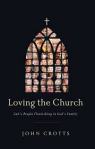
loving the churchI first noticed Loving the Church by John Crotts a few years ago when Carrie reviewed it. It struck a chord with me because I have seen a general trend in recent years of people leaving the church, primarily because of all its problems or imperfections or its lack of meeting their needs. When I commented to Carrie that I would probably get the book, she offered to send me her copy. And I am ashamed to say it has been sitting in my bedroom neglected all this time, mainly because I tend to gravitate toward fiction rather than nonfiction, even though this is a topic important to me. But the TBR challenge provided a good opportunity to get to some of those books I hadn’t yet, and I knew this was one I wanted to include.

Crotts begins the book with a fictional group of people coming together at a coffee shop. None are rebellious or malcontents, but all except one are not attending what we would call a conventional church for various reasons: one is involved in a fulfilling ministry, one attends a house church because it keeps his family from being split up into different groups, one has been deeply wounded by the way the church responded to her when she found she was pregnant while unmarried, one has sacrificed some depth of preaching for a high tech church with a lot of singles that he can identify with and where he can possibly find a wife. As this group discusses church, they decide to continue to meet together to study what the Bible says about the church.

They turn up here and there throughout the rest of the book, but the majority of the book is a straightforward discussion of exactly what the Bible says about the church and why believers should attend.

After a brief chapter on the trend away from church over the last few years, Crotts shares from the Bible why the church is valuable. A few of the concepts he discusses are that Jesus loved the church and gave His life for it: “Husbands, love your wives, even as Christ also loved the church, and gave himself for it; That he might sanctify and cleanse it with the washing of water by the word, That he might present it to himself a glorious church, not having spot, or wrinkle, or any such thing; but that it should be holy and without blemish” (Ephesians 5:25-27), and that the church is the “pillar and ground of the truth” (I Timothy 3:15) and described as the bride of Christ. ( Search for the word β€œchurch” in a Bible search engine to discover many more. I don’t remember if he includes this one, but one of the most intriguing to me is that “now unto the principalities and powers in heavenly places might be known by the church the manifold wisdom of God,” Ephesians 3:9-11. Somehow through the church God displays His wisdom to those principalities and powers.) It’s abundantly clear that the church is important to Christ.

Crotts then goes on to define the church and discusses the difference between what we call the universal church (all believers everywhere) and the individual local church. Some say that the verses about the church refer to the church universal, but the epistles were written to specific local assemblies which were called churches. “A local assembly…is not just some tiny part of the universal church, like the pinkie toenail in the universal body of Christ. It is better understood as a local expression of the body of Christ – complete in itself” (pp. 44-45).

Crotts also discusses the descriptionΒ  and function of the church from the Bible, the headship of Christ, the purpose of elders and deacons, the giftedness each member provides to minister to the others in the assembly.

Of the several quotes I marked, here are a couple that stood out to me:

The goal of mutual ministry within the church is maturity in Jesus. This is described as “the unity of the faith and of the knowledge of the Son of God” (Ephesians 4:13). The combination of unity and the knowledge of Christ shows that Paul is not maximizing superficial togetherness by minimizing doctrinal content. Voices calling Christians to forget about doctrinal differences and just love Jesus do not represent Christian maturity….Community-wide gatherings or projects that merge churches that don’t believe in the Bible, Jesus, or salvation with churches that do, are a hollow shell of what the Lord intends when he commands us to be in unity around the truth. No matter how sincere the motives of people organizing such events, in the end, the truth becomes watered down instead of strengthened, and unfortunately, weak doctrine turns out weak Christians. In Colossians 1:28, Paul describes the goal of his ministry: “Him we proclaim, warning everyone and teaching everyone with all wisdom, that we may present everyone mature in Christ” (p. 56)

Don’t you need shepherds to guide you? Jesus thinks you need them! It is terrible pride to assume that you don’t need what Jesus designed for his glory and your family’s good (p. 95).

What I find most refreshing about this book is that it is a discussion and exposition from the Bible, not just opinions or quotes from what this or that author says. It’s very readable but very thorough. I also appreciate that in general he didn’t go further than the Bible. I think he said some place, but I forgot to mark where, that every church in every time and culture will not look exactly the same because the Bible does grant a certain amount of latitude in exactly how to “do church.” Missionaries through the centuries have had to learn that their goal isn’t to replicate a church exactly like the one back home, but they’re to keep to Biblical principles and incorporate them into the culture in which they minister.

The last couple of pages of this book lists negative consequences of neglecting church, among them, “thwarting Jesus’ plan, unconsciously saying that your plan for your Christian life and family is superior to His,…rejecting a chief means He has given for your spiritual growth,…boycotting the place He designed for your service,…missing great opportunities for spiritual influence from like-minded believers,…teaching your children to disobey Jesus by your example” (pp. 129-130).

One thing I wish the author would have included was a brief history of the church. He didn’t really answer the question about house churches except to say that they don’t include the authority structure of elders and deacons that the Bible calls for. I’ve often wondered exactly how the early church in Acts met. Acts 2:41 says 3,000 were added to the church in one day, but Romans 16:5 and Colossians 4:15 refer to churches that meet in someone’s house. They didn’t have mega-churches or large places to meet in that day and obviously some did meet in houses. I don’t know if perhaps the individual house churches were connected to each other or exactly how it worked. I know some who have felt that house churches are more Scriptural, but personally I think that’s where the latitude of Scripture comes in: in Acts the church was a new enterprise and they were under persecution. A 21st century church in a country with religious freedom is going to look a little different. But I would say that making individual churches into little empires is going beyond from the Bible’s intentions.

Some will quibble about the author’s definition of pastors and elders, but I think that can be set aside for the larger purposes of the book (I think that is an area Christians can disagree on and still be friends). I may have disagreed with a minor point here and there, but nothing that I thought important enough to make note of. The only note that jarred me a little was his continual emphasis on Christians helping each other toward Christlikeness by helping them see their sins and blind spots. While that’s true, and overemphasis on that point can lead to nit-picking and fault-finding. That’s an area I admit to having a hard time finding the balance in. I tend to avoid confrontation, but when I feel most stirred up towards it, it is usually due to personal irritation and offense rather than a concern about the other person’s maturity in Christ. Sometimes we see things not so that we can jump in to do the Holy Spirit’s job, but rather to pray for the person involved. It takes a great deal of care, delicacy, and being closely in tune with and filled with the Holy Spirit to confront someone. I think the author would say that as well, and he is not advocating that we all become spiritual policemen. He does emphasize thatΒ  “love must mark a Christian’s motives and manner in ministering God’s Word to other believers” (p. 58).

I want to close with a brief comment about leaving church because of its faults and failures. The church has always been full of faults and failures because it is full of sinners. Many of the epistles are written to churches about how to correct their problems (which is an admission that they have them!), and in Revelation 2 and 3, Jesus commends and condemns certain aspects of seven churches. One of the things we’re supposed to do in church is help each other towards more Christlikeness, and all the Bible “one anothers” are to be exercised in the context of church (in everyday life, too, but they were given specifically in letters to churches). One of them is “Forbearing one another, and forgiving one another, if any man have a quarrel against any: even as Christ forgave you, so also do ye” (Colossians 3:13). There wouldn’t be a need for forbearance and forgiveness unless we failed each other or irritated each other. But because we do, we’re to “Put on therefore, as the elect of God, holy and beloved, bowels of mercies, kindness, humbleness of mind, meekness, longsuffering…And above all these things put on charity, which is the bond of perfectness” (Colossians 3: 12,14). There may be times to leave a specific church if it falls away from the truth of the Bible, and in Revelation Jesus said some churches were in danger of their candlestick removed, but the Bible doesn’t portray completely leaving the church as an option.

I don’t know anything about John Crotts other than what I have read in this book, but I heartily recommend it.

For more on this topic, see also previous posts here on Why Go to Church? and The Community of Believers as well as Lisa’s 7 reasons why I still go to church. Incidentally, at the time of this writing Loving the Church is available in a Kindle format for $1.99.

(This will also be linked toΒ Semicolonβ€˜s Saturday Review of Books.)

Reading Challenge Updates.

2014tbrbuttonI keep forgetting that Roof Beam Reader, who hosts the 2014 TBR Pile Challenge, has check-in points around the 15th of each month so we can summarize how we’re doing. I haven’t done one since March, and since that time I have completed (all links are to my reviews):

Wednesdays Were Pretty Normal: A Boy, Cancer, and God by Michael Kelley.

The Great Divorce by C. S. Lewis.

Crowded to Christ by L. E. Maxwell.

Walking From East to West: God in the Shadows by Ravi Zacharias.

Loving the Church by John Crotts.

Out of the 12 books I chose for this challenge, that completes 8, and I have started two more, so I am feeling pretty good about this challenge.

And while I am here I may as well update the other reading challenges I am participating in this year:

classics2014The Back to the Classics Challenge has a mid-year check-in. I’m happy to say that after completing My Man Jeeves by P. D. Wodehouse, Bleak House by Charles Dickens, and The Brothers Karamazov yesterday, though it will take me a few days to get a review together, I’ve completed all of the required books I chose for this challenge and all but two of the optional ones. Here are my completed choices (links are to my reviews):

Required:

  1. A 20th Century Classic:Β My Man Jeeves by P. D. Wodehouse
  2. A 19th Century Classic:Β Bleak House by Charles Dickens
  3. A Classic by a Woman Author: The Blue Castle by L. M. Montgomery
  4. A Classic in TranslationΒ  (A book originally written in a different language from your own.)Β The Brothers Karamazov by Dostoyevsky.
  5. A Classic About WarΒ Β The Scarlet Pimpernel by Baroness Orczy.
  6. A Classic by an Author Who Is New To You: The Woman in White by Wilkie Collins
Optional Categories:
  1. An American Classic: Farmer Boy by Laura Ingalls Wilder
  2. A Classic Mystery, Suspense or Thriller:Β  A Study in Scarlet by Arthur Conan Doyle, the first Sherlock Holmes book
  3. A Historical Fiction Classic: I will Repay by Baroness Orzcy, part of The Scarlet Pimpernel series. (Not completed yet)
  4. A Classic That’s Been Adapted Into a Movie or TV Series: To Kill a Mockingbird by Harper Lee. (Not completed yet)
  5. Extra Fun Category: Β Write a Review of the Movie or TV Series adapted from Optional Category #4 (Not completed yet).

bible-verse-christian-hebrews-12-1-2For the The Cloud of Witnesses Challenge.I completed Mere Christianity and Crowded to Christ. I had planned to read four books in this category of nonfiction books written by a Christian who has passed one. I’m also reading Traveling Toward Sunrise by Mrs. Charles E. Cowman, a devotional which which be completed by the end of the year, and just started The Knowledge of the Holy by A. W. Tozer. While it looks like I’ll have no problem completing my goals for this challenge, now that I have started reading this type of book again, I want to continue.

Nonfiction Challenge hosted at The Introverted ReaderAnd in theΒ Nonfiction Reading Challenge in which I am aiming to read 11-15Β  nonfiction books, I have completed 12. But I have other nonfiction books to complete for some of these other challenges, so I’ll be adding more to this list.

It helps a lot that many of these challenges overlap. That’s one reason I decided to participate in them all – otherwise I would have had to choose just one or two. And audiobooks have helped a lot, too, particularly with the classics.

It’s funny how just having these on a list of goals to complete for the year have been driving me towards completing that goal. Sometimes I don’t like that driven feeling, but that’s probably because I gravitate more toward…not fluff, exactly, but lighter reading. Yet I am glad for the impetus to incorporate some reading I would not otherwise get to.