To Kill a Mockingbird, the Movie

Normally here on the blog, if I discuss a movie based on a book, I do so within the context of my review of that book. But for the Back to the Classics Challenge, “A Classic That’s Been Adapted Into a Movie or TV Series” and “Movie or TV Series adapted from” that book are two separate categories.  I chose for both of these categories To Kill a Mockingbird (linked to my book review).

TKAMMy husband and I watched the movie version starring Gregory Peck as Atticus Finch this past weekend. I was amazed it was not on Netflix. We ended up renting it online. Our library system did have it, but I didn’t want to take the time to put it on hold and wait for it: I wanted to finish this up before the end of the year, and that night was a perfect time to see it. I think I had seen it some years ago, but my husband never had.

The audiobook is over 12 hours long, so trying to condense all of that in a two hour movie is going to result in some scenes and characters left out and some characters or situations consolidated. But overall I felt the movie did a great job of boiling the plot down to the essentials.

I discussed the plot and my thoughts about it in more detail in my book review, but basically the story opens similarly to the book with childhood episodes of Jean Louise Finch, called Scout, aged six, her ten year old brother Jem, and their friend Dill in the small town of Maycomb, Alabama, in the 1930s. They are fascinated with a reclusive neighbor known as Boo Radley and become obsessed for a time with trying to get a glimpse of him. Jem and Scout’s father, Atticus, is a lawyer who is asked to take on a difficult case of Tom Robinson, a black man accused of raping a white woman. In the climate of the times, Atticus is not thought well of for defending a black man, especially in this situation, and some of the negative feelings toward him spill over to his children. Scout is a tomboy and her first response to to fight anyone who says anything about her family, but Atticus asks her not to (actually forbids her to in the movie).

Many of the same elements of the book are in the movie as well: Atticus maintaining that all men are created equal and every man is entitled to a fair trial, his explanations to his children about how he could not hold his head up in town or even ask for their obedience if he did not do the right thing, the details of the trial and its result, Atticus’s saying that you never really know a man until you walk around in his shoes and his discussion about why it is a sin to kill a mockingbird. Meanwhile the children discover little gifts to them left in a tree by Boo Radley (in the book they both discover them; in the film Jem does and shows them to Scout later).

There is no Aunt Alexandra who tries to make Scout into a lady in the movie, and Dill’s Aunt Rachel and the town gossip Stephanie Crawford are rolled into one.

Though the book is definitely a richer experience with more background information and fuller development of the characters and plot, the film did an excellent job encapsulating the story and its meaning of protecting the innocent and not judging one’s fellow man unfairly. Gregory Peck was perfectly cast as Atticus, and I felt all of the other characters were very well fleshed-out also.

Our 35th Anniversary!

35 years ago I was blessed to marry a wise, wonderful, kind and caring man. I thank God for a wonderful marriage and a great family!

Yesterday we went to my son and daughter-in-law’s house, thinking we were just there to visit, have lunch, and see her mom, who was visiting for a few days. But the kids surprised us with an anniversary celebration!

10850180_10205244671373350_2540278917175674904_n

1897657_10205244672293373_7640667409841170865_n

10410894_10205244672253372_3880100041441124289_n

They got us a couple of special ornaments made by the Photo Barn.

10171623_10205244671213346_5774749903343139058_n

And one of our most special gifts ever – they had this special book made with photos and memories.

10689544_10205244701774110_1712606411751774809_n

Then we came home and took a nap. 🙂 And then we had someone come in to watch Great-Grandma and we went out on a rare date to Outback and then came home and watched a movie. 🙂

Since today is busy with church activities, we did most of our celebrating yesterday, and overall it was a lovely day!

On our 30th anniversary I posted 30 things I love about my husband.All of those things are still true. 🙂

A few years ago Jim made this video for me, and I think I have posted it every year since. 🙂 The song is “The Voyage,” sung by John McDermott, one of the original Irish Tenors.

Friday’s Fave Five

It’s Friday, time to look back over the blessings of the week with Susanne at Living to Tell the Story and other friends.

It has been another very busy but overall good week. Here are some of the best parts:

1. The adult Christmas program at church. For the past few years they have put together their own production rather than doing a cantata, and it is one of my favorite services of the year.

2. A new caregiver. We have someone who comes in to take care of my husband’s mother in the mornings so I can run errands or do whatever, and we have had the same weekday lady for a year and a half until last week when she resigned. Bringing a new person in can be kind of tricky, but the new lady has worked out really well.

3. A quick answer to an urgent prayer.

4. Alternatives. Some of you know I have had trouble with SVTs (supraventricular tachycardia) for years. It has picked up lately, not in the big episodes needing the ER but in more everyday shorter bothersome happenings. There is a surgical procedure called an ablation they can do, but I have been dreading it. I went to see a cardiac electrophysiologist yesterday, thinking I was going to have to schedule the surgery, but he brought up the possibility of some medicines I had not heard of previously, so we’re going to try one or two of those and see what happens. I still may have to have the procedure, in in many ways it would be nice to have it taken care of, but I just wasn’t ready to commit to that yet. The prayer mentioned in #3 had to do with an episode that occurred Monday while I was out Christmas shopping that felt like I was going to need to go to the ER, and I was thinking of all the logistics involved with needing someone to pick me up, then having Jim and Jesse have to come back to get my car, and having to make arrangements for Grandma, etc., etc. I was just praying my heart rate would go back to normal on its own, and, thank God, after about 10-15 minutes it did.

5. Joys of the season. The glow of Christmas lights in a darkened room. Christmas carols. Packages arriving. Christmas cards and greetings. Shopping for loved ones. Advent reading. Amidst the busyness of the week, I’ve enjoyed all these aspects of Christmastime. (And see the sneaky way I crammed more than five items in my fave fives? 🙂 )

We’re looking forward to my oldest son coming in tonight and everyone else having some time off this next week. I’ve been trying to get most everything else done except the cooking this week so that next week I can just enjoy being together with everyone, so it should be a bit more relaxing for me, too!

Happy Friday! And for those whom I may not see until next week, I wish you a blessed Christmas with loved ones, remembering most of all the best gift of all, our Savior, the Lord Jesus Christ.

Book Review: To Kill a Mockingbird

Despite its title, you won’t find anything like this in To Kill a Mockingbird by Harper Lee.
mockingbird

🙂 I’ll forewarn you that I will probably say more about the plot than I usually do. I don’t like to reveal key details in a review, but since I read this one this time in connection with Carrie’s  Reading to Know Classics Book Club, this discussion will involve others who have already read it, plus I am still processing some parts of it. But whatever I share about it, I will try not to spill all the major beans, and there will be much to discover if you do go on and read the book.

Published in 1960, To Kill a Mockingbird is set in the early 30s in a small Alabama town called Maycomb. The story is told through the eyes of Jean Louise Finch, known as Scout, who is six years old as the novel opens. She lives with her older brother, Jem, short for Jeremy, and her widowed father, Atticus, a lawyer. The first part of the book evokes a realistic feel of growing up in a sleepy Southern town. Jem and Scout and their friend, Dill, who comes to visit his aunt in Maycomb each summer, spend a great deal of their time trying to devise a way to get their reclusive neighbor, Arthur Radley, known as Boo, to come out. They meet with no success and get themselves in trouble over their escapades more than once. In these early scenes we get a picture of Scout, smart but bored at a school that scolds her for learning to read at home, Jem’s maturing into a young man, Atticus, who seems detached as a parent sometimes, but shows a depth of wisdom and integrity in handling his work, his life, and his children, and an overview of the citizenship of Maycomb.

There is something of a caste system in the South of this time, with “old” families concerned about their history and standing, to poor but decent folks, to uneducated “trash” who live near the dump. Then there are the Negroes or colored folks, as they are called in the book. There are varying degrees of feelings toward the colored people, with, sadly, most of the townsfolk considering them at least a race apart if not a race beneath. Atticus seems to be one of the few who believes that all people need to be treated with decency and respect no matter what their race.

The children get an inkling that their world is about to shift when they start getting taunted for their father being an “n-lover.” Scout is a scrappy tomboy and her first instinct in any confrontation is to answer with her fists. But her father asks her to refrain from fighting about this issue. The children learn that their father has been appointed the defense attorney for Tom Robinson, a black man accused of raping a white woman. Most of the town thinks, at the very least, that it is not a good idea, and some are quite caustic about it, even to the children (which is low-down and dirty in my opinion.)

Tension builds until the day of the trial. Scout, Jem, and Dill sneak in to watch, and there is no room in the courthouse except in the colored section of the balcony, which welcomes them. Lee deftly handles the details of the case even though her narrator doesn’t really understand what rape is. The evidence is only circumstantial, and Atticus brings out the fact that the alleged victim, Mayella Ewell, has flirted with and lured Tom into her home, and since no one took her to a doctor, there is no proof that a sexual assault occurred. Tom insists that none did. But even though Jem is sure they’ve won the case, the jury returns a guilty verdict.

Though the verdict went the Ewell’s way, Mr. Ewell is angry with Atticus for “destroying his credibility” and threatens to “get” Atticus if it is the last thing he does.

There were many things that stood out to me in this book. One was how Atticus tried to prepare his children for the trouble to come. He didn’t want them to fuss about it nor to think ill of their friends who might say unkind things. When asked why he took the case when the townspeople and even his own relatives think ill of him for it, he says things like he couldn’t live with himself, couldn’t go to church, couldn’t ask his children to obey him if he didn’t. It was the right thing to do, and his conscience would smite him if he didn’t. The children don’t learn until the court day that Atticus was appointed to the case. Scout says it would have saved them many fights if they could have defended him with that piece of information. It says a lot about Atticus that he did not use that fact to defend himself.

Another was how often innocence saw truth. When Scout hears her teacher at the courthouse saying this trial will “teach ’em a lesson, they were gettin’ way above themselves,” she wonders how her teacher can hate Hitler and feel sorry for the Jews in Europe in their classroom and “then turn around and be ugly about folks right at home.” “It’s not right to persecute anybody, is it? I mean have mean thoughts about anybody, even, is it?” It’s Scout innocently talking with one of her neighbors about his son at school that halts an angry mob, unbeknownst to her at first. It’s Dill who gets upset and sick at the courthouse over how the prosecuting attorney is treating Tom on the stand.

I appreciated how the children’s view of their father changes throughout the book. They love him, but compared to other fathers, he is “old,” doesn’t play football, doesn’t have an interesting job, and reads all the time. Their neighbor, Miss Maudie, helps them understand him a bit better, finding out he is a crack shot helps immensely, and the course of events eventually helps them to see him for the man that he is.

One of the most poignant parts of the book for me was when Scout was helping her Aunt Alexandra (who throughout the book tries to make Scout into a lady) at a ladies’ missionary meeting. There are poor examples of womanhood, such as when some of the women say embarrassing things to Scout for a laugh and when others gossip or others laud the heart of missionaries in other countries but fail to acknowledge needs in their own county. When Atticus comes in with bad news about Tom and asks his colored cook to go with him to Tom’s wife, Scout, Miss Maudie, and Scout are shaken. But they don’t want to let the ladies know what has happened, so they put on a brave face and go back out and serve refreshments. Aunt Alexandra smiles at Scout, who thinks to herself, “If Aunty could be a lady at a time like this, so could I.” That contrast between real womanhood and the silliness of so many, and Scout’s realization of it, just spoke volumes to me.

So what does a mockingbird have to do with all of this? When the children are given air rifles one Christmas, Atticus tells them they can “shoot all the bluejays you want, if you can hit ’em, but remember it’s a sin to kill a mockingbird.” Miss Maudie explains to Scout that mockingbirds don’t do people any harm, but they “sing their hearts out for us.” This metaphor of it being a sin to harm the innocent comes up throughout the book, especially beautifully near the end when Scout realizes its meaning and applies it to Boo Radley as well.

Miss Maudie tells the children after the trial,  “Atticus Finch won’t win, he can’t win, but he’s the only man in these parts who can keep a jury out so long in a case like this…We’re making a step – it’s just a baby step, but it’s a step.” Though the battle in this case was lost, there was much that happened that made it a baby step in the right direction. Race relations in this country are still not what they should be, but they’re a far cry from what they were in this time period, mostly due to individual steps along the way, some large and some small. I don’t know if massive cultural changes can be made by a revolution: I think they often come through slow change, through individual men and women standing up and doing the right thing within their sphere of influence.

Some quotes that especially stood out:

Atticus to Scout: “You never really understand a person until you consider things from his point of view…until you climb into his skin and walk around in it.”

Miss Maudie (a neighbor) to Scout: “Atticus Finch is the same in his house as he is in the public streets.”

Scout: “Atticus, are we going to win it?”

“No, Honey.”

“Then, why – “

“Simply because we were licked a hundred years before we started is no reason for us not to try to win.”

When Atticus tries to explain to Scout that “n-lover” is a term that “ignorant, trashy people use,” she ask, “You’re not rely one, then, are you?” He replies, “I certainly am. I do my best to love everybody.”

When Scout and Jem are asked to visit the crusty Mrs. DuBose, unaware that in her dying days she is trying to come out of a morphine addiction brought on my treatment of her illness: “I wanted you to see what real courage is, instead of getting the idea that courage is a man with a gun in his hand. It’s when you know you’re licked before you begin but you begin anyway and you see it through no matter what. You rarely win, but sometimes you do.”

Miss Maudie to the children: “There are some men in this world who are born to do our unpleasant jobs for us. Your father’s one of them…We’re so rarely called upon to be Christians, but when we are, we’ve got men like Atticus to go for us.”

Miss Maudie to Aunt Alexandra: “Whether Maycomb knows it or not, we’re paying the highest tribute we can pay a man. We trust him to do right…The handful of people in this town who say that fair play is not marked White Only; the handful of people who say a fair trial is for everybody, not just us.”

When Scout comments that a boy who was thought to have done certain misdeeds hadn’t and was actually “real nice,” Atticus replies: “Most people are, Scout, when you finally see them.”

I think Lee is an excellent author. There is so much that she brought out so well that I can’t explain or portray any more than I have. It is too bad she only wrote the one book.

The only thing that mars the book is a smattering of bad language – some “damns” and “hells” and a couple of instances of taking God’s name in vain. I am not shocked by them because I grew up in an environment where that kind of talk was common, but my family now doesn’t use that kind of language, and I usually avoid books with it. I don’t like to feed them into my brain. I had forgotten they were in this book. I always struggle with whether to recommend a book that is a great read in every way except this. That is up to the individual reader.

I first read this book in 2008, and I purposely didn’t read that review until I got done with this one. It was interesting to see what things stood out to me both times.

I’m thankful that Annette chose this book for Carrie’s  book club. I listened to the audiobook ably narrated by Sissy Spacek, and her Southern accent really added to the feel of the story.

(This will also be linked to Semicolon‘s Saturday Review of Books.)

Reading Challenge Wrap-Up

I’ve been finished with the TBR Pile Challenge for a while and finished or close to finished with the others as well, so I thought I would wrap them up all in one post except for the Back to the Classics Challenge, which I should complete within a few days. Some of these will overlap – I could not have participated in multiple challenges if they hadn’t.

2014tbrbutton

The 2014 TBR Pile Challenge hosted by Roof Beam Reader was to read 12 books in a year that have been on your shelves unread with a publication date before 2013. My original post is here. My links are to my reviews:

1. Made to CraveSatisfying Your Deepest Desire with God, Not Food by Lisa TerKeurst

2. Crowded to Christ by L. E. Maxwell

3. Ida Scudder: Healing Bodies, Touching Hearts by Janet and Geoff Benge

4. The House Is Quiet, Now What? by Janice Hanna and Kathleen Y’Barbo

5. How to Read Slowly by James W. Sire

6. How to Be a Writer by Barbara Baig

7. Walking From East to West: God in the Shadows by Ravi Zacharias

8. The Great Divorce by C. S. Lewis

9. Loving the Church by John Crotts

10. The Book of Three by Alexander Lloyd

11. Wednesdays Were Pretty Normal: A Boy, Cancer, and God by Michael Kelley

12. Why We Are Not Emergent: By Two Guys Who Should Be by Kevin DeYoung and Ted Kluck

I did not read How To Be a Writer. I want to some time, but just couldn’t get motivated to start it this year. However, we were allowed two alternates and I read both of them, totally 13 books for this challenge:

Girl in the Gatehouse by Julie Klassen

Just Jane: A Novel of Jane Austen’s Life by Nancy Moser

I haven’t decided yet if I will do this challenge next year, but I did like that it did motivate me to get to books that had been untouched on my shelves or in my Kindle app for too long.

bible-verse-christian-hebrews-12-1-2The Cloud of Witnesses Challenge was sponsored by Becky at Operation Actually Read Bible, and the idea was to read nonfiction books by godly authors who have gone on to be with Jesus. Sermons or articles could count as well, but I did not keep track of those. I did plan to read at least four books, but got a little more in:

Crowded to Christ by L. E. Maxwell

How I Know God Answers Prayer by Rosalind Goforth

Mere Christianity by C. S. Lewis

The Knowledge of the Holy by A. W. Tozer

On Stories and Other Essays on Literature by C. S. Lewis. I am not sure if this counts – it is non-fiction, and C. S. Lewis is in heaven, but though it is not a theological book, it does apply spiritual truth to the topic.

The Weight of Glory and Other Addresses by C. S. Lewis

By the end of the year I will also have completed Traveling Toward Sunrise, a daily devotional by Mrs. Charles E. Cowman, Daily Light, a devotional of Scripture verses compiled by Samuel Bagster, and Come Thou Long Expected Jesus, a compilation of essays compiled by Nancy Guthrie having to do with Christmas (some of those authors there would fit this category – Luther, Whitefield, Lloyd-Jones, Edwards, Spurgeon, Augustine, Schaeffer, etc.).

I am thankful to Becky for this challenge. It had been a long time since I had read Tozer and some of these types of books, and it was very beneficial to get back into them.


Nonfiction Challenge hosted at The Introverted ReaderThe Nonfiction Reading Challenge was to read any non-fiction book on any topic. There were different levels one could aim for:

Dilettante–Read 1-5 non-fiction books

Explorer–Read 6-10

Seeker–Read 11-15

Master–Read 16-20

I was aiming for Seeker. The non-fiction books I read so far this year are:

Come Thou Long-Expected Jesus compiled by Nancy Guthrie

Crowded to Christ by L. E. Maxwell

Gospel Meditations for Missions, not reviewed.

Gospel Meditations for the Hurting by Chris Anderson and Joe Tyrpak, not reviewed.

The House Is Quiet, Now What? by Janice Hanna and Kathleen Y’Barbo

How I Know God Answers Prayer by Rosalind Goforth

How to Read Slowly by James W. Sire

Ida Scudder: Healing Bodies, Touching Hearts by Janet and Geoff Benge

Jesus, My Father, the CIA, and Me: A Memoir of Sorts by Ian Morgan Cron

The Knowledge of the Holy by A. W. Tozer

Loving the Church by John Crotts

Made to Crave Action Plan Participant’s Guide by Lysa TerKeurst and Ski Chilton

Made to CraveSatisfying Your Deepest Desire with God, Not Food by Lisa TerKeurst

Mere Christianity by C. S. Lewis

On Stories and Other Essays on Literature by C. S. Lewis

Seeking Allah, Finding Jesus: A Devout Muslim Encounters Christianity by Nabeel Qureshi

Walking From East to West: God in the Shadows by Ravi Zacharias

Walking in the Spirit: A Study Through Galatians 5 by Steve Pettit

Wednesdays Were Pretty Normal: A Boy, Cancer, and God by Michael Kelley

The Weight of Glory and Other Addresses by C. S. Lewis

Why We Are Not Emergent: By Two Guys Who Should Be by Kevin DeYoung and Ted Kluck

Women of the Word by Jen Wilkin

In addition to Traveling Toward Sunrise and Daily Light, mentioned above, I will also have completed Let Every Heart Prepare Him Room by Nancy Guthrie.

So that’s 22, or 25 including the ones I will finish by year’s end, more than I had planned. Since I usually gravitate toward fiction, I am pleased. The TBR Challenge contributed greatly to this one: most of the books I have on my shelves but have not read yet are non-fiction.

As I said with the TBR challenge, I have not yet decided whether to participate in any of these next year, assuming all of the hosts will be hosting them again. I did enjoy that they got some books into my reading that might not have gotten there otherwise, but I didn’t like the self-imposed feeling of  pressure at the beginning of the year that I “had” to get these done before I could pick up any book just for pleasure. I am not going to think about it until after Christmas. But I would recommend any of these challenges to you: they were all beneficial.

Who Is He?

Who is He in yonder stall
At Whose feet the shepherds fall?
Who is He in deep distress,
Fasting in the wilderness?

Refrain:

’Tis the Lord! O wondrous story!
’Tis the Lord! the King of glory!
At His feet we humbly fall,
Crown Him! crown Him, Lord of all!

Who is He the people bless
For His words of gentleness?
Who is He to Whom they bring
All the sick and sorrowing?

Refrain

Who is He that stands and weeps
At the grave where Lazarus sleeps?
Who is He the gathering throng
Greet with loud triumphant song?

Refrain

Lo! at midnight, who is He
Prays in dark Gethsemane?
Who is He on yonder tree
Dies in grief and agony?

Refrain

Who is He that from the grave
Comes to heal and help and save?
Who is He that from His throne
Rules through all the world alone?

’Tis the Lord! O wondrous story!
’Tis the Lord! the King of glory!
At His feet we humbly fall,
Crown Him! crown Him, Lord of all!

~ Ben­ja­min R. Han­by, 1866

Laudable Linkage

It’s been about a month since I shared interesting reading I’ve found around the Web. Here is what especially caught my eye lately:

Stop Waiting For a Zap. This was one that hit me right between the eyes.

How Salvation Brings Freedom. Excellent.

No Voice Like Yours.

The Tragic Prevalence of Sexual Assault. Best ways to handle the accusation for both parties.

Is It Biblical to Teach Our Kids About Sex?

A Response to “No, You’re Not Running Late. You Are Rude and Inconsiderate.” Good balance. People who are chronically late do need to realize the impact their lateness has on others and work on some time management skills, but we need to be careful not to sit in judgement whenever someone is late, for reasons the author delineates.

Are You Doing Too Much? Something we all need to evaluate periodically, especially if we’re feeling stressed or drained.

The Trail of Bible Documents. A good and clear explanation of them the different manuscripts Bible translators use.

Are You Ignoring Your Mommy Radar?

Finally, this is one of the most beautiful renditions of “Silent Night” I have ever heard. I wish they had done more than the first stanza, but the harmonies and expression are just beautiful.

Happy Saturday!


Friday’s Fave Five

It’s Friday, time to look back over the blessings of the week with Susanne at Living to Tell the Story and other friends.

Except for finding out from the dentist yesterday that I am going to have to have a tooth pulled, it has been a really good week, with a balance of getting stuff done and having time to rest. Here are some of the best parts of it:

1. The Ladies’ Christmas Party at our church. Always a highlight of the year.

2. The children’s Christmas pageant at church. They always do pretty much a straight portrayal of the Nativity every year with just the songs and actors changing. But it is always good to be reminded that that’s what it is all about. Plus they’re just so cute. 🙂 Especially the little three year olds in animal costumes. It’s fun, too, to watch the children grow through the years and take on different parts as they get older.

3. A good roast. We don’t have red meat very often for various reasons, but I had been craving roast beef lately. Extremely high beef prices have prevented me from getting any kind of beef in recent months, but I caught a good sale on roasts a couple of weeks ago and put one in the crockpot Sunday. So good. Plus with leftovers for the Sunday evening meal, stir fry the next night, and a few lunches, we definitely got out money’s worth out of it.

4. Online shopping and free shipping. It’s so much more convenient to shop online for many things than to drive from store to store. Plus, I thought perhaps we had missed some of the best deals that would have occurred Black Friday and Cyber Monday, but almost every site I’ve gone to has offered either a sales discount or free shipping or both. Sweet!

5. Mutual admiration. I think I mentioned last week that my youngest son started working at the same place as my middle son. I was a little afraid that they might get on each other’s nerves – that can happen with siblings and coworkers in any circumstances. But it has been a blessing to hear them praising each other, seeing each other in a different light as adults with skills each didn’t know the other had.

It’s also been a good week for making progress on Christmas preparations: a good chunk of the shopping done, cards and letters almost ready to go. We have simplified all of that over the years and learned to start earlier in the month so it doesn’t feel stressed and pressured. I’ll have to have some marathon wrapping sessions when everything comes in, but I have some recorded TV shows to catch up on, so I’ll combine all of that. I hope your Christmas preparations are going well and you have some time to sit in the glow of the Christmas tree with a cup of coffee.

Grieving at Christmas

I wrote this a few years ago and have reposted it a couple of times. I probably won’t do so every year, but this year several friends have lost loved ones, and the first Christmas without them can be very hard. Maybe this will help. I’ve edited it a bit so the time frames are current. I also shared a bit from this and added some different thoughts in Christmas Grief, Christmas Hope for a newspaper column I was contributing to a  a couple of years ago.
___________________________________

grave-at-christmas

December could be a rather gloomy month for my family. My mother passed away Dec. 10 nine years ago, my father Dec. 12 sixteen years ago, and my grandmother Christmas Eve a few years prior to that, leading my brother to exclaim once that he just wanted to cancel the whole month. In more recent years the husband of a good college friend passed away in December 21 on our anniversary, and our family dog died the same day.

The death of a loved any any time of year can shadow the whole Christmas season as we miss our normal interactions with that loved one, and several years later, though maybe the pangs aren’t quite as sharp, they’re still there, and it’s not abnormal to be caught off guard by a memory or a longing leading to a good crying jag.

When someone is grieving over the holidays, they may not want to participate in some of the “normal” happy pastimes. It’s not that they don’t ever laugh or enjoy gatherings. But as Sherry said yesterday, “I am enjoying the traditional holiday celebrations, and at the same time they move me to tears, sad tears for things that have been lost this year. I am singing the music, and yet I’m tired of the froth of jingling bells and pa-rumpumpum.” I remember almost wishing that we still observed periods of mourning with wearing black or some sign of “Grief in progress” — not to rain on anyone else’s good time, but just to let people know there was woundedness under the surface, and just as physical wounds need tenderness while healing, so do emotional ones. Normally I love baby and bridal showers and make it a point to attend, but for several months after my mom’s death I did not want to go to them. I rejoiced with those who rejoiced…but just did not want to rejoice in quite that way. I first heard the news of my mom’s death during our adult Sunday School Christmas party, and the next year I just did not want to attend – the grief was still too close to the surface and would probably erupt in that setting where I first heard the news. Even just three years ago when our ladies’ Christmas party was on the anniversary of my mom’s death, I was concerned that at some point during the evening I would have to find the restroom and lock myself in to release some tears (though thankfully that did not happen).

Other events can cast a pall over Christmas: illness, job loss, a family estrangement, etc. One Christmas we were all sick as dogs, and my father-in-law had just had a major health crisis and wanted us to come up from SC to ID to visit. There was just no way we could drag ourselves onto a plane until antibiotics had kicked in a few days later, but we did go, and if I remember correctly, that was the last time any of us except my husband saw him alive, so in retrospect we were glad we went, though it wasn’t the merriest of Christmases. A good friend grieved over “ruining” her family’s Christmas by being in the hospital with a severe kidney infection. Lizzie wrote about visiting her husband in prison for Christmas. Quilly commented yesterday about being homeless one Christmas. Yet both Lizzie and Quilly mentioned reasons for rejoicing in the midst of those circumstances.

If you’re grieving this Christmas, don’t feel guilty if you’re not quite into the “froth” this year (on the other hand, don’t feel guilty for enjoying it, either).  One quote I shared on a Week In Words post earlier had to do with giving yourself time to heal. There may be times to go through with the holiday festivities for family’s sake — and, truly, those times can help keep you from the doldrums. Sherry shared how making a list of reasons to celebrate Christmas helped. Look for the good things to rejoice in. Don’t let the grief turn you into  Scrooge who hates Christmas: your loved one who is gone wouldn’t want that to happen. I think they’d probably prefer you celebrate in their memory and enjoy the best parts of the season while still remembering them in it. E-mom left a valuable comment yesterday that we can treasure up the memories of good Christmases to tide us over the not so good ones, and then look forward to better things ahead. And as I said yesterday, remember that the first Christmas was not all about the froth, either, but was messy, lonely, and painful, yet out of it was born the Savior of the world and the hope of mankind. Rejoice in that hope and promise. Draw near to Him who has borne our griefs and carries our sorrows until grief and sorrow are done away forever.

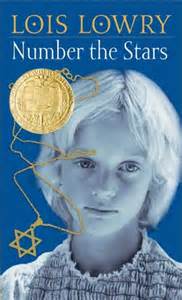
Book Review: Number the Stars

Number the StarsI had never heard of Number the Stars by Lois Lowry until seeing it listed on Carrie’s  Reading to Know Classics Book Club for November. It was published in 1989 and awarded a Newberry medal in 1990. Its name is taken from Psalm 147, read in a moment of need:

Praise ye the Lord: for it is good to sing praises unto our God; for it is pleasant; and praise is comely.

The Lord doth build up Jerusalem: he gathereth together the outcasts of Israel.

He healeth the broken in heart, and bindeth up their wounds.

He telleth the number of the stars; he calleth them all by their names.

It’s the story of WWII in Denmark through the eyes of a ten year old girl, Annemarie. At the opening of the story, the Nazis have been in Denmark for two years. Their beloved king had surrendered because they were a small country without much of an army, and they would only lose people in a war. Soldiers with guns are on almost all the street corners. One of them scared Annemarie and her friend, Ellen, by stopping them when they were racing down the street. Different items have been rationed or are no longer available.

Ellen’s family, the Rosens, are Jewish and good friends with Annemarie’s family, the Johansens. When the Rosens receive word that the Jews are about to be “relocated,” some members of the Resistance help many of them to escape. Mr. and Mrs. Rosen depart while leaving Ellen with the Johansens for a while, everyone pretending that Ellen is another daughter.

Annemarie’s mother takes the girls to her uncle’s house for a visit, and Annemarie perceives it has something to do with helping the Jews. When her mother and uncle begin talking of a Great Aunt Birte who has died and whose casket will be brought to his house. Annemarie knows there is no such person as Great-Aunt Birte and she is offended that they lied to her, but her uncle explains the situation as much as he can. He explains that not even he knows everything about the operation and that “it is much easier to be brave if you do not know everything.”

Annemarie and Ellen are delighted to find that the Rosens are among those whom Uncle Henrik and others are helping, but sad that that means Ellen will have to go away. There are several scares before they can actually leave, however, and Annemarie finds herself in a position of being the only one who can carry out a vital part.

Early in the story Annemarie wonders if she would be brave enough to die to protect her friends and comforts herself that she is only an “ordinary person who would never be called upon for courage.” I really liked how the bravery and courage of “ordinary people” were woven into the story. For some it was being part of an underground plot to help the Jews escape, for some it was facing their fear of an ocean to enable their family to get to freedom, for others it was pretending life is normal when it is anything but. When Annemarie’s protests her uncle calling her brave, because she had actually been terribly frightened, her uncle tells her, “That’s all being brave means – not thinking about the dangers. Just thinking about what you must do. Of course you were frightened. I was too, today. But you kept your mind on what you had to do” (pp. 122-123).

I have heard that sentiment in many a story of  real-life heroes. They didn’t think themselves brave or heroic. They just did what needed to be done.

I really enjoyed the afterword, too, in which the author explains which parts of the story are real and which are fictional. Some of the characters are fictional, though some are based on real ones, but the historical facts are accurate. Denmark helped almost its entire Jewish population (nearly 7,000 people) by smuggling them into Sweden.

This story has the same vibe to me as another favorite children’s book, Keep the Lights Burning, Abbie by Peter Roop. Though the plot and setting are different, it has the same theme of being able to do and face something you didn’t think you could. I enjoyed this story very much and am thankful to Heather for choosing it for us.

(This will also be linked to Semicolon‘s Saturday Review of Books.)