

Old Woman Dozing by Nicolaes Maes (1656), Royal Museums of Fine Arts, Brussels
As my mother-in-law has gotten older, she has been sleeping more. Usually when I went to see her when she was in assisted living facilities and then in a nursing home, she would be dozing in her wheelchair and I would have to wake her up to visit. She used to encourage me to wake her up because she could sleep any time, but she didn’t get many visitors and didn’t want to miss a visit because she was sleeping. Later she was more inclined to stay asleep. Once when I woke her up to visit, she actually told me, “Next time, don’t wake me up.” Usually, though, she did her best to be pleasant, but even then, after just a few minutes, she would start yawning and rubbing her eyes, her head would start drooping, and if she had a pillow propping her up in her wheelchair, she’d nuzzle against it to get comfy again.
When she was awake, though, many times our conversations would get stuck in a loop with the same questions and answers and comments over and over again.
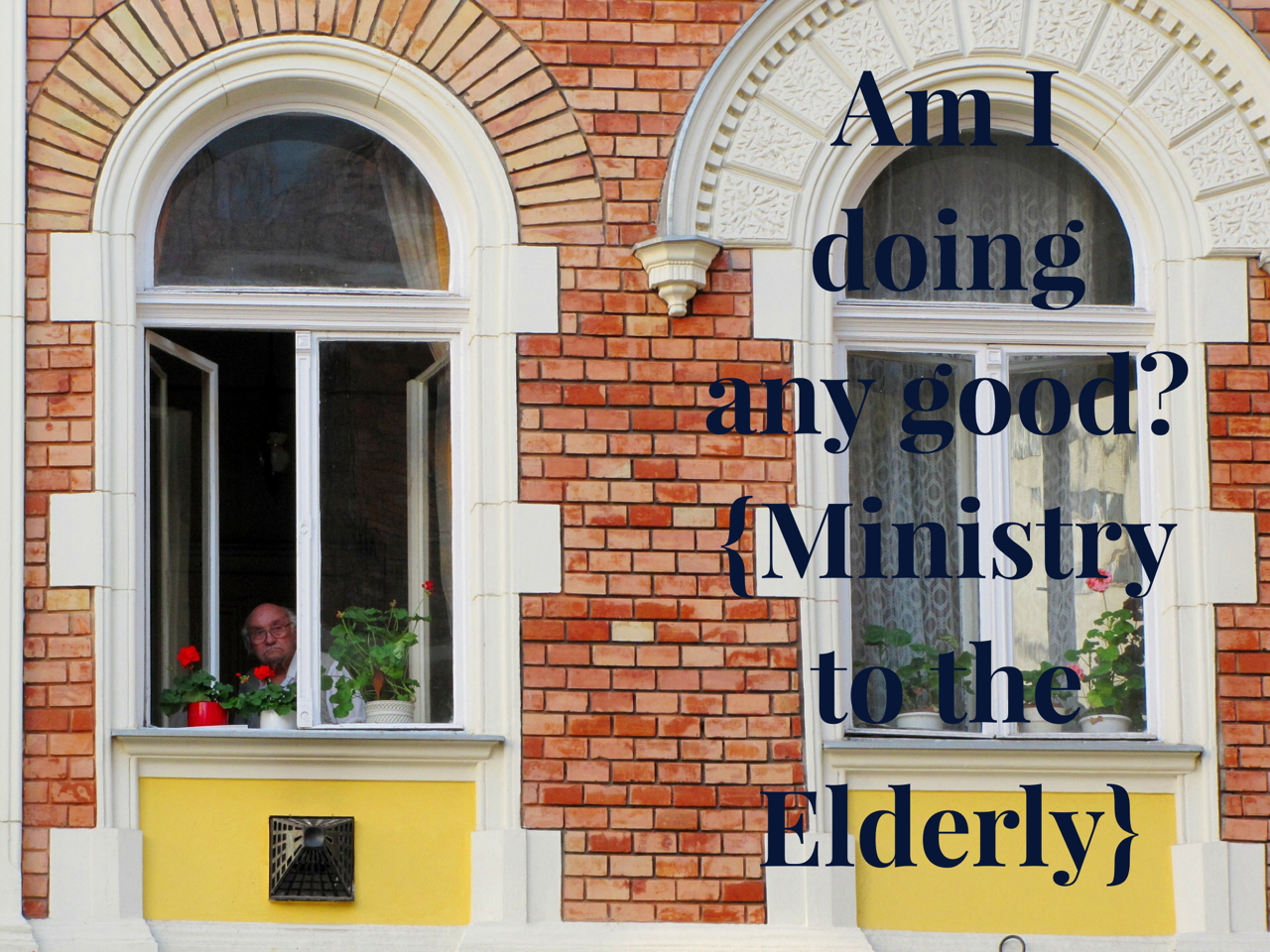
Sometimes I was tempted to wonder if it was worth a 40 minute drive round trip to wake her up for 5-10 minutes of groggy conversation that she likely wouldn’t even remember, or to have the same conversational loops repeatedly. I’d wonder what good it was really doing to visit her.
Other times, she’d be awake and we’d have a good talk, or I would be able to do some little service for her, like change her hearing aid battery, clean off her table, advocate for her with the staff over something, bring her mail, etc., and then I’d feel useful or feel like I had accomplished something with the time.
What I had to realize was that visiting her was not supposed to be about making me feel useful. It was supposed to be about letting her know she was loved and remembered and ministering to her in whatever way she needed.
A dear lady at church writes to my mother-in-law periodically and will occasionally check in with us to see if she seems to be getting anything out of her notes. I tell her that she may not remember who the lady is or that she wrote to her, and she wouldn’t know if she never wrote again, but for those few minutes that I read the note to her, she knows that someone was thinking about her.
I think perhaps this is why some elderly seem to be forgotten in facilities. We assume their needs are being taken care of, they won’t remember whether we’ve come or not, they might not even remember who we are, and our lives are filled with “important” things to do. But here are a few reasons why it is still good to visit or write them, even if it seems the visits or notes don’t seem to be accomplishing all that much:
Pure religion and undefiled before God and the Father is this, To visit the fatherless and widows in their affliction, and to keep himself unspotted from the world. (James 1:27)
For I was an hungred, and ye gave me meat: I was thirsty, and ye gave me drink: I was a stranger, and ye took me in: Naked, and ye clothed me: I was sick, and ye visited me: I was in prison, and ye came unto me.
Then shall the righteous answer him, saying, Lord, when saw we thee an hungred, and fed thee? or thirsty, and gave thee drink? When saw we thee a stranger, and took thee in? or naked, and clothed thee? Or when saw we thee sick, or in prison, and came unto thee?
And the King shall answer and say unto them, Verily I say unto you, Inasmuch as ye have done it unto one of the least of these my brethren, ye have done it unto me. (Matthew 25:35-40)
Now we exhort you, brethren…comfort the feebleminded, support the weak, be patient toward all. (I Thessalonians 5:14)
Whosoever shall give to drink unto one of these little ones a cup of cold water only in the name of a disciple, verily I say unto you, he shall in no wise lose his reward (Matthew. 10:42)
To do good and to communicate forget not: for with such sacrifices God is well pleased (Hebrews. 13:16)
There were a few gems in the aides at many of those facilities, but, in our experience, many of them were just punching the time clock, going through the motions for the day. We’ve actually witnessed some talking to each other over her while they tended to her, never once speaking to her, hardly even looking her in the eyes. You can imagine, then, what it would mean in a situation like that to have someone come to see you personally, to look you in the eyes and just be with you rather than bustling about getting other things done.
A couple of years ago, we brought my mother-in-law to our home. She had gotten down to about 90 lbs. in the nursing home and seemed out of it most of the time, and we thought we were bringing her home to die. But as she got off the medications they had her on and under one-on-one care, she started eating again, gained weight, became more mentally alert, and thrived. Now, though, she sleeps about 20 hours a day and doesn’t speak much at all any more. My “wondering if I am doing any good” takes a different tack now. We know we’ve done her good in taking care of her needs. Our ministrations have kept her alive. But to what kind of life? To sleeping interrupted by meals that are not always wanted, to baths that are definitely not wanted, and to occasional episodes of The Waltons are Matlock? Who would want to live like that? Well, I suppose if that was the life I had, I would still value it over losing it. It would be unthinkable not to meet her needs even in such a condition. Life and death are in God’s hands. So why does He leave one of His loved ones to linger here in such a condition when they long ago prepared for heaven by trusting Jesus as Savior and are eager to joined loved ones there? We don’t know all the answers to that, but I believe a large part of it is what my friend Esther shared after caring for her mother-in-law with Alzheimer’s for several years: He works in us through them, teaching us what it means to honor a parent, to minister, to love unconditionally, to confront our selfishness, to stop bustling around and just sit and connect with one other person. I think He also shows us a picture of how we must look before Him: helpless, completely dependent, messy and unable to do anything about it. Yet He loves us. He doesn’t resent cleansing and caring for us. He knows how thoroughly we need Him even more than we do. Seeing my own helplessness and basking in His love and care for me helps love for others to well up in my own heart.
A new commandment I give to you, that you love one another: just as I have loved you, you also are to love one another.
(John 13:34)
So after [Jesus] had washed their feet, and had taken his garments, and was set down again, he said unto them, Know ye what I have done to you? Ye call me Master and Lord: and ye say well; for so I am. If I then, your Lord and Master, have washed your feet; ye also ought to wash one another’s feet. For I have given you an example, that ye should do as I have done to you (John 13:12-15).
Therefore all things whatsoever ye would that men should do to you, do ye even so to them: for this is the law and the prophets. (Matthew 7:12)
Ministry to the elderly may not have the pizzazz or “results” that other ministries have, but it’s an essential ministry that we cannot forget, as individuals or as churches. Some elderly may have physical needs that we can help meet, particularly those still living alone. But for many, their main need is God’s love shown thrown human connection.
God is not unrighteous to forget your work and labour of love, which ye have shewed toward his name, in that ye have ministered to the saints, and do minister (Hebrews. 6:10).
(Revised from the archives)
(Sharing at Inspire Me Mondays, Testimony Tuesdays, Telling His Story, Thought-Provoking Thursday)


 Stray Thoughts