I didn’t intend to be silent here since Sunday—but it has been a busy week. I’m trying to get as much done for Christmas as I can, as well as pre-company cleaning, before my oldest son gets here this weekend. That way I can relax and enjoy his time here as well as the time the rest of the family has off.
But I enjoy stopping a moment with Susanne and friends atLiving to Tell the Story to recount the blessings of the week.
1. Running into old friends. We visited a new-to-us church Sunday and ran into some folks from our church in SC before we moved here 12 years ago. We didn’t know they had moved to the area. It was fun to catch up.
2. A cheerful encounter in an unlikely place. Walmart is (in)famous for only having two checkouts open. I waited patiently in line until the older couple before me bought their purchases. As the older man was putting his change back in his wallet, he told a funny anecdote from “back in the day.” Somehow he turned to me and included me in the story as well. There were two girls at the register (one in training, I guess), and we all laughed. His story only took seconds and didn’t hold up the rest of the line. As he moved on, the lighthearted conversation and laughter continued through my transaction. Funny how one small moment and short encounter can brighten everyone’s day.
3. A return pick-up. One of my online purchases arrived with both the wrong type of item and wrong size. As I initiated a return on the store site, one of the options was to have Fed-Ex pick up the item at my house. That sounded a lot simpler for a busy week than my having to go stand in line at a post office. There was one small glitch when they called me to say the driver had come to the door but didn’t get an answer (while I was in the shower at 8:30 because the notification said he would come after 9…). They offered to reschedule for the next day, but I asked if there was any way possible someone could come back the same day. There was, and he did.
4. Christmas activities clicking along. Cards addressed and mailed, most presents wrapped, a few of the family cards made, cleaning today (Thursday) and tomorrow, big grocery shopping outing Friday. I’m not quite as far along as I’d like to be. But I’ll have some time next week to finish.
5. Sunshine. It has been mostly rainy or overcast for the better part of the last two weeks. I’m glad the temperatures have been in the 40s and 50s so we haven’t had ice and snow. I’m fine if it snows Christmas day or after, but hopefully it won’t before. 🙂 It was so good to see the sun out today.
I hope your Christmas preparations are going well and you’re having some quiet reflective moments about the season as well as some merry ones.
That’s what Israel experienced after the last words of the Old Testament in Malachi. They had the law of Moses, their history, the poetry and wisdom of the psalms and Solomon’s writings, and the prophetical books.
But they had heard no new word from the Lord in 400 years.
So we can understand Zechariah’s being startled when suddenly an angel appeared before him.
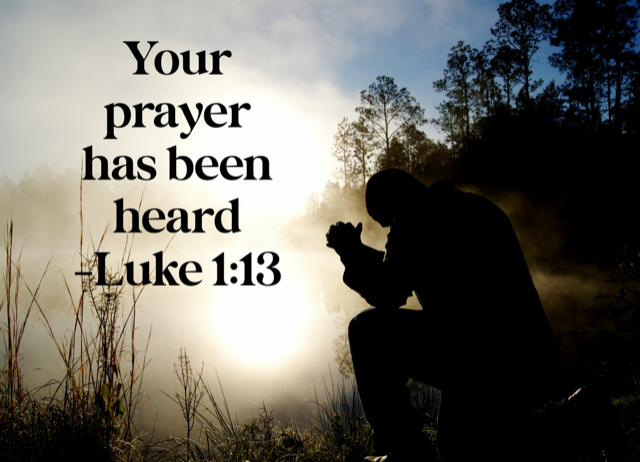
After so long a time of silence, the first message God sends through an angel is, “Do not be afraid, Zechariah, for your prayer has been heard.”
Though I’ve read this passage many times, I was focused on the larger context of how it fit in the birth story of Jesus. I must have glossed over the part about answered prayer. Which prayer? Well, from the angel’s continued message, the prayer about a child.
“Your wife Elizabeth will bear you a son, and you shall call his name John.”
We can forgive Zechariah for being stunned. He replied, “How shall I know this? For I am an old man, and my wife is advanced in years.”
Zechariah had probably long ago given up on those prayers and counted God’s answer as a resounding “No.” And now—at this time, at their ages, they were going to have a baby?
As He so often does, God didn’t answer Zechariah’s “How?” He answered with “Who?”
“I am Gabriel. I stand in the presence of God, and I was sent to speak to you and to bring you this good news.”
God had sent this good news.
And the news wasn’t just good for Zechariah and Elizabeth. This baby would later become known as John the Baptist.
And you will have joy and gladness, and many will rejoice at his birth,for he will be great before the Lord. And he must not drink wine or strong drink, and he will be filled with the Holy Spirit, even from his mother’s womb.And he will turn many of the children of Israel to the Lord their God,and he will go before him in the spirit and power of Elijah, to turn the hearts of the fathers to the children, and the disobedient to the wisdom of the just, to make ready for the Lord a people prepared (Luke 1:14-17).
Gabriel told Zechariah that because the latter did not believe, he would be mute until the promise was fulfilled.
Hannah Anderson suggests that “perhaps God’s reproof was not a punishment for Zechariah so much as an invitation to experience his strength in a way that only happened in weakness. Perhaps God’s ‘now listen’ was not silencing Zechariah so much as quieting him, quieting him long enough to restore his hope” (Heaven and Nature Sing, p. 33).
When Elizabeth did give birth, and neighbors clamored to know the baby’s name, she said “John.” The people were astonished because no one else in their family was known by this name. They appealed to Zechariah, who confirmed by writing, “His name is John,” as the angel had instructed. John, meaning “God is gracious.”
“And immediately [Zechariah’s] mouth was opened and his tongue loosed, and he spoke, blessing God” Luke 1:64).
He acknowledged this child would not just bring joy to his and Elizabeth’s life, but he was a part in God’s grand plan of salvation, put in place before the beginning of the world.
And you, child, will be called the prophet of the Most High; for you will go before the Lord to prepare his ways, to give knowledge of salvation to his people in the forgiveness of their sins, because of the tender mercy of our God, whereby the sunrise shall visit us from on high to give light to those who sit in darkness and in the shadow of death, to guide our feet into the way of peace (Luke 1:76-79).
Though God sometimes seems silent, He hears and He cares. And though He answers the immediate concern, He has the larger, longer picture in mind. Besides praying for a child, Zechariah had probably also been praying for the coming of the Messiah. Now their child would have a part in God’s grand plan of redemption. It was John the Baptist who said, “Behold, the Lamb of God, who takes away the sin of the world!” (John 1:29) and prepared the way of the Lord.
God had not forgotten His promises then, and He still hasn’t now. He might say “No” or “Not now” when those answers are best. Sometimes the answer to our prayer request is connected to God’s overarching purpose for others as well. When the time is right, He will answer.
I don’t want to “laud” my own link. But I did want to share a post I’ve shared many times before. My mom passed away 17 years ago today. It seems like every holiday season, someone else I know has lost a loved one that year. So I have shared Christmas Grief, Christmas Hope, Christmas Joy at intervals as an encouragement to those whose loved ones have passed on and who especially miss them this time of year.
I’m once again behind on some blog reading during this busy time, but here are a few posts I enjoyed this week:
What Does It Mean to Enter Into Temptation? HT to Challies. “Jesus doesn’t say, ‘Watch and pray, so you won’t be tempted.’ There is no way you can get into a place in the Christian life where you are no longer tempted. He says, ‘Watch and pray, so that you will not fall into temptation.’ Literally it says, ‘so that you will not enter into temptation.'”
Do You Hear the Bells of Christmas? HT to The Story Warren. “Henry Longfellow was one of the most widely known American poets in the 19th century. What’s not as well-known is a poem he wrote called, I Heard the Bells on Christmas Day which was eventually put to music and has since become a cherished Christmas hymn. What’s beautiful about this Christmas melody is the incredible story that led him to put his pen to paper on Christmas morning, 1863”
Grammar Crash Course: Clauses. “Distinguishing dependent clauses from independent clauses may seem like an obscure and academic thing to do. Not the most thrilling way to occupy one’s morning. But this is perhaps the most important grammatical skill to master for your Bible study.”
Three Biblical Ways to Pray for Your Adult Children. “Prayers for strong marriages, safety on the job, or wisdom in college selection are all good requests from the heart of a Christian mum, but Paul’s three-verse, single-sentence outpouring to God challenges me to lift my sights to motivation and to pray about the drive behind my adult children’s following lives — and to take a careful look at my own.”
African Christianity Thrived Long Before White Men Arrived, HT to Challies. “Crudely put, Christianity is the white man’s religion and has no place amongst true Africans. In an era where forming an African identity aside from Colonialism is high on people’s agenda, it’s a compelling argument to some. Except that it’s not true. For Christianity was present in Africa 1000 years before the first European Colonialists arrived on African shores.”
It hardly seems like it is time for another Friday. They’re coming around fast these days. That makes it a good time to stop and reflect on the blessings of the week with Susanne and friends atLiving to Tell the Story.
1. Turkey bone soup is traditionally the last thing we do with the Thanksgiving turkey. We had all the family over last Saturday to partake.
2. A light cooking week. An overextended shopping outing (one whole hour in W-Mart’s pick-up section waiting for my online order!) led to bringing home Wendy’s for dinner Friday night. We got Panda Express after church on Sunday. Then Mittu came over to make “Taco Tuesday.” Jim had said he’d be home late Wednesday, so I planned to just make frozen pizza. Then he ended getting home at the usual time–but I decided to stick with the pizza. Jason and Mittu asked us to watch Timothy tonight (Thursday) and offered to bring over dinner as well.
3. Online manuals. I was (strongly) encouraged by my dentist to use my WaterPik. I hadn’t in a long time–and it still had water in it. I wanted to clean it thoroughly before using it again and tried to find the manual to see what cleaning items I could and couldn’t use on it. I found the original box, but the manual wasn’t inside it or any of the bathroom drawers. I looked online and voila–detailed instructions for cleaning my model and a link to the manual.
4. A routine cardiologist’s visit. I am thankful for stability in that department and pray it continues.
5. When old blessings bless again. A few years ago, my pastor’s wife gave me a “writer’s survival kit” when I came home from my first writer’s conference. I was looking for something in one of my desk cabinets this week and rediscovered it. I had taken out some of the things, like the candy, but kept the notes with the rest. It was fun to look at them all again and remember her thoughtfulness. One of the items was a small Christmas puzzle, and Timothy and I put that together the other night while his mom was making tacos.
Bonus: Wrapping presents. I try to do several at a time and got the first batch done last Saturday. It’s fun when the kids come over and mosey to the Christmas tree to investigate. 🙂 A few more gifts have arrived this week, so I hope to have another wrapping session this Saturday.
I didn’t quite get everything done I wanted to this week–like finishing my Christmas letter and getting Christmas cards addressed. But here’s hoping I’ll be able to finish that this weekend.
I hope your Christmas preparations are going well!
I hope you’ll forgive all the book reviews this week. I happened to finish a few around the same time. Because of that, and because the first two books here are a little shorter than usual, I decided to review them together.
I first read, or rather listened to, The Christmas Hirelings by Mary Elizabeth Braddon a few years ago when it was free for Audible subscribers. I reviewed it here, so I won’t repeat all that. The condensed version: Sir John Penlyon is an old man in Victorian England who is not a Scrooge, but is a little gruff. He complains to his friend, Danby, that Christmas is boring. Danby replies that “Nobody knows how to enjoy Christmas if he has no children to make happy.” Then Danby proposes that they hire some children to come and stay at the manor over Christmas. He knows of a family with three children who have very nice manners but are reduced in circumstances. If Sir John would “hire” the widow’s children, it would liven up their Christmas plus be a help to the family.
Sir John thinks the idea is preposterous, but agrees as long as he doesn’t have to be involved other than paying for the experiment.
The children get off on the wrong foot with Sir John at first, but soon the children bring joy and life into the old house. Until tragedy strikes.
Sir John’s back story is quite touching. I loved listening to this again. I caught things I had missed the first time.
The audiobook is superbly narrated by Richard Armitage (Thorin Oakenshield in Peter Jackson’s Hobbit movies). I may make listening to this an annual tradition.
I got Snowed In for Christmas by Cami Checketts also through Audible. I don’t remember if it was free with my subscription or on a “2 books for 1 credit” sale.
Charlotte Oliver is a firefighter with a lifelong crush on her sister’s friend, Jace Mitchell. Charlotte suspected her sister, Virginia, and Jace were more than friends. But Jace left eight years ago to go into the military, and Virginia married someone else. Then Virginia and her unborn child tragically died in a car accident.
Now Jace is back in town, trying to establish a medical practice. Charlotte is as attracted as ever, but she thinks Jace probably still loves her sister.
Jace had always thought of Charlotte as a cute little sister, but now she’s grown up into a beautiful woman. But he knows a relationship with her is impossible. He’s sworn to secrecy over an event in his past, and he knows Char would never forgive him if she discovered it.
This book reminded me why I don’t usually read stories that are primarily romances. So much talk about kissing, anticipating kissing, remembering kissing. Sure, kissing is fun, but there is so much more to love than that.
The book actually got more interesting to me when Char did accidentally find out Jace’s secret, and they had to work through that.
I did not like how Char’s “Grams” handled things, but I don’t want to spoil the story by explaining.
If you like clean faith-based Christmas romances, you’d probably like this.
In Midnight, Christmas Eve by Andy Clapp, Brady Jameson was a high school junior out finishing some shopping on Christmas Eve when he saw a girl crying on a park bench. He approached her to see if he could help and discovered the girl was Sarah, the head cheerleader, girlfriend to the school’s best athlete. Brady provided a shoulder to cry on, and he and Sarah became friends.
Sarah’s boyfriend, Aiden, is not good for her, but she stays with him. Brady realizes Sarah has come to mean very much to him, but keeps his distance since she’s dating someone else.
After another chance encounter and another opportunity to comfort Sarah through another crises, she makes a proposition: that if neither of them are married within five years, they’ll meet at Christmas Eve at “their” bench and get married.
Brady agrees and shows up at the appointed time, but Sarah doesn’t. Their lives intersect at various times, but they never mention their promise. Brady comes every Christmas Eve, even when he tells himself he’s a fool for doing so. But Sarah never shows up.
Is Brady a picture of faithful love? Or is he deluded, letting life pass him by while he waits for an impossible dream?
I loved this book. It had me in tears in a couple of places. I appreciated that the characters’ faith was interwoven so naturally and seamlessly.
Though technically this was also a romance, it was so much deeper and so much more was involved than in the previous book I mentioned.
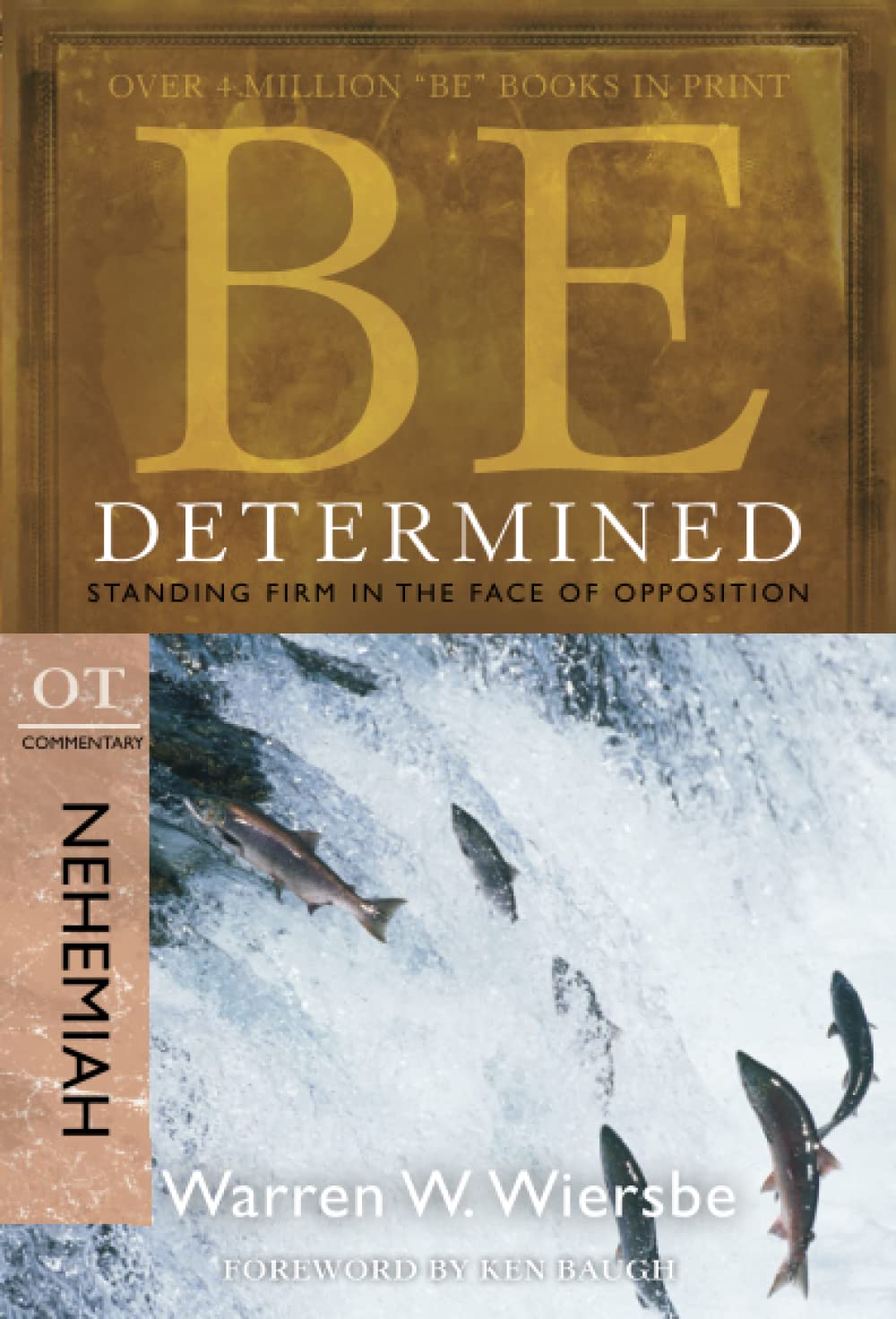
Nehemiah was a captive Israelite in Persia (formerly Babylon). Most of Judah had been deported to Babylon in God’s judgment after years of worshiping idols, committing injustices against their neighbors, and more.
After 70 years, as Jeremiah had prophesied, many of the Israelites were allowed to go back to Judah. Ezra and the people with him had rebuilt the temple and reestablished their worship practices.
Several years later, Nehemiah was still in Persia (formerly Babylon) as the king’s cupbearer. When one of his friends comes back from Jerusalem, Nehemiah asks how things are going there. The answer: not good. Its wall, a city’s main defense then, was broken down and its gates burned.
Nehemiah was so troubled, he “sat down and wept and mourned for days” (1:4). He prayed, confessing the nation’s sins and reminding God of His promise to gather His people back together again. He prayed for favor in the sight of the king and then asked the king for permission to go back to Jerusalem and rebuild the city wall and gates.
The king not only granted permission, but supplied materials and an escort. According to Wiersbe, it would have taken about 55 days to travel between Susa and Jerusalem. Before Nehemiah said anything to anyone else, he quietly inspected the area by night. Then he told the people his plan, how “the hand of my God that had been upon me for good, and also of the words that the king had spoken to me. And they said, ‘Let us rise up and build.’ So they strengthened their hands for the good work” (1:18).
From the outset, the project had enemies, especially Sanballat and Tobiah. First they jeered and mocked, then they “tattled” to the king that the Jews were really trying to start a rebellion. They they tried to distract Nehemiah, and even plotted against his life. When they tried to lure Nehemiah away, plotting to do him harm, he replied, “I am doing a great work and I cannot come down. Why should the work stop while I leave it and come down to you?” (6:3).
One of the main features of Nehemiah is his prayer life. He took the whole problem to the Lord in prayer at the beginning. He shot up quick prayers when he was about to speak to the king and when problems came up. He prayed against his enemies and trusted God to take care of them, while also preparing the workers to defend themselves if need be.
God helped the people to build the wall in just 52 days. The Ezra came and read the law of God while the Levites “gave the sense, so that the people understood the reading” (8:8). The people mourned over all the ways they had failed. But Nehemiah encouraged them that this was a time to celebrate God’s mercies. “This day is holy to our Lord. And do not be grieved, for the joy of the Lord is your strength” (8:10). The people reestablished their covenant to obey God’s Word. They dedicated the wall to God with singing.
Nehemiah had to go back to the king for a bit, and when he got back, some things had slipped–things the people had just promised to do before he left. This spoke to me that it’s important not just to make a decision to obey God, but to implement plans to carry it out. For years I’ve heard laments that people make good decisions at camp or during revival services or special meetings, but then when life goes back to “normal,” they go back to their old ways. I think that’s because the decision is not the culmination of their conviction: it is just the beginning.
Nehemiah reminded the people that some of their practices were what got them into trouble and exile in the first place. Then he initiated reforms to help them do right.
Here are some of the quotes from Wiersbe’s commentary that stood out to me:
Like large doors, great life-changing events can swing on very small hinges (p. 20).
Nehemiah is a good example of how believers should relate to unsaved officials as they seek to do the work of God. Nehemiah respected the king and sought to work within the lines of authority that existed in the empire. He didn’t say, “I have a commission from the Lord to go to Jerusalem, and I’m going whether you like it or not!” When it comes to matters of conscience, we must always obey God rather than men (Acts 5:29), but even then, we must show respect (see Romans 13 and 1Peter 2:11-25) (pp. 34-35).
Satan wanted to use these problems as weapons to destroy the work, but God used them as tools to build His people (p. 59).
He was a leader who served and a servant who led (p. 68).
But the joy that comes from the Lord is real and lasting and enriches our lives. God doesn’t give us joy instead of sorrow, or joy in spite of sorrow, but joy in the midst of sorrow. It is not substitution but transformation (p. 115).
Nehemiah is an example of someone whose heart is in the right place, who was concerned for others and for God’s glory, who took everything to Him and prayer and depended on Him, and then put feet to his prayers. He was willing to travel far and work hard and face opposition to get the job done God had given him to do. He had initiative, but he couldn’t do the work alone: he was able to inspire others with his vision. “One person can make a big difference in this world, if that person knows God and really trusts in Him” (p. 31).
Once when a friend and I were heading toward the same door at church, she called our in her usual cheery voice, “Good morning, Barbara! How are you?”
I replied, “Doing okay. How about you?”
“Just okay?” She sounded really dismayed that I wasn’t more than okay.
Well—to my thinking, okay was pretty good. Nothing hurt, nothing was wrong. I’m not an effusive person, so I wouldn’t generally respond in a really excited way unless something spectacular was happening.
For a while, I wondered if there was something wrong with me that I wasn’t more like my friend. In fact, the thought of always being so enthusiastic sounded exhausting to me. I finally attributed our responses to our very different personalities.
Still, I sometimes wondered if joy was always a bubbling brook, or if it was sometimes a steady undercurrent.
Those thoughts, and the fact that I had read and enjoyed some of Lydia Brownback’s other writings, encouraged me to get her book Joy: A Godly Woman’s Adornment.
This book is one in a series of “On the Go Devotionals.” Each entry is short, two to three pages in my Kindle app. There are forty-two devotions which concentrate on a different Bible verse about joy.
While we might go through times of sorrow and trial, gloominess and moodiness usually come from “looking at what we lack rather than all we have” (p. 9).
Even those of us going through a season of darkness can pursue joy, trusting that God designed us for it. Sooner or later, in Christ, we will find it. The trick for some of us is to change our self-oriented, worldly focus to Christ, and for others it is to take fresh hold of God’s promises that no matter how dark life seems, he is going to push you out into the light. . .
Our moodiness dishonors God and robs us of the happiness that lies right at our fingertips. If we want to change—to live with perpetual joy—we must pursue it, and in Christ we are guaranteed to find it. (p. 10).
In the very first entry, Lydia declares, “Self-surrender leads to joy” (p. 15). That doesn’t sound very joyful, does it? We think we’d be pretty happy if everything went our way.
We cannot imagine how we will survive without that certain relationship or plan. It feels like death. That’s because it is death. It’s the losing of our lives that Jesus was talking about [in Matthew 10:39: “Whoever finds his life will lose it, and whoever loses his life for my sake will find it”].
When we are facing the death of self, the costliness of discipleship, we are likely to pull back unless we remember the promise we have been given about how it will all turn out. The man in Jesus’ parable wound up owning the field. And Jesus said that those who lose their lives—all the earthly things they lean on for happiness and security—will find what they have been looking for all along. God will see to that (pp. 15-16).
I have many more quotes marked than I can share, but here are some that especially stood out to me:
Each trial is a gift. It’s a chance to know God’s strength and supernatural joy and to show that following him is worth everything (p. 24).
It is impossible to keep an eye out for God’s blessings while harboring a complaining spirit (p. 28).
We will never know lasting joy in the Lord if we seek to understand him by what goes on in the world or by our circumstances. The only way to joy is to interpret our circumstances by God’s Word rather than to judge God by our circumstances (p. 40).
Joy is the outworking of worship (p. 43).
We don’t need ten tips to a better spiritual life. What we need is to put God out front in our thoughts, priorities, time, and activities. If we allow his Word to govern us, we will see that he delights to show us “the path of life” and the path for our life (p. 45).
The joy promised in Scripture is different from the joy of personal expectation, our hope of some good thing we want God to do in our lives. While it is natural to hope for a good outcome in our difficulties and to trust God for it, we set ourselves up for a spiritual crisis if we expect that things will work out as we think they should (p. 60).
Joyful feelings are also not a yardstick to be used to determine how well we are doing spiritually. Feelings of closeness to the Lord are a wonderful blessing, but they are not an indicator of God’s acceptance of us. Christ is the only indicator. If we blur the distinction, we are going to worry about our spiritual standing whenever the good feelings aren’t present (p. 60).
God wills that we live in constant expectation of his appearing. We are to look for him in his Word, in his providences in our daily lives, in our sorrows, in our needs, and in our failures. He comes to us in Christ in all these things, but we miss him because we aren’t looking for him (p. 71).
The Holy Spirit doesn’t give us more love or more faithfulness or more joy. He gives us Christ, and as he does, joy and all the rest are produced within us as the fruit of that union (p. 73).
The joy of trials is rarely found in the circumstances of our difficulties. Rather, it is found when we stop fighting against what God is doing and seek his purposes and priorities, which always without exception are designed for our welfare. Whatever the difficulty—even one brought about by our sin—we can leave the outcome in God’s hands (p. 76).
How can we help what we feel? We just can’t muster up joyful feelings; that’s true. But we can rejoice, which sooner or later leads to joyful feelings. Rejoicing is not a feeling. It is joy in action. It is the humble willingness to offer God praise and thanks in all things, regardless of how we feel at the moment (p. 98).
We can experience joy in the Lord despite our circumstances. After reading this book, my thoughts ran to Psalm 43:3-5, a passage Lydia didn’t use:
Send out your light and your truth; let them lead me; let them bring me to your holy hill and to your dwelling! Then I will go to the altar of God, to God my exceeding joy, and I will praise you with the lyre, O God, my God.
Why are you cast down, O my soul, and why are you in turmoil within me? Hope in God; for I shall again praise him, my salvation and my God.
That passage in turn reminded me of this song, based on this passage. The words and story behind the song are here.
Sometimes we just want people to listen and sympathize. We may even know what to do about our problem, but we just want to be heard.
Sometimes we resent “fixers” because they haven’t taken the time to listen first. They start spouting solutions before they even know what the problem is. James warns us to be “quick to hear, slow to speak, slow to anger” (James 1:19). Proverbs 18:13 tells us “If one gives an answer before he hears, it is his folly and shame.”
Sometimes people with a lot of knowledge come across as arrogant know-it-alls. Some of them just want to show off or one-up their listeners. James says, “But if you have bitter jealousy and selfish ambition in your hearts, do not boast and be false to the truth.This is not the wisdom that comes down from above, but is earthly, unspiritual, demonic. For where jealousy and selfish ambition exist, there will be disorder and every vile practice” (James 3:14-16).
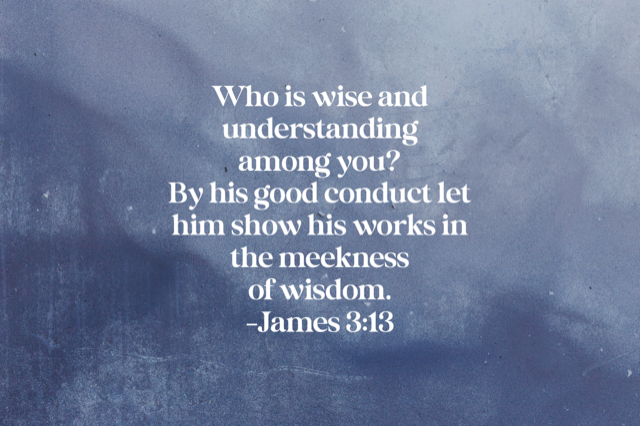
By contrast, James says, “Who is wise and understanding among you? By his good conduct let him show his works in the meekness of wisdom” (James 3:13).
That phrase, the meekness of wisdom, stood out to me. Meekness is not wishy-washy weakness. Moses was called the meekest man on the earth in his day (Numbers 12:3). Yet he faced down Pharaoh, led thousands of people out of Egypt, spent 40 days and nights alone with God when others were afraid to approach Him. Jesus said He was “meek and lowly in heart” (Matthew 11:28-30). Meekness is strength under control.
Galatians talks about restoring a fallen brother or sister in Christ “in a spirit of gentleness” (6:1-3). And Paul tells Timothy “the Lord’s servant must not be quarrelsome but kind to everyone, able to teach, patiently enduring evil, correcting his opponents with gentleness” (2 Timothy 2:24).
A truly wise man knows the answer and can give good counsel. But he doesn’t share it in pride or superiority. James goes on to say this wisdom is “from above is first pure, then peaceable, gentle, open to reason, full of mercy and good fruits, impartial and sincere” (verse 17).
A few weeks ago in our writing critique group, one member’s piece was on the way men and women think differently. One of the ladies mentioned this video, a hilarious depiction of someone with an obvious and easily repairable problem who wants her hearer to listen and not rush to “fix” it.
When I posted a link to this on my Saturday “Laudable Linkage” a couple of weeks ago, one commenter shared that someone she loved recently accused her of “fixing” instead of listening. She lamented her inclination to want to change others instead of examining her own motives.
While it’s true we need to listen first and not rush in to tell others what to do, the opposite of the coin is true as well. When we have an obvious problem and someone offers a workable solution, how wise is it to rebuff them just because we’d rather wallow in “venting” than finding an answer? The meekness of wisdom can apply to receiving as well as giving wisdom.
Proverbs is full of references about listening to wisdom, instruction, and even reproof. Just one example: “The way of a fool is right in his own eyes, but a wise man listens to advice” (Proverbs 12:15). Fools don’t listen to advice, but wise men do.
The prophets lamented that people would not listen to their wise counsel. Jeremiah said, “the word of the Lord has come to me, and I have spoken persistently to you, but you have not listened. You have neither listened nor inclined your ears to hear, although the Lord persistently sent to you all his servants the prophets” (Jeremiah 25:3-4).
God told Ezekiel that people would regard him “like one who sings lustful songs with a beautiful voice and plays well on an instrument, for they hear what you say, but they will not do it” (Ezekiel 33:31-32). What God had given Ezekiel to say in the previous verses was not beautiful music–it was a stern warning of judgment to come for their sins. Yet because the people would not listen and obey, they deceived themselves about the nature of what Ezekiel said.
By contrast, Moses accepted wise–and unasked for–advice from his father-in-law, Jethro, when Jethro saw that Moses was being worn out and needed assistants (Exodus 18).
“Let the wise hear and increase in learning, and the one who understands obtain guidance” (Proverbs 1:5). Wisdom says in Proverbs 8:33-34, “Hear instruction and be wise, and do not neglect it. Blessed is the one who listens to me, watching daily at my gates, waiting beside my doors.”
Sometimes silence is indeed the wisest option. Sometimes people just need to know they are cared for, heard, and not alone. We need to listen with sensitivity and empathy and offer counsel in dependence on God’s guidance. And we need to receive good counsel prayerfully, humbly, and gratefully, testing it against Scripture. We need meekness both to give and receive wisdom.
I am way behind on my blog reading. But here are a few posts that ministered to me this week:
Your Spouse is God’s Creation: Celebrating Differences in Marriage, HT to Challies. “God created every aspect of your spouse’s personhood. He administrated every choice of hardwiring, tone of voice, innate personality, natural gifts, and whether he or she is mechanical, analytical, or relational. Neither you nor your spouse chose any of these qualities.”
Gradual Emancipation: A Parent’s Sacrifice. “Parenting is the long goodbye. It is a gradual emancipation, because chicks were never created to stay in the nest. Everything about their growing years is preparing them for the day they will leave the nest. But as parents we have a choice. We can allow our fears to create a cage for our children.”
A Workaday Faith, HT to Challies. “How do we deal with the fact that most of us will live our lives and then go to our reward without anything impressive to be rewarded for?”
Money Problems? “I firmly believe the ‘labourer is worthy of his hire’ (Luke 10:7, KJV). You and I earn our wages. There is no entitlement or handout. If I represent a weak project, it won’t sell; and I won’t be paid. If you write a weak project, it won’t sell either. The problem comes when money, usually a lack thereof, becomes a distraction.”
We have been the recipients of the choicest bounties of Heaven. We have been preserved, these many years, in peace and prosperity. We have grown in numbers, wealth and power, as no other nation has ever grown. But we have forgotten God. We have forgotten the gracious hand which preserved us in peace, and multiplied and enriched and strengthened us; and we have vainly imagined, in the deceitfulness of our hearts, that all these blessings were produced by some superior wisdom and virtue of our own. Intoxicated with unbroken success, we have become too self-sufficient to feel the necessity of redeeming and preserving grace, too proud to pray to the God that made us!
It behooves us then, to humble ourselves before the offended Power, to confess our national sins, and to pray for clemency and forgiveness.
Just like that, we’re into December and Christmas preparations. I love these brief pauses on Friday with Susanne and friends atLiving to Tell the Story to reflect on what God has done in our lives this week.
1. Getting a Christmas tree. So far, we still go out each year to choose a live tree. I think Jason and Mittu have come with us every year since Timothy was little, and maybe before. Past Christmas photos showed one with Timothy bringing his little toy chain saw one year. 🙂
This year Jason arrived first at our usual place only to find an empty lot. So we looked at another place we went last year because it was nearby and run by a local church. We didn’t like the experience, but it was the only other place we knew of.
But their prices were really high and the experience was really nerve-wracking. They had way too many helpers there–we couldn’t take a step without someone asking if we had any questions. No, we just needed to look and see which one we liked, and no sales person could tell us that. Jason heard a guy behind us ask one of the salespeople if anyone was helping us. She said we wanted to just look around. The guy said, “You need to use more force!” Force? For selling Christmas trees? We got out of there as soon as we could. Fortunately, Mittu saw an opening the back way so we didn’t have to run back through the gauntlet of smiling faces asking if we had any questions.
I searched for Christmas tree lots on my Google maps app, and it brought up a tree farm about ten minutes away. So we caravaned over there. It was a delightful little place open for business for the first time (in which case, I am not sure how they showed up at the top of my search results. But I am glad they did). They told us how things were laid out and left us to look around. They had a gift area, and I think they may have had hot drinks. They also had a little picture-taking station.
Their prices weren’t any better than the other place–but the experience was far superior. We may have to break down and get an artificial one before next year.
Then, there was a very old blue truck in the lot with a tree in the back. I thought they had it there just for effect—you see truck with a tree on a lot of Christmas decorations and cards these days. But then an older couple, the man with a long white beard, got into the truck and drove away. The guy tying our tree to our car roof said the older man dresses up as Santa and takes a tree and presents to Cade’s Cove every year. So that was fun.
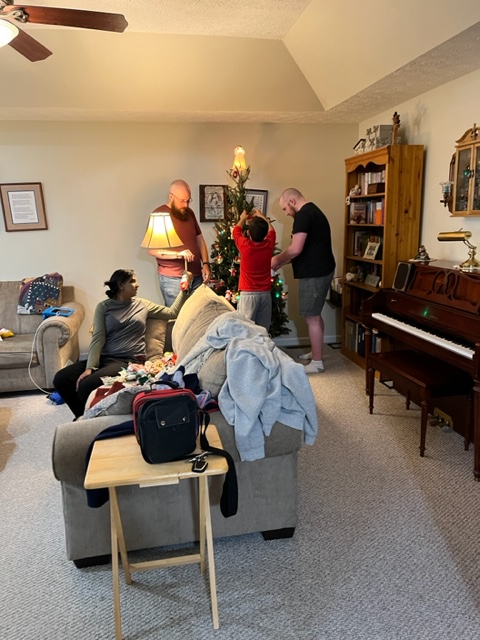
2. Tree decorating. Even though Jason and Mittu decorate their own house for Christmas, they help decorate ours as well. Jesse came over, too, and was a big help getting boxes down from the attic. For the past few years, Mittu has made lunch for us all on tree decorating day. I’m so thankful they all do this. With everyone pitching in, it only took a couple of hours to get everything up, not counting transporting the bins to and from the attic.
I wasn’t feeling Christmasy until we got the house decorated. Now I am ready to start the holidays.
3. Lunch with Melanie, a dear friend, at Cracker Barrel, one of my favorite places. None of the rest of my family likes Cracker Barrel, so I am glad I can indulge with Melanie. We both had the maple bacon chicken, which was excellent. We had a great waitress who, when she found out Melanie’s birthday was the next day, gave her a free piece of cake. And they let us sit and talk as long as we wanted without kicking us out. 🙂
4. Encouraging words. It’s such a blessing when someone says something that encourages you right where you needed it, when they could not have known that their words were needed. I feel God orchestrates those things. How we need to walk closely with Him so He can use us that way.
5. Timothy recordings. Jason and Mittu were here for another marathon cooking session to make up microwave meals while they are still painting in their kitchen. At one point Timothy started playing some old recordings on their iPad–some of them were him singing when he was about four. So sweet.














 Stray Thoughts