31 Days of Missionary Stories: Adoniram Judson, America’s First Missionary

I reviewed To The Golden Shore by Courtney Anderson about the life of Adoniram Judson a few years ago, but I can’t not include it in a month of missionary stories. It’s a missionary classic and compelling reading. So I hope those of you who have seen it before don’t mind the repost.

_____________

Imagine feeling so convicted and burdened by God’s command to go and share the gospel with every creature and so moved by the state of the lost in other countries that have never heard the gospel that you feel you must go yourself and tell them.

Now imagine doing so when you live in a country where no one has ever done so before.

To the Golden ShoreTo The Golden Shore by Courtney Anderson is a classic missionary biography of Adoniram Judson, America’s first missionary. I had read it years ago but felt an urge to revisit it.

Every missionary has to have dedication and has to be willing to make sacrifices, even in our day. But the amount of dedication and sacrifice and willingness to step into the unknown displayed by Adoniram and his wife and the small group who stepped out with them just amazes me. His wife, Ann Hassletine (also called Nancy) is one of the bravest women I have ever read of, going into the great unknown as she did and facing all that she did in later years. The letter Adoniram wrote to ask her father for her hand in marriage is an atypical proposal, but frank:

I have not to ask, whether you can consent to part with your daughter early next Spring, to see her no more in this world; whether you can consent to her departure, and her subjection to the hardships and sufferings of missionary life; whether you can consent to her exposure to the dangers of the ocean; to the fatal influence of the climate of India; to every kind of want and distress; to degradation, insult, persecution, and perhaps a violent death. Can you consent to all this, for the sake of Him who left His heavenly home and died for her and for you; for the sake of perishing immortal souls, for the sake of Zion, and the glory of God?

He was not being melodramatic: he was being realistic. It says a lot about Nancy that she accepted such a proposal.

There are several short biographies of Adoniram online, so I don’t want to retell his life story, but I just want to touch on a few highlights that stood out to me from the book.

I wrote before of his remarkable conversion. His innate intelligence, keen mind, and his own struggles coming to faith uniquely fitted him for the philosophical discussions with the Burmese that were preliminary to their understanding the gospel, and that same mind and the facility he developed with the language uniquely fitted him to translate the Bible into Burmese and to create a Burmese-English dictionary and grammar that were the standard for decades.

He had a stalwart, determined character. That could come across as stubborness in some instances, but when convinced as to the will of God, he was firm. During Adoniram’s studies over the long sea voyage, he became convinced that the Baptist mode of baptism, by immersion after a profession of salvation, was the Biblical way. That put him in a difficult position as a Congregationalist missionary. The subject was discussed and debated amongst the missionary candidates on board, but once Adoniram was convinced of the Scriptural position, he felt he had no choice but to resign as a Congregationalist missionary and seek support from the Baptists. Thankfully, in the providence of God, the situation was handled with grace, and God brought him into contact with Baptist men who took on his support. You may or may not agree about modes of baptism, but what stands out to me here was the character it took to act on what he believed even though it was going to cause difficulties.

The Burmese were open to discussion, but it was six long years before the first one believed. Progress was very slow: there was, of course, not the openness to a variety of religions as we take for granted today. Adoniram was careful not to impinge on their culture — he wasn’t trying to create an American church, but a Christian one. But slowly the gospel took root and grew. Oddly, at the time of greatest oppression by the imperialist Burmese king, when the Judsons feared they would have to leave, they had several inquirers. Some of the Burmese converts came forth as gold in the trials they faced where professing Christ cost something.

When war broke out between Burma and England in 1824, the Judsons thought that they would be safe as Americans. However, the Burmese did not understand the Western system of banking: because the Judsons’ checks were cashed through a British merchant, they were thought to be in league with the British, and Adoniram was imprisoned for twenty-one of the most grueling months of his life. A fastidious man, he dealt with filthy quarters and having his feet in fetters raised up toward the ceiling every night while his weight rested on his shoulders on the floor. Nancy daily sought help and favor for him everywhere she could: she even followed him and the rest of the prisoners on a tortuous march to another prison. As authorities searched their home, she hid what she could, especially the manuscript of the Burmese translation of the Bible over which Adoniram had been working so diligently. She hid it in a pillow and took it to Adoniram in prison. The jailer took a liking to the pillow and confiscated it for himself: Nancy made a nicer one, and Adoniram successfully offered it to the jailer in exchange.

As the war began to grind to an end, Adoniram was called on as a translator between the Burmese and British. Lack of nutrition, ill health, and extenuating circumstances all took their toll on Nancy, and she died, followed soon by their baby. None of their other children had lived.

Adoniram entered into the darkest period of his life. He threw himself into translation and missionary work, but wrestled with losses and grief: not only Nancy and all his children, but several missionary colleagues had died as well as his father back in America. Oddly, he felt guilty over his grief. He withdrew into a kind of asceticism for a while. He dug an open grave and spent long periods of time just staring into it. He requested at this time that his letters to others be destroyed, so we don’t know for sure what all he was thinking during this period. Several shorter biographies bypass this section of his life, but I think it is important to note that in his humanness, the losses he had sustained and the time in prison all had their effect on him, understandably, and it took him about three years to recover.

He eventually married Sarah Boardman, the widow of one of his colleagues, and had several more children. They had a happy eleven-year long marriage before she passed away on his only return trip to America, taken originally to try to help improve her health. God granted him another happy marriage to writer Emily Chubbuck for a few years before his own health failed in 1850 at the age of 61.

His legacies are the souls won to Christ in Burma and the churches started there, the Burmese Bible he translated, the Burmese-English dictionary and grammar, and the stirring testimony and influence of a life of character used by God.

(You can see other posts in the 31 Days of Missionary Stories here.)

(This will also be linked to Semicolon‘s Saturday Review of Books.)

What’s On Your Nightstand: September 2013

What's On Your NightstandThe folks at 5 Minutes For Books host What’s On Your Nightstand? the fourth Tuesday of each month in which we can share about the books we have been reading and/or plan to read.

Though there are a few days left in September, it is time for the monthly Nightstand post. I think I have a fairly eclectic list this time.

Since last time I have completed:

Daniel Deronda by George Eliot for Carrie’s Reading to Know Book Club for August, reviewed here. My first Eliot book, and I enjoyed it quite a lot.

The Fruitful Wife: Cultivating a Love Only God Can Produce by Hayley DiMarco, read twice! A study of the fruit of the Spirit in Galatians 5:22-23, applied to marriage, reviewed here. Excellent.

On Distant Shores by Sarah Sundin, second in the Wings of the Nightingale series, Christian fiction about WWII flight nurses, reviewed here. Very good.

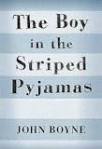
The Boy in the Striped Pajamas by John Boyne, secular fiction set in WWII, about two boys who meet on opposite sides of a fence of a prison camp. Sweet, touching, sad and disturbing, reviewed here.

Ella Enchanted by Gail Carson Levine, audiobook, an interesting take on the Cinderella story, reviewed here. Very enjoyable.

Overcoming Overeating by Lisa Morrone, reviewed here. I disagreed with her basic premise but got a lot from the rest of the book. 😀

Fahrenheit 451 by Ray Bradbury, audiobook, reviewed here.

I’m currently reading:

A Severe Mercy by Sheldon Vanauken
Bonhoeffer: Pastor, Martyr, Prophet, Spy by Eric Metaxas. I had finished the audiobook of this a few months ago, but there was too much to grasp, so I am going through the Kindle edition.
Next up:

Lost and Found by Ginny Yttrup

Jennifer: An O’Malley Love Story by Dee Henderson

If I finish all of those, I should probably work on my backlog of downloaded Kindle books. 🙂

Happy Reading!

Book Review: Fahrenheit 451

F451Fahrenheit 451 is, as far as I can remember, the first book I have read by Ray Bradbury. It has the same feel as the old Twilight Zone series, but it was published a few years before.

The story takes place in a future version of America where most books are illegal. Fireman, instead of putting fires out, now start them by burning books and the houses of those caught with books. Society had lost its taste for deep thinking, preferring instead sporting events, fast driving, endless entertainment via earpieces they listen to and parlour walls that act as an expanded TV and directly involve the viewer. Concurrently, books were shortened, and then books that made people think fell out of favor and then were deemed upsetting to the peace and happiness of society, as different groups would protest what different books said, so they were banned. As a fire captain later explained, “We must all be alike. Not everyone born free and equal, as the constitution says, but everyone made equal . . . A book is a loaded gun in the house next door. Burn it. Take the shot from the weapon. Breach man’s mind.” It is interesting, and scary, that what passes for tolerance today is this idea of making everyone equal and unobjectionable to each other rather than a willingness to let others have their differences.

Guy Montag is a fireman who likes his job, until he meets a different, free-spirited teen-age neighbor named Clarisse. Though I don’t think they ever talk about books specifically, her unconventional approach to life and way of thinking spark something in him, a questioning, a wondering if there is more to life. Several things fan this spark into flame: his vapid wife overdoses on sleeping pills and has to have her stomach pumped, but remembers nothing about it the next day; Clarisse and her family disappear; and a woman whose house Guy and his crew are supposed to torch chooses to die with her books. What can there be in books that someone would die for them? Guy has secretly taken a few of them and intends to find out. But he can’t make sense of them himself, so he goes to an old professor named Faber for help.

I’ll leave the plot there so as not to spoil it for those who haven’t read it. Though it was written during the McCarthy era, when there was an increased sensitivity to anyone having the remotest possibility of a tie to Communism, and Bradbury was concerned about censorship, he  “usually claimed that the real messages of Fahrenheit 451 were about the dangers of an illiterate society infatuated with mass media and the threat of minority and special interest groups to books,” according to Wikipedia. He has an interesting afterward that tells how he came to write the book and something of the history of it. He also tells of one publisher wanting to publish one of his stories in an anthology with 450 others, including some from Twain and Shakespeare, all shortened, seeming a fulfilling of his predictions in the book. The book itself has been banned at times in the past due to language (many “damns,” “hells,” and taking of the Lord’s name in vain), its mention of one woman’s abortion, and its depiction of firemen. There were valid reasons for the mention of abortion and the firemen. The language I could have done without. I am not shocked by it: my father spoke that way, and I know people do, but I don’t want to fill my brain with it, so I usually avoid books with much of it. I have mixed emotions about censorship. I don’t think I believe in it at the government level, but I have no problem with reserving certain books from student’s required reading. There are some books and magazines that are just pure filthiness and at least shouldn’t be right out there next to Good Housekeeping and such. I would have no problem with censoring those, personally, but then other people would have no problem censoring some books I like: some parents protest their children having to read anything religious. Thus we have the problem Bradbury depicted: if everything can be banned that anyone would have some objection to, we’re left with nothing. As Christians, the best way to deal with the situation, I think, is not to necessarily to seek to ban everything objectionable, though there are times to protest certain actions (like one library I heard of that had the “adult” section next to the children’s section, or a required book for a student that a parent objects to, or unnecessary foul language and sex scenes in books I review): rather, if we concentrate on doing what Jesus told us to do – share the gospel and make disciples – people’s hearts will be changed and they won’t want the bad stuff. That’s not the main reason to share the gospel, but it is one side effect.

The book has a great many more layers to it than there would appear to be at first glance. SparkNotes helped me catch some of that that I missed at first and caused me to appreciate Bradbury’s skill as a writer. The book is one of those classics I had heard of for years and always wanted to get to someday: I am glad that now I have.

(This will also be linked to Semicolon‘s Saturday Review of Books.)

Book Review: Overcoming Overeating

Overcoming OvereatingThe subtitle to Overcoming Overeating by Lisa Morrone is It’s Not What You Eat, It’s What’s Eating You!, and therefore the thrust of the book is dealing with the underlying emotional reasons for overeating. I got the book either free or at a low cost as a Kindle deal, and I must have overlooked the subtitle at first: it actually made me angry, not that the book addressed emotional issues but that it seemed to deemphasize other related issues. In fact, several times she seems to ridicule or at least disbelieve people’s protestations that they overeat because they like food. But to just dismiss this with an “I know what your problem really is” attitude is to do people a disservice. When I am about to have my 6th cookie of the day or a third helping of lasagna, I am not thinking about any underlying emotions: I am thinking “This tastes good and therefore I want more!” I have never read a weight-loss book that adequately addressed that part of the problem, and that’s the problem that derails all the good intentions, all the knowledge about what is good and bad and best for you, etc.

But I gave the book another run-through after my first reading, and I did glean more helpful tips than I did the first time.

I don’t deny that people overeat for emotional reasons: even healthy people at a normal weight have their comfort foods. Lisa acknowledges that “everyone eats for emotional reasons at one time or another,” but for some – about 75%, by one statistic – “emotional eating has become chronic.” Chemicals like cannabinoids (same family as marijuana) and serotonin are produced by the digestion of some common “comfort foods” (potato chips, french fries, chocolate, cheeseburgers, to name a few), making the feel-good indulgence of those foods not just emotional but physical and chemical. She does do a great job addressing how to deal with those underlying emotional issues. She describes an emotional cycle leading to overeating and a couple of places from which to step off the cycle.

I especially appreciated her distinction between different kinds of guilt: there is a good, God-given guilt designed to lead one to repentance, and there is a destructive guilt that just furthers the emotional tailspin into more over-eating.

I really liked her treatment of controlling our thoughts and distinguishing what is true between the good and bad ones. A negative thought isn’t necessarily a bad one. For instance, “I shouldn’t have yelled at my son” is negative, but it is true, and therefore we can confess it, apologize, seek forgiveness and seek for better ways to respond. But “I’m so stupid, I never do anything right” is negative and destructive and needs to be corrected. Similarly, a positive, pleasing thought can be deceptive or it can be inspirational.

She also does address that there are other “triggers” to overeating: certain foods that are especially tempting or hard for us to control, family gatherings, social situations, convenience. etc. And she does address other practical tips: reading labels, wise shopping, getting used to adequate portions, etc. She addresses the problem that we seem to celebrate everything with food, and suggests other ways to celebrate: she also cautions against ever eating to feel better when down or disappointed, frustrated, angry, etc., because that is just setting one up for food addiction and hurts rather than helps whatever the underlying problem is.

In-between the chapters are testimonies from different individuals who have lost weight, and it was in one of those that I found a helpful response for the problem I mentioned at first, that of wanting to eat more just because it tastes so good: one woman mentioned that God gave her “a new understanding that living for the satisfaction of only one part of my body (my mouth) was unholy,” and when faced with temptations for unhealthy foods or amounts, she seemed to “sense Him saying to [her], ‘I will still love you if you choose that, but will it get you what you want?'”Something that Morrone said helps here, too: “Too much of a good thing can become a bad thing.” In another testimonial, a woman said, “God loves me so much He does not want me to damage the body He has given to me. He showed me that food was just a fleeting enjoyment, but a healthy body was so much more.”

Morrone concedes that food is intended for pleasure – otherwise God would not have given us many taste buds designed to gain the maximum enjoyment from what we eat – but she advises to think that food=fuel, and there are different “grades” of food just as there are different grades of gasoline. “Most everything ‘quick and easy’ you bring home is filled with nutritional shortcuts. Be good to yourself and your family: eat quality fuel.” The goal is “to become a truly well-balanced person, one who can enjoy food without guilt and who has so many interests and goals that food only holds its rightful place in the day – that of nourishment and pleasure, not a tranquilizer, Band-aid, or time-filler” (emphasis mine).  She compares a healthy relationship with food to a healthy friendship: if one member harmed the other, it would not be a healthy relationship. We need to find foods that promote health rather than jeopardizing it.

I really liked the section dealing with inevitable setbacks as well. “Each year the winning team of the Super Bowl loses some ground (yardage) throughout the game. Yet they always keep their minds fixed on the goal, push through the opposition, and, as a result, advance to victory in the end.” She gives a variety of tips for dealing with setbacks and getting back on track.

Though I am usually wary of books and weight loss programs that promote self-love, Morrone has, I believe, the best definition of it: “We can humbly appreciate who we are and who we’ve been created to be, and honor ourselves (and our Creator) by being devoted to the care and well-being of our physical bodies.”

I’m glad I gave this book another chance. I benefited from it. Some of what Lisa says about emotional overeating has been distilled into this document on her web site, but of course it is expanded on and fleshed out in the book. If you’ve not yet guessed, the book is written from a Christian vantage point and discusses the Biblical foundation and many Biblical principles of good health, but she also addresses the non-believer with principles he could relate to while encouraging him to look at the Bible’s point of view as well.

(This will also be linked to Semicolon‘s Saturday Review of Books.)

Book Review: Ella Enchanted

Ella EnchantedWhen I first heard of Ella being “cursed” with the gift of obedience by her fairy godmother, I was a little suspect. But I watched and enjoyed the film starring Anne Hathaway and Hugh Dancy. Then I discovered and just listened to the audiobook Ella Enchanted by Gail Carson Levine, and it is almost completely different from the film. I had really liked the film, but now that I’ve read the book, I’m really disappointed that the film veered so far from it.

The book Ella Enchanted is a clever retelling of Cinderella. When Ella is first born, her fairy godmother bestows what she feels is a wonderful gift: the gift of obedience. But the gift seems more of a curse, as Ella is at the mercy of anyone who gives her an order. And she still finds ways not to quite do what she has been told, or to add to it, and she confesses at one point that there is a difference between being obedient and being good.

She hides her “condition” well, until Dame Olga and her two daughters come into her life. The older daughter, Hattie, doesn’t know about the curse but does figure out quickly that Ella obeys direct orders, and Hattie uses that knowledge in multitudes of ways, especially when the girls are all sent to finishing school. Olive catches on soon as well, and Ella is at their mercy, until she runs away from school to try to find her fairy godmother to ask her to lift the curse, which she refuses to do. Then she discovers that her father is going to marry Dame Olga, and her doom is sealed.

Earlier in the book Ella had met Prince Char at her mother’s funeral. His attempts to comfort her began a friendship which grows until they are old enough to realize they love each other. Ella’s initial joy turns into sorrow, however, when she realizes that she can’t marry the prince while she is cursed: any enemy could use her against the prince to do him harm. So she refuses him, but can’t resist going to the balls thrown in his honor just to see him and be near him again.

This book has delightful fairy tale elements and characters – giants and ogres and elves and gnomes (even a baby gnome with a beard!) The glass slippers and pumpkin coach are there are well as a different kind of a fairy tale book.

Some see it as a feminist version of Cinderella, with strong characters who take action rather than sitting in a castle with no will of one’s own while waiting to be rescued by a prince. I do not know if that is the author’s intent. I am no feminist, and I would disagree that meekness equals passivity, but I think this can be enjoyed as a fun story as is without bringing political correctness or ideologies into it.

This was a nicely-written, lighter read after some of the heavier subject material I’ve been into lately.

(This will also be linked to Semicolon‘s Saturday Review of Books.)

Book Review: On Distant Shores

On Distant ShoresOn Distant Shores by Sarah Sundin is the second in her Wings of the Nightingale series about flight nurses during WWII, the first being With Every Letter, but it could be read as a stand-alone book.

Georgie Taylor followed her best friend, Rose, into flight nurse training, but doesn’t really have confidence in herself. Her tendency to panic in a crisis causes her to wonder if maybe her fiance and family are right, that this life is too much for her, that she should resign and come back home to Virgina where it’s safe. Coddled by both her family and fiance, she is usually reliant on them to make decisions for her, but she questions whether she should push herself to grow and develop in her current situation.

Her friends seem to think she can grow into a great flight nurse, and a new friend, Hutch, encourages her to step out of her comfort zone. Sgt. John Hutchinson, or Hutch, is a pharmacist looking forward to becoming an officer some day. His father is working on the development of a Pharmacy Corps, but in the meantime, Hutch has to work under an officer who knows nothing about pharmacy and coworkers who have only had three months of training. Hutch chafes under the lack of respect for his profession and position, but he feels that once he becomes an officer, everything can be set to rights. Letters from his fiancee tend to upset him rather than encourage him, though, due to her rampant jealousy and worry.

As Hutch and Georgie cross paths on throughout Europe, their friendships grows, but as they find themselves becoming attracted to each other, they make an effort to step back. Meanwhile each faces crises of their own, involving grief, hurt, and betrayal, both at home and overseas.

Sundin’s characters are always likeable but realistically flawed, and part of their journey is how they have to come to grips with their flaws and seek change. Georgie has to learn to stand on her own two feet, among other things; Hutch has to learn humility and contentment.

Sundin also weaves interesting history and detail in her stories. She and her husband are both pharmacists, and at the end she shares where some of the inspiration and facts came from for this story.

My only tiny quibble is that Georgie’s “Southern Charm” is a little thick sometimes. I consider myself a Southerner, but I cringe when people “Sugar” and “Honey” everybody. On the other hand, some people do do that, so it’s not unrealistic, and it’s not overwhelming here.

On Distant Shores is another great WWII-era read from Sarah Sundin that I am happy to recommend.

(This will also be linked to Semicolon‘s Saturday Review of Books.)

Winner of The Fruitful Wife Giveaway

Fruitful Wife

I used Random.org to draw a winner for The Fruitful Wife giveaway, and the winner is…..

Janet!

Thanks to all who entered!

Book Review: The Boy in the Striped Pajamas

Striped Pajamas The Boy in the Striped Pajamas by John Boyne is told from the viewpoint of 9 year old Bruno, who comes to his lovely home in Berlin one day to find everyone packing up the house. Father has gotten a promotion, “the Fury” has big plans for him, and the family has to move. Bruno doesn’t want to move and leave his “three best friends for life,” his grandparents, or his home, but he has no choice.

The new destination at what Bruno understands to be “Out-with” does nothing to change his mind. The house isn’t nearly as nice: Bruno wonders if perhaps Father got punished for something by being sent here. Worse, there is no nice neighborhood nor are there children to play with. But out his window he can see a lot of small buildings with a number of people milling about, all wearing the same striped pajamas.

One day Bruno goes exploring, and after walking a long way along a fence, he meets one of the boys in striped pajamas, alone quite a way from the buildings. They begin to talk, and eventually they become friends and continue to talk almost every day, with Bruno sometimes bringing food, until..

Well, I can’t tell you much more than that without spoiling the story. Out-with, if you haven’t guessed, is Auschwitz, and, knowing that, you know this tale will be sad and somewhat disturbing. It ended as I thought it would when I first heard of it, but along the way I did think of other possible endings.

Why write and read a story like this? Because even though Bruno’s part is fictional, Auschwitz was a real place, and the horrible things that happened there really happened. And horrible things happen in some places in the world even now.

The story being told from Bruno’s vantage point allows for a contrast between the evil of Naziism and the innocence of childhood. As Bruno finds out that the people in the pajamas are Jews and that no one seems to like them, he can’t understand why. His new friend seems fine.

I’ve read some criticism that Bruno seems excessively naive, but I think in that day children weren’t as streetwise as they are today. Plus at the time there were even adults who did not pick up on what was happening, so we can hardly expect an inexperienced nine year old boy to have figured it out.

Despite the sadness and starkness, their is a certain charm in Boyne’s prose. There are a number of recurring phrases in Bruno’s world that bring a smile: he inwardly calls his sister “a hopeless case,” his father’s office is “Out of Bounds at All Times and No Exceptions.” “‘Heil Hitler,’ …he presumed, was another way of saying, ‘Well, goodbye for now, have a pleasant afternoon,’” since everyone said it as they parted.

Boyne’s simple and sparse narrative fits the story well. He has a nice way of suggesting things without spelling them out. I did see the film version after reading the book, and though the basic structure is the same and some scenes are the same, many details have been changed (unnecessarily, in my opinion), and the filmmakers seemed to want to intensify the drama. The drama is pretty intense on its own, and some things are more dramatic when left to the imagination.

I listened to the audiobook version narrated by Michael Maloney, who did a wonderful job matching the elements of the story with his tone. There is an interesting interview with Boyne at the end of the book that was also included in the audiobook.

Only the victims and survivors can truly comprehend the awfulness of that time and place; the rest of us live on the other side of the fence, staring through from our own comfortable place, trying in our own clumsy way to make sense of it all. (From the Author’s Note).

(This will also be linked to Semicolon‘s Saturday Review of Books.)

Book Review: The Fruitful Wife

Fruitful WifeHave you had the experience of having a book on your shelf for months, perhaps years, then feeling an urge to pick it up and finding it was just what you needed at that very moment? I have, many times, and The Fruitful Wife: Cultivating a Love Only God Can Produce by Hayley DiMarco was the latest instance. I first saw the book mentioned about a year ago at Carrie’s review, and, in fact, won a copy from her. But it had been sitting on my desk ever since.

Last year while reading through The Discipline of Grace by Jerry Bridges with Challies’ “Reading Classics Together” group, I was convicted when Bridges pointed out that we spend a lot of time thinking about the negative character qualities we need forgiveness and victory over but not enough of the positive ones that we need to incorporate in our lives. The Bible tells us not only to forsake and flee some things but to follow after others, not only to put off the old man, but to put on the new. So, because of that prompting and because of the lack of it in my life, at the beginning of this year I thought I might do a word study on each aspect of the fruit of the Spirit. But I think I was daunted by the massive amount of material in the Bible on the first one, love, and I never got started on it. Some ladies at church even went through Beth Moore’s study on this earlier in the year, which I thought was timely and would be beneficial, but for various reasons I ended up not participating. Then I noticed again The Fruitful Wife book on my desk and had a light bulb moment. 🙂 Here would be my “guided tour” through the fruit of the Spirit.

That’s exactly what Hayley does: she explores each of the nine facets of the fruit of the Spirit listed in Galatians 5 and applies its truths particularly to marriage. In some ways I wish this had been called The Fruitful Woman rather than just focusing on wives, because its truths are applicable in any relationship, and single women might not read it. But I understand that that’s probably the main relationship where our true self in all its flaws is seen and where we tend to let down our guard, so seeking to cultivate the fruit of the Spirit here will overflow into other areas. I would recommend this to single ladies: not only would the study be beneficial, but it might be eye-opening in regard to marriage in general.

In the introduction, Hayley points out that the fruit of the Spirit does not come naturally: naturally we react from the flesh. But when we believe on the Lord Jesus Christ for salvation and His Spirit enters our hearts, then He begins to work to cultivate that fruit into our lives. We do still have our flesh, though, and still react too often from it: the flesh and the Spirit are in almost constant conflict. But by abiding in Christ and yielding to the Holy Spirit, more of His fruit can be cultivated in our lives. She also points out that growing fruit isn’t just for our own self-indulgence: fruit is meant to feed people. “Your fruit is meant to serve the hungry, to prove the goodness of the Spirit from which it comes to those who would partake of it” (p. 16).

Then each following chapter focuses on one of each of the nine parts of the fruit of the Spirit. I can’t summarize each one, but I’ll share a sampling of the lines that most spoke to me:

“Love is less about how I feel, but more about what I do. It isn’t about getting, but giving. It isn’t about reward, but sacrifice. And it isn’t about excitement, but endurance” (p. 20).

“We are able to love those the world finds difficult because of God’s great and all-encompassing love for us” (p. 22).

Love must first be understood as dependant on His love for us, and our response to love must be action, not reliance on feeling good” (p. 22).

Love is not about responding to how others make us feel, but about the Holy Spirit’s promptings in our souls” (p. 23).

“We have to understand that to rejoice is to do something, not to feel something” (p. 44).

It’s through the Spirit that you can believe against all odds, find joy against all belief, and trust against all doubt that He is who He says He is and that your life is firmly in His hands” (p. 51).

“Once I took my eyes off of my lack and put them on His abundance, I found the joy I was lacking” (p. 55).

“To sit and wait for joy to arrive without turning your mind to the things of Christ is like expecting the Holy Spirit to take 15 pounds off your body while [you are] sitting on the couch eating ice cream” (p. 57).

“Peace comes from an absence of conflict, not external conflict but internal conflict…Peace comes from your acceptance of suffering, not your exemption from it…It is a calm knowing and a restful understanding of the ways of a world held in the hand of a perfect God” (p. 68).

God desires my patience over my deadline, my calm heart over my hurried schedule, my genuine love over my preferred plans for those I love. When we see God over the difficulty, we find the patience over the impatience (p. 94).

“See any minor disruptions to our comfort as potentially essential to our righteousness and perfection” (p. 96).

“When we make our kindness about Him and not about us, then we will find it comes so much more easily” (p. 120).

“It isn’t the kindness we experience in response to the way others make us feel but the kindness we give in spite of the way others make us feel, that truly exhibits the fruit of the Spirit” (p. 120).

“It isn’t your obedience that makes you good, but His goodness and love that make you obedient, and it’s this goodness that reveals our faith in Him” (p. 126).

“Faithfulness isn’t just about not cheating on someone but about living a life of truth in our depths – truth that permeates all of our thoughts, words, and actions” (p. 148).

“Remember that while He walked this earth, Christ didn’t micromanage the lives of people around Him. He wasn’t controlling in His demands of their obedience. He didn’t run after the rich young ruler who wouldn’t sell all he had to follow Him. Jesus didn’t chase him down and demand compliance. If then, being so perfect and wise, He can allow people to fail, why do we believe it our job to micromanage the life of our husband? Can we trust God to speak to him, teach him, and lead him?” (p. 168).

“Women who want to involve themselves in other people’s business and attempt to fix them, change them, or somehow micromanage their lives are meddlesome, and this is not a character trait of gentleness. It is harshness that interjects itself into the lives of others uninvited, and so the fruit of the Spirit doesn’t serve this end. The busybody or meddlesome woman isn’t walking in quiet gentleness, but in the harshness of control and micromanaging. But gentleness allows God to do what God does best – take care of everything, be in control, and manage the lives of His children” (pp. 168-169.)

“We must never, through our resistance to the idea of self-control, make our confession a pillow for our sin” (p. 193).

“Only the presence of life can grow fruit” (p. 197).

“Even though a farmer works hard at tending his crops, he can’t do anything to create the fruit. Only the vine has in it what is necessary for life. And so it is for us. It is because of the vine that we can grow any fruit at all. So then, why was all the paper wasted in printing this book, if it all rests on the vine? Because there exists for man a role to play, and that isn’t a passive role whereby we sit quietly by as God changes us without our participation. It is an active role that begins as we turn our thoughts toward the vine. Thus setting of your mind on the Spirit isn’t something you do only once; it is something that must continually be done. Each time our minds wander into areas of the flesh, into areas of darkness, they need to be redirected and brought back to the light. And in the light they will find just what they need for nurturing the fruit the way the farmer does as he waters and cares for his crops” (pp. 197-198).

“To continue to allow the flesh a voice in our lives is to subdue the voice of the Spirit and to reject His will as secondary to our own” (p. 200).

Hayley doesn’t write from the standpoint of a super-Christian who has it all down pat and worked out perfectly. No, she is very honest and straightforward about her own failings and where the Lord has taken her as she has sought to abide in Him. That lends an authenticity and a relatability that would be lacking in a book written from someone’s lofty perch of supposed perfection. But she also pulls no punches with her readers: if we are not honest and real with our faults and sins, we won’t get victory over them.

I read this book as quickly as I could at first, because I knew I needed it all. But I felt I had hardly grasped a fraction of it, so I reread and outlined it. I came to realize, though, that reading a book and doing word studies aren’t going to get me to the place where I can say, “I’ve got it!” and never have to sort through these truths again. No, as Hayley said in a quote above, I will need to remind myself of them often, and I can add to my understanding over time and continue to grow. I probably will reread this book at intervals. I have started those word studies and have a good base, but I am going to add to them over time as I read the Bible rather than sorting through and organizing hundreds of verses but missing their impact.

There are just a very few spots that were a little weak, in my opinion. For instance, in the first half or so of the chapter on goodness, instead of delving into what the word “goodness” means in Galatians 5:22-23 and bringing out verses about it, as she does in most of the other chapters, she kind of philosophizes that “good” is relative to what pleases us (chocolate ice cream is good to her, but bratwursts are good to her husband), therefore, since God is inherently good, whatever pleases God is good. That’s true, in a sense, but as I said, seemed weaker to me than getting into verses about goodness (which she does later in the chapter and which approach she does use in most of the chapters).

Overall the book is chock full of wisdom, and I am happy to recommend it. In fact, I think it is so beneficial that I am going to give away a copy. Not my copy – it is all marked up and has sticky tabs poking out of it. 🙂 But I’ll send one person your own brand new copy of the book. If you’d like to enter the giveaway, leave a comment below and I will choose one name from among the comments a week from today. (I will just use each name once, so multiple comments won’t count more). The drawing is closed. The winner is Janet! Congratulations!

(This will also be linked to Semicolon‘s Saturday Review of Books.)

Daniel Deronda

Daniel Deronda is a young man of uncertain parentage brought up to be an English gentleman as the ward of kind-hearted Sir Hugo Malinger in England in the 1870s. The pain and shame of the possibility of being illegitimate and the lack of knowing his family has worked in him a tender heart and an inclination to help and rescue others in need. He is uncertain about what to do with his life, dropping out of university and resistant to Sir Hugo’s urging that he take up politics. “To make a little difference for the better was what he was not contented to live without; but how to make it?”

But though he is the title character, he appears silently in the first chapter and then not again until about the 15th. Those intervening chapters and the intertwining storyline are taken up with Gwendolen Harleth, a beautiful, vain, self-centered, seemingly heartless young woman. Used to getting everything she wants, her world is shaken when her family loses its fortune and the only option they can find is to move and for her to “take a situation” as a governess. To escape that fate she goes against her conscience to marry Henley Grandcourt. She knows he has a shameful secret, but she doesn’t know he knows she knows, and his knowledge gives him power over her. She was initially attracted to him because he didn’t fawn and act “ridiculous” around her like the other smitten young men in her wake, and he was rich and seemed to indulge her. But after the marriage, the niceties are off and he turns out to be a cold and cruel man whose main source of pleasure is in mastering others.

Daniel had crossed her path in the first chapter, and when they meet again, her misery in her marriage and her tormented conscience draw her to him almost as an alternate conscience and confessor.

Meanwhile Daniel finds Mirah Lapidoth at the lowest point in her life and undertakes to help her as much as he can. She is a young Jewess who was taken from her mother and brother and forced to work on the stage, but she escaped and returned to try to find them again. In Daniel’s search through the Jewish quarter of town for Mirah’s family, he meets a young zealous Jew named Mordecai, who is dying and thinks Daniel is the answer to his prayers for a successor and future leader of his people. Daniel can’t help him in that aspect because he is not Jewish, but Mordecai insists he could be since he doesn’t know his own parentage. Though Daniel continues to resist him, they do become friends and Daniel learns more about Jewish culture.

The rest of the book is taken up with the intersection and development of these lives and Daniel’s ultimately finding his identity and purpose.  In fact, identity could be an overarching theme of the book: Daniel searches for his, Gwendolen wrestles with hers, Grandcourt hides his, Mirah and Mordecai are guided by theirs.

This is the first of George Eliot’s books that I’ve ever read, though I heard a performance of Silas Marner (and want to read it as well as Middlemarch some time). I enjoyed the psychology of her writing, the way she delved into and displayed each character’s pysche. Though, as with many older classics, there is a lot more explaining than there is in modern work, the author still tucks in neat scenes that expose a lot about the characters without further explanation, like the one where Grandcourt shows his cruelty by baiting one dog and then rejecting it.

Since Eliot is a “a writer who, for many, embodies the ideals of the liberal, secular humanism of the Victorian age,” according to Wikipedia, obviously the book is written from that standpoint, and though there are Biblical allusions, grace and forgiveness are largely and sadly missing: e.g., when Gwendolen confesses to having hateful thoughts and is stricken by her conscience, she is urged to try to live a better life, serve a purpose outside herself, etc., rather than to confess to God and seek His help. That’s not surprising when you read a bit about Eliot and find that she either missed or resisted that grace in her own life as well.There are also some weird mystical allusions in regard to Mordecai, who thinks his soul will be reincarnated in Daniel.

The Wikipedia article on Daniel Deronda also goes into the influences leading to the Jewish elements in the book in a time when society was rather anti-Semitic. I thought these lines from the book were telling:

Deronda, like his neighbors, had regarded Judaism as a sort of eccentric fossilized form which an accomplished man might dispense with studying, and leave to specialists. But Mirah, with her terrified flight from one parent, and her yearning after the other, had flashed on him the hitherto neglected reality that Judaism was something still throbbing in human lives, still making for them the only conceivable vesture of the world…This awakening of a new interest–this passing from the supposition that we hold the right opinions on a subject we are careless about, to a sudden care for it, and a sense that our opinions were ignorance–is an effectual remedy for ennui, which, unhappily, cannot be secured on a physician’s prescription.

I first became acquainted with this novel when I saw the BBC film several years ago starring Hugh Dancy as Daniel, Romola Garai as Gwendolen, and Hugh Bonneville (currently of Downton Abbey fame) as Grandcourt. I think it was one of the first period dramas I ever saw, and except for too many shots of Gwendolen’s cleavage, I was enamored with movie. I just watched it again this week on Netflix and I was less so. The filmmakers were attentive to many details, such as Daniel’s tendency to grasp his coat high near the collar and Grandcourt’s to keep a thumb and forefinger in one pocket, and many lines and scenes are taken straight from the book. But they turned Daniel and Gwendolen’s relationship into more of a romance, almost an adulterous one, and changed some scenes and lines in others (such as Gwendolen’s visit to Mirah). I still enjoyed the film, though not as much as I would have without the changes, and it does follow the overall structure of the book, but of course it condenses it.

I listened to much of the book via audiobook, and Nadia May’s reading and accents were delightful. But some of the philosophical parts were harder to comprehend without pondering the words in print, so I referred often to the free (at this time) e-book version as well.

I’m thankful to Heather at Do Not Let This Universe Forget You for choosing Daniel Deronda for Carrie’s Reading to Know Book Club for August. I enjoyed the journey!

(This will also be linked to Semicolon‘s Saturday Review of Books.)