Three Short Christmas Book Reviews

I hope you’ll forgive all the book reviews this week. I happened to finish a few around the same time. Because of that, and because the first two books here are a little shorter than usual, I decided to review them together.

Christmas Hirelings

I first read, or rather listened to, The Christmas Hirelings by Mary Elizabeth Braddon a few years ago when it was free for Audible subscribers. I reviewed it here, so I won’t repeat all that. The condensed version: Sir John Penlyon is an old man in Victorian England who is not a Scrooge, but is a little gruff. He complains to his friend, Danby, that Christmas is boring. Danby replies that “Nobody knows how to enjoy Christmas if he has no children to make happy.” Then Danby proposes that they hire some children to come and stay at the manor over Christmas. He knows of a family with three children who have very nice manners but are reduced in circumstances. If Sir John would “hire” the widow’s children, it would liven up their Christmas plus be a help to the family.

Sir John thinks the idea is preposterous, but agrees as long as he doesn’t have to be involved other than paying for the experiment.

The children get off on the wrong foot with Sir John at first, but soon the children bring joy and life into the old house. Until tragedy strikes.

Sir John’s back story is quite touching. I loved listening to this again. I caught things I had missed the first time.

The audiobook is superbly narrated by Richard Armitage (Thorin Oakenshield in Peter Jackson’s Hobbit movies). I may make listening to this an annual tradition.

I got Snowed In for Christmas by Cami Checketts also through Audible. I don’t remember if it was free with my subscription or on a “2 books for 1 credit” sale.

Charlotte Oliver is a firefighter with a lifelong crush on her sister’s friend, Jace Mitchell. Charlotte suspected her sister, Virginia, and Jace were more than friends. But Jace left eight years ago to go into the military, and Virginia married someone else. Then Virginia and her unborn child tragically died in a car accident.

Now Jace is back in town, trying to establish a medical practice. Charlotte is as attracted as ever, but she thinks Jace probably still loves her sister.

Jace had always thought of Charlotte as a cute little sister, but now she’s grown up into a beautiful woman. But he knows a relationship with her is impossible. He’s sworn to secrecy over an event in his past, and he knows Char would never forgive him if she discovered it.

This book reminded me why I don’t usually read stories that are primarily romances. So much talk about kissing, anticipating kissing, remembering kissing. Sure, kissing is fun, but there is so much more to love than that.

The book actually got more interesting to me when Char did accidentally find out Jace’s secret, and they had to work through that.

I did not like how Char’s “Grams” handled things, but I don’t want to spoil the story by explaining.

If you like clean faith-based Christmas romances, you’d probably like this.

In Midnight, Christmas Eve by Andy Clapp, Brady Jameson was a high school junior out finishing some shopping on Christmas Eve when he saw a girl crying on a park bench. He approached her to see if he could help and discovered the girl was Sarah, the head cheerleader, girlfriend to the school’s best athlete. Brady provided a shoulder to cry on, and he and Sarah became friends.

Sarah’s boyfriend, Aiden, is not good for her, but she stays with him. Brady realizes Sarah has come to mean very much to him, but keeps his distance since she’s dating someone else.

After another chance encounter and another opportunity to comfort Sarah through another crises, she makes a proposition: that if neither of them are married within five years, they’ll meet at Christmas Eve at “their” bench and get married.

Brady agrees and shows up at the appointed time, but Sarah doesn’t. Their lives intersect at various times, but they never mention their promise. Brady comes every Christmas Eve, even when he tells himself he’s a fool for doing so. But Sarah never shows up.

Is Brady a picture of faithful love? Or is he deluded, letting life pass him by while he waits for an impossible dream?

I loved this book. It had me in tears in a couple of places. I appreciated that the characters’ faith was interwoven so naturally and seamlessly.

Though technically this was also a romance, it was so much deeper and so much more was involved than in the previous book I mentioned.

My Christmas reading is off to a good start!

Be Determined

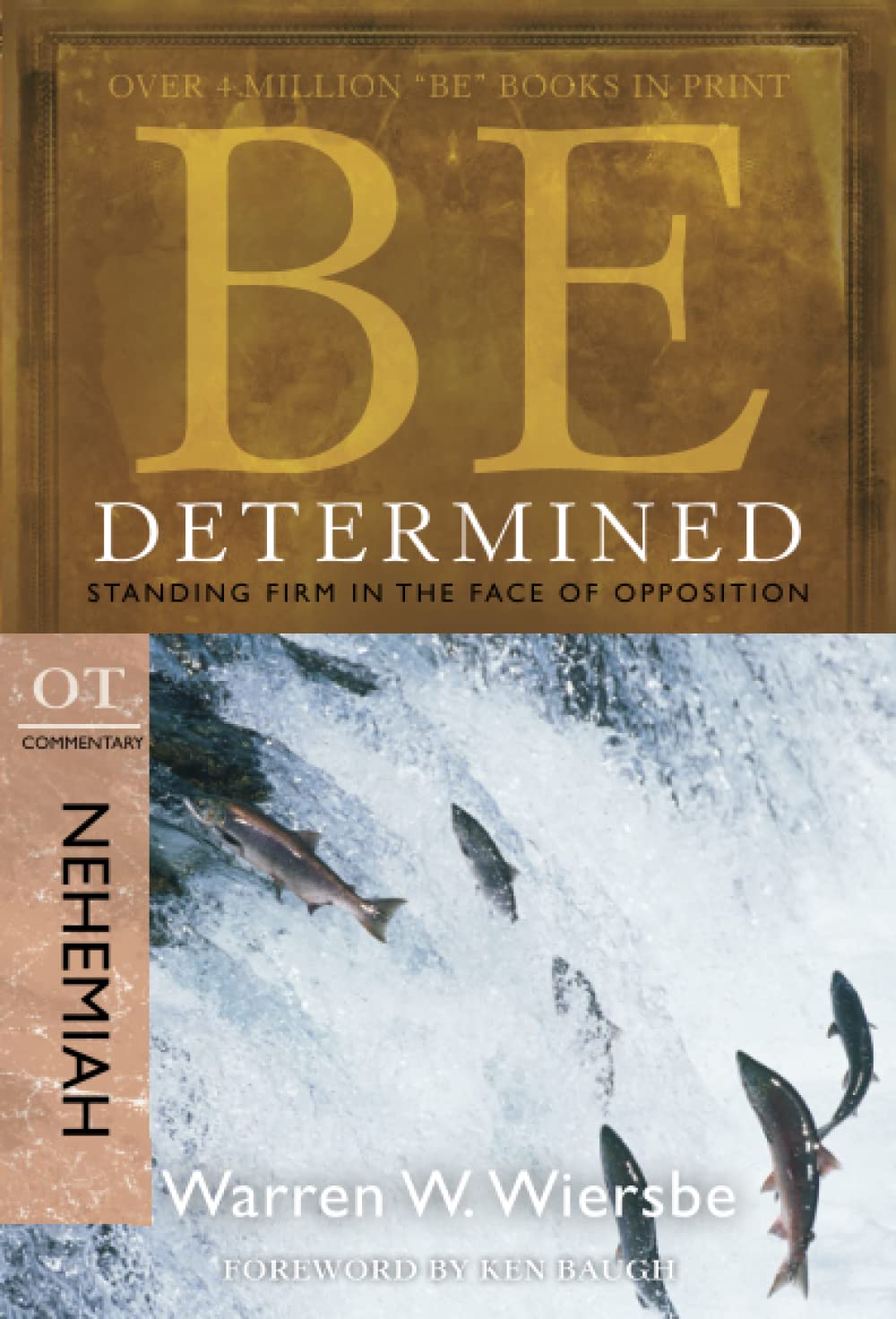
Nehemiah is one of my favorite Old Testament books, and Be Determined (Nehemiah): Standing Firm in the Face of Opposition by Warren W. Wiersbe was a good companion on this read-through.

Nehemiah was a captive Israelite in Persia (formerly Babylon). Most of Judah had been deported to Babylon in God’s judgment after years of worshiping idols, committing injustices against their neighbors, and more.

After 70 years, as Jeremiah had prophesied, many of the Israelites were allowed to go back to Judah. Ezra and the people with him had rebuilt the temple and reestablished their worship practices.

Several years later, Nehemiah was still in Persia (formerly Babylon) as the king’s cupbearer. When one of his friends comes back from Jerusalem, Nehemiah asks how things are going there. The answer: not good. Its wall, a city’s main defense then, was broken down and its gates burned.

Nehemiah was so troubled, he “sat down and wept and mourned for days” (1:4). He prayed, confessing the nation’s sins and reminding God of His promise to gather His people back together again. He prayed for favor in the sight of the king and then asked the king for permission to go back to Jerusalem and rebuild the city wall and gates.

The king not only granted permission, but supplied materials and an escort. According to Wiersbe, it would have taken about 55 days to travel between Susa and Jerusalem. Before Nehemiah said anything to anyone else, he quietly inspected the area by night. Then he told the people his plan, how “the hand of my God that had been upon me for good, and also of the words that the king had spoken to me. And they said, ‘Let us rise up and build.’ So they strengthened their hands for the good work” (1:18).

From the outset, the project had enemies, especially Sanballat and Tobiah. First they jeered and mocked, then they “tattled” to the king that the Jews were really trying to start a rebellion. They they tried to distract Nehemiah, and even plotted against his life. When they tried to lure Nehemiah away, plotting to do him harm, he replied, “I am doing a great work and I cannot come down. Why should the work stop while I leave it and come down to you?” (6:3).

One of the main features of Nehemiah is his prayer life. He took the whole problem to the Lord in prayer at the beginning. He shot up quick prayers when he was about to speak to the king and when problems came up. He prayed against his enemies and trusted God to take care of them, while also preparing the workers to defend themselves if need be.

God helped the people to build the wall in just 52 days. The Ezra came and read the law of God while the Levites “gave the sense, so that the people understood the reading” (8:8). The people mourned over all the ways they had failed. But Nehemiah encouraged them that this was a time to celebrate God’s mercies. “This day is holy to our Lord. And do not be grieved, for the joy of the Lord is your strength” (8:10). The people reestablished their covenant to obey God’s Word. They dedicated the wall to God with singing.

Nehemiah had to go back to the king for a bit, and when he got back, some things had slipped–things the people had just promised to do before he left. This spoke to me that it’s important not just to make a decision to obey God, but to implement plans to carry it out. For years I’ve heard laments that people make good decisions at camp or during revival services or special meetings, but then when life goes back to “normal,” they go back to their old ways. I think that’s because the decision is not the culmination of their conviction: it is just the beginning.

Nehemiah reminded the people that some of their practices were what got them into trouble and exile in the first place. Then he initiated reforms to help them do right.

Here are some of the quotes from Wiersbe’s commentary that stood out to me:

Like large doors, great life-changing events can swing on very small hinges (p. 20).

Nehemiah is a good example of how believers should relate to unsaved officials as they seek to do the work of God. Nehemiah respected the king and sought to work within the lines of authority that existed in the empire. He didn’t say, “I have a commission from the Lord to go to Jerusalem, and I’m going whether you like it or not!” When it comes to matters of conscience, we must always obey God rather than men (Acts 5:29), but even then, we must show respect (see Romans 13 and 1Peter 2:11-25) (pp. 34-35).

Satan wanted to use these problems as weapons to destroy the work, but God used them as tools to build His people (p. 59).

He was a leader who served and a servant who led (p. 68).

But the joy that comes from the Lord is real and lasting and enriches our lives. God doesn’t give us joy instead of sorrow, or joy in spite of sorrow, but joy in the midst of sorrow. It is not substitution but transformation (p. 115).

Nehemiah is an example of someone whose heart is in the right place, who was concerned for others and for God’s glory, who took everything to Him and prayer and depended on Him, and then put feet to his prayers. He was willing to travel far and work hard and face opposition to get the job done God had given him to do. He had initiative, but he couldn’t do the work alone: he was able to inspire others with his vision. “One person can make a big difference in this world, if that person knows God and really trusts in Him” (p. 31).

Joy: A Godly Woman’s Adornment

Once when a friend and I were heading toward the same door at church, she called our in her usual cheery voice, “Good morning, Barbara! How are you?”

I replied, “Doing okay. How about you?”

Just okay?” She sounded really dismayed that I wasn’t more than okay.

Well—to my thinking, okay was pretty good. Nothing hurt, nothing was wrong. I’m not an effusive person, so I wouldn’t generally respond in a really excited way unless something spectacular was happening.

For a while, I wondered if there was something wrong with me that I wasn’t more like my friend. In fact, the thought of always being so enthusiastic sounded exhausting to me. I finally attributed our responses to our very different personalities.

Still, I sometimes wondered if joy was always a bubbling brook, or if it was sometimes a steady undercurrent.

Those thoughts, and the fact that I had read and enjoyed some of Lydia Brownback’s other writings, encouraged me to get her book Joy: A Godly Woman’s Adornment.

This book is one in a series of “On the Go Devotionals.” Each entry is short, two to three pages in my Kindle app. There are forty-two devotions which concentrate on a different Bible verse about joy.

While we might go through times of sorrow and trial, gloominess and moodiness usually come from “looking at what we lack rather than all we have” (p. 9).

Even those of us going through a season of darkness can pursue joy, trusting that God designed us for it. Sooner or later, in Christ, we will find it. The trick for some of us is to change our self-oriented, worldly focus to Christ, and for others it is to take fresh hold of God’s promises that no matter how dark life seems, he is going to push you out into the light. . .

Our moodiness dishonors God and robs us of the happiness that lies right at our fingertips. If we want to change—to live with perpetual joy—we must pursue it, and in Christ we are guaranteed to find it. (p. 10).

In the very first entry, Lydia declares, “Self-surrender leads to joy” (p. 15). That doesn’t sound very joyful, does it? We think we’d be pretty happy if everything went our way.

We cannot imagine how we will survive without that certain relationship or plan. It feels like death. That’s because it is death. It’s the losing of our lives that Jesus was talking about [in Matthew 10:39: “Whoever finds his life will lose it, and whoever loses his life for my sake will find it”].

When we are facing the death of self, the costliness of discipleship, we are likely to pull back unless we remember the promise we have been given about how it will all turn out. The man in Jesus’ parable wound up owning the field. And Jesus said that those who lose their lives—all the earthly things they lean on for happiness and security—will find what they have been looking for all along. God will see to that (pp. 15-16).

I have many more quotes marked than I can share, but here are some that especially stood out to me:

Each trial is a gift. It’s a chance to know God’s strength and supernatural joy and to show that following him is worth everything (p. 24).

It is impossible to keep an eye out for God’s blessings while harboring a complaining spirit (p. 28).

We will never know lasting joy in the Lord if we seek to understand him by what goes on in the world or by our circumstances. The only way to joy is to interpret our circumstances by God’s Word rather than to judge God by our circumstances (p. 40).

Joy is the outworking of worship (p. 43).

We don’t need ten tips to a better spiritual life. What we need is to put God out front in our thoughts, priorities, time, and activities. If we allow his Word to govern us, we will see that he delights to show us “the path of life” and the path for our life (p. 45).

The joy promised in Scripture is different from the joy of personal expectation, our hope of some good thing we want God to do in our lives. While it is natural to hope for a good outcome in our difficulties and to trust God for it, we set ourselves up for a spiritual crisis if we expect that things will work out as we think they should (p. 60).

Joyful feelings are also not a yardstick to be used to determine how well we are doing spiritually. Feelings of closeness to the Lord are a wonderful blessing, but they are not an indicator of God’s acceptance of us. Christ is the only indicator. If we blur the distinction, we are going to worry about our spiritual standing whenever the good feelings aren’t present (p. 60).

God wills that we live in constant expectation of his appearing. We are to look for him in his Word, in his providences in our daily lives, in our sorrows, in our needs, and in our failures. He comes to us in Christ in all these things, but we miss him because we aren’t looking for him (p. 71).

The Holy Spirit doesn’t give us more love or more faithfulness or more joy. He gives us Christ, and as he does, joy and all the rest are produced within us as the fruit of that union (p. 73).

The joy of trials is rarely found in the circumstances of our difficulties. Rather, it is found when we stop fighting against what God is doing and seek his purposes and priorities, which always without exception are designed for our welfare. Whatever the difficulty—even one brought about by our sin—we can leave the outcome in God’s hands (p. 76).

How can we help what we feel? We just can’t muster up joyful feelings; that’s true. But we can rejoice, which sooner or later leads to joyful feelings. Rejoicing is not a feeling. It is joy in action. It is the humble willingness to offer God praise and thanks in all things, regardless of how we feel at the moment (p. 98).

We can experience joy in the Lord despite our circumstances. After reading this book, my thoughts ran to Psalm 43:3-5, a passage Lydia didn’t use:

Send out your light and your truth;
    let them lead me;
let them bring me to your holy hill
    and to your dwelling!
T
hen I will go to the altar of God,

    to God my exceeding joy,
and I will praise you with the lyre,
    O God, my God.

Why are you cast down, O my soul,
    and why are you in turmoil within me?
Hope in God; for I shall again praise him,
    my salvation and my God.

That passage in turn reminded me of this song, based on this passage. The words and story behind the song are here.

Mixed Emotions About a Book

I’ve been conflicted about whether I should even mention a book I recently listened to. But I finally decided that others might appreciate being forewarned, as I wish I had been.

I have not watched the Call the Midwife series on PBS. I like period pieces, but I had the impression this would be something like a “birth story of the week.” Each birth is its own miracle—or tragedy if things go wrong. But I didn’t necessarily want to watch a show about births in the 1950s.

But when I saw the audiobook by the same name was in a “two books for one credit” sale for Audible, I decided to check it out.

As it turns out, the book is a memoir about the life of a midwife in the 1950s in London’s East End, based on Jennifer Worth’s experiences.

Jenny Lee, as she is known in the book, became a nurse and then a midwife in the 1950s. She worked with other midwives out of a convent though they were not Catholic. The East End of London was a poor area, with most of the men working at the docks. Though crime was common, the midwives were respected and untouched though they rode their bikes alone day and night.

In past millennia, women were helped in giving birth by neighbors or a woman who was a midwife by means of experience gained in helping with deliveries and not through formal training. Normally, such help was fine, unless there was a problem.

Infant and mothers’ deaths finally led to midwifery becoming more of a science. Births still took place at home most of the time. But midwives in the 1950s had more training and tools to handle problem situations.

Though all of Jenny’s clients were poor, they varied greatly. Some homes were cheerful and neat though bare; others were in terrible condition.

As you might expect with a book like this, a number of birth stories are shared, both the happy and the tragic ones. Jenny shares what happened in graphic clinical detail, so if such things make you squeamish, you might not enjoy this book. Or you might skip through portions.

But the book is not all birth stories. Jenny tells about the different nuns at the convent, one of whom was brilliant but whose mind was failing. She tells about some of her coworkers and friends.

In one lengthy section, Jenny tells of a teenager named Mary who ran away from an abusive stepfather in Ireland and ended up roaming the streets of London. Mary was fourteen and evidently either didn’t know about places like the YWCA, where she could find temporary shelter, or didn’t know how to find them.

One day while Mary was looking longingly in a bakery window, a handsome young man saw her and offered to buy her breakfast. He was very kind, and soon Mary’s story came out. The man told Mary his uncle owned a cafe where they had “the best entertainment in London.” Perhaps his uncle would give her a job running the coffee machine.

In her naivete, Mary thought this man was romantically interested in her. She went with him to his uncle’s cafe—which turned out to be a brothel.

I don’t have a problem with this story being part of the book, because these kinds of things happened—and still do today. Young people, particularly runaways or orphans who have no one to call for help, are either lured with promise of food and shelter or outright kidnapped. Then they are trapped in a system they can’t get out of.

What I did object to, however, was a graphic description of the “show” one of the dancers put on at the brothel. I was navigating across busy lanes of traffic when this part of the story came on the audiobook, so I couldn’t stop and fast forward. I didn’t have the presence of mind while watching several directions for oncoming cars to just turn the sound off.

The dancer’s act wasn’t told in an approving or tantalizing manner. It was meant to be shocking and disgusting (and it was). But it wasn’t needed. We already had a good idea what kind of place Mary was being taken to. Even if Worth felt the need to share what went on, she didn’t have to tell as much as she did as graphically as she did. I regret having those images planted in my mind.

I almost laid the book aside at that point. But then I figured that scene was probably the worst, and the rest would be better. And that turned out to be the case.

There were a few other smaller problems–a few bad words, a couple of bawdy crude references, mention of a mixed group swimming nude.

Jennifer wrote the book some fifty years after her experiences when she read an article by Terri Coates wishing that some midwife would “do for midwifery what James Herriot did for vets.” I think Jennifer could have achieved what Herriot did, but I think she missed the mark by including scenes like the one I mentioned. What was otherwise a great book was marred by these negatives.

But Jennifer’s book became a bestseller when it was reissued in 2007 after having been originally published in 2002. She wrote three more, and the Call the Midwife series began in 2012.

I listened to the audiobook narrated by Nicola Barber. The narrator did a great job with the dialects. But she spoke almost in a whisper much of the time, making it hard to hear.

Worthy of Legend

Worthy of Legend is the third installment in Roseanna M. White’s Secrets of the Isles trilogy. The first was The Nature of a Lady; the second was To Treasure an Heiress.

The Secrets of the Isles involves two different groups in search of legendary pirate treasure. One loves “the hunt” and the thrill of archeological finds. The other wants the fame and fortune of such discoveries and employs underhanded means in the race to discover treasure.

Lady Emily Scofield is good friends with the people in the first group. But her father and brother are the primary instigators in the bad group.

Emily has lived her entire life in the background of her brother, Nigel. Nigel was her father’s favorite, and his misdeeds were excused away. Emily is expected to desert her friends and show loyalty to her family. But she can’t.

Instead of writing off her family completely, though, she tries to show love to them. Her friends fear she’ll be taken advantage of again.

Bram Sinclair, Earl of Telford, is the brother of the heroine in the first book. He has had an interest in the King Arthur legends since childhood. As he and his friends piece together clues to the artifact that both groups are pursuing, he realizes what they are looking for might be related to King Arthur. They try to keep this information secret from the other group.

As Bram and Emily’s group works together, Bram is concerned for Emily. He recognizes her conflict with her family and her lack of confidence and self-esteem from having been dismissed and overlooked for so many years. As he tries to encourage her, he discovers a true treasure in her character and heart.

A secondary plot line involves Emily’s maid, Thomasina, who has, unknown to Emily, been violated by Nigel. When a young man from the islands becomes interested in Tommie, she feels he would not be if he knew what had happened to her.

A couple of my favorite quotes from the book:

And if she lost everything all over again . . . well then, she’d just have to trust that the Lord could do more with her shattered than He could with her as she was now, barely holding together. That He meant her to be a mosaic instead of a whole.

Your worth, Thomasina, rests on no one else’s opinion of you. It doesn’t rest even on you. It rests in the Lord. He sees your heart, your soul. And that is all the approval any of us needs.

Bram and Emily were background characters in the previous books, and I enjoyed getting to know them better. I also loved the humorous bantering between Bram and his friend, Sheridan.

I especially liked the fact that these books were in a place I had never heard of, the Isles of Scilly. Now I feel I know the isles and the people on them. And the time frame of the early 1900s isn’t one we see often in historical fiction.

I enjoyed these stories very much and am going to miss these characters.

Dracula

I’ve never been much into horror or “monster” stories, except for an afternoon TV program that was popular when I was a teenager (what is it with teens and vampires?)

But last spring, my oldest son told me about Dracula Daily. Dracula by Bram Stoker is epistolary novel, made up of dated notes, letters, telegrams, and journal entries. Dracula Daily sent out excerpts from the book on the dates of the letters, etc., so the reader got them in “real time.” There would be weeks with nothing, but then there would be several journal entries on one day when something major was happening.

I decided it might be fun to experience the novel that way, so I signed up. I didn’t think to mention it in my end-of-month posts where I listed my current reading, I guess because it wasn’t in my usual reading format.

The story begins with Jonathan Harker, a new solicitor, traveling from England to Transylvania with some paperwork for a Count Dracula, who has just bought property in England. After some weird and frightening occurrences, Jonathan finally makes it to Dracula’s castle. The Count seems nice enough, but the remoteness of the castle, the wildness of the land, the howling of wolves nearby, all seem spooky.

Over several days Jonathan notices weird things about the Count himself. He never eats. He sleeps during the day and is awake at night. He has very sharp, canine-like teeth.

Things just keep getting weirder and more horrible. And then Jonathan discovers he is imprisoned. When he finally escapes, he lands in a mental asylum for a time.

Meanwhile, back in England, Jonathan’s fiance, Mina, wonders why she has not heard from him. Mina travels to be with her lifelong friend, Lucy Westerna, whose mother is seriously ill. Lucy receives three proposals of marriage in one day, but she loves one man: Arthur Godalming.

But after a while, Lucy begins sleepwalking, and then exhibiting strange symptoms, and then becomes anemic.

Jonathan makes it home, and he and Mina get married. He doesn’t tell her all that has happened to him, but he writes it down. He tells Mina where it is and invites her to read if it she wants, but she decides not to—yet. And then one day while Jonathan and Mina are in town, Jonathan sees Dracula.

Meanwhile, Dr. John Seward, one of Lucy’s rejected suitors, is called to check on her. He calls in his friend, Van Helsing, who suspects he knows what Lucy’s problem is. He orders a blood transfusion and other measures, but doesn’t say why or what he’s thinking. Things might have gone better if he had, because people who didn’t understand accidentally sabotaged his efforts. But then, he probably would not have been believed.

Finally Van Helsing does tell the others about the Count, and they all team up together to find and destroy him.

As it happens, the Literary Life Podcast started doing a series on Dracula on Oct. 31 (appropriately). I’ve only listened to the introductory episode so far, but it was pretty fascinating and enlightening. According to those doing this podcast, in Victorian times (when Stoker wrote Dracula), monsters in stories represented the devil. (Dracula, The Strange Case of Dr. Jekyll and Mr. Hyde, and The Picture of Dorian Gray were all written within ten years of each other). Stoker even chose the name Dracula because he thought it meant devil. These were classic good vs. evil stories in which evil must be defeated.

The podcasters say it wasn’t until after Freud that people began to sympathize with the monster, wondering what in his background made him like he was, seeing him as the victim instead of the victimizer. And in our day, people try to infuse modern sensibilities into old stories. But I agree with the podcasters that to truly understand what writer meant, we have to understand the context and times in which he or she wrote.

They also share some interesting tidbits that I would never have picked up on my own. For instance, Jonathan is traveling into Transylvania on the eve of St. George Day. That evening was something like our Halloween, and in those times, superstitious folks thought evil creatures were free to roam the earth that one night.

Then the meticulous record keeping later on is supposedly a nod to the Enlightenment–that even though this is a fantastic tale, they’re going to handle it in a very scientific manner. Yet there’s also a nod to Shakespeare’s quote in Hamlet: “There are more things in heaven and earth, Horatio, Than are dreamt of in your philosophy”–there are things that enlightened science and technology can’t explain or handle.

The podcasters (one of whom is a literature teacher) also said that Stoker was not the first to write a vampire story, but he established some of the tropes of vampire lore that still hold today. Yet the modern vampire story is very different from his. They said the idea of the mysterious sensual stranger vampire came from a story written by Lord Byron, which he wrote when he hosted a party in which the participants were challenged to write a scary story. Mary Shelley wrote Frankenstein then. Byron left his story unfinished, but his friend and doctor, John Polidori, wrote a similar one based on Byron. Byron was angry with him and terminated him, and then Polidori published his novel in revenge (You can read more about that here).

I thought Dracula was very well-written. It was both suspenseful and scary, yet with a thread of hope throughout.

Some of my favorite quotes from the book:

We learn from failure, not from success!

How good and thoughtful he is; the world seems full of good men—even if there are monsters in it.

Loneliness will sit over our roofs with brooding wings.

Though sympathy alone can’t alter facts, it can help to make them more bearable.

She is one of God’s women, fashioned by His own hand to show us men and other women that there is a heaven where we can enter, and that its light can be here on earth. So true, so sweet, so noble, so little an egoist—and that, let me tell you, is much in this age, so sceptical and selfish.

It is in trouble and trial that our faith is tested—that we must keep on trusting; and that God will aid us up to the end.

We believe that God is with us through all this blackness, and these many dark hours. We shall follow him; and we shall not flinch.

I’m looking forward to learning more from the Literary Life Podcast.

The text of Dracula is available at Project Gutenberg. Dracula Daily also has their missives in the archives.

I’m counting this book for the Mystery/Crime/Detective category of the Back to the Classics Challenge. Even though it’s both a horror and a Gothic novel, I think it fits as a mystery because who the Count is and what’s going on with him and then with Lucy, are all mysteries to the other characters. The Count does commit crimes. And then the measures to find him all fit with a detective story.

Bringing Maggie Home

In Bringing Maggie Home by Kim Vogel Sawyer, Hazel DeFord was ten years old when her mother asked her to take her three-year-old sister, Maggie, to the blackberry thicket to pick berries for a cobbler. Hazel set Maggie down for just a moment while she chased a snake away from a baby bunnies’ nest. When Hazel came back, Maggie was gone. None of the volunteers could find a trace of Maggie besides her hair ribbon, shoe, and favorite doll.

Hazel felt incredibly guilty for leaving Maggie unguarded, especially while witnessing the downward spiral Maggie’s disappearance caused in her family. She resolved to be as good as possible so as not to cause them any more trouble.

When Hazel grew up and had her own family, she never told her daughter, Diane, about Maggie. She felt Diane would never be secure with her if she felt she couldn’t trust Hazel to take care of her.

But Diane resented and rebelled against Hazel’s perfectionism and over-protectiveness. Hazel’s concerns came across as controlling to Diane.

But Diane’s daughter, Meghan, loves her grandmother and spends several weeks with her every summer. Now grown and a cold-case detective, Meghan has survived a car crash with a severely broken ankle. She decides to go to her grandmother’s to recuperate and work on some photo albums for Hazel’s upcoming 80th birthday.

Jealous, Diane, decides to come, too, without being invited or letting anyone know. Meghan is wearied playing peacemaker between the two women.

Then an accidental discovery of a shoe box of old photos leads Hazel to tell her daughter and granddaughter the truth.

Meghan and her partner at work, Sean, decide to see if they can uncover any information about Maggie’s disappearance. With the case being 70 years older, older than any case cracked by their agency, solving it is a long shot. But they resolve to try.

I loved this book. I wasn’t sure I would at first, because Hazel’s and Diane’s bickering made me tense. Then I realized the problem was mainly Diane. Hazel’s issues were easier to understand and sympathize with. And Diane’s responses were understandable to an extent. But her bitterness and selfishness got to be a bit much. Still, I felt things would turn a corner at some point, so I persevered. I’m glad I did.

The point of view shifts from each of the women at different times in their lives, and occasionally to Sean’s viewpoint as well. I didn’t feel that the changing viewpoints, timelines, or locations were hard to keep up with at all.

I’ve often said that I appreciate Christian fiction that is unapologetically Christian. I know sometimes the message needs to be subtle, but sometimes subtlety turns into vagueness. It’s good to see an author getting down to the spiritual needs in a story without becoming preachy or beating people over the head with truth. I thought Kim did a great job both with the story and the spiritual issues underneath them.

I didn’t know, when I started this book, that it had a sequel: Unveiling the Past. I will probably be reading or listening to that some time soon.

I listened to the audiobook, nicely read by Barbara McCulloh. Unfortunately, the audiobook didn’t contain any back matter, so I am not sure whether any of the story was based on anything in real life.

Christmas Reading Challenges

I always enjoy reading books about or set during Christmas in December. There are a couple of reading challenges where we can share about the Christmas books we’ve read.

I’ve participated in the Literary Christmas Challenge hosted by Tarissa at In the Bookcase for a number of years. Details about this year’s challenge, which runs from now til Dec. 31, are here.

A new challenge to me is the Ho-Ho-Ho Readathon hosted by Caffeinated Reviewer. The challenge details are here. There will be prizes! 🙂 This one runs just from November 18-30—maybe to get us in the right spirit for Christmas?

I usually try to wait til Thanksgiving to read Christmas books, but I may start earlier this year.

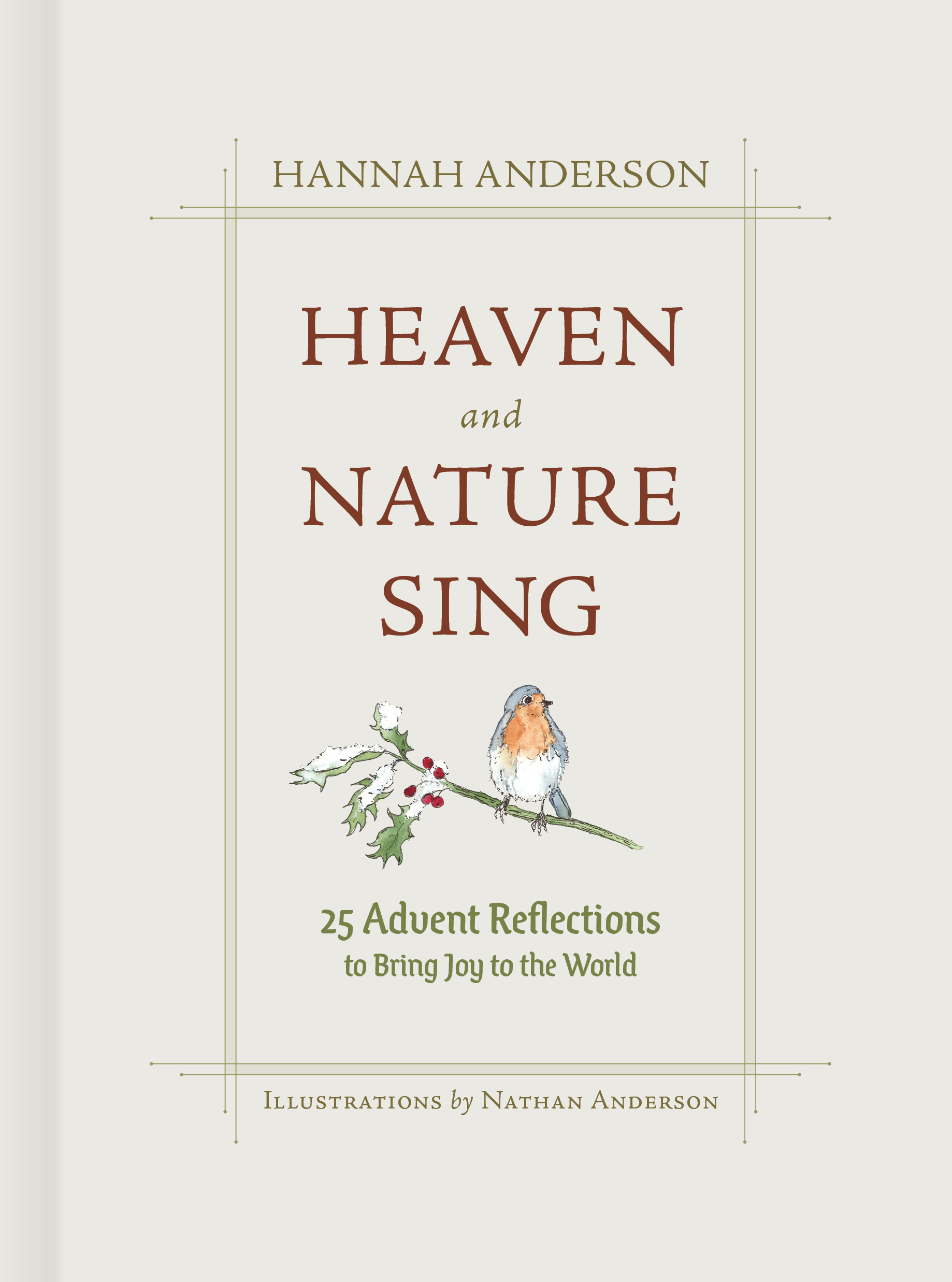
I like to read some kind of Christmas or Advent devotional book in December, and Tim Challies shared a good list of some I don’t have. But I decided to try Hannah Anderson’s Heaven and Nature Sings: 25 Advent Reflections to Bring Joy to the World.

I’ve collected most of these on Kindle sales over the last few years. I don’t know how many I’ll get to, but some are novellas or novella collections.

Hope for Christmas: A Small Town Christmas Romance Novella by Malissa Chapin

It’s a Wonderful Christmas: Classics Reimagined by Julie Cantrell, Lynne Gentry, Allison Pittman, Kelli Stuart, Janyre Tromp

Midnight, Christmas Eve by Andy Clapp

Christmas in Mistletoe Square
by Cara Putman, Teresa Tysinger, Pepper Basham, Janine Rosche

Magnolia Mistletoe: An Edisto Christmas Novella by Lindsey P. Brackett

A Goose Creek Christmas by Virginia Smith

The 20th Christmas by Andrea Rodgers

A Christmas Snow by Jim Stovall

A Christmas Bride by Melanie Dobson

This one is a free audiobook for Audible subscribers. I’ve not heard of the author, but the reviewers say it’s sweet and clean.

Snowed In for Christmas by Cami Checketts

I might also listen again to The Christmas Hirelings by Mary Elizabeth Braddon. I really enjoyed this audiobook a few years ago, plus I like Victorian-ish stories at Christmas, too.

I have a couple of Christmas story collections in print books: The Best of Christmas in My Heart by Joe Wheeler and Stories to Read at Christmas by Elsie Singmaster. I might try to read one or both of those.

Three Fifty-Seven

I had never heard of Hank Stewart or Kendra Norman-Bellamy, but their book, Three Fifty-Seven: Timing Is Everything was free for Audible subscribers.I really liked the premise, so I decided to give it a try.

Ms. Essie is an elderly lady who lives alone. Her husband died very young, but she never wanted to remarry. The family for whom she acted as caregiver in their last days left her their home and enough income to be comfortable.

As Ms. Essie sits on her porch and knits, she can’t help but be aware of some of her neighbors’ problems. The single mother yells a lot, and her teenage son shows disrespect and stays out past curfew. A regular jogger from down the street seems to be running from something rather than just running for her health. Angel, her best friend’s granddaughter, is married and expecting her first child. All is well with Angel and her husband until an accident seems to have harmed the baby.

Ms. Essie decides to be as helpful and available as possible. When her neighbors are outside, she invites them in for lemonade and peach cobbler. She offers a listening ear, prayer, and a bit of advice. As their problems intensify, so do her prayers.

As the subtitle indicates, time is a factor in the book. Each chapter starts with the time of day.

We all need a Ms. Essie in our lives. Though I didn’t like the ending, I loved the story and the truth that God can work through us if we’re available to Him.

My only minor complaint about Essie is that the authors may have made her a little too special in the sense of knowing just what to say or how to get people to share their troubles. One character says Essie “had a direct line to heaven, and God told her things He told no one else.” I wish that had been dialed back a bit and she were more ordinary–that would be more encouragement to those who don’t reach out because they don’t know what to do or say.

Unfortunately, for me a major flaw was bedroom scenes or descriptions that went too far. I don’t want or need to know the details. For that reason, I probably wouldn’t look into a book by these authors again. And that’s really a shame, because otherwise this was a great book.

A Daily Rate

The second free Grace Livingston Hill audiobook I mentioned yesterday was titled A Daily Rate.

Celia Murray lives in a Philadelphia boarding house. She and the other residents put up with awful food and shabby surroundings. She’s concerned about one of the younger men who is hanging out with the wrong crowd in the evenings. A couple of the young women seem giggly and frivolous and into nothing more than dating and novels. Celia wishes she could fix up the place and make it more home-like. Perhaps then some of the others would stay in for more wholesome activities.

Celia would also love to bring her Aunt Hannah to live with her. Aunt Hannah had raised Celia when her parents died. Then Hannah had taken in some other nieces ad nephews as well, but they didn’t seem to appreciate her efforts as much. Due to reduced circumstances, Hannah now lives with another niece who treats her as an unpaid servant and baby-sitter.

When Celia comes into an unexpected small inheritance at the same time her landlady has to take a leave due to medical problems, Celia is able to make both dreams come true. She brings Aunt Hannah to help her “mission of making one bright little clean home spot for a few people who had hitherto been in discomfort.” They start small with a few touches here and there, but the biggest change is in providing nourishing food in a clean and attractive setting.

Though Celia has good intentions, she comes across as somewhat judgmental. Plus she is impatient. When her efforts appear to fail, she wants to give up. But Hannah gently helps her gain the right perspective.

One level of the plot has to do with the transformation of the home and boarders, but another level focuses on Celia’s maturing.

A Daily Rate was one of Hill’s earliest novels, written in 1900. The Search, mentioned yesterday, was written 19 years later. Like any author, Hill’s growth as a writer can be seen in her later book. But this one was good as well. It was fun in both books to hear the slang of the day and to get picture of life in that era.

I especially appreciated the emphasis in A Daily Rate on how homemaking can be a ministry to a home’s inhabitants. Even though that’s my chosen profession, I can still get caught up in all the “stuff” that has to be done and have not the best attitude about it. It helps to be reminded that the “stuff” of housekeeping isn’t an end in itself.

The Kindle version of this book is available for 99 cents at the time of this writing.