Book Review: Keeping Christmas

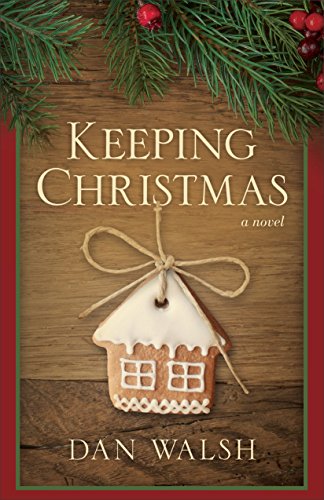
Keeping ChristmasIn Keeping Christmas by Dan Walsh, Stan and Judith Winters are empty nesters. Stan enjoys having a little more freedom of schedule and quietness, but Judith’s life has always been wrapped up in her children, and she misses them. She’s sad that they can’t come for Thanksgiving, but when she learns that none of them can come for Christmas, she falls into a deeper depression than Stan has ever seen. She doesn’t even have the heart to decorate the Christmas tree. That was something they had always done together, and most of their ornaments are what Stan calls “ugly ornaments,” ones Judith made with the kids.

Judith’s best friend does her best to distract her, with minimal success at first. Judith doesn’t think her friend understands, since all of her children and grandchildren live in town. But her friend conveys that just because they’re all there doesn’t mean everything is idyllic and shares some of the family conflicts and quandaries.

Judith and Stan had developed different and separate traditions for their after-Thanksgiving activities, and not only had they hardly talked over their meal, but Stan had even left the TV on. But as he tries to help lift Judith’s spirits, he becomes more attentive. Finally he has an idea, one involving the box of “ugly ornaments” and some sacrifice, but it’s his last option.

My thoughts:

Though predictable, this was a sweet story, not just about helping an empty nester mom’s depression, but about a husband and wife learning to reconnect after all their kids are gone. I’d be a little concerned that moms in the same situation reading this might be even more down since the Hallmark-type happy ending in the book is not likely to happen in real life. But perhaps there’s enough in everything else the characters go through and learn to be beneficial even without that ideal ending. Overall a nice, heartwarming Christmas novel.

(Sharing with Semicolon‘s Saturday Review of Books, Literary Musing Monday, and Carole’s Books You Loved)

Literary Christmas Reading Challenge

A Literary Christmas: 2017 Reading Challenge // inthebookcase.blogspot.com

Tarissa at In the Bookcase is hosting a Literary Christmas Reading Challenge, and, since I like to read Christmasy books in December, I decided to join in! More information on the challenge is here.

I have read or am planning to read the following (the ones I have already read and reviewed are linked back to my reviews):

Sarah’s Song by Karen Kingsbury
Silver Bells by Deborah Raney
Keeping Christmas by Dan Walsh
I’ll Be Home For Christmas, four novellas in one.
The Great Christmas Bowl by Susan May Warren
Gospel Meditations for Christmas by Chris Anderson, Joe Tyrpak, and Michael Barrett

That will probably be more than enough, but I have a few others on hand or in my Kindle app if needed. 🙂

Book Review: Silver Bells

Silver BellsSilver Bells by Deborah Raney opens in small-town Bristol, Kansas in August 1971. Michelle Penn has had to leave college after two years because her parents can’t afford to send both her and her brother, and they hope that having her brother in college will keep him out of Viet Nam. Michelle has found a job as the city reporter in Bristol’s small newspaper. She meets the sports reporter at the desk next to hers, and after she makes a comment about the boss’s son, she’s chagrined to learn that’s him. “First day on the job and she was toast. Burned-to-a-crisp toast.” Thankfully, the boss’s son, Rob, thinks the whole thing is funny.

He shows her the ropes and takes her along for a breaking case, which involves a domestic disturbance. While he’s snapping pictures, she’s supposed to be getting details, but compassion for the battered wife and daughter stop her in her tracks. She talks Rob into using the least graphic of the photos and goes back later to see if she can help the woman.

Later she humanizes the paper a bit by putting a fun, good-feeling photo on the front cover. At first the editor is not pleased that the cover photo did not involve politics or sports, but the response is so positive that he grudgingly assigns her the cover photo from now on. But he does warn her that he has a policy against employees dating.

Unfortunately, Michelle has already taken a liking to Rob, and he is attracted to her as well. They’re thrown together often to cover stories, but Rob’s father once again warns Michelle away from Rob and threatens her with losing her job. Rob wonders if it’s time to get out from under his father’s thumb so he can live his own life the way he wants to.

My thoughts:

This was a sweet, funny, touching, clean romance. I loved the banter between Rob and Michelle. The faith element was woven in naturally as the characters learned to seek and then to trust God with their situation. The 1970s were the era of my teens, and I enjoyed the touches particular to the times that Deborah incorporated. This era is not often written about, so it was refreshing from that aspect as well. The plot ends at Christmastime, making it a perfect Christmas read.

(Sharing with Semicolon‘s Saturday Review of Books, Literary Musing Monday, and Carole’s Books You Loved)

Book Review: The Bronze Bow

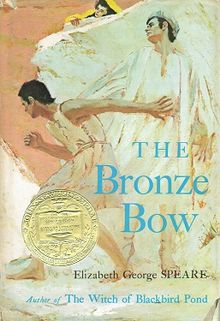
Bronze bowThe Bronze Bow by Elizabeth George Speare takes place during the time Christ lived in Israel. Daniel bar Jamin is a young Jewish man fueled by one passion: vengeance against the hated Romans. They had crucified his father and uncle when Daniel was eight, his mother died of grief, and his sister, who saw the bodies on the crosses when she was three, was so traumatized that she became excessively fearful and has never left the house since. Daniel’s grandmother took the children in, but she was so poor that she had to sell Daniel to a blacksmith as an apprentice. Daniel’s master was so cruel that Daniel escaped to the hills, where he was taken in by a band of outlaw freedom fighters.

One day Daniel, now a young man, spies another young man and his sister exploring the hills and realizes he uses to know the other young man, Joel. Though it’s not wise or safe, Daniel feels compelled to speak to them. They get reacquainted and wonder whether the freedom fighter’s leader, Rosh, could possibly be the deliverer, the Messiah they wait for. Joel wants to join Rosh’s band, so Rosh tells him to go back to town and wait, and he’ll send him word when it’s time.

Eventually Daniel’s friend, Simon the Zealot, sends word to Daniel that his grandmother is dying. As his sister, Leah’s, only living relative, Daniel feels compelled to go back and care for her, though Rosh calls him “soft.” Simon offers Daniel his blacksmith’s shop since Simon is following Jesus and not using it. Daniel finds that most people in the village, though they don’t like Roman rule, aren’t willing to fight against it. Though homesick for the free air and space of the hills, Daniel recruits Joel and other boys to a band to train to help Rosh when the time comes.

As Daniel hears of Jesus from Simon and Joel, goes to listen to his teaching, and witnesses healings, he can’t help but wonder about him and ponder his words. He wishes Jesus would team up with Rosh. But eventually he realizes Jesus’s deliverance is not so much from Roman oppression, his message is not about revenge, hatred, and war: in fact, he tells people to love their enemies. That Daniel cannot acquiesce to, so he goes his own way, which eventually leads to disaster and despair. Will Daniels’s hate destroy everything dear to him, or will his hitting rock bottom finally allow him to look up?

“Daniel,” he said. “I would have you follow me.”

“Master!….I will fight for you to the end!.”

“My loyal friend,” he said, “I would ask something much harder than that. Would you love for me to the end?”
___

It is the hate that is the enemy. Not men. Hate does not die with killing. It only springs up a hundredfold. The only thing stronger than hate is love.

My thoughts:

I came across this book while searching for an award-winning classic for the Back to the Classics challenge, and this won the Newberry medal. I was resistant to reading it, both because I figured it would be predictable and I am wary of fictionalized Bible-related stories. I chose another classic but had to lay it aside due to bad language and couldn’t find anything else, so I came back to The Bronze Bow. And I was pleasantly surprised! Though one event happened like I thought it might, the rest of the story didn’t pan out like I thought it would at all, and I was drawn in to Daniel’s story and angst. I listened to the audiobook nicely narrated by Peter Bradbury, but also checked out the hard copy from the library to go over certain passages more in depth.

I wouldn’t take my theology from this book. There are conversations and incidents involving Jesus that may not represent Him or His message entirely accurately, and the redemption described seems more about overcoming hate than personal salvation from sin (though of course overcoming hate with love is certainly a part of salvation).  But it does give an excellent feel to the times, especially to what being under a Jew under Roman occupation was like, and shows the cultural customs naturally without being didactic. The characters were well-drawn and the story drew me right in.

One thing that stood out was the sense of anticipation of waiting for the Messiah, the Deliverer, even though some people missed the point of what He was coming to deliver them from. It was interesting reading this during the Christmas season, when we commemorate the anticipation of His coming the first time, and renews in me that sense of anticipation of His coming again.

(Sharing with Literary Musing Monday and Carole’s Books You Loved)

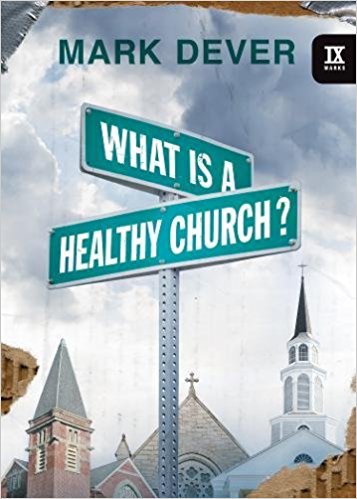
Book Review: What Is a Healthy Church?

Healthy ChurchMark Dever opens What Is a Healthy Church? by pointing out that much of what we look for in a church is determined by our own particular culture: the type of music, pastor, preaching, etc., that we’re used to. He encourages readers to consider Biblical marks of a healthy church. Why does he address a book like this to Christians in general rather than church leaders? Because, he points out, most of the NT epistles, which contain much instruction about church as well as personal life, were written to congregations, not just pastors.

Then he explains briefly what a Christian is, what the church is and isn’t, what the church is for, and why Christians need a church. Ultimately the church “is called to display the character and glory of God to all the universe, testifying in word and action to his great wisdom and work of salvation” (p. 48).

The church finds its life as it listens to the Word of God. It finds its purpose as it lives out and displays the Word of God. The church’s job is to listen and then to echo…The primary challenge churches face today is not figuring out how to be “relevant” or “strategic” or “sensitive” or even “deliberate.” It’s figuring out how to be faithful–how to listen, to trust and obey (pp. 55-56).

He then discusses one by one what he considers nine marks of a healthy church, dividing them into three essential marks (expositional preaching, Biblical theology, Biblical understanding of the Good News) and six important ones (Biblical understanding of conversion, evangelism, membership, church discipline, discipleship and growth, and church leadership).

You and I cannot demonstrate love or joy or peace or patience or kindness sitting all by ourselves on an island. No, we demonstrate it when the people we have committed to loving give us good reasons not to love them, but we do anyway (p. 29).

If a healthy church is a congregation that increasingly displays the character of God as his character has been revealed in his Word, the most obvious place to begin building a healthy church is to call Christians to listen to God’s Word. God’s Word is the source of all life and health. It’s what feeds, develops, and preserves a church’s understanding of the gospel itself (p. 63).

Martin Luther found that carefully attending to God’s Word began a Reformation. We, too, must commit to seeing that our churches are always being reformed by the Word of God (p. 67).

Sometimes, it’s tempting to present some of the very real benefits of the gospel as the gospel itself. And these benefits tend to be things that non-Christians naturally want, like joy, peace, happiness, fulfillment, self-esteem, or love. Yet presenting them as the gospel is presenting a partial truth. And, as J. I. Packer says, “A half truth masquerading as the whole truth becomes a complete untruth.”

Fundamentally, we don’t need just joy or peace or purpose. We need God, himself. Since we are condemned sinners, then, we need his forgiveness above all else. We need spiritual life. When we present the gospel less radically, we simply ask for false conversions and increasingly meaningless church membership lists, both of which make the evangelization of the world around us more difficult (p. 77).

My thoughts:

I don’t think I have ever read anything by Dever before and was only vaguely aware of his organization, 9Marks. This book seems to be a compact version of what he has written more extensively elsewhere. We received it in a gift bag from a church we visited. Generally I agree with what’s here with a couple of exceptions, one relatively minor.

1) In the chapter on preaching he makes the statement “Has not every step of growth in grace occurred when we heard from God in ways we hadn’t heard from him before?” (p. 66). For me, significant growth in grace has occurred sometimes from being reminded of something I already knew from God’s Word that I needed to return to or refocus on.

2) I think he’s too dismissive of differences in preference of music styles in churches. He seems to consider it almost a non-issue.

Remembering that the church is a people should help us recognize what’s important and what’s not important. I know I need the help. For example, I have a temptation to let something like the style of music dictate how I feel about a church. After all, the style of music a church uses is one of the first things we will notice about any church, and we tend to respond to music at a very emotional level. Music makes us feel a certain way. Yet what does it say about my love for Christ and for Christ’s people if I decide to leave a church because of the style of its music? Or if, when pastoring a church, I marginalize a majority of my congregation because I think the style of music needs to be updated? At the very least, we could say that I’ve forgotten that the church, fundamentally, is a people and not a place (p. 35).

If it were just a matter of preferences, that would be true. What I think he might not understand is that some people consider certain types of music not just not preferable, but wrong. We’ve heard teaching for years about what’s wrong with certain types of music. On the other hand, the Bible doesn’t say anything about particular music styles, and I think some of that specific teaching went far beyond what the Bible has to say about music. But I don’t think that means “anything goes.” So we’re trying to sort out what’s coming from conscience or conditioning, but I don’t think we can ignore conscience or conditioning, either. Music makes up a significant part of a church service, so, while it’s not “the” main issue, or even part of the “nine marks,” it is still an issue.

Aside from those, I thought this was a good overview of what a healthy church should be. I also appreciated his encouragement to both pastor and people to be patient if a church isn’t “there” yet and his reminder that growth takes time. Once when we were getting ready to move to another state, our dear pastor at the time advised us to look not just at where a church is, but where it’s heading, and I think that dovetails nicely with the instruction in this book. No church will be perfect, but we should look for one with a good foundation and growth in these ways.

(Sharing with Semicolon‘s Saturday Review of Books, Literary Musing Monday)

Book Review: Sarah’s Song

Sarah's SongSarah’s Song is the third in Karen Kingsbury’s Red Glove series, but can easily be read without having read the first two.

In this story, Sarah Lindeman lives in a retirement home while fighting a losing battle with heart failure. Every Christmas she brings out twelve old yellowed envelopes with ornaments with a single word on each and places one on the tree each day. The words unfold the story of her return to the Lord and her love story with dear husband, Sam, a story involving sin, rebellion, grace, and restoration.

This Christmas, one of Sarah’s nurses, Beth, takes an interest in hearing the story unfold day by day. Sarah senses that Beth has deep needs that the details of her own story can minister to. But will Beth hear it? And will Sarah live long enough to tell it?

A couple of sentences made me wince a bit, like “All of life was a dance, the steps measured out to the music of the days” and especially gloves that “smelled of old love and days gone by.” And though the plot line is somewhat predictable, it’s a sweet, touching story and I enjoyed it.

(Sharing with Semicolon‘s Saturday Review of Books, Literary Musing Monday, and Carole’s Books You Loved)

Christmas Book Giveaway

I have a few gently-used Christmas books I read last year that I’d like to give away to anyone who wants them. I’ll list them and link back to my reviews of them. If you’re interested in any, let me know in the comments. If you’re interested in more than one, let me know which you’d like first, second, and so on. If no one else wants the book you named – it’s yours! If multiple people want one book, I’ll use random.org to draw someone’s name. I’ll draw names a week from today, Tuesday, Dec. 12. That should get them to you with plenty of time left in the month for some cozy Christmas reading. I’m afraid due to shipping costs I’ll have to restrict this to contiguous USA addresses only.

father-christmas

2. Where Treetops Glisten, three novellas set during the WWII era, by Tricia Goyer, Cara Putman, and Sarah Sundin.

Where-Treetops-Glisten

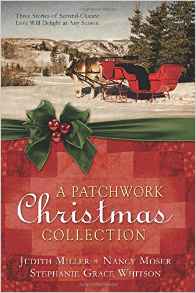
3. A Patchwork Christmas Collection by Judith Miller, Nancy Moser, and Stephanie Grace Whitson, three novellas from the Victorian era.

patchwork-christmas

There you go!
____________

Update: The giveaway is closed. the winners are:

Father Christmas: Kathie
Treetops Glisten: Dianna
Patchwork Christmas: Brenda

Congratulations! I’ll be emailing you in just a moment to get your addresses.

Book Review: Washington’s Lady

Washington's Lady Washington’s Lady by Nancy Moser is a fictionalized biography of Martha Washington, wife of the U.S.A.’s first president.

The story opens with Martha at age 26 having just lost her husband of seven years, preceded by the deaths of two children. One of her two remaining children was sick with the same illness that took her husband. Despite her grief, she had to deal with the affairs of their plantation, including the complications of her husband’s neglect to leave a will.

Because she was “the wealthiest widow in Virginia,” “expected to remarry in a timely fashion,” it wasn’t long before a number of suitors sought her hand. No one interested her, however, until she met Colonel Washington. They conversed easily and were drawn to each other, eventually marrying. George tried to help her sort out the issues at her plantation, but eventually they moved to his smaller estate at Mount Vernon.

Trouble was stirring, however, with “Mother England.” Ludicrous laws and taxes, low quality goods sold to colonists at inflated prices, and a number of other issues were moving the populace from dissatisfaction to revolt. George left Mount Vernon as a representative, but eventually became the leader of the armed forces, not returning home for six years.

The story is told from Martha’s point of view, so we hear of battles through letters and occasional visits Martha made to wherever the troops were camping. She put herself to good use, sewing and repairing uniforms, organizing sewing circles to do the same, and visiting the men. Once she and the family had to flee Mt. Vernon as British forces approached, but a storm kept the enemy back. Two schemes to kidnap her failed. Other times newspapers spread lies, such as one stating that she was loyal to Britain.

At one point, overwhelmed by the suffering of the men and the lack of food, clothing and supplies for them at Valley Forge, she lamented that she could not do more. But she realized “the fate of many men depended on the fate of this one. And this one I could help.”

As the conflict drew to a close, many realized the revolution was all for nothing if the fledgling country could not get off to a good start, so talks began as to how best to achieve that. The result was George’s being elected president, not something he wanted at first. He longed for nothing more than to go home and be with his family and get his neglected house in order. But many felt that, as he had unified an army of untrained disparate individuals, he was the best to try to do the same with the thirteen colonies.

Martha was not pleased. All she wanted was for both of them to go home, too. Plus there was nothing for her to do as the president’s wife. She couldn’t even take a walk with her husband without being mobbed, the price of fame neither of them wanted. Perhaps because of all this, the book skips ten years over the time of George’s presidency to the last day of his life, then sums up the couple of years that Martha survived him.

Like most people, Martha had a mixture of qualities. She was unpretentious, strong, feisty, practical, capable in many respects. She had a constant stream of visitors and enjoyed hospitality until it became almost constant as they became more well known. She was also a self-proclaimed worrier. Her one main weakness was her son, Jacky. Perhaps because her husband and other children all passed away, and this son had been dangerously ill, plus for reasons unknown she and George were not able to have their own children, she was over-protective of him, and not only did she not discipline him, she did not let George do so, either. Jacky ran into all kind of trouble as a teenager and young man, seemed to settle down somewhat when he married, but then went back to his undisciplined, self-willed ways later on, and died leaving a wife and four children, the youngest two of whom George and Martha took in. Martha blamed herself, but then she repeated the very same mistakes with her one grandson while being strict with her granddaughters.

After George’s death, she destroyed all but a couple of their letters, perhaps to keep at least that part of their private lives from public view, understandably.

I also enjoyed the author’s several pages at the end explaining her interest in Martha and what things were made up or compiled and what things were real. Conversations, of course, needed imagination to recreate, but she based the story on as much fact as she could discover.

Besides learning more about Martha and George, it was also neat to see glimpses of other historical figures as well and to get the feel of those times. This was a fascinating and enjoyable book.

(Sharing with Semicolon‘s Saturday Review of Books, Literary Musing Monday, Carole’s Books You Loved)

What’s On Your Nightstand: November 2017

Nightstand82The folks at 5 Minutes For Books host What’s On Your Nightstand the last Tuesday of each month in which we can share about the books we have been reading and/or plan to read.

It’s the end of another month, next to last one of 2017, and time to take stock of what we’ve been reading.

Since last time I have completed:

What Is the Gospel? by Greg Gilbert, reviewed here. Excellent.

Love in Hard Places by D. A. Carson, reviewed here. Convicting and thought-provoking.

To Be Where You Are by Jan Karon, reviewed here. Always a pleasure to visit Mitford.

A Little Salty to Cut the Sweet: Southern Stories of Faith, Family, and Fifteen Pounds of Bacon by Sophie Hudson, reviewed here. Very good.

Jayber Crow by Wendell Berry, reviewed here. Mixed emotions.

Between Friends: Craft Projects to Share by Charlotte Lyons, reviewed here. Very good.

Washington’s Lady by Nancy Moser. Fictionalized biography of our first First Lady. Very good – review coming hopefully tomorrow! here.

I’m currently reading:

What Is a Healthy Church? by Mark Dever.

French Women Don’t Get Fat: The Secret of Eating for Pleasure by Mireille Guiliano

Sarah’s Song by Karen Kingsbury

Gospel Meditations for Christmas by Chris Anderson, Joe Tyrpak, and Michael Barrett.

The Bronze Bow by Elizabeth George Speare

Up Next:

I’ve only gotten to one on my “up next” list from last month, and I laid that one aside due to bad language and suggestive content (A Bell for Adano by John Hersey for the prize-winning category of the Back to the Classics challenge). Plus I hadn’t taken into account that Christmas was coming, and I like to read a few Christmasy books during December. I’ve already started a couple and have a couple more in my Kindle, so we’ll see how that goes. The others are:

I’ll Be Home For Christmas, four novellas in one.

Silver Bells by Deborah Raney

Keeping Christmas by Dan Walsh

Besides those, I am planning on these:

Watership Down by Richard Adams, one of those books I have heard about for years but never got to. It’s not old enough to save for next year’s Back to the Classics challenge, so I’ll listen to it next.

Classics of British Literature by John Sutherland, a Great Courses series. Hope’s review convinced me to listen to it.

For those who like to plan ahead, I recently announced the Laura Ingalls Wilder Reading Challenge for February 2018 and listed a bunch of Laura-related books beyond the Little House series.

Happy Reading!

Laura Ingalls Wilder Reading Challenge 2018 and Book List

I’ve noticed that a number of people are posting about next year’s reading challenges and plans already, so for those who like to plan ahead, I wanted to let you know that the Laura Ingalls Wilder reading Challenge will take place here next February. This will be our 6th year!

The idea is to read anything by or about Laura Ingalls Wilder during the month of February since her birth and death both occurred in February. Some have also incorporated some LIW activities during that month! It’s not required, but I love to see and hear about it.

I’ll have a sign-up post here on February 1st. You don’t have to have a blog to participate, but if you do, I welcome you to post about the books you read or any activities you might do, and/or post a wrap-up of your LIW reading at the end of the month and link to our wrap-up post here on Feb. 8. If you don’t have a blog, you can let us know in the comments on that post what you read.

A few years ago I posted a list of books that I had come across by or about Laura for those people who wanted to roam beyond just the Little House books. I’ve become aware of so many more, I thought it was time for an updated list. You’re not restricted to this list by any means – these are just some that I have read or heard of. I am sure there’s multitudes more I haven’t heard of yet. I’ve linked the ones I’ve read back to my reviews.

Books by Laura Ingalls Wilder:

  • The Little House books, of course
  • Little House in the Ozarks: the Rediscovered Writings of Laura Ingalls Wilder (linked to my review), compiled and edited by Stephen Hines, a collection of newspaper columns and magazine articles she wrote before starting the Little House books
  • Saving Graces: the Inspirational Writings of Laura Ingalls Wilder (linked to my review), a collection of inspirational or faith-based writings pulled from the columns in Little House in the Ozarks.
  • Writings to Young Women from Laura Ingalls Wilder (3 volumes) I’ve not read this yet, but it appears to be the same type of thing: some of the columns from the first book sorted into different categories.
  • On the Way Home, a diary of her move with her husband and daughter in a covered wagon from South Dakota to Missouri.
  • West From Home (linked to my review), letters Laura wrote to Almanzo while visiting their daughter in San Francisco, where she visited the World’s Fair.
  • A Little House Traveler contains the above two books plus the previously unpublished The Road Back, about the first trip she and Almonzo took back to De Smet, where Laura grew up and where they met.
  • A Little House Sampler, stories and writings of Laura as well as of Rose Wilder Lane, compiled by William T. Anderson.
  • Pioneer Girl (linked to my review), the script of Laura’s first draft of what was to become the Little House books, wonderfully and thoroughly annotated by Pamela Smith Hill.

Biographies of Laura:

  • I Remember Laura by Stephen W. Hines (linked to my review), a collection of articles and interviews of people who actually knew Laura.
  • There are several, William Anderson’s perhaps the most well known. More on Anderson’s work, and some information on MacBride, is here.

Books about the family by Laura’s daughter, Rose Wilder Lane:

  • Let the Hurricane Roar (also known as Young Pioneers)(linked to my review), a fictionalized novel about her grandparents’ “prairie life,” written without her mother’s permission or knowledge
  • Free Land: I don’t know if this is about any particular family members, but it is about the same times and situations.

Books about the rest of the family. I have not read any of these, so I don’t know about their authenticity, ow close or far they are from the facts:

  • Roger Lea MacBride, Rose’s sole heir and the co-creator and co-producer of the Little House on the Prairie TV series, published a series of books based on Rose’s childhood.
  • Little House: The Martha Years by Melissa Wiley, a series of books about Martha Morse, Laura’s great-grandmother
  • A series of books about Charlotte Tucker, Laura’s grandmother, also by Melissa Wiley: Little House by Boston Bay, On Tide Mill Lane, The Road from Roxbury, Across the Puddingstone Dam
  • Books about Caroline Quiner Ingalls, Laura’s mother, by Maria Wilkes
    Little House in Brookfield
    Little Town at the Crossroads
    Little Clearing in the Woods
    On Top of Concord Hill
    Across the Rolling River
    Little City by the Lake
    A Little House of Their Own
  • Old Town in the Green Groves (Little House) by Cynthia Rylant
  • Nellie Oleson Meets Laura Ingalls (Little House) by Heather Williams
  • Mary Ingalls on Her Own (Little House Sequel) by Elizabeth Cody Kimmel.
  • (Thanks to Sherry for several of these!)

For the younger set:

Modern books related to Laura:

Others:

Music related to Laura:

The following are not books, but rather blog posts or sites related to Laura:

I have plans for a couple this February, but I see many more I’d like to get to! I hope you do, too!

(Update: Be sure to check the comments for suggestions others have added.)

(Sharing with Semicolon‘s Saturday Review of Books, Literary Musing Monday, Carole’s Books You Loved)