31 Days of Missionary Stories: Margaret Stringer: A Merry Heart and a Faithful Spirit

Margaret Stringer

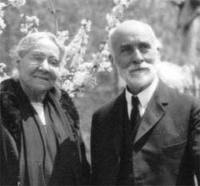
Margaret Stringer has been one of my favorite people for years. The church we attended in SC supported her in Indonesia (formerly known as Irian Jaya, now West Papua). She was there for a little over 40 years, and she “retired” (I always put that in quotation marks, because she is one of the most active retirees I know, traveling often to churches and missions conferences) not too far from our church, so we invited her to speak at least once a year to our ladies’ group. She would have us just rolling in the floor telling about situations which I’m sure weren’t funny when they first happened.

I’ve appreciated not only her merry heart, but also her faith and obedience. Many of us can’t imagine being the lone woman to go to visit a village of cannibals at the possible risk of our own lives. That sounds like something missionaries did way back, like Mary Slessor. But there are still people who haven’t heard of the Savior, and God’s ability to meet their needs as well as the needs of His messengers are still the same.

from_cannibalism_small.jpgA few years ago she wrote a book titled From Cannibalism to Christianity: The Vakabuis Story, which tells mainly how the Lord opened one particular group of villages, from first contact to the establishment of a full-fledged church. There are hilarious moments as well as frightening ones. But what joy there is in seeing the light of understanding dawn after repeated sharing of the gospel. I don’t remember if Margaret said this in the book, but I know I heard her say while speaking to us that there were moments when she thought, “This isn’t going to make sense to them.” Imagine sharing the Word of God with someone who doesn’t know anything about it and doesn’t know who God is. Yet they did share God’s Word by faith, and the Holy Spirit gave understanding and conviction.

Secularists don’t have to worry about the people’s culture being infringed on. The people still have their own traditions and culture. But they also have hope and life. As I said in an earlier post, I don’t know why anyone, even the most unchristian person on the planet, would have any objection to helping people get rid of traditions like cannibalism and killing a twin baby. I appreciated the way Margaret endeavored to help them not to be too dependent on her. When they asked her to name the church, for instance, she told them they should name it.

One of her major accomplishments while there was reducing two languages to writing and translating the Bible into them.

When she retired she thought she would never have an opportunity to go back, but she was able take a few trips back. One night at our ladies’ group she showed some video footage (24 minutes condensed from 5 hours) while she told us what was going on, interspersed with some history here and there of the people. I tell you — seeing footage of former cannibals and headhunters now singing hymns, hearing about the most powerful and feared witch doctor in the area who became a believer and whose son is now the head of the church — that just does something to your heart.

She told us about one man during a visit who said something like, “When you left us, I was very sad for a long time. But you told us you were leaving God here, and He helped me. So when you leave this time, I will be sad, but not for as long a time, because God is here with me.” She said that’s not exactly how she put it to him, but it was so neat he got the concept that God was still there and didn’t leave when she did, and he could depend on Him.

I was amazed at her fearlessness. In one piece of footage, she was getting out of a boat to see one of the villages she used to work in, and one man took her hand and began leading her away. Her friend said, “Where are you going?” She said, “I don’t know!” As people came to greet her and hug her, the man would stop for a few minutes, and then take her hand and lead her away again. Finally he led her to his house, where he had prepared lunch for them.

One of my favorite stories she tells is not in the book but is so characteristic of her. She was new to the field, which of course was an adjustment, and she was pretty low. A number of trying things had happened, one of them a big storm that had blown through the glassless windows and ruined about 95 % of her work of language analysis. After she went to bed, something fell off the wall and hit her on the head. That was the last straw: if I remember correctly, she “fussed” in her spirit at God, saying things like, “I thought you loved me! I thought you promised to take care of me!” She got a light to see what had fallen, and it was a plaque that said…”He cares for you.” That’s one way to get the message!

Margaret has also written several articles about becoming and working as a missionary here. This video, narrated by Margaret, tells the Vakabuis story in condensed form, well worth the 30 minutes it takes to watch:

(You can see other posts in the 31 Days of Missionary Stories here.)

(This will also be linked to Semicolon‘s Saturday Review of Books.)

31 Days of Missionary Stories: Rosalind Goforth, a Woman “of Like Passions” As We Are

ClimbingI mentioned Rosalind Goforth in the second post of this series and the unique ways God answered her very human and what we might consider mundane but serious needs for clothes for her children. After she had written Goforth of China, a biography of her husband, and How I Know God Answers Prayer (all or most of the text of this book is here, and it is free for the Kindle for a time here), she was asked to write something about her own perspectives and struggles after nearly a lifetime on the mission field. The result of that request is Climbing, her own story of answered prayer and personal struggles, one of my top three favorite missionary books. Being of like passions as we are, she very honestly and transparently writes of such things as overhearing two Chinese women talking about her quick temper and impatience and wishing she would live more as she preached. At first she was angry, but then realized it was all too true. She struggled with this for years, until much later the Chinese servants who had wanted to avoid her now wanted to be around her and serve her, wondering what had caused the change in her.

She tells of the work of God in many a life, of many funny experiences as well as trying ones, of multitudes of direct answers to prayer for helpers, for monetary and health needs, for protection, for grace and strength, even for everyday practical things like help to find a proper hat (after being criticized, sadly, by probably well-meaning women when she came home on furlough.)

Like any mother with young children, she struggled to have time alone with the Lord. She writes:

A devoted Christian missionary, Mrs. S, was holding a series of special meetings for our Christian women at Changte. On one occasion, this dear woman, who had no children, told me that I could never have the peace and joy I longed for unless I rose early and spent from one to two hours with the Lord in prayer and Bible study.

I longed intensely for God’s best — for all He could give me, not only to help me live the true Christian life but also for peace and rest of soul. So I determined to do what Mrs. S. had advised.

The following morning, about half-past five o’clock, I slipped as noiselessly as possible out of bed. (My husband had already gone to his study.) I had taken only a step or two when first one and then another little head bobbed up; then came calls of, “Mother is it time to get up?”

“Hush, hush, no, no,” I whispered as I went back, but too late; the baby had wakened! So, of course, the morning circus began an hour too soon.

But I did not give up easily. Morning after morning I tried rising early for the morning watch, but always with the same result. So I went back to the old way of just praying quietly — too often just sleeping! Oh, how I envied my husband, who could have an hour or more of uninterrupted Bible study while I could not. This led me to form the habit of memorizing Scripture, which became an untold blessing to me. I took advantage of odd opportunities on cart, train, or when dressing, always to have a Bible or Testament at hand so that in the early mornings I could recall precious promises and passages of Scripture (pp. 75-76).

One day when she was especially busy, she received a note from another missionary lady who was supposed to take a women’s meeting but found out she couldn’t and asked Rosalind to at nearly the last minute. She needed to nurse her baby, and she set her Bible up where she could see it. Her husband came in just then and said, “It puzzles me how you can address a meeting with so little preparation.” She responded, “Jonathan, if I had time like you, I could not expect to get a message in so short a time, but the fact is the Lord suits His help to me as a mother!” (p. 112). I’ve benefited from her studies on what God does with our sin and conditions for receiving strength.

I’ve been convicted along with her as she shares. During most of the time the Goforths ministered, the Chinese were quite suspicious of and disdainful toward “foreign devils.” To try to alleviate those feelings and establish relationships with the Chinese, the Goforths would allow crowds of the curious into their home to look around and to talk with them. This resulted in some agitation and disruption as well as theft of some of their belongings, but over all they felt it was worth it. Of one particular day, Rosalind writes:

The day had been an unusually strenuous one, and I was really very tired. Toward evening, a crowd of women burst through the living room door and came trooping in before I had time to meet them outside. One woman set herself out to make things unpleasant. She was rough and repulsive and– well, just indescribably filthy. I paid no attention to her except to treat her as courteously as the rest. But when she put both hands to her nose, saying loudly, “Oh, these foreign devils, the smell of their home is unbearable!”, my temper rose in a flash and, turning on her with anger, I said, “How dare you speak like that? Leave the room!” The crowd, sensing a “storm,” fled. I heard one say, “That foreign devil woman has a temper just like ours!”

Now, I had not noticed that the door of my husband’s study was ajar, not did I know that he was inside, until, as the last woman disappeared, the door opened and he came forward, looking solemn and stern. “Rose, how could you so forget yourself?” he said. “Do you realize that just one such incident may undo months of self-sacrificing, loving service?”

“But Jonathan” I returned, “you don’t know how she — “

But he interrupted. “Yes, I do; I heard all. You certainly had reason to be annoyed; but were you justified, with all that is hanging in the balance and God’s grace to keep you patient?”

As he turned to re-enter his study, he said, “All I can say is I am disappointed!

Oh, how that last word cut me! I deserved it, yes, but, oh, I did so want to reach up to the high ideals he had. A tempestuous time followed alone in our inner room with my Lord. as I look back now, it was all just one farther step up the rocky hillside of life — just climbing! (pp. 45-46).

GoforthsThough the Goforths faced many personal hardships and losses, “Sometimes when letters would reach us from the homeland expressing pity for us, how my husband would laugh as I read them to him. ‘Pity,’ he would say, ‘why this is the most glorious life possible!’ Yes, it was indeed!” (p. 69).

(You can see a list of other posts in the 31 Days of Missionary Stories here.)


(This will also be linked to Semicolon‘s Saturday Review of Books.)

31 Days of Missionary Stories: Mary Slessor and the Power of a Woman’s God

When I first started reading missionary biographies as a fairly young Christian, I think I had the impression that they all came from perfect Christian families. After a while I learned that there is no such thing. 🙂 But I also came across Mary Slessor’s biography. Her father was an alcoholic, like mine was, and it it encouraged me that someone with a similar background could go on and serve the Lord wholeheartedly.

SlessorMary Slessor was a girl in Aberdeen, Scotland in the 1800s. She had a godly mother and a drunken father. Her father could be violent, raging, throwing much-needed food into the fireplace, locking her out of the house to spend the night on the streets. Even after his death Mary carried the shame of his drunkenness on her shoulders.

She had been interested in missions for several years, particularly a country in west Africa called Calabar.

The great Scottish missionary David Livingstone was Mary’s hero. She’d read Missionary Travels, hardly stopping to breathe. A second time. A third time. He was a Scot, just like her. He was the second oldest of seven children, just like her. He had been poor, just like her. He had even worked in  textile mill many years, just like her! How many times had she told herself, Then cannot I be a missionary just like him? Yes, to Africa just like Livingstone.

But then how many times had her heart ached when she remembered what a godly father Livingstone sprang from? His father presented him from infancy with a “consistent example of piety” so priestly, Livingstone claimed, that his father could best be depicted only by the father Bobby Burns described poetically in “The Cotter’s Saturday Night.” Unfortunately, Mary remembered every stanza Burns composed about that Bible-living patriarch, including the conclusion: “From scenes like these, old Scotia’s grandeur springs.”

(From Mary Slessor, Queen of Calabar, by Sam Wellman.)

 Livingstone’s death had a profound impact on Mary’s life, convicting her that she had hesitated long enough. She sought much counsel about giving her life as a missionary, wrestled with whether her family could get by without her income, was convinced and encouraged by her mother that the family would be all right, and finally offered herself to the Foreign Mission Board. She didn’t specify that she was interested in Calabar, however, for she wanted to leave that as a final test to make sure she was following God’s leading and not her own. She wasn’t sure if she would be accepted as she had little education and no skill except as a mill worker. Yet the board called her and told her Calabar has asked for more teachers. She was brought to Edinburgh for training and sailed for Africa in 1876. She faced the unknown, jungle animals, jungle diseases, and abhorrent practices with faith and courage.

Soon after landing in Calabar she began to realize the difficulty and seeming impossibility of the work to which she had committed herself. She saw huge, hideous alligators sun ning on the mud banks and swimming in the streams… She saw the barracoons where the captured Negroes were penned until the slave-ships arrived. She found herself in a land where terrified prisoners dipped their hands in boiling oil to test their guilt under some accusation, where wives were strangled or buried alive to go with their dead chief into the spirit-world, where heartless chiefs could order a score of men and women  to be beheaded for a cannibal orgy and sell a hundred more into the horrors of slavery. What could one frail, timid woman do, confronted by such an appalling situation? Overwhelmed and depressed, she knelt and prayed, “Lord, the task is impossible for me but not for Thee. Lead the way and I will follow.” Rising, she said, “Why should I fear? I am on a Royal Mission. I am in the service of the King of kings.”

Mary rescued hundreds of twin babies thrown out into the forest, prevented many wars, stopped the practice of trying to determine guilt by the poison ordeal, healed the sick, and unweariedly told the people about the great God of love whose Son came to earth to die on the cross that poor sinful human beings might have eternal life. The Master she loved and served so ardently crowned her labors by permitting her to establish a number of churches and to see hundreds … [converted].

(From Blazing the Missionary Trail by Eugene Myers.)

 She didn’t go to just one African village. She continually felt called to go deeper into Africa despite warnings of dangers from headhunters and cannibals. A chief warned her, “You are going to a warlike people. You are likely to get killed on the way. Anyhow, they would not listen to what a woman says.” Mary answered, “When you think of the woman’s power, you forget the power of the woman’s God. I shall go on.”

I discovered yesterday a video called “One More River: The Mary Slessor Story” in two parts (here and here, each about a half hour long) that appears to be something of a documentary from Scottish TV about her life. I’ve only watched the first part so far, and there is a great deal of dead time, but it is still pretty interesting. I especially love how it starts out: “If you think all Victorian women were ladies in lavender crinolines swooning at the sight of a mouse, think again.”

(You can see a list of other posts in the 31 Days of Missionary Stories here.)

31 Days of Missionary Stories: Amy Carmichael and Singleness

If you’ll indulge me one more anecdote from the life of Amy Carmichael, the following vignette is excerpted from a chapter entitled “Singleness Is a Gift” from the book On Asking God Why by Elisabeth Elliot.

Amy CarmichaelWith all her heart she determined to please him who had chosen her to be his soldier. She was awed by the privilege. She accepted the disciplines.

Loneliness was one of those disciplines. How–the modern young person always wants to know–did she “handle” it? Amy Carmichael would not have had the slightest idea what the questioner was talking about. “Handle” loneliness? Why, it was part of the cost of obedience, of course. Everybody is lonely in some way, the single in one way, the married in another; the missionary in certain obvious ways, the schoolteacher, the mother, the bank teller in others.

Amy had a dear co-worker whom she nicknamed Twin. At a missions conference they found that in the posted dinner lists, Twin and a friend named Mina had been seated side by side.

“Well, I was very glad that dear Mina should have Twin,” Amy wrote to her family, “and I don’t think I grudged her to her one little bit, and yet at the bottom of my heart there was just a touch of disappointment, for I had almost fancied I had somebody of my very own again, and there was a little ache somewhere. I could not rejoice in it. . .I longed, yes longed, to be glad, to be filled with such a wealth of unselfish love that I should be far gladder to see those two together than I should have been to have had Twin to myself. And while I was asking for it, it came. For the very first time I felt a rush, a real joy in it, His joy, a thing one cannot pump up or imitate or force in any way. . .Half-unconsciously, perhaps, I had been saying, ‘Thou and Twin are enough for me’–one so soon clings to the gift instead of only to the Giver.”

Her letter then continued with a stanza from the Frances Ridley Havergal hymn:

Take my love, my Lord, I pour
At Thy feet its treasure-store.
Take myself and I will be
Ever, only, all for thee.

After writing this, Amy felt inclined to tear it out of the letter. It was too personal, too humiliating. But she decided the Lord wanted her to let it stand, to tell its tale of weakness and of God’s strength. She was finding firsthand that missionaries are not apart from the rest of the human race, not purer, nobler, higher.

“Wings are an illusive fallacy,” she wrote. “Some may possess them, but they are not very visible, and as for me, there isn’t the least sign of a feather. Don’t imagine that by crossing the sea and landing on a foreign shore and learning a foreign lingo you ‘burst the bonds of outer sin and hatch yourself a cherubim.’ “

Amy landed in India in 1897 and spent the first few years in itinerant evangelism. She began to uncover a secret traffic in little girls who were being sold or given for temple prostitution. She prayed that God would enable her find a way to rescue some of them, even though not one had ever been known to escape.

Several years later, God began to answer that prayer…and in a few years Amy Carmichael was Amma (“Mother”) to a rapidly growing Indian family that, by the late 1940s, numbered about 900. In a specially literal way the words of Jesus seemed to have been fulfilled: “Everyone who has left houses or brothers or sisters or father or mother or children or fields for my sake will receive a hundred times as much and will inherit eternal life” (Matthew 19:29).

In answer to a question from one of her children who years later had become a close fellow worker, Amy described a transaction in a cave. She had gone there to spend the day with God and face her feelings of fear about the future. Things were all right at the moment, but could she endure years of being alone?

The Devil painted pictures of loneliness that were vivid to her years later. She turned to the Lord in desperation. “What can I do, Lord? How can I go on to the end?”

His answer: ”None of them that trust in me shall be desolate” (from Psalms 34:22 KJV). So she did not “handle” loneliness–she handed it to her Lord and trusted his Word.

“There is a secret discipline appointed for every man and woman whose life is lived for others,” she wrote. “No one escapes that discipline, nor would wish to escape it; nor can any shelter another from it.”

Her commitment to obedience was unconditional. Finding that singleness was the condition her Master had appointed for her, she received it with both hands, willing to renounce all rights for his sake and, although she could not have imagined it at the time, for the sake of the children he would give her–a job she could not possibly have done if she had had a family of her own.

Many whose houses, for one reason or another, seem empty, and the lessons of solitude hard to learn, have found strength and comfort in the following Amy Carmichael poem:

O Prince of Glory, who dost bring
Thy sons to glory through Thy Cross,
Let me not shrink from suffering,
Reproach or loss .…

If Thy dear Home be fuller, Lord,
For that a little emptier
My house on earth, what rich reward
That guerdon* were.

 *recompense; something earned or gained

 (You can see a list of other posts in the 31 Days of Missionary Stories here.)

Other posts about Amy Carmichael:

Isn’t “No” an Answer?
What We Wanted All the Time.
Missionaries’ Letters to Mothers.
It’s the Little Things.
The Melting Point.
Thy Calvary Stills All Our Questions
From the worlding’s hollow gladness.
Make Me Thy Fuel.
Shadow and Coolness.
With All Our Feebleness.
Amy Learns to Die to Self.
A Book of Amy Carmichael Poems.

31 Days of Missionary Stories: Whom God Has Joined

kuhn.jpgI mentioned Isobel Kuhn yesterday. her books By Searching and In the Arena are primarily autobiographical and contain some details about her marriage, but Whom God Has Joined focuses entirely on her relationship with her husband. It was originally titled One Vision Only, and the main part of it was Isobel’s own writings sandwiched in-between biographical remarks by Carolyn Canfield. It has been long out of print and was just reprinted not too long ago without Canfield’s part.

It begins with their first notices of each other at Moody Bible Institute and the attraction they felt despite their determination not to get “sidetracked” by the opposite sex.

As they got to know one another and grew in affection, John graduated from college first and went to China. At first they were interested in different areas of China, but the China Inland Mission assigned him to the area she was interested in. When he wrote to propose, she knew what her answer would be, yet she spread the “letter out before the Lord” with a problem. She wrote, “John and I are of very opposite dispositions, each rather strong minded. Science has never discovered what happens when the irresistible force collides with the immovable object. Whatever would happen if they married one another? ‘Lord, it must occur sooner or later. Are You sufficient even for that?’” The verse the Lord gave her was Matthew 6:33: “But seek ye first the kingdom of God, and his righteousness; and all these things shall be added unto you.”

Isobel was assigned and sent to China where they were to be married. One of the first problems they faced was that there were two ladies with very different personalities who each took charge of “helping” the young couple with their wedding plans — and neither plan was what the young couple wanted. God enabled them to very graciously navigate that situation without offending either party.

Isobel wrote in a very engaging way that lets us know missionaries are “of like passions” as we are. We feel like we are right there with her feeling what she is feeling. She not only had the adjustments of marriage but the adjustments of a new culture. Though she was ready and willing for both, sometimes it still threw her for a short while. One example was in her natural “nesting” as a new wife. The CIM way was to live directly with the people as they did, and Isobel was willing for that. She did have a few things to pretty up her home a little bit — nothing extravagant. She was excited to receive her first women guests, and as she began to talk with them, one blew her nose and wiped the stuff on a rug; the other’s baby was allowed to wet all over another rug. Isobel knew that they were not being deliberately offensive: those were just the customs of the country people in that time and place. Yet, naturally, resentment welled up and she had a battle in her heart. She wrote, “If possessions would in any way interfere with our hospitality, it would be better to consign them to the river. In other words, if your finery hinders your testimony, throw it out. In our Lord’s own words, if thine hand offend thee, cut it off. He was not against our possessing hands, but against our using them to holds on to sinful or hindering things.”

In their early marriage they had disagreements over the couple who were their servants (in primitive cultures it was not unusual for missionaries to employ helpers for the many tasks that would have taken up so much time). They were not only lazy, but helped themselves to some of the Kuhn’s own things. John was slower to see it because he had always gotten along fine with them before he was married. At one point when Isobel brought up something the man had not done, hoping for John to correct him, John instead sided with him against her. Angry and resentful, Isobel walked out of the house, not caring where she went, just to get away from it all. Gradually she came to herself and realized she was in a little village as darkness was nearing. In that time and culture that was not done: “good women were in their homes at such an hour.” She felt as if the Lord were saying to her, “You have not considered Me and My honor in all this, have you?” and then convicting her that she had not even invited Him into the situation. She confessed that was true, asked Him to work it out, and went home. And He did.

Isobel was more artistic and exuberant by nature, and once when she was telling a story she mentioned that it was “pouring rain.” John corrected her, saying it was “merely raining.” She was indignant that her story was being interrupted by such a minor detail and said, “I didn’t stop to count the raindrops.” He replied that that was just what she should do. He felt she exaggerated and wanted to break her of it. He began “correcting” her prayer letters and stories and began to use the catch-phrase, “Did you count the raindrops?” It was discouraging and distressing to her and she felt it had a stilted effect on her writing. She tells how over time the Lord used this to help her husband appreciate his wife’s gift of imagination and expression and helped her to be more accurate. She comments,

Similar situations are not uncommon among all young couples. If we will just be patient with one another, God will work for us…Until the Lord is able to work out in us a perfect adjustment to one another, we must bear with one another, in love…With novels and movies which teach false ideals of marriage, young people are not prepared to ‘bear and forbear.’ They are not taught to forgive. They are not taught to endure. Divorce is too quickly seized upon as the only way out. It is the worst way out! To pray to God to awaken the other person to where he or she is hurting us, to endure patiently until God does it: this is God’s way out. And it molds the two opposite natures into one invincible whole. The passion for accuracy plus a sympathetic imagination which relives another’s joys and sorrows—that is double effectiveness. Either quality working unrestrained by itself would never have been so effective. But it cost mutual forgiveness and endurance to weld these two opposites into one! Let’s be willing for the cost.

With humor and poignancy Isobel tells of further challenges and adjustments in the midst of ministry and growing love for each other and growth in the Lord.

(You can see a list of other posts in the 31 Days of Missionary Stories here.)

(This will also be linked to Semicolon‘s Saturday Review of Books.)

Wanting Things To Be Perfect

file000184058237

You know how it is when company’s coming. Though you always want to keep your house to a certain level of cleanliness, and you do esteem your family members above everyone else, there is just something about having company that sets off a housecleaning frenzy.

I learned long ago that I can’t usually get everything done that I’d like to do before company comes, so I’ve learned how to prioritize and hit the most important things first. If I have enough warning, sometimes I can get some of those long overdue household projects done as well.

But no matter how much I do, it seems there is always something I miss. One time a friend of my son and daughter-in-law’s was in town visiting them, and I invited them all over for dinner one night. I was rejoicing in getting just about everything done that I wanted to before they came. Dinner was not quite ready when they got here (because I decided I needed to vacuum my room before I started dinner, even though it was unlikely she would go in there. It had been needing it anyway and it was a relief of mind to get it done). They offered to help and set the table, but dinner was just a matter of waiting on things to cook through. While they waited, our guest played some different hymns. It rejoiced my heart to hear the piano at home again: no one had played in months since we let Jesse drop out of lessons. We enjoyed a nice time of fellowship later with dinner.

The next day, I was picking up some things in the living room when I noticed some scattered debris on the piano next to the keys. “What in the world…?” I thought. I had just dusted it the day before. As I drew closer to inspect it, I saw it was needles from the Christmas tree. From last December. On my piano in May. We had had the cover over the piano keys closed for so long, I didn’t even think to open it to dust under there. And there it was for our guest to discover!

That reminded me of another time in early married years when we wanted to have the youth group over after church one Sunday night. We had furiously cleaned the day before until everything was gleaming. As the young people came in and then started singing, my eyes strayed behind them to the bookcase, on top of which was the can of dusting spray, on top of which was the dustrag, which happened to be an old pair of my husband’s underwear with the distinctive waistband showing. I was mortified, but I couldn’t do anything about it: if I went toward it to remove it, all eyes would see and notice it then. So I just left it and hoped no one saw it. If they did, they were too polite to say so. I couldn’t do anything but laugh about it afterward, since there was no way to correct it.

I’ve had what sometimes seems like more than my share of laughable, imperfect cooking experiences from disastrous cakes to green gravy to volcanic teriyaki.

I was reading a book on hospitality once where the author wrote about having a bit of time to relax, so she sat on the sofa and read the newspaper. Then someone came to the door, and when she answered it she saw it was an acquaintance who had dropped by unexpectedly. The author was embarrassed that things weren’t “picked up,” but invited her guest in anyway. When the guest saw the scattered newspapers, she smiled and said something like, “Now we can be friends.” When people are “perfect,” we can’t quite relate to them and they can even seem unapproachable. But when we see they have the same struggles we do, then they are more genuine to us and we can interact with them more comfortably.

Years ago when I first joined the Transverse Myelitis Internet Club, I wanted to be a good testimony there. It’s frowned upon to use such a forum as a “bully pulpit,” and I didn’t want to do that, anyway. But I did want to honestly relate how God helped me and I wanted to be a light for Him there while gaining information and support. Because of that, I tried to keep my posts upbeat and hopeful. Some months later another Christian lady joined, and I was blessed by how honest she was about her struggles. She wasn’t morose or complaining, but she shared her everyday struggles as well as her faith. I e-mailed her privately about how refreshing her posts were, and she wrote back that it wouldn’t pay to hide her struggles. By sharing that she struggled with the same things everyone else did, she was more genuine and had more of an open door with them.

In the chapter “Women of Like Passions” from her book Keep a Quiet Heart, Elisabeth Elliot wrote of a woman at a conference who had asked to speak to her, but was hesitant to “bother” her and was a little afraid of her. Elisabeth agreed to speak with her and tried to reassure her, and later the leader of the conference told Elisabeth that the woman had told her, “Oh, it wasn’t bad after all! I walked in–I was shaking. I looked into her eyes, and I knew that she, too, had suffered. Then she gave me this beautiful smile. When I saw that huge space between her front teeth, I said to myself, ‘it’s OK–she’s not perfect!’”

Then in the same chapter she wrote of a time when her daughter, Valerie, was speaking, lost her place in her notes, and after a long, awkward time span of not being able to find it again, did the best she could ad-libbing the rest. She was nearly in tears as she finished, but afterward one person told her it was the best class so far and another thanked her for what she had said that helped her. Later she told her mother, “I couldn’t understand why this had happened. I had prepared faithfully, done the best I could. But then I remembered a prayer I’d prayed that week (Walt told me it was a ridiculous prayer!)–asking the Lord to make those women know that I’m just an ordinary woman like the rest of them and I need His help. I guess this was His answer, don’t you think?”

We need to let go of perfectionism. Who are we trying to fool, anyway? We so want for things to be “just right” when we have company or have an event. And that’s a worthy desire. It shows care for the guests and care for one’s home and surroundings. I’ve been in places where there was no such care, and they were uncomfortable places to be! We shouldn’t be slovenly or careless, but we don’t need to beat ourselves up when things aren’t “perfect” even when we’ve done our best. It helps to just laugh at ourselves (with others, if they’re aware), learn from the situation (next time I will lift the piano key cover and dust under there, and put cleaning supplies away!), and, for serious offenses, go to Jesus for cleansing and restoration. Even though He is perfect, He is approachable because He bore our sin and its punishment so that we could be forgiven. We can never be perfect on our own, but by His grace we can be washed white as snow, pure and spotless.

For verily he took not on him the nature of angels; but he took on him the seed of Abraham. Wherefore in all things it behoved him to be made like unto his brethren, that he might be a merciful and faithful high priest in things pertaining to God, to make reconciliation for the sins of the people.  For in that he himself hath suffered being tempted, he is able to succour (help, aid) them that are tempted. Hebrews 2:16-18.

For we have not an high priest which cannot be touched with the feeling of our infirmities; but was in all points tempted like as we are, yet without sin. Let us therefore come boldly unto the throne of grace, that we may obtain mercy, and find grace to help in time of need.
Hebrews 4:15-16.

_______________________________________________________

Revised from the archives.

Photo courtesy of morguefile.com.

Related posts:

A Perfect Christmas.
Perfect Peace.
Imperfect Families.

Book Review: The Fruitful Wife

Fruitful WifeHave you had the experience of having a book on your shelf for months, perhaps years, then feeling an urge to pick it up and finding it was just what you needed at that very moment? I have, many times, and The Fruitful Wife: Cultivating a Love Only God Can Produce by Hayley DiMarco was the latest instance. I first saw the book mentioned about a year ago at Carrie’s review, and, in fact, won a copy from her. But it had been sitting on my desk ever since.

Last year while reading through The Discipline of Grace by Jerry Bridges with Challies’ “Reading Classics Together” group, I was convicted when Bridges pointed out that we spend a lot of time thinking about the negative character qualities we need forgiveness and victory over but not enough of the positive ones that we need to incorporate in our lives. The Bible tells us not only to forsake and flee some things but to follow after others, not only to put off the old man, but to put on the new. So, because of that prompting and because of the lack of it in my life, at the beginning of this year I thought I might do a word study on each aspect of the fruit of the Spirit. But I think I was daunted by the massive amount of material in the Bible on the first one, love, and I never got started on it. Some ladies at church even went through Beth Moore’s study on this earlier in the year, which I thought was timely and would be beneficial, but for various reasons I ended up not participating. Then I noticed again The Fruitful Wife book on my desk and had a light bulb moment. 🙂 Here would be my “guided tour” through the fruit of the Spirit.

That’s exactly what Hayley does: she explores each of the nine facets of the fruit of the Spirit listed in Galatians 5 and applies its truths particularly to marriage. In some ways I wish this had been called The Fruitful Woman rather than just focusing on wives, because its truths are applicable in any relationship, and single women might not read it. But I understand that that’s probably the main relationship where our true self in all its flaws is seen and where we tend to let down our guard, so seeking to cultivate the fruit of the Spirit here will overflow into other areas. I would recommend this to single ladies: not only would the study be beneficial, but it might be eye-opening in regard to marriage in general.

In the introduction, Hayley points out that the fruit of the Spirit does not come naturally: naturally we react from the flesh. But when we believe on the Lord Jesus Christ for salvation and His Spirit enters our hearts, then He begins to work to cultivate that fruit into our lives. We do still have our flesh, though, and still react too often from it: the flesh and the Spirit are in almost constant conflict. But by abiding in Christ and yielding to the Holy Spirit, more of His fruit can be cultivated in our lives. She also points out that growing fruit isn’t just for our own self-indulgence: fruit is meant to feed people. “Your fruit is meant to serve the hungry, to prove the goodness of the Spirit from which it comes to those who would partake of it” (p. 16).

Then each following chapter focuses on one of each of the nine parts of the fruit of the Spirit. I can’t summarize each one, but I’ll share a sampling of the lines that most spoke to me:

“Love is less about how I feel, but more about what I do. It isn’t about getting, but giving. It isn’t about reward, but sacrifice. And it isn’t about excitement, but endurance” (p. 20).

“We are able to love those the world finds difficult because of God’s great and all-encompassing love for us” (p. 22).

Love must first be understood as dependant on His love for us, and our response to love must be action, not reliance on feeling good” (p. 22).

Love is not about responding to how others make us feel, but about the Holy Spirit’s promptings in our souls” (p. 23).

“We have to understand that to rejoice is to do something, not to feel something” (p. 44).

It’s through the Spirit that you can believe against all odds, find joy against all belief, and trust against all doubt that He is who He says He is and that your life is firmly in His hands” (p. 51).

“Once I took my eyes off of my lack and put them on His abundance, I found the joy I was lacking” (p. 55).

“To sit and wait for joy to arrive without turning your mind to the things of Christ is like expecting the Holy Spirit to take 15 pounds off your body while [you are] sitting on the couch eating ice cream” (p. 57).

“Peace comes from an absence of conflict, not external conflict but internal conflict…Peace comes from your acceptance of suffering, not your exemption from it…It is a calm knowing and a restful understanding of the ways of a world held in the hand of a perfect God” (p. 68).

God desires my patience over my deadline, my calm heart over my hurried schedule, my genuine love over my preferred plans for those I love. When we see God over the difficulty, we find the patience over the impatience (p. 94).

“See any minor disruptions to our comfort as potentially essential to our righteousness and perfection” (p. 96).

“When we make our kindness about Him and not about us, then we will find it comes so much more easily” (p. 120).

“It isn’t the kindness we experience in response to the way others make us feel but the kindness we give in spite of the way others make us feel, that truly exhibits the fruit of the Spirit” (p. 120).

“It isn’t your obedience that makes you good, but His goodness and love that make you obedient, and it’s this goodness that reveals our faith in Him” (p. 126).

“Faithfulness isn’t just about not cheating on someone but about living a life of truth in our depths – truth that permeates all of our thoughts, words, and actions” (p. 148).

“Remember that while He walked this earth, Christ didn’t micromanage the lives of people around Him. He wasn’t controlling in His demands of their obedience. He didn’t run after the rich young ruler who wouldn’t sell all he had to follow Him. Jesus didn’t chase him down and demand compliance. If then, being so perfect and wise, He can allow people to fail, why do we believe it our job to micromanage the life of our husband? Can we trust God to speak to him, teach him, and lead him?” (p. 168).

“Women who want to involve themselves in other people’s business and attempt to fix them, change them, or somehow micromanage their lives are meddlesome, and this is not a character trait of gentleness. It is harshness that interjects itself into the lives of others uninvited, and so the fruit of the Spirit doesn’t serve this end. The busybody or meddlesome woman isn’t walking in quiet gentleness, but in the harshness of control and micromanaging. But gentleness allows God to do what God does best – take care of everything, be in control, and manage the lives of His children” (pp. 168-169.)

“We must never, through our resistance to the idea of self-control, make our confession a pillow for our sin” (p. 193).

“Only the presence of life can grow fruit” (p. 197).

“Even though a farmer works hard at tending his crops, he can’t do anything to create the fruit. Only the vine has in it what is necessary for life. And so it is for us. It is because of the vine that we can grow any fruit at all. So then, why was all the paper wasted in printing this book, if it all rests on the vine? Because there exists for man a role to play, and that isn’t a passive role whereby we sit quietly by as God changes us without our participation. It is an active role that begins as we turn our thoughts toward the vine. Thus setting of your mind on the Spirit isn’t something you do only once; it is something that must continually be done. Each time our minds wander into areas of the flesh, into areas of darkness, they need to be redirected and brought back to the light. And in the light they will find just what they need for nurturing the fruit the way the farmer does as he waters and cares for his crops” (pp. 197-198).

“To continue to allow the flesh a voice in our lives is to subdue the voice of the Spirit and to reject His will as secondary to our own” (p. 200).

Hayley doesn’t write from the standpoint of a super-Christian who has it all down pat and worked out perfectly. No, she is very honest and straightforward about her own failings and where the Lord has taken her as she has sought to abide in Him. That lends an authenticity and a relatability that would be lacking in a book written from someone’s lofty perch of supposed perfection. But she also pulls no punches with her readers: if we are not honest and real with our faults and sins, we won’t get victory over them.

I read this book as quickly as I could at first, because I knew I needed it all. But I felt I had hardly grasped a fraction of it, so I reread and outlined it. I came to realize, though, that reading a book and doing word studies aren’t going to get me to the place where I can say, “I’ve got it!” and never have to sort through these truths again. No, as Hayley said in a quote above, I will need to remind myself of them often, and I can add to my understanding over time and continue to grow. I probably will reread this book at intervals. I have started those word studies and have a good base, but I am going to add to them over time as I read the Bible rather than sorting through and organizing hundreds of verses but missing their impact.

There are just a very few spots that were a little weak, in my opinion. For instance, in the first half or so of the chapter on goodness, instead of delving into what the word “goodness” means in Galatians 5:22-23 and bringing out verses about it, as she does in most of the other chapters, she kind of philosophizes that “good” is relative to what pleases us (chocolate ice cream is good to her, but bratwursts are good to her husband), therefore, since God is inherently good, whatever pleases God is good. That’s true, in a sense, but as I said, seemed weaker to me than getting into verses about goodness (which she does later in the chapter and which approach she does use in most of the chapters).

Overall the book is chock full of wisdom, and I am happy to recommend it. In fact, I think it is so beneficial that I am going to give away a copy. Not my copy – it is all marked up and has sticky tabs poking out of it. 🙂 But I’ll send one person your own brand new copy of the book. If you’d like to enter the giveaway, leave a comment below and I will choose one name from among the comments a week from today. (I will just use each name once, so multiple comments won’t count more). The drawing is closed. The winner is Janet! Congratulations!

(This will also be linked to Semicolon‘s Saturday Review of Books.)

Book Review: The Hidden Art of Homemaking

HomemakingEven though I’ve been discussing The Hidden Art of Homemaking by Edith Schaeffer a chapter at a time at  The Hidden Art of Homemaking Book Club, I wanted to write an overall review to have one post to refer back to when discussing the book. Too, I thought perhaps some who weren’t interested in reading the weekly chapter summaries might enjoy perusing one smaller review.

The basic theme of the book could be summarized in this quote from it:

“If you have been afraid that your love of beautiful flowers and the flickering flame of the candle is somehow less spiritual than living in starkness and ugliness, remember that He who created you to be creative gave you the things with which to make beauty and the sensitivity to appreciate and respond to His creation” (p. 109).

As a teen I struggled with whether the desire to look “pretty” and dress nicely was a fleshly one, and as a young woman I had the same struggles in regard to wanting an attractive home. Was it a waste of the resources God gave me to use them in such a way, or would it be in better keeping with Christian character to buy bargain basement items, no matter whether they suited me? Were decorative items wasteful and selfish or an enhancement?

It helped me greatly to realize that God could have made the world simply functional, but he made it beautiful as well. Another help was realizing that the Proverbs 31 woman dressed in “coverings of tapestry; her clothing is silk and purple,” the finest in her day.

I read Edith’s book as some point during this time, and I remember feeling so relieved that my natural inclinations were okay. She discusses the principles above, and the principle of balance: we have to keep our artistic desires within the context of our finances, our season of life, our responsibilities to our families and our calling in life at any given point. It’s possible to go overboard. Yet within those contexts, God gives us great freedom of self-expression which in turn can be used to glorify Himself and draw others to Him.

She discusses in turn (these are all linked to my discussions of each chapter):

The First Artist (God’s creativity)
What Is Hidden Art?
Music
Painting, Sketching, and Sculpturing
Interior Decoration
Gardens and Gardening
Flower Arrangements
Food
Writing
Drama
Creative Recreation
Clothing
Integration (of different races, ages, cultures, etc.)
Environment (the type we create in our homes or with our personalities)

She does concede that in some cases we may only be able to cultivate an appreciation for some of these areas rather than a talent in them, and she acknowledges that probably no one can incorporate all of them at once, but she makes a strong case for each one and brings out a variety of ways to employ them in our homes.

The book isn’t flawless: some of its examples and illustrations are a bit dated (it was originally published in 1971), sometimes Edith can get just a touch preachy, sometimes she goes on and on with examples when we’ve gotten the point already. But overall it is great encouragement and inspiration to employ creativity. I enjoyed perusing the book again.

I am sure that there is no place in the world where your message would not be enhanced by your making the place (whether tiny or large, a hut or a palace) orderly, artistic and beautiful with some form of creativity, some form of ‘art’ (p. 213).

(This will also be linked to Semicolon‘s Saturday Review of Books.)

Book Review: His Ways, Your Walk

HWYWHis Ways, Your Walk by my friend Lou Ann Keiser focuses on Bible passages written specifically to women. It grew out of Lou Ann’s long experience as a missionary wife, counseling many women and seeing the types of problems and struggles that regularly arise, and out of her years of Bible reading and study.

It covers a lot of ground for 244 pages: how to become born again, how to know God’s will for one’s life, singleness, romance, marriage, motherhood, women in the church, spiritual gifts, dress, entertainment, dealing with emotions, abuse – and that’s not even half the topics discussed. There are “application” questions after major sections, to process and apply what one has read. It is very practical, straightforward, balanced, chock full of Biblical wisdom, and laced with humor.

One of my favorite aspects of the book is that most of the time, when Lou Ann is discussing a passage, she includes the whole passage right there in the book rather than just a reference (though sometimes references are listed for further study).

One of my favorite quotes is in the chapter on dress: “We shouldn’t call attention to ourselves by looking tacky any more than we should call attention to ourselves by wearing too much bling. We need to find balance” (p. 152). Another, in a section on the husband’s headship over his wife, quotes I Corinthians 11:3 (“But I would have you know, that the head of every man is Christ; and the head of the woman is the man; and the head of Christ is God”), and then observes, “Is it negative to have a head? Obviously not, since Christ has one! Here, we have a glimpse of God’s order of authority. God the Father is in a position over Christ. Is God the father more important or better than Christ? No. They are equal; both are God! But Christ was obedient to His heavenly Father” (p. 72).

This book is good not only for personal study, but it would be good to share with daughters, a Sunday School class, or in a mentoring situation.

This book also represents a few firsts for me: this is the first (and only, so far) book I was asked to read and critique before publication, the first book in which I was listed in the acknowledgments, and the first book in which I am actually quoted. Thanks, Lou Ann!

You can read more of Lou Ann’s writings at her blog, In the Way.

(This will also be linked to Semicolon‘s Saturday Review of Books.)

The Hidden Art of Homemaking, Chapter 5: Interior Decoration

It’s Week 5 of  The Hidden Art of Homemaking Book Club hosted by Cindy at Ordo Amoris where we’re discussing Edith Schaeffer’s book, The Hidden Art of Homemaking a chapter at a time.

Chapter 5 is about Interior Decoration, and I have to say I think this might be the chapter I feel most at home in so far, because Edith talks about decorating one’s living space, whether a “dream home” or a boarding house room, not with the latest decorating fads for a magazine-worthy decor, but with originality and personality. She says our “spot” should not only express something of ourselves to visitors but should also be a place that is satisfying and feels “at home” to us. She advises the reader not to wait for certain funds or the ideal home (some of my frustrations along those lines are here) or even for marriage, but to start right where we are with personal touches to our space, and as she has said in previous chapters, ideas beget ideas, creativity begets more creativity.

She shares some personal examples that may be beyond the scope of what many of us can or want to do, but they’re good for sparking ideas. Some are time-honored traditions, like making quilts or rugs from scraps, or restoring old furniture rather than buying new. We did some of this when we were first married, transforming a storage barrel used in college into a side table with a long tablecloth over it. Once when the kids wanted a tree house, and new lumber was prohibitively expensive, my husband found some used wooden palettes and took the boards apart, sanded them down and made a great tree house. That was one of the things I hated leaving behind when we moved.

After last week’s chapter about drawing and sketching, I began to wonder why she didn’t include crafts or home arts, like embroidery, quilting, etc., but she mentions them here.

There is nothing inherently wrong with buying new furniture and decorations, and we’ve done a good bit of that as well, but the goal should be to make it homey and express one’s own tastes and personality.

We do need to keep in mind the other people with whom we live. I don’t believe in stripping the place bare when young children are in the house, but that’s probably not the time for antique vases. I have decidedly feminine tastes in decorating, but living with all males, I’ve tried to have the family room, at least, more neutral. My husband has said that if he lived alone he probably wouldn’t think to decorate, but he does appreciate the homeyness decorations add. He usually leaves the decorating choices up to me, but we do major furniture shopping together and consult on paint colors, etc.

We need to keep in mind, too, that “this world is not our [ultimate] home,” that we’re to lay up treasures in heaven rather than earth, that here on earth moth doth corrupt and thieves can break through and steal, and we’re not to set out hearts too much on “things.” And sometimes “we are to be willing to sacrifice in the area of material things as well as in all other areas, to put first the things of God, to put first His use of our time, or money, and our talents” (p. 79). I was reminded of that just yesterday morning with this post about a time of loss. Isobel Kuhn tells of a time early in her marriage when they were ministering to a poor  tribe whose manners were decidedly different from her own. She was pleased with her nesting and her newlywed “things,” but then one of the women blew her nose into her hands and then wiped them on the new couch, and a mother held her baby away from her while the baby urinated on the new rug. Those things weren’t done to express hostility toward Isobel – it’s just the way things were done there. She had to struggle to not let her precious “things” take precedence in her heart over the needs of the people she was working with, and she learned to be very practical with her possessions. The Goforths lost everything four different times in their lives. After the last time, “when, in the privacy of their own room, the ‘weaker vessel’ broke down and wept bitter, rebellious tears, Goforth sought to comfort her by saying, ‘My dear, after all, they’re only things and the Word says, ‘Take joyfully the spoiling of your goods!’ Cheer up, we’ll get along somehow.’” He wasn’t being calloused: he had a generally faith-filled, buoyant spirit, while his wife had…one rather more like my own. We need to hold all of God’s material gifts to us loosely, remembering they are ultimately His and He has promised to supply all we need.

But even within those parameters, He often allows for some expression of personality and creativity in our living spaces.

I shared a tour of my house here, but I thought I might share just a couple of those expressions of personality here.

This one has a story behind it:

CIMG0034

I collected Boyd’s Bears figurines for a while, and this is a small figurine of a flower basket with a teeny little bear hiding in it. I kept it on the windowsill above the kitchen sink for a while. One day I found this little dinosaur next to it, put there by one of the boys when they were younger. I don’t know if the dinosaur was supposed to be after the flowers or the bear. 🙂 Or maybe the boys were just adding to the decorations. But I’ve always loved this as a picture of living with boys, and now I keep these together in a little curio cabinet.

Of course, living with boys, sometimes the “decorating” gets a little out of hand…

Life with boys

I mentioned Boyd’s Bear figurines – I posted some of my collection here. I just love their little faces and the details of them. There is only room for so many, though, before they become just a blur of too many to keep track of, but I tried to get my collection to reflect my interests – there is one holding the music to an Irish folks song, one reading a book, a couple cooking, several “Mom” and “couple” ones. Most were given to me by my husband or Mom.

Another of my favorites is a needlepoint piece I did when expecting my first son. My youngest still had it up in his room until his twelfth birthday, when we took it down so he wouldn’t get teased about it. That was kind of sad – an official turning from little boyhood.

Needlework bears

You can’t really tell from the picture, but there are different types of stitching in different places and the little cookies are raised rather than flat.

CIMG0557

This is one I am hanging on to. I don’t know if I will hand it off to a grandchild (if any of their parents want it) or keep it for a playroom here.

A few years ago I realized that I had done a lot of cross stitch through the years that I had given away for gifts, but didn’t have much that I had done for my own home. I wanted to do a few pieces both to express my own personality and maybe to hand down to progeny. Of course, my tastes are more feminine, as I said, and having all boys, I don’t know if they’d be interested in any of these just because their mom made them, and daughters-in-law will have their own tastes. I hope when I am gone that they will keep some things like this for grandchildren – I often wish I had something personal from my grandparents. But at any rate, these are a couple of my favorites:

Our only investment in “real art” was a set of prints by Paula Vaughan, a gift to me from my husband, who knew how much I liked them. But I have also framed cards and pages from calendars.

I did have one class in Home Furnishings in college, where we learned a bit about elements of art and principles of design, but I am far, far from expert in it. I never did get to go on and take the next class, Interior Decorating, which I would have loved, I think. Sometimes I watch decorating shows and “get” what the designers are saying, sometimes I have no idea. 🙂 I don’t always agree with what they do, but I sometimes enjoy listening to their reasons. But though some of these principles and elements are helpful (i.e., wondering why something looks “wrong” with the end table next to the couch and then realizing that it’s because the lamp there is way too small in proportion to the rest of the furniture), overall what’s most important is what Edith stresses: making a place homey, comfortable, and an expression of your own creativity and personality.

More discussion on this chapter is here.

This post will be also linked to Women Living Well.