See the Destined Day Arise

See the destined day arise! See a willing sacrifice!
Jesus, to redeem our loss, hangs upon the shameful cross;
Jesus, who but You could bear wrath so great and justice fair?
Every pang and bitter throe, finishing your life of woe?

Hallelujah! Hallelujah! Lamb of God for sinners slain!
Hallelujah! Hallelujah! Jesus Christ, we praise your name!

Who but Christ had dared to drain, steeped in gall, the cup of pain,
And with tender body bear thorns, and nails, and piercing spear?
Slain for us, the water flowed, mingled from your side with blood;
Sign to all attesting eyes of the finished sacrifice.

Holy Jesus, grant us grace in that sacrifice to place
All our trust for life renewed, pardoned sin, and promised good.
Grant us grace to sing your praise, ‘round your throne through endless days,
Ever with the sons of light: “Blessing, honor, glory, might!”

~ Lyrics: Venantius Fortunatus (c.530-600), tr. Richard Mant (1837), Public Domain (original lyrics here); Alt. words, chorus lyrics, and music: Matt Merker, © 2014

Just As I Am

I love this arrangement of “Just As I Am,” especially with the addition of these lines (which I believe were written by Travis Cottrell):

I come broken to be mended
I come wounded to be healed
I come desperate to be rescued
I come empty to be filled
I come guilty to be pardoned
By the blood of Christ the Lamb
And I’m welcomed with open arms
Praise God, just as I am.

This is from the Galkin Evangelistic Team CD Each Day I Live. I’ve had it on when puttering around the kitchen the last few days.

That I May Know Thee

As other times, Lord, I come for cleansing.
In self and pride, Lord, I’ve lost my way.
I’ve trusted self, Lord, my wisdom, strength, Lord.
Forgive my straying. Cleanse me, I pray, Lord.

Chorus:
I can’t be like Thee until I know Thee.
May my one goal be to know Thee more.
Thou art my all, Lord: my life, my love, Lord.
May ev’ry hope be that I may know Thee.

Thou great Creator, Power of powers,
I long for all that Thou hast for me.
And if in suff’ring I’m changed to glory,
I’ll want Thy likeness when I would know Thee.

Chorus:
I can’t be like Thee until I know Thee.
May my one goal be to know Thee more.
Thou art my all, Lord: my life, my love, Lord.
May ev’ry hope be that I may know Thee.
~ Mac Lynch

“Special” Music in the Church

choir

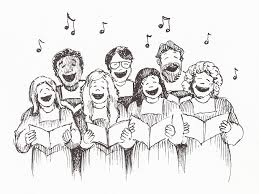
Let me say at the outset that I know some people object to the term “special music” in church, meaning songs that are performed by instrumentalists or sung as solos or groups as opposed to congregational singing, because it sounds like we’re elevating that type of music above congregational singing. In the order of service in our own church bulletin, a “special” is listed as “Ministry in music,” and that’s perfect. But if I used that phrase as a blog title, it would sound like I was writing about the whole panorama of music in the life of a church, and I am not doing that. I just wanted to share a few thoughts on this particular aspect of church music.

These thoughts were spurred some time ago by an article I saw (which I can’t find now) which advised that one way to encourage more and better congregational singing was to deemphasize the special music. I don’t know how many people saw that particular article, but it seems like that is the current trend, and I think it is a sad one, for reasons I’ll get into in a moment. We always have such a tendency to be unbalanced in one direction or another, and I think to scrap or at least downplay personal ministry in music creates a loss for the church, a loss for the musicians and their gifts as well as for the hearers who would be ministered to.

The writer of the article in question suggested that one reason people weren’t singing as well as they could congregationally was that having worship leaders and a band on stage made it seem more like they were “the professionals” and everyone else was just there primarily to listen and maybe to sing along occasionally. I have never experienced a set-up like that personally; the churches we have attended have been more traditional, with a songleader behind the pulpit and a choir behind him, and a few instrumentalists to one side. I am not knocking the other style, but I can see the point that if it is set up more like a concert, the audience will be more likely to listen than to participate. However, I really don’t think that’s the problem in most churches.

Some think that when we listen to others “perform” a spiritual song, we’re more likely to enjoy the performance rather than be ministered to by the words. And I do admit that is a danger. But I don’t think it is a reason to deemphasize performed hymns and spiritual songs. I can get distracted by how well I like a song or its melody even in congregational singing, so I think that’s largely a matter of training our minds and taking “every thought captive.” I don’t think it is wrong to enjoy the music, the harmony, the performance aspect of it, but we need to let that enhance the message rather than become the main point.

Some want to downplay “special” music in church because they feel congregational singing is more participatory, whereas with special music we’re just listening. But I disagree: listening is participating if done right. (And besides that, we don’t apply the same logic to the preaching, which is done by one and listened to by everyone else.) I think we need to train our families and ourselves to concentrate, to pay attention to the words especially, not to talk or fidget or otherwise distract ourselves and others during the performance. Part of that is just consideration and respect for those performing, but another part of it is to enhance our own ability to receive the song’s message.

For me personally, the special music, whether an offertory, solo, or ensemble, is the most worshipful part of the church service. (By the way, I don’t believe the musical segment of a service is the only time where worship takes place: worship should be what we do in every part of the service.) I do enjoy congregational singing very much, but I do get more distracted by my own voice, by the voices of those around me, by wondering when we’re going to get to sit down because my knees are killing me, by what I need to do to start dinner, etc. That is my own problem, and I work on it constantly. Our church does display the words to the songs we’re singing, and that helps immensely, but that time is the hardest time in the whole service for me to keep my mind on what I am doing. During special music, however, I’m all in and focused without really trying to be.

Besides being able to focus better personally, I think special music has value in other ways as well. Some people are gifted vocally or in ways of expressing what they are singing so that we can get more of the nuance of a song than when we’re just barreling through it with everyone else. And though I have a wealth of recorded Christian music I can listen to any time, and do often, it means more to hear someone I know personally who is dealing with a chronic illness sing, “Day by day and with each passing moment, strength I find to meet my trials here,” or someone who recently lost her husband sing about the New Jerusalem, or a sweet couple who have walked with the Lord for decades together singing about Him whom their souls love, or someone undergoing a longstanding trial singing:

What if Your blessings come through raindrops?
What if Your healing comes through tears?
What if a thousand sleepless nights
Are what it takes to know You’re near?
What if trials of this life are Your mercies in disguise?

(“Blessings” by Laura Story)

I can and have been ministered to through music sung by someone I don’t know, but when I know the people and observe how they walk with the Lord, that adds a valuable layer of ministry to a church.

The article I mentioned also proposed that singers and musicians should take it down a notch and not sound so professional so as not to discourage those of us with more average voices to sing out. But Psalm 33:1-3 talks about playing music skilfully. Those who sing and play need to have some skill in doing so (and that is another reason I enjoy it: I can sing and praise in my own spirit vicariously through them, since I don’t have the skills they do.) I don’t think special music has to sound “professional”: it can be very simple. But it is not wrong for it to sound professional, either. Different people have different skill levels, and I can enjoy a variety of them just as I enjoy reading from writers at various levels of writing skill or listening to preaching from men whose style or gifts vary. A child’s first piano offertory or a simple solo with a guitar can minister just as much as a full scale performance of Handel’s Messiah, and I like them all in different ways.

Not long after I came across the article I mentioned, I came to Chronicles in my Bible reading. Among the many people with various specific functions in the temple were musicians and singers.

I Chronicles 16:4-7: Then he appointed some of the Levites as ministers before the ark of the Lord, to invoke, to thank, and to praise the Lord, the God of Israel. Asaph was the chief, and second to him were Zechariah, Jeiel, Shemiramoth, Jehiel, Mattithiah, Eliab, Benaiah, Obed-edom, and Jeiel, who were to play harps and lyres; Asaph was to sound the cymbals, and Benaiah and Jahaziel the priests were to blow trumpets regularly before the ark of the covenant of God. Then on that day David first appointed that thanksgiving be sung to the Lord by Asaph and his brothers.

I Chronicles 16:41-42: With them were Heman and Jeduthun and the rest of those chosen and expressly named to give thanks to the Lord, for his steadfast love endures forever. Heman and Jeduthun had trumpets and cymbals for the music and instruments for sacred song.

I Chronicles 25 gives great detail about David appointing different people for different musical functions. One of the most interesting verses to me is I Chronicles 25:1: “Moreover David and the captains of the host separated to the service of the sons of Asaph, and of Heman, and of Jeduthun, who should prophesy with harps, with psalteries, and with cymbals.” A former pastor used to say that even instrumental music was a form of prophecy.

When the ark was brought into the temple,

all the Levitical singers, Asaph, Heman, and Jeduthun, their sons and kinsmen, arrayed in fine linen, with cymbals, harps, and lyres, stood east of the altar with 120 priests who were trumpeters; and it was the duty of the trumpeters and singers to make themselves heard in unison in praise and thanksgiving to the Lord), and when the song was raised, with trumpets and cymbals and other musical instruments, in praise to the Lord, “For he is good, for his steadfast love endures forever,” the house, the house of the Lord, was filled with a cloud,  so that the priests could not stand to minister because of the cloud, for the glory of the Lord filled the house of God. II Chronicles 5:12-14.

“Special” music was also performed at the dedication of the temple, before the army, at the crowning of a king, when Hezekiah reestablished worship in the temple, at the restoration of the Passover,  at the Passover in Josiah’s time, when the foundation for the temple was laid again in Ezra’s time. But special or performed music wasn’t just for special occasions:  II Chronicles 8:14 says  “According to the ruling of David his father, he appointed the divisions of the priests for their service, and the Levites for their offices of praise and ministry before the priests as the duty of each day required.” Singers are mentioned multiple times from Chronicles to Nehemiah: Ezra 2: 65 says they were male and female.

Then of course the Psalms are themselves songs and mention music throughout. Whether they were song congregationally or by the temple musicians, or both, I don’t know. Now I am in Isaiah: I am not sure whether I’ll find references to singing in the prophets, as their focus and purpose is different.

That is all Old Testament: what about the New? I’ll look for specific references when I come to it in my reading, but two passages there come to mind. Colossians 3:16 says, “Let the word of Christ dwell in you richly in all wisdom; teaching and admonishing one another in psalms and hymns and spiritual songs, singing with grace in your hearts to the Lord.” I think that can apply to both congregational and performed music. I Corinthians 14:6 says, “How is it then, brethren? when ye come together, every one of you hath a psalm, hath a doctrine, hath a tongue, hath a revelation, hath an interpretation. Let all things be done unto edifying.” The ESV has “hymn” in place of “psalm.”

I think songleaders and preachers can enhance the performed music of a church by emphasizing the message of it just before or after the person or people sing. If there is one thing I could say to preachers everywhere on this topic: please don’t joke just after someone has ministered in song, especially about that person. I’m not against laughter, I love to laugh as much as the next person, I know the Lord loves a merry heart, but joking just after someone sings is one of the quickest ways to quench whatever ministry their testimony in song could have had.

Instead of downplaying ministry in musical performance, I think songleaders can enhance congregational singing in a number of other ways: reminding us to sing as unto the Lord and what the Bible says about singing or commenting on something the song teaches (not long: a little sermon before each song or each stanza can dull its effect). Please, however, don’t do what I have heard often through the years and say something like, “Are you a Christian? Do you love the Lord? Then please tell your face!” or “If you could see the view from here, you’d be really depressed. Smile!” That’s basically saying, “Paste a smile on so you look better,” an emphasis on the outer rather than the inner man and not conducive to worship. How much better to encourage better singing by encouraging worship of the one we’re singing about and thinking about the message of the song.

Please understand that I am not trying to exalt “special” or performed music above congregational singing because I have emphasized it here: I’m just asking that we don’t discourage or downplay special music in our efforts to encourage congregational singing. Both have vital places in our worship: both can be great tools the Lord can use to minister to our hearts.

Just to Leave in His Dear Hand

I was looking for this poem to share with a friend a few days ago, and I had thought it was on my blog somewhere. I couldn’t find it, so I thought it was high time to add it here. I originally saw the last stanza somewhere, and it wasn’t until looking it up online that I discovered it was part of a longer poem (it might possibly be a hymn, but I’ve never heard it set to music). It’s still the first line of the last stanza that comes to me most often.

I’ve seen this under the titles “How to Trust” and “The Secret of a Happy Day.” I don’t know which was the original, but they both work.

JUST to let Thy Father do what He will;
Just to know that He is true, and be still.
Just to follow, hour by hour, as He leadeth;
Just to draw the moment’s power, as it needeth.
Just to trust Him, this is all. Then the day will surely be
Peaceful, whatso’er befall, bright and blessed, calm and free.

Just to let Him speak to thee, through His Word,
Watching, that His voice may be clearly heard.
Just to tell Him everything, as it rises,
And at once to bring to Him all surprises.
Just to listen, and to stay where you cannot miss His voice,
This is all! and thus today, you, communing, shall rejoice.

Just to trust, and yet to ask guidance still;
Take the training or the task, as He will.
Just to take the loss or gain, as He sends it;
Just to take the joy or pain as He lends it.
He who formed thee for His praise will not miss the gracious aim;
So today, and all thy days, shall be moulded for the same.

Just to leave in His dear hand little things;
All we cannot understand, all the stings.
Just to let Him take the care sorely pressing;
Finding all we let Him bear changed to blessing.
This is all! and yet the way marked by Him who loves thee best:
Secret of a happy day, secret of His promised rest.

– Frances Ridley Havergal

At the Close of the Year

dec-31-calendar

Excerpts from “At the Close of the Year”

 ~ by John Newton

 Let hearts and tongues unite,
And loud thanksgivings raise:
‘Tis duty, mingled with delight,
To sing the Saviour’s praise.

 In childhood and in youth,
His eye was on us still:
Though strangers to his love and truth,
And prone to cross his will.

 And since his name we knew,
How gracious has he been:
What dangers has he led us through,
What mercies have we seen!

 Now through another year,
Supported by his care,
We raise our Ebenezer here,
“The Lord has help’d thus far.”

 Our lot in future years
We cannot now foresee,
He kindly, to prevent our fears,
Says, “Leave it all to me.”

 Yea, Lord, we wish to cast
Our cares upon thy breast!
Help us to praise thee for the past,
And trust thee for the rest.


Who Is He?

Who is He in yonder stall
At Whose feet the shepherds fall?
Who is He in deep distress,
Fasting in the wilderness?

Refrain:

’Tis the Lord! O wondrous story!
’Tis the Lord! the King of glory!
At His feet we humbly fall,
Crown Him! crown Him, Lord of all!

Who is He the people bless
For His words of gentleness?
Who is He to Whom they bring
All the sick and sorrowing?

Refrain

Who is He that stands and weeps
At the grave where Lazarus sleeps?
Who is He the gathering throng
Greet with loud triumphant song?

Refrain

Lo! at midnight, who is He
Prays in dark Gethsemane?
Who is He on yonder tree
Dies in grief and agony?

Refrain

Who is He that from the grave
Comes to heal and help and save?
Who is He that from His throne
Rules through all the world alone?

’Tis the Lord! O wondrous story!
’Tis the Lord! the King of glory!
At His feet we humbly fall,
Crown Him! crown Him, Lord of all!

~ Ben­ja­min R. Han­by, 1866

To Behold Thee

From weariness of sin I turn at last, O Lord, to Thee
My eyes and heart grown dim from looking long on vanity.
I venture toward thy radiance then, compelled to come by grace
And in the pages of Thy word behold Thy lovely face.

(Refrain)
Face of glory, turned upon me
I cannot but Thee adore.
To behold Thee, O my Saviour,
Is to love Thee more and more.

Each grace in all its fullness on Thy countenance I see.
Great tenderness of mercy, blazing light of purity.
Thine eyes are wells and love and wisdom, s
ettled peace Thy brow,
Before the whole of perfect beauty I in worship bow.

(Refrain)

When someday I before Thee stand, a debtor to Thy grace,
And gaze with heaven’s eyes upon the brightness of Thy face,
Transformed into Thy likeness, all my sin thrust far away,
With millions of redeemed ones I will lift my voice and say:

Face of glory turned upon me
I cannot but Thee adore.
To behold Thee, O my Savior,
Is to love Thee more and more.
To behold Thee, O my Savior,
Is to love Thee more and more.

Words: Eileen Berry

Music: Dan Forrest

To hear this beautiful hymn, go here and click on “Listen

But we all, with open face beholding as in a glass the glory of the Lord,
are changed into the same image from glory to glory,
even as by the Spirit of the Lord.

II Corinthians 3:18

I Could Not Do Without Thee

The first time I heard this hymn was from an ensemble visiting our church, and I was riveted. I thought it was a new hymn, but looking it up after I got home, I saw it was written by Frances Ridley Havergal in1873. I like the newer melody better, but I don’t know who wrote it.

I have usually only heard it sung with these four stanzas, but cyberhymnal.org lists several more.

I could not do without Thee
O Savior of the lost,
Whose precious blood redeemed me
At such tremendous cost.
Thy righteousness, thy pardon
Thy precious blood, must be
My only hope and comfort,
My glory and my plea.

I could not do without Thee,
I cannot stand alone,
I have no strength or goodness,
No wisdom of my own;
But Thou, beloved Savior,
Art all in all to me,
And weakness will be power
If leaning hard on Thee.

I could not do without Thee,
O Jesus, Savior dear;
E’en when my eyes are holden,
I know that Thou art near.
How dreary and how lonely
This changeful life would be,
Without the sweet communion,
The secret rest with Thee!

I could not do without Thee,
For years are fleeting fast,
And soon in solemn loneness
The river must be passed;
But Thou wilt never leave me,
And though the waves roll high,
I know Thou wilt be near me,
And whisper, “It is I.”

The first time I heard it I was struck with the repetition of “lone,” “alone,” and “loneness.” I was feeling very much alone at the time because Jim was traveling a lot, and I was reminded that I am never alone with Christ, and that’s not just a trite saying but a meaningful reality. And then the second stanza has been a help to me so many times. We truly have no strength, goodness, or wisdom of our own, but because of the redemption mentioned in the first stanza, we can experience the strength in the second stanza.

Trusting God in the Dark

I often post hymns texts on Sundays, but I don’t have much time at the computer on Sunday itself, so if I don’t have a post ready beforehand I’m not usually able to get to it then. That dilemma was compounded yesterday when I had two different songs on my heart and couldn’t decide which one to share. 🙂

I’ve been rediscovering a CD that I’ve had for a while but somehow got buried in my little basket I keep on the kitchen counter for CDs: Beyond All Praising by the BJU Singers and Orchestra. One of the songs that stands out to me from this CD is “In Your Silence,” words by Eileen Berry and music by Molly IJames, on the theme of trusting God even when He seems silent and distant.

In Your word I find the echoes of the questions in my mind;
Have I fallen from Your favor, is Your ear to me inclined?
When Your silence is unbroken, though my prayer ascends each day,
Father, keep my faith from failing in the face of long delay.

While You wait in gracious wisdom and my doubts begin to rise,
I recall Your loving kindness, and lift my hopeful eyes.
While Your hand withholds the answer, I will not withhold my heart.
I will love you in Your silence, I will trust You in the dark.

When the troubled thoughts within me hold me wakeful in the night,
And the shadows that surround me seem to hide me from Your sight.
Father, bring to my remembrance mercies shown in days gone by.
Help me rest upon Your promise: You will not neglect my cry!

While You wait in gracious wisdom and my doubts begin to rise,
I recall Your loving kindness, and lift my hopeful eyes.
While Your hand withholds the answer, I will not withhold my heart.
I will love you in Your silence, I will trust You in the dark.

It is performed beautifully here:

I think many Christians go through times like this. Biblically Job and the psalmists share similar thoughts, and this song echoes some of the Psalms: the second stanza brings to mind Psalm 63. The last two lines of the chorus particularly resonate with me: “While Your hand withholds the answer, I will not withhold my heart. I will love you in Your silence, I will trust You in the dark.”

This song also brings to mind a section in Evidence Not Seen by Darlene Deibler Rose (linked to my review). The following occurred while she was in a Japanese prison camp, having been captured while a missionary to the New Guinea during WWII.

I knew that without God, without that consciousness of His Presence in every troubled hour, I could never have made it…Quite suddenly and unexpectedly, I felt enveloped in a spiritual vacuum. “Lord, where have You gone? What have I said or done to grieve You? Why have You withdrawn Your Presence from me? Oh Father—” In a panic I jumped to my feet, my heart frantically searching for a hidden sin, for a careless thought, for any reason why my Lord should have withdrawn His Presence from me. My prayers, my expressions of worship, seemed to go no higher than the ceiling; there seemed to be no sounding board. I prayed for forgiveness, for the Holy Spirit to search my heart. To none of my petitions was there any apparent response.

 I sank to the floor and quietly and purposefully began to search the Scriptures hidden in my heart…

 “Lord, I believe all that the Bible says. I do walk by faith and not by sight. I do not need to feel You near, because Your Word says You will never leave me nor forsake me. Lord, I confirm my faith; I believe.” The words of Hebrews 11:1 welled up, unbeckoned, to fill my mind: “Now faith is the substance of things hoped for, the evidence of things not seen.” The evidence of things not seen. Evidence not seen — that was what I put my trust in — not in feelings or moments of ecstasy, but in the unchanging Person of Jesus Christ. Suddenly I realized that I was singing:

When darkness veils His lovely face,
I rest on His unchanging grace.
In every high and stormy gale,
My anchor holds within the veil.

 On Christ the solid Rock I stand;
All other ground is sinking sand.

I was assured that my faith rested not on feelings, not on moments of ecstasy, but on the Person of my matchless, changeless Savior, in Whom is no shadow caused by turning. In a measure I felt I understood what Job meant when he declared, “Though He slay me, yet will I trust in Him” (13:35). Job knew that he could trust God, because Job knew the character of the One in Whom he had put his trust. It was faith stripped of feelings, faith without trappings. More than ever before, I knew that I could ever and always put my trust, my faith, in my glorious Lord. I encouraged myself in the Lord and His Word.

We don’t always know why God seems distant. Sometimes it is sin: though He is with us always, that fellowship can be broken when we’re sinning against Him. Sometimes, as in Darlene’s case, He is teaching us to trust in Him and His Word and not in our feelings. Sometimes, like for Daniel, answers are delayed due to spiritual opposition. There may be other reasons as well, but the answer is the same: reminding ourselves of and resting on His Word.

Though this is not a “dark” time for me, it is for a few friends, so I hope this encourages them, and I can shore these truths up for myself for when those times might come around in the future.

Who is among you that feareth the Lord, that obeyeth the voice of his servant, that walketh in darkness, and hath no light? let him trust in the name of the Lord, and stay upon his God. Isaiah 50:10