31 Days of Missionary Stories: Hudson Taylor, Pioneer Missionary

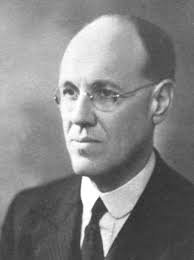
J_Hudson_TaylorI wasn’t going to mention Hudson Taylor because I felt most people would know of him, but in looking at an old post of some of his quotes, a friend commented that she hadn’t read anything about him. His is one of the premier missionary stories (though he would cringe to hear anyone say that) both because of his example in his walk with the Lord and his influence on missionary thought and outreach.

One day as a boy he came across a tract in his father’s office. He casually sat down to read it, and at that the same time his mother, some seventy miles away, felt an urgent burden to pray for her son. As Hudson read, he puzzled over the phrase “the finished work of Christ,” wondering what it meant, what was “finished.” He realized Christ had accomplished everything needed for his salvation, all his efforts at “trying” to be a Christian were for naught: all he had to do was believe. His mother prayed for hours until she felt sure that her prayers had been answered. When she came home, she was so sure that he had been saved while she was gone that he thought his sister had told her.

He was a pioneer missionary to China in the 1800s during a time when China was especially hostile and suspicious of foreigners. He wanted to convert people to Christ in their own culture rather than converting them to Western culture. He dressed as a Chinaman, much to the dismay and criticism of the overseas European community and even other missionaries, simply because he found that the most effective way to work with the Chinese. A missionary coming into a town dressed as a European was likely to be attacked and cause a riot. (He would not have said that dressing like a native is something all missionaries in every time and place should do, though. Elisabeth Elliot in No Graven Image makes the point that sometimes such a practice is not well-received. It just worked best for Taylor at the time and place he ministered.)

He suffered much hardship uncomplainingly and purposefully lived as simple a life as possible, even before going to China, to train himself.

Probably the most notable aspects of Hudson, however, were his simple childlike (but not childish) faith and his unswerving obedience to what he perceived God wanted him to do. Once, before going to the field, he heard of a family in dire need and went to visit them. He felt he should give them the last money he had, but wrestled with himself over it. Finally he yielded. The next day he received in the mail several times more than he had given.

He did not set out to start a mission agency, but the agency which sent him out failed miserably: they failed to advise or prepare him, failed to forward funds and communicate with him when he was on the field, causing other mission agencies to step in and help him and others, and then they had the gall to criticize other mission agencies in the periodicals of the day. The necessity of a mission agency attuned to the needs in China and responsible in its habits led to Hudson beginning the China Inland Mission. There were a few missionaries in the bigger cities, but he wanted to go inland where the gospel had not been preached.

The following excerpts come from It Is Not Death to Die: A New Biography of Hudson Taylor by Jim Cromarty.

Before he went to China, the girl he had planned to marry refused his proposal because she did not want to go to China. He wrote to his mother, “Trusting God does not deprive one of feelings or deaden our natural sensibilities, but it enables us to compare our trials with our mercies and to say, ‘Yet notwithstanding, I will rejoice in the Lord, I will joy in the God of my salvation’” (p. 55).

Once during a storm on the way to China in a ship, he took off a life jacket because he felt he was trusting in it rather than the Lord. Later he realized that was wrong thinking and wrote, “The use of means ought not to lessen our faith in God; and our faith in God ought not to hinder whatever means He has given us for the accomplishment of His own purposes…When in medical or surgical charge of any case, I have never thought of neglecting to ask God’s guidance and blessing in the use of appropriate means…to me it would appear presumptuous  and wrong to neglect the use of those measures which He Himself has put within our reach, as to neglect to take daily food, and suppose that life and health might be maintained by prayer alone” (p. 99). He was later said to be “a man of prayer, but it was prayer associated with action…’He prayed about things as if everything depended upon the praying…but he worked also, as if everything depended upon the working’” (p. 329).

To live in inland China at that time meant giving up what would be considered Western luxuries, and Hudson tried hard to give a real picture of the mission field before new missionaries came over. “The only persons wanted here are those who will rejoice to work — really to labour — not to dream their lives away; to deny themselves; to suffer in order to save.” (p. 294). He wrote to applicants, “If you want hard work, and little appreciation of it; value God’s approbation more than you fear man’s disapprobation; are prepared, if need be, to seal your testimony with your blood and perhaps oftentimes to take joyfully the spoiling of your goods…you may count on a harvest of souls here, and a crown of glory that does not fade away, and the Master’s ‘Well done’…it is no question of ‘making the best of both worlds’ — the men who will be happy with us are those who have this world under their feet” (p. 303).

At one time he said. “My soul yearns, oh how intently for the evangelization of these 180 millions of the nine unoccupied provinces. Oh that I had a hundred lives to give or spend for their good…Better to have pecuniary and other outward trials and perplexities, and blessing in the work itself, souls being saved, and the name of the Lord Jesus being magnified, than any measure of external prosperity without it” (p. 297).

He was known to be a humble and unassuming man. Many meeting him for the first time were surprised that he didn’t “stand out,” but looked at first like a regular Chinaman. Spurgeon wrote of him, “Mr. Taylor…is not in outward appearance an individual who would be selected among others as the leader of a gigantic enterprise; in fact, he is lame in gait, and little in stature; but…his spirit is quiet and meek, yet strong and intense; there is not an atom of self-assertion about him, but a firm confidence in God” (p. 329). Many times he quietly and unassumingly helped and ministered to others, especially new arrivals. Once when a group he was with had to spend a night on a boat with a leper, and someone complained about the stench of his bedding, Hudson spent the night in his cabin uncomplainingly and bought him new bedding the next day. Another time when an exhausted group of travelers fell into bed without eating, Hudson prepared omelets for them all. Once when he knew of a paper that was critical of him, almost derogatory, he said, “That is a very just criticism, for it is all true. I have often thought that God made me little in order that He might show what a great God He is” (p. 400).

In one meeting, Hudson said, “What we give up for Christ we gain, and what we keep back is our real loss…Let us make earth a little less homelike, and souls more precious. Jesus is coming again, and so soon! Will He really find us obeying His last command?” (p. 383).

Some of the sayings he is most well-known for:

“Many Christians estimate difficulty in the light of their own resources, and thus they attempt very little and they always fail. All God’s giants have been weak men, who did great things for God because they reckoned on His being with them.” – Dr. & Mrs. Howard Taylor, Hudson Taylor and the China Inland Mission; The Growth of a Work of God, Chapter 19

“After proving God’s faithfulness for many years, I can testify that times of want have ever been times of spiritual blessing, or have led to them.” – A.J. Broomhall. Hudson Taylor and China’s Open Century, Book Five: Refiner’s Fire.

Brighton, 25 June 1965: “All at once came the thought – If you are simply obeying the LORD, all the responsibility will rest on Him, not on you! What a relief!! Well, I cried to God – You shall be responsible for them, and for me too!” – A.J. Broomhall. Hudson Taylor and China’s Open Century, Book Three: If I Had a Thousand Lives.

If God places me in great perplexity, must He not give much guidance; in positions of great difficulty, much grace; in circumstances of great pressure and trial, much strength. As to work, mine was never so plentiful, so responsible, or so difficult, but the weight and strain are all gone. His resources are all mine, for He is mine. – Hudson Taylor (inscribed in Dal Washer’s Bible)

God’s work done in God’s way will never lack God’s supplies.

Do not have your concert first, and then tune your instrument afterwards. Begin the day with the Word of God and prayer, and get first of all into harmony with Him.

I used to ask God to help me. Then I asked if I might help Him. I ended up by asking Him to do His work through me.

In a letter to Jonathan Goforth: “Brother, if you would enter that province, you must go forward on your knees.” Rosalind Goforth, How I Know God Answers Prayer.

The definitive biography of Hudson Taylor is a two-volume set, Hudson Taylor in Early Years: The Growth of a Soul and Hudson Taylor and the China Inland Mission: The Growth of a Work of God by his daughter and son-in-law, Dr. and Mrs. Howard Taylor, first published in 1911. But the first volume is over 500 pages and the second well over 600, which can be quite daunting, plus they are out of print. They are excellent and easily readable even though they were written over a hundred years ago, and you can find used copies online. The other well-known biography of Taylor is Hudson Taylor’s Spiritual Secret, also written by his daughter and son-in-law, but much more compact at 272 pages and still printed regularly today. A newer one is the above-mentioned It Is Not Death to Die: A New Biography of Hudson Taylor by Jim Cromarty. I am sure there are others, but these are the ones I have read, plus there is much information about him online. His life is definitely worthy of study.

(You can see other posts in the 31 Days of Missionary Stories here.)

(This will also be linked to Semicolon‘s Saturday Review of Books.)

31 Days of Missionary Stories: Jim Elliot’s Journals

I can’t not mention Jim and Elisabeth Elliot in a series like this. The first missionary book I can recall reading is Through Gates of Splendor, about Jim and four other men who were killed by the Indians they were trying to reach with the gospel, and the subsequent opening Elisabeth and Rachel Saint, sister to one of the other men, had with the same tribe. That touched off reading almost everything Elisabeth ever wrote plus many another missionary biography. Elisabeth, as many of you know, remarried after Jim died, lost that husband to cancer, and then remarried Lars Gren, but she kept Elisabeth Elliot as her pen name. She put out a newsletter for several years, and some excerpts from that and from some of her books were used in a daily e-mail devotional that used to be sent out by Back to the Bible. You can see those devotionals now on her website here. Lars posts updates every now and then here.

Incidentally, I just discovered that Jim and Elisabeth’s daughter, Valerie Elliot Shepard, wrote a children’s book about her childhood in the jungle titled Pilipinto’s Happiness. It is definitely going on my To Be Read list!

Journals of Jim ElliotSince I just reread and reviewed Through Gates of Splendor here at the end of June and included a lot of links and resources, I won’t repost that information, but I thought I’d include a few excerpts from Jim’s journals, as quoted by Elisabeth a a chapter titled “Not One Thing Has Failed” in her book Love Has a Price Tag. She edited and published the bulk of them in The Journals of Jim Elliot and included some excerpts and letters in her biography of him, Shadow of the Almighty, but here are just a few snippets. She explains:

Jim started his journal as a means of self-discipline. He began to get up early in the morning during his junior year in college to read the Bible and pray before classes. He was realistic enough to recognize the slim chances of fitting in any serious study and prayer later in the day. If it had priority on his list of things that mattered, it had to have chronological priority. To see that he did not waste the dearly-bought time, he began to note down on paper specific things he learned from the Word and specific things he asked for in prayer.

He recorded:

It is not written as a diary of my experiences or feelings, but as a ‘book of remembrance’ to enable me to ask definitely by forcing myself to put yearnings into words. All I have asked has not been given and the Father’s withholding has served to intensify my desires…. He promises water to the thirsty, satiation to the unsatisfied (I do not say dissatisfied), filling to the famished for righteousness. So has His concealing of Himself given me longings that can only be slaked when Psalm 17:15 [‘As for me I shall behold thy face in righteousness; when I awake I shall be satisfied with beholding thy form’] is realized.

Elisabeth writes:

“All I have asked has not been given.” Not, that is, in the way or at the time he might have predicted. Jim beheld the longed-for Face much sooner than he expected. It is startling to see, from the perspective of nearly thirty years, how much of what he asked was given, and given beyond his dreaming.

When Jim prayed for revival he was instructed by reading in David Brainerd’s diary how a revival came when Brainerd was sick, discouraged, and cast down, “little expecting that God had chosen the hour of his weakness,” Jim wrote, “for manifestation of His strength.”

 “I visited Indians at Crossweeksung,” Brainerd records, “Apprehending that it was my indispensable duty…. I cannot say I had any hopes of success. I do not know that my hopes respecting the conversion of the Indians were ever reduced to so low an ebb . . . yet this was the very season that God saw fittest to begin His glorious work in! And thus He ordained strength out of weakness . . . whence I learn that it is good to follow the path of duty, though in the midst of darkness and discouragement.”

Jim saw, in reading Brainerd, the value of his own journals. He also “was much encouraged to think of a life of godliness in the light of an early death…. Christianity has been analyzed, decried, refused by some; coolly eyed, submitted to, and its forms followed by others who call themselves Christians. But alas, what emptiness in both!

 “I have prayed for new men, fiery, reckless men, possessed of uncontrollably youthful passion–these lit by the Spirit of God. I have prayed for new words, explosive, direct, simple words. I have prayed for new miracles. Explaining old miracles will not do. If God is to be known as the God who does wonders in heaven and earth, then God must produce for this generation. Lord, fill preachers and preaching with Thy power. How long dare we go on without tears, without moral passions, hatred and love? Not long, I pray, Lord Jesus, not long.” I read these prayers now with awe–new men, new words, new miracles all granted as a result of this young man’s death.

He wrote in 1953 of watching an Indian die in a jungle house. “And so it will come to me one day, I kept thinking. I wonder if that little phrase I used to use in preaching was something of a prophecy: ‘Are you willing to lie in some native hut to die of a disease American doctors never heard of?’ I am still willing, Lord God. Whatever You say shall stand at my end time. But oh, I want to live to teach Your word. Lord, let me live ‘until I have declared Thy works to this generation.”‘

 Elisabeth concludes this chapter by marveling at how God answered Jim’s prayer “‘exceeding abundantly above all‘ that he had asked or thought” in so many who have been touched and spurred to consecrate themselves to God by the testimony of “the record of his young man-hood–the days which seemed so sterile, so useless, so devoid of any feelings of holiness, when God was at work shaping the character of a man who was to be his witness; the prayers which seemed to go unheard at the time, kept–as all the prayers of all his children are kept, incense for God–and answered after what would have seemed to Jim a long delay.”

 And, behold, this day I am going the way of all the earth: and ye know in all your hearts and in all your souls, that not one thing hath failed of all the good things which the Lord your God spake concerning you; all are come to pass unto you, and not one thing hath failed thereof.
Joshua 23:14

Here are a few other isolated quotes Jim Elliot is known for:

“I seek not a long life, but a full one, like you Lord Jesus.”

“He is no fool who gives what he cannot keep to gain that which he cannot lose.”

“Wherever you are, be all there! Live to the hilt every situation you believe to be the will of God.”

“Let not our longing slay the appetite of our living.”

“When it comes time to die, make sure that all you have to do is die.”

To those who thought he could be better used as a preacher at home, he wrote: “I dare not stay home while the Quichuas perish. What if the well-filled church in the homeland needs stirring?  They have the scriptures, Moses, and the prophets and a whole lot more.  Their condemnation is written on their bankbooks and in the dust on their Bible covers.”

“[He makes] His ministers a flame of fire. Am I ignitable? God deliver me from the dread asbestos of ‘other things.’ Saturate me with the oil of the Spirit that I may be aflame. But flame is transient, often short-lived. Canst thou bear this my soul—short life? In me there dwells the spirit of the Great Short-Lived, whose zeal for God’s house consumed Him.”

(You can see other posts in the 31 Days of Missionary Stories here.)

(This will also be linked to Semicolon‘s Saturday Review of Books.)

31 Days of Missionary Stories: Verda Peet: Sometimes I Prefer to Fuss

I wasn’t originally going to repost this review – I am finding I have more that I want to include for this series than I have days for. But as I was rereading it, I felt I really needed to, and it has been six years since it originally appeared here, so it will be new to many of you.

Sometimes I Prefer to Fuss_Some years ago I read and enjoyed a book titled Sometimes I Prefer to Fuss by Verda Peet. When I tried to find a copy of it, though, I found it was out of print. I’ve kept an eye out for it ever since, and discovered it in Amazon.com’s used books for just a few dollars (some copies are just a penny).

The premise of the book can be found in the introduction:

The idea that missionaries are haloed saints, mature and perfected, above the sins of most mortals and so not needing much prayer, has done great disservice to the missionary cause. If you ever lived with missionaries you would know that their halos are askew. If I were to say that a missionary preaches the gospel, may (if female) put curlers in her hair, likes ice cream, travels a lot, longs for letters from home, can be thoughtless or domineering or depressed, perspires, has cakes that don’t always rise, never gets beyond the need of the Lord’s teaching, is concerned about her children’s upbringing and education and feels irritable in the heat, your first thought would be, “Sounds like a description of me.”

Exactly. James tells us Elijah was a man of like passions but we have trouble believing it. Our glamorization of missionaries blinds us to the need of down-to-earth prayer for down-to-earth details.

The title comes from the fact that God does send help when needed, even for “small” irritations like excessive heat, perspiration, and sticky clothes — but sometimes we prefer to “fuss” instead.

Mrs. Peet and her husband were missionaries in Thailand for about thirty years. Her book is an honest and often funny look at missionary life, but its lessons of faith are applicable to anyone.

There are so many places I marked in the book — I wish I could share them all. One thing that came up often was the need for wisdom in so many areas and the possibility of misunderstandings. For instance, even the simplest living arrangements of Americans can seem extravagant in jungle or tribal areas. One missionary who wanted to live as much like the people as possible did without a refrigerator, then overheard two of the nationals commenting that she did not get one because she was stingy. Another family who saved some of their best “goodies” from home to serve a visiting VIP heard that he later spread the word that the missionaries “lived too well.” So often they would like to just give the people material things they need, and they often do, but they don’t want to foster dependence on the missionary instead of the Lord.

Satan throws innumerable obstacles to keep people from believing or to stifle them when they do believe. The missionaries have to learn patience with a new believer’s struggling to “walk” in a faith totally foreign to anything he knows — just as a child stumbles and falls, so will a new believer as he matures. Practices that seem obviously wrong to Westerners with a heritage of a Judeo-Christian background, like premarital sex and using and selling opium, can take a while for a new believer from a different background to recognize as wrong. Then a new believer, or even one just showing an interest in Christianity, can face ridicule, ostracism, and persecution. There are thorny questions about what old practices are wrong, what a new believer should do when the demon priest declares an area or a day “taboo.” The consequences of violating a taboo are very real, but the believers can eventually learn to trust in God for protection.

With all the disappointment and heartache of those who “trusted” the Lord for the wrong reasons (like healing from a sickness when the demon rituals didn’t help) or those who did believe but fell away due to family pressure, there are also gems who have endured the refining fires to shine like diamonds. One believing lady, Celia, had a husband who was a professing Christian but not living very actively for the Lord. One day he showed up in their home with a second wife and moved her in, a common practice in their culture, but one that he should have known better than to practice as a believer. As a missionary lady came to comfort and encourage her through the Word, Celia said, “I thought I could never cook for her (the second wife) but I remembered ‘love your enemies,’ and because of these words I overcame, and I cook and call her to eat.” I was convicted at my lack of “overcoming” minor trials by comparison.

Another quote that stood out to me was, “The trial of our faith is not to point out how faulty it is but to prove how trustworthy He is. I had always pictured God testing me to show how little I believed, but He has a more positive purpose — to increase my capacity to enjoy His faithfulness.”

Another “lesson” was to trust the sovereignty of God to work even through fallible leaders. There was an elected field council as well as a superintendent who were good men, but human like everyone else, whose temperament, background, training, quirks, and pet theories may affect their decisions. When they make a decisions that seems wrong or unfair, there is temptation to blame them. “If we see ourselves in the hands of men, we can expect to be miserable, but if we know ourselves to be in God’s hands, subject to His decisions, we can go on in peace.”

There is so much more — grace through trials and how the Lord uses them, dealing with fear, care of children, etc. This book is a good “peek” into the under-the-surface, real everyday lives of missionaries, but it is also an example of how the Lord uses “all things” to work together for good and to grow His children in grace and knowledge of Him.

(You can see other posts in the 31 Days of Missionary Stories here.)

(This will also be linked to Semicolon‘s Saturday Review of Books.)

31 Days of Missionary Stories: Clint and Rita Vernoy: On Ethnocide and Raising Children in the Jungle

VernoysClint and Rita Vernoy are missionaries that our church in SC supported. I found Rita’s blog through a link from Susan‘s, and as I looked around I realized that this was one of our missionaries! Rita blogged at The Jungle Hut for several years and then moved to Livin’ la Rita Loca. Both sites have some great windows into life as a missionary.

I met Clint a couple of times when they were home on furlough, but Rita was not able to come either time. They ministered in the jungles of Venezuela for several years until the Communist government forced all foreign missionaries out. This post tells of their heartbreak at leaving a people and country they had come to love. They currently minister in Paraguay.

I wanted to highlight a couple of posts of theirs that I think would be very helpful and informative to read.

Let’s Define Ethnocide! is Clint’s response to a comment that he was committing “ethnocide,” purposely destroying an ethnic group or culture, by his missionary activities. I have mentioned a couple of times in this series that this sentiment is increasing in our culture these days, and Clint’s answer is a great one to read to inform yourself not only for your own information, but to answer these accusations when you come across them. Besides the spiritual benefit, which is huge but of course unrecognized or unacknowledged (or condemned) by a secular culture, missionaries generally also improve the hygiene, health, and quality of life of those to whom they minister while still keeping the culture intact. Who among us would still want to live as people did during the American Revolution or Little House on the Prairie days without the improvements and progress we have experienced since then? Rita also expanded on this in What About the Culture? I strongly encourage you to read both of these posts.

Another post I wanted to highlight is Rita’s daughter’s response to an anonymous commenter who said “that we had raised our children in an abusive environment by forcing them to live in the jungle in a mud hut without the amenities of civilization.” She assures, “While we appreciate your concern about our childhood, rest assured…we’re fine. Not a single one of us regrets our childhood, it was an awesome adventure, and we are grateful.” The rest of the post expands on some of the advantages and results of having grown up in the jungle.

I don’t know if anyone in the family has written a post on this yet – I haven’t seen one –  but I’d love to read Clint’s story of eating grub worms for the first time. 🙂 It was hilarious when he told it at church, though I am sure it didn’t feel so funny when it happened.

And if you have time, another great and thought-provoking post written for their mission board’s magazine is How Far Is Enough?

(You can see other posts in the 31 Days of Missionary Stories here.)

31 Days of Missionary Stories: Margaret Stringer: A Merry Heart and a Faithful Spirit

Margaret Stringer

Margaret Stringer has been one of my favorite people for years. The church we attended in SC supported her in Indonesia (formerly known as Irian Jaya, now West Papua). She was there for a little over 40 years, and she “retired” (I always put that in quotation marks, because she is one of the most active retirees I know, traveling often to churches and missions conferences) not too far from our church, so we invited her to speak at least once a year to our ladies’ group. She would have us just rolling in the floor telling about situations which I’m sure weren’t funny when they first happened.

I’ve appreciated not only her merry heart, but also her faith and obedience. Many of us can’t imagine being the lone woman to go to visit a village of cannibals at the possible risk of our own lives. That sounds like something missionaries did way back, like Mary Slessor. But there are still people who haven’t heard of the Savior, and God’s ability to meet their needs as well as the needs of His messengers are still the same.

from_cannibalism_small.jpgA few years ago she wrote a book titled From Cannibalism to Christianity: The Vakabuis Story, which tells mainly how the Lord opened one particular group of villages, from first contact to the establishment of a full-fledged church. There are hilarious moments as well as frightening ones. But what joy there is in seeing the light of understanding dawn after repeated sharing of the gospel. I don’t remember if Margaret said this in the book, but I know I heard her say while speaking to us that there were moments when she thought, “This isn’t going to make sense to them.” Imagine sharing the Word of God with someone who doesn’t know anything about it and doesn’t know who God is. Yet they did share God’s Word by faith, and the Holy Spirit gave understanding and conviction.

Secularists don’t have to worry about the people’s culture being infringed on. The people still have their own traditions and culture. But they also have hope and life. As I said in an earlier post, I don’t know why anyone, even the most unchristian person on the planet, would have any objection to helping people get rid of traditions like cannibalism and killing a twin baby. I appreciated the way Margaret endeavored to help them not to be too dependent on her. When they asked her to name the church, for instance, she told them they should name it.

One of her major accomplishments while there was reducing two languages to writing and translating the Bible into them.

When she retired she thought she would never have an opportunity to go back, but she was able take a few trips back. One night at our ladies’ group she showed some video footage (24 minutes condensed from 5 hours) while she told us what was going on, interspersed with some history here and there of the people. I tell you — seeing footage of former cannibals and headhunters now singing hymns, hearing about the most powerful and feared witch doctor in the area who became a believer and whose son is now the head of the church — that just does something to your heart.

She told us about one man during a visit who said something like, “When you left us, I was very sad for a long time. But you told us you were leaving God here, and He helped me. So when you leave this time, I will be sad, but not for as long a time, because God is here with me.” She said that’s not exactly how she put it to him, but it was so neat he got the concept that God was still there and didn’t leave when she did, and he could depend on Him.

I was amazed at her fearlessness. In one piece of footage, she was getting out of a boat to see one of the villages she used to work in, and one man took her hand and began leading her away. Her friend said, “Where are you going?” She said, “I don’t know!” As people came to greet her and hug her, the man would stop for a few minutes, and then take her hand and lead her away again. Finally he led her to his house, where he had prepared lunch for them.

One of my favorite stories she tells is not in the book but is so characteristic of her. She was new to the field, which of course was an adjustment, and she was pretty low. A number of trying things had happened, one of them a big storm that had blown through the glassless windows and ruined about 95 % of her work of language analysis. After she went to bed, something fell off the wall and hit her on the head. That was the last straw: if I remember correctly, she “fussed” in her spirit at God, saying things like, “I thought you loved me! I thought you promised to take care of me!” She got a light to see what had fallen, and it was a plaque that said…”He cares for you.” That’s one way to get the message!

Margaret has also written several articles about becoming and working as a missionary here. This video, narrated by Margaret, tells the Vakabuis story in condensed form, well worth the 30 minutes it takes to watch:

(You can see other posts in the 31 Days of Missionary Stories here.)

(This will also be linked to Semicolon‘s Saturday Review of Books.)

31 Days of Missionary Stories: Dallas and Kay Washer, Candles in the Darkness

The names of Dallas and Kay washer were legend when I was in college. At that time I only knew they were missionaries in Togo, West Africa. I never had the opportunity to meet Dallas or hear him speak, but I was privileged to meet Kay several years later when my family lived in SC and two of her grandsons (Mike Washer of National Hoops and Jonathan Washer of National Goals, for those of you who know them) were youth pastors at our church. Kay became “Grandma Washer” to our ministry, speaking to the youth group a number of times and to the ladies once or twice. one-candle-lg.jpg

One saying Dal is known for is, “I have but one candle of life to burn and would rather burn it out where people are dying in darkness than in a land which is flooded with light.” (I had thought this saying was original with him, but it was a quote from John Keith Falconer.) So a few years ago when I saw Kay’s daughter-in-law at church with a stack of books with the title One Candle To Burn, I immediately went to her and asked if Kay had written a book. And she had! I bought one on the spot.

It was pure joy to read. It begins with Dallas and Kay’s childhood and call to the ministry, how the Lord led them together (she at first thought her sister was just right for him), a year of learning the language and Muslim customs in Algiers, then ministry first in Niger and then in Togo. There are many stories of open doors of ministry, people turning from darkness to light, and answers to prayer such as provision of land and finding a source of water for land for a hospital during the last attempt to drill for it. Compassion for the blind, who could only provide for themselves by begging, led Kay to take courses in Braille during one family vacation, then to teaching a few blind boys how to read, then eventually to the establishment of blind school where students get a regular academic education plus learn certain crafts or skills. She was surprised to be honored with the civilian medal of honor by Togo’s President Eyadema.

You get some idea of where the Washer adventurousness comes from when you read of Kay lying on her stomach strapped to the floor of a small plane with the door removed so she could film the maiden voyage of boat used as a floating mission station.

When people asked about her children’s safety and exposure to disease, she told them about an lawn mower accident resulting in the loss of toes of one of her sons — in America.

My heart was especially touched by the chapters dealing with Dallas’s death and later Kay’s serious fall which resulted in a broken arm and two broken bones in her leg and the long, complicated recovery period. At first she chafed under what felt like imprisonment, but later came to accept that this was God’s will for her at the time and to allow Him to work in and through her for a different kind of ministry.

There are many remarkable stories tracing God’s hand at work, laced with good humor and touching moments and lessons learned — all the more remarkable because the events are true. Love for God, for family, and for the people of Africa shines throughout.

I have been so glad to see this book. As much as I love the missionary classics, I believe it is incredibly important for missionaries of our time to record what the Lord has done. The same God who worked through Hudson Taylor and Amy Carmichael is still at work today!

You can read a bit more about Kay Washer here.

(You can see other posts in the 31 Days of Missionary Stories here.)

(This will also be linked to Semicolon‘s Saturday Review of Books.)

31 Days of Missionary Stories: J. O. Fraser: Pianist and Engineer Turned Missionary

I first came across the name of J. O. Fraser in writings of Isobel Kuhn, whom I have mentioned here many times. The Lord used him to call Isobel to the mission field, and in later years he was her superintendent in China. Two good biographies of him are Behind the Ranges by Geraldine Taylor and a later one, Mountain Rain, by his daughter, Eileen Crossman. Both books contain many of Fraser’s letters and journal entries. They both appear to be out of print, but thankfully used copies and Kindle editions are available. His name is not as well known as Hudson Taylor and Amy Carmichael, but his remarkable life and character are well worth reading.

FraserJames Outram Fraser was born to a prominent English family in London in 1886. He was trained as both an engineer and a classical pianist. As a young man he came across a tract written to Christians urging them to give their lives to reach the lost in China. Something in it touched a heart prepared, and he at that time gave Christ “not the latch key, but the master key” of his life. He looked on that moment as his conversion.

After applying to the China Inland Mission and training, he went to China as a missionary. One market day in his village, he met some men from a tribe called the Lisu. His heart went out to them. They lived in the mountains of the area, six days journey northward. “I was very much led out in prayer for these people, right from the beginning. Something seemed to draw me to them; and the desire in my heart grew til it became a burden that God would give us hundreds of converts among the Lisu.” Workers were scarce in China: to go to the Lisu meant that James would have to go alone as an itinerant pioneer missionary traveling out to them from time to time as he could, and the Lisu villages were so spread out that he could not stay for long at one place. Other areas were more promising, but James felt led to the Lisu.

So he traveled to them and visited them. They were greatly open, friendly, cheerful, hospitable though living in poverty and squalor. James dressed as they dressed, ate as they ate, traveling on foot or by donkey up and down steep mountain ranges (and, by his description, thoroughly enjoying it!) He told them about the one true God. They listened well. Some were interested, but they lived in great fear. They did not worship idols. They worshiped demons themselves. They didn’t particularly want to or enjoy doing so, but they were trapped. The demons could quite literally make their lives miserable.

He learned much over time and with experience about how to work with the Lisu and about dealing with unseen principalities and powers. One article that came to him just when needed showed him “that deliverance from the power of the evil one comes through definite resistance on the grounds of the cross. I am an engineer and believe in things working. I want to see them work. I had found that much of the spiritual teaching one hears does not seem to work…The passive side of leaving everything to the Lord Jesus as our life, while blessedly true, was not all that was needed just then. Definite resistance on the ground of the cross was what brought me light….’Resist the devil’ is also Scripture (James 4:7). And I found that it worked. That cloud of depression dispersed. I found that I could have the victory in the spiritual realm whenever I wanted it. The Lord Himself resisted the devil vocally: ‘Get thee behind me, Satan!’ I, in humble dependence on Him, did the same. I talked to Satan at that time, using the promises of Scripture as weapons. And they worked. Right then, the terrible oppression began to pass away.”

He also leaned much on the intercessory prayer of others. He asked his mother to gather some prayer helpers, folks who would definitely undertake for his ministry in prayer. He began to correspond with them about what he was learning about prayer.

Little by little the seed of the Word was planted and the ground of hearts tilled. Little by little battles were fought for spiritual territory the evil one had claimed for himself; little by little ground was won. Just when James was ready to conceded that God’s time was not now for the Lisu, he made one “last” trip through all the villages, and then it was that the Lord of the harvest brought forth a bumper crop.

He found that even with as little teaching as he was able to give them before having to travel on to the next village, they taught others all they knew. The Lord eventually raised up more workers, and the church grew in numbers and in grace.

James wrote to his prayer helpers,

They [the Lisu] have not yet grown to military age in this spiritual warfare; they are babes in God’s nursery, not warriors in God’s army. But you have centuries of Christianity behind you, you have had Christian education, Christian influence, an open Bible, devotional helps, and many other things to help you in your growth to spiritual maturity. So now you belong to those of full stature in Christ, who are able to ‘help with power against the enemy.’ The vast difference between you and them is that you are ‘grown up’ in Christ, while they are babes and sucklings; and the work of pulling down Satan’s strongholds requires strong men, not infants.

He was asking his supporters to treat their prayer as more than a sideline. “I am trying to roll the main responsibility of this prayer-warfare on you,” he told them. “I want you to take the BURDEN of these people upon your shoulders, I want you to wrestle with God for them.”

 I feel like a businessman who perceives that a certain line of goods pays better than any other in his store, and who purposes making it his chief investment; who, in fact, sees an inexhaustible supply and an almost unlimited demand for a profitable article and intends to go in for it more than anything else.

The DEMAND is the lost state of these tens of thousands of Lisu and Kachin — their ignorance, their superstitions, their sinfulness; their bodies, their minds, their soul; the SUPPLY is the grace of God to meet his need — to be brought down to them by the persevering prayers of a considerable company of God’s people. All I want to do is, as a kind of middleman, to bring the supply and demand together.

The Lisu language had not been reduced to writing, so James developed a script which later became known as the Fraser alphabet and eventually translated the New Testament and other aids into Lisu.

One unique mark of his ministry was that the work was indigenous from the beginning. According to Wikipedia:

Fraser maintained a consistent policy of training the Lisu converts (usually whole households and whole villages at a time) to be self-supporting and to pay for their own books and church buildings. They raised their own funds for the support of pastors, of wives and children of their travelling evangelists and of festivals and other occasions. Unlike other missionaries of his generation, Fraser would not pay local preachers to go out, or for building local church structures, and this was something that put the Lisu in good stead for the years of Japanese occupation and the Communist persecution, particularly during the Chinese cultural revolution. Nevertheless tens of thousands of them fled during this era to neighboring Burma and Thailand. Fraser also left church government in the hands of Lisu elders; very little imprint was made on them that had a home church character, other than the tremendous prayer support the Fraser organised back in England for the Lisu and his work.

He also established the Rainy Season Bible Schools (Isobel Kuhn writes much about these),  systematic Bible study during the times when they could not work at their farming.

When James returned from furlough, he was needed in a different area of China: those in charge felt his experience would be best suited to the needs of that region. He was greatly disappointed. F.B. Meyer prayed, “I can’t say I’m willing, Lord, but I’m willing to be made willing,”  and James seemed to know that kind of prayer as well. He “knew the barrenness of obeying reluctantly. Recognition that God’s will was ‘perfect and acceptable’ would be costly, but it was always fruitful.”

He had not planned to be married, but the Lord definitely led in his marriage at the age of 42. He was drawn more into the administrative side of the work as God raised up more laborers in the field, and they counted his help and guidance as greatly valuable. All were stunned at his death at the age of 52 from malignant cerebral malaria.

In character he was known as a godly man with a quick mind, “ahead of his time” in missionary work and methods, kindly, humorous.  One traveling with him once said, “Mr. Fraser is a gentleman to his fingertips. There was nothing of lightness or flippancy. Wisdom governed him and every propriety was observed…He was the perfect gentleman in the dirtiest and dingiest Chinese inns…Every courtesy was observed. Every kindness was done. The depth of his inward life in Christ was never more manifest than in his attention to those hundred and one little things which make comfort for others.”

I discovered a DVD called Breakthrough: The Story of James O. Fraser and the Lisu People, but I have not seen it. Here is a trailer for it:

You can read more about Fraser online here:

About James O. Fraser (Overseas Missionary Fellowship site, formerly the China Inland Mission)
Quotes of J. O. Fraser
J. O. Fraser: Biographical Sketch
The Prayer of Faith

(You can see other posts in the 31 Days of Missionary Stories here.)

31 Days of Missionary Stories: Rosalind Goforth, a Woman “of Like Passions” As We Are

ClimbingI mentioned Rosalind Goforth in the second post of this series and the unique ways God answered her very human and what we might consider mundane but serious needs for clothes for her children. After she had written Goforth of China, a biography of her husband, and How I Know God Answers Prayer (all or most of the text of this book is here, and it is free for the Kindle for a time here), she was asked to write something about her own perspectives and struggles after nearly a lifetime on the mission field. The result of that request is Climbing, her own story of answered prayer and personal struggles, one of my top three favorite missionary books. Being of like passions as we are, she very honestly and transparently writes of such things as overhearing two Chinese women talking about her quick temper and impatience and wishing she would live more as she preached. At first she was angry, but then realized it was all too true. She struggled with this for years, until much later the Chinese servants who had wanted to avoid her now wanted to be around her and serve her, wondering what had caused the change in her.

She tells of the work of God in many a life, of many funny experiences as well as trying ones, of multitudes of direct answers to prayer for helpers, for monetary and health needs, for protection, for grace and strength, even for everyday practical things like help to find a proper hat (after being criticized, sadly, by probably well-meaning women when she came home on furlough.)

Like any mother with young children, she struggled to have time alone with the Lord. She writes:

A devoted Christian missionary, Mrs. S, was holding a series of special meetings for our Christian women at Changte. On one occasion, this dear woman, who had no children, told me that I could never have the peace and joy I longed for unless I rose early and spent from one to two hours with the Lord in prayer and Bible study.

I longed intensely for God’s best — for all He could give me, not only to help me live the true Christian life but also for peace and rest of soul. So I determined to do what Mrs. S. had advised.

The following morning, about half-past five o’clock, I slipped as noiselessly as possible out of bed. (My husband had already gone to his study.) I had taken only a step or two when first one and then another little head bobbed up; then came calls of, “Mother is it time to get up?”

“Hush, hush, no, no,” I whispered as I went back, but too late; the baby had wakened! So, of course, the morning circus began an hour too soon.

But I did not give up easily. Morning after morning I tried rising early for the morning watch, but always with the same result. So I went back to the old way of just praying quietly — too often just sleeping! Oh, how I envied my husband, who could have an hour or more of uninterrupted Bible study while I could not. This led me to form the habit of memorizing Scripture, which became an untold blessing to me. I took advantage of odd opportunities on cart, train, or when dressing, always to have a Bible or Testament at hand so that in the early mornings I could recall precious promises and passages of Scripture (pp. 75-76).

One day when she was especially busy, she received a note from another missionary lady who was supposed to take a women’s meeting but found out she couldn’t and asked Rosalind to at nearly the last minute. She needed to nurse her baby, and she set her Bible up where she could see it. Her husband came in just then and said, “It puzzles me how you can address a meeting with so little preparation.” She responded, “Jonathan, if I had time like you, I could not expect to get a message in so short a time, but the fact is the Lord suits His help to me as a mother!” (p. 112). I’ve benefited from her studies on what God does with our sin and conditions for receiving strength.

I’ve been convicted along with her as she shares. During most of the time the Goforths ministered, the Chinese were quite suspicious of and disdainful toward “foreign devils.” To try to alleviate those feelings and establish relationships with the Chinese, the Goforths would allow crowds of the curious into their home to look around and to talk with them. This resulted in some agitation and disruption as well as theft of some of their belongings, but over all they felt it was worth it. Of one particular day, Rosalind writes:

The day had been an unusually strenuous one, and I was really very tired. Toward evening, a crowd of women burst through the living room door and came trooping in before I had time to meet them outside. One woman set herself out to make things unpleasant. She was rough and repulsive and– well, just indescribably filthy. I paid no attention to her except to treat her as courteously as the rest. But when she put both hands to her nose, saying loudly, “Oh, these foreign devils, the smell of their home is unbearable!”, my temper rose in a flash and, turning on her with anger, I said, “How dare you speak like that? Leave the room!” The crowd, sensing a “storm,” fled. I heard one say, “That foreign devil woman has a temper just like ours!”

Now, I had not noticed that the door of my husband’s study was ajar, not did I know that he was inside, until, as the last woman disappeared, the door opened and he came forward, looking solemn and stern. “Rose, how could you so forget yourself?” he said. “Do you realize that just one such incident may undo months of self-sacrificing, loving service?”

“But Jonathan” I returned, “you don’t know how she — “

But he interrupted. “Yes, I do; I heard all. You certainly had reason to be annoyed; but were you justified, with all that is hanging in the balance and God’s grace to keep you patient?”

As he turned to re-enter his study, he said, “All I can say is I am disappointed!

Oh, how that last word cut me! I deserved it, yes, but, oh, I did so want to reach up to the high ideals he had. A tempestuous time followed alone in our inner room with my Lord. as I look back now, it was all just one farther step up the rocky hillside of life — just climbing! (pp. 45-46).

GoforthsThough the Goforths faced many personal hardships and losses, “Sometimes when letters would reach us from the homeland expressing pity for us, how my husband would laugh as I read them to him. ‘Pity,’ he would say, ‘why this is the most glorious life possible!’ Yes, it was indeed!” (p. 69).

(You can see a list of other posts in the 31 Days of Missionary Stories here.)


(This will also be linked to Semicolon‘s Saturday Review of Books.)

31 Days of Missionary Stories: William Carey: “Attempt great things for God. Expect great things from God.”

CareyNo series like this would be complete without mention of William Carey, who is known as the “Father of Modern Missions.” In reading of his life, one cannot help but be struck by the providence of God in preparing and directing him and the perseverance of William Carey in the face of seemingly insurmountable odds.

He was born near Northampton, England in 1761 to a poor weaver. When he was six, his father was appointed a clerk for the Church of England. William loved to read, and in that day most books were only owned by rich people and clergymen; so with his father’s new appointment came many opportunities to borrow books. William was fascinated by tales of explorers and other lands. He was also very quick with languages. He taught himself Latin from an old book of his uncle’s that he found along with an old dusty Latin grammar book his father had found. Later on as a teenager, after finding a book of Greek, he found someone to teach it to him, and quickly picked it up as well.

William completed the schooling available to him at the age of 12 (only those who could afford to continued their formal education beyond that; William’s family could not.) William loved the outdoors and went to work on a farm; however, he got a painful rash on his hands and face whenever he was out in the sun. He tried to continue the work for two years, but finally had to give it up. It is likely that if he had continued on in that labor, he would have remained a poor farmer all his life. Instead, his father apprenticed him to a shoemaker. William was able to work with a book propped up nearby and continued to learn. The other apprentice was a “dissenter” — one who disagreed with much in the Church of England. They had some lively arguments, but in the end William became a dissenter, too, eventually becoming one of their preachers. After a few years, a congregation called him to be their pastor.

William was also able to teach school. His geography lessons spurred not only his love of learning, but his compassion for people in other lands who did not know Christ. His interest grew into a passion which compelled him to action.

Churches didn’t send out missionaries in the late 1700s — at least not Dissenting English churches. Many felt that the “Great Commission” was given to 11 disciples in the New Testament and wasn’t applicable in modern times. At a minister’s meeting, William tried to share his burden and vision for reaching the lost in other lands. He was told by an older pastor, “Young man, sit down! If God wants to convert the heathen, He will do it without consulting you — or me!” He was soundly rebuked as a “miserable enthusiast.” This drove William to study to see if the minister was right, but he became more convinced than ever that they had a responsibility to the heathen. The more he studied about other countries, the more he felt burdened for souls lost in darkness: the more He studied Scripture, the more he saw evidence that the church was indeed called to spread the gospel.

Since the subject caused such dissension in public meetings, he began to talk with other pastors individually. He was urged to write a pamphlet and eventually was able to so, only the “pamphlet” turned into an eighty-seven-page book with a forty-two-word title. It became known as the Enquiry. In it, William addressed some common misconceptions:

Objection: How do we know that this command is still valid? Not even divine injunctions abide forever. They have their periods and pass, like the Levitical law.

Reply: Nay, divine injunctions abide till they have fulfilled their function. Who can think this command exhausted, with the majority of mankind not yet acquainted with Christ’s name?

Objection: But Christ’s command could scarcely have been absolute, seeing they never heard of vast parts of the globe — the South Seas, for example — nor could these be reached. Neither can we think it absolute today, with very large regions still unknown and unopened.

Reply: As they (the apostles) were responsible for going according to their strength into all their accessible world, we are in duty bound to speed into our much enlarged world. Indeed, we ought to be keen to go everywhere for Christ, till all closed doors are open.

Other sections of the book listed the history of missions in the world, the facts as they knew them about the world at the time (including the fact that an estimated 76% or 557 million souls were lost), practical considerations, and the duty of every Christian (to pray, to plod, and to plan).

Soon after his book was published, there was a ministers’ meeting. William brought his book and gave copies to those who were interested. At his opportunity to preach, he chose the text from Isaiah 54:2: “Enlarge the place of thy tent, and let them stretch forth the curtains of thine habitations: spare not, lengthen thy cords, and strengthen thy stakes.” He urged the obligation of missions, concluding with the phrase famous to us now, “Brothers, attempt great things for God. Expect great things from God.” Some of the ministers were shaken. Yet later on, in the business meeting, there were no resolutions and no discussion about missions. When the meeting was adjourned, “William leaped to his feet. ‘Is nothing going to be done again?’” He compared them to the ten scouts of Moses. One man moved to reopen for business, and a majority agreed. Within minutes they passed a resolution: “Resolved, that a plan be prepared against the next ministers meeting at Kettering, for forming a Baptist Society for propagating the gospel among the Heathens.”

Opposition still abounded.  Some felt the church could not afford such a thing. Only two dozen of the congregations in their Association approved.

In the next months, William was led to offer himself as their first appointee. His wife flatly refused to go (though she eventually relented, a depression that began when her first baby died continued to grow. She was mentally unstable a good portion of her adult life.) His father was bitterly opposed. The East India Company feared missionaries would interfere with their trade and opposed them; in fact, William could have been arrested and deported except that a Dutch settlement in India took him in.

Though he had many hearers, there were no converts for seven long years. The first convert was bitterly persecuted, but his family and others to turned to Christ instead of away from Him.

William’s facility with languages led to translating the gospel into several. Other missionaries eventually followed, with churches and a school established. Thanks to one man’s perseverance and God’s grace to him, many were saved and a great work was done that not only impacted Carey’s world for God, but continues to have influence on believers today.

William Carey was a shining example of his own motto, “Attempt great things for God. Expect great things from God,” but near the end of his life, when another missionary came to visit him and discuss his work, William said, “You have been speaking about William Carey. When I am gone, say nothing about William Carey — speak only about William Carey’s Savior.”

William died on June 9, 1834. The epitaph on his tombstone reads:

“A wretched, poor, and helpless worm
on Thy kind arms I fall.”

(Some information taken from William Carey, Father of Modern Missions by Sam Wellman.)

(You can see a list of other posts in the 31 Days of Missionary Stories here.)

(This will also be linked to Semicolon‘s Saturday Review of Books.)

31 Days of Missionary Stories: The Cambridge Seven

In 1883 Harold Schofield, a missionary doctor in China, surveyed the needs of his field and prayed in faith “that God would waken the church to China’s claims, that He would raise up men to preach His word. Above all that He would touch the universities and call men of talent and ability and consecrate them to His work in China. It seemed a prayer absurd enough except to faith” (p. 42). He did know know that God had begun answering his prayer “even while he was yet speaking,” and he didn’t live to see the answer: like those saints in Hebrews 11, he died not having yet received the promises, but God used him in faith and prayer.

This book details the answer to that prayer. The subtitle of The Cambridge Seven by John Pollock is “The True Story of Ordinary Men Used in No Ordinary Way,” an apt title.

A fairly short book at only 111 pages, it details the Lord’s leading in the lives of seven young men from their conversions to their departure for China with a brief synopsis at the end about what happened to each of them. C.T. Studd, M. Beauchamp, S.P. Smith, A.T. Polhill-Turner, D.E. Hoste, C.H. Polhill-Turner, W.W. Cassels were all Cambridge students who felt called to offer their lives as missionaries to China. They were from different backgrounds: some were wealthy, some were in the military, some were collegiate athletes — one of them a household name in his day; some were more “ordinary.” They were of varying abilities and gifts. Yet as God called them one by one, and it became known, and they shared their testimonies of salvation and surrender over England and Scotland, God used them in a remarkable way before they ever even got to China.

For many of them, the first stirrings toward faith in Christ came when D. L. Moody and Ira Sankey held meetings in England. Some of “their friends thought it a great joke that two uneducated Americans should be coming to preach to the University” (p. 29). But the Holy Spirit worked through His servant and His Word to convict their hearts and bring them to Himself. Others came from Christian families yet were only nominal believers until the Lord began to draw them to a closer fellowship and surrender to Himself.

Some of their families supported them: others strongly resisted the idea of their sons going to a foreign mission field, at least at first.

I appreciated the caution and care with which they approached their call. As D. E. Hoste “began to feel the urge to devote himself to the gospel. Nothing else seemed worthy,” his father “refused. He pointed out how recent was Dick’s faith, and reminded him that, though nothing could break its reality, the intensity of his emotions might be transient. To rush, on impulse, to such a binding decision would be foolishly wrong and might afterwards be regretted” (p. 43). C. T. Studd was listening to an address about the needs of China and “thought for a moment of rising in his place and offering for China on the spot. But he felt ‘people would say I was led by impulse.’ When the meeting ended he slipped away by himself and prayed for guidance” (pp. 69-70). I wince sometimes in our modern-day meetings when a speaker seems to feel he has to compel people down the aisle or else they’ll miss the will of God for their lives forever afterward. That may be true in some cases — there are moments of crisis when we need to make a decision for the Lord without hesitation. But as a general rule I’d rather people take time to pray and make sure their call is really of God than to respond to man-made pressure mistaken for the Holy Spirit’s.

China was not an easy field to go to then, if indeed it ever was. Some of these men were laying aside personal wealth and the possibility of brilliant careers and social prominence. But as they shared their call, they did not do so with woebegone countenances. They did not make it seem like a sacrifice: they made it seem like a joyous privilege. Perhaps that contagious joy was one of the things that drew a number of people to give their all to the Lord in their wake. Hudson Taylor, founder of the China Inland Mission through which they would be working, even allowed them to wait past their appointed time of departure because they were being called to more meetings in the British Isles to speak: he recognized that God was doing something unusual through them.

C. T. Studd is perhaps the most well-known of the seven in our day. One of his most well-known quotes is at the end of this section:

I had known about Jesus Christ’s dying for me, but had never understood that if he died for me, then I didn’t belong to myself. Redemption means ‘buying back,’ so that if I belonged to Him, either I had to be a thief and keep what wasn’t mine or else I had to give up everything to God. When I came to see that Jesus Christ had died for me, it didn’t seem hard to give up all for HIM. It just seemed common, ordinary honesty.

(You can see a list of other posts in the 31 Days of Missionary Stories here.)

(This will also be linked to Semicolon‘s Saturday Review of Books.)