Preparing good ground

796211_green_rows.jpg

This is “harvest season” rather than spring planting, yet a farmer can take clues from inspecting his harvest to determine what he needs to do the next year for a better harvest.

The parable of the sower speaks of different “soils” of the heart that produced different results from the sowing of the Word. What can we do to help our hearts be “good ground” so that God’s Word can take root and bring forth fruit?

1. Hosea 10:12 says, “ Sow to yourselves in righteousness, reap in mercy; break up your fallow ground: for it is time to seek the LORD, till he come and rain righteousness upon you.” Jeremiah 4:3 also speaks of breaking up our fallow ground.

2. We need to remove the “stones,” the hard places of our willfulness, and the “thorns” of the cares and pleasures of this life which want to choke out the Word.

3. Psalm 25:9 says, “ The meek will he guide in judgment: and the meek will he teach his way.” Elisabeth Elliot writes in Keep a Quiet Heart, “Meekness is teachability. ‘The meek will he teach his way’ (Psalm 25:9, KJV). It is the readiness to be shown, which includes the readiness to lay down my fixed notions, my objections and ‘what ifs’ or ‘but what abouts,’ my certainties about the rightness of what I have always done or thought or said. It is the child’s glad ‘Show me! Is this the way? Please help me.’ We won’t make it into the kingdom without that childlikeness, that simple willingness to be taught and corrected and helped. ‘Receive with meekness the engrafted word, which is able to save your souls’ (James 1:21, KJV). Meekness is an explicitly spiritual quality, a fruit of the Spirit, learned, not inherited. It shows in the kind of attention we pay to one another, the tone of voice we use, the facial expression.”

4. Psalm 25:14 says, “The secret of the LORD is with them that fear him; and he will shew them his covenant.” Reverence for the Lord makes us teachable. Proverbs 1:7 says, “The fear of the LORD is the beginning of knowledge: but fools despise wisdom and instruction.”

5. In Matthew 15:16 and Mark 7:13, Jesus tells the Pharisees and scribes that they have made the commandment or word of God “of none effect” through their traditions. That is a scary thought, that we can diminish the effectiveness of the Word by our preconceived notions or our imposing on the Word our own ideas of what it says or means.

6. In John 7:17, Jesus says, “If any man will do his will, he shall know of the doctrine, whether it be of God, or whether I speak of myself.” A willingness to do His will makes us teachable.

7. Though this speaks of the seed rather than the ground, it is a needed reminder: John 12: 24-25 say, “Verily, verily, I say unto you, Except a corn of wheat fall into the ground and die, it abideth alone: but if it die, it bringeth forth much fruit. He that loveth his life shall lose it; and he that hateth his life in this world shall keep it unto life eternal.” In order to bring forth spiritual fruit we have to be willing to die to our own plans, dreams, desires, and will and yield all of those things to the Lord. This sounds so difficult, and it is, but the more we know the Lord, the more we can trust Him with all of those things and stop grasping them for ourselves, thinking we can protect them. His way really is so much better, but often we can’t see that til we get on the other side of the issue at hand, til after we’ve yielded. That’s where faith comes in — faith in Who He is, His love, wisdom, and goodness.

This is not meant to be an exhaustive list, and there are probably many other aspects to consider, but, if you’re like me, this is more than enough to get us started.

What do we do, though, if we’re not feeling particularly meek, if we know we don’t reverence the Lord as we ought, if we’re feeling stubborn and willful and we know it is wrong, but we don’t know quite what to do with ourselves? Should we avoid the Word, then, thinking it will be useless with our hearts in that condition? When I am feeling like that, first of all I pray and confess that to the Lord and ask Him to change my heart. Then I look up verses like three in Psalm 80 which say, “Turn us again, O God, and cause thy face to shine; and we shall be saved,” or Psalm 85:6: “Wilt thou not revive us again: that thy people may rejoice in thee?” or Psalm 119:36-37: “Incline my heart unto thy testimonies, and not to covetousness. Turn away mine eyes from beholding vanity; and quicken thou me in thy way” or Psalm 119: 10-11: “ Teach me to do thy will; for thou art my God: thy spirit is good; lead me into the land of uprightness. Quicken me, O LORD, for thy name’s sake: for thy righteousness’ sake bring my soul out of trouble.” (If you have a concordance or Online Bible program, it’s very helpful to search for the word “quicken” and read through the verses that contain that word, and use those in your own prayers. One online source is at crosswalk.com. When you click on the drop-down menu for the version you want to use, at the very bottom there are choices for the KJV or NASB with Strong’s numbers. If you use those, the words in the verse will be highlighted and you can click on them for definitions, other ways they are translated, etc. BibleGateway.com is another good source).

When we go to Him confessing our lack of meekness, reverence, and willingness and asking Him to work on us in those areas, then He can use His Word to begin to plow up the soil of our hearts and make “good ground.”

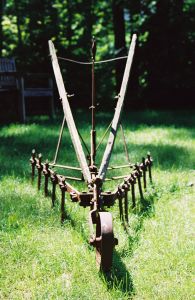
If we leave a field untended, it grows weeds and the ground hardens again. So this plowing must be a continual process. It might sound painful, “but no chastening for the present seemeth to be joyous, but grievous: nevertheless afterward it yieldeth the peaceable fruit of righteousness unto them which are exercised thereby” (Heb. 12:11). The more our hearts are “weeded” and kept soft and pliable, the more the seed of God’s Word can take root and bring forth fruit.

181687_plowseries_3.jpg

(Photos courtesy of the stock.xchng)

Book Review: The Restorer’s Son

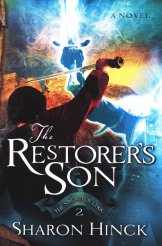
restorers-son.jpgThe Restorer’s Son wasn’t originally on my Fall Reading List simply because I forgot it was coming out in that time frame. How could I have forgotten? Sharon Hinck is one author whose books I eagerly anticipate.

The Restorer’s Son is a sequel to The Restorer (previously reviewed here), second in The Sword of Lyric trilogy. In the first book, Susan, an average “soccer mom,” is suddenly pulled into another reality where she discovers she is the Restorer, one whose purpose is to help the people heart’s return to the One who made them. Feeling overwhelmed and dismayed, she learns to rely on the One for strength for the task to which He has called her. She is startled to find that her husband is originally from this world. At the end of the book, the Restorer gifts are transferred to probably the most unlikely person, Kieran, who is distrustful and antagonistic, who is not even sure what he believes or if he believes, and Susan and husband Mark return to their world thinking that adventure is over only to discover that their son Jake has disappeared through the portal, and they have to go back to find him.

The Restorer’s Son picks up the story right where The Restorer left off. I’ll try not to reveal much more of the plot than the back of the book reveals so as not to spoil it for those who haven’t read it. Kieran is running from his destiny and stumbles upon Jake, who he realizes is Susan’s son. He can’t really afford the time and energy to care for him, but he knows he can’t leave him alone. Susan and Mark return and panic in the unfruitful search for Jake. All are drawn into the events occurring in Lyric and its enemy Hazor.

Whereas Susan’s story was inspired by that of Deborah in the Old Testament book of Judges, Kieran has a very Jacob-like encounter with the One. Parts of his story also remind me of Jonah. He’s not running from the One’s call for the same reasons, but he is running.

Sharon portrays the alternate world as very real, and readers will readily identify with struggles, wrestlings, and feelings the characters have. There are some surprises along the way. The title has at least a double, if not a triple meaning. Gentle humor throughout keeps the book from being too “heavy,” and the spiritual truth is convicting and inspiring.

I can’t wait til The Restorer’s Journey, due out next February.

Three abortion stories

Over the last few days three very different abortion stories have come to my attention.

I saw the first one linked to from Crystal’s about a woman who found she was expecting triplets and decided to abort two because,

“I worked freelance; and I would have to go on bed rest in March. I lecture at colleges, and my biggest months are March and April. I would have to give up my main income for the rest of the year. There was a part of me that was sure I could work around that. But it was a matter of, Do I want to?…When I found out about the triplets, I felt like: It’s not the back of a pickup at 16, but now I’m going to have to move to Staten Island. I’ll never leave my house because I’ll have to care for these children. I’ll have to start shopping only at Costco and buying big jars of mayonnaise. Even in my moments of thinking about having three, I don’t think that deep down I was ever considering it.”

She went on to say she is afraid of getting pregnant again because of the possibility of conceiving multiples again, and that if she was pregnant again with triplets she would again abort one or more of them. A note at the end of the article says this woman is an abortion rights advocate who has no regrets over her decision.

I felt both sick and sad after reading this article. Any honest parent would admit that yes, babies don’t always come at convenient times, and, yes, they do change your life — especially when they come three at one time. This mother didn’t feel as if she couldn’t handle it. She didn’t want to. Aside from the religious and moral implications, how sad that two lives with all their potential for who they could have been and what they could have accomplished were snuffed out with a shot of potassium chloride to the heart — an act that would be legally murder done to someone outside the womb — just because they were an inconvenience to the one who gave them life. How sad that life is only valued if it is wanted. There used to be some measure of self-sacrifice, of putting aside one’s own wants and pleasures for the sake of another’s life, even among non-Christians. Those are foreign concepts these days.

I have to admit the thought of triplets would be jarring. The thought of such a sudden and drastic life change would be unsettling. When I found out I was pregnant with my third, I’ll have to admit there were mixed emotions, just for a little while — my other two were older, and though we hadn’t decided on a certain number of children or a certain time frame for having them, there was a feeling as if we had moved past the baby stage of life, and entering it again was daunting. Maybe that’s part of the problem — we as Christians never talk about these things and we make it seem like parenthood is all bliss. It’s not. It’s wondrous, it’s fun, it’s beautiful. But it is hard. But there is help. By God’s grace I knew that He is the author of life, His timing is perfect, He has a plan for every soul (Psalm 139:13-17), and He gives grace to help in time of need, and therefore I would never have considered abortion. I wish this mother knew these things as well, and I hope she would have been accepting of them if she knew them. I am so glad He brought Jesse along when He did. he’s the sunshine of our family. I can’t imagine life without him.

The second story was one I saw linked to at Amy’s. For the past day or so I had been thinking about blogging about this one under the title “Doctor’s aren’t always right.” “When doctors found that Gabriel was weaker than his brother, with an enlarged heart,and believed he was going to die in the womb, his mother Rebecca Jones had to make a heartbreaking decision. Doctors told her his death could cause his twin brother to die too before they were born, and that it would be better to end Gabriel’s suffering sooner rather than later.” ”

Mrs Jones said: “They told us that if he died, it could be life threatening for his brother. We had to decide whether to end his life and let his brother live, or risk them both. They said it would be impossible to keep him alive afterwards as he was so poorly. It would be kinder to let him die in the womb with his brother by his side than to die alone after being born.” (That’s rather strange logic to me). “That made my mind up for me. I wanted the best thing for him.” (The best thing?)

Mrs Jones decided to let doctors operate to terminate Gabriel’s life.

Firstly they tried to sever his umbilical cord to cut off his blood supply, but the cord was too strong.

They then cut Mrs Jones’s placenta in half so that when Gabriel died, it would not affect his twin brother.

But after the operation which was meant to end his life, tiny Gabriel had other ideas.

Although he weighed less than a pound, he put up such a fight for survival that doctors called him Rocky.

Astonishingly, he managed to carry on living in his mother’s womb for another five weeks – until the babies were delivered by caesarean section.

Now he and Ieuan are back at home in Stoke – and are so close they are always holding each other’s hand.

When Mrs Jones reached 31 weeks doctors carried out a caesarian to deliver the twins. Ieuan weighed 3lb 8oz and Gabriel 1lb 15oz. Both were kept in hospital, but since going home they have thrived. At seven months, Ieuan weighs 15lb and Gabriel 12lb 6oz.

Mrs Jones said: “The boys are so healthy, they have huge appetites too. Ieuan is the noisy one, while Gabriel is always laughing, it’s like he’s just so happy to be here.

“There is such a strong bond between them.

“They are always holding hands and if one cries, the other reaches out to comfort him.”

“Doctors tried to break their bond in the womb, but they just proved it couldn’t be broken.”

I am so thankful for the outcome, thankful this little one lived and is thriving. And I can sympathize with the mother’s thought that she was sacrificing one child to help the other survive rather than lose both. But I wish the mindset among people in general and the medical community in particular was geared toward giving life a chance rather than thinking a fatal intervention is needed.

The last story was one I read just this morning about God’s amazing grace to a woman who had had three abortions. I don’t want to just quote pieces from it — go on over and read the whole thing. I pray that anyone reading this who is considering abortion or who has had an abortion would read this story and find the same amazing grace.

Psalm Sunday: Psalm 52

psunday.png

1 Why boastest thou thyself in mischief, O mighty man? the goodness of God endureth continually.

2 The tongue deviseth mischiefs; like a sharp razor, working deceitfully.

3 Thou lovest evil more than good; and lying rather than to speak righteousness. Selah.

4 Thou lovest all devouring words, O thou deceitful tongue.

5 God shall likewise destroy thee for ever, he shall take thee away, and pluck thee out of thy dwelling place, and root thee out of the land of the living. Selah.

6 The righteous also shall see, and fear, and shall laugh at him:

7 Lo, this is the man that made not God his strength; but trusted in the abundance of his riches, and strengthened himself in his wickedness.

8 But I am like a green olive tree in the house of God: I trust in the mercy of God for ever and ever.

9 I will praise thee for ever, because thou hast done it: and I will wait on thy name; for it is good before thy saints.

The NASB heading of this Psalm says it was written “when Doeg the Edomite came and told Saul and said to him, ‘David has come to the house of Ahimelech.'” This incident is recorded in I Samuel 21-22. King Saul had grown increasingly unstable and had tried to kill David. David fled from Saul and stopped in to ask the priest for provisions and a weapon. He did not tell the priest he was fleeing for his life; he told him he was on the king’s business. Doeg the Edomite saw him there, and later when King Saul asked for information about David, Doeg told him all he knew. Saul confronted the priest and, though the priest confessed he knew nothing about the trouble between David and Saul, Saul commanded his servants to kill the priests, but they refused. Then Saul commanded Doeg to kill them, and he did — 85 of them plus “Nob, the city of the priests, smote he with the edge of the sword, both men and women, children and sucklings, and oxen, and asses, and sheep” (I Samuel 22:19). One son of the priest escaped and came to David, who was deeply grieved at the loss of life his situation had caused and took the man into his protection.

Knowing the background lends weight to David’s comparing the tongue to a sharp razor, working deceitfully and devising mischief and speaking devouring words. This man, and others like him, ” lovest evil more than good” and “made not God his strength; but trusted in the abundance of his riches, and strengthened himself in his wickedness.”

Yet David had faith that “the goodness of God endureth continually” and that this man had no reason to boast because “God shall likewise destroy thee for ever, he shall take thee away, and pluck thee out of thy dwelling place, and root thee out of the land of the living.”

Verses 6-7 say, “The righteous also shall see, and fear, and shall laugh at him: Lo, this is the man that made not God his strength; but trusted in the abundance of his riches, and strengthened himself in his wickedness.” I honestly have a little trouble with the idea of laughing at the fate of the wicked, but I don’t think this is talking about laughing at his fate. I don’t know if this is exactly the right perspective, but I think of it similarly to when I hear ferocious barking, turn to see where it is coming from, and see it is some little tiny yapping dog, and I smile and think, “Who do you think you are?!” Sure, a little dog can still cause harm, but he’s not nearly as big and mighty as he seems to think he is. And the wicked are the same. Yes, they can cause harm. But their power is limited, and their reward is coming.

We are instructed in the New Testament to “Love your enemies, bless them that curse you, do good to them that hate you, and pray for them which despitefully use you, and persecute you” (Matthew 5:44). I have heard testimony of some who have come to the Lord as a result of being loved and prayed for in the face of hatred and perecution. God “is longsuffering to us-ward, not willing that any should perish, but that all should come to repentance (II Peter 3:9). But if a person will not repent, they will have to face God’s judgment.

So God will take care of the wicked one way or another. This reminds me of Psalm 37:7: “Rest in the LORD, and wait patiently for him: fret not thyself because of him who prospereth in his way, because of the man who bringeth wicked devices to pass.”

By contrast to the characteristics and fate of the wicked, David says he is “like a green olive tree in the house of God: I trust in the mercy of God for ever and ever. I will praise thee for ever, because thou hast done it: and I will wait on thy name; for it is good before thy saints.” He will not be cut down: he will be growing and fruitful in the house of God, trusting in His mercy forever, praising Him forever.

We can wait on God’s good name as well, trusting and resting in Him.

For more meditations on this Psalm or to join in with your own, see Butterfly Kisses.

When Morning Guilds the Skies

883823_lone_tree_at_sunrise.jpg

When morning gilds the skies my heart awaking cries:
May Jesus Christ be praised!
Alike at work and prayer, to Jesus I repair:
May Jesus Christ be praised!

When you begin the day, O never fail to say,
May Jesus Christ be praised!
And at your work rejoice, to sing with heart and voice,
May Jesus Christ be praised!

Does sadness fill my mind? A solace here I find,
May Jesus Christ be praised!
Or fades my earthly bliss? My comfort still is this,
May Jesus Christ be praised!

To God, the Word, on high, the host of angels cry,
May Jesus Christ be praised!
Let mortals, too, upraise their voice in hymns of praise,
May Jesus Christ be praised!

Be this at meals your grace, in every time and place;
May Jesus Christ be praised!
Be this, when day is past, of all your thoughts the last
May Jesus Christ be praised!

When mirth for music longs, this is my song of songs:
May Jesus Christ be praised!
When evening shadows fall, this rings my curfew call,
May Jesus Christ be praised!

When sleep her balm denies, my silent spirit sighs,
May Jesus Christ be praised!
When evil thoughts molest, with this I shield my breast,
May Jesus Christ be praised!

The night becomes as day when from the heart we say:
May Jesus Christ be praised!
The powers of darkness fear when this sweet chant they hear:
May Jesus Christ be praised!

Let all the earth around ring joyous with the sound:
May Jesus Christ be praised!
In Heaven’s eternal bliss the loveliest strain is this:
May Jesus Christ be praised!

In Heav’n’s eternal bliss the loveliest strain is this,
May Jesus Christ be praised!
Let earth, and sea and sky from depth to height reply,
May Jesus Christ be praised!

Be this, while life is mine, my canticle divine:
May Jesus Christ be praised!
Sing this eternal song through all the ages long:
May Jesus Christ be praised!

(Full version here)

(Photo courtesy of hotblack at the stock.xchng

Psalm Sunday: Psalm 51

My apologies for being late this week — we had out-of-town company over the last several days.

psunday.png

1 Have mercy upon me, O God, according to thy lovingkindness: according unto the multitude of thy tender mercies blot out my transgressions.

2 Wash me throughly from mine iniquity, and cleanse me from my sin.

3 For I acknowledge my transgressions: and my sin is ever before me.

4 Against thee, thee only, have I sinned, and done this evil in thy sight: that thou mightest be justified when thou speakest, and be clear when thou judgest.

5 Behold, I was shapen in iniquity; and in sin did my mother conceive me.

6 Behold, thou desirest truth in the inward parts: and in the hidden part thou shalt make me to know wisdom.

7 Purge me with hyssop, and I shall be clean: wash me, and I shall be whiter than snow.

8 Make me to hear joy and gladness; that the bones which thou hast broken may rejoice.

9 Hide thy face from my sins, and blot out all mine iniquities.

10 Create in me a clean heart, O God; and renew a right spirit within me.

11 Cast me not away from thy presence; and take not thy holy spirit from me.

12 Restore unto me the joy of thy salvation; and uphold me with thy free spirit.

13 Then will I teach transgressors thy ways; and sinners shall be converted unto thee.

14 Deliver me from bloodguiltiness, O God, thou God of my salvation: and my tongue shall sing aloud of thy righteousness.

15 O Lord, open thou my lips; and my mouth shall shew forth thy praise.

16 For thou desirest not sacrifice; else would I give it: thou delightest not in burnt offering.

17 The sacrifices of God are a broken spirit: a broken and a contrite heart, O God, thou wilt not despise.

18 Do good in thy good pleasure unto Zion: build thou the walls of Jerusalem.

19 Then shalt thou be pleased with the sacrifices of righteousness, with burnt offering and whole burnt offering: then shall they offer bullocks upon thine altar.

I am not going to outline this Psalm as it is pretty clear. I just want to pull a few thoughts from it.

This Psalm reminds me of the marks of godly sorrow and true repentance described in II Corinthians 7:9-11. There is no casual “Forgive me if I have done anything wrong” here.

David appeals to God’s lovingkindness here, and that is our hope and appeal as well. I am so glad God loves us in spite of our bent to sinning and created a way though Christ wherein we can have all our sins forgiven.

Though Israel was commanded to offer certain sacrifices at that time as a picture of the coming Christ’s redemptive work for us, just going through the motions was all for naught if there was not a broken and a contrite heart over sin (vv 16-17). God desires truth in the inward part of us (v. 6).

David acknowledges that, though his sin did affect other people, ultimately his sin was primarily against God (v. 4).

Thank God for His cleansing. I have prayed v. 10 many a time.

Then after there is acknowledgment, confession, repentance, and cleansing — then the joy is restored (vv. 8, 13).

See Butterfly Kisses for more Psalm Sunday meditations.

In Tenderness He Sought Me

In tenderness He sought me,
Weary and sick with sin;
And on His shoulders brought me
Back to His fold again.
While angels in His presence sang
Until the courts of Heaven rang.

Refrain:

Oh, the love that sought me!
Oh, the blood that bought me!
Oh, the grace that brought me to the fold,
Wondrous grace that brought me to the fold.

He washed the bleeding sin wounds,
And poured in oil and wine;
He whispered to assure me,
“I’ve found thee, thou art Mine”;
I never heard a sweeter voice;
It made my aching heart rejoice!

Refrain

He pointed to the nail prints,
For me His blood was shed,
A mocking crown so thorny
Was placed upon His head;
I wondered what He saw in me,
To suffer such deep agony.

Refrain

I’m sitting in His presence,
The sunshine of His face,
While with adoring wonder
His blessings I retrace.
It seems as if eternal days
Are far too short to sound His praise.

Refrain

So while the hours are passing,
All now is perfect rest,
I’m waiting for the morning,
The brightest and the best,
When He will call us to His side,
To be with Him, His spotless bride.

Refrain

— W. Spencer Walton

Psalm Sunday: Psalm 50

psunday.png

1 The mighty God, even the LORD, hath spoken, and called the earth from the rising of the sun unto the going down thereof.

2 Out of Zion, the perfection of beauty, God hath shined.

3 Our God shall come, and shall not keep silence: a fire shall devour before him, and it shall be very tempestuous round about him.

4 He shall call to the heavens from above, and to the earth, that he may judge his people.

5 Gather my saints together unto me; those that have made a covenant with me by sacrifice.

6 And the heavens shall declare his righteousness: for God is judge himself. Selah.

7 Hear, O my people, and I will speak; O Israel, and I will testify against thee: I am God, even thy God.

8 I will not reprove thee for thy sacrifices or thy burnt offerings, to have been continually before me.

9 I will take no bullock out of thy house, nor he goats out of thy folds.

10 For every beast of the forest is mine, and the cattle upon a thousand hills.

11 I know all the fowls of the mountains: and the wild beasts of the field are mine.

12 If I were hungry, I would not tell thee: for the world is mine, and the fulness thereof.

13 Will I eat the flesh of bulls, or drink the blood of goats?

14 Offer unto God thanksgiving; and pay thy vows unto the most High:

15 And call upon me in the day of trouble: I will deliver thee, and thou shalt glorify me.

16 But unto the wicked God saith, What hast thou to do to declare my statutes, or that thou shouldest take my covenant in thy mouth?

17 Seeing thou hatest instruction, and casteth my words behind thee.

18 When thou sawest a thief, then thou consentedst with him, and hast been partaker with adulterers.

19 Thou givest thy mouth to evil, and thy tongue frameth deceit.

20 Thou sittest and speakest against thy brother; thou slanderest thine own mother’s son.

21 These things hast thou done, and I kept silence; thou thoughtest that I was altogether such an one as thyself: but I will reprove thee, and set them in order before thine eyes.

22 Now consider this, ye that forget God, lest I tear you in pieces, and there be none to deliver.

23 Whoso offereth praise glorifieth me: and to him that ordereth his conversation aright will I shew the salvation of God.

I like to read the Psalm for the day several times on my own first and sort out my thoughts and impressions of what I think it is teaching before checking myself against someone else, usually C. H. Spurgeon’s Treasury of David. Spurgeon summed up the divisions of this Psalm nicely in this paragraph: “The Lord is represented as summoning the whole earth to hear his declaration, Ps 50:1-6; he then declares the nature of the worship which he accepts, Ps 50:7-15, accuses the ungodly of breaches of the precepts of the second table, Ps 50:16-21, and closes the court with a word of threatening, Ps 50:22, and a direction of grace, Ps 50:23.” For an expert study of this Psalm, see the rest of Spurgeon’s commentary on it here: in fact, I wonder what in the world I am doing saying anything about this Psalm when so many others have done a much better job thatn I ever could! But it is an exercise in studying the passage for me, and I do get a lot from it in thinking through it this way.

I won’t go over it verse by verse or section by section this time, but here are just a few thoughts.

— Sometimes these days people forget this view of God as the righteous Judge. He is merciful and gracious, longsuffering and ready to forgive. But as the Creator and as God alone, He has the right to “make the rules,” so to speak, and to deal with those who won’t come to Him for forgiveness for not following His way. Even His warnings may be seen as merciful because they are designed to lead people to repentance before it is too late.

— Like Israel, we can sometimes forget to do what’s required of us or do it in a way that is just “going through the motions” without any heart behind it. God doesn’t “need” our service any more than He “needed” Israel’s sacrifices, but He requires the service out of a right heart of gratitude. I like what Spurgeon said about this:

No longer look at your sacrifices as in themselves gifts pleasing to me, but present them as the tributes of your gratitude; it is then that I will accept them, but not while your poor souls have no love and no thankfulness to offer me. The sacrifices, as considered in themselves, are contemned, but the internal emotions of love consequent upon a remembrance of divine goodness, are commended as the substance, meaning, and soul of sacrifice. Even when the legal ceremonials were not abolished, this was true, and when they came to an end, this truth was more than ever made manifest. Not for want of bullocks on the altar was Israel blamed, but for want of thankful adoration before the Lord. She excelled in the visible, but in the inward grace, which is the one thing needful, she sadly failed. Too many in these days are in the same condemnation.

— Verse 15 is often quoted by itself, “And call upon me in the day of trouble: I will deliver thee, and thou shalt glorify me,” but it is a continuation of the sentence in verse 14: “Offer unto God thanksgiving; and pay thy vows unto the most High: And call upon me in the day of trouble: I will deliver thee, and thou shalt glorify me.”

— Verse 21: “These things hast thou done, and I kept silence; thou thoughtest that I was altogether such an one as thyself: but I will reprove thee, and set them in order before thine eyes.” Sometimes we mistake God’s mercy and longsuffering for indulgence. When we do wrong and there are no immediate consequences, we think He hasn’t seen, or if He has, like a kindly grandfather in the sky He will pat us on the head and overlook our wrongdoing. But forgiveness is not the same thing as overlooking sin: forgiveness involves facing up to wrongdoing and repenting of it.

— On the first part of verse 23, “Whoso offereth praise glorifieth me,” Spurgeon says,

Thanksgiving is a God exalting work. Though nothing can add the least cubit to God’s essential glory, yet praise exalts him in the eyes of others. Praise is a setting forth of God’s honour, a lifting up of his name, a displaying the trophy of his goodness, a proclaiming his excellency, a spreading his renown, a breaking open the box of ointment, whereby the sweet savour and perfume of God’s name is sent abroad into the world.

— The last part of verse 23 can be a little confusing: “to him that ordereth his conversation aright will I shew the salvation of God.” It makes it sound like we’re saved after we correct our actions, but many other verses say that we’re saved by God’s grace, and then with His power and out of gratitude we get things right in our lives. The word “salvation” in the Bible, though, doesn’t always mean deliverance from the penalty and power of our sins: sometimes it means rescue from trouble. Since the first part of this verse seems to be addressed to believers (“whose offereth praise…”) perhaps the meaning of this second part of the verse is similar to Psalm 66:18: “If I regard iniquity in my heart, the Lord will not hear me.” A believer can’t expect God to hear and answer prayer if he is walking around with known and unconfessed sin in his life. But once we have confessed that sin to God, we have the confidence that He will answer prayer. Verse 22 is a call to those who “forget God” to heed His warning and repent; verse 23 seems to be a reminder to God’s people that He wants true heart worship, right motives behind a right life, not just a lifeless outer obedience. If you have another “take” on this verse, let me know.

Our Psalms Sunday hostess, Erica at Butterfly Kisses, does not yet have the link up for this weeks Psalm Sunday, but she probably will one day this week. I usually wait until she does so to post my Psalms Sunday thoughts, but I wanted to do it as close to Sunday as possible, even though I am a day late already.

My righteousness

My Daily Light reading this morning reminded me of a precious truth, that our standing and acceptance before God is based on Christ’s righteousness, not our own. Here are a couple of the verses:

Psalm 89:16: In thy name shall they rejoice all the day: and in thy righteousness shall they be exalted.

Isaiah 45:24-25: Surely, shall one say, in the LORD have I righteousness and strength: even to him shall men come; and all that are incensed against him shall be ashamed. In the LORD shall all the seed of Israel be justified, and shall glory.

Romans 3: 21 But now the righteousness of God without the law is manifested, being witnessed by the law and the prophets;

22 Even the righteousness of God which is by faith of Jesus Christ unto all and upon all them that believe: for there is no difference:

23 For all have sinned, and come short of the glory of God;

24 Being justified freely by his grace through the redemption that is in Christ Jesus:

25 Whom God hath set forth to be a propitiation through faith in his blood, to declare his righteousness for the remission of sins that are past, through the forbearance of God;

26 To declare, I say, at this time his righteousness: that he might be just, and the justifier of him which believeth in Jesus.

I thought of another:

I Corinthians 1:30: But of him are ye in Christ Jesus, who of God is made unto us wisdom, and righteousness, and sanctification, and redemption.

My own righteousness can’t help me:

Isaiah 64: 6: But we are all as an unclean thing, and all our righteousnesses are as filthy rags; and we all do fade as a leaf; and our iniquities, like the wind, have taken us away.

How could we think that any righteousness or work of our own could stand next to His blazing holiness and count for anything?

Philippians 3:9: And be found in him, not having mine own righteousness, which is of the law, but that which is through the faith of Christ, the righteousness which is of God by faith.

Titus 3: 4-7: But after that the kindness and love of God our Saviour toward man appeared, Not by works of righteousness which we have done, but according to his mercy he saved us, by the washing of regeneration, and renewing of the Holy Ghost; Which he shed on us abundantly through Jesus Christ our Saviour; That being justified by his grace, we should be made heirs according to the hope of eternal life.

Romans 10:3-4: For they being ignorant of God’s righteousness, and going about to establish their own righteousness, have not submitted themselves unto the righteousness of God. For Christ is the end of the law for righteousness to every one that believeth.

We obtain a right standing with God by repentance from our own sins and works and instead accepting Christ, relying on His sacrifice on the cross to pay the debt of our sins. Once we are in Christ, God sees and accepts His righteousness on our behalf.

Romans 4:5: But to him that worketh not, but believeth on him that justifieth the ungodly, his faith is counted for righteousness.

Romans 10:9-10: That if thou shalt confess with thy mouth the Lord Jesus, and shalt believe in thine heart that God hath raised him from the dead, thou shalt be saved. For with the heart man believeth unto righteousness; and with the mouth confession is made unto salvation.

II Corinthians 5:20-21: Now then we are ambassadors for Christ, as though God did beseech you by us: we pray you in Christ’s stead, be ye reconciled to God. For he hath made him to be sin for us, who knew no sin; that we might be made the righteousness of God in him.

When Satan tempts me to despair
And tells me of the guilt within,
Upward I look and see Him there
Who made an end of all my sin.
Because the sinless Savior died
My sinful soul is counted free.
For God the just is satisfied
To look on Him and pardon me.

Behold Him there the risen Lamb,
My perfect spotless righteousness,
The great unchangeable I AM,
The King of glory and of grace,
One in Himself I cannot die.
My soul is purchased by His blood,
My life is hid with Christ on high,
With Christ my Savior and my God!

— “Before the Throne of God Above,” Charitie L. Bancroft

Jesus, my Lord, my God, my All

Jesus, my Lord, my God, my All,
Hear me, blest Savior, when I call;
Hear me, and from Thy dwelling place
Pour down the riches of Thy grace;
Jesus, my Lord, I Thee adore;
O make me love Thee more and more.

Jesus, too late I Thee have sought;
How can I love Thee as I ought?
And how extol Thy matchless fame,
The glorious beauty of Thy Name?
Jesus, my Lord, I Thee adore;
O make me love Thee more and more.

Jesus, what didst Thou find in me
That Thou hast dealt so lovingly?
How great the joy that Thou hast brought,
So far exceeding hope or thought!
Jesus, my Lord, I Thee adore;
O make me love Thee more and more.

Jesus, of Thee shall be my song;
To Thee my heart and soul belong;
All that I have or am is Thine;
And Thou, blest Savior, Thou art mine;
Jesus, my Lord, I Thee adore;
O make me love Thee more and more.

–Henry A. Collins, 1854

(You can hear a 90 second sound clip of this hymn here.)