The King of Love

One of my favorite hymns:

The King of love my Shepherd is,
Whose goodness faileth never,
I nothing lack if I am His
And He is mine forever.

Where streams of living water flow
My ransomed soul He leadeth,
And where the verdant pastures grow,
With food celestial feedeth.

Perverse and foolish oft I strayed,
But yet in love He sought me,
And on His shoulder gently laid,
And home, rejoicing, brought me.

In death’s dark vale I fear no ill
With Thee, dear Lord, beside me;
Thy rod and staff my comfort still,
Thy cross before to guide me.

Thou spread’st a table in my sight;
Thy unction grace bestoweth;
And O what transport of delight
From Thy pure chalice floweth!

And so through all the length of days
Thy goodness faileth never;
Good Shepherd, may I sing Thy praise
Within Thy house forever.

~ Henry W. Baker

A beautiful rendition of it is here.

Poetry Friday

Seeing Poetry Friday around the Internet has revived my love of poetry. I never really stopped loving it, but I stopped exploring it, content when a gem was found in my path. But now I am going back to old favorites and finding new ones.

One of the poets I most enjoyed learning about while I was in college was John Donne, an Anglican priest converted from Roman Catholicism, who is known as a metaphysical poet. According to this article that simply means he compared “two vastly unlike ideas into a single idea, often using imagery,” as opposed to “the conceits found in other Elizabethan poetry, most notably Petrarchan conceits, which formed clichéd comparisons between more closely related objects (such as a rose and love).” Most of his poems focus on love, death, or religion, the last “a matter of great importance to Donne. Donne argued that it was better carefully to examine one’s religious convictions than blindly to follow any established tradition, for none would be saved at the Final Judgment by claiming ‘a Philip, or a Gregory, A Harry, or a Martin taught [them] this‘” (Greenblatt, Stephen. The Norton anthology of English literature Eighth edition. W. W. Norton and Company, 2006. pp. 600–602.)

I enjoyed reading several of Donne’s poems, but the one I wanted to share today is “A Hymn to God the Father”:

Wilt thou forgive that sin, where I begun,
which is my sin, though it were done before?
Wilt thou forgive those sins through which I run,
and do run still, though still I do deplore?
When thou hast done, thou hast not done,
for I have more.

Wilt thou forgive that sin, by which I won
others to sin, and made my sin their door?
Wilt thou forgive that sin which I did not shun
a year or two, but wallowed in a score?
When thou hast done, thou hast not done,
for I have more.

I have a sin of fear that when I’ve spun
my last thread, I shall perish on the shore;
swear by thyself, that at my death thy Son
shall shine as he shines now, and heretofore.
And having done that, thou hast done,
I fear no more.

According to this source, the multiple use of the word “done” was a play on his own name, which was pronounced the same way. I think many Christians have gone through this process of confessing sin only to realize “I have more,” but thank God “where sin abounded, grace did much more abound: That as sin hath reigned unto death, even so might grace reign through righteousness unto eternal life by Jesus Christ our Lord” (Romans 5: 20b-21.)

Poetry Friday is hosted at Charlotte’s Library today.

By the way, Poetry Friday participants are very careful about copyright restrictions: if I refer to a modern poem and would deprive the author of potential income by copying his poem, I would only quote a few lines and link back to his site. But with older poems like this, they are quoted in multiple places on the Internet and in textbooks, and the copyrights involved, as far as I can tell, apply to the text about the poem rather than the original poem (and if I quote any of their comments I link back to them as well). Someone please correct me if I am wrong on that understanding.

Poetry Friday: Anne Bradstreet

Anne Bradstreet has been one of my favorite poets since I first “discovered” her in my college sophomore American literature class. The heart and spirit that shines through her poems belies the premise that the Puritans were dour and humorless. She was one of America’s first poets and one of the first women to have a book published.

Probably one of her most well-known and favorite poems is To My Dear and Loving Husband, which begins with the lines, “If ever two were one, then surely we. If ever man were lov’d by wife, then thee.” Another of my favorites is The Author To Her Book, which begins, “Thou ill-formed offspring of my feeble brain…” I just love the way that sounds! By Night While Others Soundly Slept touched my heart with her seeking communion with her Lord late at night.

But my friend Bet pointed me to one of Anne’s poems with which I was not familiar, Verses Upon the Burning of Our House. The title clearly states the subject. The first lines describe the surprise and fear of finding her home in flames with earnest prayer for the Lord’s comfort. Job-like, “I blest his grace that gave and took,” and she acknowledges God’s ownership of all she has and His right to do with it as He will.

Yet she begins to grieve for the special, precious things lost, the particular familiar and treasured bits of a woman’s nesting instinct.

My sorrowing eyes aside did cast
And here and there the places spy
Where oft I sate and long did lie.
Here stood that Trunk, and there that chest,
There lay that store I counted best,
My pleasant things in ashes lie
And them behold no more shall I.

Then she reminds herself of the impermanence of treasures here on earrth and “sets her affection of things above“:

Then straight I ‘gin my heart to chide:
And did thy wealth on earth abide,
Didst fix thy hope on mouldring dust,
The arm of flesh didst make thy trust?
Raise up thy thoughts above the sky
That dunghill mists away may fly.
Thou hast a house on high erect
Fram’d by that mighty Architect,
With glory richly furnished
Stands permanent, though this be fled.
It’s purchased and paid for too
By him who hath enough to do.
A price so vast as is unknown,
Yet by his gift is made thine own.
There’s wealth enough; I need no more.
Farewell, my pelf; farewell, my store.
The world no longer let me love;
My hope and Treasure lies above.

Often as I have read older stories and biographies I’ve been struck by how closely they lived with loss. We have fires, floods, and such now, too, of course, but such catastrophes happen much less often now due to safety factors implemented as a result of previous disasters. Yet even though materials things may last longer now, they still won’t last forever, and our treasures are best laid up in heaven.

Poetry Friday is at Read Imagine Talk today.

Faithful in little things

The following quotes are from today’s reading of Joy and Strength compiled by Mary Wilder Tileston:

It is required in stewards that a man be found faithful.
–1 CORINTHIANS 4:2

TOO many people are not faithful in little things. They are not to be absolutely depended upon. They do not always keep their promises. They break engagements. They fail to pay their debts promptly. They come behind time to appointments. They are neglectful and careless in little things. In general they are good people, but their life is honeycombed with small failures. One who can be positively depended upon, who is faithful in the least things as well as in the greatest, whose life and character are true through and through, gives out a light in this world which honors Christ and blesses others.
–J. R. MILLER

Duties retire evermore from the observation of those who slight them.
–SARAH W. STEPHEN

Great thoughts go best with common duties. Whatever therefore may be your office regard it as a fragment in an immeasurable ministry of love.
–BROOKE FOSS WESTCOTT

Book Review: Children of the Storm

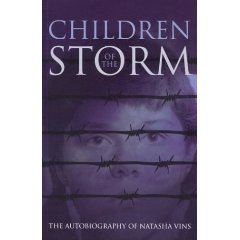
Some of you may remember the name of Georgi Vins. He was a Ukrainian pastor in prison for his “religious activities” in the Soviet Union several years ago. I was a BJU student praying for him in the Slavic Mission Prayer Band in the late 70s, and it was with great joy I heard years later that he had been exiled to the USA in exchange for Soviet spies.  Children of the Storm, written by his daughter, Natasha, and published by BJU Press, tells of her perspective during those years of persecution.

Natasha was about nine years old when persecution began in her school (though ridicule of Christianity had begun years before), and it seemed to increase as the years went by. Teachers would hold her up for ridicule in front of her classmates and blame her for her class’s not making it into certain competitions. She was assigned to write a report on a boy held up as a Soviet hero who turned his father in to the KGB for keeping back a little of his grain for his starving family. The other children began to taunt and threaten her or just avoid her. She was threatened with being removed from her home and “re-educated.” These things struck a chord with me when I first read this book because my youngest was at the age Natasha was when some of this was happening, and I just could not imagine him going through these things. Yet as it all struck me as so sad, the Lord reminded me that He marvelously kept her through that time. And she was not even saved yet!

In later years she had a teacher who had similar interests, befriended her, was kind to her, and then began to undermine her Christian beliefs. This time Natasha listened, thought some of what her teacher said made sense, and began to question. When her father came home from a prison camp and she had an opportunity, she talked with him. Imagine coming home from being in prison for your faith to have your own daughter question your faith. Yet he did not express anger or disappointment: he just answered her questions as best he could. Not long afterward Natasha was saved.

At this time and place one truly had to count the cost of following Christ. Natasha was denied finishing her studies in her field of choice because of her Christianity. Her father had had to go “underground” by this time and sent word that he would like her to join him in the printing ministry. She helped for many years in vital ways, and even got to see her father here and there. Once they were to meet with someone who at the last minute had to postpone meeting with them for a couple of hours. Natasha and her father used the time to walk around the city and talk. He thought it highly likely that he would be arrested again, and his talks with her that day helped her to make it through the time when he was indeed arrested. Imagine having to prepare your child not for the remote possibility but for the very real likelihood of your imprisonment…and to do so in a way that does not leave her mourning or sad or bitter or feeling sorry for you or herself, but leaves her strengthened and resting in the Lord.

Natasha’s grandmother was also arrested when she was in her sixties and thought she would die in prison, yet the Lord delivered her.

The book tells also of Natasha’s mother and siblings, of visits to her father and grandmother in prison, of the persecuted church, of struggling to maintain a Christian attitude toward persecutors, of their reaction when her father was suddenly and unexpectedly exiled, of the family’s preparing to join him, of their impressions of America: one of the younger siblings was astounded that everyone carried Bibles to church. Natasha wept upon seeing a Christian bookstore. They left Russia with sorrow because it was their homeland, but before too long they began to see how the Lord could use them in the USA.

The epilogue of the book tells of the Lord’s help through their adjustments to the US, and then opportunities for ministry by publishing newsletters and several books and establishing a mission. After 11 years of exile, in 1990, Pastor Vins was able to make several return trips to the former Soviet Union, visiting and preaching openly, discussing with church leaders how the mission in America could best help them. He passed away Jan. 11, 1998, leaving not only a continuing ministry, but a legacy of godly man and his family.

Book Review: It Happens Every Spring

Gary Chapman and Catherine Palmer coauthored It Happens Every Spring, the first of a series, in order to illustrate through fiction some of Chapman’s teachings about dealing with seasons of marriage. I don’t think I have read any of Chapman’s books, but I have enjoyed several of Palmer’s.

The group of ladies in different stages of marriage meet in the “Just As I Am” beauty salon (though I love the truth of the song by the same name, I thought it was kind of ironic for the name of a place where people go to change something about themselves) which also has a tea room where the ladies chat while waiting for their appointments.  Though we see glimpses into all of the marriages, the main focus of this book is on Brenda and Steve, a middle-aged couple whose children are grown and gone, one to the mission field and two to college. Brenda’s dreams of spending their empty nest years doing things together are dimmed when Steve finds a second wind in a new career and is gone from the house most of the time, even taking clients out to eat most evenings a week. They both know that they have problems, but they both withdraw and inwardly blame the other, until the resulting vulnerability of Brenda brings the marriage to a crisis.

I thought the subject was handled well and the changes in point of view illustrated how each other’s behavior looked and was interpreted by the other. The conflicts and feelings were realistically expressed and handled. The other ladies show a great range in ages and personalities as well as seasons in relationships. Even though in some places it seemed obvious that the plot was fitted around Chapman’s teaching points, overall if flowed well and the book was a good read. I am looking forward to the next in the series.

This book review is being linked to Semicolon’s Saturday Review of Books.

When someone tells me I am doing something wrong…

…what should my response be?

Well, my usual (inward) reaction is to think, “Who do you think YOU are?” or to think of their flaws. Not a very spiritual reaction, is it?

On the one hand we all know we are far from perfect, but on the other hand, we bristle when anyone points out an imperfection. Really, we should just be grateful it doesn’t happen as often as it could.

These days we feel that if anyone tries to reprove us about anything, they’re judging. But what does the Bible say?

As an earring of gold, and an ornament of fine gold, so is a wise reprover upon an obedient ear. Proverbs 11:12.

Reprove not a scorner, lest he hate thee: rebuke a wise man, and he will love thee. Proverbs 9:8.

The way of a fool is right in his own eyes: but he that hearkeneth unto counsel is wise. Proverbs 12:15.

A wise son heareth his father’s instruction: but a scorner heareth not rebuke. Proverbs 13:1.

The ear that heareth the reproof of life abideth among the wise. He that refuseth instruction despiseth his own soul: but he that heareth reproof getteth understanding. Proverbs 15:31-31.

A reproof entereth more into a wise man than an hundred stripes into a fool. Proverbs 17:10.

Seest thou a man wise in his own conceit? there is more hope of a fool than of him. Proverbs 26:12.

What if the reprover isn’t very kind about it? Though there are instructions throughout Scripture about how to rebuke someone in a right way, there is also throughout Scripture the principle that I am supposed to do what’s right regardless of what the other person does. In all of the instructions in Ephesians 5 and 6 about relationships, it does not say, “You do this IF he does that.” No, each person is responsible for the instructions given to him or her whether the other person fulfills his or her responsibilities as instructed. And in this, too, just because someone doesn’t correct us in a “right” way doesn’t mean we’re off the hook and can write off whatever they’re saying.

But what if the person really is judging? We just can’t please everyone. Wherever our convictions are, someone will always be more conservative, and usually in a heartfelt rather than a Pharisaical way, even if that might be what they sound like — usually they do have some reason for the convictions they have. Romans 14:3 does say, “Let not him that eateth despise him that eateth not; and let not him which eateth not judge him that eateth: for God hath received him” in regard to the disputations over eating meat, and we can extract that principle of not judging the one whose convictions are looser than ours or despising the one whose convictions are stricter than ours and apply it to other areas of difference where the Bible doesn’t give clear instructions. But Paul does go on in the rest of that chapter to make the case that sometimes we need to restrain ourselves even from something we might feel it is all right to do if it offends someone else. Paul says in I Corinthians 8:12-13, “But when ye sin so against the brethren, and wound their weak conscience, ye sin against Christ. Wherefore, if meat make my brother to offend, I will eat no flesh while the world standeth, lest I make my brother to offend.”

How unlike the spirit of many Christians in this age, in which the attitude is often, “If you’ve got a problem with something I am doing, it is YOUR problem and you’re being a judgmental hypocritical Pharisee.” And then often each side creates schisms by trying to drum up supporting opinions from others.

Christ did have harsh words for true Pharisees, but if you study out those instances in Scripture, it was a far different situation than what we have today when one earnest Christian approaches another about something in his or her conduct. The Pharisees were not true believers and were basing their acceptance before God on their excessive works, rituals, and rites that went far beyond what God outlined in the Old Testament law. It is totally uncalled for to name another Christian brother among their ranks just because he has a different view of things than we do.

So how should I respond if someone tells me I am doing something wrong? In meekness, not anger and defensiveness, I should assume they have the best intentions and examine what they say, bringing it before the Lord to see if it is something truly wrong, or if it is something that is all right, but I should refrain myself for the sake of that person’s conscience. If it is something I still free to do, I should still react kindly to the person doing the rebuking. Maybe they can accept that the issue is an honest and allowable difference of opinion; maybe not. But they are a lot more likely to if we handle the matter with grace (even though it stings) than if we react harshly.

If we’re truly in the right, we have the example of Christ to emulate in I Peter 2:

19 For this is thankworthy, if a man for conscience toward God endure grief, suffering wrongfully.

20 For what glory is it, if, when ye be buffeted for your faults, ye shall take it patiently? but if, when ye do well, and suffer for it, ye take it patiently, this is acceptable with God.

21 For even hereunto were ye called: because Christ also suffered for us, leaving us an example, that ye should follow his steps:

22 Who did no sin, neither was guile found in his mouth:

23 Who, when he was reviled, reviled not again; when he suffered, he threatened not; but committed himself to him that judgeth righteously:

24 Who his own self bare our sins in his own body on the tree, that we, being dead to sins, should live unto righteousness: by whose stripes ye were healed.

25 For ye were as sheep going astray; but are now returned unto the Shepherd and Bishop of your souls.

What shall we do?

I am in the book of John for my devotions just now, and this morning I came across this passage, a conversation that took place when the people among the 5,000 who were miraculously fed came looking for Jesus the next day:

26 Jesus answered them and said, Verily, verily, I say unto you, Ye seek me, not because ye saw the miracles, but because ye did eat of the loaves, and were filled.

27 Labour not for the meat which perisheth, but for that meat which endureth unto everlasting life, which the Son of man shall give unto you: for him hath God the Father sealed.

28 Then said they unto him, What shall we do, that we might work the works of God?

29 Jesus answered and said unto them, This is the work of God, that ye believe on him whom he hath sent.

That last verse is one of the most precious to me. There is no other “work,” no ritual, no hoping the good things outweigh the bad that will make me acceptable to God.

No merit of my own His anger to suppress.
My only hope is found in Jesus’ righteousness.

For me He died, For me He lives,
And everlasting life and light He freely gives.

(Words and music by Norman J. Clayton)

Green Leaf in Drought

In 1950, Arthur and Wilda Mathews and their 13 month old baby, Lilah, traveled to Hwangyuan, China. China had fallen to Communism, and other missionaries were leaving, yet the Chinese church had invited them to come, with the approval of the Communist government. They felt this was a miraculously opened door God would have them go through.. Yet, when they arrived, they could sense that all was not well. The Christians pastors who met them were strained, and they discerned that between the time of their invitation and arrival, the Chinese learned that association with the white people would be a liability under Communism, not a asset. The Mathews thought perhaps then that, if they could not be a help to the church, they could endeavor to evangelize the unreached Mongols in the area and nearby. They had a few weeks in which to minister, but soon found that they were restricted in ways they could help. They endeavored to set up an inn with which to reach the Mongols, but Chinese troops took it over the day before it was to open. Arthur protested, but soon found it would have been wiser to have said nothing. In two days a policeman came to the mission compound to announce that no one there could do village work without permission, and the white people were forbidden everything: they could not have meetings outside the compound, they could not give out tracts or dispense medicine. They were restricted to the mission compound.

They finally decided that since they were more of a hindrance than a help, they would apply for exit visas. They thought, since the government did not want them, they would be allowed to leave quickly, and so gave away or sold dishes, curtains, etc., keeping just the bare minimum to function until they could leave. Arthur was summoned to the police station and asked to sign a statement that he was for world peace. He had heard of another missionary having to sign some document before leaving, so he signed without thinking much of it. The government official then asked what contribution Arthur was then willing to make toward world peace, outlining a plan in which Arthur would go to India and essentially be a Communist spy. Arthur realized that the Communist definition of world peace was a world dominated by communism, and of course could not consent.

A government official called Arthur in and promised his exit visas if he would do something for them, like write a report of five other missionaries. At first Arthur did write glowing reports of the missionaries in question, but someone told him he dare not turn that in: the Communists would change what he had written but keep his signature. So Arthur threw his report in the fire and told the official he could not be a Judas. The official then told him that he could have given him a pass, if he had cooperated, but now a charge had been laid against him which must be investigated, and “investigations take a long time.”

Thus began a two and a half year ordeal. Their provisions from their mission were frozen by the government, which made Arthur submit a report of what he would need, and then they doled out to him much less than what the report said he needed. Every victory they mentioned in a letter seemed to be immediately challenged by the enemy of their souls: once when they wrote what a blessing Lilah was, she then came down with scarlet fever, and they almost lost her. All of them had turns being ill. Eventually they were told that no one could speak to them, and they could only leave home to draw water from the creek and get food.

They wrestled with the “what-ifs” and the frustration of what they called “second causes,” finally coming to the conclusion that they had to trust that the Lord was in control and had them there for a reason, though it was hard to discern that reason when they were so restricted. Yet the Lord did use them even when they could not speak to the people. The few weeks they had had to minister before restrictions set in, people knew their hearts and saw their love. When the Mathews could no longer speak openly, the people saw them in tattered clothes, persecuted, attacked by illness without much medical aid, laughed at, jeered, humiliated, doing menial, degrading work just to survive, tantalized by the government offering release and then not giving it or doling out money that was theirs in the first place. They saw the Lord provide miraculously for them in many ways. Yet more than that, they saw them endure graciously and joyfully until, finally, the Mathews became the last CIM missionaries to leave China.

How the Lord provided for them and ministered through them in unexpected ways are some of the most exciting parts of the book Isobel Kuhn wrote of their story titled Green Leaf in Drought. She says,

But most amazing of all was their spiritual vigour. Whence came it? Not from themselves: no human being could go through such sufferings and come out so sweet and cheerful. As I was in a small prayer meeting… one prayed thus: ‘O Lord, keep their leaf green in times of drought!’ I knew in a moment that this was the answer. Jeremiah 17:8: “He shall be as a tree planted by the waters, and that spreadeth out her roots by the river, and shall not see when heat cometh, but her leaf shall be green; and shall not be careful in the year of drought, neither shall cease from yielding fruit.” That was it! There was an unseen Source of secret nourishment, which the Communists could not find and from which they could not cut them off…That is needed by all of us. Your drought may not be caused by Communism, but the cause of the drying up of life’s joys is incidental. When they dry up — is there, can we find, a secret Source of nourishment that the deadly drought cannot reach?…Is it possible for a Christian to put forth green leaves when all he enjoys in this life is drying up around him?

The answer, by God’s grace, is yes!

Poetry Friday: To a Waterfowl

I have always enjoyed poetry, but I have neglected it in recent years. I have enjoyed seeing Poetry Friday selections at Findings and Semicolon, but this is my first time to participate.

I probably first read William Cullen Bryant’s poem “To a Waterfowl” in college, but the first time it really stood out to me was when Elisabeth Elliot quoted some of these stanzas in her book The Savage My Kinsman after her husband’s death.


Whither, ‘midst falling dew,
While glow the heavens with the last steps of day,
Far, through their rosy depths, dost thou pursue
Thy solitary way?

There is a Power whose care
Teaches thy way along that pathless coast,–
The desert and illimitable air,–
Lone wandering, but not lost.

Thou’rt gone, the abyss of heaven
Hath swallowed up thy form; yet, on my heart
Deeply hath sunk the lesson thou hast given,
And shall not soon depart.

He, who, from zone to zone,
Guides through the boundless sky thy certain flight,
In the long way that I must tread alone,
Will lead my steps aright.

As a young wife then I empathized with Elisabeth’s picking up and going forward in the comfort of God’s care after the loss of her husband and was comforted with the thought that, if the Lord should ever ask me to “tread alone,” He would lead me and care for me, too. Even within 28 years of marriage, there have been many days of treading alone while my husband traveled, and I have been comforted to know that I am never truly alone.

The rest of the poem, which describes Bryant’s observation and thoughts of the bird’s activity, can be found here along with some instructive links. Becky’s Book Reviews is hosting Poetry Friday today.