Lord, with glowing heart I’d praise Thee,
For the bliss Thy love bestows,
For the pardoning grace that saves me,
And the peace that from it flows:
Help, O God, my weak endeavor;
This dull soul to rapture raise:
Thou must light the flame, or never
Can my love be warmed to praise.
Praise, my soul, the God that sought thee,
Wretched wanderer, far astray;
Found thee lost, and kindly brought thee
From the paths of death away;
Praise, with love’s devoutest feeling,
Him Who saw thy guilt-born fear,
And the light of hope revealing,
Bade the blood-stained cross appear.
Praise thy Savior God that drew thee
To that cross, new life to give,
Held a blood sealed pardon to thee,
Bade thee look to Him and live.
Praise the grace whose threats alarmed thee,
Roused thee from thy fatal ease;
Praise the grace whose promise warmed thee,
Praise the grace that whispered peace.
Recently I saw the saying, “Don’t look back: you’re not going that way” on Pinterest, and now it seems like I am seeing it all over the place.
Is that good advice? It can be sometimes, if looking back is keeping you from moving forward, if it is keeping you from obedience, if it tempts you in any kind of wrong way, if it causes you to wallow in regret instead of repentance or instead of learning a better way, if it fuels your longing for something or someone you should not have.
We don’t know all the reasons Lot’s family was told not to look back, but when Jesus admonished His hearers to “Remember Lot’s wife,” who did look back and was turned into a pillar of salt, the context was that of the coming of the kingdom of God, and just after mentioning her, He said, “Whosoever shall seek to save his life shall lose it; and whosoever shall lose his life shall preserve it.” Clearly when God says, “Go!” then it is not time to look back.
But are there times to look back? This depiction of the saying above amused me, because in context, not looking back would be a major safety hazard!
This one also makes a good point:
There are times God tells us to look back. Just this morning I read, “Hearken to me, ye that follow after righteousness, ye that seek the Lord: look unto the rock whence ye are hewn, and to the hole of the pit whence ye are digged” (Isaiah 51:10). It is good to look back at where the Lord found us and where He brought us from. Many times in both the Old and New Testaments, a prophet, preacher, or apostle recounted Israel’s history to them, reminding them of their unfaithfulness and His faithfulness and mercy and grace. They were told to “remember all the way which the LORD thy God led thee these forty years in the wilderness, to humble thee, and to prove thee, to know what was in thine heart, whether thou wouldest keep his commandments, or no” (Deuteronomy 8:2), “Remember the days of old, consider the years of many generations: ask thy father, and he will shew thee; thy elders, and they will tell thee” (Deuteronomy 32:7), “Remember his marvellous works that he hath done, his wonders, and the judgments of his mouth” (I Chronicles 16:12).
A couple of churches mentioned in Revelation were admonished to “Remember therefore from whence thou art fallen, and repent, and do the first works; or else I will come unto thee quickly, and will remove thy candlestick out of his place, except thou repent,” (Revelation 2:5), and “Be watchful, and strengthen the things which remain, that are ready to die: for I have not found thy works perfect before God. Remember therefore how thou hast received and heard, and hold fast, and repent. If therefore thou shalt not watch, I will come on thee as a thief, and thou shalt not know what hour I will come upon thee” (2:2-3).
The Psalmist encouraged himself (here and here and here, among other places) by looking back and remembering how God had met his needs and faithfully dealt with him in the past.
Peter said, “This second epistle, beloved, I now write unto you; in both which I stir up your pure minds by way of remembrance: That ye may be mindful of the words which were spoken before by the holy prophets, and of the commandment of us the apostles of the Lord and Saviour” (I Peter 3:1-2).
So, do we look back or do we not look back? We can’t live life by catch phrases. There are times and reasons to look back, but there are times and reasons not to look back: it depends on what we are looking at and why and what effect it has on us.
I waited patiently for the Lord; and he inclined unto me, and heard my cry.
He brought me up also out of an horrible pit, out of the miry clay, and set my feet upon a rock, and established my goings.
And he hath put a new song in my mouth, even praise unto our God: many shall see it, and fear, and shall trust in the Lord.
Blessed is that man that maketh the Lord his trust.
“Community” has become kind of a buzzword over the last year or two. As an introvert, I tend to prefer time alone to a lot of community, but few, if any, introverts want to be complete hermits. Everyone needs some interaction with other people. For Christians in particular, the Bible instructs to do certain things to, for, or with others:
Wash one another’s feet—John 13:14.
Love one another—John 13:3; 15:12, 17; Romans 13:8; I Peter 1:22; I John 3:11, 23; 4:7, 11.
In honor preferring one another—Romans 12:10.
Don’t judge one another—Romans 14:13.
Receive one another—Romans 15:7.
Salute one another—Romans 16:16.*
Greet one another—I Cor. 16:20, II Cor. 13:12, I Peter 5:14.
Serve one another—Gal. 5:13.
Don’t provoke one another or envy one another—Gal. 5:26.
Bear one another’s burdens—Gal. 6:2.
Forbear one another in love—Eph. 4:2, Col. 3:13.
Forgive one another—Eph. 4:32, Col. 3:13.
Teach and admonish one another with song—Col. 3:16.
Comfort one another—I Thess. 4:18.
Edify one another—I Thess. 5:11.
Exhort one another— Heb. 3:13; 10:25.
Consider one another to provoke unto love and good works—Heb. 10:24.
I’m told that there are over 50 “one another” passages in the Bible, but these are the ones I found, which would keep me busy for a very long time.
The Bible also tells us we should “Not [forsake] the assembling of ourselves together, as the manner of some is; but [exhort] one another: and so much the more, as ye see the day approaching” (Hebrews 10:25). The early disciples “continued stedfastly in the apostles’ doctrine and fellowship, and in breaking of bread, and in prayers” (Acts 2:42).
So engaging with other people, and especially other believers, is vitally important. Yet any truth can be taken too far.
Our church has been going through Tim Keller’s “Gospel in Life” video series in small groups on Sunday nights. One emphasis in the series has been on the implications of the gospel in every area of life, not just initial salvation; the other emphasis has been on community. My husband and I have had mixed emotions about the study (perhaps another post for another time), but it has convicted me of my tendency to keep too much to myself and the need to be actively involved in the life of others and to be open to their involvement in mine.
But one of Keller’s statements jarred me: “We will not know God, change deeply, nor win the world apart from community.” I take strong exception to that. For me personally, the times I feel I am best getting to know God the most deeply and am most subject to change are times alone with Him and my Bible. Though preaching, church services, and discussions with others may enhance that, it can’t replace or supersede that. Even in listening to preaching, I’ve usually derived more from it those times I’ve been unwell at home and listened to a sermon online while having my Bible program and Word document open for notes. I would not say that time with community is more important or necessary than time alone. Sometimes, frankly, community can be a distraction to growth.
And even though as Christians we can help strengthen each other by praying for each other, reminding each other of what the Bible says, and helping each other in practical ways, there are times we need to be alone with God and times we have to stand alone with Him.
Think of Joseph, separated from family, friends, and any godly influences when he was sold by his brothers into slavery. If he had not known how to walk with God alone, his story would have been much different than the one we have recorded for us.
Though Paul traveled and ministered with companions, at times he had to stand alone.
Jesus, our perfect example in all things, ministered to crowds, attended gatherings, met with the small group of His disciples and the smaller group of Peter, James, and John, yet He also went out alone to pray often and had to stand alone in Gethsemane and through His trial.
Community is a gift from God, but community doesn’t always mean a crowd. Jesus said, “Where two or three are gathered together in my name, there am I in the midst of them” (Matthew 18:20).
Those of us who tend to aloneness need to be reminded that God made us to need, serve, and interact with others, but those who tend to avoid aloneness need to be reminded that sometimes it is a necessity. Either way we are wired, there are times for community and times for solitude. Sometimes God wants to spend time with us alone and wants us to stand alone with Him, and in those times He will give us the grace to do so.
Even though I’ve been discussing The Hidden Art of Homemaking by Edith Schaeffer a chapter at a time at The Hidden Art of Homemaking Book Club, I wanted to write an overall review to have one post to refer back to when discussing the book. Too, I thought perhaps some who weren’t interested in reading the weekly chapter summaries might enjoy perusing one smaller review.
The basic theme of the book could be summarized in this quote from it:
“If you have been afraid that your love of beautiful flowers and the flickering flame of the candle is somehow less spiritual than living in starkness and ugliness, remember that He who created you to be creative gave you the things with which to make beauty and the sensitivity to appreciate and respond to His creation” (p. 109).
As a teen I struggled with whether the desire to look “pretty” and dress nicely was a fleshly one, and as a young woman I had the same struggles in regard to wanting an attractive home. Was it a waste of the resources God gave me to use them in such a way, or would it be in better keeping with Christian character to buy bargain basement items, no matter whether they suited me? Were decorative items wasteful and selfish or an enhancement?
It helped me greatly to realize that God could have made the world simply functional, but he made it beautiful as well. Another help was realizing that the Proverbs 31 woman dressed in “coverings of tapestry; her clothing is silk and purple,” the finest in her day.
I read Edith’s book as some point during this time, and I remember feeling so relieved that my natural inclinations were okay. She discusses the principles above, and the principle of balance: we have to keep our artistic desires within the context of our finances, our season of life, our responsibilities to our families and our calling in life at any given point. It’s possible to go overboard. Yet within those contexts, God gives us great freedom of self-expression which in turn can be used to glorify Himself and draw others to Him.
She discusses in turn (these are all linked to my discussions of each chapter):
She does concede that in some cases we may only be able to cultivate an appreciation for some of these areas rather than a talent in them, and she acknowledges that probably no one can incorporate all of them at once, but she makes a strong case for each one and brings out a variety of ways to employ them in our homes.
The book isn’t flawless: some of its examples and illustrations are a bit dated (it was originally published in 1971), sometimes Edith can get just a touch preachy, sometimes she goes on and on with examples when we’ve gotten the point already. But overall it is great encouragement and inspiration to employ creativity. I enjoyed perusing the book again.
I am sure that there is no place in the world where your message would not be enhanced by your making the place (whether tiny or large, a hut or a palace) orderly, artistic and beautiful with some form of creativity, some form of ‘art’ (p. 213).
(This will also be linked to Semicolon‘s Saturday Review of Books.)
I read The Magician’s Nephew by C. S. Lewis for Carrie‘s Chronicles of Narnia Reading Challenge. It’s the fifth book in order of publication but the first book in the Narnian time line. I liked reading it as the fifth book very much, and I’ll tell you why in a moment.
The story opens with two children, Digory and Polly, meeting. Polly lives in London, and Digory has just come there to stay with an aunt and uncle because his mother is very ill and his father is in India. Digory is not happy about leaving his pony and nice home in the country to come to London, and he is concerned about his mother, but after his meeting with Polly gets off to a shaky start, they become friends.
Digory’s uncle is thought by some to be mad, but if he’s not exactly mad, he’s at least strange. One day Digory and Polly go exploring in an attic corridor that seems to run along the length of the row of houses (the description of stepping on the rafters reminds me of a description of Lewis doing the same thing when he has a boy in a biography I read years ago – I don’t remember which one). They’re trying to get to an empty house to explore, but they miscalculate and find themselves in Uncle Andrew’s attic room. He dabbles in magic and has made some rings which he thinks sends people to other worlds – at least that seems to be what’s happened to the guinea pigs he has sent through. He suddenly sends Polly through and then manipulates Digory into going after her.
The children find themselves in what looks like a land of ancient ruins, where Digory inadvertently awakens an ancient evil, which follows them to London and causes a ruckus. In trying to get everyone back where they belong, they end up in an uninhabited world, and witness the creation of Narnia, beautifully and wonderfully described.
But they’ve brought the evil with them into the brand new world on its first day, which Aslan predicts will cause further evil later, but he promises to “see to it that the worst falls upon myself,” an echo of Christ’s taking the punishment for our evil on Himself.
More of those echoes to Biblical truth are found when Aslan breathes life into his creatures, when Aslan questions Digory as to how the evil came to be in Narnia, and Digory finds that Aslan won’t let him fudge the truth at all, when Digory concludes “the Lion was not at all the sort of person one could try to make bargains with,” with the freedom of choice that might lead to evil and its consequences, when Digory is sent to retrieve a particular apple from a particular tree enclosed by a particular gate and reads a sign that one must come through the gate, that stealing or climbing over the wall will lead one to despair, when Digory is tempted by forbeidden fruit, when Aslan welcomes him back from his quest with “Well done,” and probably in other ways as well which I am not remembering. With this book as well as the others, as Aslan told the children in Voyage of the Dawn-Treader, “You were brought to Narnia, that by knowing me here for a little, you may know me better there.”
I’m leaving our great chunks of the story on purpose so as not to spoil it for those who haven’t read it yet. But this book as well as the others leaves me with an appreciation of its underlying truths and a wistfulness for Narnia.
And personally, I think I got so much more out of this book reading it at this stage rather than the beginning because of the thrill and anticipation when I recognized certain connections – realizing just who the children were waking up, recognizing the lamppost in the woods as that lamppost, finding out who Digory turns out to be, etc.. If I had read this book first I think I would have had a hard time caring much about what was going on with Digory and Polly at the beginning: I even had to almost fight to care this time, even knowing, from having read the book before, where their adventures were going to lead. But I suppose people who read this book first might experience the same thrill of recognition when they get to The Lion, the Witch, and the Wardrobe. It’s just hard for me to fathom experiencing these stories without starting there.
I ended up loving this book much more than I thought I would at the beginning, and I’m very much looking forward to The Last Battle next.
(This will also be linked to Semicolon‘s Saturday Review of Books.)
Five missionaries working in different outposts in Ecuador in the early to mid-1950s became burdened for a tribe of killers known then as the Aucas. Early encounters with the white man had not gone well when the rubber hunters came to harvest while also “plundering and burning the Indian homes, raping, torturing, and enslaving the people” (p. 14). But the Aucas killed not only white men, but any outsiders and even their own people. “Could Christian love wipe out the memories of past treachery and brutality?” (p. 14). The missionaries hoped so and longed to be a part of reaching this tribe with the love and gospel of Christ. Upheld by the truth that “Thou wast slain, and hast redeemed us to God by thy blood out of every kindred, and tongue, and people, and nation” (Revelation 5:9b), they began to plan and strategize as to how best to reach these hostile people.
Through Gates of Splendorby Elisabeth Elliot is the story of how these five men came to the Lord, came to be called to the mission field, their marriages, and how each was led to become part of “Operation Auca.” It’s no spoiler to say the operation ended in the death of the five, because that fact was known long before the book came to be and was probably a great impetus in it’s writing. But then it is not right, either, to say that is how Operation Auca ended, because God used it in the lives of the Aucas themselves as well as of people all over the world in the decades since. But knowing how the story “ends” lends a poignancy to the men’s lives and words.
The five men were:
Nate Saint, a brilliant pilot whose dreams of flying the big planes was cut short by an illness, but who went on to become a pilot for Missionary Aviation Fellowship, bringing much-needed supplies, human contact, and medical help to missionaries in outpost stations. He had an ingenious engineer’s mind which he used to great effect solving problems and improving life, and a healthy balance between doing everything in his power to ensure success and safety yet trusting God for the outcome.
Jim Elliot, from Portland, OR, intense and passionate, had a burning desire to share Christ with those who had never heard of Him, yet also had a humorous side and felt with George MacDonald that “It is the heart that is not yet sure of its God that is afraid to laugh in His presence” (p. 17).
Pete Fleming, from Seattle, WA, quiet, studious, would probably have been a college professor if he had not felt called to the mission field.
Roger Youderian, of Louistown, MT, severely affected by polio as a child, was called to the missionary field while serving in the military.
Ed McCully, from Milwaukee, WI, was planning to go to law school when a Bible study led him to abandon all to follow Christ wherever he might lead.
Even before Operation Auca was even remotely thought about, most of the men were willing to give themselves even unto death. Jim wrote in his journal:
“‘He makes His ministers a flame of fire.’ Am I ignitible? God deliver me from the dread asbestos of ‘other things.’ Saturate me with the oil of the Spirit that I may be a flame. But flame is transient, often short-lived. Canst thou bear this my soul – short life? In me there dwells the Spirit of the Great Short-Lived, whose zeal for God’s house consumed Him. ‘Make me Thy fuel, Flame of God.'” (p. 17).
Nate Saint, likewise, considered himself “expendable,” saying, “Every time I take off, I am ready to deliver up the life I owe to God” (p. 58), and Pete later wrote:
“I am longing now to reach the Aucas if God gives me the honor of proclaiming the Name among them…I would gladly give my life for that tribe if only to see an assembly of those proud, clever, smart people gathering around the table to honor the Son – gladly, gladly, gladly! What more could be given to a life?” (p. 26).
All of the wives, as well, were willing to live in “primitive” conditions and to be used in God’s service in whatever way He saw fit.
But they were not careless. Every step of Operation Auca was steeped in thought, discussion, sometimes disagreement, and prayer for the best outcome for all involved. And every step looked like it was going well.
What then led the Aucas then to kill the five men? When God opened the tribe to visits later, at first they said it was because they thought the men might be cannibals. In a later book I believe someone was told that the photographs the missionaries had scared them: they thought somehow it involved the soul of the person in the photograph. In Steve Saint’s more recent book, End of the Spear, he was told that an argument had broken out among the Auca men involving a woman, and one man wanted to prevent the bloodshed amongst the tribe and turned their anger towards the white men. It is possible that all of these factors played a part, or that as the Aucas (now known by their own name of Waodani [going by Steve’s spelling of it since he has worked with them for years, but I have also seen it as Huaorani or Waorani]) got to know white people and their language better, they may have felt more of a freedom of expression in later years that they did at first.
I first read this book in college, and the lives of these men and their wives and their dedication and love for the Lord touched me greatly. I have read it many times since, and it never fails to speak to me. The version I read this time is the same one I read in college, a brown around the edges 1977 fifth printing: the first printing was in 1956. It was interesting to see what I had underlined in previous readings and what stood out to me this time. It also touched off a lifetime of reading missionary biographies, reading just about everything Elisabeth Elliot has written and reading several other books about Operation Auca and the lives of those involved.
If you’d like to read more about any of these, I recommend the following:
The Dayuma Story by Rachel Saint, sister of pilot Nate Saint. Dayuma was the Auca girl who had escaped the tribe years earlier, taught the men Auca phrases, and later went back to share the gospel with her tribe.
The Savage My Kinsman by Elisabeth Elliot about her years of working with the Aucas after Jim’s death.
Unfolding Destinies by Olive Fleming Liefeld, widow of Pete Fleming.
End of the Spear by Steve Saint, Nate’s son. If you don’t read any others, I’d recommend this one as it is a more recent book and a fuller account of the events then and since, plus it is just plain good reading.
I’m sure there are other books and biographies out there (I have one of Nate Saint on my bookshelf that I’ve not read yet). but these are the ones I have read. In addition, Elisabeth Elliot touches on the experiences of her time in the Ecuadorian jungle in several of her other books. One of my favorites is in The Savage My Kinsman when she quotes William Cullen Bryant’s poem, “To a Waterfowl,” and applies it to herself, especially the last line: “He, who, from zone to zone, Guides through the boundless sky thy certain flight, In the long way that I must tread alone, Will lead my steps aright.”
There are also several films and film clips of interest:
Through Gates of Splendor, narrated by Elisabeth Elliot, using footage that she, Nate Saint, and Life Magazine had taken.
A “This Is Your Life” feature of Rachel Saint, part 1 and 2.
Beyond the Gates of Splendor, a documentary made 50 years after the events. This is one I would recommend above all the others if you only have time for one. It is in four parts on Vimeo (Part 1, 2, 3, and 4), but I found the audio a bit hard to hear.
I wanted to say just a word, too, to those who criticize missionary efforts and who believe that primitive tribes should be left as they are. By the Waodani’s own admission, the tribe probably would have become extinct now if someone had not come to tell them of a better way of life. Why would anyone want to deny them that? In Spirit of the Rainforest (different people and field, but also a primitive tribe) this rather lengthy quote explains some of their feelings (I started just to link to it, but I feel it is so important that I copied it here):
“The naba wants to know why you want to change the way you live out here in the jungle,” Keleewa said to Hairy after Doesn’t-Miss talked.
Hairy was surprised at the question. “Because we’re miserable out here. We are miserable all the time. The people from Honey [predominantly Christian village] came here and made peace with us many seasons ago and their village keeps getting better. We want that for us. If it means throwing spirits away and getting new ones, we will do it. [This is not something said lightly. Many were under the impression that they would be killed if they tried to get rid of their spirits.] But we need someone to teach us these new ways.”
Hairy didn’t have spirits because he was not a shaman. But he followed everything the spirits told his shaman. I knew my spirits would be very irritated if Hairy quit following the spirits. No one who has killed as often and as long s Hairy could ever stop it…
Doesn’t Miss talked with Keleewa for a while. Keleewa paused and thought how to say what the naba said. Then he told Hairy, “He says there are many people in his land that don’t think that he, or any of us, should be here helping you at all. They say that you’re happy here and that we should leave you alone. He wants to know what an experienced killer like you would say to them.”
Hairy grew even more serious. “I say to you, please don’t listen to the people who say that. We need help so bad. We are so miserable here and out misery never stops. Night and day it goes on. Do those people think we don’t suffer when bugs bite us? If they think this is such a happy place out here in the jungle, why aren’t they moving here to enjoy this beautiful life with us?”
Doesn’t-Miss was quiet. Then he got out of his hammock and walked down the trail…When he was too far away to hear, Hairy said to Keleewa, “Is he stupid? Doesn’t he have eyes? Can’t he see these lean-tos we call houses? Can’t he see us roam the jungle every day, searching for food that isn’t here, so we can starve slower? Can’t he see that our village is almost gone, that this move we are making now is our last hope to stay alive?”
Keleewa was slow to answer. He knew Hairy wouldn’t understand what he was about to say. “Most nabas think just like him,” Keleewa told Hairy, and shook his head because he knew he couldn’t explain why.
“Nobody’s that stupid,” Hairy snapped. “They must hate us. They think we’re animals” (pp. 180-183).
Why would even any non-Christian want to see a whole people group extinguished due to infighting or disease? Especially these days when we clamor to save the spotted owl and other endangered species? Shouldn’t endangered people be at least equally as important as endangered animals?
Would anyone in their right minds really want such practices as burying a widow along with her husband or killing twins or deformed babies to continue? So many primitive tribes practice these kinds of things.
Why deny these people the choice of hearing that there are other ways? Why not allow them to hear the gospel and let them make their own choice? So many who bask in the multitudes of freedoms we have here in the US would rather keep people like this in darkness in the name of preserving their culture. Most missionaries I know of these days consciously and conscientiously try not to “Americanize” the native churches but rather try to respect their culture and form churches within that culture while introducing healthier ways of living and civil practices. Who could possibly have a problem with that?
Thank you, Carrie, for allowing me to choose this book for the Reading to Know Book Club in a year of featuring classics. It truly is a Christian and a missionary classic, and I am glad folks are revisiting it or discovering it for the first time.
I’ll leave you with the song the men sang the night before they launched “Operation Auca,” and from which the title of the book is taken (words and thoughts are here.)
(This will also be linked to Semicolon‘s Saturday Review of Books.)
In a Sunday School lesson a couple of weeks ago, I can’t remember the exact context, but something came up about different ways saved and unsaved people react. One man pointed out that we came up with fairly tame reactions for the saved and fairly awful ones for the unsaved when actually saved people can display awful reactions and even unsaved people can display kindness, love, thoughtfulness, etc. That struck a chord with our teacher, who then spent the next two Sundays teaching about “Spiritual Snobbery.”
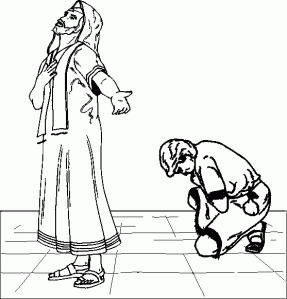
It jarred me a bit to think of it as “snobbery,” but that’s exactly what it is when we think we’re “better” in any way than anyone else. That led me to remember a situation when a young woman brought together her extended birth family and adopted family. The adopted family were Christians, the birth family primarily was not. Admittedly the circumstances were a bit awkward for everyone, made more so by two completely different cultures in the same room. But instead of the Christians in the room reaching out to the lost, they pretty much kept to themselves and ignored them, making them feel like outcasts and outsiders. The non-Christians didn’t approach the Christians saying, “Can you tell me how to get what you have?” There was nothing displayed that they’d want to have. Instead, they withdrew and kept to themselves.
By contrast, Jesus went out of His way to minister to the “outsiders” of His day: He took special pains to speak to the woman at the well, He called a tax collector to be one of His disciples, He ate with publicans and sinners, He accepted the love of a fallen woman, the hero of one of his parables was the Good Samaritan when the Samaritans and Israelites were enemies.
Our Sunday School teacher brought up Isaiah 5:21 (“Woe unto them that are wise in their own eyes, and prudent in their own sight!) and II Corinthians 10:18 (“For not he that commendeth himself is approved, but whom the Lord commendeth”), discussed some of the dangers of “spiritual snobbery” and some of Jesus’s rebukes of the Pharisees, and then discussed some ways to combat spiritual snobbery. I’d like to share the ways he mentioned along with some others that came to mind.
Also from the above passage, we were saved only by the blood of Christ due to His mercy and grace, not because of anything good in ourselves or any work we could do.
3. Remember any good thing we have is from God.
“For who sees anything different in you? What do you have that you did not receive? If then you received it, why do you boast as if you did not receive it?” (I Corinthians 4:7, ESV).
4. Cultivate genuine humility.
– See the difference between the Pharisee and the publican (Luke 18:9-14).
– “Have this mind among yourselves, which is yours in Christ Jesus, who, though he was in the form of God, did not count equality with God a thing to be grasped,but emptied himself, by taking the form of a servant, being born in the likeness of men. And being found in human form, he humbled himself by becoming obedient to the point of death, even death on a cross.” (Philippians 2:5-8, ESV)
5. Recognize that partiality is a sin incompatible with true religion.
Mark 12:30-31: “And you shall love the Lord your God with all your heart and with all your soul and with all your mind and with all your strength.’ The second is this: ‘You shall love your neighbor as yourself.’ There is no other commandment greater than these.”
7. Esteem others to be better than ourselves.
“Let nothing be done through strife or vainglory; but in lowliness of mind let each esteem other better than themselves” (Philippians 2:3).
8. Develop compassion.
Keep their end in mind if they don’t come to Christ, empathize with their trying to solve their problems without Him.
9. Remember common grace.
Because everyone is made in the image of God, even though we’re marred by sin, some still retain a reflection of Him. Rosaria Butterfield pointed out in Secret Thoughts of an Unlikely Convert that the gay community she came from was very caring of each other, and it was eye-opening when the gay community and the Christian community ended up side by side while trying to minister to someone in need.
10. Realize that even if we did every single thing right, we’d still have nothing to brag about.
Luke 17:10: “So you also, when you have done all that you were commanded, say, ‘We are unworthy servants; we have only done what was our duty.’”
Have you ever noticed a tendency toward spiritual snobbery in yourself? What has helped you to combat it?
“Brother, if any man thinks ill of you, do not be angry with him; for you are worse than he thinks you to be. If he charges you falsely on some point, yet be satisfied, for if he knew you better he might change the accusation, and you would be no gainer by the correction. If you have your moral portrait painted, and it is ugly, be satisfied; for it only needs a few blacker touches, and it would be still nearer the truth.” Spurgeon
The first sentence especially resonated with me. I was just discussing with my son yesterday that the first response to any criticism should be to examine it to see if there is any truth to it. I’m amazed at people who can’t take the merest suggestion that they might be doing something not quite right without becoming defensive and blowing up, or, in opposite fashion, becoming wounded and closing in on themselves.
Yet I have to admit, my first response to criticism isn’t, “Thank you: you’ve give me something to think about.” I might not say so out loud, but my first thoughts are likely to be something like, “You don’t understand,” or, “How DARE you!” or, “Oh yeah? Well take a look at yourself and deal with your own faults!” Not very pretty, is it? My first response should probably be, “Yes, and you don’t know the half of it!”
It should be no surprise to us that we’re not perfect, and no surprise that someone else notices that fact from time to time. Proverbs has much to say about hearing reproof:
For the commandment is a lamp; and the law is light; and reproofs of instruction are the way of life. Proverbs 6:23.
He is in the way of life that keepeth instruction: but he that refuseth reproof erreth. Proverbs 10:17.
Poverty and shame shall be to him that refuseth instruction: but he that regardeth reproof shall be honoured. Proverbs 13:18.
The ear that heareth the reproof of life abideth among the wise. Proverbs 15:31.
He that refuseth instruction despiseth his own soul: but he that heareth reproof getteth understanding. Proverbs 15:32.
A reproof entereth more into a wise man than an hundred stripes into a fool. Proverbs 17:10.
We can take comfort in the fact that God sees believers through His Son, Jesus Christ, and that once we savingly believe on Him, His righteousness is transferred to our account because He took our sinfulness on His. Because of His amazing grace, those who have believed on Christ for salvation become God’s children, and will have a home with Him in heaven. Our eternal life begins NOW, not when we die.
Yet until we get to heaven, we have a sin nature to contend with, and we’re instructed to “grow in grace, and in the knowledge of our Lord and Savior Jesus Christ” (II Peter 3:18). II Timothy 3:16-17 tell us: “All Scripture is breathed out by God and profitable for teaching, for reproof, for correction, and for training in righteousness, that the man of God may be complete, equipped for every good work” (ESV). Part of that growing, completion, equipping, is realizing those areas where we have a problem and then seeking God’s grace and relying on His Word to change us. So when we receive a criticism, instead of just brushing it off, we can see if God means to use it to show us something we need to know about ourselves.
There is only one perfect person in the universe, and as we behold Him, He changes us to be more like Himself: But we all, with open face beholding as in a glass the glory of the Lord, are changed into the same image from glory to glory, even as by the Spirit of the Lord. II Corinthians 3:18.
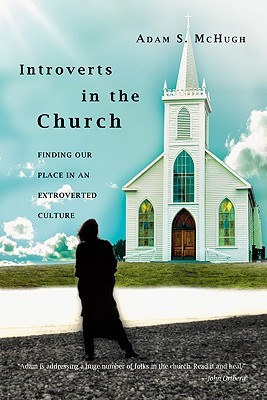
It was and wasn’t. Some parts of the book were extremely helpful, but some of it totally turned me off.
One of the main characteristics of introverts is that they’re energized by solitude. They’re not hermits, not all are shy, they do like socializing to a degree, but it drains them, whereas extroverts are energized by socializing. They also process things differently. Extroverts process by talking with others: they can speak and think at the same time, though sometimes they are more prone than introverts to speak before thinking (e.g., Peter). Introverts process things internally and take longer to do so, so sometimes they miss speaking up because they’re still trying to figure out what to say. Extroverts can handle a lot of stimulation: introverts, only so much. Introverts also “prefer depth over breadth” (p. 41). That doesn’t mean that extroverts have no depth: it just means that introverts may have only a few very close friends rather than a great number of casual friends, generally hate small talk, prefer to fully explore a few interests rather than experiencing a smattering of interests.
McHugh starts off by making the case that church life seems to be set up more for extroverts than introverts (see the post on his blog, The Top Five Things Introverts Dread About Church, one of my all-time favorite posts ever). He cites a survey indicating more people than not thought Jesus was an extrovert (though McHugh lists several qualities of both the introvert and extrovert from what we see of Jesus’s life and suggests that Jesus was the perfect balance between the two), examples of equating spirituality with sociability, of a church atmosphere resembling a “nonalcoholic cocktail party” where “there is a chatty, mingling informality…where words flow like wine” (p. 21) rather than quietness and reverence.
Introverts tend to process things slowly, so they might lag behind in conversation and therefore be uncomfortable. They prefer having more involved, meaningful conversation with one or two people rather than glad-handing everyone they see. They “can faithfully sit in the back pew of worship services, rarely talking to anyone and still feel a genuine connection to the community (p. 93). They probably prefer quieter forms of church worship and wouldn’t mind some intervals of silence in order to think and process.
McHugh emphasizes that neither approach is right or wrong, and most of us have some mixture of introvert and extrovert in us, though most of us are usually stronger one way than the other. He asserts that, just like there are a variety of spiritual gifts withing the church that are supposed to interact to make up the body, so the church needs different personality types, partly so that we can minister to different personality types. There are valuable ways introverts can minister that may not look just like the way extroverts do, and that’s ok. An introvert doesn’t have to change his personality to “fit in” God’s kingdom, though McHugh acknowledges that we all need to be stretched out of our comfort zones sometimes.
He cites various ways introverts can be misunderstood or can feel they don’t fit in. He tells of a few people whose pastors thought that fostering community meant having a lot of church activities and groups, and one was thought less than spiritual if one did not attend all or most of these, yet the introverts found them exhausting. Introverts may be thought standoffish. I admit I have seen some of this. Recently a pastor who is usually very gracious equated being “quiet and bashful” with being “self-absorbed,” and the solution seemed to be to stop being quiet and bashful rather than to find ways a quiet and bashful person can minister (although, as I said above, we do need to extend ourselves past our comfort zones sometimes, but anyone can be self-absorbed, introvert or extrovert). Those kinds of things hurt, yet I can’t say I carry the sense of woundedness McHugh seems to, but he does have a chapter on “Finding Healing” for those who do.
He does have some admonitions for introverts that I found helpful:
“It is natural for introverts to distance themselves from others to do the necessary work of internal processing, but too often we use that as an excuse for avoiding others, even when we have the social energy to engage” (p. 52).
We are “susceptible to an unhealthy degree of self-preoccupation” and “become mired in our inner worlds, to the exclusion of relationships and actions that would bring …healing and joy” (p. 59).
“Our inner reflections can become excessive to the point of inaction. Introversion should never be an excuse for laziness or sin. Understanding our introversion is not the end of our self-discovery and growth; it is a beginning point for learning to love God and others” (p. 59).
“The love that is the ultimate goal of the Christian life cannot be restricted to inner stirrings, but it must be expressed in self-sacrificial action. Healing will come en route. We stretch as we take risks and move beyond our comfort zones” (p. 59)
“We bless the body of Christ when we express our gifts within community and when we love at personal costs to ourselves” (p. 60).
“When we use our introversion as an excuse for not loving people sacrificially, we are not acting as introverts formed in the image of God. We who follow a crucified Messiah know that love will sometimes compel us to willingly choose things that make us uncomfortable, to surrender our rights for the blessing of others. We worship a God ‘who by the power at work within us is able to accomplish abundantly far more than all we can ask or imagine’ [Ephesians 3:20]. We must be always be open to the sovereign God who can shake us to our cores, who gives us the strength to transcend our humanness and to do things we never thought possible” (p. 63).
“Even when our resources are at their lowest point, even when we have nothing to offer, we work out of a power that can take our scant reserves and overwhelm people with a mercy that heals both body and soul” (p. 65)
“Sometimes we play the ‘introvert card’ in order to avoid taking a risk or doing something uncomfortable” (p. 136).
“Introverts may need to keep struggling through greeting times at church, because we need the constant reminder that the Christian life is never lived in isolation” (p. 193).
“God may call some people into a work for which they are not perfectly suited, for His greater glory” (p. 138).
“When Moses objected to God at the burning bush, saying that he was a clumsy speaker, God did not disagree with him…The power of the Holy Spirit gives us the ability to do things we couldn’t do otherwise” (p. 138).
But while we need to extend ourselves, there are things churches can do to minister to introverts and enable them to connect and minister. He doesn’t suggest that churches should “coddle” introverts or “create yet another target audience” (p. 193), but one of the main things churches can do is to recognize that there are different ways to energize, lead, worship, experience community. He spends much of the book discussing these factors.They can stop “communicating to introverts that their ways of living and relating and worshiping are inferior or unfaithful” (p. 193) and realize that though we hold to the same “paramount, indispensable values” (p. 23), we may have different ways of expressing them. “The truly healthy church is a combination of introverted and extroverted qualities that fluidly move together. Only in that partnership can we capture both the depth and breadth of God’s mission” (p. 30).
Someone I read thought he focused too much on leadership rather than lay people, but I didn’t think so personally: there are two chapters specifically on leadership, and many of his examples involve pastors, but I found much I could glean and apply to myself even within those chapters.
I found the majority of the book very helpful, but I had major problems with the chapter on “Introverted Spirituality” and some of the chapter on “Introverts in Church”. He recommends several Eastern practices that “move beyond the senses” (p. 70) and mystical and Catholic practices that I would be uncomfortable with. I do agree that “words and tangible images are signs pointing to God, but they are not God Himself” (p. 71), and that God said, “as the heavens are higher than the earth, so are my ways higher than your ways, and my thoughts than your thoughts” (Isaiah 55:9), but I very strongly disagree that “words have a way of trying to control Him” (p. 71) or that we need to seek Him beyond words, especially the very words that He breathed out for us to have until we see Him again. A former pastor used to call the Bible “divinely brief” – of all the infinite number of things God could have said and conveyed to us, this is what He wanted us to know and think about and learn from. In the chapter on “Introverts in the Church,” he opens the chapter with a quote from Neil Postman that “If an audience is not immersed in an aura of mystery and symbolic otherworldliness, then it is unlikely that it can still call forth the state of mind required for a nontrivial religious experience” (p. 187). Though there are times when we can be humbled and amazed by God’s “otherworldliness” and transcendence, and though there are mysteries in the Bible and about God Himself that we can never fully fathom, I don’t think worship is “mystical.” A speaker I used to hear in college called worship “worth-ship” – ascribing to God and acknowledging His worth, His majesty, glory, holiness, and His abundant other qualities – which we learn of through His Word, not “beyond our senses.” Peter, James, and John had one of the most amazing spiritual experiences ever when they saw Christ transfigured before their very eyes, yet when Peter referred to it, he went on to say we have a “more sure word of prophecy” in the Scripture than even that experience. I am also wary of a prayer form that involves “silence to quiet the mind and focus on a sacred word or phrase. Apophatic prayer tries to rid the mind of all images and forms so as to be open to encounter directly the Mysterious One. It is the desire of the meditator to listen to God rather than talk to God” (p. 71). I have read suggestions that the focusing on a single word or phrase while meditating may be an occultish practice. I don’t know about that, but I do know that Biblical meditation is not an emptying of the mind but rather a using the mind, mulling or thinking over. Right when I was in the midst of this book, I was at home from church sick one day and listened to a sermon by Jim Berg on “Let the Word of Christ Dwell in You Richly” from Colossians 3:16. He defined meditation as “peering intently with purpose” involving concentration, purpose, and focus on a particular passage. I’m not saying that every single practice McHugh mentions is wrong (though there are some I am more uncomfortable with than others) or that Christians might not be able to use some of them in beneficial ways, but I am very wary of extra-Biblical practices, and strongly disagree that introverts need to seek this kind of spirituality. Besides all of that, I am just more practically minded. When he was writing of a specific form he likes to use in prayer, my thought was, “Well, ok, if that helps you. But some of us just like to talk to God in prayer.” Admittedly sometimes my thoughts get scattered in prayer, and when they do I go back to what we call the Lord’s prayer (not to say it in a rote way, but to use it phrase by phrase as a jumping-off point) or the Psalms or one of the New Testament prayers like Colossians 1:9-14 or Philippians 1:9-11.
So…as I said at the beginning, much of the book was extremely helpful, but some of it raised some red flags for me.
(This will also be linked to Semicolon‘s Saturday Review of Books.)
Chapter 6 discusses “Gardens and Gardening,” and Edith applies some of the same principles as in other chapters, that people don’t necessarily need to become experts, get a degree, start a farm, etc., to participate and benefit by doing a little gardening, but they can start small, as she did with what we would call now container gardening, or with a small space of land. She lists many of the benefits of gardening (exercise, contributing to rather than taking from the environment, the pleasure and anticipation of planting something and watching it grow, etc.) and a few of the many Biblical allusions to planting.
And while I understand and agree with all of that, I have to confess, I am no gardener. My husband had a garden for a few years, but it was a battle royal to keep bugs from destroying it, and at certain times of the year it was more pressure that relaxation to keep up with it. I have not been able to spend more than a very few minutes on my knees since TM, even with a pad, so I am not keen to go start a garden myself. I have thought of starting some squash growing in a container or two, since often what I find in the store is so sad-looking, and have also thought of growing some herbs. I’d have to figure out better ways of battling the bugs – I cringe at spraying pesticides over something I am going to eat.
I do a little better with ornamental plants. Somehow both at our former house and this one, rose bushes have flourished despite me, not because of me. I think some of my first plants were hanging baskets, just the basic petunias, impatiens, and begonias. Last year I tried verbena for the first time, and this year some blue lobelia and pink Gerber daisies. At our last home there was a purple hydrangea bush that I just loved and wanted one here: the one I planted last year is putting forth buds (I can’t remember what color I bought, though. 🙂 Either pink or blue, as they didn’t have purple, but I think the color of the bloom primarily depends on the soil, anyway. I’m excited to see how they turn out). I do want to plant some bulbs some time for early spring blooms.
With this chapter, as well, as the others, if we have little or no experience at all in the given topic, we can start out small, learn as we go, and expand. I do enjoy walking around the plant sections at stores and seeing what kinds of things are there and wondering how I can incorporate them.
I do love how flowers can brighten up the area. We had none right next to this house, and I’ve enjoyed planting some since we’ve been here (oddly, the previous owner planted daffodils and a few other things behind the shed and in an area of the back yard that can’t be seen from the windows. Haven’t figured that out yet.)
This one came with this variety of plants all together: all I had to do was transplant it into this container. It has filled out nicely.
One of the spiritual parallels I’ve learned most with the small experiences I’ve had with plants is that of John 15:2b: “every branch that beareth fruit, he purgeth it, that it may bring forth more fruit.” The few that I have worked with need to be cut back sometimes. If they’re just let go, they may continue to grow to an extent but will look scraggly and sick or may even stop growing altogether. Cutting back – pruning or “deadheading” the spent flowers and even sometimes cutting back what looks like perfectly good growth – makes the plant, full, lush, bushy, healthy, ad produces many more flowers. This is one of the most comforting truths concerning suffering and loss: we may not know why God took a certain person or thing or closed a certain door, and there are many Biblical reasons for suffering, but one is this: we will grow spiritually in ways we would not have without that “pruning.”
More discussion on this chapter can be found here.













 Stray Thoughts