The Yuletide Angel

In The Yuletide Angel by Sandra Ardoin, someone mysteriously leaves gifts at the homes of the needy during Christmas season nights in the 1890s. The town dubs the mysterious visitor the Yuletide Angel.

No one knows that the Yuletide Angel is shy, timid Violet Madison.

No one except her neighbor, Hugh Barnes. Hugh had seen Violet on her mission one night, and ever since he has followed her at a discreet distance to protect her.

When Violet learns her brother is planning to marry soon, she begins to worry. Her brother inherited the family home and plans to bring his bride there. They plan for Violet to live with them, but she would feel like she’s intruding on their lives. Her father did not leave her much because he assumed she would marry. But she is plain and not well-spoken, and no one has shown an interest. What could she do to make her own way that would be socially acceptable? She has some ideas of things she could sell in the Hugh the grocer’s shop.

Hugh has been fond of Violet for a long time. He speaks cheerfully to her and tries to gently draw her out. He enthusiastically endorses her plan for selling her baked goods in his store.

Just when it seems their relationship is unfolding well, Hugh’s ne’er-do-well brother, Kit, shows up. When Hugh sees Violet and Kit together, he feels betrayed.

And on top of everything else, an unseen stalker is following Violet on her nightly rounds and stealing her gifts.

This was an enjoyable story. I appreciate that as a Christian author, Sandra is not afraid to deal with Christian issues outright rather than just hinting at them. Yet her style is not heavy or preachy.

As a novella, this was a quick read. But the characters and story arc were well-developed. All in all, a good quick read.

Last Christmas in Paris

Last Christmas in Paris: A Novel of World War I by Hazel Gaynor and Heather Webb opens with the beginning of WWI. Two friends from childhood, Will Elliott and Thomas Harding, head out for France to fight, enthusiastically expecting the war to be over by Christmas. Then they plan to meet Will’s sister, Evie, and her friend, Alice, in Paris for Christmas to celebrate.

But of course the war drags on much longer than the few months til Christmas.

Evie writes Will and Thomas with all the support and hope she can send. Will is not much of a writer, so Evie gets most of her news about him from Tom.

Over time, enthusiasm and naiveté wanes and the realities of war weigh them all down. Tom gets more discouraged by what he has seen and has to do.

Tom also faces pressure from his father’s illness and business troubles. His father owns and operates the London Daily Times and always planned for Tom to follow in his footsteps. Tom’s interests fall more into a literary and scholarly vein, and he has no interest in the newspaper, which causes tension with his father. But when his father falls ill, Tom is consulted. He can’t do much from France, so he asks his cousin, John, to step in. There has been some longstanding feud between Tom’s and John’s families, but Tom never knew what it was all about, and he has to hope John will keep the paper’s best interests in mind.

Evie, meanwhile, chafes at home. She wants to do something to help, but her mother insists that for girls in her class, the only acceptable activity is aiding her mother with her charities and looking for a suitable husband. But Evie branches out from her protective gilded cage. Though she puts herself at risk, she also grows through her efforts.

The book opens with an aged and ill Thomas planning to go to Paris for Christmas in 1968 to read one last letter from Evie. Most of the book is made up of letters, mostly between Tom and Evie, but also with Will, Alice, their parents, and Tom’s contacts at his father’s business. At different places throughout the novel, the scene switches back to Tom and his current situation and reflections over his life.

This book was not in my Christmas reading plans, not even on my radar until Becky mentioned it. It sounded interesting, and I needed a new audiobook, so I got it. Epistolary novels are not my favorite style of writing, but I have enjoyed some.

I am so glad I listened to this book. I enjoy historical fiction, and not as many books are written about the first world war. I like how this one shared details of everyday life in England as well as on the front.

But mostly I enjoyed the growth of Evie and Tom’s characters and their relationship with each other. From lighthearted banter to lifting each other up from the deepest discouragement, from heartbreak to hope, from misunderstanding to shared poetry, they get to know one another better than they ever had before but almost miss each other in the end.

Though there is some mention of God and prayer, this is a secular book. It has maybe three bad words, but is remarkably clean.

The audiobook is excellently done, with different narrators for the different characters.

This is a beautiful book, and I am so glad I listened to it.

Happy 42nd Anniversary with My Love

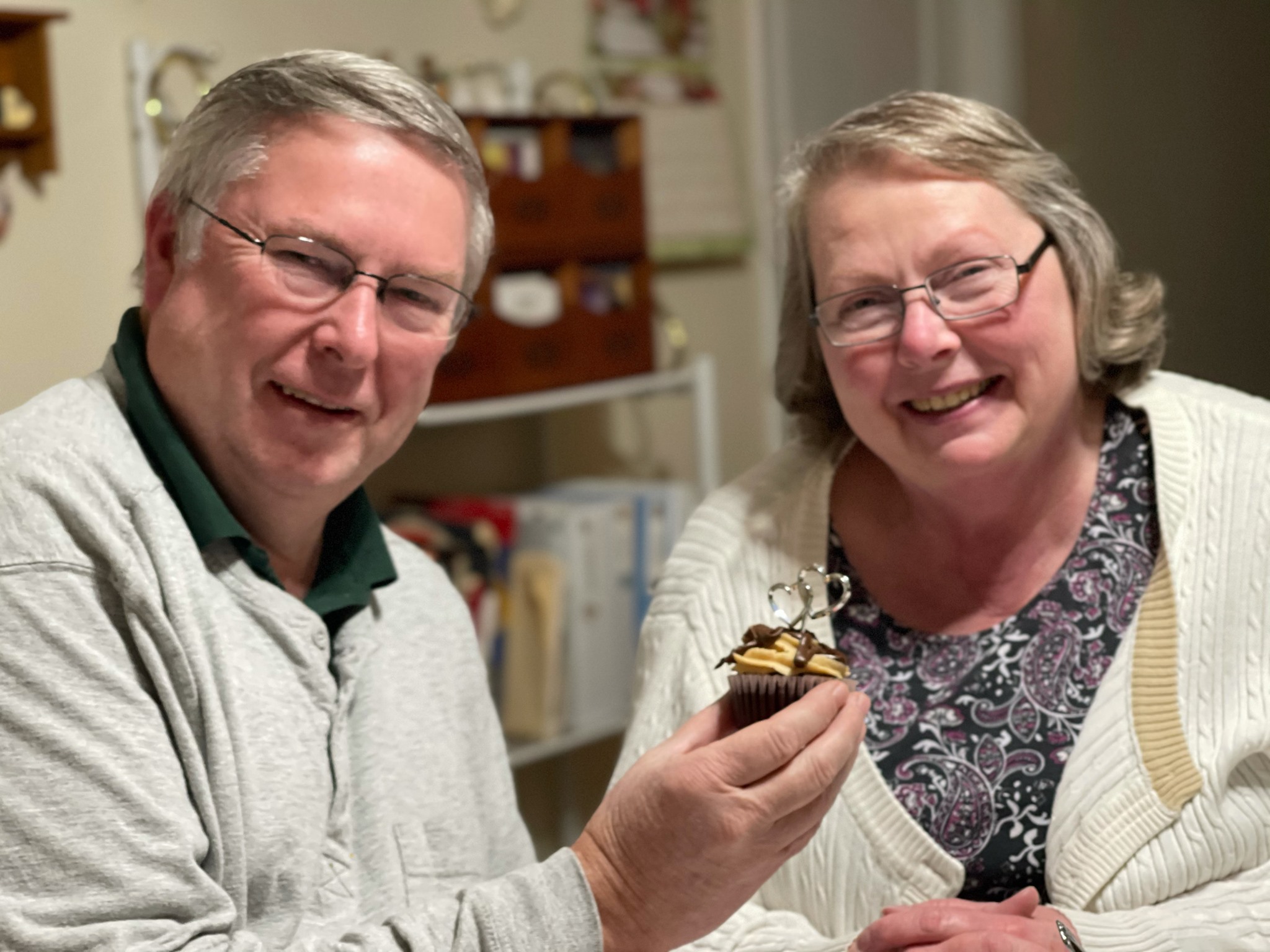
Today, my husband and I have been married 42 years!

180921_1832848657987_428678_n

Happy anniversary, hon! Love you much.

Why Does God Make Us Wait?

When our children were little, my husband and I learned that it wasn’t always a good idea to tell them about an upcoming event until it was nearly time for it.

If the event was a happy one, we’d get dozens of questions a day. How many days? What will we do? Can’t we do it sooner?

If the event was not one they were looking forward to, we’d get questions as well. Do we have to? Can’t we put it off?

With that in mind, I wondered why God promised Abraham a son without telling him the promise would be so long coming to fruition. Or why He had David anointed king so long before David came to the throne. Or why He told Adam and Eve about a coming Redeemer without letting them know He wasn’t coming for a few millennia. Or why we have no idea when His promised return will occur.

Doesn’t God know how torturous it is for us to wait? Besides the big-picture waiting, we often have to wait for a mate, financial provision, test results at the doctor’s office, and so one. How do we navigate waiting on a large or small scale?

I think first of all, God wants to grow our faith by our waiting. He doesn’t delight in torturing us. “He knows our frame; he remembers that we are dust” (Psalm 103:14). But we need to trust in His timing. He sent the promised Messiah “in the fullness of time.” Hundreds of threads came together to form the perfect time and setting for Jesus to be born. We don’t always know the details behind a wait, but we can trust God has good reason for it. One reason for the wait for Jesus to return is found in 2 Peter 3:9: “The Lord is not slow to fulfill his promise as some count slowness, but is patient toward you, not wishing that any should perish, but that all should reach repentance.”

I think God also wants to grow our patience. As a parent, I can’t hide all coming events from my children until I am ready for them to know. Waiting for Christmas or a birthday or a special occasion can stretch a child’s limits, but they need to be stretched. They need to learn delayed gratification and patience in waiting. So do we.

I think God also wants to teach us to live in light of His promise. When we know someone is coming or something is going to happen, we plan for it and around it. For example, Abraham’s expectation of Isaac shaped his decisions. Abraham sometimes made wrong decisions, trying to manipulate circumstances to accomplish God’s will instead of waiting for God’s timing. Mary and Joseph’s lives were changed forever by the news that Mary would bear Jesus. 2 Peter 3:11 says, “Since all these things are thus to be dissolved, what sort of people ought you to be in lives of holiness and godliness.”

God also wants us to wait in readiness. When I was old enough to babysit my siblings, my parents would give us an expectation of when they’d return. If they planned to be home by 5, guess when we’d start getting the house picked up and in order? Around 4:45. If we knew exactly when Jesus was going to return, imagine how many people would live for self all their lives and “get right” just before He came. Jesus told His disciples to “be like men who are waiting for their master to come home from the wedding feast, so that they may open the door to him at once when he comes and knocks” (Luke 12:36). Jesus promised, “Blessed is that servant whom his master will find so doing when he comes” (verse 43). But the servant who lived self-indulgently and mistreated others would be severely punished (verses 45-48). Peter tells us. “The end of all things is at hand; therefore be self-controlled and sober-minded for the sake of your prayers” (1 Peter 4:7).

God also wants to give us hope. 1 Thessalonians 4:13-18 tells us to encourage (some translations say comfort) each other with the hope that He will someday come for us. That hope isn’t a flimsy wish, but a confident expectation. When we get discouraged with our world, it helps to know this isn’t all there is.

Waiting also creates anticipation. Half the fun of Christmas is getting ready for it. Graduation, wedding days, having children all come with years of excited anticipation before them. There is an almost delicious joy when something you’re waiting for finally comes to fruition, a joy that wouldn’t have been quite the same without the wait. And when the wait is for something less joyful, the time can be used in preparation as well. Before I had surgery a few years ago, I read a book about fear and anxiety in the days leading up to it. Though the time was difficult and challenging, it increased my faith and dependence on God.

God knows just what to tell us about upcoming events, good or bad. As one old song says:

If we could see, if we could know, we often say,
But God in love a veil doth throw
Across our way;
We cannot see what lies before,
And so we cling to Him the more,
He leads us till this life is o’er;
Trust and obey.

That first Christmas, “the hopes and fears of all the years are met in Thee tonight (“O Little Town of Bethlehem” by Phillips Brooks). Finally, the “fullness of time” came at just the right moment. Now we wait for His second return, and Peter tells us. “Therefore, beloved, since you are waiting for these, be diligent to be found by him without spot or blemish, and at peace. And count the patience of our Lord as salvation” (2 Peter 3:14-15a).

How does God want us to wait? Not like Abraham, manipulating circumstances. Not like those who forgot or denied His promise or did their own thing. But like Anna and Simeon, in hope, expectation, anticipation, relying on His promises, busy about His business.

The Lord is good to those who wait for him, to the soul who seeks him (Lamentations 3:25).

I wait for the Lord, my soul waits, and in his word I hope (Psalm 130:5).

(I often link up with some of these bloggers.)

Christmas By the Sea

In A Christmas by the Sea by Melody Carlson, Wendy Harper and her son, Jackson, are in the midst of hard times. Wendy’s husband passed away, and she is left with a mountain of medical bills.

Then she learns that she has inherited her grandparents’ cottage by the sea. She had visited them several summers as she grew up. Though she loves the cottage, she knows she has to sell it to get back on her feet financially. So she and Jackson drive down to spend a few days fixing the cottage up.

Jackson, who has been having a hard time since his father died, is renewed by the town and the cottage. He thinks they are going to stay. Wendy doesn’t want to disappoint him, so she puts off telling him that they have to sell the place.

When Wendy goes shopping for supplies, she meets a helpful man, Caleb, who she takes to be store employee. Later she discovers he is a local craftsman who owns his own store, while his mother owns the tourist shop Wendy remembers from her childhood.

Wendy faces challenges in her renovations, her need to tell Jackson her plans for the house, her deciding what to do next in life, and her growing relationship with Caleb.

I loved the nontraditional setting for a Christmas story. As I’ve mentioned before, I grew up on the coast of southern Texas, so my early Christmases didn’t contain snow and sledding and such.

My one complaint is that the story wrapped up awfully quickly and a bit unrealistically. But otherwise, I thought it was a nice book.

Friday’s Fave Five

It’s Friday, time to look back over the blessings of the week
with Susanne at Living to Tell the Story and other friends.

Another week has gone by, and we’re another week closer to Christmas. Here are some favorites from this busy week:

1. A 35% off coupon code. I needed more long-sleeved clothes, and visited the site of an online store where I have gotten things I liked before. They had a banner across the top of their web page advertising a 35%-off coupon, applicable to your entire purchase. That was a big help: their prices are a bit more than I usually like to pay, but their quality is much better as well. I know, I know—you get what you pay for. But it was nice to have this opportunity to pay a little less.

2. A 5%-off coupon. I rotate between three grocery stores—each has some things the others don’t. I don’t go to all three in one day, but which one I go to depends on what I need. The store where I usually buy our Christmas ham, and where I planned to get our weekly groceries plus supplies for our Christmas meal, sent though the mail a 5%-off coupon for an entire order.

3. A mailing envelope. I had to mail some packages this week, and I needed a 9×12 manila envelope for one of them. But I didn’t have any: I used the last one last week. There is a store near the post office, but it’s not one of my regular stops and I wasn’t sure whether it had mailing supplies. All the other stores were a distance away. I thought about saving that mailing until after I had gone to the store, but I really didn’t want to make another trip to the Post Office, especially during this season. I checked an old cabinet where I used to keep mailing supplies, and voila, there was one lone bent but unused 9×12 envelope. A small blessing, but it really helped simplify my schedule on a busy day/week.

4. Moderate temperatures. We’ve had some icy-cold days this month, but this week the daytime temperatures have been in the 60s.

5. Christmas cards and letters, though we’ve only received three so far this year. I understand some families have foregone Christmas cards in an effort to simplify the extra tasks this time of year. And maybe they are not as needed since so many are connected more online through the year. But I still enjoy them.

We won’t have FFF next week, with it being Christmas Eve. So I’ll wish you a wonderful, meaningful Christmas. I hope you’ll be able to spend it with those you love.

Book Review: Be Available

The book of Judges is one of the oddest in Scripture. The phrases “There was no king in Israel” and “Everyone did what was right in his own eyes” are repeated. In the preceding book, Joshua was the nation’s leader who had followed Moses. Now there was no national leader and Israel had by and large fallen away from following God as they had promised. The behavior in the book dramatically shows the need for godly leadership and personal righteousness.

Warren Wiersbe helps readers navigate through the book of Judges in Be Available: Accepting the Challenge to Confront the Enemy.

Wiersbe points out that, ““Deuteronomy 6 outlined the nation’s basic responsibilities: Love and obey Jehovah as the only true God (vv. 1–5); teach your children God’s laws (vv. 6–9); be thankful for God’s blessings (vv. 10–15); and separate yourself from the worship of the pagan gods in the land of Canaan (vv. 16–25). “Unfortunately, the new generation failed in each of those responsibilities” (p. 18, Kindle version). “The sin in our lives we refuse to conquer will eventually conquer us” (p. 26).

“The first step the new generation took toward defeat and slavery was neglecting the Word of God, and generations ever since have made that same mistake” (p. 23). Wiersbe applies this across the ages: “I fear that too many believers today are trying to live on religious fast food dispensed for easy consumption (no chewing necessary) by entertaining teachers who give people what they want, not what they need” (p. 23).

Wiersbe makes this interesting observation: “Whether in a nation or a local church, the absence of qualified leaders is often a judgment of God and evidence of the low spiritual level of the people” (p. 112).

By the time of the Judges, ““Unfortunately, God’s people aren’t working together to defeat the enemy, but here and there, God is raising up men and women of faith who are experiencing His blessing and power and are leading His people to victory” (p. 20, Kindle version).

Sometimes those leaders were a surprise: ““When God goes to war, He usually chooses the most unlikely soldiers, hands them the most unusual weapons, and accomplishes through them the most unpredictable results” (p. 31). “Never underestimate the good that one person can do who is filled with the Spirit of God and obedient to the will of God” (p. 36). Others were a disappointment: though they yielded to God and were used by Him, at other times they yielded to the flesh.

The last few chapters show the low level Israel sank to and set us up for the monarchy to come. But even though some of the future kings were godly and inspiring, all of them failed in various points. One of my former pastors used to say that throughout the OT, we see the best of the judges and kings, but we also see the worst. These point us to the only completely righteous and perfect King, the Lord Jesus Christ.

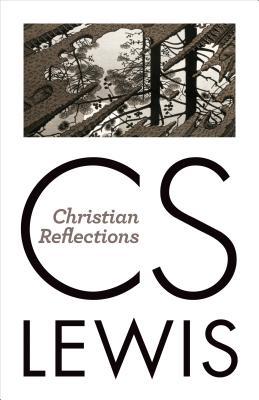
C. S. Lewis: Christian Reflections

Reading C. S. Lewis’ nonfiction is always a stretch for the brain muscles. Even Elisabeth Elliot, a deep thinker herself, said that she could follow his line of reasoning but couldn’t always reproduce or explain it.

Lewis’ writings for the general population, like Mere Christianity, are accessible–I would not want to scare anyone away from them.

However, I checked out Lewis’ Christian Reflections several month ago–and laid them aside several times. I was about to give up on them completely when I decided to try once more, praying for understanding and discernment. And then I was able to follow the gist of what he was saying.

This book is a collection of Lewis’ essays on various topics pertaining to Christianity or from a Christian point of view. They were assembled and published by Walter Hooper, Lewis’ longtime secretary, after Lewis’ death. In Hooper’s preface, he shares which of the essays had been previously published or never before published. Many were written for Lewis’ peers, which explains the elevated level of philosophic thought (and the plethora of unfamiliar Latin phrases. I wished I had read this in my Kindle app, where at a touch I could get the translations).

There are fourteen essays in all, touching on topics like Christianity and Literature, Christianity and Culture, ethics, church music, and the psalms. Others delve into things like subjectivism and historicism and de futilitate. I’ll try to give a sentence or two about each:

“Christianity and Literature.” These first two were the ones I was most looking forward to, but they were also the most difficult. I can’t really sum them up in a short sentence or two. I think I need to come back and read them again some time in the future to get more out of them. This blogger has created a helpful outline of the essay.

“Christianity and Culture.”

“Religion: Reality or Substitute?” This essay discusses faith vs. reason and whether religion is a substitute for reality.

“On Ethics.” Lewis discusses whether “the world must return to Christian ethics in order to preserve civilization, or even in order to save the human species from destruction” p. 44).

De Futilitate.” Lewis debunks the idea that we can’t really know anything so therefore everything is futile. Doesn’t that sound depressing?

“The Poison of Subjectivism.” This sounds a lot like the postmodernism of our era: maybe the seeds of it began here. “There are modern scientists, I am told, who have dropped the words truth and reality out of their vocabulary and who hold that the end of their work is not to know what is there but simply to get practical results” (p. 72). Indignation against another person’s or country’s morality . . .

is perfectly groundless if we ourselves regard morality as a subjective sentiment to be altered at will. Unless there is some objective standard of good, over-arching Germans, Japanese and ourselves alike whether any of us obey it or no, then of course the Germans are as competent to create their ideology as we are to create ours. If ‘good’ and ‘better’ are terms deriving their sole meaning from the ideology of each people, then of course ideologies themselves cannot be better or worse than one another. Unless the measuring rod is independent of the things measured, we can do no measuring (p. 73).

“The Funeral of a Great Myth” takes a look at evolution not in the scientific sense but in the sense of society. Lewis says the thought of humanity continually getting better has been around longer than Darwin but at no point has been witnessed or proven true. Rather, just the opposite seems to be the case. Nor does the complex arise from the simple, but the complex often offers the seed of the simple.

“On Church Music.” In Lewis’ day, church music “glorifies God by being excellent in its own kind; almost as the birds and flowers and the heavens themselves glorify Him. In the composition and highly-trained execution of sacred music we offer our natural gifts at their highest to God, as we do also in ecclesiastical architecture, in vestments, in glass and gold and silver, in well-kept parish accounts, or the careful organization of a Social” (p. 95). “But in most discussions about Church Music the alternative to learned music is popular music” (p. 95) which he says can be shouted and “bellowed” as well as sung. Either one can be done to the glory of God—or simply because it’s what people like. Each one could be done with pride and condescension. Or, the musician “of trained and delicate taste” can “humbly and charitably sacrifice his own . . . desires and give people the humbler and coarser fare than he would wish” (p. 96), and the the less musically learned could “humbly and patiently, and above all silently, listen to music which he . . . cannot fully appreciate, in the belief that it somehow glorifies God (p. 96). To both, “Church Music will have been a means of grace; not the music they have liked, but the music they have disliked. They have both offered, sacrificed, their taste in the fullest sense” (p. 97) for love of others, the glory of God, and the good of the church.

“Historicism.” ““What I mean by a Historicist is a man who asks me to accept his account of the inner meaning of history on the grounds of his learning and genius” (p. 101). He doesn’t have a problem with those who find “causal connections between historical events” (p. 100), a work belongs to historians. “The mark of the Historicist, on the other hand, is that he tries to get from historical premises conclusions which are more than historical; conclusions metaphysical or theological or (to coin a word) atheo-logical” (pp. 100-101).

“The Psalms.” I’ve always appreciated the psalms for their humanness, their depth of emotion. So I was a little surprised Lewis called them “shockingly alien,” until he described his religious experience of “Anglican choirs, well laundered surplices, soapy boys’ faces, hassocks, and organ, prayer books” (p. 114). He has an interesting discussion on the call for justice in the psalms, “not something that the conscience-stricken believer fears but something the downtrodden believer hopes for” (p. 123), “the continual hope of the Hebrews for ‘judgement’, the hope that some day, somehow, wrongs will be righted” (p. 124). I would disagree with his view of imprecatory psalms, but I admit I don’t always know how to interpret them.

“The Language of Religion.” Lewis begins by discussing different kinds of language: ordinary (his example: “It was very cold.”), scientific (“There were 13 degrees of frost.”), and poetic, with several lines from Keats. He discusses how each type conveys some level of accuracy and elicits some degree of emotion, yet each has its failings. Then he applies this to apologetics, which he compares to trying to convey a certain shade of color to a blind man who has never seen color.

“Petitionary Prayer: A Problem Without an Answer.” Lewis struggles here with the difference between biblical promises that we receive whatever we ask for in faith vs. Jesus’ prayer in Gethsemane that the cup be removed, yet “not my will but Yours be done.” He doesn’t have a problem with a loving providence saying no. But he seems to have a problem with so many promises of answers to prayers of faith for what one asks, even of mountains being moved (acknowledging the metaphorical aspect), that it would seem that Jesus did not pray with that kind of faith. But I think Jesus did pray with that kind of faith–faith that the Father’s will would ultimately be done. To me, the mystery is that Jesus prayed that the cup would be removed when that cup was the very reason He came, as He said earlier. I’ve only been able to conclude that this shows the human side of our Lord. And it shows that deep dread of a coming crisis in the will of God is not necessarily sin. Jesus had planed and prepared for this before creation–it was His own will (I lay down my life, no on can take it from me) as well as the Father’s. Yet His human side shrank from it. That gives me great comfort.

“Modern Theology and Biblical Criticism.” This essay was not only fairly easy to follow, it was delightful. Lewis takes on the problem of modern theologians who “ask me to believe they can read between the lines of the old texts; the evidence is their obvious inability to read (in any sense worth discussing) the lines themselves” (p. 157). These Biblical critics “seem to me to lack literary judgement, to be imperceptive about the very quality of the texts they are reading” (p. 154). “I have been reading poems, romances, vision-literature, legends, myths all my life. I know what they are like. I know that not one of them is like this [the Biblical text]” (p. 155).

Lewis speaks not as a theologian, but as a “sheep telling shepherds what only a sheep can tell them” (p. 152). He claims some authority on the basis of how people have wrongly evaluated his writings and that of his friends, assuming things about the background and meaning which weren’t true. A longer quote:

A theology which denies the historicity of nearly everything in the Gospels to which Christian life and affections and thought have been fastened for nearly two millennia—which either denies the miraculous altogether or, more strangely, after swallowing the camel of the Resurrection strains at such gnats as the feeding of the multitudes–if offered to the uneducated man can produce only one or other of two effects (p. 153).

Those effects, Lewis goes on to say, would be to look elsewhere for spiritual truth or to become an atheist.

“The Seeing Eye.” Lewis here refers to the Russian astronauts who said they had not found God in space. He replies, ‘It is not in the least disquieting that no astronauts have discovered a god of that sort. The really disquieting thing would be if they had” (p. 167).

Space-travel really has nothing to do with the matter. To some, God is discoverable everywhere; to others, nowhere. Those who do not find Him on earth are unlikely to find Him in space. (Hang it all, we’re in space already; every year we go a huge circular tour in space.) (p. 171).

He then discusses various scenarios of what kinds of other creatures we might find on other worlds and how we’d likely respond to them. He explored this to a degree in his science fiction series.

In the end, I was glad I persevered. I did enjoy and benefit from several of the essays, though it would take multiple readings to really grasp everything Lewis was saying in some of them. But it’s good to give one’s brain a workout.

I’m counting this book for the essay category for the Nonfiction Reading Challenge.

Is Love More Important than Doctrine??

Some would say so. The reasoning goes that the Bible says God is Love. It doesn’t say God is doctrine. Therefore, love trumps doctrine.

Part of the confusion or disagreement comes from what is meant by doctrine. I’m using the word here as the truth God declares about Himself and His requirements for us.

And the Bible also says God is truth.

Jesus said, “I am the way, and the truth, and the life. No one comes to the Father except through me” (John 14:6).

The Holy Spirit is “the Spirit of truth” (John 14:17; 15:26; 16:13).

Some translations of Deuteronomy 32:4 say God is “a God of truth and without iniquity, just and right is he.”

Not only is God truth, but His Word is characterized as truth.

The psalmist declared, “The sum of your word is truth, and every one of your righteous rules endures forever” (Psalm 119:160).

Jesus prayed, “Sanctify them in the truth; your word is truth” (John 17:17).

God wants us to respond to Him in truth.

Jesus said, “God is spirit, and those who worship him must worship in spirit and truth” (John 4:24).

“The LORD is near to all who call on him, to all who call on him in truth” (Psalm 145:18).

Most of the books of the Bible warn against false doctrine, false prophets, and false teachers in the strongest terms. It’s not loving to cut corners on truth for the sake of not sounding adamant. It’s not loving to God or to others to teach something untrue about Him or about how He wants us to live.

But it’s also not loving to bludgeon people with truth like a club.

And it’s wrong to elevate every little disagreement to the same level as doctrine. There are areas where we can’t give any ground: the deity and humanity of Christ, our need for salvation, Christ’s death on the cross for our sins, salvation by grace through faith, the resurrection, the Bible as God’s Word, and so on. But there are areas in Scripture where good people can disagree and should give each other grace. Too many Christians spend way too much time and effort on these issues than on declaring unequivocal truth and loving each other and the lost.

We don’t need to put love and doctrine in competition with each other. We need them both. Both are aspects of God, and both should permeate our lives.

(I often link up with some of these bloggers.)

Laudable Linkage

IMG_0195

I don’t want to “laud” my own link, but I wanted to share once again a post from a few years ago about grieving over Christmas. My mother, father, and grandmother (as well as a family friend and our only family pet) all died in December, though in different years. The first few years after my mom passed away were the hardest, especially with how much she loved the season. It seems like every year, someone I know is facing their first Christmas without a certain loved one. So I hope these thoughts will be helpful: Christmas Grief, Christmas Hope, Christmas Joy.

Now, on to some good online reading and listening found recently:

Losses of a Prayerless Christian, HT to Challies. “Though God is sovereign over all things, He ordains the means of prayer. There are some things He will not do unless we pray, though He always does all He purposes (Psalm 135:6). The mystery does not change this truth: You do not have because you do not ask (James 4:2).”

Gentleness Is a Christian Virtue, HT to Challies. ‘Christians should be the absolute opposite of mean and angry. Jesus’s people are to be kind, gentle, joyful, patient, peaceful, good, and self-controlled. None of these character traits define American culture today, but they must define Christ’s church.”

Must You Remain Silent on Abortion Unless You Adopt a Baby? HT to Challies. Perhaps you’ve heard the argument that unless a pro-life person is willing to adopt babies (supposedly babies that would be saved from abortion), then that person has no voice in the abortion debate. This article explains what’s wrong with that reasoning.

Gospel Parenting During the Little Years with Melissa Kruger and Jen Wilkin (one of my favorite authors). This is an almost 50-minute video, but well worth a listen. I wish I had had this when mine were little, though I think I came to many of the same conclusions over time.

Jen Wilkin on Women in the Church with the Gift of Leadership. Jen speaks from a complementarian background, but encourages that there is a place for women to exercise their gifts. Different ones of us will fall on different places in the spectrum of this discussion, but the issues are worth contemplating.

People’s Choice; Wildlife Photographer of the Year 2021, HT to Laura. These are always so fascinating.

If you need a good laugh this morning, try this “12 Days of Christmas” skit, HT to The Story Warren.

This is as good a time as any for my occasional reminder that linking doesn’t always indicate 100% endorsement with everything and everyone linked to. But the links contain food for thought.

Happy Saturday!