Review: Ribbon of Years

Ribbon of Years

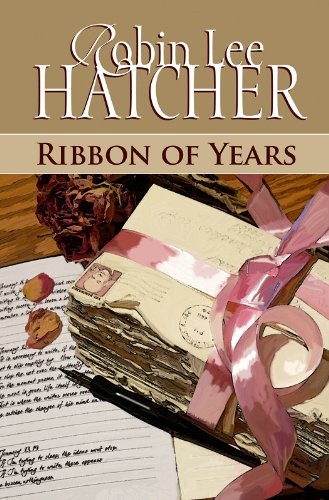
Ribbon of Years: A Timeless Journey of Love, Loss, and Unwavering Grace is a novel by Robin Lee Hatcher.

The story opens with middle-aged Julianna Crosby somewhat at loose ends, feeling there should be more to life. Nothing major is wrong, but she just feels sort of empty, purposeless.

She visits an estate sale, usually one of her favorite activities. As she roams through the house, she finds an upstairs sitting room with a cardboard box labeled “My Life.” The woman at the door had said everything in the house was on sale, so Julianna opened the box. The items inside were a hodgepodge collection that didn’t seem connected.

Just then an elderly man comes into the room and notices the box. He sits down and asks Julianna to pass him the movie poster in the box. He begins to tell Julianna how Miriam, the woman whose house they were in, acquired the poster and what it meant to her.

As a teenager, Miriam had wanted to be an actress. Headstrong and impulsive, she didn’t even want to finish high school: she wanted to run away to Hollywood.

More people come into the room with Julianna and the older man, Jacob McAllister. Each person has some story to tell about Miriam based on one of the items in the box. Through frequent flashbacks, we get the story of Miriam’s life, from a teenage girl headed for trouble, to a young wife who can barely handle her husband being sent off to war, and so on throughout her 80 yeas of life.

She has many ups and down through the years, but eventually finds God faithful and his grace sufficient for all her needs. Her life, then, inspires others–even Julianna’s.

I heard of this book from Susanne, who loved it so much, she’s read it four times. I’ve enjoyed some of this author’s books through the years, so I looked up this book and found the audiobook was free with my Audible account.

I didn’t realize until I started listening to it that it was narrated by a “Virtual Voice.” I was disappointed, but figured it was free and I’d already started it, so I kept listening.

That was a mistake. The voice sounded human, but the inflections were often wrong. There was no emotion in the voice. Some words were mispronounced. Sometimes the voice sounded garbled and I missed a few words–if this had been a cassette, I would have said it sounded like the tape had wrinkles in places.

Miriam’s life was inspirational, not because she lived it perfectly, but because she learned to rely on God through all that happened to her.

The author said that Miriam was based on her own mother. The audiobook didn’t contain end notes, so I am not sure whether the events of the story occurred in the author’s mother’s life, or whether the character of Miriam reflects the author’s mother–or both.

The story itself was good, but I am afraid I didn’t love it as much as my friend did. I can’t pinpoint exactly why. However, I feel I can recommend it to you–at least the print version–without qualms. Maybe you’ll love it as much as my friend.

(Sharing with Bookish Bliss)
Review: Every Hour Until Then

Every Hour Until Then

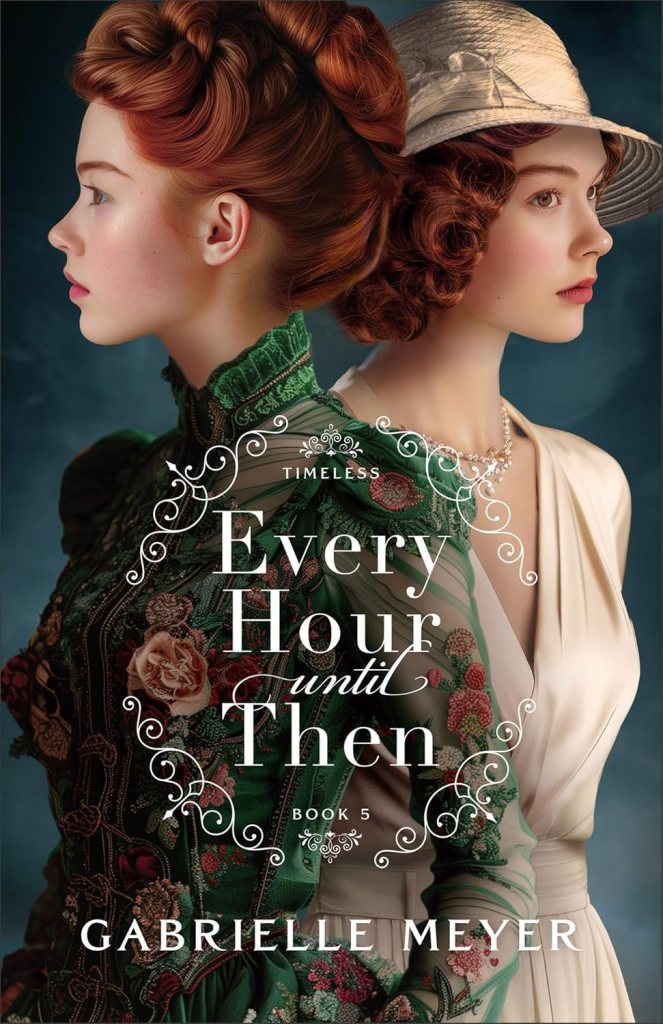
Every Hour Until Then is the fifth in Gabrielle Meyer’s Time Crosser novels about a handful of people who lead double lives. They live a day in one year, and when they go to sleep, they wake up in another year and place, centuries before or after. The next day, they wake up in the first timeline as if no time had passed there. They have until their twenty-first or twenty-fifth birthdays (depended on a number of factors) to chose which path they want to stay in. At that time, they’ll lose the other path.

Twenty-three-year-old Kathryn Kelly lives a privileged life in 1888 London with her parents and sister, Mary. As the book opens, Mary is packing to leave home but won’t tell Kathryn why. Kathryn runs to her father to stop Mary, but he insists Mary is now dead to them. But Kathryn is determined to find out what’s going on. She learns that Mary has gone to live as a charwoman in the Whitechapel district, a poor and dangerous part of London.

Kathryn’s neighbor, Austen Baird, has been her best friend since childhood. But he’s been distant since his parents died a few years ago. Still, she hopes he’ll accompany her to Whitechapel since she can’t go there alone.

In 1938, Kathryn Voland lives with her parents in Washington D.C. She has a lifelong interest in history and works as an assistant exhibit curator at the Smithsonian Arts and Industries Building. Her father is famous aviator Luke Voland. Her mother is another time crosser, Grace from For a Lifetime. They’ve just come to London because Kathryn has been invited to be a guest curator for a special exhibit at the London Museum. However, Kathryn has ulterior motives for being in London. Kathryn’s two timelines are only fifty years apart, closer than most time crossers. She hopes to find clues in 1938 that might help her find Mary in 1888. Yet with the threat of war with Germany looming, she doesn’t know how long she’ll be able to stay in London.

As Kathryn meets with the museum’s Keeper, Sir Bryant Rothschild, she learns that the special exhibit will feature Jack the Ripper on the fiftieth anniversary of his crime spree.

As Kathryn researches Jacks’ gruesome murders, she’s horrified to learn that her sister in 1888, Mary Jane Kelly, is Jack’s fifth victim.

Her first instinct is to put all her energy into finding and saving Mary. But one of the time crossers’ rules is that if they knowingly change history, they’ll lose their lives in that timeline. Kathryn’s planning to stay in 1938 anyway, so leaving 1888 a couple of years early is not a great loss. But her mother has warned her that changing history can have serious unintended consequences.

And her relationship with Austen is just beginning to reconnect. She believes he feels something more than friendship for her. Does she really want to leave without exploring whether they could have a future together?

She decides that, whatever the risks or consequences, she must save Mary.

I’ve enjoyed all of Gabrielle’s Time Crossers stories, but this one was riveting, especially the last half. Often I can guess at the ways a plot might go, but this one had a twist that gobsmacked me.

I had known very little about the Jack the Ripper murders before reading this book. They remain some of the worst murders of all time. I felt the author did a good job conveying what Jack did without going into unnecessary details.

I got a little irritated at Kathryn’s penchant for getting herself into dangerous situations. However, she does begin to realize that she is impetuous, headstrong, and stubborn, and that those qualities are not always good. She also finds that she runs ahead of God, hoping He’ll approve her plans, instead of waiting on His leading.

I enjoyed the audiobook read by Liz Pearce. I am used to Liz’s voice on some of Roseanna M. White’s books, so it took some adjustment to remember I was in another author’s stories.

I’m glad this audiobook contained the author’s historical notes, sharing where she got her inspiration and what facts were true or fiction. There are several theories about who Jack was and why he committed his crimes. Gabrielle chose one of the theories to incorporate into her novel.

I’ve wondered how many ways Gabrielle can take this time crossing theme. All of the books have been excellent so far, and another is due out this fall. I can’t wait.

(Sharing with Bookish Bliss)

Review: Code Name Edelweiss

Code Name Edelweiss

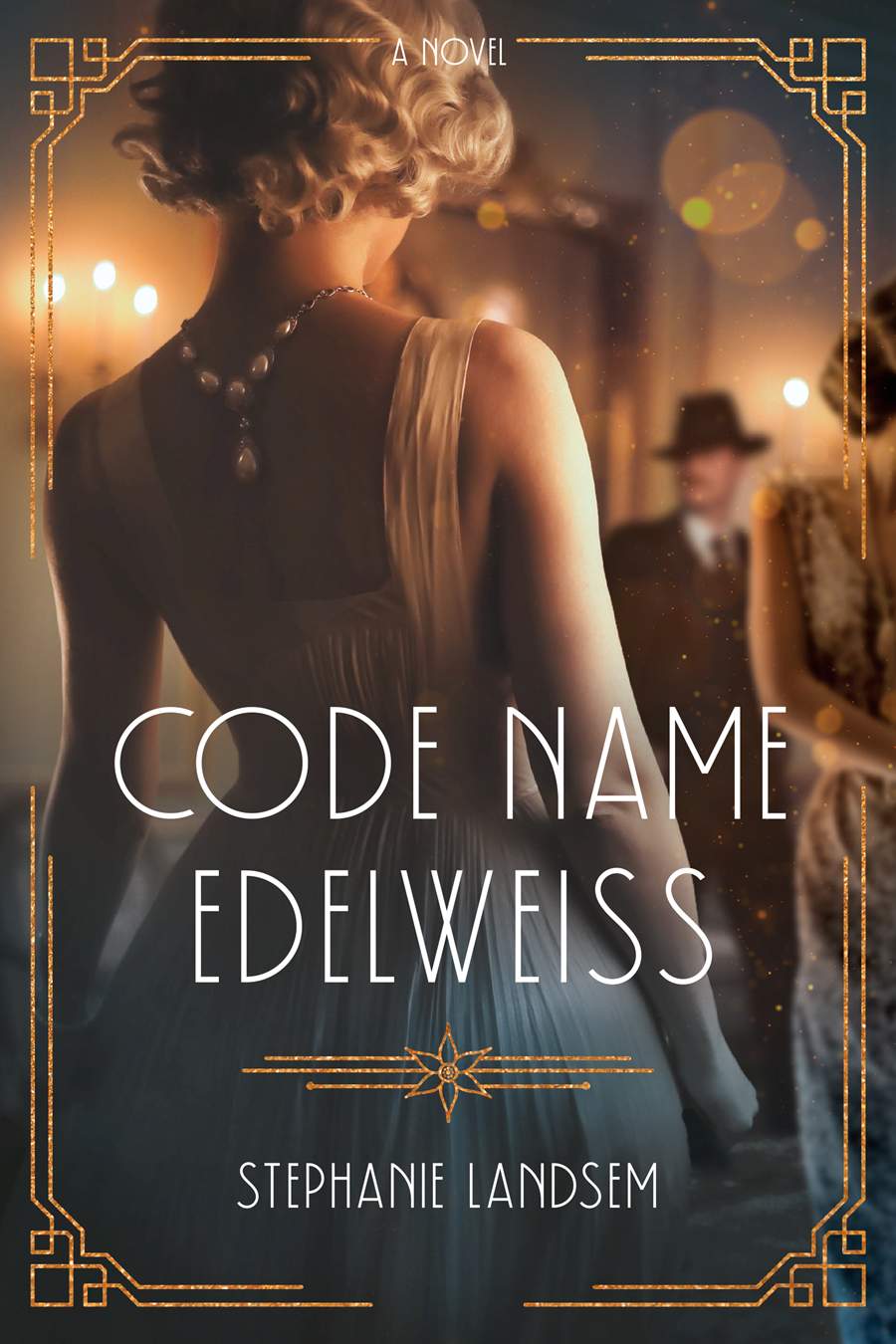
Code Name Edelweiss by Stephanie Landsem is a novel based on a true story.

In 1933, Hitler’s rise to power in Germany causes concern for many. But Liesl Weiss doesn’t have time to pay much attention to him. Her husband is missing, and the police assume he just abandoned his family. Liesl is the sole provider for her two children as well as her mother and brother. When Liesl is suddenly fired from her secretarial job at MGM, she desperately looks for another position.

She interviews with a Jewish lawyer named Leon Lewis and learns that what he needs is a spy. An organization called Friends of New Germany appears to help German Americans, especially veterans. But Lewis thinks the leaders are up to something nefarious. He wants Liesl to work as a secretary for group, keep her eyes and ears open, and report back to him.

At first, Liesl thinks Lewis’ fears are unfounded. Her bosses seem very nice. Some of their documents could be taken the wrong way, but aren’t blatant.

As time goes on, however, the group’s stance becomes clearer. Yet there’s not enough concrete evidence to report them. Lewis meets with officials in Washington, but they think he is overreacting. Everyone’s focus is on the Communists, not the Nazis.

Lewis has another operative in the group, known only as Thirteen. He and Liesl don’t know the other’s identity. As he works his way up in the group, he becomes more alarmed. He knows they are up to something, but he can’t find clear details.

Finally Liesl’s and Thirteen’s paths converge. They take more risks to get the information they need, but put themselves in danger to do so. When they finally learn the group’s plans, will they be too late to stop them?

The last several chapters kept me on the edge of my seat.

I think Liesl was like a lot of Americans at the time–preoccupied with her own problems, disbelieving anything bad was going on, then thinking there was nothing she could do anyway. But slowly, she comes to realize that she has to intervene. Lewis shares a quote with her: “If not me, who? If not now, when?”

Then as she rises in the Friends of New Germany organization, she has to deal with misunderstandings from her mother, friends, . . . and her Jewish neighbors.

Some of the other quotes that stood out to me:

I loved my country, but also I loved my German heritage. Would I be forced to choose between the two? (p. 64, Kindle version).

He thought maybe he had it figured, the question that had hounded him since Monterey, the one about why God allowed evil like Winterhalder and the Nazis. Why he didn’t stop them. He guessed that God did stop them—but not with fire and brimstone or smiting like Wilhelm would have done. No, he used people—good people like Leon Lewis, not-so-good people like himself. Gave them what they needed to work with and let them at it. Wilhelm would sure prefer the fire and brimstone, but maybe that’s why God was God . . . and he wasn’t (p. 348).

Adolf Hitler and his religion of anti-Semitism was not a Jewish problem. It was my problem. And if good people did nothing, the evil around us would continue to grow and flourish (p. 90).

The faith element is more subtle here. At first Liesl’s relationship with God is strained: she can’t understand why He would allow her husband to leave. She’s burdened with the pressures of providing for her family and feeling like she is not giving her children the time they need. Thirteen is not particularly spiritual at first. He says at one point that most people weren’t born bad, but were made that way–which is not true, Scripturally, but which shows where his thinking is at the time. But both of them gradually come to stronger faith and dependence on God. 

I enjoyed the author’s historical notes. Leon Lewis was a real person who employed a spy network, helped prosecute American Nazis, and prevented assignations and sabotage. The Nazis really were more active here than many realized. The author includes a quote from Hitler saying the Nazis would cause confusion in America and undermine people’s faith in their government, and then the Nazis would help German Americans rise to power (she doesn’t cite the source). One of their goals was to take over the movie studios and use them for their own purposes. Organizations like the Friends of New Germany were real as well. 

The author says her goal “is not to document a historical event but to write a compelling story about how a character reacts to this event, how it affects her life, and how she is changed by what she encounters. One of my favorite quotes about fiction is this: A story doesn’t have to be true to tell the truth. This is what I hope you gain from [the characters’] story: the truth about courage, conviction, and love that both encompasses and transcends the historical record.”

I think she succeeded.

(Sharing with Bookish Bliss)
 

Review: On the Edge of the Dark Sea of Darkness

Dark Sea of Darkness

On the Edge of the Dark Sea of Darkness is the first in the four-part Wingfeather Series by Andrew Peterson. Amazon recommends it for children in third through seventh grades

The story takes place in the mythical land of Skree, which has been taken over by life-size lizard-like people called Fangs, whose leader is Gnag the Nameless.

The book’s main focus is the Igiby family: mother Nia, grandfather Podo, and children Janner, Tink, and Leeli. Podo is an old pirate with a pegleg, but he’s amazingly agile. Leeli’s leg is crooked, and she walks with a crutch. The children’s father died some time ago, and Janner is disturbed that his grandfather and mother won’t allow questions about him.

Despite the oppressive Fangs, life is fairly peaceful in Skree.

Oh, yes, the people of Skree were quite free, as long as they were in their homes by midnight. And as long as they bore no weapons, and they didn’t complain when their fellow Skreeans were occasionally taken away across the sea, never to be seen again. But other than the cruel Fangs and the constant threat of death and torture, there wasn’t much to fear in Skree (p. 3).

But then the children have an altercation with one of the Fangs, Slarb. The children are put in jail but released when their mother gives the commander some of her jewels.

But now they are on Slarb’s radar.

And Janner didn’t even know his mother had jewels. Between that and the secrets surrounding his father, Janner wonders what else his mother is hiding.

The tension escalates into a classic battle of good-vs.evil with a surprise revelation at the end.

Alongside this plot, the children have normal fusses with each other and learn to face fears.

There seems to be some symbolism or allusions to Christian themes like in the Chronicles of Narnia. The family prays to “the Maker.”

One GoodReads reviewer said “Peterson intended this to be the ‘vastness of Lord of the Rings’ with the ‘whimsey of the Princess Bride.'” I don’t know if she read that in an interview: if so, I’d love to find it. It does help understand the tone of the story.

Some of the animals that live in Skree and the nearby forest are skonks, toothy cows (like our cows except they have long fangs and are omnivores), thwaps–like squirrels, a menace to gardens, and flabbits–like rabbits bur hairless with exceptionally long ears..

The danger is real and scary, but humor is sprinkled throughout. In fact, there seemed too much humor in the first part of the book.

I had a hard time getting into the book at first. But once the action picked up and some of the things hinted at came to light, I thought it was very good.

Some of my favorite quotes:

Blood was shed that you three might breathe the good air of life, and if that means you have to miss out on a Zibzy game, then so be it. Part of being a man is putting others’ needs before your own (pp. 23-24),.

There’s just something about the way he sings. It makes me think of when it snows outside, and the fire is warm, and Podo is telling us a story while you’re cooking, and there’s no place I’d rather be–but for some reason I still feel… homesick (p. 70).

Even if hope is just a low ember at night, in the morning you can still start a fire.

An animated series has been made of the books–at least the first two, I think. I have not seen it but want to with my son’s family. It appears to be very well done.

(Sharing with Bookish Bliss)
Review: This Promised Land

This Promised Land

In Cathy Gohlke’s latest novel, This Promised Land, Ginny Pickering Boyden is finally about to realize her dream of traveling to her family’s ancestral home in England. Decades earlier, she had run away to marry her boyfriend before he shipped out to WWII. Her mother and brother disowned her; she lost the baby she was expecting; and her husband came back maimed in body and mind. She cared for him as long as she could, and then he spent the rest of his years in a nursing home. When he died, Ginny spent years recovering and paying off her debts so she could travel.

Now she has just retired from her job when she gets a letter from a lawyer in New Scrivelsby, VA–the town where her family owned a Christmas tree farm for generations. The letter says her brother has died and there is a problem with his will. She needs to come and settle the family business.

Ginny doesn’t want to go, but doesn’t seem to have a choice. She plans for a quick trip to sign whatever papers are needed, see her parents’ graves, and then get on with her life.

But the situation is more complicated than she thought. Her mother, who had died long before, had actually left the Christmas tree farm and family home to her. Her brother, Harold, had told his sons he was leaving everything to them, but he couldn’t since he didn’t rightfully own it.

On top of that, Harold was not in his right mind his last few years. Despite his son’s efforts, Harold took out a sizeable loan and didn’t pay two years worth of taxes.

Even if Ginny wanted the farm, there’s no way she could pay its debts. She has no choice but to sell.

Harold’s son, Luke, has been running the farm almost single-handedly. He believes his father’s lies about Ginny and figures she’s swooping to claim everything and sell it all, leaving him high and dry.

And then Harold’s other son, Mark shows up. A Vietnam veteran, Mark has been in and out of trouble with drugs and alcohol. He did some time in jail while his three children were placed in separate foster homes. All he wants is to sell out his part of the farm to his brother so he can try to make a new start with his children. He’s stunned to learn that his brother doesn’t own the farm.

All the branches of the family tree are fractured and barely holding on. Harold is angry and barely gives Ginny or Mark a chance. His longsuffering wife, Bethany, urges patience and grace. Mark’s children desperately need stability, but his addiction recovery is fragile.

They decide to try to maintain the farm through one more Christmas season to see if they can recover their losses. If not, Ginny will sell and divide the proceeds between them. Though keeping the farm is uncertain, Ginny hopes the rifts can heal and they can become a true family, something they all need.

Unbeknownst to them all, they have enemies without as well as within.

The Bible story of the prodigal son comes up often in this story, with Ginny realizing she has been in the place of both the prodigal and the resentful older brother. Now she wants to be like the welcoming father. But all the family’s problem make it difficult.

Ginny enjoys the hobby of pressing flowers and making pictures with the dried blooms. She shares this with the children and even uses their creations to make framed art to sell to help the farm. Along with the interesting process of how flowers are dried and pressed, the process symbolized that “something so pretty and permanent could come out of something as short-lived as a rose” and “life was not done–simply waiting to bloom again.”

I have enjoyed all of Cathy’s books that I have read, and this one is no exception. The characters are well-developed, and the faith element is woven in naturally. It’s easy to sympathize with all the characters and their struggles. I like how the author brought everything together in the end.

I listened to the audiobook, nicely read by Sarah Zimmerman.

(Sharing with Bookish Bliss)
Review: Crimson Roses

Crimson Roses

In Grace Livingston Hill’s novel, Crimson Roses, Marion Warren has been taking care of her ill father for five years. They had always planned that she would go to normal college and become a teacher, until his accident.

Now he has passed away. They had discussed that she would have the house and her brother the life insurance money. But a will can’t be found. So her brother, Tom, feels the best thing to do is sell the house and buy a farm in Vermont (which his wife strongly wants to do). They plan that Marion will always have a home with them, where she can help with the housecleaning and teach their children (basically, act as unpaid live-in help).

Marion’s practical mother, who died years before, always called her husband a visionary, not necessarily meaning it as a compliment. Marion takes after her father, while Tom is more like their mother. Marion mildly protests that she doesn’t want to live on a farm in Vermont, she wants to stay in the city, go to school, attend lectures and concerts and such. Tom says these are “foolish notions,” and she’s too old to go to school now anyway. Tom and his wife, Jennie, think that Marion is just being grumpy and will come around by the time they leave.

As Marion considers her options, she truly feels it’s best for her to stay in the city. Since Tom and Jenny won’t listen, Marion finds a job and small apartment on her own. She plans not to take any of her father’s assets so they will be able to buy their farm.

When they find out her plans, there is a big blow-up. Jennie (who gets my nomination for worst sister-in-law ever) feels Marion is being selfish. Tom finally concedes that the only way Marion will learn is to let her have her way. In time, when she realizes she can’t make it on her own, she’ll come to the farm with them.

But Marion thrives in her new situation. She’s been out of circulation for several years while caring for her father, and some of her coworkers help her update her look and clothes. Marion draws a line at some of their suggestions, though, not wanting to look like a “flapper.”

Marion’s intense loneliness almost sends her to Vermont. But she hears of a local weekly symphony concert series. If she manages her money carefully, she can afford it.

On the night of the second concert, Marion finds a beauitful crimson rose on her seat. Thinking the rose has been placed there by mistake, she tries to find who it belongs to. But no one claims it. She decides to take it home and enjoy it.

But the next week, a crimson rose is again at her seat. And the next week, and so on throughout the concert series.

Later in the book, when a young man shows interest in Marion, some “mean girls” in the church think Marion’s station is beneath his and act unkindly toward her (fueled by the interest in one of the girls in the young man).

This book was published in 1928, and, of course, is very old-fashioned in style and content. It’s a clean, sweet story–maybe a smidgen too sweet, but just a smidgen. Some of the 20s slang is amusing.

Marion seems a little naive for a twenty-three year old young woman. But that might have been the case in those times. Plus she had been mostly at home for five years.

The theme of the story might be that faithfulness wins out in the end. Through all her tribulations, though Marion struggles, she remains humble and sweet and tries to do the right thing.

I listened to the audiobook nicely read by Anne Hancock. Though the audiobook was released in 2024, the narrator’s style and accent matched the setting in the book.

(Sharing with Bookish Bliss)

Ruth by Elizabeth Gaskell

Ruth is a novel written by Elizabeth Gaskell (sometimes listed as Elizabeth Cleghorne Gaskell) in the 1850s.

Ruth’s mother died when she was twelve. Her father, absorbed in his own grief, did not pay much attention to Ruth and died when she was fifteen. The man named as Ruth’s guardian had never met her before, but obtains a postilion for her with a dressmaker.

Ruth is naive and immature, not having had her mother’s instruction as she became a young woman. When she accidentally meets a Henry Bellingham, a well-to-do young man in his twenties, he is struck by her beauty. He observes that she goes to church alone on Sundays and arranges to be where he can interact with her afterwards. After several weeks of meetings, he offers to walk with her to where she used to live, as she has often described how much she loved the area.

Ruth’s boss sees her so far from home with a young man, draws the wrong conclusion, and tells Ruth she is fired. Distressed and alone in the world, Ruth succumbs to Bellingham’s persuasion to accompany him to London.

Some time later, Ruth and Bellingham are visiting Wales when he falls seriously ill. The inn’s proprietor sends for his mother, who disgustedly ousts Ruth.

A Mr. Benson is a dissenting minister visiting the same area who ascertains Ruth’s situation. He intercepts her as she plans to attempt suicide and persuades her to live with him and his sister, Faith, and their crusty but kind-hearted housekeeper, Sally.

Faith and Sally don’t think well of Ruth at first. But her sweetness and humbleness win them over.

None of them realize that Ruth is with child at first–not even Ruth. When Ruth’s pregnancy is discovered, Mr. Benson’s sister, Faith, persuades him to say that Ruth is a distant relative who has recently been widowed. They want to give Ruth a fresh start but also want to protect her child.

As Ruth attends Mr. Benson’s church, she realizes she has done wrong and repents.

Eventually she becomes a governess to the daughters of the town’s leading citizen. But then her secret becomes known.

Mrs. Gaskell is one of the first authors to make a “fallen woman” the heroine of her story (The Scarlet Letter by Nathaniel Hawthorne came a few years earlier; Tess of the d’Urbervilles by Thomas Hardy came a few decades later). The book was controversial in its Victorian era. Gaskell rightly asserted that sometimes the fallen woman is the wronged party, that grace and forgiveness are available to all who have sinned, and that the child born of such a situation does not deserve to be branded.

Gaskell comes from a Unitarian background, which, from what I have read, I would not agree with. But much of what is said of Christ in this book seems accurate. However, there’s also talk about penance and “self-redemption,” which I don’t think are scriptural concepts.

Besides the themes of forgiveness and compassion, the book deals with the dangers of gossip and hypocrisy.

This novel is a product of its times. It’s wordy, with a lot of detailed description. Ruth is presented as almost too perfect. Some interactions are a bit overwrought.

But I loved the story. And I loved what Gaskell conveyed through the story. Both the main and secondary characters were well-developed.

I listened to the audiobook, nicely read by Eve Matheson.

(I often link up with some of these bloggers.)

Review: He Should Have Told the Bees

He Should Have Told the Bees by Amanda Cox tells the story of two young women whose lives intersect unexpectedly.

Beckett Walsh kept bees with her father until he died unexpectedly. Her mother had left them when Beckett was small. Though memories of her mother are hazy, her leaving sent Beckett into nightmares of monsters when she was a child and panic attacks as a young person and adult. Her father had left his job as a banker to homestead, start an apiary, and accommodate Beckett’s needs. But now he’s gone. Still, Beckett thinks she can do just fine, despite her aunt’s attempts to manage her life.

Callie Peterson grew up with an unstable alcoholic mother who went through a series of men. Now Callie has distanced herself and bought a building to start a new business making candles, lotions, etc. But the building is going to need more work than she thought. And then her mother shows up on her doorstep, claiming she’s ready to seek help. When Callie takes her to a rehab center, she’s unaware that her mother named her as the person responsible for the finances needed.

Both women get a summons about a hearing for a trust that Beckett’s father had set up, naming them both as co-owners of the farm. The two women never knew each other before. Beckett can’t fathom why her father would name this stranger a co-owner when he knows Beckett’s needs and problems. Callie doesn’t, either. But she wonders if selling the farm could help her financial problems. But doing so would oust Beckett from the only safe place she knows.

Both women try to understand why Beckett’s father named Callie in the trust. Their search leads them to secrets and connections they never knew about. Will both their lives be upended–or fulfilled?

I enjoyed this story quite a lot. It was easy to sympathize with each woman’s journey and pain.

The side characters are delightful. Beck is unexpectedly visited by a neighbor in the form of a young girl who says she is an alien. Callie’s booth neighbor in the markets where they sell their wares turns out to be a stabilizing factor in her life.

The book opens with an excerpt of a poem by John Greenleaf Whittier titled “Telling the Bees,” in which beehives are draped in black as the bees are told their keeper has died. Evidently, according to Wikipedia, this is a custom in many European countries. It was even done when Queen Elizabeth died in 2022.

At one point, Callie’s friend points out some sunbeams and says:

They’re called crepuscular rays. And they happen because of light hitting dust. It’s just ordinary, boring particulate floating all around us like it always does, and then bam, the light hits it and suddenly it’s something that makes people stop and take pictures. If that’s not a miracle, then I guess I don’t know what a miracle is (p. 54).

That becomes an underlying theme.

A few other quotes that stood out to me:

If she could stack up all the hurt in the world and sort the kind inflicted with malicious intent from the hurt inflicted by carelessness, how would the two compare? Was there really any difference when the result was the same? (p. 216).

It was a hard lesson to learn—that you couldn’t be the one to fill the holes in another person’s life. Working through dysfunctional patterns, finding healthy coping skills, and letting God heal the wounds the past left behind, those were things you couldn’t do for another person. No matter how much you wanted to (p. 251).

It’s possible for treasured things to come out of the brokenness. Even if it doesn’t happen the way any of us would have wanted. Even if it comes through loss (p. 299).

On a humorous note, it’s fun to notice a particular author’s unique repeated words. In this book and others, Amanda uses the word “scrubbed” a lot (eight times in this book)–she scrubbed her eyes, he scrubbed his hand over his face. And hearts tend to “stutter-step” when upset. And people “worry” their bottom lips.

Amanda doesn’t have end notes about the story, but there is an interview here where she discusses the book.

All in all, I’m happy to recommend this book.

(I often link up with some of these bloggers.)

Laudable Linkage

Laudable Linkage

I found several noteworthy blog posts this week:

The Good We Cannot See, HT to Challies. “I wanted to see the purpose of the suffering; at least a small glimpse. I wanted to understand even a small piece of why God allowed it. I wanted to see the man that Ezra would become because of the pain he endured. I wanted to see a piece of redemption. I wanted to experience the tangible comfort of knowing that God intended the suffering for good with good defined by me. Therein lies the trouble.”

All the Books I’ll Never Read, HT to Linda. This resonated with me so much! “Not only will I never read all the books I wish I could, but I’ll never be all the things that I want to be, or do all the things that I want to do. When this realization first hit me, I have to confess I did not roll with it well.”

What We Miss When We Skip the Prophets. “The prophetic books of the Old Testament make up 250 of the Bible’s 1189 chapters. That’s about 21% of the Bible! And I think those books are sorely neglected.”

Big Heads or Big Hearts, HT to Knowable Word. “Truth and love ought not be thought of as if they are opposites — as if the pursuit of one will automatically detract from the pursuit of the other. Even in specific situations, we shouldn’t think that we need to decide between standing for the truth and loving. We can always do both!”

Beware Toxic Servant Leadership, HT to Challies. “Sometimes, what people mean by servant leadership is not leadership at all. If I only understand leadership as deferring to others and not stepping on people’s toes, then I’m at risk of ignoring what God has called me to do. We have become so allergic to authority that anytime someone expresses any authority at all we immediately recoil. This is not good.”

Why Does John Mention That He Outran Peter to Jesus’ Tomb? HT to Challies. I don’t remember if I ever wondered about this, but I appreciate this answer.

The 15-Minute Block, HT to Redeeming Productivity. “I am obsessed with this idea of the 15-minute block. Anything and everything becomes possible when you break it down into a manageable chunk.”

Should We Capitalize Divine Pronouns? I’ve been taught all my life that capitalizing pronouns referring to God was a sign of respect to Him. But lately I’ve found several sources saying that capitalizing divine pronouns is not necessary–partly because they are not capitalized in the original languages nor in many Bible translations. I’m glad Tim categorizes this as a conscience issue. Author and editor Lori Hatcher discusses the same question in To Capitalize or not to Capitalize: Exploring the Deity Pronoun Question.

Dead Man Talking. Bob Roberts is frequent camp speaker and the founder of Kids4Truth Clubs. We attended the same church for several years. Bob had cancer a few years ago, which went into remission. But now it’s back in his liver, and the prognosis is not good. While undergoing some experimental treatments as a last effort, Bob didn’t want to “waste” his cancer. So he began a podcast with five men who have been his friends for 30+ years to discuss what God is doing in his life. The one I linked to is the third, where he discusses the first half of his “bucket list.” The first one was more general; the second one discussed friendship and the impact of the group potentially losing one member. These are available wherever one listens to podcasts and on YouTube.

If I listened to the wretched talk of proud men, I might sometimes fancy sin was not so very sinful! But I cannot think little of sin, when I look at the cross of Christ. — J. C. Ryle

Review: An Ocean of Grace

Ocean of Grace

Tim Chester collected collected thoughtful writings about Christ’s death and resurrection and edited them into An Ocean of Grace: A Journey to Easter with Great Voices of the Past.

Some of the selections are from familiar pens: Augustine, Martin Luther, and Charles Spurgeon. Others are more obscure: Cyril of Alexander from the fifth century, Gregory of Myssa from the fourth, Cyprian of the third, and many others. I was delighted to see a piece by Anne Steele, an eighteenth-century female hymn writer. And I was surprised to see a selection from Catherine Parr, Henry VIII’s last wife, leading me to read a little more about her online. I think Spurgeon is the most recent of the authors included.

These selections are divided into daily readings from Ash Wednesday to Easter. They are grouped into themes for each week: The Light of Love, The Welcome of Grace, The Exchange of Places; The Assurance of Faith, The Gift of Christ, and The Victory of God.

In his introduction, Chester says he removed archaic language except for poetry and hymns while trying to retain the “voice” of the original authors. He also says many “descriptions have been turned into a prayer addressed to God or an exhortation addressed to our own souls.” He doesn’t say why, but he also turned what I think were prose selections into a free-verse style of poetry. I wish he had kept the selections closer to the originals–but then maybe I wouldn’t think so if I read the originals.

I began reading this book late in the season due to finishing a previous study. Because of that, and because the selections were fairly short, I read two or three a day. I think that may have lessened the impact of them. If I read this book again, I’ll plan to read one a day as the author intended.

Nevertheless, I did receive much food for thought and warmth for heart by reading this book. I have many places marked, but I will try not to overwhelm you with quotes.

In an excerpt from Catherine Parr’s The Lamentations of a Sinner, she spends several lines listing her sins and Christ’s merits. She concludes:

Shall I fall in desperation?
No, I will call upon Christ,
 the Light of the world,
  the Fountain of life,
   the relief of all careful consciences,
    the Peacemaker between God and man,
     and the only health and comfort of all true repentant sinners.

By his almighty power he can save me
and deliver me out of this miserable state.
For this is the life everlasting, O Lord,
 to believe you to be the true God,
 and him whom you sent, Jesus Christ.
By this faith I am assured,
and by this assurance I feel the forgiveness of my sins:
 this is what gives me confidence,
 this is what comforts me,
 this is what quenches all despair (p. 10).

This line of Puritan Stephen Charnock’s “A Discourse of the Knowledge of Christ Crucified” stood out to me: “May all the charms of sin be overcome by this ravishing love” (p. 27). He goes on to say:

How can we, with thoughts of the cross alive in our hearts, sin against so much tenderness, compassion and grace, and all the other perfections of you, our God, which sound so loud in our ears from the cross of Jesus? Shall we consider him hanging there to deliver us from hell and stain, and retain any desire to walk in the way which led him there? Can we take any pleasure in that which caused so much pain for our best friend? Can we love that which brought a curse better than him who bore the curse for us?” (pp. 26-27. I put this in paragraph form just to save time formatting).

This from Isaac Ambrose also stood out to me: “Surely his death is more satisfactory to God than all your sins can possibly be displeasing to God” (p. 94).

This was from Thomas Watson: “We cannot lift up Christ higher in heaven, but we may lift up him in our hearts. So let us believe him, adore him and love him, and exalt him in our lives, for all the doxologies and prayers in the world do not exalt Christ as much as a holy life” (p. 132).

I loved this closing poem from Henry Vaughan titled “Easter Hymn”:

Death, and darkness get you packing,
Nothing now to man is lacking,
All your triumphs now are ended,
And what Adam marred, is mended;
Graves are beds now for the weary,
Death a nap, to wake more merry;
Youth now, full of pious duty,
Seeks in thee for perfect beauty;
The weak and aged tired, with length
Of days, from thee look for new strength;
And infants with thy pangs contest
As pleasant, as if with the breast.
Then, unto him, who thus hath thrown
Even to contempt thy kingdom down,
And by his blood did us advance
Unto his own inheritance,
To him be glory, power, praise,
From this, unto the last of days! (p. 154).

I had a couple of formatting complaints in the book. Chester writes verse references as, for example, Isaiah 61 v 10 rather than Isaiah 61:10. The latter has been used for centuries. I have never seen the former except in Chester’s books. I wondered if perhaps it’s done that way in the UK, but I have read several books from authors from various countries without having seen this way of writing Bible references. I Googled “how to write Bible verse references” just to see if this is a new style, and I didn’t see it mentioned in any source I looked at. It’s not a big deal in the grand scheme of things. It’s more a commentary on my heart to say it irritated me. But I tried to overlook it

The other complaint is not unique to Mr. Chester, but is to all the books I have from The Good Book Company. They put the table of contents in the back of the book rather than in the front after the title page. That doesn’t make sense to me. I use the Table of Contents to look at where a book is going, not where it has been. When I am considering a new book, I look at the front cover, the back cover, the description, the table of contents, and the first few paragraphs or pages. If I look at a sample on Amazon, they usually only include the first several pages. If the Table of Contents is in the back, I am not able to see it in the sample.

I also wish Chester had listed the titles of all the readings in the Table of Contents rather than just the main section headings.

Again, these are minor issues compared to the content of the book.

There were just two or three places where I put a question mark or didn’t quite agree with how something was worded. But overall, I enjoyed this book and plan to use it again for Lenten reading in the future.

(I often link up with some of these bloggers.)