Back to the Classics 2017 Wrap-up

back-to-the-classics-2017
It’s time to wrap up the Back to the Classics Challenge hosted by Karen at Books and Chocolate. Karen creates the categories each year, and participants can gain entries for a prize – a $30 gift certificate towards books! – based on the number of books read. Here’s what I read for the categories this year, linked back to my reviews of them:

1.  A 19th Century Classic. Resurrection by Leo Tolstoy (1899)(Finished 9/6/17)

2.  A 20th Century Classic. The Thirty-Nine Steps by John Buchan (1915)(Finished 7/25/17) and Up From Slavery by Booker T. Washington (1901)(Finished 3/8/17)(I read the text of Up From Slavery which was included in the book Uncle Tom or New Negro?: African Americans Reflect on Booker T. Washington and UP FROM SLAVERY 100 Years Later)

3.  A classic by a woman authorMiddlemarch by George Eliot (Mary Ann Evans)(1871)(Finished 4/18/17)

4.  A classic in translation.  Any book originally written or published in a language other than your native language. Cyrano de Bergerac by Edmond Rostand (1897)(Finished 7/15/17)

5.  A classic published before 1800. Don Quixote by Miguel de Cervantes (1605)(Finished 7/8/17)

6.  A romance classic. Lavender and Old Lace by Myrtle Reed (1902)(Finished 5/3/17)

7.  A Gothic or horror classic. The Strange Case of Dr. Jeckyll and Mr. Hyde by Robert Louis Stevenson (1886)(Finished 7/14/17)

8.  A classic with a number in the title. Twelve Years a Slave by Solomon Northup (1853)(Finished 2/8/17)

9.  A classic about an animal or which includes the name of an animal in the title.  Old Yeller by Fred Gipson (1956) (Finished 5/2/17)

10. A classic set in a place you’d like to visitThe Story Girl by Lucy Maude Montgomery, set in Prince Edward Isle, Canada. (1911)(Finished 2/1/17)

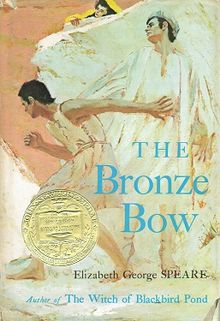
11. An award-winning classic.The Bronze Bow by Elizabeth George  Speare (Newberry Medal, 1962) (Finished around 12/8/17)

12. A Russian Classic. The Death of Ivan Ilyich by Leo Tolstoy (1886)(Finished 8/30/17)

Karen also asks that we let her know how many entries we qualify for so she doesn’t have to figure them for each person. Since I completed all twelve (even 13! 🙂 ), I’m eligible for three entries. She also asks for an email address: barbarah06 (at) gmail (dot) com.

Karen has the categories and information up for the Back to the Classics 2018 Challenge here if you want to look it over and think about participating next year. I’ve been trying to incorporate classics into my reading the last few years, and this has been a fun way to do it.

I’ll also put in a plug here for the Laura Ingalls Wilder Reading Challenge 2018, which will be hosted here in February and would dovetail nicely with the Classics Challenge. The Little House books would fit in the 19th century, woman author, and children’s categories, and some would fit in the travel or journey category.

Next week after Christmas I’ll post the list of books I’ve read this year and a list of my favorites of the year.

(Sharing with Semicolon‘s Saturday Review of Books)
Book Review: One Enchanted Christmas: A Novella

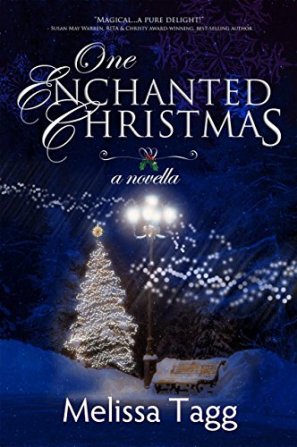
Enchanted ChristmasIn One Enchanted Christmas by Melissa Tagg, Maren Grant had one of the best nights of her life one December evening. Her book was about ready to be published, and as she developed a serious crush on Colin Renwycke, the model posing for the cover of her book, he actually asked her out. They had a wonderful, “enchanted” evening going to dinner and then a carriage ride around the city, ending with his issuing an open invitation to come visit his family’s farm, even to stay there and write for a while.

A year later, even though Maren only heard from Colin once, via a postcard reminding her about his open invitation, and at the urging of her best friend, she decided to take Colin up on his offer. She had begun to think of him as her story’s hero, and was stuck in her next novel. She decided seeing Colin’s home and town might provide her with inspiration. She couldn’t reach him, so she decided to just show up. He had told her where to find the key if the family was away, and as she tried to retrieve it, who should arrive but – not Colin, but his brother, Drew, mystified as to why this woman was trying to break into his house.

After much explanation and the fortunate recognition of her by Drew’s niece, Winnie, who had read Maren’s first book, Drew invites her into the home he shares with his sister and niece. He had inherited the family farm and was trying to make a go of it as a haven for his siblings and himself, helping out with their problems the best way he knew how. He and Colin had argued over the inheritance, and Drew had not see his brother since. He begins to entertain the hope that this author might draw Colin back to the farm.

But as Drew shows Maren around town and as she unavoidably gets pulled into some of the family issues, they find they mesh well, her playfulness a complement to his seriousness. He may not want Colin to rediscover Maren after all.

My thoughts:

I had never read Melissa Tagg before, and romances aren’t my favorite genre, but this was a delight. I loved how Maren and Drew interacted, and a quirky narrator popped up occasionally to summarize, give background information, etc. Though the story has something of a romantic comedy feel, there’s drama as well from the family issues and misunderstandings. It’s a little light on the faith element, but otherwise it’s quite an enjoyable Christmas read.

(Sharing with Semicolon‘s Saturday Review of Books and Carole’s Books You Loved)

Book Review: The Shoe Box

Shoe BoxThe Shoe Box by Francine Rivers is a novella about a boy named Timmy who has had to be removed from his home and placed with foster parents. He carries a shoe box with him everywhere he goes, but doesn’t show or tell anyone what’s in it.

Though the situation with his family is hard, his foster parents care for him tenderly.

One day he’s motivated to give his greatest treasure to a special person.

And that’s about all I can say without giving away too much, because this is really more of a short story than a novella. I wish I had known that going in, because the surprise and distraction of being only 50% through the Kindle version yet getting to the end took away from the enjoyment of the story (the rest of the Kindle version was a preview for another book). But it’s a sweet, touching story with beautiful illustrations, interspersed with the author’s family traditions and recipes.

(Sharing with Semicolon‘s Saturday Review of Books and Carole’s Books You Loved)

Book Review: French Women Don’t Get Fat

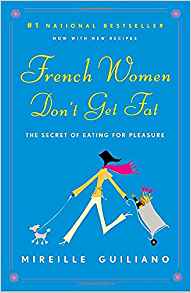
French WomenFrench Women Don’t Get Fat by Mireille Guiliano is certainly an eye-catching title, even acknowledging that it’s more likely a generalization than an absolute statement.

Mireille Guiliano was born and raised in France. When she came to America as an exchange student in college, she put on weight, and even when she went back to France, the bad habits she had picked up led to more weight gain. Her concerned mother took to to a doctor.

His prescription was first to write down everything she ate for three weeks. Then he sat down with her to evaluate her eating habits.

Like an addict’s, my body came to expect too much of what had once been blissfully intoxicating in small doses. It was time to enter rehab, but fortunately Dr. Miracle had never heard of cold turkey. (The French don’t much care for dinde at any temperature) (p. 22).

For the next three months I was to pare back, finding less rich alternatives, reserving the real thing for a special treat–as it is intended. This was less deprivation than contemplation and reprogramming, because, as I would discover, achieving a balance has more to do with the mind than with the stomach…(p. 24).

After cutting back for three months, she could gradually start adding items back in, in moderation. But she was to begin with 48 hours of nothing but water and “Magical Leek Soup” (which she says is delicious. I’ll take her word for it.)

Obviously, if one is overweight, there’s no getting around the need for cutting back somewhere. But the emphasis in this book is in the subtitle: The Secret of Eating for Pleasure. Rather than dieting, guilt, and deprivation, she advocates balance, eating foods fresh and in season, and truly enjoying one’s food, concentrating on the food and taking pleasure in it rather than eating mindlessly while doing something else. The most pleasure we get from food is in the first few bites, so savor those bites. Aim not for a certain size or number, but rather “‘well-being’ weight, the one at which a particular individual feels bien dans sa peau (comfortable in his or her own skin)…the weight at which you can say, ‘I feel good and I look good'” (p. 23).

She says that for the most part, French women don’t go to the gym, preferring to incorporate more movement into everyday life. “It always astounds me to see people who live no higher than the fourth floor taking the elevator” (p. 211).

A few other principles that stood out to me:

Do not eat on autopilot (p. 31).

On the whole, “offenders” are foods we tend to eat compulsively, with less actual pleasure than you might think. Often they are poor versions of something better (p. 32).

French women never let themselves be hungry.
French women never let themselves feel stuffed (p. 254).

French women typically think about good things to eat. American women typically worry about bad things to eat.

Learn to say no, with an eye to saying yes to something else.

Seasonality (eating the best at its peak) and seasoning (the art of choosing and combining flavors to complement food) are vital for fighting off the food lover’s worst enemy: not calories, but boredom. Eat the same thing in the same way time and again, and you’ll need more just to achieve the same pleasure. (Think of it as “taste tolerance.”) Have just one taste experience as your dinner (the big bowl of pasta, a big piece of meat), and you are bound to eat too much, as you seek satisfaction from volume instead of the interplay of flavor and texture that comes from a well thought out meal (p. 118).

She shares recipes, seasoning information, different tips for different stages of life. This being a secular book, some of its philosophies and principles I would not ascribe to, like the information on alcohol and meditative breathing.

As an adult, she divides her time between France and America, so she’s well familiar with both mindsets. She has shared these principles and practices with others through the years who have asked how she can “get away with” seeming to eat so much yet staying slim, and they have found them successful as well.

While I wouldn’t minutely follow everything she says (I don’t think I could ever get “hooked on the sensation of that tender grayish glob of seagoing goodness sliding down your throat” [p. 100] – oysters), I’ve marked some recipes to try and gleaned quite a lot of good thoughts and especially attitudes.

(Sharing with Semicolon‘s Saturday Review of Books and Carole’s Books You Loved)

Book Review: Keeping Christmas

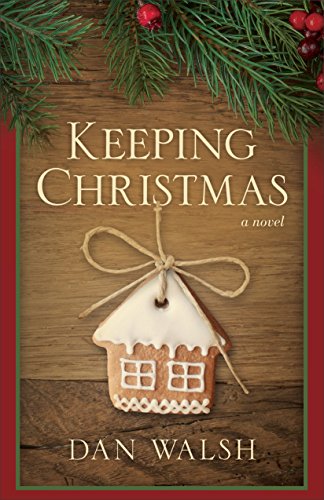
Keeping ChristmasIn Keeping Christmas by Dan Walsh, Stan and Judith Winters are empty nesters. Stan enjoys having a little more freedom of schedule and quietness, but Judith’s life has always been wrapped up in her children, and she misses them. She’s sad that they can’t come for Thanksgiving, but when she learns that none of them can come for Christmas, she falls into a deeper depression than Stan has ever seen. She doesn’t even have the heart to decorate the Christmas tree. That was something they had always done together, and most of their ornaments are what Stan calls “ugly ornaments,” ones Judith made with the kids.

Judith’s best friend does her best to distract her, with minimal success at first. Judith doesn’t think her friend understands, since all of her children and grandchildren live in town. But her friend conveys that just because they’re all there doesn’t mean everything is idyllic and shares some of the family conflicts and quandaries.

Judith and Stan had developed different and separate traditions for their after-Thanksgiving activities, and not only had they hardly talked over their meal, but Stan had even left the TV on. But as he tries to help lift Judith’s spirits, he becomes more attentive. Finally he has an idea, one involving the box of “ugly ornaments” and some sacrifice, but it’s his last option.

My thoughts:

Though predictable, this was a sweet story, not just about helping an empty nester mom’s depression, but about a husband and wife learning to reconnect after all their kids are gone. I’d be a little concerned that moms in the same situation reading this might be even more down since the Hallmark-type happy ending in the book is not likely to happen in real life. But perhaps there’s enough in everything else the characters go through and learn to be beneficial even without that ideal ending. Overall a nice, heartwarming Christmas novel.

(Sharing with Semicolon‘s Saturday Review of Books, Literary Musing Monday, and Carole’s Books You Loved)

Literary Christmas Reading Challenge

A Literary Christmas: 2017 Reading Challenge // inthebookcase.blogspot.com

Tarissa at In the Bookcase is hosting a Literary Christmas Reading Challenge, and, since I like to read Christmasy books in December, I decided to join in! More information on the challenge is here.

I have read or am planning to read the following (the ones I have already read and reviewed are linked back to my reviews):

Sarah’s Song by Karen Kingsbury
Silver Bells by Deborah Raney
Keeping Christmas by Dan Walsh
I’ll Be Home For Christmas, four novellas in one.
The Great Christmas Bowl by Susan May Warren
Gospel Meditations for Christmas by Chris Anderson, Joe Tyrpak, and Michael Barrett

That will probably be more than enough, but I have a few others on hand or in my Kindle app if needed. 🙂

Book Review: Silver Bells

Silver BellsSilver Bells by Deborah Raney opens in small-town Bristol, Kansas in August 1971. Michelle Penn has had to leave college after two years because her parents can’t afford to send both her and her brother, and they hope that having her brother in college will keep him out of Viet Nam. Michelle has found a job as the city reporter in Bristol’s small newspaper. She meets the sports reporter at the desk next to hers, and after she makes a comment about the boss’s son, she’s chagrined to learn that’s him. “First day on the job and she was toast. Burned-to-a-crisp toast.” Thankfully, the boss’s son, Rob, thinks the whole thing is funny.

He shows her the ropes and takes her along for a breaking case, which involves a domestic disturbance. While he’s snapping pictures, she’s supposed to be getting details, but compassion for the battered wife and daughter stop her in her tracks. She talks Rob into using the least graphic of the photos and goes back later to see if she can help the woman.

Later she humanizes the paper a bit by putting a fun, good-feeling photo on the front cover. At first the editor is not pleased that the cover photo did not involve politics or sports, but the response is so positive that he grudgingly assigns her the cover photo from now on. But he does warn her that he has a policy against employees dating.

Unfortunately, Michelle has already taken a liking to Rob, and he is attracted to her as well. They’re thrown together often to cover stories, but Rob’s father once again warns Michelle away from Rob and threatens her with losing her job. Rob wonders if it’s time to get out from under his father’s thumb so he can live his own life the way he wants to.

My thoughts:

This was a sweet, funny, touching, clean romance. I loved the banter between Rob and Michelle. The faith element was woven in naturally as the characters learned to seek and then to trust God with their situation. The 1970s were the era of my teens, and I enjoyed the touches particular to the times that Deborah incorporated. This era is not often written about, so it was refreshing from that aspect as well. The plot ends at Christmastime, making it a perfect Christmas read.

(Sharing with Semicolon‘s Saturday Review of Books, Literary Musing Monday, and Carole’s Books You Loved)

Book Review: The Bronze Bow

Bronze bowThe Bronze Bow by Elizabeth George Speare takes place during the time Christ lived in Israel. Daniel bar Jamin is a young Jewish man fueled by one passion: vengeance against the hated Romans. They had crucified his father and uncle when Daniel was eight, his mother died of grief, and his sister, who saw the bodies on the crosses when she was three, was so traumatized that she became excessively fearful and has never left the house since. Daniel’s grandmother took the children in, but she was so poor that she had to sell Daniel to a blacksmith as an apprentice. Daniel’s master was so cruel that Daniel escaped to the hills, where he was taken in by a band of outlaw freedom fighters.

One day Daniel, now a young man, spies another young man and his sister exploring the hills and realizes he uses to know the other young man, Joel. Though it’s not wise or safe, Daniel feels compelled to speak to them. They get reacquainted and wonder whether the freedom fighter’s leader, Rosh, could possibly be the deliverer, the Messiah they wait for. Joel wants to join Rosh’s band, so Rosh tells him to go back to town and wait, and he’ll send him word when it’s time.

Eventually Daniel’s friend, Simon the Zealot, sends word to Daniel that his grandmother is dying. As his sister, Leah’s, only living relative, Daniel feels compelled to go back and care for her, though Rosh calls him “soft.” Simon offers Daniel his blacksmith’s shop since Simon is following Jesus and not using it. Daniel finds that most people in the village, though they don’t like Roman rule, aren’t willing to fight against it. Though homesick for the free air and space of the hills, Daniel recruits Joel and other boys to a band to train to help Rosh when the time comes.

As Daniel hears of Jesus from Simon and Joel, goes to listen to his teaching, and witnesses healings, he can’t help but wonder about him and ponder his words. He wishes Jesus would team up with Rosh. But eventually he realizes Jesus’s deliverance is not so much from Roman oppression, his message is not about revenge, hatred, and war: in fact, he tells people to love their enemies. That Daniel cannot acquiesce to, so he goes his own way, which eventually leads to disaster and despair. Will Daniels’s hate destroy everything dear to him, or will his hitting rock bottom finally allow him to look up?

“Daniel,” he said. “I would have you follow me.”

“Master!….I will fight for you to the end!.”

“My loyal friend,” he said, “I would ask something much harder than that. Would you love for me to the end?”
___

It is the hate that is the enemy. Not men. Hate does not die with killing. It only springs up a hundredfold. The only thing stronger than hate is love.

My thoughts:

I came across this book while searching for an award-winning classic for the Back to the Classics challenge, and this won the Newberry medal. I was resistant to reading it, both because I figured it would be predictable and I am wary of fictionalized Bible-related stories. I chose another classic but had to lay it aside due to bad language and couldn’t find anything else, so I came back to The Bronze Bow. And I was pleasantly surprised! Though one event happened like I thought it might, the rest of the story didn’t pan out like I thought it would at all, and I was drawn in to Daniel’s story and angst. I listened to the audiobook nicely narrated by Peter Bradbury, but also checked out the hard copy from the library to go over certain passages more in depth.

I wouldn’t take my theology from this book. There are conversations and incidents involving Jesus that may not represent Him or His message entirely accurately, and the redemption described seems more about overcoming hate than personal salvation from sin (though of course overcoming hate with love is certainly a part of salvation).  But it does give an excellent feel to the times, especially to what being under a Jew under Roman occupation was like, and shows the cultural customs naturally without being didactic. The characters were well-drawn and the story drew me right in.

One thing that stood out was the sense of anticipation of waiting for the Messiah, the Deliverer, even though some people missed the point of what He was coming to deliver them from. It was interesting reading this during the Christmas season, when we commemorate the anticipation of His coming the first time, and renews in me that sense of anticipation of His coming again.

(Sharing with Literary Musing Monday and Carole’s Books You Loved)

Book Review: Sarah’s Song

Sarah's SongSarah’s Song is the third in Karen Kingsbury’s Red Glove series, but can easily be read without having read the first two.

In this story, Sarah Lindeman lives in a retirement home while fighting a losing battle with heart failure. Every Christmas she brings out twelve old yellowed envelopes with ornaments with a single word on each and places one on the tree each day. The words unfold the story of her return to the Lord and her love story with dear husband, Sam, a story involving sin, rebellion, grace, and restoration.

This Christmas, one of Sarah’s nurses, Beth, takes an interest in hearing the story unfold day by day. Sarah senses that Beth has deep needs that the details of her own story can minister to. But will Beth hear it? And will Sarah live long enough to tell it?

A couple of sentences made me wince a bit, like “All of life was a dance, the steps measured out to the music of the days” and especially gloves that “smelled of old love and days gone by.” And though the plot line is somewhat predictable, it’s a sweet, touching story and I enjoyed it.

(Sharing with Semicolon‘s Saturday Review of Books, Literary Musing Monday, and Carole’s Books You Loved)

Book Review: Washington’s Lady

Washington's Lady Washington’s Lady by Nancy Moser is a fictionalized biography of Martha Washington, wife of the U.S.A.’s first president.

The story opens with Martha at age 26 having just lost her husband of seven years, preceded by the deaths of two children. One of her two remaining children was sick with the same illness that took her husband. Despite her grief, she had to deal with the affairs of their plantation, including the complications of her husband’s neglect to leave a will.

Because she was “the wealthiest widow in Virginia,” “expected to remarry in a timely fashion,” it wasn’t long before a number of suitors sought her hand. No one interested her, however, until she met Colonel Washington. They conversed easily and were drawn to each other, eventually marrying. George tried to help her sort out the issues at her plantation, but eventually they moved to his smaller estate at Mount Vernon.

Trouble was stirring, however, with “Mother England.” Ludicrous laws and taxes, low quality goods sold to colonists at inflated prices, and a number of other issues were moving the populace from dissatisfaction to revolt. George left Mount Vernon as a representative, but eventually became the leader of the armed forces, not returning home for six years.

The story is told from Martha’s point of view, so we hear of battles through letters and occasional visits Martha made to wherever the troops were camping. She put herself to good use, sewing and repairing uniforms, organizing sewing circles to do the same, and visiting the men. Once she and the family had to flee Mt. Vernon as British forces approached, but a storm kept the enemy back. Two schemes to kidnap her failed. Other times newspapers spread lies, such as one stating that she was loyal to Britain.

At one point, overwhelmed by the suffering of the men and the lack of food, clothing and supplies for them at Valley Forge, she lamented that she could not do more. But she realized “the fate of many men depended on the fate of this one. And this one I could help.”

As the conflict drew to a close, many realized the revolution was all for nothing if the fledgling country could not get off to a good start, so talks began as to how best to achieve that. The result was George’s being elected president, not something he wanted at first. He longed for nothing more than to go home and be with his family and get his neglected house in order. But many felt that, as he had unified an army of untrained disparate individuals, he was the best to try to do the same with the thirteen colonies.

Martha was not pleased. All she wanted was for both of them to go home, too. Plus there was nothing for her to do as the president’s wife. She couldn’t even take a walk with her husband without being mobbed, the price of fame neither of them wanted. Perhaps because of all this, the book skips ten years over the time of George’s presidency to the last day of his life, then sums up the couple of years that Martha survived him.

Like most people, Martha had a mixture of qualities. She was unpretentious, strong, feisty, practical, capable in many respects. She had a constant stream of visitors and enjoyed hospitality until it became almost constant as they became more well known. She was also a self-proclaimed worrier. Her one main weakness was her son, Jacky. Perhaps because her husband and other children all passed away, and this son had been dangerously ill, plus for reasons unknown she and George were not able to have their own children, she was over-protective of him, and not only did she not discipline him, she did not let George do so, either. Jacky ran into all kind of trouble as a teenager and young man, seemed to settle down somewhat when he married, but then went back to his undisciplined, self-willed ways later on, and died leaving a wife and four children, the youngest two of whom George and Martha took in. Martha blamed herself, but then she repeated the very same mistakes with her one grandson while being strict with her granddaughters.

After George’s death, she destroyed all but a couple of their letters, perhaps to keep at least that part of their private lives from public view, understandably.

I also enjoyed the author’s several pages at the end explaining her interest in Martha and what things were made up or compiled and what things were real. Conversations, of course, needed imagination to recreate, but she based the story on as much fact as she could discover.

Besides learning more about Martha and George, it was also neat to see glimpses of other historical figures as well and to get the feel of those times. This was a fascinating and enjoyable book.

(Sharing with Semicolon‘s Saturday Review of Books, Literary Musing Monday, Carole’s Books You Loved)