Book Review: The Green Ember

Green EmberThe Green Ember by S. D. Smith is a children’s story about rabbits. Brother and sister Heather and Picket live a normal (for storybook rabbits), almost idyllic life with their parents and baby brother until one day when a mysterious stranger comes to talk with their parents. Heather and Picket are shooed out to pick berries, but while they are gone, their home is attacked by wolves and burned. Not knowing where their parents are and being spotted by wolves, they try for a harrowing escape, being rescued at the last minute by an uncle they didn’t know they had and his adopted son, Smalls.

Their uncle, Wilfred, and Smalls take them to a community of rabbits hidden away. They see and hear evidences of other wolf attacks. While rabbit forces are training to fight the wolves, rabbit artisans and workmen are keeping their skills honed for a time when the heir of their fallen king will rise up and claim his place and lead them to a season of peace. When injustices or suffering occur, they comfort themselves with the saying, “It shall not be so in the Mended Wood.” Meanwhile discord threatens the community, and Heather and Picket struggle to find their place, especially when they learn their family’s history with the king.

My thoughts:

I don’t read children’s stories other than classics often, though I agree with C. S. Lewis that a good children’s story should appeal to adults, too.

I was expecting to be wowed, and maybe that’s the biggest problem with why I wasn’t. I think when expectations are so high, that can actually set one up for disappointment. I’ve seen it compared to Narnia, and though there are similarities, I think such a comparison helps set up those lofty expectations and the resulting letdown.

It’s not a bad story at all. It has a lot of great elements. I tend to enjoy “coming of age during adversity” type stories generally. I bought and looked back through the Kindle version after listening to the audio, and the things that bothered me while listening didn’t stand out so much while reading. I am not sure if that’s because it lends itself better to being read than listened to or if I was already familiar with it, so certain things did not then stand out.

I don’t mean to sound nitpicky and critical. I really don’t read or listen to books with an editing pen handy, ready to pounce on any little infraction. But there were a few things that were like speed bumps, pulling me out of the story to wonder why some things were phrased the way they were.

I think the arc of the story, the characters, the conflict, and most everything else is fine: it’s just these little things that could be tightened up to make it stronger, or at least provide fewer distractions.

To be fair, let me share some of the great quotes that stood out to me:

“If you aren’t angry about the wicked things happening in the world all around, then you don’t have a soul.”

“Why not just apologize to Smalls, to everyone, and move on? But he couldn’t do it. It would feel too much like surrendering ground he felt entitled to.” Thought that was quite insightful – that’s exactly how one feels when not wanting to apologize.

“All of life is a battle against fear. We fight it on one front, and it sneaks around to our flank.”

My place beside you,
My life for yours,
‘Til the Green Ember rises
Or the end of the world!

I like the way the community is not just surviving, but also focusing on and preparing for the time to come: “Here we anticipate the Mended Wood, the Great Wood healed. Those painters are seeing what is not yet but we hope will be. They are really seeing, but it’s a different kind of sight. They anticipate the Mended Wood. So do all in this community in our various ways. We sing about it. We paint it. We make crutches and soups and have gardens and weddings and babies. This is a place out of time. A window into the past and the future world. We are heralds, you see, my dear, saying what will surely come. And we prepare with all our might, to be ready when once again we are free.”

The story ends rather abruptly, obviously setting up for a sequel, which is due out in September: Ember Falls. Between these two a prequel was published, The Black Star of Kingston.

It’s not an overtly Christian book, but there are spiritual parallels, mainly of a fractured, hurting world longing for its king to come, and many spiritual truths along the way. A good discussion of this aspect is in this review.

The illustrations by Zach Franzen are gorgeous. I was glad the Kindle included them.

If you’d like to read a much more enthusiastic review, the great majority on Amazon or Goodreads are positive.

(Sharing at Semicolon‘s Saturday Review of Books)
Save

Save

Save

Save

Bookcases

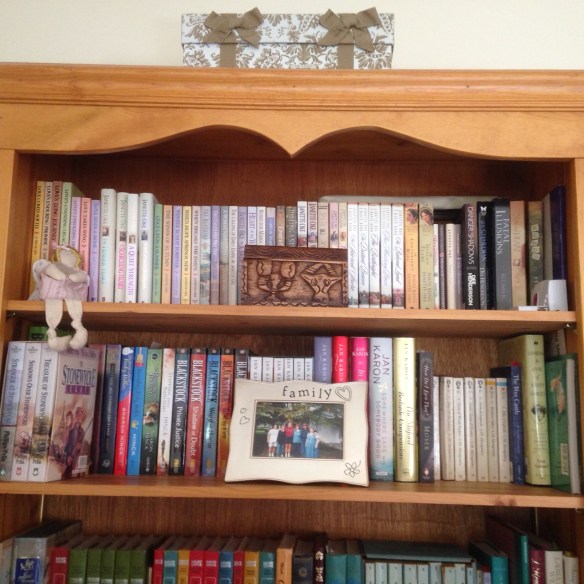
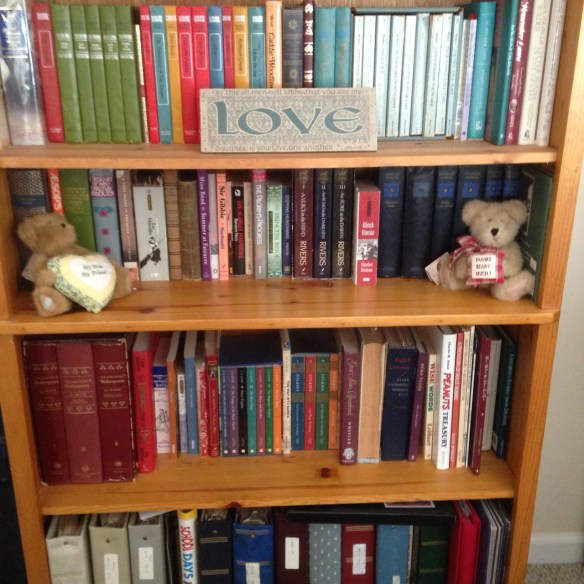
When I visit someone’s home and see an assortment of books, at some point during the visit I like to meander over and see what books my host has. I’ve been thinking for some time about sharing my own bookcases. Someone mentioned a long time ago that she thought it would be interesting to see blogging friends’ book collections, and then recently Melanie shared her own, which brought the idea to the forefront of my thinking again and spurred me on to share my own.

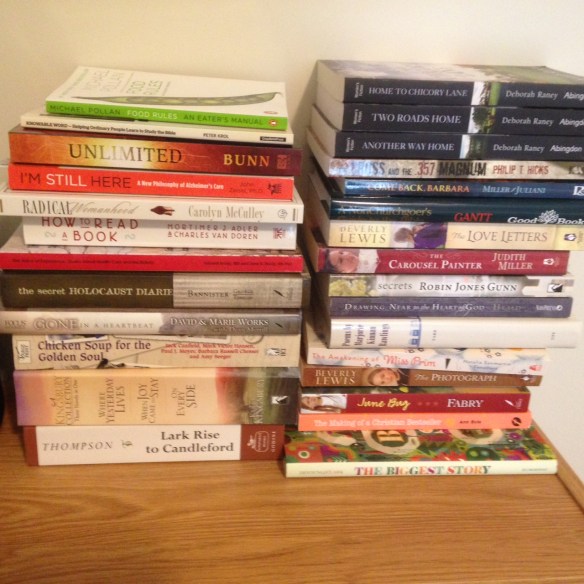
So these are the main two in the living room:

IMG_1812(1)

My husband made one in the early years of our marriage, and then as my collection grew, he made a second one to match. But he says we don’t have any room for more. 🙂 And we truly don’t, unless we get rid of something else which we’re not ready to do yet. He doesn’t quite understand my penchant for keeping books except for reference. He figures once you know the story, you don’t need the book any more. 🙂 But he tolerates my obsession as much as he can. To me, most of my books are treasured friends, and some I do read over and over. Others I might not read as often, but I’m still not ready to let them go. But I have had to purge my collection when we moved here and have had to delete a few here and there as I have added others and needed a space.

Above the couch is most of my Boyd’s Bear figurine collection. I like having them behind glass where I can see them but they don’t get dusty, but they do seem a little farther removed than when they were out and around the room. But not having to dust wins. 🙂 To the right you can see a bit of Timothy’s corner, where we keep toys for when he’s here.

On the bookcase on the left I have Christian fiction and classics and some assorted others along with some photo albums at the bottom:

IMG_1814

IMG_1815

The carved wooden box was a gift from my middle son, Jason, from a mission trip he took with his youth group to Cameroon. The bears were gifts from my kids: Timothy plays with these sometimes now.

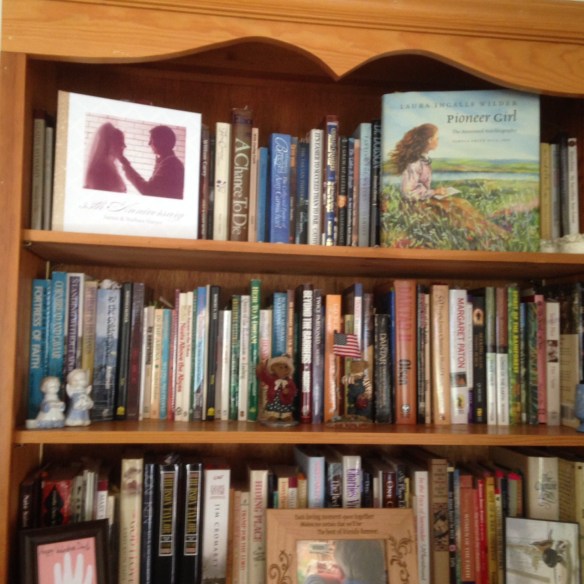
The one on the right holds biographies, assorted Christian nonfiction, and college yearbooks.

IMG_1817

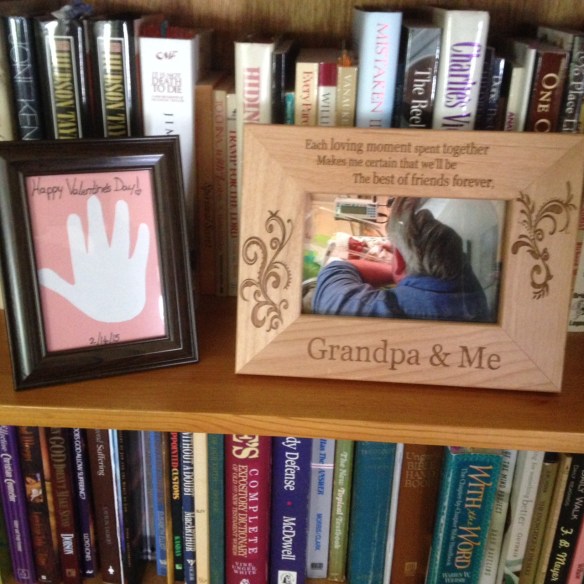
This got cut off in the above picture, but on the left is a special Valentine from Timothy, and on the right is a special photo from Jason and Mittu of my husband and Timothy when he was in the NICU. My reflection is blurring it a little, but not the essential part.

IMG_1826

IMG_1818

Some of you may remember that the book with the wedding photo was one our kids put together for our 35th anniversary, and it’s one of my treasures. 🙂 I have a set of Matthew Henry commentaries on the bottom shelf that were given to me 35 or so years ago by my former youth pastor when he left that position to go to Mexico as a missionary. I used them some, but the commentary on each verse is quite long, so I just don’t dig them out often unless I am really puzzling over something. I keep thinking I should sell them online or give them to someone, but then I am reluctant to do so in case I just might want to use them again. 🙂 I know you can find some of them online: they probably have the complete set online somewhere, but so far when I have looked, I’ve found condensed versions which were  a little easier to read but didn’t make quite as much sense with what was left out.

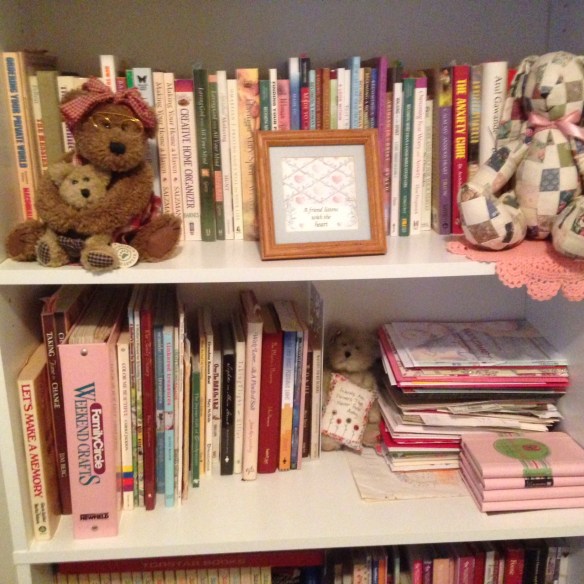
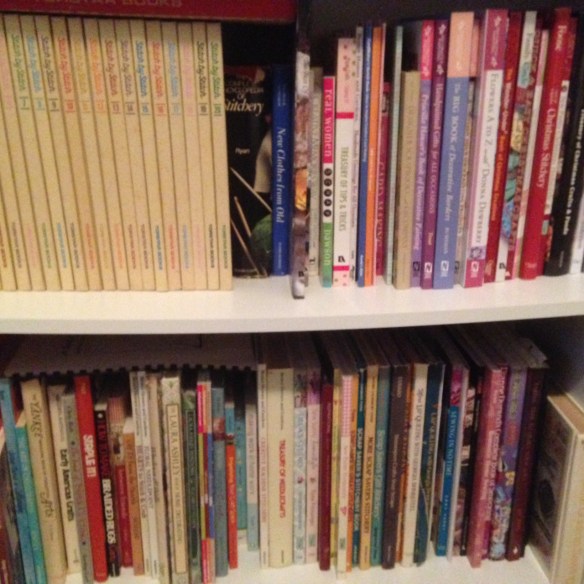
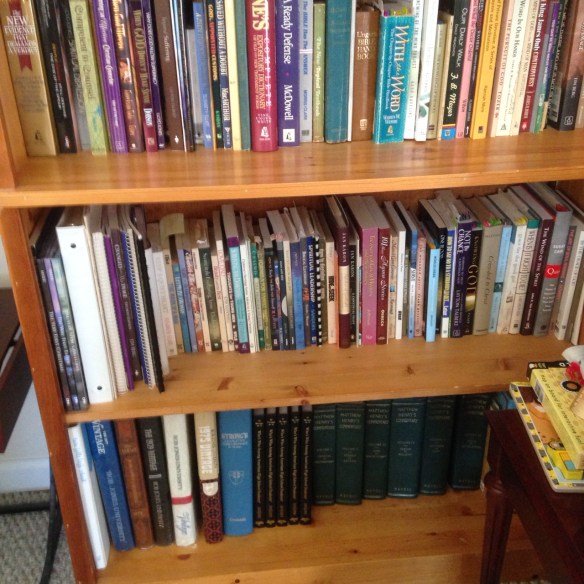
This one is in my sewing/ craft room and holds mainly craft-related books or Christian non-fiction relating specifically to women. I just got rid of a number of old “how to save money and live frugally” books because I figured they were out of date now, plus you can find a lot of that kind of thing online these days.:

IMG_1821

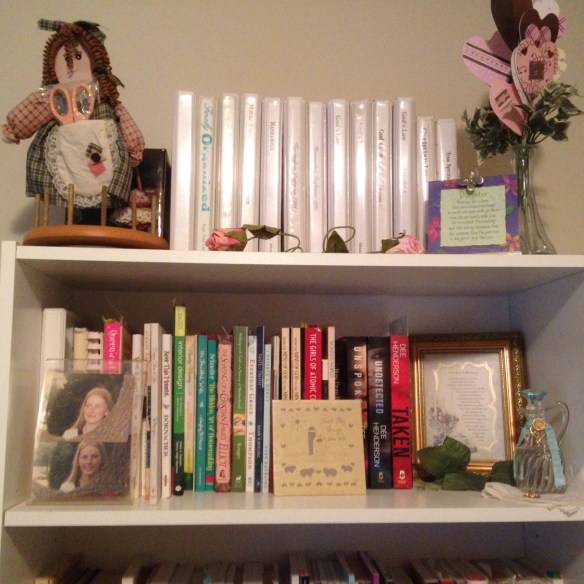
On top are several sets of cassette-taped messages, some from women’s conferences, some a few special sermon series.

IMG_1822

My mom gave me the little girl on the top left: she’s designed to hold thread and notions, but I don’t want to leave my thread out to get dusty. But I think she’s cute. 🙂 The hearts in the vase on the right were leftover from a ladies’ luncheon a few years ago. The girl in the photos was me in college. 🙂 I think my husband had those in his dorm room when we were dating, and I just rediscovered them recently and stuck them there for now. I have a few Dee Henderson and other books there partly because there was no room elsewhere and partly because this room doubles as a guest room, and someone might like to read them while visiting.

IMG_1823

The little pile there is cards, notes, mementos that I need to figure out what to do with. 🙂

IMG_1824

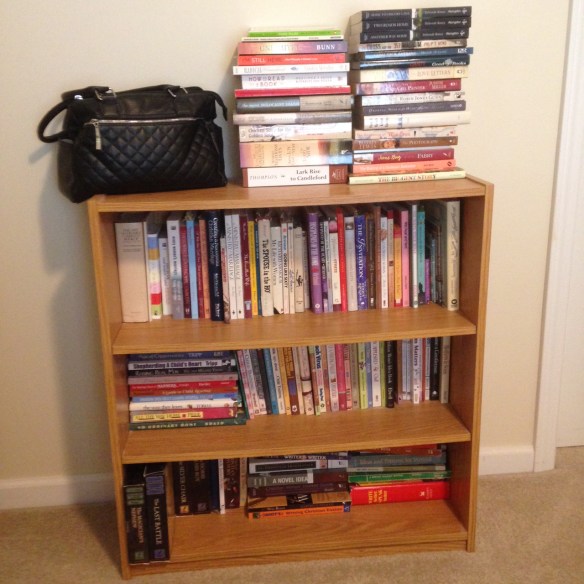
I admit I cleaned up this last one pretty extensively before taking a picture. 🙂 It’s a small one in my bedroom, and I plop my purse there on top. When I go out again, I usually clean any receipts and papers from it and just leave it in a pile until I decide whether I need to keep them. Plus any new books or books I’ve just finished but haven’t decided whether or where to keep end up in piles here. So I sorted and organized all of that. This is kind of a hodgepodge, but it’s mostly humor, women’s books, child-rearing books, and writing books.

IMG_1819

The pile on top is To Be Read books (and this doesn’t include the bunch on my Kindle and a few in a drawer in my nightstand!

IMG_1820

In addition to these, I have, I think, three boxes in various closets. I do need to go through them and probably give most of them away: they’re not doing anyone any good in a closet. When we first moved here I just wasn’t ready to get rid of them yet, but it’s been 6 years now…so probably most of them can go.

I’m sorry some of these turned out a bit blurry – they looked clear when I took them, but enlarged they are not very crisp.

What’s on your bookshelves? I’d love to see!

Book Review: Tuck Everlasting

TuckI hadn’t planned to read Tuck Everlasting by Natalie Babbitt until I saw Carrie’s review of it, and even then, it wasn’t high on the TBR list. But a couple of weeks ago I was looking for a quote about August and came across this one:

“The first week of August hangs at the very top of the summer, the top of the live-long year, like the highest seat of a Ferris wheel when it pauses in its turning. The weeks that come before are only a climb from balmy spring, and those that follow a drop to the chill of autumn, but the first week of August is motionless, and hot.”

It’s the opening sentence from Tuck Everlasting, and it so arrested me that I had to read the book. Thankfully it was available for the Kindle for a good price.

Ten year old Winnie Foster is contemplating running away. As an only child of a fairly strict and controlling family, she’s restless to get out from under the constant watchfulness and longs to do “something interesting–something that’s all mine. Something that would make some kind of difference in the world.” She can’t quite muster the courage to run away, but she does venture out into the woods near her family’s home, something she has never done before. She is startled to come upon a teenage boy drinking from a stream, and they converse easily. But when she wants a drink from the stream, he tries to keep her from doing so, which raises her ire. When the boy’s mother and brother happen along, they whisk Winnie away to their home.

After Winnie simmers down from being kidnapped, the Tuck family explains that they had to do what they did, and after they explain, they’ll be very glad to take her back home the next day. They share that 87 years ago, they came across this same woods and spring and drank from it, as did their horse. They didn’t know at first that anything was different. But when different ones of them had serious accidents but didn’t die, and after a while they realized that none of them was aging (not even the horse), they tried to trace back the cause. When they came back to the spring years later, the tree near where they stopped had not grown at all, and the “T” the father had carved there looked freshly done. So they covered up the spring with rocks. They could not stay in one place for long because when people noticed they didn’t age, they accused them of witchcraft.

Winnie isn’t sure she believes the story, but she likes the Tucks. The father, Angus, explains why it is so important for her to keep their secret. But what neither of them realize is that the secret is already out: a nameless man in a yellow suit has been following, questioning, and has overheard. But he’s not inclined to keep any secrets: in fact, he wants to profit by them.

I’ll leave the story there so as not to spoil it for those who haven’t read it. As I read, I kept wondering what the author was trying to say about life and death. But according to one interview, she said:

People are always looking for a lesson in it, but I don’t think it has one. It presents dilemmas, and I think that’s what life does! I dealt with a lot of dilemmas before I even started school. I think a lot of adults would like to think that things are simple for kids, but that’s not so. I get a lot of letters from students and teachers saying they spend a lot of time debating the things that happen in Tuck.… I think the book doesn’t present any lessons about what’s right and what’s wrong, but it does point out how difficult these decisions are.

(Warning: The interview does contain vital plot points, so it might be best read after reading the book.)

Each of the Tucks has a different viewpoint about their situation. The mother, Mae, feels that there is nothing they can do about it so they may as well make the best of it. The father, Tuck, mourns the fact that in the normal course of things, they’re “stuck,” that everything and everyone else is “moving and growing and changing” except for them.

Your time’s not now. But dying’s part of the wheel, right there next to being born. You can’t pick out the pieces you like and leave the rest. Being part of the whole thing, that’s the blessing. But it’s passing us by, us Tucks. Living’s heavy work, but off to one side, the way we are, it’s useless, too. It don’t make sense. If I knowed how to climb back on the wheel, I’d do it in a minute. You can’t have living without dying. So you can’t call it living, what we got. We just are, we just be, like rocks beside the road.

Miles, the oldest son, has lost the most. He was married with two children when his wife noticed he wasn’t aging, and she took the children and left, fearing witchcraft. This was before they figured out what caused it, so he had no explanation. He tells Winnie, “It’s no good hiding yourself away, like Pa and lots of other people. And it’s no good just thinking of your own pleasure, either. People got to do something useful if they’re going to take up space in the world.”

And Jesse, forever seventeen, thinks life to be enjoyed to the hilt.

I’ve thought that if I had the option to stay forever at one certain age, which would I choose? I don’t know – they all have their advantages and disadvantages. But being stuck at one age, you would lose that anticipation of what’s around the next bend. Thankfully eternal life in heaven will be a different situation.

I thought the story was certainly interesting and thought-provoking, and the characters were well-drawn and likeable. But what stood out to me was Babbitt’s writing. Beside the quote at the beginning, these sentences or phrases stood out to me:

…A stationery cloud of hysterical gnats suspended in the heat above the road.

The toad…gave a heave of muscles and plopped its heavy mudball of a body a few inches farther away from her.

…An enormous tree thrust up, its thick roots rumpling the ground ten feet around in every direction.

The sun was dropping fast now, a soft red sliding egg yolk…

I have not seen the recent film, but I’d like to some day.

(Sharing at Semicolon‘s Saturday Review of Books)

Save

Save

Save

Book Review: More Things in Heaven and Earth

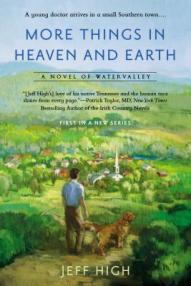
More ThingsMore Things in Heaven and Earth by Jeff High first came to my attention through this post about “gentle fiction.” He described the kind of books and stories I love to read, and he writes about Tennessee, where he grew up and where I have been living for six years now. So I wanted to give his books a try.

In this story, Luke Bradford has just finished medical school, and his first practice in in the small town of Watervalley, TN. He would have preferred a position as a research assistant, but that doesn’t pay as well, and he has school loans to pay off. He also would have preferred a large city to a small town, but a program that will allow his school bills to be paid off for a few years of service in an out-of-the-way town was one that could not be passed up. So he enters Watervalley reluctantly.

The book is peopled by a variety of characters. After accidentally causing a fire in his oven, which set off an alarm at the fire department, the mayor suggests that Luke hire a housekeeper. He sends over Connie Thompson, a “large and robust black woman in her mid-fifties” who brooks no nonsense. But she does cook well and keeps house nicely, and it’s fun to see their relationship develop. His neighbor is a 12 year old boy who likes to wear bicycle helmets and whose mother keeps to herself. Finding an apple orchard on a hike and getting nearly shot by its owner starts a tentative friendship with John Harris, former leading citizen of Watervalley who has become an intelligent but bitter near-recluse. And every encounter with the beautiful Christine Chambers goes awry, leaving him with little hope of forming any kind of relationship, though he still likes to try.

The author has degrees in literature and nursing, and his knowledge of both show through in his writing. Luke’s aunt had taken him in when his parents were killed when he was twelve, and her love of literature passed on to him. At one point she had given him a book of poetry with a note that his medical knowledge would help people physically, but words had the power of “hope and joy and courage” and could help hearts. The title of the book, quoted in it at one point, is from Hamlet: “There are more things in heaven and earth, Horatio, than are dreamt of in your philosophy.” In a sense that could be the theme of the book. Luke looks down on the people of Watervalley at first, but finds a goodness and kindness in them he admires; he holds himself aloof and feels out of place, but eventually finds a home. Though I wouldn’t call this Christian fiction, Luke doesn’t have much of a place for faith in his life at first, but does come to (or returns to) the conviction that there is a caring Designer behind life.

It took me a while to warm up to the characters. The first couple of chapters involved a series of comic disasters, which are okay occasionally, but are not the type of stories I enjoy. But the book grew on me the further I read (or listened), and by the end I loved it. The only thing that mars it is a smattering of bad language.

I listened to the audiobook wonderfully read by Will Damron. There is more about Watervalley at WatervalleyBooks.com, particularly How It All Began.

(Sharing at Semicolon‘s Saturday Review of Books)
 

Save

Book Review: Leaving Oxford

Leaving OxfordThe setting for Leaving Oxford by Janet W. Ferguson is not in England, but in a small town in Mississippi. There advertising expert Sarah Beth LeClair works remotely for her company in CA and teaches a few classes at the University of Mississippi. A trauma has left her suffering from severe panic attacks, and she only feels safe in Oxford, where she grew up. Because of the limitations of her anxieties, she avoids getting into a dating relationship. But a new coach from FL enters her world as a friend and eventually becomes something more. When he has an opportunity to advance in his career by taking a college coaching position in another state, that puts him in a dilemma with the woman he has come to love who can’t leave town.

I thought the first chapter, especially about seven paragraphs in, was just kind of silly, but knowing the subject matter, I knew it would have to get deeper before long. And it did. Overall it was a good story, though I felt the writing fell a little flat in some places. I loved the cover.

The thing I appreciated most about the book will require me to back up to explain. I am a fan of Christian fiction, but some plot lines have everything being resolved in one act of repentance or in the character getting right whatever it is he or she needs to get right in their hearts, and they live happily ever after, when in real life, that act of repentance is just the starting point, not the end. For instance, in one book I read years ago, a couple had a troubled marriage and were even planning to divorce after an event in their daughter’s life. They were just marking time until they could get to that point. The author ended the book in a climatic and dramatic surrender of each to the Lord and to acceptance of each other. In real life, that would be a beginning, but it would still take a lot of work for the marriage to recover from everything it had gone through.

That said, I was happy to see that this author didn’t go that route. Though there is drama that advances the characters to where they need to be, there is also acknowledgment that change and recovery are journeys.

My favorite quote from the book: “Put God first. Don’t confuse passion for love. Love includes the work that happens after the passion. Love becomes a choice.”

Oddest incident in the book: the folk song “The Water Is Wide” is used in an engagement and played at a wedding. It’s one of my favorites and has a gorgeous melody, and the first stanza sounds very romantic – but in most versions, it’s about a love that “proved false” and “grows old and waxes cold And fades away like the morning dew.”

Some readers would want to know that a few of the characters discuss past indiscretions in their relationships, but not in an explicit way.

So, overall it was a good story, though I probably wouldn’t place it on my top ten favorites of the year. But there is a sequel I am considering reading to see what happens to one of the other characters.

(Sharing at Semicolon‘s Saturday Review of Books)
Save

Save

What’s On Your Nightstand: July 2016

What's On Your NightstandThe folks at 5 Minutes For Books host What’s On Your Nightstand? the last Tuesday of each month in which we can share about the books we have been reading and/or plan to read.

There are a few days left in July, but the fourth Tuesday is here, and that means WOYN!

Since last time I have completed:

Pioneer Girl: The Annotated Autobiography by Laura Ingalls Wilder and Pamela Smith Hill. Finally! And enjoyed it very much. A very thorough and exceedingly well done resource. Reviewed here.

Eight Twenty Eight: When Love Didn’t Give Up by Ian and Larissa Murphy, nonfiction. They were engaged when Ian was in a serious car accident and suffered brain trauma. Reviewed here.

City of Tranquil Light by Bo Caldwell, audiobook, reviewed here. Lovely novelization of the author’s grandparents’ time as missionaries in China in the early 20th century.

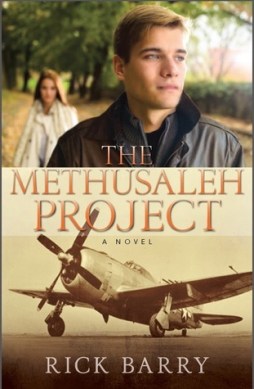
 The Methuselah Project by Rick Barry, fiction, reviewed here. WWII American pilot shot down in Germany is experimented on by  Nazi doctor trying to accelerate the body’s healing and prolong life. Excellent!

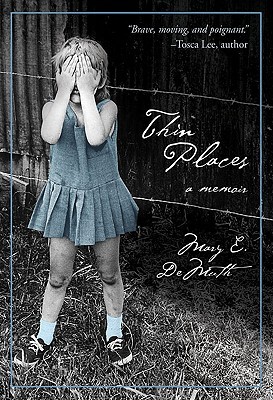
Thin Places: A Memoir on by Mary DeMuth, nonfiction, reviewed here. God’s grace in healing from childhood trauma including drug-using parents and rape.

They Almost Always Come Home by Cynthia Ruchti, fiction, reviewed here. Libby and Greg’s marriage is crumbling due to blame, guilt, and emotional distancing, and Libby is planning to leave, but then Greg goes missing and she must find him.

Great British Short Stories: A Vintage Collection of Classic Tales, audiobook, reviewed here. Not my favorite, but not unpleasant.

C. S. Lewis’ Letters to Children, reviewed here, in conjunction with Carrie’s Chronicles of Narnia Reading Challenge. Enjoyed it quite a lot.

I’m currently reading:

Ten Fingers For God: The Life and Work of Dr. Paul Brand by Paul Brand. A reread from 20 or so years ago.

Leaving Oxford by Janet W. Ferguson. Just started this one – not sure what I think yet.

More Things in Heaven and Earth by Jeff High. Ditto.

Give Them Grace: Dazzling Your Kids with the Love of Jesus by Elyse M. Fitzpatrick and Jessica Thompson

Be Mature (James): Growing Up in Christ by Warren Wiersbe

Up Next:

Home to Chicory Lane by Deborah Raney. I know I have listed that several times, and it keeps getting pushed back, I think partly because it’s the first in a series, and I think I am going to want to read the series straight through once I start it.

I’m Still Here: A New Philosophy of Alzheimer’s Care by John Zeisel, HT to Lisa’s review.

June Bug by Chris Fabry

Waiting For Peter by Elizabeth Musser

Happy Reading!

Save

Book Review: C. S. Lewis Letters to Children

CS lettersI rediscovered C. S. Lewis’ Letters to Children, edited by Lyle W. Dorsett and Marjorie Lamp Mead, on my bookshelf when I was trying to rearrange the books to make room for more. I had forgotten I even had it and had never read it, so I decided to save it for Carrie’s Chronicles of Narnia Reading Challenge this month.

The book was published after Lewis’s lifetime: my copy was published in 1985, about 20 years after Lewis’s death, but I am not sure if that is when it was first published. It’s a short book: 114 pages not counting the bibliographies at the back. The book opens with a forward by Doug Gresham, Lewis’s stepson, a brief introduction, and a short overview of Lewis’s childhood. The editors note that the letters are only representative samples: there were way too many to include all, and many of them answer the same questions.

What the editors don’t say is how they obtained the letters. He wrote most of them “in longhand with a dip-pen and ink” (p. 4), telling a correspondent in one of the letters, “You can drive a typewriter, which I could no more drive than a locomotive (I’d sooner drive the locomotive too)” (p. 77) (fascinating article on other reasons why he did not use a typewriter is here).  Did he make carbon copies, or did some of the correspondents send their letters back to his estate? We’re not told, but we are told that “Originals or photocopies of the letters in this book are housed in either the Marion E. Wade Collection, Wheaton College, Illinois, or the Bodleian Library, Oxford” (. 7).

When reading the Narnia series, I have often marveled that a man with the education and brainpower Lewis had, and with so little real-life experience with children, could communicate so effectively with them. He’s neither condescending or cloying. In “On Writing to Children,” Lewis said, “The child as reader is neither to be patronized nor idolized: we talk to him as man to man.” That same perspective is reflected in his letters.

Many of the children’s letters ask about the Narnia series: questions about specific characters, when the next book would be out, why wasn’t he going to write more than seven, etc. Some of them carried on regular correspondence with him for years (as many as twenty years in one case), sending him pictures they made or bits of their own writing, which he critiqued honestly. Most are very short and to the point. One of the longest and most touching was to the mother of a boy who had written to him because the boy was afraid he loved Aslan more than Jesus.

Sometimes he shares just a glimpse of his home life and responsibilities: when the people he was caring for had problems, when his wife was ill, when he himself was ill. On a sad note, to his goddaughter, a few months after his wife died: “I couldn’t come to the wedding, my dear. I haven’t the pluck. Any wedding, for reasons you know, would turn me inside out now” (p. 94). And a funny one: “I’ve been having a…cyst lanced on the back of my neck: the most serious result is that I can never at present get my whole head & shoulders under water in my bath. (I like getting down like a Hippo with only my nostrils out)” (p. 37).

Assorted notes and quotes:

  • When one girl wanted to know Aslan’s “other name,” he didn’t tell her directly but gave her several clues.
  • When one girl questioned why the Pevensie children grow up in Narnia but are still children in our world: “I feel sure I am right to make them grow up in Narnia. Of course they will grow up in this world too. You’ll see. You see, I don’t think age matters so much as people think. Parts of me are still 12 and I think other parts were already 50 when I was 12: so I don’t feel it very odd that they grow up in Narnia while they are children in England” (p. 34).
  • He tells several that the books are not an allegory like Pilgrim’s Progress in which everything represents something. They’re a “supposing” of what it might be like if there was another world with people that needed saving and Jesus came in the form of a lion rather than a man. “Reepiceep and Nick-i-brick don’t, in that sense, represent anyone. But of course anyone who devotes his whole life to seeking Heaven will be like Reepicheep, and anyone who wants some worldly thing so badly that he is ready to use wicked means to get it will be likely to behave like Nick-i-brick” (p. 45).
  • A bit of humor: “I never saw a picture of a baby shower before. I had to put up my umbrella to look at it” (p. 47).
  • On what happened to Susan: “The books don’t tell us what happened to Susan. She is left alive in this world at the end, having by then turned into a rather silly, conceited young woman. But there is plenty of time for her to mend, and perhaps she will get to Aslan’s country in the end–in her own way. I think that whatever she had seen in Narnia she could (if she was the sort that wanted to) persuade herself, as she grew up, that it was ‘all nonsense'” (p. 67).
  • “A perfect man would never act from a sense of duty; he’d always want the right thing more than the wrong one. Duty is only a substitute for love (of God and of other people), like a crutch, which is a substitute for a leg. Most of us need the crutch at times; but of course it’s idiotic to use the crutch when our own legs (our own loves, tastes, habits etc) can do the journey on their own!” (p. 72).
  • “American university teachers have told me that most of their freshmen come from schools where the standard was far too low and therefore think themselves far better than they really are. This means that they lose heart (and their tempers too) when told, as they have to be told, their real level” (p. 84).
  • “You know, my dear, it’s only doing you harm to write vers libre. After you have been writing strict, rhyming verse for about 10 years it will be time to venture on the free sort. At present it only encourages you to write prose not so good as your ordinary prose and type it like verse. Sorry to be a pig!” (p. 87).
  • When asked which of his books he liked best: Till We Have Faces (though he felt it “attracted less attention than any book I ever wrote,” p. 107) and Perelandra (p. 95).
  • He often closed his notes by asking them to pray for him.

I loved this window into Lewis’s life and thinking.

Chronicles of Narnia Reading Challenge

 (Sharing at Semicolon‘s Saturday Review of Books)
 

Save

Book Review: City of Tranquil Light

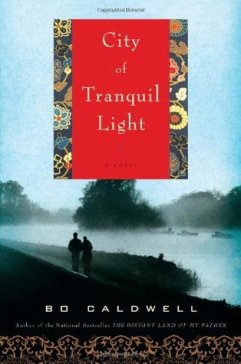
TranquilI’ve had City of Tranquil Light by Bo Caldwell on my TBR list for a while now, at least ever since seeing Sherry’s review. When I needed a new audiobook to listen to and had finished my Classics challenge, I was reminded of this book.

Though the story is loosely based on the author’s grandparents, it is fiction and incorporates elements from other people’s lives as well. It’s told in the first person from Will’s point of view, interspersed with sections from Katherine’s journal.

Will Kiehn was the son of a Mennonite farmer in Oklahoma in the early 1900s whose only plan was to continue the farming he loved. But when he was twenty-one, a friend of the family who was a missionary to China came through, visiting various churches on furlough. When he preached, Will felt “found out” and could hardly speak at dinner. When their guest, Edward, spoke of China at their table, he “could not look away.” When asked if he might consider going to China, Will’s siblings laughed because he “was the least likely to leave,” not good at public speaking, “quiet and shy” and “not a good student.” He felt he hadn’t “‘any training or gifts of that kind.’ Edward said, ‘The Giver of those gifts may feel otherwise…A torch’s one qualification is that it be fitted to the master’s hand. God’s chosen are often not talented or wise or gifted as the world judges. Our Lord sees what is inside and that is why He calls whom He does.'”

Will wrestled with these truths for a few days and finally surrendered. “Despite the fact that it would mean leaving what I loved most in the world, I felt not the sadness and dread I had expected but a sense of freedom and release. The tightness in me loosened like a cut cord, and I was joyful.”

He was so green that when he set out to return with Edward a few weeks later, he had given no thought at all to finances. His mother foresaw that and gave him traveling funds. There was no deputation: I assume the mission paid missionaries’ salaries.

A few other recruits sailed with Will and Edward, among them Edward’s sister-in-law, Katherine. She only saw Will as a boy, “clumsy,” “awkward,” and “bothersome,” but her brother-in-law’s excitement about him “makes me believe there must be more to this Will than I can see.” On the voyage and then during their first months in China, they began to appreciate qualities about each other, and their love story is tenderly told.

After they marry, they travel to Kuang P’ing Ch’eng— City of Tranquil Light to start a church. Theirs is not a story of giant super-heroes of the faith, but of quiet, ordinary people faithfully walking with God and working with Him, people with whom most readers could relate. The story of their first convert, his wife’s eventual coming to faith, and the birth and loss of their daughter, are all touchingly told. The beginning and growth of the church, laboring against superstition and anti-foreign sentiment, trials of bandits, famine, civil war, and the influx of Communism draw them close to the people and city they love.

A few standout quotes:

After the loss of their child and during a time her husband is missing, Katherine writes, “My faith feels tattered and threadbare and I am ashamed. What good is it if it does not see me through pain? But a scrap of faith is better than nothing, so I cling to it tightly.”

“I find myself questioning my Lord’s ways; I do not understand why He would place a longing in my heart that He doesn’t plan to fulfill. But whys don’t get me anywhere; they just lead me around in circles. So I pray I can accept this painful lack, and if my prayers are half-hearted, I know they are still heard” (pp. 157-158).

During famine, Will is asked:

“Why do you stay with us here when you could so easily go to your home and eat your fill?”

“My home is here. And if my belly were full but my heart empty, what would I gain?”

“Ah,” he said. “It is a marvel nonetheless for a foreign-born to endure our pain” (p. 166).

In an encounter with an enemy solider:

“You preach the man Jesus, do you not?”

“I do.”

“Are you not aware that what is well suited to you may be ill adapted to others?”

“I am…but it is not a question of what is suited to me. It is a question of obeying my God and passing on what has been given to me. I would be remiss if I kept it to myself.”

“You believe it is your duty to impose that truth on other nations?”

“Not to impose it, sir, like a law. To share it like a gift, freely given” (p. 202).

Though fiction, the book rings true with other missionary stories I’ve read from the era, especially Rosalind Goforth’s Goforth of China and Climbing, even to describing how the curiosity of the people at first led them to wet their fingers and touch the paper windows, making a peephole through which they could observe the foreigners and their strange ways.

Not long ago I came upon the term “quiet fiction” – Jan Karon’s Mitford books would be an example. It’s not that there are no climaxes or suspense or tension or emotions: there are plenty. But the purpose of the story is the relationships, not razzle-dazzle plot twists. I think that term describes this book as well. The audiobook I listened to was nicely read by Bronson Pinchot, who echoed the quietness of the narration. I checked out a hardback copy from the library to reread certain spots.

In trying to find out a little more about the author, I found the Wikipedia article on her maddeningly short. But I found a couple of interviews with her here and here that I greatly enjoyed.

I wouldn’t agree with every little point in the book theologically, but I think I would on the bigger issues. I loved the story: I loved how it was related: I am going to miss Will, Katherine, Chung Hao, Mo Yun, and Hsiao Lao.

(Sharing at Semicolon‘s Saturday Review of Books)
Save

Save

Book Review: The Methusaleh Project

MethusalehLately I seem to be catching up with books that were popular a year or two ago. Maybe that’s how long it takes for them to go on good sales for the Kindle. 🙂 At any rate, when The Methusaleh Project by Rick Barry came up as  Kindle sale last year, I remembered seeing a number of favorable reviews about it, so I got it.

The first part of the book switches between two different story lines. In one, Captain Roger Greene is a US pilot flying on a mission in Nazi Germany in 1943. His plane is shot down and he is captured, but instead of being taken to a POW camp, he is taken to an underground bunker set up like a lab. He and six other captives are subjected to experiments by a Nazi doctor designed to accelerate the body’s healing and prolong life. If successful, the doctor will be able to to pass along this technology to the Nazi powers that be. When an Allied bomb destroys the building, the doctor, and all his research, as well as the six other captives, only Roger and the doctor’s assistant survive. The Nazi regime keeps Roger captive and sets up the doctor’s assistant in a new building to try to figure out what the doctor did to Roger so they can duplicate it.

The alternate story involves Katherine Mueller in Atlanta in 2015. Her parents died long ago and she was raised by her uncle. The major consideration in his life is the Heritage Organization, a secret society “aimed at challenging individuals to higher levels of achievement, improving the world with inventions and positive influences, then passing on a stronger heritage to the next generation.” He wants Katherine to move up the ranks in the organization, which involves excelling in marksmanship and field exercises involving tracking. She doesn’t know exactly what the organization does – only the higher-ups do – and it seems almost cultish to her sometimes. But her Uncle Kurt and both her parents were involved in it, and she trusts her uncle completely, so she wants to carry on the family tradition. Though she loves her uncle, she’s frustrated by his matchmaking involving only men from the organization, none of whom attracts her in any way.

I assumed these story lines would intersect at some point, though they were 70 years apart. And wow, did they ever! I won’t reveal how, but let’s just say this is the fastest I have read any book lately because I kept looking for opportunities to open it.

There were just a few speed bumps in the writing in the first part of the story, but I didn’t even note what they were except that Roger at first seemed beyond the stereotypical brash and breezy WWII American flyboy into something of a cliche in the first chapter or so. But that feeling dissolved pretty quickly, and it wasn’t long before I was totally wrapped up in the story, racing to see how the author would bring various elements together and whether some of my suspicions about some of the characters and the “organization” were accurate.

I’m not sure exactly how you’d classify this book. It’s part sci-fi, part historical fiction, part contemporary fiction, part action and suspense. It is Christian fiction: neither Roger nor Katherine are Christians at the beginning of the book. Roger has faint memories of a former Sunday School teacher encouraging him to pray, and he is given a Bible in captivity that long hours of inaction and desperation drive him to. I thought the author wove the faith element in quite naturally.

Overall – I thoroughly enjoyed this book!

(Sharing at Semicolon‘s Saturday Review of Books)
Save

Save

Book Review: Thin Places

Thin PlacesI don’t remember where or in what context I first heard of Mary DeMuth. I hadn’t read anything by her that I remember, but when I saw her book Thin Places: A Memoir on a Kindle sale, the name registered somehow, and I got it.

The title comes from a Celtic term for “a place where heaven and the physical world collide, one of those serendipitous territories where eternity and the mundane meet.” DeMuth uses it as a metaphor for “moments…when we sense God intersecting our world in tangible, unmistakable ways. They are aha moments, beautiful realizations, when the Son of God bursts through the hazy fog of our monotony and shines on us afresh.” “God woos me from behind the veil through the tragedies, beauties, simplicities, and snatches of my life I might overlook.”

It’s a wonder, with Mary’s upbringing, how she ever turned out with any sense of stability: she was raised by hippie-ish parents who regularly had friends over to get stoned, even passing their marijuana to her, had a series of step-fathers, was raped repeatedly at the age of 5 by neighbor teenage boys while supposedly under the care of a neglectful babysitter, suffered the loss of her father. All of this plus other circumstances made her feel unloved and unworthy and fueled a need for attention and approval and a fear of men.

She came to know Jesus as a teenager, some twenty-four years before the writing of this book, and sank down into His love and acceptance and cleansing. Yet some wounds heal slowly, and it took a long time of getting to know Him and His Word and walking with Him to transform her view of herself and others, a process still ongoing.

She wrote the book for several reasons: to help others feel they are not alone, to magnify God’s grace in saving and healing her, and to convey hope.

In the past I needed all the fragments of my life placed just so, like diamonds set in a tennis bracelet. The older I get, the more I see that Jesus wants me to trust Him for the missing pieces, the broken clasps, the counterfeit baubles–to relax in the unknowing, to be at peace with the tangles, to learn the art of living with mystery. He is more than capable of handling all my questions, and someday He will make things right.

I used to think that if God truly loved me, He’d give me everything I want, not realizing that getting everything I want will give me an idolatrous heart. And a meaningless life.

I would differ from Mary theologically in a few places, particularly in the area of tongues and visions, and a couple of places made me wince just a bit (“The grace of God is my Mary Jane,” a vision of Jesus “dancing like a crazy man” and offering her an invitation to join Him), though I know she didn’t mean them irreverently or disrespectfully.

But even though we would look at a few things in different ways, there is no denying the grace of God in her life and the way He has worked in and through her.

(Sharing at Semicolon‘s Saturday Review of Books)

Save

Save