Book Review: Quo Vadis

Quo VadisWhen I posted my reading plans for the year, a friend suggested that Henryk Sienkiewicz’sΒ With Fire and Sword: An Historical Novel of Poland and Russia would fill the Forgotten, Long, or Translated classic categories of the Back to the Classics Challenge. I was looking over descriptions and reviews of the book and decided to look into for next year’s challenge, but noticed along the way that Sienkiewicz had also written Quo Vadis: A Narrative of the Time of Nero. That’s a title I have heard of for years but never read, and I was looking to replace the classic I had originally chosen for a translated one, so I started listening to this via audiobook. Then I got the free Kindle version to reread or look more closely into various sections.

The Latin phrase quo vadis means “Where are you going?” and is usually connected with a legend that says Peter was fleeing from Roman persecution when, outside the city, he saw Jesus with His cross coming into the city. When Peter asked where He was going, Jesus supposedly replied, “I am going to Rome to be crucified again.” I had thought perhaps the title might be a metaphor for the various characters, especially Marcus Vinicius, and it may be, but the author includes the legend as a scene near the end of the book as well.

Vinicius is a Roman tribune who falls in love with a beautiful young woman who is the ward of a general. Her name is Callina, though she goes by Ligea throughout most of the book because her people were known as Ligeans. They were conquered by Rome, and technically she is a hostage. Somehow she came to the house of Aulus Plautius and his wife, Pomponia Graecina, but she has become like a daughter to them. Marcus’s attraction at first is primarily lustful: she’s beautiful and he desires her, so his uncle, the influential Petronius, suggests that, since she is a hostage, they can have Caesar take her from her home, bring her to the palace, and then give her to Marcus. Marcus doesn’t understand why this does not go over well with Ligea (duh), but while at the palace where they participate in a feast which turns into a drunken orgy, Marcus realizes that one of the things he loves about Ligea is that she’s not like other women, and to either take her by force or subject her to such an atmosphere would not only violate her personally but would change everything he loves about her.

At one time Ligea drew a fish in the sand, but Marcus did not know it had any special meaning. Ligea escapes the palace with her servant and the help of a number of other Christians. In trying to find her, Marcus learns that the fish is symbolic of Christianity. He and Petronius are surprised that Ligea is a Christian, as there are a number of odd rumors going around about Christians, such as that they poison wells and fountains, worship an ass’s head, murder babies, and “give themselves up to dissoluteness.” But since Ligea and the one or two other professing Christians they know are not like that, then the rumors, they reason, must be wrong. Marcus doesn’t care, as he is willing to set up an altar to Christ and add Him to the other gods he worships, if he can only find Ligea and make her his.

Marcus does find the Christian community, and as he spends time with them, he realizes that being a Christian is not just a side religion for them, but rather affects everything they do. Furthermore, it is an obstacle between himself and Ligea, because, though he senses she loves him, she could not be his mistress, because it would violate her religion, and she could not marry him because he is not a believer. Thus he is in an agony.

The context of their story plays out in the backdrop of the Roman civilization of the time. Though many covet the favor of Nero’s court, it’s an uncertain place to be, as Nero’s favor can change on a whim or the merest displeasure. When Marcus reminds Petronius that he is “playing with death” by his verbal jousts, Petronius replies that “That is my arena, and the feeling that I am the best gladiator in it amuses me.” The excess, frivolity, self-gratification, depravity, and cruelty of the Romans, particularly the patrician class, is contrasted with the poverty, simplicity, sincerity, and goodness of the Christians. Many of the major characters come to their own fork in the road and have to decide which way they are going.

And all at once he saw before him a precipice, as it were without bottom. He was a patrician, a military tribune, a powerful man; but above every power of that world to which he belonged was a madman whose will and malignity it was impossible to foresee. Only such people as the Christians might cease to reckon with Nero or fear him, people for whom this whole world, with its separations and sufferings, was as nothing; people for whom death itself was as nothing. All others had to tremble before him. The terrors of the time in which they lived showed themselves to Vinicius in all their monstrous extent. He could not return Lygia to Aulus and Pomponia, then, through fear that the monster would remember her, and turn on her his anger; for the very same reason, if he should take her as wife, he might expose her, himself, and Aulus. A moment of ill-humor was enough to ruin all. Vinicius felt, for the first time in life, that either the world must change and be transformed, or life would become impossible altogether. He understood also this, which a moment before had been dark to him, that in such times only Christians could be happy.

The author has Nero and Peter coming face to face at one point, which probably did not really happen, but of the meeting he says:

For a while those two men looked at each other. It occurred to no one in that brilliant retinue, and to no one in that immense throng, that at that moment two powers of the earth were looking at each other, one of which would vanish quickly as a bloody dream, and the other, dressed in simple garments, would seize in eternal possession the world and the city.

Even Petronius, though not at all tempted by the Christian religion, acknowledges “that a society resting on superior force, on cruelty of which even barbarians had no conception, on crimes and mad profligacy, could not endure. Rome ruled the world, but was also its ulcer.”

There is a definite Catholic flavor to much of the Christianity in the book, perhaps most noticeable when the author has Peter saying that God will build His capital in Rome rather than Jerusalem (not something the Bible ever intimates) and calls Peter the “vice-regent” of Christ. But there is also a surprising amount of truth in a lot of the characters’ grappling with what Christianity would mean to them. The author portrays many of the Romans as not really believing in the gods, much less loving them, though they felt compelled to placate them with offerings for good measure. But the Christians had “found a God whom they could love, they had found that which the society of the time could not give any one –happiness and love.”

“What kind of God is this, what kind of religion is this, and what kind of people are these?” All that he had just heard could not find place in his head simply. For him all was an unheard-of medley of ideas. He felt that if he wished, for example, to follow that teaching, he would have to place on a burning pile all his thoughts, habits, and character, his whole nature up to that moment, burn them into ashes, and then fill himself with a life altogether different, and an entirely new soul.

Since the book was written in 1895 and translated in 1896, of course it reads like an older work – more telling than showing, a little dragged out in places. Peter and Paul are highly idealized. I had to smile at a description of Marcus’s handsomeness remarking about his “brows joining above the nose.” Perhaps a unibrow was considered handsome then. πŸ™‚ But the descriptive passages of the famous Roman fire and the persecutions in the arena were quite well done. Of course, given the setting, we know that someone among the main characters will end up in the arena, but it didn’t happen in any of the ways I had thought it might, and there is quite a bit of intrigue about whether that person can be saved before their time in the arena comes.

The author is said to have done quite extensive research before starting this book, and he weaves historical details in fairly seamlessly. I am not well versed in that segment of history, so I am not sure how much is factual and how much is fictional except that he did include some actual historical figures, though of course their conversations are fictional.

I have to commend him, too, that some of the scenes portraying the profligacy of the people left one feeling disgusted and sick at their actions without the descriptions getting too gratuitous. I wish modern authors would take a note from this. He does include a few details I would prefer to have been left out (too many mentions of “heaving bosoms”), but considering what could have been said about what was going on, particularly at Nero’s feast, he showed much restraint. I’ve often said “less is more” with these kinds of details, and this book illustrates that.

The book left me with several thoughts to ponder, among them: the cost of following Christ, something we don’t take into account in our day in many places in the world; the thought that whatever persecution or disfavor we think Christians are facing now, we really haven’t seen anything yet in most places; the testimony of the Christians that belied the rumors about them (“For so is the will of God, that with well doing ye may put to silence the ignorance of foolish men” – I Peter 2:15); the thought in an above quote, that in such times only Christians could be truly happy, for this world is not the end for them.

I listened to the audiobook narrated by Frederick Davidson, and honestly, it was hard to follow at first. That’s one reason I got the Kindle version as well. I am not sure if it was due to the opening of the book itself or the narrator’s voice. He did some characters very well, particularly Petronius, Chilo (a wily investigator employed by Marcus), and Nero, but other times he spoke in a monotone. Once I got well into the book and invested in the characters, however, the less his narration bothered me.

There are a number of film versions, notable a 1951 film starring Deborah Kerr and Robert Taylor, that I would like to see but haven’t yet. It would be interesting to see how they condense the 22 hours of the book to the 2 hours or so of a movie. I was very surprised it was not on Netflix.

Though it was not a flawless book, overall it was a good read and I enjoyed it.

(This review will also be linked toΒ Semicolonβ€˜s Saturday Review of Books.)

Laudable Linkage

It has again been a little while since I have been able to share good reading I’ve found on the web. I try to do them about every other week so there’s not such a long list, but life doesn’t always work out that way. But here they are, and maybe you’ll find something of interest among them:

The First Cut Is the Deepest: Self-Harmers in the Church.

When We Are the Ones Who Persecute.

Back to School: Helping Kids Stay in the Word.

The Best Day of the Week. “Lord’s Day worship isn’t a burden to endure, but a joyful offering from God to receive. Christians don’t put aside their earthly cares each week to earn God’s favor, but to enjoy worshiping the God whose favor has already been granted in Jesus Christ. It is a true delight to forego even the best worldly endeavors for the day, without feeling any sense of guilt for being lazy or uncaring, to revel in the heavenly things of God which are the truest and greatest treasure for any Christian (Matthew 6:19-21).”

Dear Moms: You Do More Than You Know.

Your Children Are Your Neighbor. This is excellent. There is one difference in that parents are authorities over their children and supposed to correct them, while they are not with neighbors, but even still, authority can be handled with grace and not authoritarianism.

Five Boys’ Reaction to One Being Bullied.

5 Ways to Ruin a Perfectly Good Dating Relationship.

An Open Letter to Ann Coulter about the use of the word “retard”. We need to scourge that noun from our vocabulary.

How Making Time For Books Made Me Fell Less Busy, HT to Challies

Easy Tips to Add Text to Photos.

Here are a few about writing:

Why I Write.

How to Evoke Powerful Images in Your Reader’s Mind.

How to Write a Devotional: The Definitive Guide.

Saw this going around Facebook:

Open Bible

And this is adorable and made me laugh: a little baby fakes out her dad when he tries to cut her fingernails:

Happy Saturday!

Knowing God, Chapters 9 and 10: God’s Wisdom and Ours

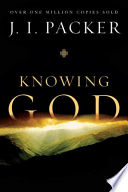
Knowing GodWe’re continuing to read Knowing God by J. I. Packer along with Tim Challies’ Reading Classics Together Series. This week we are in chapters 9 and 10, which present different aspects of wisdom.

Chapter 9, “God Only Wise,” discusses what the Bible means when it says that God is wise and acknowledges that Biblical wisdom is not merely intellect, knowledge, or cleverness but also includes a moral quality. “Wisdom is the power to see, and the inclination to choose, the best and highest goal, together with the surest means of attaining it. Wisdom is, in fact, the practical side of moral goodness. As such, it is found in its fullness only in God. He alone is naturally and entirely and invariably wise” (p. 90). But His wisdom doesn’t guarantee a comfortable, trouble-free life: “He has other ends in view for life in the world than simply to make it easy for everyone” (p. 92).

God’s wisdom cannot be thwarted as human wisdom can “because it is allied to omnipotence…Omniscience governing omnipotence, infinite power ruled by infinite wisdom, is a basic biblical description of the divine character” (p. 91). “Wisdom without power would be pathetic, a broken reed; power without wisdom would be merely frightening; but in God boundless wisdom and endless power are united, and this makes him utterly worthy of our fullest trust” (p. 91).

After discussing God’s purposes or goals for us, part of which is to draw us into a loving relationship with Himself which involves faith in Him and deliverance from sin, manifesting His grace through our lives, Packer traces that wisdom in God’s dealing with three Biblical figures: Abraham, Jacob, and Joseph. I won’t list everything he skillfully brings out about them, but I loved this section, and his descriptions reinforced in me the need to not just read the facts, but to notice what is going on with the people in the Bible and how they change. Packer then briefly discusses how we can trust that same wisdom to be working through the perplexities in our lives.

Chapter 10 is “God’s Wisdom and Ours” and discusses what the Bible means when it says we are to be wise. It doesn’t mean that we know everything God knows or what His purposes are in what happens in the world and our lives. There is much that doesn’t make sense in life, and Packer brings out some truths in Ecclesiastes to illustrate that but also to show that ultimately we can trust God no matter what is happening or what sense it does or doesn’t make to us. He emphasizes the need for realism in our view of life and compares it to driving: we may not know why certain roads are laid out the way they are or why other drivers are acting they way they are, but we “simply try to see and do the right thing in the actual situation that presents itself. The effect of divine wisdom is to enable you and me to do just that in the actual situations of everyday life” (p. 103).

That wisdom is gained first by reverencing God (“The fear of the LORD is the beginning of wisdom” – Psalm 111:10; Proverbs 9:10, and others) and then by receiving His Word (Psalm 119:98-99, Colossians 3:16).

[Wisdom] is not a sharing in all his knowledge, but a disposition to confess that he is wise, and to cleave to him and live for him in the light of his Word through thick and thin.

Thus the effect of his gift of wisdom is to make us more humble, more joyful, more godly, more quick-sighted as to his will, more resolute in the doing of it and less troubled (not less sensitive, but less bewildered) than we were at the dark and painful things of which our life in the fallen world is full. The New Testament tells us that the fruit of wisdom is Christlikeness–peace, and humility, and love (James 3:17)–and the root of it is faith in Christ (1 Cor. 3:18; 2 Tim. 3:15) as the manifested wisdom of God (1 Cor. 1:24, 30).

Thus the kind of wisdom that God waits to give those who ask him is a wisdom that will bind us to himself, a wisdom that will find expression in a spirit of faith and a life of faithfulness (p. 108).


Knowing God, Chapters 7 and 8

Knowing GodWe’re continuing to read Knowing God by J. I. Packer along with Tim Challies’ Reading Classics Together Series. This week we are in chapters 7 and 8.

Chapter 7, “God Unchanging,” opens with the scenario of reading the Bible but not getting much out of it because it seems so far removed from one’s own life. “We don’t live in the same world. How can the record of God’s words and deeds in Bible times, the record of His dealings with Abraham and Moses and David and the rest, help us, who have to live in the space age?” (p. 76).

Packers answers that it is true that we might experience a different “space, time, and culture,” but “the link is God Himself. For the God with whom they had to do is the same God with whom we have to do,” (p. 76), and He hasn’t changed in the meantime. He quotes A. W. Tozer as saying, “He cannot change for the better, for He is already perfect; and being perfect, He cannot change for the worse.”

Packer then elaborates on the points that God’s life, character, truth, ways, purposes, and Son do not change. He lists a few texts where God is said to have repented, but those refer to “a reversal of God’s previous treatment of particular people, consequent upon their reaction to that treatment. But there is no suggestion that this reaction was not foreseen, or that it took God by surprise and was not provided for in His eternal plan. No change in His eternal purpose is implied when He begins to deal with a person in a new way” (p. 80).

While it is a comfort that “fellowship with Him, trust in His Word, living by faith, standing on the promises of God, are essentially the same realities for us today as they were for Old and New Testament believers,” it is a challenge as well. “How can we justify ourselves in resting content with an experience of communion with Him, and a level of Christian conduct, that falls so far below theirs?” (p. 81).

Chapter 8 explores “The Majesty of God,”and Packer asserts that “Christians today largely lack” the knowledge of God’s greatness and majesty, “and that is one reason why our faith is so feeble and our worship so flabby…Modern people…cherish great thoughts of themselves” but “small thoughts of God” (p. 83). The emphasis today is on the personal interest and care God extends towards His loved ones, and while that is a blessed truth, it can’t offset His majesty and greatness. The rest of the chapter is a wonderful walk through the Scriptures that give us glimpses of His majesty and a reminder that we need to “‘wait upon the Lord’ in meditations on His majesty, till we find our strength renewed through the writing of these things upon our hearts” (p. 89).

Knowing God, Chapters 5 and 6: The Incarnation and the Holy Spirit

Knowing GodWe’re continuing to read Knowing God by J. I. Packer along with Tim Challies’ Reading Classics Together Series. This week we are in chapters 5 and 6.

Chapter 5, “God Incarnate,” is probably the most…I hate to say difficult or technical, because that immediately turns people off. It is a little more difficult and technical than the previous chapters, but not at all insurmountable. I love that Packer says, “This is the deep end of theology, no doubt, but John [in John 1] throws us straight into it” (p. 66). Some people prefer to avoid theological discussions and feel that, “We’re just supposed to love God and people. Why waste time on that stuff?” Because it matters. If people talk about loving Jesus but don’t know Him for Who He really is, they can be totally lost even while thinking all is right with the world. False steps either on the side of Jesus’ humanity or His deity lead to grave errors.

That said, I couldn’t possibly reproduce what Packer said in this chapter in distilled form. It would be long and involved and I just don’t have time this particular week. But it’s good reading to cement the truth that Jesus is totally God and totally man into our thinking, drawing primarily from John 1:1-14,Β  Philippians 2:5-11, and II Corinthians 8:9.

A section particularly interesting to me involved what it meant for Christ to “empty Himself” in Philippians 2:6-7: “who, though he was in the form of God, did not count equality with God a thing to be grasped, but emptied himself, by taking the form of a servant, being born in the likeness of men.” We know this doesn’t mean He set aside His deity, for He displayed omnipotence (still the storm, feeding 5,000+, raising the dead, etc.), omniscience (knowing others’ thoughts), and omnipresence (talking about being in heaven at the same time He was talking to people on earth – John 3:13)) while in human form. So what did He empty Himself of? “DoesΒ  it not imply that a certain reduction of the Son’s deity was involved in His becoming man?” (p. 59). No, answers Packer. Such a theory is called kenosis, and it has been around in various forms for years. Packer discusses it and its manifestations and implications more fully and then says:

When Paul talks of the Son as having emptied himself and become poor, what he has in mind, as the context in each case shows, is the laying aside not of divine powers and attributes but of divine glory and dignity, “the glory I had with you before the world began, as Christ puts it in His great high priestly prayer (p. 60).

We now see what it meant for the Son of God to empty himself and become poor. It meant a laying aside of glory (the real kenosis); a voluntary restraint of power; an acceptance of hardship, isolation, ill-treatment, malice and understanding; finally, a death that involved such agony – spiritual even more than physical – that his mind nearly broke under the prospect of it. It meant love to the uttermost for unlovely human beings, that they through his poverty might become rich (p. 63).

I like the way he applies this truth to Christmas, when we celebrate the incarnation, the fact that God came to us in the form of a baby, to grow up as a human, yet still fully God, for the purpose of dying on the cross for our sins:

We talk glibly of the β€˜Christmas spirit,’ rarely meaning more by this than sentimental jollity on a family basis. But what we have said makes it clear that the phrase should in fact carry a tremendous weight of meaning. It ought to mean the reproducing in human lives of the temper of him who for our sakes became poor at the first Christmas. And the Christmas spirit itself ought to be the mark of every Christian all the year round.

It is our shame and disgrace today that so many Christians–I will be more specific: so many of the soundest and most orthodox Christians–go through this world in the spirit of the priest and the Levite in our Lord’s parable, seeing human needs all around them, but (after a pious wish, and perhaps a prayer, that God might meet them) averting their eyes, and passing by on the other side. That is not the Christmas spirit. Nor is it the spirit of those Christians–alas, they are many–whose ambition in life seems limited to building a nice middle-class Christian home, and making nice middle-class Christian friends, and bringing up their children in nice middle-class Christian ways, and who leave the sub-middle-class sections of the community, Christian and non-Christian, to get on by themselves.

The Christmas spirit does not shine out in the Christian snob. For the Christmas spirit is the spirit of those who, like their Master, live their whole lives on the principle of making themselves poor β€” spending and being spent β€” to enrich their fellow men, giving time, trouble, care, and concern, to do good to others β€” and not just their own friends β€” in whatever way there seems need (pp 63-64).

Chapter 4, “He Shall Testify,” is about the Holy Spirit. He asserts that preaching and teaching about the Holy Spirit has been sadly neglected but is vital, for He is fully God as well and testifies of Christ. “But the Helper, the Holy Spirit, whom the Father will send in my name, he will teach you all things and bring to your remembrance all that I have said to you.” (John 14:26).

Again, I am not going to list point by point his instruction about the Holy Spirit – you’ll just have to read the book. πŸ™‚ But one section that stood out to me was this:

In the Old Testament, God’s word and God’s Spirit are parallel figures. God’s word is his almighty speech; God’s Spirit is his almighty breath. Both phrases convey the thought of his power in action (p. 67).

He then discusses the parallels are mentioned in the creation account and in reference to Christ. This caught my eye because I had noticed a long time ago that in the passages telling us to “Let the word of Christ dwell in you richly” (Colossians 3:16-25) and to “be filled with the Spirit” (Ephesians 5:18-33), the aftermath is remarkably similar: speaking to ourselves in psalms and hymns and spiritual songs, letting the Spirit and the word affect all our relationships, etc.

After showing that one of the Holy Spirit’s ministries is to illuminate and convict people of God’s truth:, Packer says:

It is not for us to imagine that we can prove the truth of Christianity by our own arguments; nobody can prove the truth of Christianity except the Holy Spirit, by his own almighty work of renewing the blinded heart. It is the sovereign prerogative of Christ’s Spirit to convince men’s consciences of the truth of Christ’s gospel; and Christ’s human witnesses must learn to ground their hopes of success not on clever presentation of the truth by man, but on powerful demonstration of the truth by the Spirit (p. 71).

That’s not to say we shouldn’t share the truth of Christ since opening people’s eyes is His job and not ours: no, we must. We’re commanded to, and the Spirit used the Word to open eyes. But we trust in His working, not our “clever presentation.”

These chapters were beneficial to study, even though they tossed us for awhile into the “deep end of theology.” It’s good to “gird up the loins of our minds” sometimes and exercise them beyond what we’re used to.

Book Review: Everyday Grace: Infusing All Your Relationships With the Love of Jesus

I’ve mentioned several times here that I read years ago in an old biography of a missionary who felt strongly the lack of love in her life, felt guilty about it, berated herself over it often, tried to spur herself on to do better, all to no avail. But when she began instead to meditate on God’s love for her, He began to transform her in ways she was unaware of until her husband told her people were commenting to him about the change in her.

Everyday GraceIn Everyday Grace: Infusing All Your Relationships With the Love of Jesus, Jessica Thompson takes this same principle and applies it to nearly every relationship we might have. She points out that most relationships operate on the basis of karma – I’ll do for you if you’ll do for me, or maybe I’ll do for you so that you’ll do for me in return. But Christianity operates on the basis of grace: God loved us and Jesus died for us when we were enemies, when we didn’t care, when we didn’t love Him, and He wants us to love others in the same way.

But how can we do that? He is God, and though he has saved and changed us, in our everyday lives our old fleshly nature too often evidences itself.

We are not basically good people who need a little instruction so that we can live up to our full potential. We are completely sinful people who need help from outside of ourselves in order to be made alive (p. 39).

We don’t just need a new list; we need a new heart. That is exactly what is promised to us in Ezekiel 11:19-20:

And I will give them one heart, and a new spirit I will put within them. I will remove the heart of stone from their flesh and give them a heart of flesh, that they may walk in my statutes and keep my rules and obey them. And they shall be my people, and I will be their God (p. 47)

We can operate from a basis of grace because Jesus lived a perfect life, keeping all God’s commands in our place, and died, taking all of our sin and its punishment in our place.

My hope is that this book will help you “taste and see that the Lord is good” (Psalm 34:8). That as I open up to you all that he is and all that he has done…as you taste this multifaceted relationship with God, it will transform all of your other relationships (p. 43).

Paul doesn’t just pray [in Ephesians 3:14-21] that the Ephesians would get their act together; he prays that they would somehow be able to comprehend the incomprehensible love of God in Christ (p. 49).

In subsequent chapters, Jessica discusses God as our Father and husband and how that influences our relationships with our spouse and children, Jesus as a friend, coworker, brother, and how that influences our relationships in each of those areas, as well as how our relationship with God directs our interactions with our communities and fellow church members. She ends with discussing the Holy Spirit’s help, dealing with difficult people, and “The Gospel for the Relationship Failure.”

In the chapter on friendship, she writes:

Jesus tells his disciples, “You are my friends if you do what I command you.”…It seems to be saying that he will be our friend only if we obey. But that isn’t what Jesus is saying at all. His friendship came first. This obedience is not what makes them friends; it is what characterizes his friends. I have lived most of my life under the assumption that if I am not obeying, then Christ doesn’t want any part of me. That is a terrible weight and it is a lie. God’s love for us in Christ always precedes our loveliness. His faithfulness always precedes ours, and his friendship is what brings us into relationship with him…If we are true believers in Christ, we will obey. That doesn’t mean we will obey perfectly…But it does mean that we will have a desire to obey. If your life is characterized by a growing desire to obey, you can be sure that you are a friend of Jesus. It is his very pronouncement of “my friend” that gives us the longing to be obedient to his commands. His love for us is what engenders a heart of obedience (pp. 76-77).

In a chapter on work, she writes:

While there is nothing wrong with doing a job you enjoy or looking for a job that you are passionate about, we have made a terrible point of our focus. We are setting out to fulfill ourselves instead of looking for ways to serve others. How often do we really think of our jobs as a way to be God’s hands, even if our job is just stacking books at the library? (p. 169)

[Jesus’] work wasn’t dependent on the one who received the benefit of his work. His work was only and always dependent on his love for God and his love for his people (p. 171).

I thought this from the chapter on church members was particularly lovely:

So we are humble with one another, not thinking we are better than others. We are gentle with each other, instead of beating each other over the head with a long list of “you-shoulds.” We can point out sin, when necessary, without distancing ourselves or acting like our friends have a disease that we might catch if they don’t get their acts together. We bear with one another in love, which is tough, especially if their sin affects us personally. And we are eager and excited to maintain peace, instead of eager and excited when we get a juicy bit of gossip about our friend. We remember that we are one body, and if I hurt you, I am actually hurting myself. We take a vested interest in each other and in loving one another. Lastly, we remember that all of our failures to live as one body have been paid for by the Savior. We don’t have to hide from our community when we sin against them. We confess and remember that even the sin of hurting others in the church was paid for on Christ’s cross. We pray for a new and deeper understanding of what he went through to make us one body; and we pray that this understanding changes who we are as individuals and as a community, one redeemed sinner at a time (pp. 161-162).

In the chapter on difficult people, she talks about not only people whose personalities rub us the wrong way or who have hurt us, but also those going through hard trials – not that they are difficult, but because we find it difficult to know what to say or how to comfort them. A few lines from that chapter were instructive to me:

Part of the reason I struggle to be around people who suffer is because I have to come to grips with my own inability to make everything better. I hate to see that I am actually not the Holy Spirit and I can’t bring them the comfort they need. I hate that I say the wrong things at times and I end up hurting more than helping. But I believe it is in embracing that very weakness that the Holy Spirit has more room to work. The more I try to make it better, the more I try to come up with the perfect verse, the more I am ultimately in the way. When I relinquish my desire to be the Savior and just grieve with my friends, the Holy Spirit does some pretty amazing work (p. 189).

While I found this book immensely helpful in many ways, I’m not eager to go out and buy everything Thompson has ever written. The truth grabbed me: for the most part, the writing did not. I haven’t spent a lot of time analyzing why, but it could have been a lot tighter and less wordy in places (and I realize I have no room to talk there. πŸ™‚ ) There was a lot of repetition.Β  Plus I think she went way too far in her speculations in some biblical situations that the Bible doesn’t spell out, like the ways in which Jesus was tempted, the situation between Paul and Barnabas’ disagreement, what was going on in Mary’s mind the time she and her other children tried to get in and see Jesus, and instead of instructing them to be admitted or going to the door, He told those He was teaching that whoever does His will is is family. Saying, “Mary might have thought or reacted…” in a particular way is one thing. Saying Mary did think and feel in ways that the Scripture doesn’t say or even indicate she did is dangerous (Thompson postulates that Mary doubted or forgot who Jesus was for a time). This kind of thing keeps me from fulling trusting Thompson’s handling of Scripture, but she seems better in exegesis and application than in speculation. On the other hand, speculation and imagination do serve her well in some areas where she doesn’t go too far, such as picturing Jesus working as a carpenter and encountering the same kind of people we encounter in the workplace.

I found much more that I did like in the book than I didn’t like, and I feel I could recommend it with a caution about those sections.

(This review will also be linked toΒ Semicolonβ€˜s Saturday Review of Books.)

Laudable Linkage

It’s been a few weeks since I have had time to share, but here are some thought-provoking reads discovered recently:

How to Repent Without Really Repenting.

For the Woman Who Is Simply Weary of Serving.

10 Ways to Overcome Spiritual Weariness.

How to Move On When You’ve Been Betrayed.

Invent a Ministry. HT to Challies. Love this. One of my themes is that ministry isn’t always in an official church-sponsored activity. It’s being available for God to use you all throughout the day. Another is the “Someone should…” or “The church should…” mentality, forgetting we ARE the church. I’ve been thinking about a possible blog post along these lines.

Unavoidable Tantrums. Good thoughts here.

12 Things That Every First-Time Dad Should Know.

Have This Conversation Before You Send Your Baby Back to School. I wouldn’t say, “Don’t strive to do your best,” but otherwise very sound advice.

The Dramatic, Adrenaline Soaked Life of a Missionary, or, It’s Not Like You Read in All Those Classic Biographies, and That’s OK. From a missionary we know in real life.

What It’s Like When You Publish a Book. Interesting thoughts on the type of people God uses (clue: messed-up ones, because that’s the only type available).

Sticking With It, on reading long books with dull spots, either personally or to children. I don’t think the author is advocating for never putting a book aside, but I like the analogy that life is going to be that way sometimes.

25 Ways to Ask Your Kids ‘So How Was School Today?’ Without Asking Them ‘So How Was School Today?’ HT to The Story Warren. I had to learn this with one child who would always just answer, “Normal.” I don’t think I used any of these, but I did learn to ask specific questions.

Finally, this cute little boy, his reaction to hearing he is going to become a big brother, and his accent are all adorable:

And this was sweet: an orphaned kangaroo hugging a teddy bear:

Happy Saturday!

Knowing God, Chapters 3 and 4

Knowing God

We’re continuing to read Knowing God by J. I. Packer along with Tim Challies’ Reading Classics Together Series. This week we are in chapters 3 and 4.

Chapter 3, “Knowing and Being Known,” is one of those chapters that I wish I could produce in it’s totality, one in which I have numerous places marked.

Since Jesus said in John 17:3, “And this is life eternal, that they might know thee the only true God, and Jesus Christ, whom thou hast sent,” and since knowledge of God is commended throughout the Bible, what does it mean to know God?

It is clear, to start with, that β€˜knowing’ God is of necessity a more complex business than β€˜knowing’ a fellow-man, just as β€˜knowing’ my neighbour is a more complex business than β€˜knowing’ a house, or a book, or a language.Β  The more complex the object, the more complex is the knowing of it. Knowledge of something abstract, like a language, is acquired by learning; knowledge of something inanimate…comes by inspection and exploration…But when one gets to living things, knowing them becomes a good deal more complicated. One does not know a living thing till one knows not merely its past history but how it is likely to react and behave and specific circumstances…

In the case of human beings, the position is further complicated by the fact that…people keep secrets. They do not show everybody all that is in their hearts…you may spend months and years doing things in company with another person and still have to say at the end of that time, “I don’t really know him at all.” We recognize degrees in our knowledge of our fellow men…according to how much, or how little, they have opened up to us (pp. 34-35).

Taking it one step further, Packer points out that if we’re meeting someone “above us” in some way, like a queen or president, that person takes the initiative into whatever relationship we might or might not have.

And God, who is so much more “above us” than anyone else, has taken that initiative, spoken to us, invited us into His confidence.

Knowing God is a relationship calculated to thrill a man’s heart.Β  What happens is that the almighty Creator, the Lord of hosts, the Great God before whom the nations are as a drop in a bucket, comes to you and begins to talk to you through the words and truths of Holy Scripture.Β  Perhaps you have been acquainted with the Bible and Christian truth for many years, and it has meant little to you; but one day you wake up to the fact that God is actually speaking to you – you! – through the biblical message.Β  As you listen to what God is saying, you find yourself brought very low; for God talks to you about your sin, and guilt, and weakness, and blindness, and folly, and compels you to judge yourself hopeless and helpless, and to cry out for forgiveness.Β  But this is not all.Β  You come to realize as you listen that God is actually opening His heart to you, making friends with you and enlisting you a colleague…(p. 36)

What, then, does the activity of knowing God involve? Holding together the various elements involved in this relationship, as we have sketched it out, we must say that knowing God involves, first, listening to God’s Word and receiving it as the Holy Spirit interprets it, in application to oneself; second, noting God’s nature and character, as his Word and works reveal it; third, accepting his invitations and doing what he commands; fourth, recognizing and rejoicing in the love that he has shown in thus approaching you and drawing you into this divine fellowship (p. 37).

Packer talks about four analogies the Bible uses to help us understand how we know God: “in the manner of a son knowing his father, a wife knowing her husband, a subject knowing his king, and a sheep knowing its shepherd” (p. 37).

Then the Bible adds the further point that we know God in this way only through knowing Jesus Christ, who is himself God manifest in the flesh. β€˜Don’t you know me…? Anyone who has seen me has seen the Father’; β€˜No-one comes to the Father except through me’ (John 14: 9,6 NIV). It is important, therefore, that we should be clear in our minds as to what β€˜knowing’ Jesus Christ means (p. 37).

Packer discusses how the disciples knew and interacted with Jesus, and, since His death and resurrection, we can know Him in the same way except in a spiritual rather than physical (bodily) way, and we have more revealed truth than they did, and “Jesus’ way of speaking to us now is not by uttering fresh words, but rather by applying to our consciences those words of his that are recorded in the gospels, together with the rest of the biblical testimony to himself. But knowing Jesus Christ still remains as definite a relation of personal discipleship as it was for the twelve when he was on earth. The Jesus who walks through the gospel story walks with Christians now, and knowing him involves going with him, now as then” (p. 38).

After sharing several passages that talk about hearing Him (John 10: 27; 6:35; 10:7, 14; 11:25; 5:23-24; Matthew 11:28-29), Packer explains:

Jesus’ voice is β€˜heard’ when Jesus’ claim is acknowledged, his promise trusted, and his call answered. From then on, Jesus is known as shepherd, and those who trust him he knows as his own sheep. β€˜I know them, and they follow me. I give them eternal life, and they shall never perish; no-one can snatch them out of my hand’ (John 10: 27-28 NIV). To know Jesus is to be saved by Jesus, here and hereafter, from sin, and guilt, and death.

He closes the chapter by noting that “knowing God is a matter of personal dealing,…personal involvement,…and grace” (pp. 39-40).

Knowing God is more than knowing about him; it is a matter of dealing with him as he opens up to you, and being dealt with by him as he takes knowledge of you. Knowing about him is a necessary precondition of trusting in him (β€˜how could they have faith in one they had never heard of?’ [Romans 10:4 NEB]), but the width of our knowledge about him is no gauge of the depth of our knowledge of him.

Chapter 4, “The Only True God,” mainly discusses the second commandment about not making idols or bowing down and worshiping them. He spends a great deal of time explaining why he believes that commandment precludes pictures of Jesus, and I understand his points that any picture, sculpture, etc., in any kind of media will be limiting and may portray Him falsely. Christians through the ages have had various opinions about that (there have been some lively discussions on the Facebook group for this series.) I wrestled with it myself when my husband gave me a print of Jesus as the Good Shepherd having just found the lost sheep. I came to terms with it because I felt it wasn’t meant to be a representation of Him, but an expression of that truth of the Shepherd’s love and care for His sheep and the sheep’s rest in the Shepherd. But I have wondered if I should take it down so it is not a stumblingblock to anyone else.

Packer also cautions us to watch for wrong mental images about God, as they can be just as idolatrous and false as wooden or sculpted ones.

How often do we hear this sort of thing: β€œI like to think of God as the great Architect (or Mathematician or Artist).” β€œI don’t think of God as a Judge; I like to think of him simply as a Father.” We know from experience how often remarks of this kind serve as the prelude to a denial of something that the Bible tells us about God. It needs to be said with the greatest possible emphasis that those who hold themselves free to think of God as they like are breaking the second commandment (p. 47).

I hadn’t thought of it in exactly that way before, but I think this is the basis of the problem I had with a book that portrayed God as an artist and not a technician. It wasn’t a full and true representation of Him: though we can and do appreciate His artistry and creativity and eye for beauty in His creation, that is only one aspect of His character.

All speculative theology, which rests on philosophical reasoning rather than biblical revelation, is at fault here [emphasis mine here]. Paul tells us where this sort of theology ends: β€œThe world by wisdom knew not God” (1 Cor 1:21 KJV). To follow the imagination of one’s heart in the realm of theology is the way to remain ignorant of God, and to become an idol-worshipper, the idol in this case being a false mental image of God, made by one’s own speculation and imagination.

In this light, the positive purpose of the second commandment becomes plain. Negatively, it is a warning against ways of worship and religious practice that lead us to dishonor God and to falsify his truth. Positively, it is a summons to us to recognize that God the Creator is transcendent, mysterious and inscrutable, beyond the range of any imagining or philosophical guesswork of which we are capable and hence a summons to us to humble ourselves, to listen and learn of him, and to let him teach us what he is like and how we should think of him (p. 48).

This book has been immensely helpful so far, and we’re only four chapters in. We’re taking them two at a time, and they’re not overly long or difficult. It’s not too late to join in!

Reading Classics Together: Knowing God

Knowing GodSomehow I have never read Knowing God by J. I. Packer, though I have heard it is wonderful. The title came to my attention again a few weeks ago, and I thought it might be a good time to start it. Then I saw that Tim Challies was leading readers through the book for his Reading Classics Together Series on Thursdays, and that added impetus to read it now, along with the fact that a few blog friends will be reading it at this time as well.

I’ve only participated in Tim’s Reading Classics Together one other time, with The Disciples of Grace by Jerry Bridges. I had decided I wasn’t going to blog about this book every week like I did then, especially since Tim has closed comments on his blog and readers can only participate via a Facebook group for that purpose. I’m really sad about that, for a number of reasons. But as I read the first chapter, I decided it would help me get more out of it and cement what I was learning to keep notes from each chapter rather than just trying to tie it all together at the end.

Chapter 1 is “The Study of God.” I don’t think I am going to summarize or outline each chapter, as Tim will probably do that. I’m just going to share a few things that stood out to me.

Packer starts out with a lengthy quote from Spurgeon extolling the virtues of studying God, reproduced here. Packer counters charges that such a study would be boring, impractical, and irrelevant and instead asserts that “it is the most practical project anyone can engage in” (p. 19).

He talks in the preface and some in the chapter about the spirit of the modern age of skepticism, and here comments, “I ask you for the moment to stop your ears to those who tell you there is no road to knowledge about God, and come a little way with me and see. After all, the proof of the pudding is in the eating, and anyone who is actually following a recognized road will not be too worried if he hears nontravelers telling each other that no such road exists” (p. 19).

Packer warns that, β€œTo be preoccupied with getting theological knowledge as an end in itself, to approach Bible study with no higher a motive than a desire to know all the answers, is the direct route to a state of self-satisfied self-deception. We need to guard our hearts against such an attitude, and pray to be kept from it” (p. 22).

“There can be no spiritual health without doctrinal knowledge; but it is equally true that there can be no spiritual health with it, if it is sought for the wrong purpose and valued by the wrong standard” (p. 22). I very much appreciate that he doesn’t downplay Bible study or knowledge – too many people today, trying to make the same point Packer does, tend to set up false dichotomies about whether we love God or the Bible when we actually learn to love God through the Bible. Rather, he says, yes, study God’s Word – that’s how we learn what He wants us to know about Him – but don’t stop with the academics and the facts. Yearn to get to know God Himself through your study of His Word.

The psalmist [of Psalm 119] was interested in truth and orthodoxy, in biblical teaching and theology, not as ends in themselves, but as means to the further ends of life and godliness. His ultimate concern was with the knowledge and service of the great God whose truth he sought to understand (pp. 22-23).

One of the ways we do this is by meditation, “the activity of calling to mind, and thinking over, and dwelling on, and applying to oneself, the various things that one knows about the works and ways and purposes and promises of God. It is an activity of holy thought, consciously performed in the presence of God, under the eye of God, by the help of God, and as a means of communion with God. Its purpose is to clear one’s mental and spiritual vision of God, and to let His truth make its full and proper impact on one’s mind and heart. It is a matter of talking to oneself about God and oneself; it is, indeed, often a matter of arguing with oneself, reasoning oneself out of moods of doubt and unbelief into a clear apprehension of God’s power and grace” (p. 23).

Chapter 2, “The People Who Know Their God,” Packer expands on the theme of knowing God vs. just knowing about Him. Daniel 11:32b says, “the people that do know their God shall be strong, and do exploits,” or, as another version states it, “shall stand firm and take action.” Drawing from the book of Daniel, he notes and discusses that:

Those who know their God have great energy for God.
Those who know their God have great thoughts of God.
Those who know their God have great boldness for God.Those who know their God have great contentment in God.

It’s not too late if you’d like to join in on this study. We’re reading and discussing two chapters a week, and the chapters are easy to read and not long. I am finding it very beneficial so far.

Laudable Linkage

It has been quite a while since I have been able to do one of these, but here are some posts I’ve found interesting the last few weeks. Maybe you’ll enjoy one or two of them as well:

Planned Parenthood: Four Ways to Respond.

Explaining the Problem Does Not Eliminate the Problem.

Gentle Selfishness, HT to Challies. Guilty.

How We Do Family Devotions.

Are You Believing This Lie About Love?

Getting Acquainted With God.

The Sunday Worship Killer.

A Right Theology of Fear (and Why You Need It.)

A few on mothering:

Talking to Your Kids About Same-Sex Marriage.

The Beginning of the Sacrifice of motherhood.

How Much Should a Mom Minster Outside the Home?

Hidden. God has a purpose in “hidden years.”

A few on online communication:

How Should Christians Comment Online?

An Embarrassing Week For Christians Sharing Fake News. Yes! Confirm before you share.

Why I Removed Extremely Effective Pop-ups From My Web Site. Yes! Wish everyone would do this!

What Makes Readers Lose Interest in a Blog?

Four Easy Ways to Create Quote Graphics for Facebook, Pinterest, and Your Blog. Do you use any of these, or any others? I’ve used Quozio a few times.

21 Self-Editing Secrets That Can Supercharge Your Manuscript.

In Zimbabwe, We Don’t Cry For Lions. HT to Challies. A different and refreshing perspective on the Cecil the Lion story.

Someone shared this on Facebook:

Spurgeon - Faith

Amen! Happy Saturday!