Review: The Christmas Book Flood

Christmas Book Flood

Jolabokaflod is an Icelandic tradition that translates to “Christmas Book Flood.” It began in 1944 near the end of WWII. Iceland was occupied by the Americans, and their willingness to spend money in town and help arrange for exports of the country’s fish helped Iceland become a little more prosperous than many European nations occupied by Germany.

But many items were still in short supply due to rationing. Icelanders were already great readers and storytellers, but this particular year, books were the main gifts. A tradition began Christmas night of people reading the books they had gotten for Christmas, often while enjoying hot chocolate. Sounds like a great idea to me!

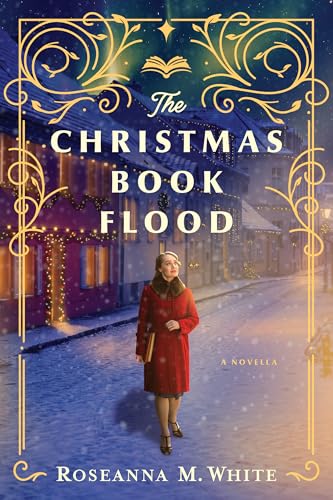
Roseanna M. White has set her novella, The Christmas Book Flood, in this time and place.

Tatiana Eliasdottir is her uncle’s assistant at his publishing house. Tatiana’s sister calls to ask if she can send her seven-year-old daughter for the holidays. Her sister is having difficulties in her pregnancy, and has lost several unborn babies. Her sister’s husband has injured his leg and is out of work. They felt their daughter, Elea, needed a brighter, happier setting for Christmas. Tatiana agrees to host Elea. At first the girl is disconsolate over not being home for Christmas. But getting into some of the traditions and learning she’ll be able to go to work with Tatiana, where her favorite author, Anders Johannsson, also works, begins to lift her spirits.

Author, illustrator, and editor Anders and his secretary agree to help Tatiana watch Elea when Tatiana can’t be at her desk. Tatiana has liked Anders for a while, but he is so shy and quiet and easily flustered that it’s hard to talk much with him.

Anders’ personality tends toward quietness, but he is also that way because he feels like a misfit. His brothers are all hardy, big, strapping fishermen who make fun of him for his shyness and bookish ways.

A true part of the story deals with the publishing companies teaming to form a “Book Bulletin” sent to every home.. The results were so successful–a flood of orders–that they weren’t sure they would be able to fill the orders before Christmas.

Another part deals with Tatiana and Anders getting to know one another and overcoming their misconceptions.

Woven in with the plot was some Icelandic folklore. They don’t have Saint Nicholas, but they do have the “Yule lads“–Troll brothers who take turns visiting in December and leaving gifts in shoes if they find everything to their liking.

This was a delightful novella. I knew very little about Iceland and its traditions and folklore. Then the plot was so different from many Christmas novellas. And, though there’s a slow romance, the book is not at all cheesy. The characters have things to learn and ways to grow along the way.

There were a couple of anachronisms–I don’t know if they talked about “patriarchal” expectations of women then, or “fighting the patriarchy”–at least not in those terms.

Happily, this audiobook did include the author’s notes about the inspiration and research for this book.

I listened to the audiobook, nicely read by Talon David. The only negative to listening was I had no idea what some of the Icelandic terms and names looked like. But there was usually enough explanation that I understood what was going on.

Three Short Christmas Reads

I finished a few very short Christmas stories or novellas, so I thought I’d mention them in one post.

Bespoke: A Tiny Christmas Tale by Amanda Dykes

Bespoke: A Tiny Christmas Tale is a novella by Amanda Dykes which takes place on the Isle of Espoir, halfway between France and England. A famed composer lived there, Giovanni St. John. Superstition in his day said “a composer must never write beyond his ninth symphony. To do so was to face certain death.”

He disappeared after conducting his eight symphony, then suddenly reappeared nine years later with his tenth. He said the ninth was there, but they would never see or hear it.

Many years later, an aged St. John returns to the Isle of Espoir, to the old house villagers had taken to calling the Silent House because of his long absence. His grown daughter, Aria, is with him, gloved hands concealing injuries which had silenced her promising music career.

Aria has one last thing to do before her father dies. But she’ll need the help of her long-ago childhood friend, James. Yet Her father has forbidden James to see her, blaming James for the accident that injured Aria–as James does, himself.

This was a sweet and poignant story, packing a lot in for a novella.

Amanda shares at the end that this book was part of a campaign to get a bicycle to Gospel for Asia missionaries. When all was said and done, enough was raised for fifteen bicycles!

Tin Can Serenade by Amanda Dykes

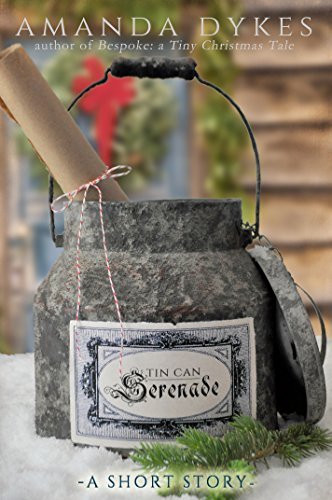
Tin Can Serenade is a short story by Amanda Dykes, made up entirely of notes sent back and forth in a tin can on a pulley rope between two houses separated by a river. Two children are the writers and exchange notes first about a lost toy boat, then include biscuits, peppermint sticks, and such. She writes with flowery words, having read a lot. He’s very plainspoken. She lives with her widowed mother; he lives with his widower father.

As their correspondence reveals details about their families, they have no idea what they are about to stir up.

This was one of the sweetest things I have read in a long while, and wonderfully, beautifully written. It was originally written as a free story for Amanda’s readers and is free for now as a Kindle book.

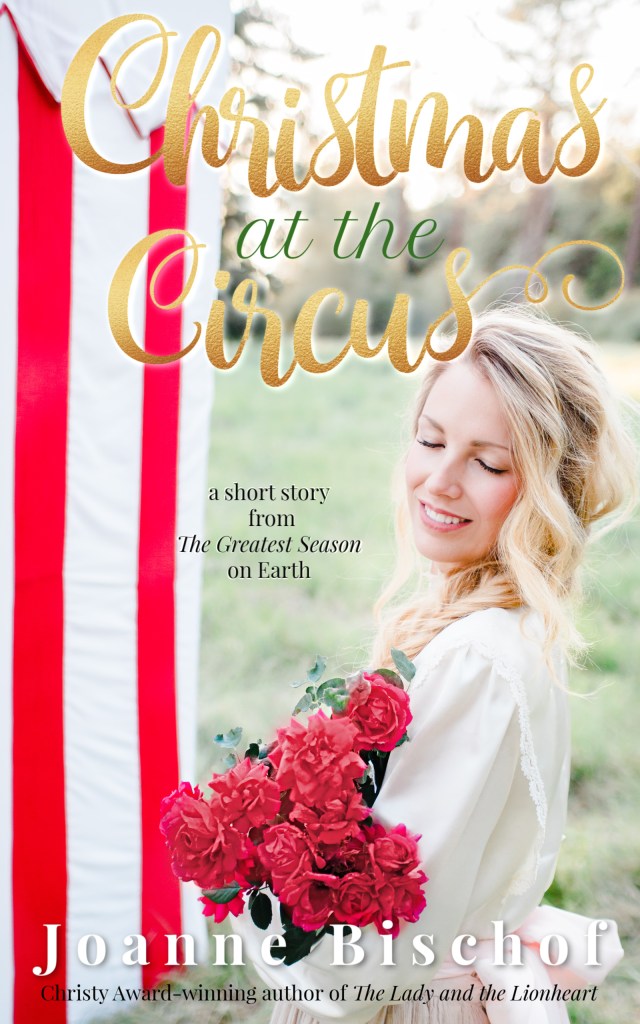
Christmas at the Circus by Joanne Bischof is listed as a “short story from the Greatest Season on Earth.” The characters are the same as those in The Lady and the Lionheart by the author (linked to my review) about a want-to-be nurse who helps a circus performer in need and (spoiler alert) ends up marrying him. I think Christmas at the Circus may have been a bonus or Christmas story around the time Lionheart was published.

At any rate, Charlie and Ella are married, raising his niece. The circus is at their off-season location, with all the performers preparing for at big Christmas celebration under the big top. But Ella has no idea a special surprise awaits her.

There wasn’t much else to this story, but it would have been a fun addendum for fans of the original book.

(Sharing with Bookish Bliss Quarterly Link-Up)

Review: O Little Town

O Little Town Christmas novellas

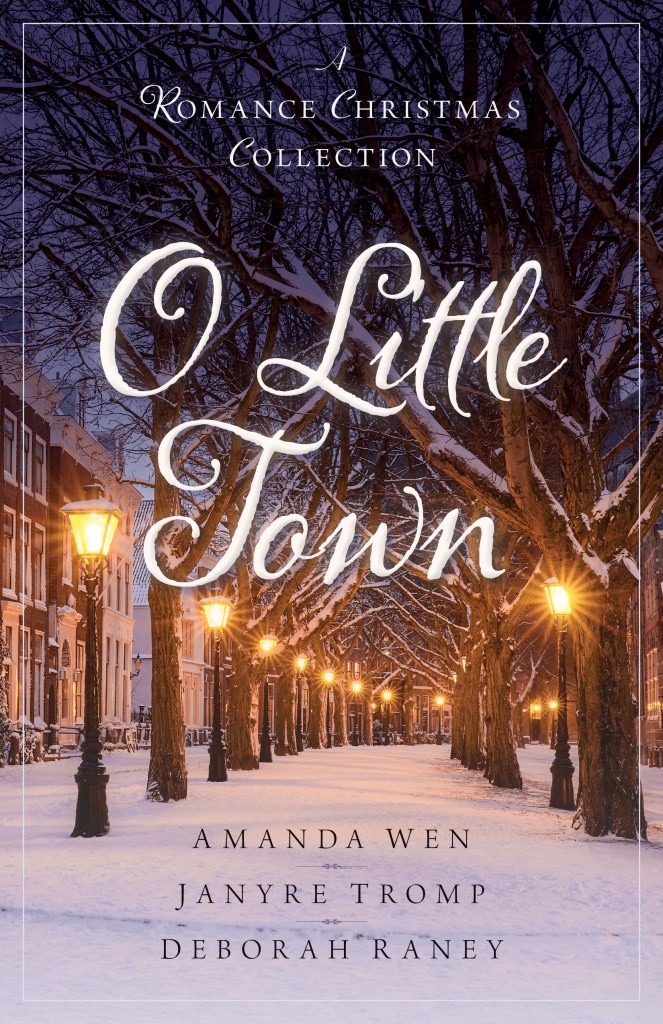
O Little Town is a collection of three stories by three different authors. The town in question is not Bethlehem, but Mapleview, Michigan. Each author’s story takes place in a different time.

Hopes and Fears by Amanda Wen begins in a two-room schoolhouse in November, 1912. Emma Trowbridge teaches the younger students and loves her job. She’s dismayed to learn that her mentor and boss who teaches the upper grades has to take leave due to a family emergency. But she’s totally floored to find out that his replacement is Frederick Oberstein, her rival and nemesis all through school.

Frederick went away for a four-year degree, but Emma took classes at a nearby teaching college. They had not seen each other in years. They start clashing almost immediately. What Emma mistakes as Frederick’s curmudgeonly ways actually reflect weariness and grief. Can they learn not only to work together, but to actually appreciate each other’s gifts?

While Mortals Sleep by Janyre Tromp takes place during WWII. Eleanor Sweers had left her dysfunctional family years ago to become a reporter in California. She comes home due to her sister’s death, the only relative with whom she had a bond. She’s shocked to discover her sister named her as her daughter’s guardian. An old family friend, Gideon Braum, is a lawyer who helps Eleanor (nicknamed Lennie) through the legal process.

Something about Lennie’s sister’s death doesn’t add up, though. Lennie can’t turn off her reporter’s instincts and begins to investigate. She’s stunned to find evidence of a Japanese balloon bomb, similar to one she researched in CA. What is a Japanese bomb doing in Mapleview, MI? Gideon helps her learn more.

The Wondrous Gift by Deborah Raney takes place in present time. The faculty of a small Christian school is stunned to learn the school is closing due to low enrollment and high costs. After the announcement, some of the teachers agree to meet and talk about the situation further. Music teacher Rachel Hamblin and coach Caleb Janssen end up riding together, but they misunderstood where the other teachers were going. As they get to know each other, they hit it off and wonder why they had not noticed each other before.

Though sad about losing their jobs, they each harbor dreams about what they’d really like to do. They cheer each other on as they think, pray, talk, and take tentative steps in their new ventures. Things are going amazingly well until they realize that only one of them can have what they both wanted. Can they work through the issues, or will this derail their fledgling relationship?

I enjoyed experiencing stories in the same small town in different eras. It was fun to occasionally recognize a person or item from the previous era, though I probably missed some of those connections.

I’m afraid the characters in the first story didn’t resonate with me quite as much. Emma’s “force of nature” personality and Frederick’s faulty reasoning both hit me the wrong way.

And the second story’s writing seemed excessive in places. For example, “The hot, laughing breath of the reaper sighed on my neck even as he shoveled dirt over my self-made grave” and “It was a missive from the devil written in the blood of my regrets.”

Plus the narration of the audiobook I listened to seemed overwrought in the first two stories.

The third story was my favorite. I enjoyed the banter between the two characters and the progression of the story. The narration seemed more natural here.

Overall this was an enjoyable Christmas read. I liked that it wasn’t light and fluffy: each story dealt with serious issues and feelings. Each story was clean and seamlessly incorporated Christian truths and principles.

Two Dickensian Christmas Stories

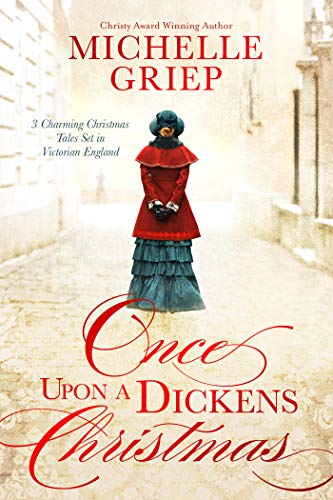
In A Tale of Two Hearts by Michelle Griep, Mina Scott is an innkeeper’s daughter in 1853 London. She enjoys Dickens novels when she can borrow them and dreams of a better life. She wouldn’t mind if William Barlow, a regular customer in her father’s tap room, was part of those dreams.

And then the unthinkable happens: William asks her to pose as his wife for a dinner with his uncle. The uncle is trying to determine which nephew will be his heir, and William thinks that appearing married will give him a better chance, especially considering his unstable earlier years.

Mina reluctantly agrees. She enjoys the visit to the restaurant and then the uncle’s townhouse, where she feels like a real lady. But she finds she really likes William’s uncle and feels bad for deceiving him. William does as well. Then they discover a scheme by the other nephew in line for the inheritance, and their focus turns to protecting the uncle. But how will they be believed without sounding like they are just angling for a better position themselves?

In The Old Lace Shop, also by Griep, Bella White is recently widowed, but not in mourning. Her husband was abusive, and she had only married him due to her father’s machinations. While selling off her husband’s property, she decides to keep one industry: a small lace manufacturer. She doesn’t need the income, but she needs to prove she can function on her own.

The shop has a partner, though Bella is the majority owner. When she moves to Nottingham to visit the shop, she’s stunned to find that the partner is the man she loved who left without a word to her several years before. After their awkward getting to know each other again and overcoming his resistance to her partnership, they try to find a good working relationship. But they clash on several points. And then they discover a plot that endangers both of them and the people they love.

These books were the second and third of Griep’s Once Upon a Dickens Christmas series. The first was 12 Days at Bleakly Manor, which I read a couple of years ago (linked to my review). The first two books were released separately in two subsequent years, but now they are combined in Once Upon a Dickens Christmas with the third.

As far as I could tell, the stories didn’t seem to be a retelling of a particular Dickens book. But they were from the same era and in similar style. Dickens himself shows up in the last two (I can’t remember if he did in the first).

Another common thread was a “second chance” coin—not a token of luck, but just a wish or acknowledgement for the recipient.

A few quotes:

Real joy is not found in the best moments of life, but in trusting that God is making the best of every moment.

My mother–God rest her– always told me to think of eternity, then live backward from that. Such a view has a way o’ whittlin’ down our current troubles to a size we can crumple up into a ball and toss aside.

His face was a road map of years.

Maybe, perhaps, true meaning in life had nothing to do with outward trappings but with inward genuineness.

Funny, is it not, that one doesn’t know how bad one really is until trying hard to be good.

One quote was overstated a bit. . . . “The heat of a thousand suns burned along every nerve, and settled low in his belly.”

I got a little frustrated with the characters and their choices sometimes. But these books weren’t bad companions for the last weeks of the year.

(Sharing with Carole’s Books You Loved, Booknificent)