Book Review: Come Thou Long-Expected Jesus

Long Expected JesusI’ve read Come Thou Long Expected Jesus:Experiencing the Peace and Promise of Christmas, compiled by Nancy Guthrie, many times, but somehow I have never reviewed it. Probably because, like this year, I’ve finished it right in the busiest of the Christmas season, and by the time I had time to go over it, felt it was too far past Christmas to review. But I am not letting that happen this year. 🙂

In Nancy’s preface, she tells of Christmases where all the activities had been accomplished, but her heart wasn’t truly prepared. Then she tried to find a book of Christmas readings, but the ones she found did not minister to her. She wanted to find a “book with short readings on Advent themes from a number of different writers I trust and respect; that reflected a high view of Scripture; and that put the incarnation in the context of God’s unfolding plan of redemption” (p. 10). When she couldn’t find such a book, she set out to create one, reading and editing multitudes of sermons and writings from well-known theologians and Bible teachers.

There are 22 selections on various aspects of Advent, from Mary to conception by the Holy Ghost to Joseph to the shepherds to Jesus’s humility and others, from such teachers and preachers as Charles Spurgeon, Augustine, Martyn Lloyd-Jones to Tim Keller, John MacArthur, J. I. Packer, and Ray Ortland. I don’t know all of the authors, so I wouldn’t endorse everyone 100%, but I don’t think I read anything in this particular volume that I had a problem with, at least not that I noted or can recall.

In many ways it is hard to review a book like this, with so many authors and topics. But I’ll share just a few quotes that stood out to me:

Ligon Duncan III on Joseph: “God is calling Joseph to believe his word and to act in accordance with it. And Joseph does just that. He accepts God’s word and he trusts God’s word and he relies upon God’s word and he re-orients his life to conform to that word. What a tremendous act of faith on the part of Joseph and what an example of obedience to God’s word in spite of circumstance” (p. 53).

From “For Your Sakes He Became Poor” by J. I. Packer (originally from Knowing God): “We see now what it meant for the Son of God to empty himself and become poor. It meant a laying aside of glory; a voluntary restraint of power; an acceptance of hardship, isolation, ill-treatment, malice and misunderstanding; finally, a death that involved such agony–spiritual even more than physical–that his mind nearly broke under the prospect of it. It meant love to the uttermost for unlovely human beings, that they ‘through his poverty might become rich.’ The Christmas message is that there is hope for a ruined humanity–hope of pardon, hope of peace with God, hope of glory–because at the Father’s will Jesus Christ became poor and was born in a stable so that thirty years later he might hang on a cross. It is the most wonderful message that the world has ever heard, or will hear.

We talk glibly of the ‘Christmas spirit,’ rarely meaning more by this than sentimental jollity on a family basis. But what we have said makes it clear that the phrase should in fact carry a tremendous weight of meaning. It ought to mean the reproducing in human lives of the temper of him who for our sakes became poor at the first Christmas. And the Christmas spirit itself ought to be the mark of every Christian all the year round.

…The Christmas spirit does not shine out in the Christian snob. For the Christmas spirit is the spirit of those who, like their Master, live their whole lives on the principle of making themselves poor — spending and being spent — to enrich their fellow men, giving time, trouble, care, and concern, to do good to others — and not just their own friends — in whatever way there seems need (pp. 70-72).

From “Good News of Great Joy” by Raymond C. Ortlund, Jr.: “God is terrifying to guilty sinners, even though he is in himself gloriously beauitful. But God is pursuing us, even though we avoid him. He himself has taken the initiative to break through our terror” (p. 99).

From the same chapter: “Our good intentions are not strong enough to control our evil impulses. We need a Savior to rescue us from ourselves” (p. 100).

From “The Lessons of the Wise Men” by J. C. Ryle: “Let us beware of resting satisfied with head knowledge. It is an excellent thing when rightly used. But a person may have much of it, and still perish everlastingly. What is the state of our hearts? This is the great question. A little grace is better than many gifts. Gifts alone save no one; but grace leads on to glory” (p. 111).

There are so many others I’d love to share. Packard’s and Ortlund’s chapters impacted me the most this time, I think. There was a lot that was deep and thought-provoking in both, especially Ortlund’s on God’s glory.

Our family doesn’t celebrate Advent liturgically or ceremonially, with different candles on different days and all that, but I do like to, as Nancy wrote at the beginning, spend some time preparing for Christmas with some kind of Advent reading. This book, so far, has been the best book I have found for that. I like that it is 22 essays rather than 24 or 25 or 31: it gives one some leeway to begin early in December but not fall behind if a day or two is missed. Though the chapters are longer than the average devotional booklet, they’re not too long to read in a sitting, and I have found I do better at this stage of life with sustained thought on topics like this rather than “grab and go” devotionals. But most of all I like the richness and the depth. I had used it for several years, laid it aside for a few years, and rejoiced to read it again this year. I’m sure I will read it again many times.

(This will also be linked to Semicolon‘s Saturday Review of Books.)

Book Review: Where Treetops Glisten

Where-Treetops-GlistenI wanted to read Where Treetops Glisten: Three Stories of Heartwarming Courage and Christmas Romance During World War II by Cara Putnam, Sarah Sundin, and Tricia Goyer since I first heard of it because I have thoroughly enjoyed all of Sarah Sundin‘s books. So far everything she has written has been set during WWII, and I enjoy the period backdrop as well as her well-drawn characters. I had never read Cara before and had read only one of Tricia’s books.

This book opens in the Turner home Lafayette, Indiana on Christmas Eve 1941. Abigail Turner’s boyfriend was killed in the bombing of Pearl Harbor and Meredith’s had broken her heart. For all of these reasons, no one was in much of a mood to celebrate Christmas. But Grandma Louise felt that celebrating Christ’s birth was especially necessary in such times, so she gets up early to start decorating.

The book then divides into three sections, each focusing on one of the Turner siblings during subsequent Christmas seasons and written by a different author. Each section is also headed by well known Christmas songs which debuted during the WWII era.

Almost a year after Pearl Harbor, Abigail is a college student and has decided that, for the duration of the war at least, her heart is closed to romance. There’s just no sense in getting involved with someone during uncertain times. She works part-time at the unique Glatz Candies (a real store, now known as McCord Candies), and on her way to catch the bus for work collides with a young man. He boards her bus as well, and she notices he has a limp plus seems to be under a heavy weight. She reaches out to see if she can be of help.

Pete Turner for years considered himself the black sheep of the family. His childhood bullying and prankish sense of humor hurt, angered, or aggravated every one subjected to it, until he finally gave his life to Christ. But old reputations are hard to escape, so he centers his life and work in a different town. On leave in Lafayette, he encounters a lost child and helps her home only to find that her widowed mother is the younger sister of a friend and the target of some of his worst bullying. She’s in need of some help, which he offers, but she has never forgiven him. Yet her daughter seems taken by him, and he seems to understand her daughter more than anyone else.

Meredith had met a young musician in college who was German born but seemed very Americanized. Just as their relationship was growing serious, she learns he has fled, and paraphernalia left behind indicates he was probably a spy. Hurt and betrayed, she joins the service as a nurse, and her unit is following the front lines to attend to the wounded. Christmas Day is also her birthday, and being so far from home weighs on her. But the last thing she expects is having to deal with her betrayal head on.

Grandma Louise’s influence is a running thread connecting all the stories, and an epilogue brings them all to a satisfying close.

At the end is a chat with the authors about their research and how they worked together on the project.

I very much enjoyed this book. The characters and situations were realistic and the element of faith was genuine. I enjoyed each character’s journey and what they learned along the way.

(This will also be linked to Semicolon‘s Saturday Review of Books.)


Merry Christmas!

We hope you and yours have a lovely day with all its activities, especially remembering our dear Saviour born for our salvation.

Infant holy, Infant lowly, for His bed a cattle stall;
Oxen lowing, little knowing, Christ the Babe is Lord of all.
Swift are winging angels singing, noels ringing, tidings bringing:
Christ the Babe is Lord of all.

Flocks were sleeping, shepherds keeping vigil till the morning new
Saw the glory, heard the story, tidings of a Gospel true.
Thus rejoicing, free from sorrow, praises voicing, greet the morrow:
Christ the Babe was born for you.

Tra­di­tion­al carol, trans­lat­ed from Po­lish to Eng­lish by Edith M. Reed, 1921

Who Is He?

Who is He in yonder stall
At Whose feet the shepherds fall?
Who is He in deep distress,
Fasting in the wilderness?

Refrain:

’Tis the Lord! O wondrous story!
’Tis the Lord! the King of glory!
At His feet we humbly fall,
Crown Him! crown Him, Lord of all!

Who is He the people bless
For His words of gentleness?
Who is He to Whom they bring
All the sick and sorrowing?

Refrain

Who is He that stands and weeps
At the grave where Lazarus sleeps?
Who is He the gathering throng
Greet with loud triumphant song?

Refrain

Lo! at midnight, who is He
Prays in dark Gethsemane?
Who is He on yonder tree
Dies in grief and agony?

Refrain

Who is He that from the grave
Comes to heal and help and save?
Who is He that from His throne
Rules through all the world alone?

’Tis the Lord! O wondrous story!
’Tis the Lord! the King of glory!
At His feet we humbly fall,
Crown Him! crown Him, Lord of all!

~ Ben­ja­min R. Han­by, 1866

Grieving at Christmas

I wrote this a few years ago and have reposted it a couple of times. I probably won’t do so every year, but this year several friends have lost loved ones, and the first Christmas without them can be very hard. Maybe this will help. I’ve edited it a bit so the time frames are current. I also shared a bit from this and added some different thoughts in Christmas Grief, Christmas Hope for a newspaper column I was contributing to a  a couple of years ago.
___________________________________

grave-at-christmas

December could be a rather gloomy month for my family. My mother passed away Dec. 10 nine years ago, my father Dec. 12 sixteen years ago, and my grandmother Christmas Eve a few years prior to that, leading my brother to exclaim once that he just wanted to cancel the whole month. In more recent years the husband of a good college friend passed away in December 21 on our anniversary, and our family dog died the same day.

The death of a loved any any time of year can shadow the whole Christmas season as we miss our normal interactions with that loved one, and several years later, though maybe the pangs aren’t quite as sharp, they’re still there, and it’s not abnormal to be caught off guard by a memory or a longing leading to a good crying jag.

When someone is grieving over the holidays, they may not want to participate in some of the “normal” happy pastimes. It’s not that they don’t ever laugh or enjoy gatherings. But as Sherry said yesterday, “I am enjoying the traditional holiday celebrations, and at the same time they move me to tears, sad tears for things that have been lost this year. I am singing the music, and yet I’m tired of the froth of jingling bells and pa-rumpumpum.” I remember almost wishing that we still observed periods of mourning with wearing black or some sign of “Grief in progress” — not to rain on anyone else’s good time, but just to let people know there was woundedness under the surface, and just as physical wounds need tenderness while healing, so do emotional ones. Normally I love baby and bridal showers and make it a point to attend, but for several months after my mom’s death I did not want to go to them. I rejoiced with those who rejoiced…but just did not want to rejoice in quite that way. I first heard the news of my mom’s death during our adult Sunday School Christmas party, and the next year I just did not want to attend – the grief was still too close to the surface and would probably erupt in that setting where I first heard the news. Even just three years ago when our ladies’ Christmas party was on the anniversary of my mom’s death, I was concerned that at some point during the evening I would have to find the restroom and lock myself in to release some tears (though thankfully that did not happen).

Other events can cast a pall over Christmas: illness, job loss, a family estrangement, etc. One Christmas we were all sick as dogs, and my father-in-law had just had a major health crisis and wanted us to come up from SC to ID to visit. There was just no way we could drag ourselves onto a plane until antibiotics had kicked in a few days later, but we did go, and if I remember correctly, that was the last time any of us except my husband saw him alive, so in retrospect we were glad we went, though it wasn’t the merriest of Christmases. A good friend grieved over “ruining” her family’s Christmas by being in the hospital with a severe kidney infection. Lizzie wrote about visiting her husband in prison for Christmas. Quilly commented yesterday about being homeless one Christmas. Yet both Lizzie and Quilly mentioned reasons for rejoicing in the midst of those circumstances.

If you’re grieving this Christmas, don’t feel guilty if you’re not quite into the “froth” this year (on the other hand, don’t feel guilty for enjoying it, either).  One quote I shared on a Week In Words post earlier had to do with giving yourself time to heal. There may be times to go through with the holiday festivities for family’s sake — and, truly, those times can help keep you from the doldrums. Sherry shared how making a list of reasons to celebrate Christmas helped. Look for the good things to rejoice in. Don’t let the grief turn you into  Scrooge who hates Christmas: your loved one who is gone wouldn’t want that to happen. I think they’d probably prefer you celebrate in their memory and enjoy the best parts of the season while still remembering them in it. E-mom left a valuable comment yesterday that we can treasure up the memories of good Christmases to tide us over the not so good ones, and then look forward to better things ahead. And as I said yesterday, remember that the first Christmas was not all about the froth, either, but was messy, lonely, and painful, yet out of it was born the Savior of the world and the hope of mankind. Rejoice in that hope and promise. Draw near to Him who has borne our griefs and carries our sorrows until grief and sorrow are done away forever.

Book Review: The Gift of the Magi and Other Christmas Stories

Gift of the MagiI picked up The Gift of the Magi and Other Christmas Stories when it was free or on sale for the Kindle (as of this writing it’s 99 cents). It contains four stories:

“The Gift of the Magi” by O. Henry
“The Heavenly Christmas Tree” by Fyodor Dostoevsky
“The Story of the Other Wise Man” by Henry Van Dyke
“Where Love Is, God Is” by Leo Tolstoy

“The Gift of the Magi”is well-known, about a young couple with not much money who give up their most precious possessions out of love to buy a Christmas present for the other. I have to confess that in earlier encounters with this story, I found it very frustrating. I know the point is that they loved each other so much they sacrificed their best, but it kind of seems like, “Give up your best and get….nothing.” 🙂 I don’t remember if I had ever read the story in its entirety before, though I was very familiar with it, but it did help to do so. One of my favorite lines is when Della tried to fix what was left of her hair after selling it:

“She got out her curling irons and lighted the gas and went to work repairing the ravages made by generosity added to love. Which is always a tremendous task, dear friends–a mammoth task.”

I liked that she “had a habit for saying little silent prayer about the simplest everyday things.”

And I knew the title connected their giving with the Magi, but I didn’t quite realize it fully until this paragraph:

The magi, as you know, were wise men–wonderfully wise men–who brought gifts to the Babe in the manger. They invented the art of giving Christmas presents. Being wise, their gifts were no doubt wise ones…And here I have lamely related to you the uneventful chronicle of two foolish children in a flat who most unwisely sacrificed for each other the greatest treasures of their house. But in a last word to the wise of these days let it be said that of all who give gifts these two were the wisest. O all who give and receive gifts, such as they are wisest. Everywhere they are wisest. They are the magi.

So, reading the whole story in context, I enjoyed it more. Though it is still not my favorite Christmas story, there was a sweetness and winsomeness about it I hadn’t caught before.

“The Heavenly Christmas Tree” is pretty sad, about a poor, cold, hungry boy who is mistreated after his mother dies, and who then dies himself, but they are reunited around “Christ’s Christmas tree” along with all the other children and mothers who died. The mistreatment is a convicting reminder of how not to treat the poor, and the end is, of course, sweet.

I don’t think I have ever read “The Story of the Other Wise Man” before, but I was familiar with it: I may have seen it in a play or some other venue. As the title says, it is about a fourth wise man, Artaban, who was supposed to meet up with the others and take three precious jewels to the Christ Child, but missed the excursion and used one of his jewels to help an ill man. He decides to try to find the Child on his own over the next 30 years, but keeps missing Him, and uses up all his jewels helping other people in need. Thinking he has failed in his life’s quest, ultimately he finds that “Verily I say unto thee, inasmuch as thou hast done it unto one of the least of these my brethren, thou hast done it unto me” (Matthew 25:40).

That verse is the theme of “Where Love Is, God Is” as well. I have seen this as a play in my children’s school and heard it somewhere else with a different name for the main character and possibly a different title. It is the story of a cobbler who lost interest in life after his wife and son died, until a visitor urges him to live for God and read the Gospels to learn how. The cobbler does so, and his life changes. One day when he falls asleep while reading, he hears a voice saying, “Martin, Martin! Look out into the street to-morrow, for I shall come.” All day he looks for the Savior to come so he can welcome Him, but he only finds various other people who need help he is glad to give. In the end he finds that in welcoming them, he has welcomed Christ.

The latter two seem on the surface to equate doing good deeds with salvation rather than faith, but I think, reading between the lines, we can assume the good deeds came because of faith, not in place of it.

Though I am not likely to seek these out to reread for future Christmases, I did enjoy getting a fuller version of the stories than what I had remembered of them. And they have whetted my interest to read more Tolstoy in particular.

(This will also be linked to Semicolon‘s Saturday Review of Books.)

Merry Christmas!

Manger12

How silently, how silently
The wondrous gift is given!
So God imparts to human hearts
The blessings of His heaven.
No ear may hear His coming,
But in this world of sin,
Where meek souls will receive him still,
The dear Christ enters in.

O holy Child of Bethlehem
Descend to us, we pray
Cast out our sin and enter in
Be born to us today
We hear the Christmas angels
The great glad tidings tell
O come to us, abide with us
Our Lord Emmanuel.

~ Phillips Brooks, “O Little Town of Bethlehem”

I wish for your and your families a wonderful Christmas remembering and centering on the greatest Gift of all.

For the wages of sin is death;
but the gift of God is eternal life through Jesus Christ our Lord.
Romans 6:23

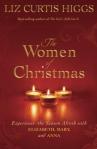
Book Review: The Women of Christmas

I like to read something devotional about Christmas during December, with the Scripture passages regarding Advent themselves and/or a devotional book. I’ve enjoyed Come, Thou Long Expected Jesus, compiled by Nancy Guthrie, a number of times and thought about picking it up again this year, but I kind of wanted something new and different. Then my friend Kim mentioned she was enjoying Liz Curtis Higgs’ book The Women of Christmas: Experience the Season Afresh with Elizabeth, Mary, and Anna.  I have read several of Liz’s novels, but never one of her non-fiction books, so on Kim’s recommendation I decided to give this one a try.

Women of ChristmasIt was just what I wanted this year. The book takes us thoughtfully through the Christmas passages of Scripture, focusing mainly, as the title indicates, on three women: Elizabeth is older, beyond the usual childbearing years, but finds herself miraculously expecting the forerunner of Christ. Mary is a young teenager, a virgin, yet she is told she will bear the Son of God. Anna is elderly yet still serves God with all her heart and life. Though Zacharias, Joseph, and Simeon are discussed as well, the main focus of the book is on how God worked in the lives of these women.

It’s obvious that Liz has put a wealth of study behind this book, but it’s not what I would call a technical book. She touches on some of the controversies and questions of the Christmas story but wisely doesn’t spend a lot of time speculating on that for which we have no answers. She brings and out meditates on the truth we can find from what God has told us in His Word and provides an opportunity to get a fresh viewpoint from passages so familiar that we can sometimes zip through them without stopping to think about the real implications for the real people in these real stories.

For instance, I never thought to wonder before why Mary went to see Elizabeth right after learning that she was going to bear Jesus. We can’t tell from the text how well they knew each other or whether they were close, though they are cousins. Elizabeth was quite a distance away from Mary. Yet when the angel, in his announcement to Mary, told her that her barren older cousin was pregnant, that must have been an encouragement to her that the God who did this impossible thing for Elizabeth could and would do the impossible thing the angel foretold for her as well. But it also provided her with someone who would understand something of what she was going through. There is no record that Mary told anyone about the angel’s announcement. We assume she told Joseph, though we don’t really know. But Elizabeth was the one person who would believe her about an angelic visit and a miraculous pregnancy.

A few quotes that stood out to me:

“Now consider this: the first person to hold the newborn Christ was Mary of Nazareth, and the first person to touch the newly risen Christ, however briefly, was Mary of Magdala. God placed himself in a woman’s care when he came to earth, then entrusted a woman to announce his resurrection when he came back to life.

“When I hear women rail that the Bible is misogynistic, I wonder if we’re reading the same book. God loves women, redeems women, empowers women – then and now. On the day we call Christmas, he could simply have arrived on earth, yet he chose to enter through a virgin’s womb. On the day we call Easter, he could have appeared first to his beloved disciple John, yet he chose as his first witness a woman set free from seven demons” (p. 122)

(On Mary’s bearing a child in a stable), “Given the circumstances, it’s surprising what we don’t find in the passage. She whined. She complained. She demanded better accommodations. Not our Mary. Even after giving birth to the Savior of the world, she didn’t insist on special treatment, didn’t fuss about there being ‘no space for them in the living-quarters'” (p. 124).

“On that day in Bethlehem, absolute abasement was bathed in breathtaking glory. Born the lowest of the low, the infant Jesus was the highest of the high” (p. 125).

(On the announcement by the angels to the shepherds), “We’ve seen countless Christmas cards and tabletop Natvity scenes with Jesus as a ‘newborn baby’ (CEB) dressed in ‘swaddling-clothes’ (KNOX) and ‘lying in a feeding trough’ (ERV). But we’ve had a lifetime to embrace that reality. Think of these men hearing it for the first time” (p. 130).

(After the shepherds told everyone about the baby on their way back to their sheep), “What about Mary? Did she run around Bethlehem, telling everyone about God’s Son? She did not. ‘But Mary treasured up all these things and pondered them in her heart.’ Luke 2:19. Mary focused on caring for her baby while she stored all she’d seen and done ‘like a secret treasure in her heart’ (NIrV). Some women like to talk their way through experiences; others prefer the Mary approach: ‘weighing and pondering’ (AMP), ‘mulling them over’ (CJB), and ‘trying to understand them’ (ERV)” (p. 136).

Note in the last quote that she didn’t say this was a better approach: just that it contrasted with the reaction of the shepherds and then later Anna. That was a blessing to me in this year of having read and heard a lot about introverts and extroverts: neither is better, God made both, and He works in and through both in different ways for His glory.

I’m so glad I read this book this year. It provided me with many quiet, meditative moments during the mornings of this Christmas season. I’m sure I’ll be using it again in years to come.

Save

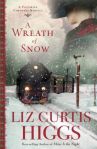
Book Review: A Wreath of Snow

Wreath of SnowIn Scotland during the Victorian era, a “wreath” meant not just a circular decoration for your front door, but a drift, like a snowdrift. In A Wreath of Snow: A Victorian Christmas Novella by Liz Curtis Higgs, a wreath, or giant snowdrift, has not only stopped but also damaged the train leaving the small town of Stirling. An invisible wreath of mistakes, pain, and deception has halted and damaged the lives of two of its passengers.

One of them, Meg Campbell, had fled from home in a hurry after an altercation with her brother, who had become churlish, moody, and demanding after an accident that left him without much use of his legs years ago. Now she will have to go back home and face him again.

Gordon Shaw is a newspaper man passing through Stirling. He used to live there but a thoughtless and harmful act on his part hurt someone else there several years ago, and he has been living under its shadow ever since.

At first Meg and Gordon do not recognize each their or their shared histories, and once they do, they feel it best to cover it all up again with lies to Meg’s family. But deception never leads to healing. Is there any chance this wreath, this impasse, in the lives of all involved can be removed?

This book was a perfect Christmas read. Since it is a novella, it’s not overly long or involved, but the characters and plot are well-developed. The ending is what you would hope, without being sappy. This season when we sing of peace on earth and goodwill to men can be fraught with conflict and a long history of hard feelings, and the truths of this story encourage readers to seek peace with each other.

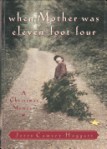
Book Review: When Mother Was Eleven-Foot-Four

eleven foot fourWhen Mother Was Eleven-Foot-Four by Jerry Camery-Hoggatt caught my eye when it was free for the Kindle app at the time. I didn’t realize it was a children’s book, but as I think C. S. Lewis said, the best children’s books are enjoyable to adults as well, and this one definitely is.

This is the story of the Christmas of 1963 for the author’s family. His mother was a tiny woman, only four-foot-eleven and about 100 lbs., but when she drew herself up to her full height, she seemed eleven-foot-four. One full-height moment was when she stared down a black-clad, tattooed biker who was making threats against her: “He blinked first.”

Mother loved everything about Christmas: the multitudes of ornaments, with a story behind every one, the symbols and meanings of everything they did for the season. She was romantic and extravagant, because she believed God was. Father  was a realist because he believed God was. Father was a man of principle, inflexible because, after all, how can a man of principle compromise his principles? And some of his strongest principles revolved around Christmas: he felt it was too commercial and that Santa’s list-keeping of good boys and girls gave the wrong idea that gifts were earned. So every year they clashed over Christmas, ending with Father compromising for Mother…

…Until one Christmas, when everything changed. Poverty and grief hung heavily over the family, and it looked like there would be no Christmas celebrating. That’s when Mother’s boys learned what Christmas giving really meant, and learned that both parents were right.

I can’t tell you much more than that, because it’s a very short book, but it’s very sweet and not at all sappy like some of the made-for-TV Christmas movies. I especially loved the author’s last couple of pages of reflections.

I just discovered the hardback version, which is apparently out of print, but the glimpse of its illustrations made me seek out a used copy. I think this book is going to become a yearly tradition.

(Updated to add: there was one aspect of the story that bothered me that I couldn’t really put into words until a day or so after posting the review. Though traditions are important, I did have trouble with Mother in the story fighting with Father over them and then going beyond what he compromised to say she could do. It sounded like, with their two strong personalities and different views, this was a regular thing, not just at Christmas, which is probably what led to the father leaving (which is what caused the grief mention that one Christmas). The mother did say later that she wished she had done better by him, so maybe she realized that as well (though of course the fault for the marriage break-up wasn’t entirely hers). As this is a story from a child’s point of view about learning to give at Christmas, the author doesn’t go into analyzing all of that: he appropriately just mentions what is necessary to this particular story.)

(This will also be linked to Semicolon‘s Saturday Review of Books.)