Review: Crimson Roses

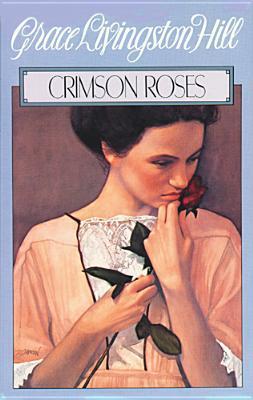
Crimson Roses

In Grace Livingston Hill’s novel, Crimson Roses, Marion Warren has been taking care of her ill father for five years. They had always planned that she would go to normal college and become a teacher, until his accident.

Now he has passed away. They had discussed that she would have the house and her brother the life insurance money. But a will can’t be found. So her brother, Tom, feels the best thing to do is sell the house and buy a farm in Vermont (which his wife strongly wants to do). They plan that Marion will always have a home with them, where she can help with the housecleaning and teach their children (basically, act as unpaid live-in help).

Marion’s practical mother, who died years before, always called her husband a visionary, not necessarily meaning it as a compliment. Marion takes after her father, while Tom is more like their mother. Marion mildly protests that she doesn’t want to live on a farm in Vermont, she wants to stay in the city, go to school, attend lectures and concerts and such. Tom says these are “foolish notions,” and she’s too old to go to school now anyway. Tom and his wife, Jennie, think that Marion is just being grumpy and will come around by the time they leave.

As Marion considers her options, she truly feels it’s best for her to stay in the city. Since Tom and Jenny won’t listen, Marion finds a job and small apartment on her own. She plans not to take any of her father’s assets so they will be able to buy their farm.

When they find out her plans, there is a big blow-up. Jennie (who gets my nomination for worst sister-in-law ever) feels Marion is being selfish. Tom finally concedes that the only way Marion will learn is to let her have her way. In time, when she realizes she can’t make it on her own, she’ll come to the farm with them.

But Marion thrives in her new situation. She’s been out of circulation for several years while caring for her father, and some of her coworkers help her update her look and clothes. Marion draws a line at some of their suggestions, though, not wanting to look like a “flapper.”

Marion’s intense loneliness almost sends her to Vermont. But she hears of a local weekly symphony concert series. If she manages her money carefully, she can afford it.

On the night of the second concert, Marion finds a beauitful crimson rose on her seat. Thinking the rose has been placed there by mistake, she tries to find who it belongs to. But no one claims it. She decides to take it home and enjoy it.

But the next week, a crimson rose is again at her seat. And the next week, and so on throughout the concert series.

Later in the book, when a young man shows interest in Marion, some “mean girls” in the church think Marion’s station is beneath his and act unkindly toward her (fueled by the interest in one of the girls in the young man).

This book was published in 1928, and, of course, is very old-fashioned in style and content. It’s a clean, sweet story–maybe a smidgen too sweet, but just a smidgen. Some of the 20s slang is amusing.

Marion seems a little naive for a twenty-three year old young woman. But that might have been the case in those times. Plus she had been mostly at home for five years.

The theme of the story might be that faithfulness wins out in the end. Through all her tribulations, though Marion struggles, she remains humble and sweet and tries to do the right thing.

I listened to the audiobook nicely read by Anne Hancock. Though the audiobook was released in 2024, the narrator’s style and accent matched the setting in the book.

(Sharing with Bookish Bliss)
A Daily Rate

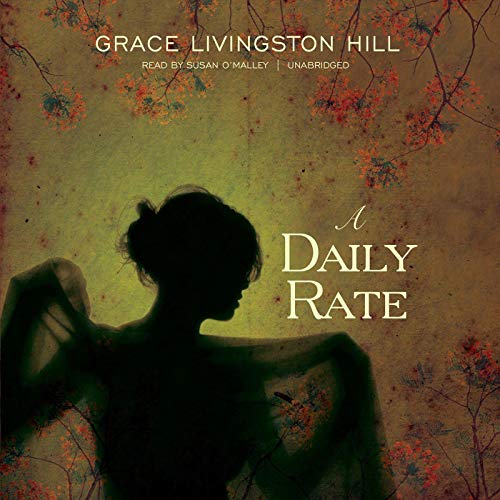
The second free Grace Livingston Hill audiobook I mentioned yesterday was titled A Daily Rate.

Celia Murray lives in a Philadelphia boarding house. She and the other residents put up with awful food and shabby surroundings. She’s concerned about one of the younger men who is hanging out with the wrong crowd in the evenings. A couple of the young women seem giggly and frivolous and into nothing more than dating and novels. Celia wishes she could fix up the place and make it more home-like. Perhaps then some of the others would stay in for more wholesome activities.

Celia would also love to bring her Aunt Hannah to live with her. Aunt Hannah had raised Celia when her parents died. Then Hannah had taken in some other nieces ad nephews as well, but they didn’t seem to appreciate her efforts as much. Due to reduced circumstances, Hannah now lives with another niece who treats her as an unpaid servant and baby-sitter.

When Celia comes into an unexpected small inheritance at the same time her landlady has to take a leave due to medical problems, Celia is able to make both dreams come true. She brings Aunt Hannah to help her “mission of making one bright little clean home spot for a few people who had hitherto been in discomfort.” They start small with a few touches here and there, but the biggest change is in providing nourishing food in a clean and attractive setting.

Though Celia has good intentions, she comes across as somewhat judgmental. Plus she is impatient. When her efforts appear to fail, she wants to give up. But Hannah gently helps her gain the right perspective.

One level of the plot has to do with the transformation of the home and boarders, but another level focuses on Celia’s maturing.

A Daily Rate was one of Hill’s earliest novels, written in 1900. The Search, mentioned yesterday, was written 19 years later. Like any author, Hill’s growth as a writer can be seen in her later book. But this one was good as well. It was fun in both books to hear the slang of the day and to get picture of life in that era.

I especially appreciated the emphasis in A Daily Rate on how homemaking can be a ministry to a home’s inhabitants. Even though that’s my chosen profession, I can still get caught up in all the “stuff” that has to be done and have not the best attitude about it. It helps to be reminded that the “stuff” of housekeeping isn’t an end in itself.

The Kindle version of this book is available for 99 cents at the time of this writing.

The Search by Grace Livingston Hill

Somehow I never read Grace Livingston Hill, even though her books were very popular with young women when I was in my teens and twenties. I thought of them as clean, sweet romance novels. Though most fiction will include romance, no matter the genre, I prefer novels with more to them.

But recently I finished my audiobook and wouldn’t receive a new credit for my next book til the end of the month. I scrolled through Audible’s selections that are included free with membership. I found a couple of Hill’s books there, so decided to give them a try.

The first was titled The Search. Ruth Macdonald is a society girl whose life consists of parties and outings with friends. When WWI starts, Ruth helps in ways that ladies of her class did: making bandages, knitting socks and sweaters for soldiers. etc. Some of her male friends became officers. But the magnitude and meaning of the war didn’t really sink in until she accidentally came upon a group of people seeing draftees off. There Ruth saw an old classmate, John Cameron, who was not of her “set,” but who had done her a kindness when they were children. Ruth is struck by his tender good-bye to his weeping mother and his brave, resolute face. Their eyes met for a brief moment.

Ruth decides to write to John as a friend to tell him she still remembered what he did for her so long ago and to express her appreciation for his part as a soldier. She writes that she hadn’t really thought of the sacrifice young men were making until she saw him.

John is touched by Ruth’s letter, and they begin corresponding regularly. When John gets leave to come home, he asks to visit Ruth.

But then he learns that an old enemy plans to marry Ruth. Could Ruth really love someone like that?

Then this old enemy becomes an officer in John’s company and makes his life miserable.

As John knows he must be prepared for death when his company leaves for France, he tries to search for God. His home minister is not much help. But someone he meets on base gives him a New Testament, and various contacts along the way shed light. But somehow he still doesn’t comprehend.

He tells Ruth about his search, and she realizes that, even though she has been in church all her life and been a “good” girl, she doesn’t really know God either. She embarks on a search of her own.

Hill’s style and tone seemed very similar to Louisa May Alcott and D. E. Stevenson, though Hill is more overtly Christian. Hill’s lifetime was between the other two ladies, overlapping them each by a few decades.

I enjoyed the story quite a lot and wished I had read them in my younger years.

A Kindle version of the book is currently available for 99 cents.