Circle of Spies

Circle of Spies is the third of Roseanna M. White’s Culper Spy Ring, a real life spy ring active during the Revolutionary War (Ring of Secrets was the first and Whispers from the Shadows was second). Although we don’t know that the ring continued, Roseanna said in the last book that someone in the CIA said it was possible. So Roseanna imagined how the spy ring could have worked during the War of 1812 in the second book, and now in the Civil War.

Marietta Hughes is an unlikely heroine at first. She has lived mostly for her own will and pleasure, not walking with the God of her parents. She married Lucien Hughes, wealthy president of a railroad company. But Lucien had been killed. Marietta had an understanding with his brother, Devereaux, that they would marry as soon as was proper after her period of mourning.

But then Marietta’s grandfather, Thaddeus Lane, informs her that the Hughes family is not staunchly Unionist, as they proclaim. Not only are they Confederate, but Devereaux is the head of a secret fifth column bent on killing Lincoln and seizing power.

As if that wasn’t enough to turn Marietta’s world upside down, Lane tells her that their family has been involved as a ring of spies since the Revolutionary War. Then he tells her that a Pinkerton man, Slade Osborne, is on his way to infiltrate the secret society to try to find proof that will lead to their arrests. Marietta’s job is to distract Devereaux as much as possible to facilitate Osborne’s investigation.

Thus begins a game of cat-and-mouse. Osborne is not altogether certain he can trust Marietta at first. Marietta is revolted at what she has learned about the Hughes family, but must keep pretending she is in love with Devereaux.

I ached with Marietta as she came to face what she had become and wondered if God could forgive her. Sometimes the realization of the magnitude of one’s sin breaks open to them more fully after they believe. Osborne, too, has a broken background, as well as complications from a twin brother whose values were the opposite of his.

By the end of this book, I wanted to put everything else aside to keep reading what happened. There were some quite exciting twists and turns!

I did disagree with one point, though, when a character says that God doesn’t speak for or against slavery. He does: I wrote once about the Bible and Slavery. But I did like what the character had to say about trying to reconcile the views of different Christians on the issue: “At last we realized we didn’t have to, because God so very rarely tells us what society should do—rather, He tells us how we, as believers, should behave in whatever society to which we belong” (p. 226).

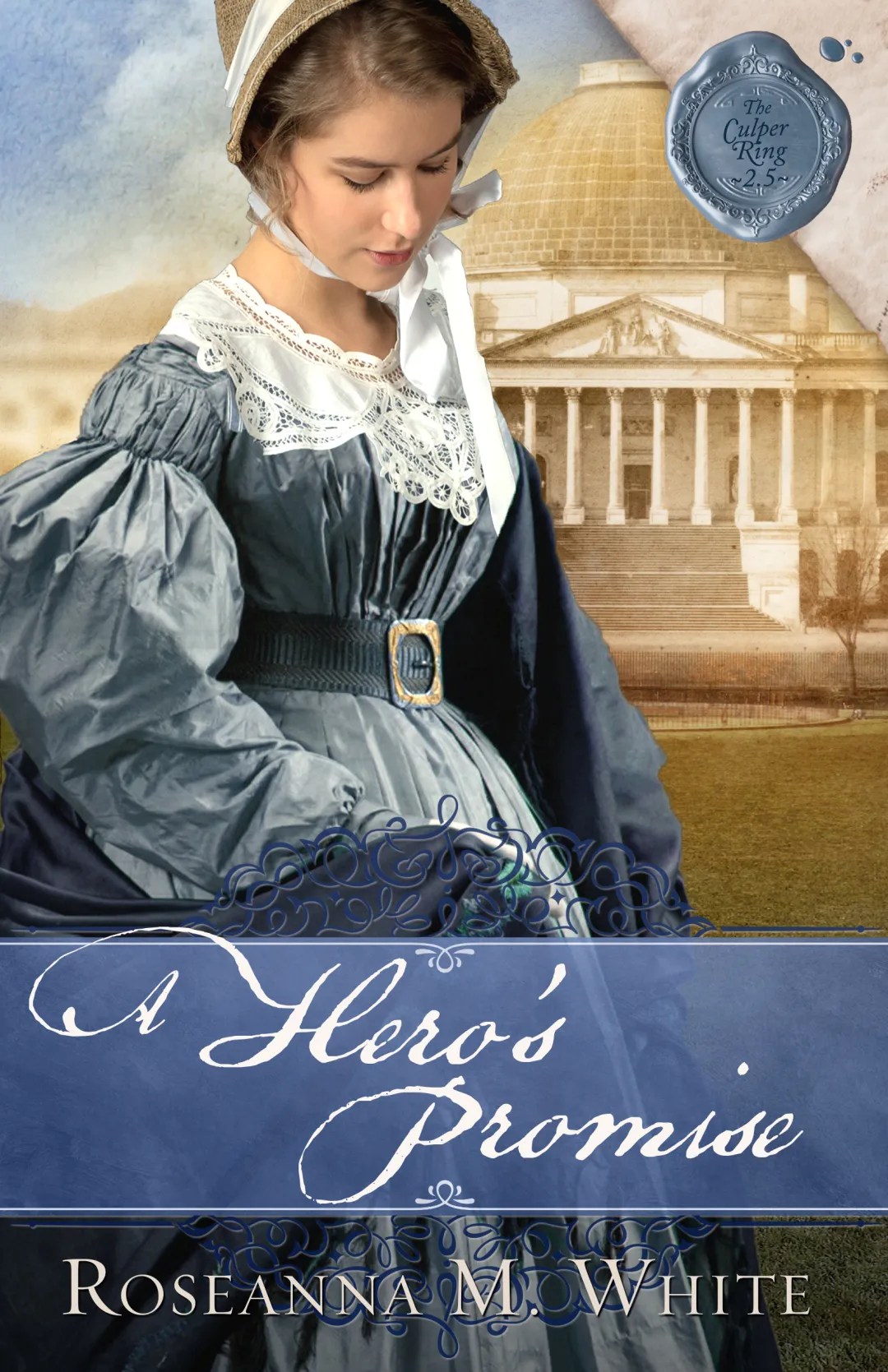
In-between this book and the previous one was a little novella titled A Hero’s Promise. Julienne Lane has been helping a friend, Freeda, hide runaway slaves and get them to safety. Julienne is unsure whether to let her fiance, Jack Arnaud, in on the situation.

Meanwhile, Jack has postponed their wedding twice already but might have to do so again. A mentally unbalanced man is being set up by enemies to assassinate President Jackson, and the Culpers must intervene.

The assassination attempt was based on a true event.

I enjoyed these forays in early American history and spycraft. But even more, I enjoyed the journeys of faith Roseanna takes her characters through.

Whispers from the Shadows

Whispers from the Shadows is the second novel in Roseanna M. White’s Culper Spy Ring series.

The story opens some 35 years after the Revolutionary War. England and the United States are once again battling each other, this time in the War of 1812.

So Gwyneth Fairchild can’t understand why her father is sending her away from England to America, to his old friends, the Lanes. How can crossing a sea filled with pirates and combatants be safer than England?

But her father is insistent. As they’ve said their good-byes, Gwyneth turns to the carriage and her guardians. But she runs back to ask her father one last thing—only to witness his murder. His last whisper as he sees her is, “Run.”

So Gwyneth runs. On the two-month long voyage, she can’t sleep more than two hours at a time. Seasickness, insomnia, and sorrow reduce her health and well-being to frightening levels. For some reason, she does not tell her guardians what happened.

When their vessel is overtaken by American privateers, they are delivered to Thaddeus Lane in Baltimore, the son of Winter and Bennet. Thankfully Thad’s parents are there when Gwyneth arrives.

Gwyneth slowly recovers from her ordeal, but still tells no one what happened to her father. Everyone suspects that her state is due to more than severe seasickness. Gwyneth takes refuge in drawing, and somehow Thad discerns that she has faced some kind of severe trauma.

On the surface, Thad is a merchant who knows almost everyone in Baltimore. Secretly, he’s a key member of the revived Culper Ring.

As Gwyneth and Thad discover each other’s secrets, the British invasion increases. In the midst of it all, Gwyneth can’t help but wonder if her father’s murderer will come after her, too.

I loved this book on so many levels. It was fun that Winter and Bennet from the first book were such a big part of this one as well. I enjoyed Gwyneth and Thad, their personalities and journey and especially Gwyneth’s growth. I loved Thad’s kind but non-nonsense cook, Rosie, who was a niece of Freeman from the first book.

There was also so much edge-of-your-seat intrigue.

I don’t know if I have ever read another book set during the War of 1812. So many write WWII novels, which is fine—I loved Roseanna’s books set then. But it’s nice to learn about other eras as well.

Wikipedia only details the Culper Ring activity through the Revolutionary War. Roseanna shared in her afterword of the first book that a CIA member said in an interview that “The Culper Ring may or may not still exist.” It’s fun it imagine that they continued on behind the scenes for so many years.

The next novel is set during the Civil War, and one more novella comes before. I am looking forward to them.

All That Really Matters

In Nicole Deese’s novel All That Really Matters, Molly McKenzie’s video channel about makeup and fashion has over half a million followers. She has corporate sponsors, a virtual assistant, and a manager who became her boyfriend.

Her manager shares an opportunity to host a makeover show. But first, she needs to increase her followers even more. And she needs a cause to show her compassionate, involved side.

Molly seeks advice from her pastor brother, and he directs her to a mentor program for kids transitioning out of the foster care program.

But the program director, Silas, is not impressed by Molly at their first interview. His kids are dealing with serious, real-life problems Molly knows nothing about. How could she help them?

When Molly comes back to him with a well-thought-out plan for classes, Silas decides to give her a chance. And his life and program are never the same.

At first, Molly is motivated to simply get this requirement out of the way. But as she gets involved with the kids, especially Wren, a quiet outsider of the group, Molly begins to really care about them.

Just as Silas begins to appreciate that there’s more to Molly than her sparkling online presence, a series of crises come that cause Molly to question her identity and purpose.

The first part of this book was just delightful. Molly is not the kind of character I’d normally connect with, but Nicole took care not to make Molly a caricature. She’s enthusiastic, but not overly bubbly. And, as Silas discovered, she’s not empty and vain.

Silas is a serious, caring, but by-the-book director. I like how Molly’s influence loosened him up a little. One reviewer thought they had something like the Maria/Captain Von Trapp vibe in The Sounds of Music.

When the crises came, my heart went out to Molly and the other people involved. Nicole drew all the characters so well and infused the plot with both humor and pathos.

Here are a few of the quotes I loved:

Of helping without overstepping. It’s difficult to see real needs and not want to rush the process to appease our own desire for restoration (p. 125, Kindle version).

But more often than not, the best rescue plan we can offer someone we care about is our support for each step they take forward (p. 209).

I think we first have to understand just how deeply we are already loved that way—by God. Then we can love each other out of the response to His love for us (p. 247).

You don’t honor God with your life by changing your personality and tossing out everything that is unique about who you are. You honor Him by offering those very gifts back to Him (p. 331).

This is the first book I’ve read by Nicole, but it won’t be the last. In fact, I loved this book so much, I already started the sequel, All That It Takes.

The Lady and the Lionheart

The Lady and the Lionheart by Joanne Bischof takes place in the Virginia of 1890. Ella Beckley has moved away from heartbreak in her mountain hometown to be a nurse in bigger city. The problem is that her knowledge is self-taught. The doctor with whom she applied won’t hire her for her homespun remedies. But he does let her work as a scullery maid, occasionally allowing her to assist in other ways.

One snowy evening, Ella is nearly bowled over by a tall, panicked stranger with a feverish baby. Busy, the doctor tells Ella to attend to the child. Ella learns that the man is a performer with the new circus in town. The doctor only lets the man and baby stay overnight since the man doesn’t have enough money to continue the baby’s care.

Risking her own job, Ella runs after the man, whom she learned was named Charlie Lionheart. She goes to his tent where she meets Regina, a widow who has become the baby’s godmother and who helps Charlie out. Ella tends the baby and checks back each day.

Circus life is a whole new world for Ella. Charlie has always kept his personal life private from “rubes”–circus outsiders who pay to laugh and gawk at performers but who think circus folks “beneath” fine society. But Ella’s kindness and persistent questions slowly break down his resolve, and he opens up to her.

They grow in appreciation and then attraction to each other, but the situation is impossible. Ella can’t run away and join the circus, after all. And Charlie is contracted for more than Ella knows. Plus they each have secrets from their pasts which have scarred them and affected their futures–secrets they’ve not yet shared.

I listened to the free audiobook version of this story, which did not contain any back matter. I’d love to know what inspired the author to write this story. I loved the subtle theme about not judging a book by its cover. The swarthy, heavily tattooed circus performer may have a heart of gold and a selfless reason for what he does. The pretty, kind nurse may hold a depth of pain behind her smile. But I especially loved when one character makes the point that when people are deeply damaged, and no amount of faith will make the circumstances or the past go away, they are still not to be discarded like a broken vase. They still have great value–and not only value, but beauty.

A few reviews I saw expressed dismay at how people perceived a man’s tattoos. They were offended the author would insinuate that anything was wrong with tattoos. But the author was portraying attitudes in the 1890s. The doctor says early on that tattoos were associated with ex-cons in that era.

I had gotten this audiobook not only because it was free, but especially because I had very much enjoyed the author’s Sons of Blackbird Mountain and Daughters of Northern Shores a few years ago. I felt that this story dragged just a bit (although another reviewer appreciated that it was “unrushed,” so maybe the pacing was a matter of perspective). It seemed the two main characters kept circling around the same issues over and over. There were a few editorial oddities that distracted me.

But despite those minor issues, I enjoyed the story, theme, and characters.

Dakota December and Dakota Destiny

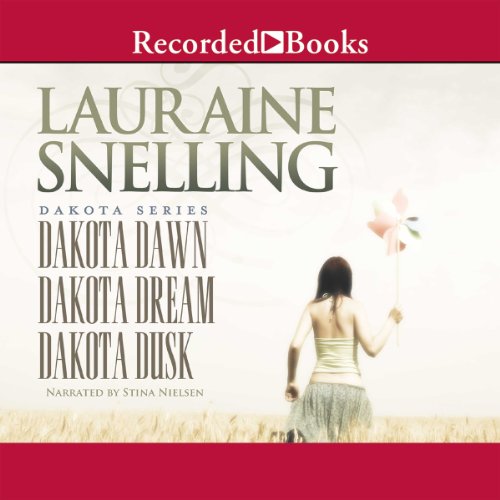
Lauraine Snelling’s Dakota Plans series is made up of five novellas about Norwegian immigrants to North Dakota in the early 1900s. The first three, Dakota Dawn, Dakota Dream, and Dakota Dusk, were packaged together in an audiobook I reviewed here.

The last two, Dakota December and Dakota Destiny, were packaged together in a separate audiobook.

In Dakota December, Sheriff Caleb Stenesrude’s dog needed to go out during a Christmas Eve blizzard, but then stayed out yipping instead of coming back in. Caleb went out to see what was wrong and found a woman collapsed on a horse. He caught her as she fell and discovered a young child clinging to her. When he brought them into the house, he saw that the woman was with child. Her cries let him know she was in labor. He was in for a unique Christmas Eve.

Later, the woman, Johanna Carlson, is ensconced with her children in a widow’s home until she can recover and the weather settles down. She’s reluctant to tell these good people her troubles. But she needs to get away as soon as possible, before her angry and violent husband finds them.

In Dakota Destiny, Pastor Moen’s daughter, Mary, is grown up and in a teacher’s school, thanks to a wealthy benefactress. Mary is in love with Will, the blacksmith’s apprentice we met in the second book, who is also now grown up. But when World War I begins, Will feels he must enlist. Mary spends the summer taking care of a sick woman’s children while Will goes to training camp and then out to sea. When Mary goes back to school, she receives the devastating news that Will is missing and presumed dead.

She carries on with her school and finds her first job as a teacher. A year later, another man seeks her hand. But she can’t shake the feeling that Will is still alive.

The last book was much shorter and seemed a little underdeveloped. It was odd that characters in books 3 and 4 had the same last name, but didn’t seem to be related to each other. The narrator of all the books was really good, but used a different voice for the pastor in book 4 than in the rest of the books. And I disagreed with a statement in the last book that we are all God’s children (we’re not).

But otherwise, I enjoyed both these books. A few characters from the previous books were rarely mentioned again, but others played prominent parts. I’m going to miss this little community. I especially appreciated an older lady, Mrs. Norgard, and the ways she found to help and encourage people.

Dakota Dawn, Dream, and Dusk

Dakota series by Lauraine Sneling

Lauraine Snelling wrote a series of five novellas about Norwegian immigrants to North Dakota in the 1900s. The first three, Dakota Dawn, Dakota Dream, and Dakota Dusk, were packaged together in a free-with-my-subscription audiobook. I don’t know what’s up with the picture on the cover—no one dressed that way in the 1900s!

In Dakota Dawn, Norah Johanson’s fiance had gone to America three years ago, promising to send for her. Now she’s on her way. But when she arrives, she finds that Hans has just recently died. Reverend and Mrs. Moen take her in for as long as she needs to decide what to do. She doesn’t have the money to go back home, so she must find work.

Carl Detchman is a quiet but stubborn German immigrant whose wife has just died in childbirth. The Moens have taken care of his young daughter and infant son, but he can’t expect them to do so forever. The Moen’s house guest who has been helping with the children seems capable. But he can’t invite a beauitful young single woman to his home without tongues wagging. So he proposes a marriage of convenience. If she’ll come and keep house and take care of the children until he can make other arrangements, then they can annul the marriage and he’ll pay for her ticket back home.

Norah is shocked at first, but agrees. And, of course, the two fall in love. This is a frequently seen story line with an inevitable conclusion, but it was enjoyable to see the two work through their issues and come first to appreciate, and then to love each other.

In Dakota Dream, Clara Johanson, Norah’s sister, received a ticket to her sister’s town and a picture from a handsome stranger offering to pay her way to Dakota if she’ll be his wife. Clara agrees. But when she arrives at her sister’s house, no one knows who this man is.

What she doesn’t know is that Jude Weinlander brought Clara over to play a trick on his brother, Dag. He signed Dag’s name to the letter but sent his own picture. Dag is tasked with meeting Clara at the train station and taking her to the Detchman’s. He does not make a good first impression, with matted hair and beard and filth from the livery where he works.

Clara stays with her sister until the pastor asks if she can come and stay with an elderly woman who is not doing well and needs full time care. Clara has no idea the change this will make in her life—and in her relationship with Dag.

In Dakota Dusk, Jude Weinlander is disgusted. His trick on Dag backfired. He’s run out of money due to drinking and gambling and has to move with his wife back to his mother’s house.

When a fire destroys his home, after he heals, he becomes a drifter, traveling from place to place looking for work. He doesn’t drink or gamble any more, but he can’t go home. He comes upon a town rebuilding their school after a prairie fire. He stays to help, and then is asked to stay on to help rebuild other homes.

He can’t help but notice the pretty school teacher, Rebekka Stenesrude. But he can never pursue a relationship. He’s not worthy. No one could love him if they learned what he had done.

These stories were set some years after Laura Ingalls Wilder’s Little House series, so there are many similar incidents—grasshopper infestations, prairies fires, etc .But these stories are told primarily from the viewpoint of immigrants adjusting to a new land. I felt the same way I did after reading Laura’s books—glad I was born in my time and not hers!

There were so many hardships in those times. The services for help that we take for granted didn’t exist then, so people had to help each other, and accept help, or die.

But great faith and character emerged as well. I enjoyed these stories as well as the characters and the obstacles they overcame.

The Space Between Words

In The Space Between Words by Michele Phoenix, Jessica and two friends in Denver take a vacation to Paris. Though they’ll do some sight-seeing, they are mainly there to scout out treasures at antique stores and flea markets.

But then Jessica is shot during the Paris attacks in 2015. She’s traumatized by all she saw in the attacks. When she heals enough to be moved, she wants to get out of Paris as quickly as possible.

But one of her friends talks her into staying, at least for a little while. In one flea market, Jessica find an antique sewing box that seems to draw her. Back at her room, she discovers a secret compartment in the box which contains several sheets of handwritten paper and a few pages from an antique French Bible.

A new friend helps Jessica translate the ancient French. The sheets held the writing of a young woman named Adeline Baillard in 1695. She and her family were Huguenots when the Catholic King outlawed their faith and sanctioned torture and persecution against them. Adeline’s family gets her sister and brother and his family out, but Adeline stays with her parents. She’s a teacher and wants to help her students as much as she can while there is time.

As Jessica reads Adeline’s words, she feels compelled to find what happened to her and her family, especially her sister. Her own healing and mental and spiritual health are wrapped up in Adeline’s fate. She can’t understand how Adeline could believe so strongly in a God who would allow such atrocities to happen.

I’m sorry to say that I had completely forgotten about the Paris attacks of 2015. The year isn’t given in the novel, but the details seemed more reality than fiction, so I looked up and read more about them in Wikipedia.

This is the first book of Michele’s I have read, and I was captivated. So much of the story is touching, but subtle humor is sprinkled throughout as well. One surprise twist was heart-wrenching.

Just a few quotes that stood out to me:

I knew he worried, as I did, that that part of my life had been amputated by fear.

Father held what remained of our Bible in both hands and declared, “This is the Truth that binds us to each other and to God. These are the words exhorting us to faithfulness and strength. These are the pages that emancipated our faith from the dictates of a King. We will carry them with us as a testament to our resistance, as a reminder of all the Huguenot community has endured” (p. 115).

My grandmother believed in the power of words, in the capacity of story to transcend both time and place. This scroll is evidence of the temerity of her escape, a tribute to the ancestors who lost their world to save their faith (p. 288).

There were a couple of odd places where a child seemed to see someone who wasn’t there. But other than that, I loved everything about this book.

Unveiling the Past

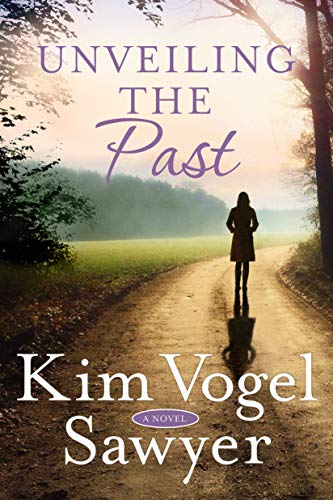
In Kim Vogel Sawyer’s novel, Unveiling the Past, Megan DeFord and Sean Eagle are married cold case detectives. They are working on a case about the death of two young brothers when their captain interrupts them. A friend of the captain’s wants to investigate her father’s disappearance from several years before. The missing father was accused of embezzling from his bank, though there was no evidence to suggest he did. But his sudden disappearance lent credence to the idea that he did steal the money. His daughter, Sheila, wants to find out what happened, and she wants a woman detective. Since Meghan is the only woman in the office, the captain wants her to take the case.

Sean, however, feels strongly about the case they are on. He could give it to one of the other detective teams, but he has been personally involved with the family and feels he would be letting them down to drop the case now.

Reluctantly, Sean and Meghan decide to work with another detective team so Sean can finish his case while Meghan works on the one from the captain. Unfortunately, that leaves Sean working with Tom Farber, the most cantankerous detective on site.

On a personal level, Sean longs to start a family. But Meghan’s highly dysfunctional mother and absentee father make her uncertain of her own maternal capacities.

In fact, Meghan’s lack of a father in her life makes her sympathize with Sheila. Meghan’s mother had finally given her the name of her father a few years ago. Maybe it’s time to look him up.

This book is the sequel to Bringing Maggie Home, one of my top books of last year. Each book could be read on its own, but I would recommend both of them.

The title of the book reflects many layers of unveiling, both in the two main characters, the people they are investigating, Meghan’s parents, and Farber.

I mentioned in my review of the first book that I like Christian fiction that shows Christian people doing normal Christian things. Two characters in the book are new Christians. Meghan, in particular, wrestles with discerning between her own desires and God’s will.

Overall, I enjoyed this book quite a lot.

I listened to the audiobook, nicely read by Barbara McCulloh.

Worthy of Legend

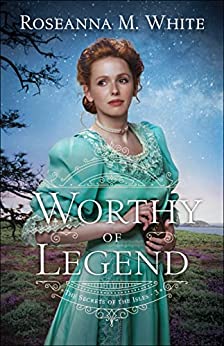
Worthy of Legend is the third installment in Roseanna M. White’s Secrets of the Isles trilogy. The first was The Nature of a Lady; the second was To Treasure an Heiress.

The Secrets of the Isles involves two different groups in search of legendary pirate treasure. One loves “the hunt” and the thrill of archeological finds. The other wants the fame and fortune of such discoveries and employs underhanded means in the race to discover treasure.

Lady Emily Scofield is good friends with the people in the first group. But her father and brother are the primary instigators in the bad group.

Emily has lived her entire life in the background of her brother, Nigel. Nigel was her father’s favorite, and his misdeeds were excused away. Emily is expected to desert her friends and show loyalty to her family. But she can’t.

Instead of writing off her family completely, though, she tries to show love to them. Her friends fear she’ll be taken advantage of again.

Bram Sinclair, Earl of Telford, is the brother of the heroine in the first book. He has had an interest in the King Arthur legends since childhood. As he and his friends piece together clues to the artifact that both groups are pursuing, he realizes what they are looking for might be related to King Arthur. They try to keep this information secret from the other group.

As Bram and Emily’s group works together, Bram is concerned for Emily. He recognizes her conflict with her family and her lack of confidence and self-esteem from having been dismissed and overlooked for so many years. As he tries to encourage her, he discovers a true treasure in her character and heart.

A secondary plot line involves Emily’s maid, Thomasina, who has, unknown to Emily, been violated by Nigel. When a young man from the islands becomes interested in Tommie, she feels he would not be if he knew what had happened to her.

A couple of my favorite quotes from the book:

And if she lost everything all over again . . . well then, she’d just have to trust that the Lord could do more with her shattered than He could with her as she was now, barely holding together. That He meant her to be a mosaic instead of a whole.

Your worth, Thomasina, rests on no one else’s opinion of you. It doesn’t rest even on you. It rests in the Lord. He sees your heart, your soul. And that is all the approval any of us needs.

Bram and Emily were background characters in the previous books, and I enjoyed getting to know them better. I also loved the humorous bantering between Bram and his friend, Sheridan.

I especially liked the fact that these books were in a place I had never heard of, the Isles of Scilly. Now I feel I know the isles and the people on them. And the time frame of the early 1900s isn’t one we see often in historical fiction.

I enjoyed these stories very much and am going to miss these characters.

Bringing Maggie Home

In Bringing Maggie Home by Kim Vogel Sawyer, Hazel DeFord was ten years old when her mother asked her to take her three-year-old sister, Maggie, to the blackberry thicket to pick berries for a cobbler. Hazel set Maggie down for just a moment while she chased a snake away from a baby bunnies’ nest. When Hazel came back, Maggie was gone. None of the volunteers could find a trace of Maggie besides her hair ribbon, shoe, and favorite doll.

Hazel felt incredibly guilty for leaving Maggie unguarded, especially while witnessing the downward spiral Maggie’s disappearance caused in her family. She resolved to be as good as possible so as not to cause them any more trouble.

When Hazel grew up and had her own family, she never told her daughter, Diane, about Maggie. She felt Diane would never be secure with her if she felt she couldn’t trust Hazel to take care of her.

But Diane resented and rebelled against Hazel’s perfectionism and over-protectiveness. Hazel’s concerns came across as controlling to Diane.

But Diane’s daughter, Meghan, loves her grandmother and spends several weeks with her every summer. Now grown and a cold-case detective, Meghan has survived a car crash with a severely broken ankle. She decides to go to her grandmother’s to recuperate and work on some photo albums for Hazel’s upcoming 80th birthday.

Jealous, Diane, decides to come, too, without being invited or letting anyone know. Meghan is wearied playing peacemaker between the two women.

Then an accidental discovery of a shoe box of old photos leads Hazel to tell her daughter and granddaughter the truth.

Meghan and her partner at work, Sean, decide to see if they can uncover any information about Maggie’s disappearance. With the case being 70 years older, older than any case cracked by their agency, solving it is a long shot. But they resolve to try.

I loved this book. I wasn’t sure I would at first, because Hazel’s and Diane’s bickering made me tense. Then I realized the problem was mainly Diane. Hazel’s issues were easier to understand and sympathize with. And Diane’s responses were understandable to an extent. But her bitterness and selfishness got to be a bit much. Still, I felt things would turn a corner at some point, so I persevered. I’m glad I did.

The point of view shifts from each of the women at different times in their lives, and occasionally to Sean’s viewpoint as well. I didn’t feel that the changing viewpoints, timelines, or locations were hard to keep up with at all.

I’ve often said that I appreciate Christian fiction that is unapologetically Christian. I know sometimes the message needs to be subtle, but sometimes subtlety turns into vagueness. It’s good to see an author getting down to the spiritual needs in a story without becoming preachy or beating people over the head with truth. I thought Kim did a great job both with the story and the spiritual issues underneath them.

I didn’t know, when I started this book, that it had a sequel: Unveiling the Past. I will probably be reading or listening to that some time soon.

I listened to the audiobook, nicely read by Barbara McCulloh. Unfortunately, the audiobook didn’t contain any back matter, so I am not sure whether any of the story was based on anything in real life.