What’s On Your Nightstand: February 2013

What's On Your NightstandThe folks at 5 Minutes For Books host What’s On Your Nightstand? the fourth Tuesday of each month in which we can share about the books we have been reading and/or plan to read.

February has seemed like a much longer month than 28 days this year. But I’ve managed to get some reading and audiobook-listening in.

Since last time I have finished:

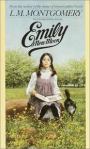
Emily of New Moon for Carrie’s Lucy Maud Montgomery Reading Challenge, reviewed here.

The Tenth Plague by Adam Blumer, reviewed here. Suspenseful Christian fiction about a warped man who uses the Biblical ten plagues of Egypt as a playbook to exact revenge, and the couple who is trying to find and stop him.

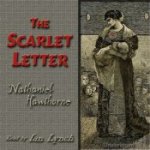
The Scarlet Letter by Nathaniel Hawthorne, reviewed here, for Carrie’s Reading to Know Book Club.

Let the Hurricane Roar by Rose Wilder Lane, reviewed here. Laura’s daughter wrote a fictionalized account of some of her grandparent’s experiences. This one and the next two were for the Laura Ingalls Wilder Reading Challenge which wraps up Thursday.

West From Home by Laura Ingalls Wilder, reviewed here, a compilation of letters Laura wrote to Almanzo while visiting their daughter, Rose, and Rose’s husband, and the World’s Fair.

On the Banks of Plum Creek by Laura Ingalls Wilder, reviewed here. It covers the same events as Let the Hurricane Roar plus a few more: a grasshopper plague, blizzards, attending school for the first time, meeting Nellie Oleson.

These High Green Hills (audiobook) by Jan Karon, Book 3 of the Mitford series, not reviewed. There is a lot in this book: dealing with a case of child abuse, an unidentified burn victim, and the death of a long-time Mitford resident, as well as the continuing adventures of Father Tim and the rest of Mitford.

I also wrote about books I remember reading as a child and my reading history here.

I’m currently reading:

Dreams in the Medina by Kati Woronka, courtesy of a free voucher Lisa graciously shared with me, a coming-of-age story about several girls in Syria.

Out to Canaan by Jan Karon (audiobook), Book 4 of the Mitford series.

Secret Thoughts of an Unlikely Convert by Rosaria Champagne Butterfield: a lesbian leftist professor who hates Christians….becomes one. Just started this one and can’t wait to dig in more.

Coming up next:

Introverts in the Church: Finding Our Place in an Extroverted Culture by Adam S. McHugh. I know it’s okay to be an introvert, but I struggle with whether I sometimes play the introvert card when I should be seeking God’s grace to extend myself. We all need to leave our comfort zones sometimes.

A New Song by Jan Karon.

A Maud Hart Lovelace book for Carrie’s Reading to Know Book Club for March. I’ve never read her: any suggestions?

I need to pick something from my multitude of Kindle app downloads! But I’ll decide that after I finish some of the above.

So what are you reading?

Update: I am linking this post up with

btt  button Booking Through Thursday, a weekly meme related to books. Today’s (2/28) question is “what are we reading,” which ties in nicely with this post. 🙂

Book Review: On the Banks of Plum Creek

Plum CreekI wanted to read next On the Banks of Plum Creek by Laura Ingalls Wilder right on the heels of Let the Hurricane Roar (linked to my thoughts) by her daughter, Rose Wilder Lane  while it was fresh in my mind, because they covered some of the same events.

Little House on the Prairie had ended with the Ingalls family having to leave their homestead in “Indian territory” when it was determined that the Indians had rights to the land. On the Banks of Plum Creek opens with the family coming into Minnesota near Walnut Grove (“only three miles away, a nice walk”, Pa says) and trading their horses for the land and crops of a family who is leaving. The family had a little dugout house, and the Ingalls live there until Pa’s wheat crops start to sprout, and he borrows against it to buy lumber and supplies for a new house.

Since they are close to town, Mary and Laura begin to attend school, where they meet the infamous Nellie Oleson, who becomes an instant enemy with her derisive assessment of them as “country girls.” The also meet Reverend Alden and are able to attend church for the first time in a long time.

This book contains some of my favorite “Little House” scenes, like the party where their classmates are invited to the house on the creek and Laura lures Nellie into the area where the crab and leeches are, the church Christmas party where Laura gets her fur cape and muff, the girls bringing in all the firewood during a storm when Ma and Pa are away after they heard about a house of children who froze. It also tells of the awful grasshopper invasion, Pa’s having to go East for work, prairie fires, and the terrible blizzards.

Some of us reading Laura’s letters in books like West From Home have remarked how unemotional her correspondence seems. I’m not sure how much of that comes from her personality and how much from her upbringing. The Ingalls weren’t stoics, but their attitude during any crisis seemed to be to buck up and do what you had to do. Emotion is shown more subtly, as when Pa stops playing his fiddle during stressful times or Ma sits late at the window with the light in it, staring at her hands, worried for her husband, who might be caught out in a blizzard. Once when a visiting child takes a liking to Laura’s rag doll and wants to keep it, Ma admonishes Laura that the child is little and company and should have the doll, and scolds Laura that a great girl like her (about age 8 at this time) should sulk over it. But then later Ma does come around and says she didn’t realize Laura cared so much for the doll and helps her restore it when Laura rescues it from a puddle, and while she doesn’t let them rant, she does understand when they’re strained and stops work to play games with them. Laura is ashamed of herself for crying during Pa’s long absence, saying it would be a shame even for younger Carrie to cry. Laura seems to paint herself as the only family member having bad emotions, like envy and pride.

Once again I marvel at the strength of the early settlers, who regard three miles as a “nice walk” and bear so much without a whimper. I don’t know if we could do today what they did, maybe because we haven’t had to. But then, each generation has its particular trials and hardships.

I liked seeing through Laura’s eyes as she described new things and how she thought when she fell into temptation. I enjoyed visiting with the Ingalls family again, with Pa’s cheerfulness, Ma’s gentleness and resourcefulness, their industriousness and endurance of the whole family as well as their enjoy of simple pleasures, and the interaction of the family as well as getting to know new neighbors from town.

Laura Ingalls Wilder Reading Challenge

(This will also be linked to Semicolon‘s Saturday Review of Books.)

Book Review: The Scarlet Letter

Scarlet LetterThe February selection for Carrie‘s  Reading to Know Book Club is The Scarlet Letter, chosen by Shonya from Learning How Much I Don’t Know. I don’t think I have read it since high school, so I figured it would be good to revisit it, especially when I found it as an audiobook.

As most people know, The Scarlet Letter is about Hester Prynne, whose sin of adultery has produced a child in a 1640 Puritan community and whose punishment is to wear the letter A for “adulteress” on her bosom. I’ve been looking around at other reviews, study guides, and such, and many seem to see the story as a strong woman overcoming the confines of a repressive society. But I saw it described in a couple of places as a psychological romance or drama, and I think that is where the strength of the story is.

The audiobook for some reason leaves out the first chapter in which the narrator finds the scarlet letter in a custom house before telling the story behind it. We first see Hester emerging from the prison, the scarlet A already on her chest, with her child in her arms, sentenced to stand on a public scaffolding for three hours. She had been married, and her husband had sent her on ahead to this country, but her pregnancy became evident too long after arriving for the child to have been her husband’s. In all the intervening time he has not been heard from and is assumed dead. Hester steadfastly refuses to name the other guilty party in her sin.

The first time I read the book, it took me a while to realize who it was. If I were reading it for the first time as an adult, I think I would have figured it out much faster. It was interesting reading it knowing who he was from the outset, as there are clues everywhere. I’ve wrestled with whether to name him or not: I don’t want to destroy the suspense for anyone who hasn’t read it yet, but I don’t know how much I can say about the book without naming him. I’ll give it a try. 🙂

The psychological drama comes in the contrast between Hester’s publicized guilt and its consequences, ostracism from society and the resulting extreme loneliness, versus the consequences her partner in sin’s suppressed guilt: the torment of hearing praises heaped on him for his goodness when he knows he is a hypocrite. At first I thought he kept quiet because he was spineless, but later the author shows he is concerned as well about the negative repercussions his guiltiness could have if it were known, thus he feels “caught,” and his guilt begins to affect him physically.

Hester’s long-lost husband shows up at the first scaffolding scene, but signals to Hester to remain quiet. When he speaks to her later, he swears her to secrecy about his real name and their relationship. He understands, in one sense, her sin, because theirs had not been a marriage of love, and he was much older than she. But he determines to find and exact revenge upon Hester’s partner. He has become a doctor of sorts and goes by the name of Roger Chillingworth, fitting for his cold heart. There is more psychological drama when he thinks he has found the guilty party and determines to “dig” until he knows for sure, and the guilty party thinks he is a friend and doesn’t realize the danger.

The book could be easily divided into sections based on three scenes at the scaffold, where each of the major characters appear each time. The first I’ve mentioned; in the second, the other guilty party has been driven in the middle of the night to the scaffold in his guilt and pain. Self-flagellation, fasting, and vigils have not alleviated his guilt, so he goes himself to the scene of Hester’s shame — yet under cover of darkness, where he is tortured at the thought of being found out. Hester and her daughter, Pearl, happen to be walking by at that same time, and he calls to them to join him. They do, and Pearl asks if he will stand with them the next day at noon. He says no, but he will at the Judgment Day. Then the light of a meteor reveals the face of Chillingworth watching them. The final scaffolding scene takes place near the end of the book, with the same characters, yet in a public setting, where everyone’s fate is resolved.

The book is replete with symbolism: the A, of course, and the different meanings associated with it through the years, Chillingworth’s name and misshapen form representing his heart, Hester’s dressing little Pearl in scarlet, the scenes in the forest, the wild rosebush by the prison door, various manifestations of light and darkness. Pearl herself seems symbolic until the end of the book and acts something like a conscience for her parents. At one point she tells Hester, “the sunshine does not love you. It runs away and hides itself, because it is afraid of something on your bosom.

There are two things I don’t know that keep me from understanding this book more fully. One is Puritan society. I don’t know if how it is viewed here and in general (legalistic, harsh, repressive) is what it really was. This community is totally graceless, but the quotes I have read from Puritans have not been, though I admittedly have not read a great deal of Puritan literature. One source said that Puritans believed that whether you were “elect” or not would show in your life, thus Hester’s partner’s dilemma and struggle between his public persona and private sin. But all of the sources I looked at spoke of either being “elect” or earning one’s way to heaven (which did not seem possible for anyone in the book), yet neglected the real truth of grace that reaches out to the fallen sinner to provide redemption.

The other thing is Hawthorne’s transcendentalism and how it affected his views. I looked into this a bit when rereading Little Women (linked to my thoughts) but didn’t feel I really got a handle on their beliefs. Maybe someone else who read this book for this challenge will have more insight into that.

But I could definitely see the themes and contrasts between judgment and grace, penitence and repentance, and true  versus perceived identity (both Hester’s partner and Chillingworth present different personas from what they really are and tend to self-destruct because of it). I don’t know if I would say I enjoyed the book, but it was an interesting study.

(This will also be linked to Semicolon‘s Saturday Review of Books.)

Book Review: Let the Hurricane Roar

Let the Hurricane RoarLet the Hurricane Roar by Rose Wilder Lane, daughter of Laura Ingalls Wilder, is also published as Young Pioneers. In some versions the characters are named Molly and David: in others they are Charles and Caroline. The events are based on the same events covered in Laura’s book On the Banks of Plum Creek, though some details have been changed.

I had wondered about the title, since hurricanes don’t generally come to the prairie, but the title comes from a hymn.

Molly and David are very young newlyweds (16 and 18) who head west to claim a homestead. Though they live in a little sod house and don’t have many possessions, they are gloriously happy, especially when a good wheat crop grows and they have a baby son. But disaster strikes in the form of a grasshopper plague that destroys the crop. David had borrowed against the lost crop, so he must travel to look for work. Even though neighbors give up and leave in the face of similar difficulties, Molly stays on through a terrible winter so claim jumpers won’t steal their land.

A former pastor used to bestow high compliments on people when he called them “pioneer stock” — sturdy, dependable, strong, not easily swayed. David and Molly would both qualify for this compliment. I am sure I would not! At least not when it comes to living in a dirt house all alone through several blizzards. The book realistically portrays Molly struggle with being alone, wrestling with all of the “what ifs,” and David’s anger over his failure, poor choices (going into debt), and difficult circumstances, rather than portraying them as always smiling and unflappable.

Some of that “pioneer stock” is shown as well in Molly’s attitude when a neighbor complains about hardships, and Molly thinks to herself, “Well, the land isn’t going to feed you with a spoon!” Quite different from the attitude of many today.

I also liked the description at the beginning that Molly “never quite lost the wonder that she, quiet and shy and not very pretty, had won such a man as David. He was laughing and bold [and] daring.”

It’s obvious Rose loved and admired her grandparents, and I am glad she shared this part of their story with us. Part of her goal in writing it was to “inspire Depression-era readers with its themes of resilience in the face of hardship and the strength of the American character” (The Wilder Life by Wendy McClure, p. 168).

Carrie and Amy both reviewed this book last year — in fact, Carrie’s review is where I think I first heard of it. They both focus more on the relationship between Molly and David than I did, but after rereading their reviews as I came to the end of mine, I do remember that that’s part of what drew me to this book, besides its relationship to Laura. Though the book is not written as a romance per se, and as Amy said, Rose writes with restraint, the realities as true love as opposed to “romance novel fiction” shine through it.

The only blight on this novel is that Rose used this information from her mother’s material without her mother’s knowledge or permission. Laura was understandably upset, and they eventually came to terms with it and moved on.

I was originally going to read Farmer Boy next for the Laura Ingalls Wilder Reading Challenge, but since it is Almanzo’s childhood story and doesn’t need to be read in order, I think I am going to read On the Banks of Plum Creek for Laura’s version of the events in this story while this book is still fresh in my mind.

Laura Ingalls Wilder Reading Challenge

(This will also be linked to Semicolon‘s Saturday Review of Books.)

Save

Book Review: West From Home by Laura Ingalls Wilder.

West From HomeWest From Home is a compilation of letters Laura Ingalls Wilder wrote home to her husband, Almanzo, while she was in San Francisco visiting her daughter and the 1915 World’s Fair, also called the Panama-Pacific International Exposition in celebration of the completion of the Panama Canal, which opened trade with other countries. Her daughter, Rose Wilder Lane, had kept the letters in a box after her mother’s death, and they were among other possessions passed along to her heir, Roger Lea McBride. When he discovered them, he decided to publish them in a book for Laura fans.

Laura spent about two months with Rose and her husband. She was 48; Rose was 29. Besides all the sights and wonder of the Exposition, Laura got a glimpse of San Francisco, Rose’s work, different ways business was done, and the ocean. I love the description of Laura and Rose taking their shoes off and running in the water.

She visited to a cannery, and “her doubts about the cleanness of canned goods from a large plant are removed” (p. 54). She was intrigued by the different nationalities of people she saw. She was enthralled by the light show in the evenings. And she took in a great deal from the city and the Exposition and tried to describe it in great detail to Almanzo.

Though there are photos included in the book of some of the sights around the time she was there, they are not hers. I don’t know if they did not have a camera, or if it was just inconvenient or expensive to shoot many photos. But Laura tried to describe with as much detail as she could what she was seeing so Almanzo can experience it as much as possible, too.

Almanzo couldn’t leave the farm, and it is clear in several of the letters that Laura feels conflicted about leaving him with all the work herself. A number of things I read last year about her showed that she was an integral part of the farm work.

Her letters are quite practical, not romantic or even affectionate much at all. That may have been due to the era, but overall she was a very practically-minded person, so that may just be how she expressed herself.

In several places it is mentioned that Rose was trying to persuade her parents to move near her, and Laura (actually called Bessie by Almanzo because he had a sister named Laura and called Mama Bess by Rose) explored the costs and details involved in moving some of their ventures to CA. But ultimately she felt, “There is no place like the country to live and I have not heard of anything so far that would lead me to give up Rocky Ridge [their home] for any other place” (p. 89).

Laura was also writing her farm-paper columns at this time, and Rose had several writing assignments, but there was talk of wanting Rose to help her block out a story. I’m assuming these were some of the first efforts towards what would eventually become the Little House stories.

One of the reasons I especially wanted to read this book was for a glimpse into Laura’s relationship with Rose. I had read mixed reports about how well they got along. There is nothing in these letters to indicate they didn’t get along, and if they didn’t, it would seem Rose wouldn’t be so keen on wanting them to move near her. There are indications that Rose was more emotional and Laura more practical and down-to-earth, so I am sure that caused some misunderstandings sometimes. Of course, these cover just a short period in their lives, so they are not the whole story.

There are some family glimpses as well, in Laura’s concern about whether they’d get back $250 they had loaned to Rose and her husband, and Rose’s note to her father with concerns that Laura was getting too fat (!!!)

All in all it was a fairly quick (171 pages, if you count some recipes at the end) and enjoyable read. It wasn’t riveting, but it was an interesting peek into Laura’s real life.

Laura Ingalls Wilder Reading Challenge

Book Review: Emily of New Moon

L. M. Montgomery Reading Challenge Reading to Know - Book Club

I read Emily of New Moon by L. M. Montgomery for Carrie‘s Lucy Maud Montgomery Reading Challenge. and Reading to Know Book Club for the month of January.

EmilyEmily is similar to LMM’s Anne of Green Gables in many ways: both are orphans and come to live with stern older women. Both are highly imaginative and high-strung. But Emily’s world is harsher, darker, at least at first, whereas Anne’s is more charming and optimistic.

Emily’s mother had died years ago, and Emily lives alone with her beloved father, who is dying of consumption. They had had no contact with her mother’s people, the proud Murrays of New Moon, because her mother had run away and eloped with her father, to the severe disapproval of the Murrays. But “Murray pride” insures they will do their duty by Emily, and the various family members draw lots to see who will take her. The lot falls to Aunt Elisabeth (who is much harsher than Anne’s Marilla, who, though she was not warm, was not unkind.) The blow is softened for Emily a bit by the fact that her Aunt Laura and Cousin Jimmy (who “may not be all there, but what is there is very nice” p. 209) also live with Elisabeth, and they both love Emily, though they don’t “cross” Elisabeth.

It was astounding to me that no one understood either Emily’s grief in the loss of her father nor the jolt it would have been to leave all she had known to live with strangers. But with the resilience of childhood she soon learns the ways of the household and soon learns to love much about New Moon. Starting school is another trial by fire, but she makes dear friends with a girl named Ilse, who has been allowed to run rather wild by her inattentive father, Teddy, a quiet classmate who draws exceptionally well but whose mother is somewhat disturbed, and Perry, who has never been to school but has sailed hither and yon with his father.

Emily’s outlet is writing. She loves “the magic…made when the right words are wedded” (p. 273). She has a vivid imagination and writes fanciful stories and poems and pours out her heart about her trials and tribulations in letters to her father.

I wasn’t sure how well I really liked this book until about the last third of it, when Emily and Aunt Elisabeth have their ‘breakthrough” (and I loved that everything wasn’t all “happily ever after” that, but their different personalities and views still caused them to clash sometimes.) And then the chapter “When the Curtain Lifted” was the best in the book, I think. I also enjoyed Emily’s growth through the book, both in her personalty, as she “learns to mingle serpent’s wisdom and dove’s harmlessness in practical proportions” (p. 314), and in her writing, as she begins to realize that much of her early work is fanciful trash but is encouraged by the glimmers of talent a few others see.

This book is said to be more autobiographical than Anne, with some of the events in Emily’s life taken from LMM’s. It was interesting that a poem someone sent to encourage Emily about the Alpine path was one that also encouraged LMM: her autobiography takes its title from the same poem.

There is also a television series based on Emily, but I have not seen it.

I had hoped to read all three Emily books, but I only got through the first one, so I’ll probably save the next two for next year’s LMM challenge. The book for February’s Reading to Know Book Club. (which is all classics this year: take a peek here and see if you’d like to join in for any of them) is The Scarlet Letter, which I’ll probably listen to via audiobook.

And if anyone is looking for another challenge for February, I invite you to check out the Laura Ingalls Wilder Reading Challenge which starts tomorrow!

Laura Ingalls Wilder Reading Challenge

My past readings for the LMM Reading Challenge are (all linked to my thoughts on them):

Anne of Green Gables
Anne of Avonlea
Anne of the Island
Anne of Windy Poplars
Anne’s House of Dreams
Anne of Ingleside
Rainbow Valley
Rilla of Ingleside
Looking for Anne of Green Gables: The Story of L. M. Montgomery and Her Literary Classic by Irene Gammel

(This will also be linked to Semicolon‘s Saturday Review of Books.)