Review: Hillbilly Elegy

Hillbilly Elegy

I saw Hillbilly Elegy making the rounds a few years ago and almost read it then, but kept deciding on something else instead. The title stuck with me, the author’s name did not, so it was only recently that I realized the author, J. D. Vance, is the current Republican Vice-Presidential nominee. I decided to finally read this book to learn more about him.

I almost gave up reading it a number of times due to the language. At first, it was easy to compartmentalize that most of vulgarities came from Vance’s grandmother. But later in the book, Vance himself used these same words.

About halfway through, I had just about decided to abandon this book when I read Rebekah Matt’s testimony of how much this book helped her as she grew up in similar circumstances to Vance’s. I decided to keep reading because this story is a real account of what many go through. I’m sure the language goes with the other characteristics Vance described, but I think he could have demonstrated that factor without .giving so many examples.

Vance’s grandparents moved from the Appalachia region of Kentucky to Ohio to try to escape the poverty they grew up with. Vance didn’t think his tumultuous family situations were anything but normal, because everyone he knew had the same kinds of experiences: poverty, drug addiction, violent arguments, an absent father, and a mom cycling through one boyfriend after another.

Vance says in his introduction that he wasn’t extraordinary by escaping his roots, joining the Marines, going to college, then Yale, eventually becoming a Senator (and, after this book was written, the vice-presidential nominee). “I didn’t write this book because I’ve accomplished something extraordinary. I wrote this book because I’ve achieved something quite ordinary, which doesn’t happen to most kids who grew up like me” (p. 1, Kindle version).

I want people to know what it feels like to nearly give up on yourself and why you might do it. I want people to understand what happens in the lives of the poor and the psychological impact that spiritual and material poverty has on their children. I want people to understand the American Dream as my family and I encountered it. I want people to understand how upward mobility really feels. And I want people to understand something I learned only recently: that for those of us lucky enough to live the American Dream, the demons of the life we left behind continue to chase us (pp. 1-2).

Nobel-winning economists worry about the decline of the industrial Midwest and the hollowing out of the economic core of working whites. What they mean is that manufacturing jobs have gone overseas and middle-class jobs are harder to come by for people without college degrees. Fair enough—I worry about those things, too. But this book is about something else: what goes on in the lives of real people when the industrial economy goes south. It’s about reacting to bad circumstances in the worst way possible. It’s about a culture that increasingly encourages social decay instead of counteracting it (pp. 6-7).

One stabilizing influence in Vance’s life was his grandmother. Although she had what he called a quirky faith, she didn’t go to church, had a foul mouth, and was as likely as anyone else to get physically violent in an argument.

Another big factor in Vance’s journey were teachers, one in particular.

Vance doesn’t think the answer to the problems of people in the area he grew up in are political.

Public policy can help, but there is no government that can fix these problems for us. . . .I don’t know what the answer is, precisely, but I know it starts when we stop blaming Obama or Bush or faceless companies and ask ourselves what we can do to make things better (p. 255-256).

Powerful people sometimes do things to help people like me without really understanding people like me (p. 186).

To me, the fundamental question of our domestic politics over the next generation is how to continue to protect our society’s less fortunate while simultaneously enabling advancement and mobility for everyone. We can easily create a welfare state that accepts the fact of a permanent American underclass, one where family dysfunction, childhood trauma, cultural segregation, and hopelessness coexist with some basic measure of subsistence. Or we can do something considerably more difficult: reject the notion of a permanent American underclass. Yet . . . doing better requires that we acknowledged the role of culture (p. 261).

A couple of odd things in the book were his assertions that the nicknames “Mamaw: and “Papaw” were only used for hillbilly grandparents, and the phrase “too big for your britches” was a hillbilly saying. I grew up in southern Texas, and my grandparents on my mother’s side were Mamaw and Papaw. I’ve heard “too big for your britches” all my life.

Another oddity is that many referred to this as the “book that got Trump elected.” But there are only a couple of paragraphs that mention Trump, and Vance disagreed with him at the time.

Vance writes that he told his story the way he did because he thought “if people experienced these problems through the perspectives of real people, they might appreciate their complexity” (p. 269).

I think he succeeded in that goal. Although the family I grew up in was poor and dysfunctional to some degree until my teen years, when my parents divorced, I didn’t face all that Vance did. He helped me understand that poverty and dysfunction become mindsets that are hard to escape from. As he “made it” in terms of upward mobility, he called himself a “cultural emigrant” in trying to understand and adjust to people and institutions who were so fundamentally different from himself. Though he didn’t put it quite this way, he showed that just improving circumstances and economic well-being in themselves were not all that was needed.

Note: This post is about Vance’s book and not Vance as a political candidate. I will not approve comments that are personal or political rants.

Review: A Boy’s War

A Boy's War by David Michell

David Michell was the tender age of six when he was sent to the Chefoo School, a Protestant boarding school for missionary children in what is now known as Yantai. He and his parents had no idea they would not see each other for six years because the Japanese captured the school during WWII.

David tells his story in A Boy’s War. His parents moved from Australia to be missionaries to China with China Inland Mission, originally founded by Hudson Taylor, in 1930. David was born in China and lived with his parents and older sister until they were later joined by a younger sister. When it came time for school:

In the China of those years the only way for most children of missionaries to get a good education in English was to go away to boarding school. Chefoo offered this opportunity. At Chefoo children of missionaries and a few sons and daughters of business people lived and studied together at the preparatory school, the Boys’ School, and the Girls’ School, getting a truly Christian education for body, mind, and spirit. So good was that education, in fact, that others, non-CIMers, wanted to take advantage of it, too (Location 59, Kindle version.

Some of the school’s famous graduates were Henry Luce of Time Magazine and Thornton Wilder.

On a side note, when I first read in missionary biographies of parents sending their children away to school so young, I was horrified. But home schooling materials were not as available then as now. Plus the British boarding school system had been in place for ages. Parents wanted their older children to have the credentials for college. And in some cases, the environment was such that children were more vulnerable to some of the horrific practices of the parents’ mission field, so parents felt they were safer away at school. These days, many mission boards work with parents to teach their children at home, especially in the younger years.

David tells of his trip to school (“two thousand miles and a six-week journey away,” Location 145) and early days of adjustments. Though he missed his parents and younger sister and had some homesickness and struggles, for the most part he settled in fairly easily.

Many of the teachers had been Chefoo students themselves. Outside the classroom, “housekeepers” helped the children write letters home, mended their clothes, and generally helped where needed. I was touched to see that many of these women were widows who now “mothered” these children.

As early as 1940, the school’s headmaster conferred with the British Embassy about what they should do in the face of the conflict between Japan and China. They decided to keep the school open. However, many children could not travel home at Christmas break due to the dangers, so a larger number than usual were at the school over the holidays. The staff provided a memorable Christmas for them.

They were used to seeing Japanese soldiers in the area, but the military didn’t bother anyone at the school. That changed after Japan attacked the US at Pearl Harbor the following year. Now British and Americans were the enemies. Immediately, Japanese soldiers arrested the headmaster for a month and took over the campus.

Classes and activities were allowed to continue under the watchful eye of the Japanese, but supplies ran low and freedoms were curtailed.

In November, 1942, the whole campus was sent on foot to an abandoned Presbyterian mission at Temple Hill, where conditions were even more crowded and supplies were even fewer.

Then in September 1943, the school was sent on a longer journey to the Weihsien interment camp, where they remained until the end of the war. There they joined some 1,500 other people from all walks of life and several nationalities held by the Japanese.

One of the detainees was Olympic medalist Eric Liddell. He had become a missionary to China after his Olympic feats. He had sent his pregnant wife and two children home, planning to join them later. But the Japanese took over before he could. One chapter of the book is a mini-biography of Liddell. He took an active part in teaching the children, who all called him Uncle Eric. He drew pictures of chemistry equipment they didn’t have so older students could be prepared for their Oxford exams. He arranged races and athletic activities and was generally thought of as a man “whose humble life combined with muscular Christianity with radiant godliness” (Location 1516). Sadly, he died of a brain tumor while at Weihsien.

Another detainee was Herbert Taylor, oldest son of Hudson Taylor, in his eighties, having been a missionary in China for over sixty years.

Though their years in camp were fraught with hardships, the children managed to have adventures as well.

David describes the joy of seeing six American soldiers parachute nearby and the Japanese surrendered.

Then came the scramble to get everyone home and taken care of.

Though David exulted in freedom, he found some aspects hard to adjust to.

In the last chapter of the book, David described going back to Weihsien with a few of his friends from there and their sons on the fortieth anniversary of their rescue. 

I had read this book some decades ago but had forgotten much of it. Reading a frictional account of the Chefoo school’s captivity in When We Were Young and Brave by Hazel Gaynor made me want to revisit this book. I am so glad I did. Hazel’s book may have more emotion, but it’s imagined emotion. David’s book is more factual. While he doesn’t downplay the hardships, he doesn’t go into great detail about them, either. I appreciated what he had to say here:

A situation like Weihsien is fertile soil for producing people of exceptional character. In our eyes, for instance, our teachers were heroes in the way they absorbed the hardships and fears themselves and tried to make life as normal as possible for us.

In fact, I think at times all of us in camp considered ourselves as heroes. We were surviving, some would say even thriving, in the midst of war. By dint of hard work, ingenuity, faith, prayer and perseverance we had transformed a compound that was a hopeless mess into a habitable and in some rare corners, almost an attractive living place (Location 1333).

Someone in the camp, Hugh Hubbard, wrote this of Eric Liddell after his death, but I think it was true of them all:

Weihsien—the test—whether a man’s happiness depends on what he has or what he is; on outer circumstances or inner heart; on life’s experiences—good or bad—or on what he makes out of the materials those experiences provide (Location 1504).

You can read a couple of testimonies of David Michell here and here.

I’m thankful to have reread this book, and for God’s sustaining grace of His people through the hardest of times.

Review: Everything Sad Is Untrue

Everything Sad Is Untrue (A True Story) by Daniel Nayeri is, on one level, a story about a boy who came to America as a refugee from Iran. Besides encountering a different language, different ways of doing things, even different kinds of toilets, Daniel has to deal with losses.

First he lost his name, Khosrou, because no one could pronounce it. He lost the presence of his father, who stayed behind in Iran. He lost his language and culture. He lost his position in society: his mother had been a doctor in Iran but worked cutting cardboard in a company that made business cards in the US. And he lost his connection with his extended family, his memories of them in fragments. “A patchwork memory is the shame of a refugee” is something he says often.

That was when I realized I had to write down the memories and myths and the legends—and even the phrases and jokes. Or I’d lose everything. Maybe even the recipes (p. 235, Kindle version).

Another layer of the story is the sad human tendency not only not to welcome anyone “different,” but to actively persecute them.

Yet another major facet is Daniel’s mother’s conversion to Christianity and the fatwa that was placed on her head, which led to her fleeing Iran with her two children. They ended up in a refugee camp in Italy for three years before finally making it to the US.

Sima, my mom, read about him and became a Christian too. Not just a regular one, who keeps it in their pocket. She fell in love. She wanted everybody to have what she had, to be free, to realize that in other religions you have rules and codes and obligations to follow to earn good things, but all you had to do with Jesus was believe he was the one who died for you (p. 195).

How can you explain why you believe anything? So I just say what my mom says when people ask her. She looks them in the eye with the begging hope that they’ll hear her and she says, “Because it’s true.” Why else would she believe it? It’s true and it’s more valuable than seven million dollars in gold coins, and thousands of acres of Persian countryside, and ten years of education to get a medical degree, and all your family, and a home, and the best cream puffs of Jolfa, and even maybe your life. My mom wouldn’t have made the trade otherwise (p. 196).

If you believe it’s true, that there is a God and He wants you to believe in Him and He sent His Son to die for you—then it has to take over your life. It has to be worth more than everything else, because heaven’s waiting on the other side. That or Sima is insane (pp. 196-197).

Daniel tells his story from his viewpoint as a twelve-year-old boy in the style of Scheherazade, the storyteller in One Thousand and One Nights. Sometimes he addresses the reader directly. Sometimes he addresses his teacher as if what he is writing is for an assignment.

If you listen, I’ll tell you a story. We can know and be known to each other, and then we’re not enemies anymore (p. 1).

The point of the Nights is that if you spend time with each other—if we really listen in the parlors of our minds and look at each other as we were meant to be seen—then we would fall in love. We would marvel at how beautifully we were made. We would never think to be villain kings, and we would never kill each other. Just the opposite. The stories aren’t the thing. The thing is the story of the story. The spending of the time. The falling in love. All the good stuff is between and around the things that happen (p. 299).

Being a Persian/Eastern tale, it isn’t told in a way we’re used to.

Mrs. Miller says I have “lost the plot,” and am now just making lists of things that happened to fill space. But I replied that she is beholden to a Western mode of storytelling that I do not accept and that the 1,001 Nights are basically Scheherazade stalling for time, so I don’t see the difference. She laughed when I said this (p. 299).

I had heard marvelous things about the book, but was confused when I started reading it. It jumps from a scene at school to a story about Daniel’s ancestors to a story about his mother or something that happened on their journey here. At first I thought this was because the narrator is a twelve-year-old boy. Then I realized it was a different style. I don’t often do this with fiction, but when I finished the book, I immediately started rereading it. I understood it much better the second time–I felt I had all the pieces, so I wasn’t confused. Plus, I just wasn’t ready to let go of the book yet.

I hadn’t paid much attention to the cover until another reviewer mentioned the tornado (which is in the book) is swirling around various things Nayeri mentions throughout his story. Plus, his style of storytelling is cyclical, like the tornado. That helped things click into place for me, plus it made me think the cover designer was a genius.

The title of the book comes from a scene in The Lord of the Rings when Samwise Gamgee “sees Gandalf come back and it’s like seeing his grandpa return from the land of death and memories.” “And Sam thinks maybe all the sad parts of the adventure will come untrue, now that this one has. And the beautiful part is that they do” (p. 232).

Though the story stops at a sad place, it seems a turning point towards hope.

Daniel makes his mother the heroine of story, the one who always had hope, who was unstoppable. “What you believe about the future will change how you live in the present” (p. 347).

The legend of my mom is that she can’t be stopped. Not when you hit her. Not when a whole country full of goons puts her in a cage. Not even if you make her poor and try to kill her slowly in the little-by-little poison of sadness. And the legend is true. I think because she’s fixed her eyes on something beyond the rivers of blood, to a beautiful place on the other side (p. 213).

Once I got into the book, I totally loved it. Well—almost totally. There were a lot of poop stories—maybe because the narrator is a twelve-year-old boy. But there were such poignant moments as well as many funny ones. I couldn’t help but admire and connect with Daniel’s mother. But my eyes were also opened to what refugees experience and to Persian culture.

Some of my other favorite quotes from the book:

I am ugly and I speak funny. I am poor. My clothes are used and my food smells bad. I pick my nose. I don’t know the jokes and stories you like, or the rules to the games. I don’t know what anybody wants from me. But like you, I was made carefully, by a God who loved what He saw. Like you, I want a friend (p. 2).

To lose something you never had can be just as painful—because it is the hope of having it that you lose (p. 51).

The lesson here is that people have scales in their heads and they measure other people for their value and ugly refugee boys are near the bottom and pretty blond girls are at the top. This is not a happy lesson. But you either get the truth, or you get good news—you don’t often get both (p. 80).

Does writing poetry make you brave? It is a good question to ask. I think making anything is a brave thing to do. Not like fighting brave, obviously. But a kind that looks at a horrible situation and doesn’t crumble. Making anything assumes there’s a world worth making it for . . . making something is a hopeful thing to do. And being hopeful in a world of pain is either brave or crazy (p. 122).

My mom comes home exhausted every night. I have never seen her not exhausted. And also, I have never seen her not working (p. 154).

Love is empty without justice. Justice is cruel without love (p. 217).

I found this video of the author and his mother making cream puffs, which I thought was really sweet. I had almost finished my second reading of the book when I saw this, and it was neat to actually see Daniel and his mother

I loved what Kathryn Butler said in her review of this book: “He weaves fragments of myth and personal history into his story, with threads intricately looping like the magnificent Persian rugs he describes (some of them studded with jewels, as can also be said of his prose).”

I’m sure this will be one of my favorite books of the year . . . and of all time.

Review: Lenten Lands: My Childhood with Joy Davidman and C. S. Lewis

Douglas Gresham was the son of Joy Davidman Gresham, who married C. S. Lewis when Douglas was eleven years old. In 1973, ten years after Lewis’s death, Gresham wrote Lenten Lands: My Childhood with Joy Davidman and C. S. Lewis, partly because he was asked to, partly to correct some misconceptions concerning C. S. Lewis. Yet Lenten Lands is his own biography, not Lewis’s.

The title of the book comes from a poem that Lewis had originally written for a friend, but then adapted to be put on Joy’s tombstone:

Here the whole world (stars, water, air,
And field, and forest, as they were
Reflected in a single mind)
Like cast off clothes was left behind
In ashes, yet with hopes that she,
Re-born from holy poverty,
In lenten lands, hereafter may
Resume them on her Easter Day.

Joy married fellow writer William Gresham in 1942. They had two sons, David and Douglas. But their marriage was troubled. They had been atheists, but searched other religions. Joy was drawn to the writings of C. S. Lewis as he told of his own journey from atheism to Christianity. She began writing to Lewis and eventually visited him in England.

When she returned home, she found that her husband was having an affair with the cousin she had left to keep house for her husband and sons while she was away. She tried to reconcile the marriage, but it was too late. Joy took her two sons and moved to England.

Joy and Lewis and Lewis’s brother, Warnie (Warren) enjoyed a strong, intellectual friendship. Joy and Lewis influenced each other’s writing. When Joy’s visa was not renewed in 1956, Lewis married her in a civil ceremony.

But before long, the couple grew to love each other as more than friends and sought a Christian marriage, difficult since the church of England did not condone Joy’s divorce. But they found someone who would perform the ceremony.

Joy developed bone cancer but went into remission. The cancer came back a few years later, and Joy died in 1960. C. S. Lewis wrote A Grief Observed under a pseudonym. He had not been well himself, and died three years after Joy.

Douglas experienced all these things as a child: he was just eighteen when Lewis passed. He kept in touch with Warnie for some years, but Warnie’s grief and alcoholism were too much for Douglas to bear. He later regretted that he was not more attuned to Warnie’s grief and more of a help to him.

Douglas then tells of his various jobs, marriage, and children.

In his afterword, written in 2003, thirty years after the original publication of the book, he tells how he “committed [his] life to Christ and His service.” He had “always believed in God and in Jesus Christ; my problem was not one of belief, but one of arrogance and pride. I did not want to submit my life to any authority other than my own and it took me a long time to realize that I am simply not qualified to run it myself.” At that time he “was working more and more for the C. S. Lewis Literary Estate.” His Wikipedia page says he “hosted Focus on the Family Radio Theatre’s adaptations of his stepfather’s most famous works, and he was named co-producer for the series of theatrical films adaptations of The Chronicles of Narnia” and is now a “stage and voice-over actor, biographer, film producer, and executive record producer.”

Not much is said of his brother, David, in the book. Douglas’s Wikipedia page says David returned to Judaism and was later diagnosed as a paranoid schizophrenic.

My heart went out to Douglas, having experienced so much loss at heartache at such a young age. His young adult years were somewhat tumultuous. A good talking to by the woman who would become his wife helped set him on the right course.

One of my favorite moments in the book was when Douglas actually met Jack. He had regarded him as “a cross between Sir Galahad and Merlin the Wise (p. 27), “on speaking terms with King Peter, with the Great Lion, Aslan himself” (p. 55). But Jack was “a slightly stooped, round-shouldered, balding gentleman whose full smiling mouth revealed long, prominent teeth, yellowed like those of some large rodent, by tobacco staining” (p. 55). “Well, so much for imagery,” Douglas concluded. But he also noticed “His florid and rather large face was lit as if from within with the warmth of his interest and his welcome. I never knew a man whose face was more expressive of the vitality of his person” (p. 55).

Another favorite part was when Douglas said “When I was home from school, the dinner table of The Kilns was the scene of my real education. Jack and Warnie were both brilliant at sustaining a conversation at any one of a dozen different levels and on almost any topic, and I learnt more sitting and conversing over meals than I ever learnt at school (p. 81). I imagine so!

I appreciated what was said about the interaction between Joy and a friend named Jean: “Though they did not always agree upon matters of religion, politics, or taste, they could argue for hours and finally simply agree to disagree, without the dissent having the slightest adverse effect on their friendship” (p. 92).

I became interested in this book after reading a fictional account of the relationship between Joy and Lewis, Becoming Mrs. Lewis by Patti Callahan (linked to my review). Since much of what the author wrote (like letters between the two) was made up, I wanted to read the account from one who was actually there at the time. It’s taken me a few years to get to it, but I am glad I finally did.

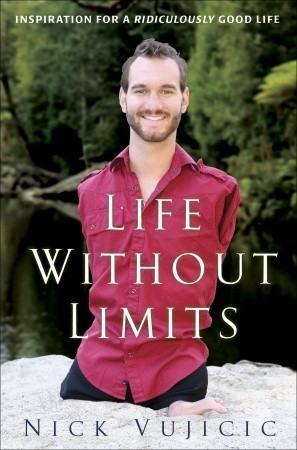
Review: Life Without Limits

When Nick Vujicic was born without arms and legs, his parents were shocked and grieved. They were concerned about how he could ever grow up to be independent. They were devout Christians yet wondered why God would allow such a thing to happen.

Nick wondered the same thing as he got older.

I have to confess, I wondered the same thing. Even with as much comfort and reassurance I’ve received studying God’s reasons for allowing suffering, and as much as I have come to trust His character and will, thinking of a person growing up in this condition was hard to come to grips with.

Maybe that’s why I had Nick’s book, Life Without Limits: Inspiration for a Ridiculously Good Life, on the shelf for so long without picking it up. It was one we had bought for my husband’s mother. I remember her saying her tears were streaming as she read this, and she felt she had nothing to complain about after reading this book.

Recently, I saw several Facebook posts from friends about a young wife and mother they knew who ended up in the hospital with several severe infections. The doctor said her condition was a 10 out of 10 on the scale of a serious illness. The treatment reduced blood flow to her limbs, which resulted in amputation of both arms and legs. She’s been in the hospital since December.

As my heart went out to this family and I’ve been praying for them, I decided to pick up Nick’s book to see how he dealt with his situation.

After his parents’ initial shock, they strove to give him as normal a life as possible. He was a determined little boy and found ways to do most things he wanted to do.

However, school was a different story. His family wanted him to attend regular classes rather than special-needs classes. He faced the cruel remarks of some of his classmates, which was depressing. He was even suicidal at one point until his father encouraged him.

Nick found that often he had to be the one to reach out to make people feel comfortable approaching him. That and a good sense of humor helped people to see he was just a regular guy on the inside.

Discussions with others about how he coped with no limbs led to speaking to student, church, and youth organizations. In the years since, speaking became Nick’s vocation and ministry, not only in his native Australia, but around the world.

This book is part memoir, part motivational encouragement. He does include Christian principles but also a lot of secular motivation (love yourself, etc.).

Some of the quotes that stood out to me:

Experiences like that helped me realize that being “different” just might help me contribute something special to the world. I found that people were willing to listen to me speak because they had only to look at me to know I’d faced and overcome my challenges. I did not lack credibility. Instinctively, people felt I might have something to say that could help them with their own problems (pp. 20-21).

As difficult as it might be to live without limbs, my life still had value to be shared. There was nothing I lacked that would prevent me from making a difference in the world. My joy would be to encourage and inspire others. Even if I didn’t change this planet as much as I would like, I’d still know with certainty that my life would not be wasted. I was and am still determined to make a contribution (p. 24).

Often the very challenges that we think are holding us back are, in fact, making us stronger. You should be open to the possibility that today’s handicap might be tomorrow’s advantage (pp. 43-44).

Nick was encouraged by the man who was born blind in John 2. The disciples asked Jesus, “Who sinned, this man or his parents, that he was born blind?” Jesus responded, “It was not that this man sinned, or his parents, but that the works of God might be displayed in him.”

This book was published in 2010. Since then, Nick has gotten married, had four children, written more books and traveled and spoken to even more people.

I appreciated Nick’s attitude and willingness to help and encourage others.

You might be interested in this piece about Nick on Australia’s 60 Minutes program:

(I often link up with some of these bloggers.)

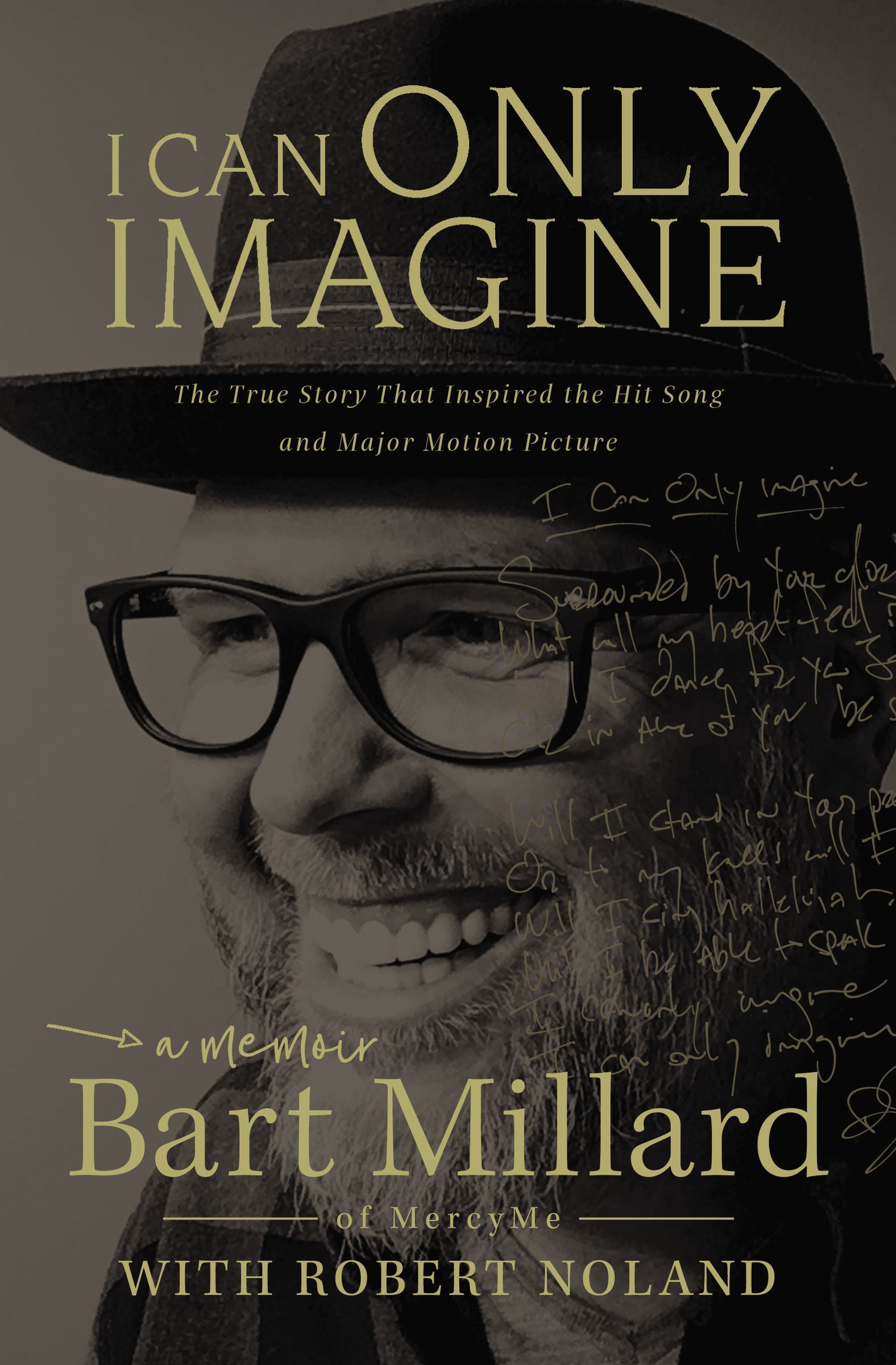
Review: I Can Only Imagine

I Can Only Imagine

Even if you don’t listen to contemporary Christian music, you’ve probably heard the song “I Can Only Imagine,” a crossover hit by Bart Millard and Mercy Me.

The inspiration for the song came from a comment Bart’s grandmother made after Bart’s father’s funeral: “Bart, I can only imagine what Bub must be seeing now.”

Bart’s relationship with his father had been rocky, to say the least. He described his dad as a monster who either beat him severely, or checked out completely, saying he didn’t care what Bart did.

But, miraculously, Bart’s father became a Christian. Bart had a front row seat to the dramatic changes in his father’s life as he cared for him during final decline with pancreatic cancer.

I had seen the film of Bart’s life by the same title as the song and was deeply touched. He said the original taping was six hours of material, so four of those had to be cut for the final product. He decided to write a memoir, also titled I Can Only Imagine, to tell the more complete story.

The first part of the book tells about Bart’s family, his sports career coming to an end with an injury, his interest in music, and the last years of his father’s life. The rest of the book tells about forming a band and the events leading to and following the release of the song “I Can Only Imagine.” Through some amazing twists and turns, that song launched the band’s career.

Bart said he was tempted to leave the story there with the fairy tale ending. But he went on to talk about his experiences with depression, his young son’s diabetes, his unhealthy lifestyle, his mistaken spiritual beliefs that he had to somehow earn God’s blessings by doing all the right things. As a Christian, he knew he was saved only by God’s grace. But like so many of us, we forget living for Christ is is just as much by His grace.

A few quotes from the book:

Thank the Lord for the prayers and provision of grandmas! I’m not sure what would have happened to Stephen and me without those two sweet saints being the constants in our lives (p. 10, Kindle version).

I once heard a pastor say that when it comes to the sins of our fathers, we either repeat or repent (p. 55).

Isn’t it interesting how some life-changing devastations are actually like the crossover switches on train tracks that take you in a totally new direction, often forcing you onto the path you were supposed to be on all along? God had certainly brought a divine interruption into my life, taking me out of sports and putting me into choir (pp. 61-62).

The moment I realized all of my creativity and talent was simply an overflow of a healthy relationship with Christ, everything changed (p. 172).

While I am here on earth, I am both a work in progress and already made whole because of the cross. I am a child of the risen King who will wrestle with the flesh. I’ll win some and lose some, but it can never change how Christ sees me because the cross was enough! (p. 172).

I’m thankful Bart wrote this book and that I read it. It was just as touching and inspiring as the movie.

Surprised by Joy

I’ve read a few biographies of C. S. Lewis and recently watched The Most Reluctant Convert, based on his journey from atheism to theism to Christianity. It occurred to me while watching the latter that I had never read Lewis’ testimony in his own words, Surprised by Joy. So I got the audiobook version of his book.

I thought that, since these other sources all quoted heavily from this book, I’d be familiar with most of it. Much was familiar, but there was a lot I didn’t know. There were also some incidents missing that I thought came from this book.

Lewis writes that this book is not an autobiography of his whole life til that point. He focuses mainly on everything that led to his conversion. That story encompasses much of his early life and what went into his becoming the personality and type of thinker he was. As he goes on, the focus narrows to just his spiritual movement.

One fact that I don’t remember reading before was that both Lewis and his brother had only one workable joint in their thumbs. Trying to make models of things or cut cardboard with scissors ended in frustration and tears. Games at school were the bane of his existence because he could never play them well. He could write and draw, though, and he liked solitude, which factors led to his creating stories about “dressed animals” in what he called “Animal Land.” His brother drew and wrote stories about India and trains and ships. Eventually they combined their imaginary worlds into what they called Boxen.

It was quite interesting to follow all that made Lewis into the man he became, from being unable to reason with his father, to (mostly negative) experiences at school, to his time with a private tutor (the “Great Knock”) who demanded that he be able to defend every opinion he expressed. Then the books he read and people he came across and conversations he had with them at various junctions all led step-by-step to his becoming a Christian. His journey was driven by philosophy more than emotion.

Surprised by Joy was written after the majority of Lewis’ other books were published. He said he wrote the book partly to answer questions he regularly received and partly to correct some misconceptions. Some of his detractors assumed he came from a Puritanical background, but Lewis assures them that the family he grew up in was not religious at all. Then when he came to make his own choice about religion, he turned against it though he did not tell his father. It was only many years and much reading later, after he began his career, that he came to believe. He likened it to a chess game where God knocked down his objections and false beliefs one by one by one.

The joy in Lewis’ title was what he described as a feeling of longing. It first came upon him when his brother brought in a toy garden he had made in the lid of a tin. It was something beautiful but ineffable, a small glimpse into something greater. “Joy is distinct not only from pleasure in general but even from aesthetic pleasure. It must have the stab, the pang, the inconsolable longing” (p. 86, Kindle version). At times through his life, he sought to recreate that feeling. After he became a Christian, he realized that what he thought of as joy was not an end in itself, but a signpost to point him to God.

A few quotes from the book that stood out to me:

The greatest service we can do to education today is to teach fewer subjects. No one has time to do more than a very few things well before he is twenty, and when we force a boy to be a mediocrity in a dozen subjects we destroy his standards, perhaps for life” (p. 137).

[Of his tutor, Kirk] Here was talk that was really about something. Here was a man who thought not about you but about what you said. No doubt I snorted and bridled a little at some of my tossings; but, taking it all in all, I loved the treatment. After being knocked down sufficiently often I began to know a few guards and blows, and to put on intellectual muscle. In the end, unless I flatter myself, I became a not contemptible sparring partner (p. 167).

I knew very well by now that there was hardly any position in the world save that of a don in which I was fitted to earn a living, and that I was staking everything on a game in which few won and hundreds lost. As Kirk had said of me in a letter to my father (I did not, of course, see it till many years later), ‘You may make a writer or a scholar of him, but you’ll not make anything else. You may make up your mind to that.’ And I knew this myself; sometimes it terrified me (p. 224).

I was by now too experienced in literary criticism to regard the Gospels as myths. They had not the mythical taste. (p. 288).

There’s a verse of “Just As I Am” by Charlotte Elliott that is not as well known as the rest of the hymn, but seems to sum up Lewis’ journey of faith:

Just as I am, Thy love unknownHas broken every barrier downNow to be Thine, yea, Thine alone,O Lamb of God, I come, I come.

I’m grateful God pursued Lewis and “broke every barrier down,” both for Lewis’ sake and our own. What a gift Lewis has been to us, even so many years after he lived. But his example gives me hope that God will do the same for dear ones I pray for.

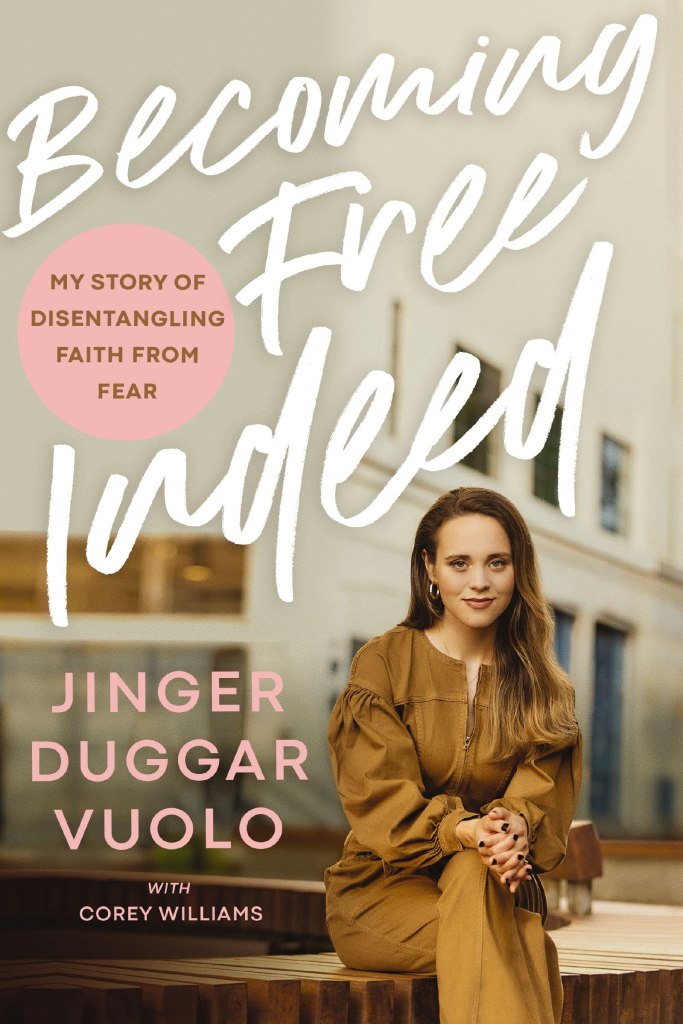
Becoming Free Indeed by Jinger Duggar Vuolo

I didn’t watch any of the TV shows about the Duggars, an ultra-conservative Christian family with 19 Children (19 Kids and Counting, Counting On). But I’d heard about them. I knew people who were caught up in the same teachings they were, though perhaps not to the same extent. I didn’t realize, at first, that those teachings came from Bill Gothard. I had heard of him, too, and knew he was some kind of Bible teacher. But somehow I never heard him speak or read anything he wrote.

Jinger Duggar Vuolo is the sixth of the Duggar children, the fourth girl. It wasn’t until one of her sisters married a man who was a Christian who loved God but didn’t hold to all the things the Duggars did that Jinger began to question her own beliefs. She discovered some of what she had been taught was not in the Bible. To her credit, she didn’t “deconstruct” her faith and throw everything out, good and bad. She sought counsel and studied the Bible for herself. She tells about her journey in Becoming Free Indeed: My Story of Disentangling Faith from Fear.

There are areas that the Bible doesn’t speak to directly and that Christians can differ on and follow their consciences. But Gothard made those issues concrete right or wrong, which produced a kind of legalism. Those convictions also produced a lot of fear for Jinger.

So much of my fear and anxiety after I became a Christian was tied to my overactive conscience. I had created false standards of righteousness: standards that were impossible for me, or anyone, to measure up to. But where did those false standards come from? At the time, I thought my convictions came from the Bible. Now I know that wasn’t the case. Now I know that instead of coming from the perfect Word of God, they came from the mind of an imperfect man (p. 23-24).

According to Gothard, following his principles was the same as obeying God (p. 28).

But even worse was Gothard’s misinterpretation of the Bible.

I believed that God had a specific, individualized interpretation for me. Bill Gothard called these personal interpretations of Scripture rhemas—communication from God to one person and no one else. The IBLP website defines a rhema as “a verse or portion of Scripture that the Holy Spirit brings to our attention with application to a current situation or need for direction” (p. 111).

I assumed the same thing was supposed to happen to me when I read the Bible. I was hoping to discover a hidden meaning that would be revealed not through words but through thoughts I would have as I was reading those words.

Gothard’s rhemas weren’t limited to the Bible. He also saw God communicating His will through personal experiences (pp. 111-112).

When I was younger, I didn’t realize that when Gothard told stories, he was finding truth in analogies, not in the Word of God (p. 113).

Gothard was eventually accused of sexual harassment. Jinger writes that he surrounded himself in his offices with young blond women, many of whom did not have a father or grandfather. Even though girls working in an office “outside the home was forbidden among IBLP families” (p. 167), somehow Gothard followers just thought this a quirk. Only later did stories of his misconduct emerge.

I appreciate Jinger’s use of the word “disentangling.” That’s just what she had to do as she studied the Bible for herself: disentangle the false things she had been taught from what the Bible actually said.

Jinger is very gracious and doesn’t throw her parents under the bus. She credits her mom, in particular, with pointing her to grace. But Jinger does firmly expose Gothard’s false teachings and actions. She does so not only to share her story, but to be a help to anyone caught up in his teachings or the false teachings of anyone.

But this book is helpful even for those of us who weren’t Gothard followers. It helped me understand where some of my friends caught up in these teachings were coming from. And I could identify with a good deal of what Jinger wrote, even though my issues were not exactly the same as hers. I think as we grow in the Lord, we all have to disentangle some of the false ideas we’ve encountered from the truth of God’s Word.

It took a lot of courage for Jinger to speak out against the false teachings and actions she grew up with. I’m thankful God led her to a right understanding and that she shared what she learned for the benefit of others.

(I often link up with some of these bloggers.)

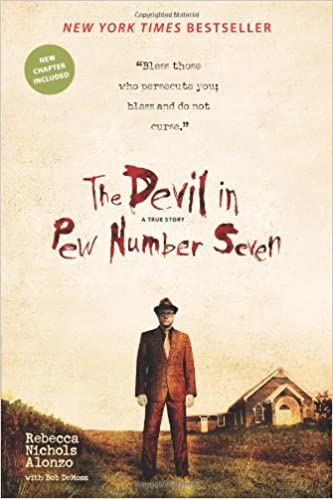
The Devil in Pew Number Seven

“The story you are about to read actually happened, every last detail of it. As the plot unfolds, my hunch is that you’ll need to remind yourself of this reality more than once.” So Rebecca Nichols Alonzo opens her book The Devil in Pew Number Seven.

Her hunch was right.

Rebecca tells the story of a man who harassed—no, terrorized her family for several years as she was growing up.

Rebecca’s father was the new pastor of a small church in Sellerstown, NC, in 1969. He found that one man, a Mr. Watts, held key positions in the church even though he was not a member. Recognizing Mr. Watts’ “stranglehold” on the church, Pastor Nichols “made changes to end his dominance” (p. 48).

Mr. Watts did not take his loss of position well, nor the pastor’s difference of opinion over issues like the style of the new church roof. Mr. Watts started acting up in church from pew number seven, making faces at the pastor while he preached, tapping on his watch, walking out and slamming the door loudly before the sermon was finished.

The Nichols family started receiving threatening anonymous phone calls in the middle of the night and unsigned letters. One letter promised the pastor’s family would leave “crawling or walking, running or riding, dead or alive” (p. 54).

Then followed several incidents of escalating attacks: home invasions while the family was away, which one time included water in the fuel tank and oil in the water pump; shots fired at the outside walls; dynamite set off near the house.

The Nichols family, the neighbors, the church, and even the police knew who was behind these attacks, but no one could prove it. Some of the incidents occurred while Mrs. Nichols was pregnant and then while the family had a newborn.

Finally events came to a tragic head. (It’s no spoiler to say this since it’s mentioned in the first chapter).

The rest of the book tells of the long-term effects these years had on the family and the necessity of learning to forgive those involved.

Rebecca was a child when much of this happened, but she read her parents’ journals, newspaper reports, court documents, and interviewed several people from the town.

It’s hard to fathom how far this man went to drive out the pastor. Rebecca’s father felt he couldn’t leave, because that would mean Mr. Watts would again assert his dominance over the church if Pastor Nichols left. The pastor and his wife also believed and modeled for their children “Love your enemies and pray for those who persecute you” (Matthew 5:44).

I first heard of this book from my friend Lou Ann. But I kept passing it by on my TBR list because I thought it might be too hard to read. I finally listened to the audiobook nicely read by Pam Ward. Then I checked the book out of the library to see the pictures and read the afterword.

The book was not hard to read or listen to. Rebecca doesn’t sensationalize the violence. She begins with the climactic incident, but then backtracks to tell how her parents met, were called to the ministry, how they came to Sellerstown, and other “normal” occurrences.

Some of my favorite quotes:

With a few rare exceptions, everyone in Sellerstown was related to one another in some way. Which is why at times, shotguns in hand, they watched out for one another. The Sellers kin are true salt-of-the-earth people . . . although some were saltier than others (p. 31).

I knew [God] said in the Bible that He’s a father to the fatherless and to the brokenhearted. I was both, so we had a perfect fit. There was one more insight I came to embrace. I needed God more than I needed to blame God (p. 235).

I didn’t ask for this abrasion on my soul to be a part of my life; it just is. Now, day by day, I have the choice to forgive the two men who took so much from me, or I can choose to wallow in a toxic brew of bitterness. True, I forgave . . . a long time ago. But that doesn’t mean I still don’t have to forgive him again and again . . . (p. 250).

I’m the one who remains in jail if I withhold God’s grace by failing to forgive when wronged (p. 251).

My one critique is that the author seems to belabor some points overmuch. For instance, with the first threatening phone call, a little more than a page is spent on describing what happens inside the phone when it rings, explaining how phones in those days didn’t have optional ring tones and couldn’t be left off the hook without setting off a warning tone, how her father couldn’t take the phone off the hook anyway because a country pastor was “on call” 24/7 just like a country doctor was. Maybe this was supposed to build suspense with three rings leading up to the first threat, but it just seemed extraneous and a touch irritating. But, this is a minor criticism and for the most part doesn’t hinder the story.

Sometimes the circumstances were hard to read about and illustrated how “truth is stranger than fiction,” But I highly recommend this book. Ultimately it’s about God’s grace and strength through the most difficult of times.

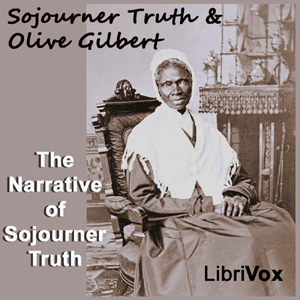
The Narrative of Sojourner Truth

Sojourner Truth was a freed slave who became a well-known speaker for abolition and women’s rights.

She was born Isabella Bomefree (or Baumfree—I’ve seen it both ways) in a Dutch community in New York. She spoke only Dutch until around age 9, when she was sold for $100 at an auction along with a flock of sheep. She was sold a total of four times over her lifetime. She endured hard work and excessive physical punishments until her last master promised her freedom a year before the state of New York promised emancipation in 1827. However, he reneged on his promise when a hand injury kept Isabella from her usual work output. Isabella took her youngest daughter and fled to an abolitionist family, the Van Wagenens, who paid her master for her services for the rest of the year so she could go free. Her master then illegally sold hr son, whom she’d had to leave behind. The Van Wagenens helped her sue her former master, and Isobella became one of the first Black women to successfully win a case against a white man.

Isobella had a major religious experience soon afterward and felt God wanted her to “preach the truth,” and she changed her name to Sojourner Truth. Her religious views were somewhat muddled. She had never learned to read or write, so her only knowledge came through what she heard. She asked people to read the Bible to her without commentary, but they invariably started explaining as they went along. Finally she found some children to read to her. She had some visions and for a time got in with some folks who believed Jesus would come back in 1843-44. She was a little confused as to just who Jesus was:

She conceived, one day, as she listened to reading, that she heard an intimation that Jesus was married, and hastily inquired if Jesus had a wife. ‘What!’ said the reader, ‘God have a wife?’ ‘Is Jesus God? ‘ inquired Isabella. ‘Yes, to be sure he is,’ was the answer returned. From this time, her conceptions of Jesus became more elevated and spiritual; and she sometimes spoke of him as God, in accordance with the teaching she had received.

But when she was simply told, that the Christian world was much divided on the subject of Christ’s nature-some believing him to be coequal with the Father-to be God in and of himself, ‘very God, of very God;’-some, that he is the ‘well-beloved,’ ‘only begotten Son of God;’-and others, that he is, or was, rather, but a mere man-she said, ‘Of that I only know as I saw. I did not see him to be God; else, how could he stand between me and God? I saw him as a friend, standing between me and God, through whom, love flowed as from a fountain.’ Now, so far from expressing her views of Christ’s character and office in accordance with any system of theology extant, she says she believes Jesus is the same spirit that was in our first parents, Adam and Eve, in the beginning, when they came from the hand of their Creator. When they sinned through disobedience, this pure spirit forsook them, and fled to heaven; that there it remained, until it returned again in the person of Jesus; and that, previous to a personal union with him, man is but a brute, possessing only the spirit of an animal.

She became well-known as a speaker, worked for various causes, eventually met Frederick Douglass, Abraham Lincoln, Ulysses Grant, and others.

One of Sojourner’s most famous speeches was called “Ain’t I a Woman.” But there are different versions of it around, and no one knows which is closest to her original words. A Frances Dana Barker Gage transcribed the speech to sound as if it were written by a Southern ex-slave, and that became the most famous version. Yet Sojourner was born in NY and spoke Dutch in her early life, so it’s unlikely she had a Southern accent and phraseology. The speech also speaks of thirteen children, when Sojourner had five.

When looking back on what slaves endured, it’s hard to fathom how and why people thought the way they did and treated their fellow humans so cruelly. In describing the poor and unhealthy living conditions one master placed her family in:

Still, she does not attribute this cruelty-for cruelty it certainly is, to be so unmindful of the health and comfort of any being, leaving entirely out of sight his more important part, his everlasting interests,-so much to any innate or constitutional cruelty of the master, as to that gigantic inconsistency, that inherited habit among slaveholders, of expecting a willing and intelligent obedience from the slave, because he is a MAN-at the same time every thing belonging to the soul-harrowing system does its best to crush the last vestige of a man within him; and when it is crushed, and often before, he is denied the comforts of life, on the plea that he knows neither the want nor the use of them, and because he is considered to be little more or little less than a beast.

Of the practice of selling slaves’ children, Isobel said:

She wishes that all who would fain believe that slave parents have not natural affection for their offspring could have listened as she did, while Bomefree and Mau-mau Bett,-their dark cellar lighted by a blazing pine-knot,-would sit for hours, recalling and recounting every endearing, as well as harrowing circumstance that taxed memory could supply, from the histories of those dear departed ones, of whom they had been robbed, and for whom their hearts still bled.

Isabella’s parents, as well as several older slaves, were granted their freedom in their last years when they could no longer work. But then they had no place to live and no way to care for themselves. So the slaveholder was not being generous, but rather relieving himself of the obligation to provide for people who could no longer produce.

In 1850, Sojourner began dictating her memoir to a friend named Olive Gilbert, who added her own commentary and observations. Olive’s opinion of Sojourner was:

Through all the scenes of her eventful life may be traced the energy of a naturally powerful mind-the fearlessness and child-like simplicity of one untrammelled by education or conventional customs-purity of character-an unflinching adherence to principle-and a native enthusiasm, which, under different circumstances, might easily have produced another Joan of Arc.

I listened to this book through Librivox. Librivox is free because all the narrators are volunteers. I am thankful for their service, but they vary in skill, not just in narrating, but in basic reading. So this was not the most enjoyable audiobook experience. But I am glad to be more acquainted with a name I knew very little about. I looked up certain passages in the online version here.

I’m counting this book as a classic by a person of color for the Back to the Classics Reading Challenge.