Review: North! Or Be Eaten

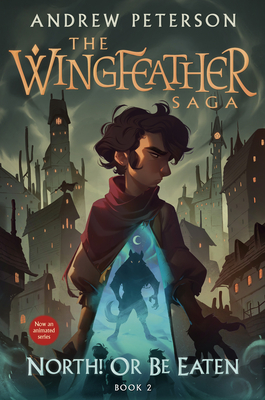
North! Or Be Eaten

North! Or Be Eaten is the second of Andrew Peterson’s Wingfeather Saga for children.

In the first book, On the Edge of the Dark Sea of Darkness (linked to my review), we met the Igiby family: grandfather Podo, mother Nia, sons Janner and Tink, and daughter Leeli. They lived in Skree, which is under the domination of the Fangs of Dang, headed by Gnag the Nameless.

At the end of the first book (spoiler alert if you haven’t read it), the children are stunned to learn that they are the lost Jewels of fabled Anniera. Their father was the High King.

Unfortunately, the Fangs figure this out as well. They raze the town, burn the Igiby’s home, and pursue them. Podo’s plan is to make it to the Ice Prairies, which the lizard-like Fangs can’t tolerate. Once there, they can decide what to do next.

Thus the family sets out on an epic quest “through many dangers, toils, and snares.”

They are accosted by the Stranders, rough, fierce people who live in Glipwood Forest and have no conscience about stealing and kidnapping. Yet they find a couple of people of character even there.

They get separated at Dugtown, which, oddly, lacks children–and soon find out why.

While searching for the lost Tink, Janner gets whisked away to the deceptively named Fork Factory, where there is no escape.

They are betrayed by those they thought were friends. But they find aid in unexpected sources.

Along the way, they battle not only the enemies pursuing them, but themselves. When the journey is quiet, the children are told more about the kingdom and their established roles in it. Leeli is fine with hers and seems to have been fulfilling it already. But the boys take longer to absorb the news and aren’t so sure they want the responsibility.

However, their trials and hardships bring home to their hearts what is most important. And when things seem at their lowest, “darkness is seldom complete, and even when it is, the pinprick of light is not long in coming–and finer for the great shroud that surrounds it” (p. 312).

One whose hidden past caught up with him “moved through the days in peace and wonder, for his whole story had been told for the first time, and he found that he was still loved” (p. 323).

The first book took a while to set up the characters and situation. This book dove right into the action. There’s a lot less humor in this book than the first, but I felt the first went a little overboard in that department. There aren’t many occasions for full-blown humor in this book, but it’s tucked in here and there.

Besides trusting “the Maker,” family, bravery, and overcoming, it seemed to me that identity was a key theme. Though Janner struggled with his role in the kingdom, remembering who he really was helped him in the Fork Factory, where all the workers were only called “Tools” and treated as such.

The book is wonderfully illustrated by Joe Sutphin. I think the boy on the front cover is supposed to be Tink, who looks a lot like former Monkee Michael Nesmith. 🙂 I don’t think that’s purposeful, as neither author nor illustrator are old enough to have been Monkee’s fans. But it was a fun connection.

I enjoyed the book a lot, especially the latter third of it. There are two more books in the series. I look forward to what happens to the Igiby family next.

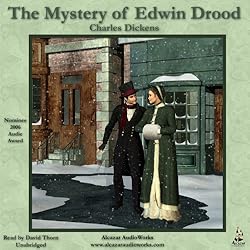
Review: The Mystery of Edwin Drood

The Mystery of Edwin Drood was the last of Charles Dickens’ novels and only about half-finished when he died.

The story opens in an opium den as a man awakens from his drug-induced stupor, then goes to the cathedral, where he is the choirmaster.

A little later, this man, John Jasper, tells his nephew, Edwin Drood, that he takes opium for a physical condition. The reader is left unsure for a while whether Jasper is telling the truth or leading a double life.

Edwin is a young man engaged to Rosa Bud. They are both orphans, but their fathers were good friends and arranged their marriage. Edwin comments that the prearrangement “flattens” the excitement of their courtship. But he’s willing to go along with the plan. He and Rosa often end up arguing.

Twin siblings, Neville and Helena Landless, also newly orphaned, arrive from Ceylon with their guardian. Neville is to study with the minor canon, Rev. Crisparkle, while Helena will attends the nuns’ boarding school. She and Rosa, also a student there, become good friends.

Nevile has been mistreated by his stepfather and has a quick temper. He is secretly attracted to Rosa and can’t stand the way Edwin treats her. The two young men argue, goaded on by Jasper.

Crisparkle urges the two to settle their differences. The day after they do, Edwin disappears. Neville is immediately suspect, but there’s no proof of his guilt.

Dickens always has multiple threads and quirky characters woven into his plots. Mr. Durdles is a stonemason and undertaker. Jasper asks Durdles to take him on a nighttime tour of the crypts. “Deputy” is the nickname of a street child who throws rocks at people out at night but who also sees and hears much that goes on. Mr. Sapsea is a somewhat self-important auctioneer who later becomes the mayor. Dick Datchery comes into the story later, a man of independent means supposedly looking for a pleasant place to stay. A former sea captain, Mr. Tartar, arrives later, too, and ends up living next to where Neville is hiding out. At first I thought Tartar was spying on Neville for Jasper, but later I didn’t think so.

One of the most touching moments for me involved Mr. Grewgious, Rosa’s guardian. At first he comes across as a little silly and fussy. But later, as he remembers the women he silently loved, who died long ago, he wonders whether the man she married ever suspected him of having feelings for her. As he catches sight of himself in the mirror, he says “A likely someone, you, to come into anybody’s thoughts in such an aspect! There! There! There! Get to bed, poor man, and cease to jabber!” The narrator notes, “There are such unexplored romantic nooks in the unlikeliest men.”

Another favorite quote, said of Rev. Crisparkle: “He was simply and staunchly true to his duty alike in the large case and in the small. So all true souls ever are. So every true soul ever was, ever is, and ever will be. There is nothing little to the really great in spirit.”

I liked the turn of phrase that a bombastic man targeted another as “kind of human peg to hang his oratorical hat on.” Then, “the remainder of the party lapsed into a sort of gelatinous state, in which there was no flavour or solidity, and very little resistance.”

And this brought a smile: “The two shook hands with the greatest heartiness, and then went the wonderful length—for Englishmen—of laying their hands each on the other’s shoulders, and looking joyfully each into the other’s face.”

Wikipedia lists some of the theories about how Dickens intended to finish the novel. I feel pretty sure I know what happened to Edwin and why and by whom–the clues seem to point one direction. But it would have been fun to learn whether I was right and to see the plot unravel and the bad guy get his comeuppance.

I listened to the audiobook, narrated by David Thorn. He did a great job, except I had a little trouble understanding a few of the characters. I also got the Kindle version, which was free at the time, to go over the passages which weren’t clear to me.

Some years ago I set myself a mission to read all the Dickens novels I hadn’t read yet. Now I have read all of them except Barnaby Rudge, which, honestly, doesn’t sound very exciting. But I will still read it some day.

While Edwin Drood isn’t my favorite of Dickens’ novels–those would be A Tale of Two Cities and David Copperfield--I did enjoy it and got caught up in the mystery.

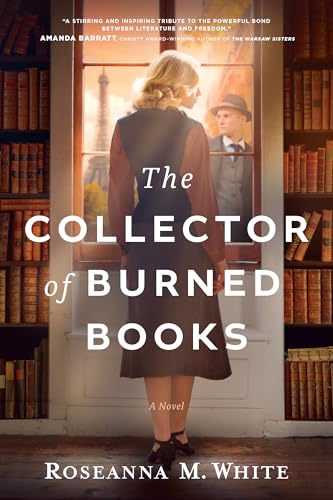
Review: The Collector of Burned Books

Collector of Burned Books

The Collector of Burned Books by Roseanna M. White takes place in Paris during WWII, opening with the Nazi takeover of the city.

Corinne Bastien is a professor at the Sorbonne, but looks more like a student. Secretly, she oversees the Library of Burned Books, a collection of books that have been banned by the Nazis. She encodes some of them with war news and send them out to some of her students, who send encoded messages back. The others Jewish authors who worked with the library fled before the Nazis arrived.

Now, however, Goebbels has sent a “library protector,” Christian Bauer, to take over all the libraries in Paris. Christian is not sure how he got the position. He’s a professor, not a soldier. With his record of speaking out against the Nazis, he’s surprised he hasn’t been arrested. All he can figure is that his friend in the police force, who was absorbed into the Gestapo, has adjusted his records.

He and his friend, Erik, had many discussions about the best way to combat the madness surrounding them–whether to fight against it overtly, only to be arrested, or to battle quietly from within while seeming to go along. They decide on the latter course. Christian knows many of the French Jewish authors personally. Perhaps he can mitigate the damage done to them and their works. At the very least, he can insist on civility among the soldiers assigned to him.

Christian arrives at Corinne’s flat with a list of books checked out by her mother from the Library of Burned Books. He only wants then returned. Corinne plays dumb. Her mother is out of the country and is not very organized–she doesn’t know where the books could be.

As Christian visits repeatedly to search for the books, they discover they have much in common. Corinne still regards him as an enemy, but she realizes he is not like the others.

Eventually, some surprising twists lead them to the truth about each other. And then a shocking betrayal threatens everything they’ve worked for.

Another part of the story involves hiding a boy with birth defects whom the German authorities wanted to have euthanized.

Some of my favorite quotes from the book:

These students had it all wrong—backward. Books didn’t burn. Books ignited. They lit the burning in others. Not with paper and match. With ideas. But then, that was their very argument (p. 1, Kindle version).

The only way to defeat a bully was to win him over. The only way to truly defend what you believe is to make your enemy believe it too (p. 4).

The words we hear, the words we read, the words we sing along to on the radio and study in the papers with our morning coffee, become our thoughts. I think our thoughts become our beliefs. And I think our beliefs become our actions. That is why Goebbels sent us here, Kraus. Because words form the foundation of society. Ideas create culture. Control them, and you can control . . . everything (p. 76).

He would tell you to think, next time, before you blindly chase your ideology. He would ask you to think, not just to feel. To ask, always, if you could be wrong. To listen, always listen, to the other points of view. Because the moment we stop granting someone the right to disagree, Kraus, this is what happens. Do you understand me? This is what turns men into tyrants. This is what leads to fear and death (p. 265).

God could well have said no. Today, he’d extended his mercy. His grace. But as too many in Germany had already learned, sometimes he didn’t intervene. Sometimes he let the monsters come. Sometimes good people, good Christians, good Jews were dragged off in the night, no matter the prayers they cried. He’d promised to be with his people through persecutions—not to prevent them (p. 304).

Read novels, because they will put you in someone else’s skin. Read poetry, because it will give wings to your soul. Read science, because it will show you what’s possible. Read politics, because it will teach you how strongly people care about how their fellow men are treated, wherever they stand on what the best way is. . . . Read things you hate and things you love and things you never thought you’d understand. And never, never accept the excuse that you’re not strong enough to handle it if you read something that offends you. You are. You’re strong enough to be offended and then try to understand why. You’re strong enough to grant that someone can be different and still be worthy of dignity. And if you aren’t? . . . Then read more, until you are (pp. 315-316).

Roseanna is a master storyteller who creates wonderful characters and intricately interwoven plots. I enjoyed both of these characters immensely.

I also enjoyed Roseanna’s notes at the end of the book, where she shares what’s historically accurate and what’s made up. There really was a Library of Burned Books. There really was an anti-Nazi professor who was given a special assignment, though not the one detailed in the book.

There were even some fun surprises, like a character from Roseanna’s Shadows Over England series showing up. This was the first series of Roseanna’s I read, and I loved them. Though there were clues, I didn’t recognize him until his real last name was revealed and he shared a bit of his history. There was a tie-in with another previous character from Yesterday’s Tides, but I didn’t remember him or his situation at all.

The faith element is Catholic, which would have been accurate for the setting and characters. There was mention of some practices I couldn’t agree with–a priest forgiving sins, the need for penance, praying to Mary and saints, the supposed healing power of the Eucharist. But the overall tenor of the characters’ hope in God was touching and inspiring.

I listened to the audiobook, superbly read by Lisa Flanagan. This time, the audiobook did include the author’s notes, which I appreciated. But I also had a Kindle version for reference.

Roseanna mention in her notes that one character will be getting his own story in another book. I don’t know if it will be a sequel, exactly, but I look forward to it.


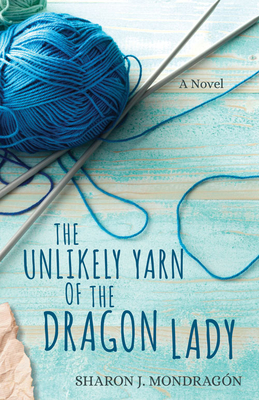
Review: The Unlikely Yarn of the Dragon Lady

Unlikely Yarn

It’s rare that I try a book without ever having heard of it or the author or seeing a recommendation from someone I trust. But I was looking through Audible’s Plus Catalog of titles they rotate in and out, and The Unlikely Yarn of the Dragon Lady by Sharon Mondragon caught my eye. It looked like an interesting novel about a group of knitters, which seemed like a relatively safe topic. Since it was free, if I found something objectionable, I could just delete it.

I’m so glad I tried this book. It was delightful.

A group of four women form the Heavenly Hugs Prayer Shawl Ministry at their church. I was confused about prayer shawls at first, wondering if they were something people wore as they prayed. But no, the ladies pray as they knit them for those who will receive them, and then hand them out to anyone ill, grieving, or going though a hard time so they’ll feel comforted and “hugged.”

The women meet every Wednesday morning to knit and pray together in their church’s prayer chapel. But one morning, they’re surprised to learn they can’t meet there any more. The chapel is being painted. Besides that, their pastor wants them to take their knitting out in public. People weren’t coming to church as much any more. If they knitted in public, people would ask about their knitting, and they could tell them about their ministry and the church.

In addition, the church’s bishop has told the pastor that if things don’t improve with the church soon, they’ll be closed down. More is riding on the success of the knitters’ mission than they know.

Margaret, the group leader, is livid. They’ve met in the chapel for years. How can they have peace and quiet to pray out in public? She wants to meet at her house, but the other ladies aren’t willing to go against their pastor’s request.

So they head to the coffee shop in the mall. Rose, kindhearted and interested in others, loves the idea. She likes to talk about knitting. She lives in a retirement home and is starting to feel invisible and useless. An overprotective daughter keeps her hemmed in until she can hardly do anything. Going out in public to knit seems like an adventure.

Jane has two teen-age daughters who are driving her to desperation with their constant bickering and discontentment. Only Rose knows Jane’s secret sorrow, that her son is in prison for using and selling narcotics.

Fran is the newest knitter among the group, taught and helped by Rose. Her husband passed away suddenly the year before, and the fog is just beginning to lift.

The ladies aren’t knitting long at the coffee ship before a college student comes over because her grandmother used to knit and she wants to see what the ladies are doing. When she hears about their prayers, she asks them to pray for a crucial upcoming test.

Slowly, other people do the same thing–stop by out of curiosity and then ask for prayer. The next time the ladies come to the mall, they find word has gotten around: they receive several prayer requests written on paper napkins. The prayer requests lead to more involvement in people’s lives.

Margaret feels the people stopping by are interruptions. “We’re supposed to be praying,” she repeats often. She can’t see past the green hair of one young man or the weariness of a middle-aged woman to the soul inside them.

But gradually, God works not only through, but in the prayer shawl ministry in surprising ways.

A couple of my favorite quotes:

Rose kept asking questions, drawing out Eileen’s memories of her father the way knitters pull their yarn from the center of the skein.

You’re right. God is orderly. But people are messy. They have problems and wounds and fears and besetting sins. Isn’t that what prayer shawls are all about, though? Trying to give people the comfort and strength they need to face and get through those things?

These characters were so well-drawn. The narrator of the audiobook, Christina Moore, did a beautiful job, especially with Margaret’s and Rose’s voices.

The plot is laced with humor and warmth and poignancy.

I’m not a knitter and I don’t know the jargon. But that didn’t interfere with my enjoyment of the book. There’s enough specific detail that I think seasoned knitters would understand and enjoy it, but not so much that it bogs down the narrative.

There were only two things I didn’t like. The author has God speaking to one character. I don’t think she ever identifies Him as God–she calls Him a “presence.” But I think we have to be very careful about putting words in God’s mouth, assuming we know what He would say in a given situation. I think writers can show how we think He could lead someone without having Him speak verbally. In fact, the author does this nicely with another character.

The other thing is that, in all the talk about people’s prayer needs, there’s no mention of anyone coming to believe on the Lord. People come to church who didn’t before and are encouraged to reconcile with estranged loved ones and such. But people can do that without knowing the Lord. I’m not sure what faith tradition the author is from. I know some authors prefer not to spell things out spiritually, but to let the change in characters’ lives speak for themselves. They feel that being any more explicit would be preachy. But I think a lack of clarity here causes confusion and leaves the reader without the most important message they need. I’ve written before that the whole plan of salvation doesn’t necessarily need to be included for a book to be Christian fiction, but what is there should be clear.

Otherwise, though, I loved this book. When I finished it, I missed the characters. A sequel has been written, so I’ll likely pick it up sometime. Meanwhile, this title is free for Audible members through October 7 and is about 8 hours and 20 minutes long if you want to give it a try.

Laudable Linkage

Laudable Linkage

I haven’t been online as much as usual this week, due to being busy with other things. But here are a few good reads I found:

Reading as Rebellion, HT to Redeeming Productivity. “I know the stats. I’ve heard the stories. But I believe we’re humans, not robots. Trends aren’t determinative. We make choices. We have agency. Which is why I refuse to bow to the fatalism that marks too many takes on the decline in reading—the insultingly low expectations of teachers and commentators who throw up their hands and surrender the next generation to the power of the cultural tides. I want you to rebel. That’s right. In today’s world, reading is an act of holy insurgency.”

How to Avoid the Comparison Trap with help from The Chronicles of Narnia.

Is Christian Antisemitism on the Rise? This article not only deals with that question but also discusses what is and is not antisemitism.

Male Friendship Is Declining. Wives Can Help, HT to Challies. “I was grateful for him considering our family, but that conversation gave me pause. Why did my husband seem to think he’d be letting our family down if he spent a weekend with friends?”

Just Ask, HT to Challies. “I’ve said it before, but I think it bears repeating: don’t be afraid to ask your friend about how they are doing in their grief over losing a loved one…even if it’s been years or decades since their loved one died.”

Violence and Technology, HT to Challies. “For someone like Kirk, who became a larger than life Internet figure, literally someone lampooned by South Park, he would seem unreal in a sense, mediated through a thousantd YouTube videos. A figment of celebrity and the digital gaze of viewers. Not a father (which he was). Not a husband (which he was). But an image to be torn down symbolically. And this is only possible because his humanity had been slowly divorced from his digital image.”

Nancy Wolgemuth quote

God is not looking for Christians with great power or influence but those who are faithful to his word and his name.–Nancy DeMoss Wolgemuth

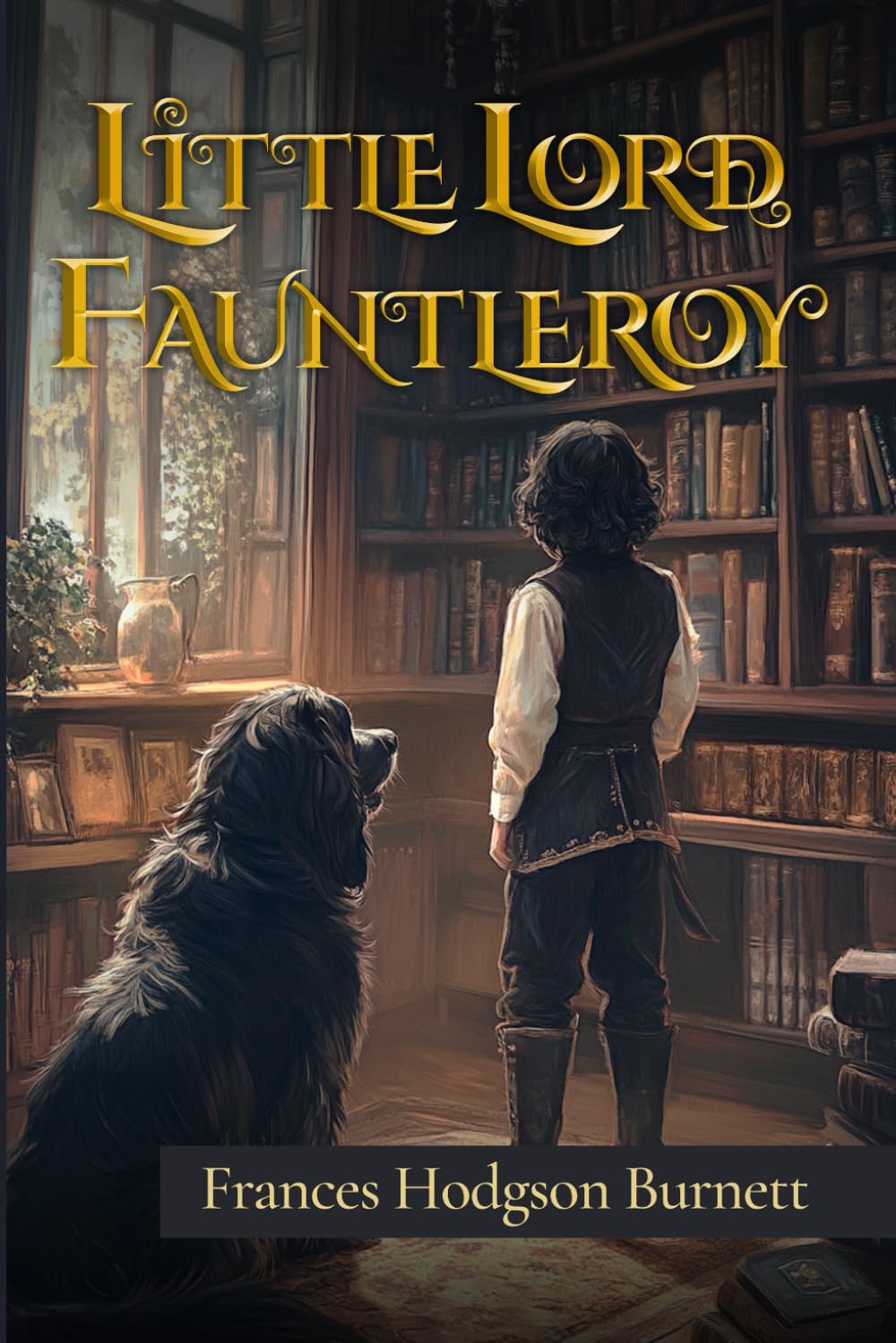
Review: Little Lord Fauntleroy

Little Lord Fauntleroy has never been on my to-read lists. But I was looking through Audible‘s Plus Catalog of free books they rotate in and out, and this title caught my eye. I saw that the novel was written by Frances Hodgson Burnett, who also wrote The Little Princess, which I loved, and The Secret Garden, which I had mixed emotions about. I decided to give it a try.

Cedric Errol is a little boy living with his mother in “genteel poverty.” His father had been the third son of an earl in England. When he came to America, he fell in love and married. His father hated Americans and felt this one was just after his son’s money. So he cut his son off from his inheritance and position.

Cedric’s parents lived happily together for several years until his father became sick and died. Cedric calls his mother “Dearest” because that’s what his father had always called her, and it seems to make her happy.

Cedric is seven years old at the story’s beginning. “He had never heard an unkind or uncourteous word spoken at home; he had always been loved and caressed and treated tenderly, and so his childish soul was full of kindness and innocent warm feeling.” He’s special friends with the grocer, Mr. Hobbs, a young bootblack named Dick, and the “apple woman.” Even when winning a race with another boy, he encourages him by saying he only won because he’s three days older and his legs are a little longer.

Then one day a stranger from England, a lawyer named Mr. Havisham, arrives at Cedric’s home. Cedric’s father’s brothers have all died, and Cedric is the heir to his grandfather’s estate. His grandfather wants Cedric to come to England, live with him, and learn how to become an earl. He would become Lord Fauntleroy. His mother is invited, too, but the earl doesn’t want to see her. She’s be provided another home nearby so she and Cedric can visit every day.

Cedric’s mother believes his father, who loved his home in England, would have wanted Cedric to accept this invitation. She doesn’t want Cedric to start out with bad feelings against his grandfather, so she doesn’t tell him why his grandfather won’t see her.

The earl is described as “sitting in his great, splendid, gloomy library at the castle, gouty and lonely, surrounded by grandeur and luxury, but not really loved by any one, because in all his long life he had never really loved any one but himself; he had been selfish and self-indulgent and arrogant and passionate.” Everyone is intimidated by him. But Cedric’s mother said he was kind and generous. So Cedric approaches him without fear, which impresses the earl.

He wants Cedric to realize the riches at his disposal, so he gives instructions that Cedric can have anything he likes (perhaps not realizing that this was what ruined his two older sons). Instead of indulging himself, Cedric wants to use the money to help others.

Just when I thought the book was going to be fairly predictable, an unforeseen crisis arises.

Cedric is almost too good to be true. I haven’t found anything to explain why Burnett wrote the book: this was her first children’s book, though she had written for adults before. Perhaps she wanted to give children an example to follow. It’s interesting to trace the development of characters in her children’s books (at least the three I have read). Sarah in A The Little Princess is ideal as well, but not so perfect. Mary in The Secret Garden is spoiled and nasty.

Wikipedia says this book was as popular as Harry Potter in its day, and it started a fad of boys wearing the long curls and white frilly shirt that Cedric was known for.

Virginia Leishman did a nice job narrating the audiobook. It’s free through September to Audible subscribers, and only about six and a half hours long. I also got the Kindle version for 99 cents, which includes some of the original illustrations, which were fun to see. I don’t know why the newer cover shows Cedric with dark hair when the book repeatedly mentions his golden curls.

Even though Cedric and his mother are somewhat idealized, this was a sweet story that I enjoyed very much.

Review: The Island Bookshop

The Island Bookshop

In The Island Bookshop by Roseanna M. White, Kennedy Marshall has a career she loves in the Library of Congress. But when her sister back in North Carolina’s Outer Banks has a serious fall from a ladder, Kennedy travels to help care for her sister and run their grandmother’s island bookshop.

Kennedy hasn’t been home in a while. She loves the island, her sister, and the bookshop. But she’s avoiding Wes Armstrong. They’ve been friends since childhood, but Kennedy had deeper feelings. Then Wes married her friend Britta. Though Britta passed away, Kennedy knew too many of her secrets–secrets she can’t bear that Wes should know.

Wes’s family has built a successful business on the island, but a development group has offered to purchase the business. The money would help, but the business has been Wes’s life. He struggles with knowing what he should do.

When Kennedy’s sister’s recovery takes longer than expected, Kennedy faces some difficult decisions.

When a question comes up about a different name on the lease of the bookshop than Kennedy’s grandmother, Kennedy searches for information among county records and old boxes in the attic. She finds a number of editions of The Secret Garden in various languages as well as some old letters with surprising news.

Interspersed between the modern-day chapters are scenes from Kennedy’s great-grandmother’s life. Ana is pregnant when she comes to the US during WWII from Dalmatia in Croatia, which at that time was part of Italy. Her husband, Marko, had come earlier to get a job and find a home. But he doesn’t come to meet her when she arrives. Italian-looking immigrants were viewed suspiciously at that time, and Ana doesn’t receive much help or direction. Finally a sea captain gives her a bit of information which leads her to the wife of the man who hired Marko for his fishing boat. The wife graciously takes Ana in, though she has to deal with anti-Italian sentiment from some of the neighbors.

But her friend’s daughter is enamored with Ana. They both love books, and Ana shares her favorite, The Secret Garden.

Then tragedy strikes. Ana doesn’t know what she will do in a new country with a newborn daughter.

I enjoyed both the modern-day and the historical stories. I hadn’t realized Croatia had been part of Italy. At the time, most people in the US weren’t interested in the difference–Italy was Italy and was ruled by Mussolini, so Italians were suspect. It was hard enough to adjust to a new country without that added layer.

I don’t usually read seasonally except at Christmas. But it was fun to read a “beachy” story at the end of the summer.

Themes of faith, forgiveness, and second chances are woven well through both narratives. Roseanna is one of my favorite authors, and this book is a lovely addition to her body of work.

Review: A Face Illumined

A Face Illumined

In A Face Illumined by Edward Payson Roe, Harold Van Berg is an artist attending a concert when he sees a striking young woman in the audience. He thinks her almost perfect face is so beautiful that he would love to paint it. But as he observes her, he finds that she is shallow and flirtatious. He’s disturbed that such beauty is ruined by her demeanor.

He overhears that she and her mother are going to a certain resort for the next few weeks. He decides to take his painting gear and go to the same resort. He wants to see if he can possibly awaken “thought, with womanly character and intelligence” in her.

He attempts his project first of all by expressing silent disapproval, which the girl, Ida, senses immediately. Rankled by his judgment, she determines to get back at him. But she realizes her usual way of handling men won’t work with him.

Then a pretty, sweet, kind teacher named Jenny comes to the resort. Isa sees how Harold, as well as others, respond to Jenny. She hears Jenny’s praises sung. She believes Harold is falling in love with Jenny. In fact, he seems to have forgotten Ida altogether.

Ida realizes her faults, but not knowing how to be any way other than what she is, she’s driven to despair and almost tragedy. Fortunately, a kind older man in a garden points her to One who loves her and can change her.

And Harold is stunned along the way to discover some of his own imperfections. “His confidence in his own sagacity received the severest shock it had ever experienced” (p. 203).

Edward Payson Roe was a Presbyterian pastor in the 1800s who also wrote fiction and horticulture books. I first read and loved He Fell In Love with His Wife by him when a friend mentioned it. I found some of his other books free for the Kindle app, but just got around to this one.

Of course, the language is old-fashioned. Some of the sentences are excessively long. I like to read books from this era partly so as not to lose the ability to.

The plot might seem a little odd in our day. We would notice that someone seems shallow, but I don’t think many of us would set ourselves a mission to try to improve that person n the way Harold did.

But setting all that aside, this ended up being a tender, lovely story.

Some of the quotes I marked:

He was less versed in human nature than art, and did not recognize in the forced and obtrusive gayety the effort to stifle the voice of an aroused conscience  (p. 31, Kindle app). 

Beauty without mind is like salad without dressing (p. 55).

The number of those who rise above their circumstances with a cheery courage are but few (p. 71).

A genuine man, such as she had not seen or at least not recognized before, had stepped out before the gilt and tinsel, and the miserable shams were seen in contrast in their rightful character (p. 106).

What a heaven it would be to look up into the eyes of a man I could trust, and who honored me (p. 120).

What an unknown mystery each life is, even to the lives nearest to it! (p. 150).

Mr. Mayhew was a tired, busy man, who visited at his own home rather than lived there (p. 154).

Was she not seeking to make her life an altar on which she laid as a gift to others the best treasures of her woman’s soul? (p. 160).

It is a fearful thing to permit a child to grow up ignorant of God, and of the sacred principles of duty which should be inwrought in the conscience, and enforced by the most vital considerations of well-being, both for this world and the world to come (p. 180).

When the storm was loudest and most terrible, his hand was on the helm, and now I am entering the quiet harbor (p. 194).

It was our imperfection and wickedness that brought Christ to our rescue, and yet you have been made to believe that your chief claim upon our Divine Friend is a hopeless barrier against you! (p. 210).

The hopeless fools are those who never find themselves out (p. 245).

Roe says in his preface that seeing a “beautiful but discordant face” at a concert some years earlier became this story, though he doesn’t know that person’s fate. Also, “The old garden, and the aged man who grew young within it, are not creations, but sacred memories.” He writes his earnest wish is “That the book may tend to ennoble other faces than that of Ida.”

Review: The Bitter End Birding Society

The Bitter End Birding Society

In Amanda Cox’s newest novel, The Bitter End Birding Society, Bitter End is a small town in eastern Tennessee with a variety of legends about how it got its name.

Ana Leigh Watkins, the most recent newcomer to Bitter End, plans to spend the summer helping her great aunt Cora sort through her belongings in preparation for selling her house and moving to a retirement community. In reality, Ana needs time away to recuperate from her year of teaching kindergarten. She’s regarded as a hero for confronting a school shooter who entered her classroom. But she remembers the fear in the young man’s eyes and feels she escalated a situation that could have been resolved peacefully. She can’t forgive herself for the young man’s fate and the trauma caused to her students. The praise she receives only weighs her down further.

Ana gets adopted by a stray dog. While taking him for a walk one day, she runs into a neighbor with a group of birdwatchers who invite her to join them. She learns her aunt is bitter enemies with the head of the bird-watching group. As Ana gently investigates further, she discovers a story over sixty years old of a moonshiner’s daughter, Viola, who falls in love with a preacher’s son. The tragedies that befell them are still having repercussions.

The narrative switches back and forth between Ana’s and Viola’s points of view.

I just discovered Amanda a few years ago and have read all of her books except a novella. I’ve loved every one. The stories are well-written and the characters are easy to identify and empathize with and root for. Their situations tug on the heartstrings, but gentle humor is laced throughout as well. Grace and redemption are underlying themes.

Some of the quotes that stood out to me:

I thought I could fit everything into tidy boxes and sort right from wrong. But now I see that sometimes a saint acts like a sinner. And sometimes a sinner acts like a saint.

Those lines can seem pretty blurry sometimes. One can look just like the other from the outside. I’d say that the difference comes down to the heart. A lost sheep wants to come home but can’t for some reason. Something is getting in their way. But a prodigal is running in the opposite direction on purpose. You can’t make someone come home if they don’t want to. 

It was a mystery how some trinkets and knickknacks were alive with meaning and memory while others were soulless souvenirs. 

Did he know that what he needed for his pain was healing, not an anesthetic? The numbness he felt was not a cure. Anesthesia was not the sort of thing a body could live on.

Healing was an ongoing journey without a fixed destination.

Sometimes things don’t come to a tidy conclusion. Words are left unsaid. Things are left undone. But this life is not the end. . . . . Our present circumstances, our perceived failures, they are not final.

I loved that the birding society visited the Seven Islands State Birding Park, which I have been to.

I listened to the audiobook read by Rachel Botchan, who had a distracting habit of taking a breath in odd places. But otherwise, I enjoyed her narration.

The audiobook does not include the author’s notes, but Amanda has linked to a few interviews she did about this book here, and I found another one here.

Review: Where We Belong

Where We Belong

In Lynn Austin’s novel, Where We Belong, sisters Rebecca and Flora Hawes are traveling across the Sinai Desert on camels.

That’s particularly unusual for 1892. But neither sister is a conventional Victorian woman.

Rebecca was often bored in school as a child, thirsting for adventure. She convinced Flora to go with her to the train station and shipping line to amass information to persuade their father to take them on a trip overseas. He listened to their reasoning and planned a trip for the following summer. Rebecca found she had an affinity for languages, learning French and a little Italian for the trip. Later she added Greek so she could read Homer in his native tongue and Arabic for another trip.

She thought each journey would get the traveling and adventure bug out of her system. Instead, each journey made her want to travel more. Her father had always urged his daughters to find God’s purpose for their lives. But what could God do with a woman who loved travel, adventure, and learning and had enough wealth to finance any journey she wanted to undertake? The answer came in a surprising way.

Flora was a little more pliable and gracious than Rebecca. Flora didn’t usually initiate adventures, but she could be talked into going and always enjoyed them. She, too, struggled with assessing God’s plan for her life and almost let herself be molded into someone else’s plan for her. But then God’s leading became clear.

Each woman’s story is told in a series of flashbacks, always returning to their current desert trek. Their mother died shortly after Flora was born. They live through a meddling aspiring stepmother, the death of their father, and the Great Chicago Fire. A chance purchase of an ancient manuscript in Cairo turns out to be from an early copy of Scripture, fueling Rebecca’s desire to find more. With the recent publication of Darwin’s book and the tide of scientific discovery turning against the Bible’s truths. Rebecca feels that finding proof of such old copies of Scripture will help prove its validity and reliability. Along the way, she finds a much more personal reason for her quest.

The story is divided into five parts, each told from a different point of view: first Rebecca’s, then Flora’s, then Soren’s and Kate’s, two troubled young people that the sisters help, then back to Rebecca’s. At first Soren’s and Rebecca’s stories just seemed added on, but they did end up blending well with the overarching narrative.

Themes include the nature of Christianity, the Bible’s veracity and reliability, the responsibility of privilege, compassion for the less fortunate, being your own unique person, and finding your purpose in the world and the family of God.

I listened to the audiobook narrated by Mary Beth Light, speeding the rate up to 1.2 since the recording was a bit slow.

I saw that the novel was based on two real-life sisters, but the audiobook didn’t include the author’s notes, and my library didn’t have the book for me to look up that information. I didn’t find much information online except for a reference to twin sisters Agnes Smith Lewis and Margaret Dunlop Gibson, who also traveled, spoke many languages, and found one of the earliest copies of the gospels at Saint Catherine’s Monastery in Egypt. It looks like the novel included many details of the sisters lives but changed some, making them sisters rather than twins, describing different men from their real-life husbands, and detailing different charitable work than what’s listed.

I enjoyed the book and the trajectory of the characters’ lives.