Review: The Christmas Book Flood

Christmas Book Flood

Jolabokaflod is an Icelandic tradition that translates to “Christmas Book Flood.” It began in 1944 near the end of WWII. Iceland was occupied by the Americans, and their willingness to spend money in town and help arrange for exports of the country’s fish helped Iceland become a little more prosperous than many European nations occupied by Germany.

But many items were still in short supply due to rationing. Icelanders were already great readers and storytellers, but this particular year, books were the main gifts. A tradition began Christmas night of people reading the books they had gotten for Christmas, often while enjoying hot chocolate. Sounds like a great idea to me!

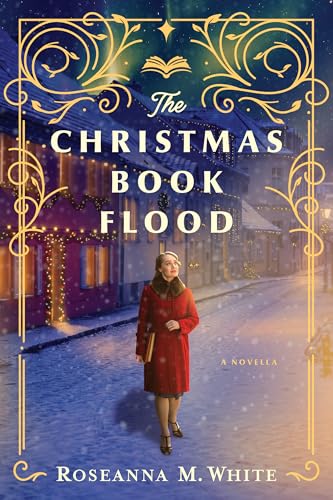
Roseanna M. White has set her novella, The Christmas Book Flood, in this time and place.

Tatiana Eliasdottir is her uncle’s assistant at his publishing house. Tatiana’s sister calls to ask if she can send her seven-year-old daughter for the holidays. Her sister is having difficulties in her pregnancy, and has lost several unborn babies. Her sister’s husband has injured his leg and is out of work. They felt their daughter, Elea, needed a brighter, happier setting for Christmas. Tatiana agrees to host Elea. At first the girl is disconsolate over not being home for Christmas. But getting into some of the traditions and learning she’ll be able to go to work with Tatiana, where her favorite author, Anders Johannsson, also works, begins to lift her spirits.

Author, illustrator, and editor Anders and his secretary agree to help Tatiana watch Elea when Tatiana can’t be at her desk. Tatiana has liked Anders for a while, but he is so shy and quiet and easily flustered that it’s hard to talk much with him.

Anders’ personality tends toward quietness, but he is also that way because he feels like a misfit. His brothers are all hardy, big, strapping fishermen who make fun of him for his shyness and bookish ways.

A true part of the story deals with the publishing companies teaming to form a “Book Bulletin” sent to every home.. The results were so successful–a flood of orders–that they weren’t sure they would be able to fill the orders before Christmas.

Another part deals with Tatiana and Anders getting to know one another and overcoming their misconceptions.

Woven in with the plot was some Icelandic folklore. They don’t have Saint Nicholas, but they do have the “Yule lads“–Troll brothers who take turns visiting in December and leaving gifts in shoes if they find everything to their liking.

This was a delightful novella. I knew very little about Iceland and its traditions and folklore. Then the plot was so different from many Christmas novellas. And, though there’s a slow romance, the book is not at all cheesy. The characters have things to learn and ways to grow along the way.

There were a couple of anachronisms–I don’t know if they talked about “patriarchal” expectations of women then, or “fighting the patriarchy”–at least not in those terms.

Happily, this audiobook did include the author’s notes about the inspiration and research for this book.

I listened to the audiobook, nicely read by Talon David. The only negative to listening was I had no idea what some of the Icelandic terms and names looked like. But there was usually enough explanation that I understood what was going on.


Review: The Collector of Burned Books

Collector of Burned Books

The Collector of Burned Books by Roseanna M. White takes place in Paris during WWII, opening with the Nazi takeover of the city.

Corinne Bastien is a professor at the Sorbonne, but looks more like a student. Secretly, she oversees the Library of Burned Books, a collection of books that have been banned by the Nazis. She encodes some of them with war news and send them out to some of her students, who send encoded messages back. The others Jewish authors who worked with the library fled before the Nazis arrived.

Now, however, Goebbels has sent a “library protector,” Christian Bauer, to take over all the libraries in Paris. Christian is not sure how he got the position. He’s a professor, not a soldier. With his record of speaking out against the Nazis, he’s surprised he hasn’t been arrested. All he can figure is that his friend in the police force, who was absorbed into the Gestapo, has adjusted his records.

He and his friend, Erik, had many discussions about the best way to combat the madness surrounding them–whether to fight against it overtly, only to be arrested, or to battle quietly from within while seeming to go along. They decide on the latter course. Christian knows many of the French Jewish authors personally. Perhaps he can mitigate the damage done to them and their works. At the very least, he can insist on civility among the soldiers assigned to him.

Christian arrives at Corinne’s flat with a list of books checked out by her mother from the Library of Burned Books. He only wants then returned. Corinne plays dumb. Her mother is out of the country and is not very organized–she doesn’t know where the books could be.

As Christian visits repeatedly to search for the books, they discover they have much in common. Corinne still regards him as an enemy, but she realizes he is not like the others.

Eventually, some surprising twists lead them to the truth about each other. And then a shocking betrayal threatens everything they’ve worked for.

Another part of the story involves hiding a boy with birth defects whom the German authorities wanted to have euthanized.

Some of my favorite quotes from the book:

These students had it all wrong—backward. Books didn’t burn. Books ignited. They lit the burning in others. Not with paper and match. With ideas. But then, that was their very argument (p. 1, Kindle version).

The only way to defeat a bully was to win him over. The only way to truly defend what you believe is to make your enemy believe it too (p. 4).

The words we hear, the words we read, the words we sing along to on the radio and study in the papers with our morning coffee, become our thoughts. I think our thoughts become our beliefs. And I think our beliefs become our actions. That is why Goebbels sent us here, Kraus. Because words form the foundation of society. Ideas create culture. Control them, and you can control . . . everything (p. 76).

He would tell you to think, next time, before you blindly chase your ideology. He would ask you to think, not just to feel. To ask, always, if you could be wrong. To listen, always listen, to the other points of view. Because the moment we stop granting someone the right to disagree, Kraus, this is what happens. Do you understand me? This is what turns men into tyrants. This is what leads to fear and death (p. 265).

God could well have said no. Today, he’d extended his mercy. His grace. But as too many in Germany had already learned, sometimes he didn’t intervene. Sometimes he let the monsters come. Sometimes good people, good Christians, good Jews were dragged off in the night, no matter the prayers they cried. He’d promised to be with his people through persecutions—not to prevent them (p. 304).

Read novels, because they will put you in someone else’s skin. Read poetry, because it will give wings to your soul. Read science, because it will show you what’s possible. Read politics, because it will teach you how strongly people care about how their fellow men are treated, wherever they stand on what the best way is. . . . Read things you hate and things you love and things you never thought you’d understand. And never, never accept the excuse that you’re not strong enough to handle it if you read something that offends you. You are. You’re strong enough to be offended and then try to understand why. You’re strong enough to grant that someone can be different and still be worthy of dignity. And if you aren’t? . . . Then read more, until you are (pp. 315-316).

Roseanna is a master storyteller who creates wonderful characters and intricately interwoven plots. I enjoyed both of these characters immensely.

I also enjoyed Roseanna’s notes at the end of the book, where she shares what’s historically accurate and what’s made up. There really was a Library of Burned Books. There really was an anti-Nazi professor who was given a special assignment, though not the one detailed in the book.

There were even some fun surprises, like a character from Roseanna’s Shadows Over England series showing up. This was the first series of Roseanna’s I read, and I loved them. Though there were clues, I didn’t recognize him until his real last name was revealed and he shared a bit of his history. There was a tie-in with another previous character from Yesterday’s Tides, but I didn’t remember him or his situation at all.

The faith element is Catholic, which would have been accurate for the setting and characters. There was mention of some practices I couldn’t agree with–a priest forgiving sins, the need for penance, praying to Mary and saints, the supposed healing power of the Eucharist. But the overall tenor of the characters’ hope in God was touching and inspiring.

I listened to the audiobook, superbly read by Lisa Flanagan. This time, the audiobook did include the author’s notes, which I appreciated. But I also had a Kindle version for reference.

Roseanna mention in her notes that one character will be getting his own story in another book. I don’t know if it will be a sequel, exactly, but I look forward to it.

Review: The Island Bookshop

The Island Bookshop

In The Island Bookshop by Roseanna M. White, Kennedy Marshall has a career she loves in the Library of Congress. But when her sister back in North Carolina’s Outer Banks has a serious fall from a ladder, Kennedy travels to help care for her sister and run their grandmother’s island bookshop.

Kennedy hasn’t been home in a while. She loves the island, her sister, and the bookshop. But she’s avoiding Wes Armstrong. They’ve been friends since childhood, but Kennedy had deeper feelings. Then Wes married her friend Britta. Though Britta passed away, Kennedy knew too many of her secrets–secrets she can’t bear that Wes should know.

Wes’s family has built a successful business on the island, but a development group has offered to purchase the business. The money would help, but the business has been Wes’s life. He struggles with knowing what he should do.

When Kennedy’s sister’s recovery takes longer than expected, Kennedy faces some difficult decisions.

When a question comes up about a different name on the lease of the bookshop than Kennedy’s grandmother, Kennedy searches for information among county records and old boxes in the attic. She finds a number of editions of The Secret Garden in various languages as well as some old letters with surprising news.

Interspersed between the modern-day chapters are scenes from Kennedy’s great-grandmother’s life. Ana is pregnant when she comes to the US during WWII from Dalmatia in Croatia, which at that time was part of Italy. Her husband, Marko, had come earlier to get a job and find a home. But he doesn’t come to meet her when she arrives. Italian-looking immigrants were viewed suspiciously at that time, and Ana doesn’t receive much help or direction. Finally a sea captain gives her a bit of information which leads her to the wife of the man who hired Marko for his fishing boat. The wife graciously takes Ana in, though she has to deal with anti-Italian sentiment from some of the neighbors.

But her friend’s daughter is enamored with Ana. They both love books, and Ana shares her favorite, The Secret Garden.

Then tragedy strikes. Ana doesn’t know what she will do in a new country with a newborn daughter.

I enjoyed both the modern-day and the historical stories. I hadn’t realized Croatia had been part of Italy. At the time, most people in the US weren’t interested in the difference–Italy was Italy and was ruled by Mussolini, so Italians were suspect. It was hard enough to adjust to a new country without that added layer.

I don’t usually read seasonally except at Christmas. But it was fun to read a “beachy” story at the end of the summer.

Themes of faith, forgiveness, and second chances are woven well through both narratives. Roseanna is one of my favorite authors, and this book is a lovely addition to her body of work.

Review: An Honorable Deception

An Honorable Deception

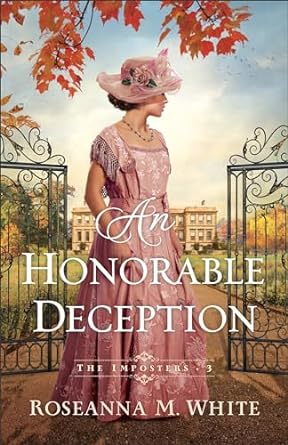
An Honorable Deception is the third in Roseanna M. White’s Imposters series about an aristocratic English pair of siblings in the early 1900s whose father left them nearly penniless. One of the father’s extravagant expenditures was a circus, whose residents now make their home at the Fairfax tower and whose staff taught the siblings, Yates and Marigold, skills to help them in their venture as private investigators

Yates heads to the church of a friend, James, who allows him to conduct interviews with potential clients in the confessional booth. Yates poses as “Mr. A” with an accent, Scottish this time. A “Miss B” on the other side of the booth asks him to help find her ayah, Samira. Miss B had been raised in India when her father was a viceroy there. Samira was with the family until they moved back to England, and since then she has traveled back and forth in several similar situations. Miss B. and Samira have remained close and meet whenever Samira is in town. But Samira missed their scheduled meeting, and so did a friend who was supposed to give Miss B. some news.

As Mr. A. and Miss B talk, they hear banging doors and hurried footsteps. Before Yates can stop her, Miss B leaves the confessional, says, “You!” and is shot three times.

Yates is in danger of blowing his cover, but he has to help Miss. B. As he leaves the confessional, the men have gone, and he discovers Miss B. is none other than Alethia Barremore, daughter of one of London’s leading families.

James and Yates bring Alethia to the Fairfax’s London home for her safety, fearing her attackers would find her in a hospital. As she slowly recovers, they learn more of her story and start looking into her case.

Also with the Fairfax siblings is a longtime friend, Lavinia Hemming.Yates had loved Lavinia when they were teenagers, but she developed scarlet fever which damaged her heart, leaving her ill for several years. Then when Yates discovered he had no money, he knew her parents would never consent to him asking for her hand. And Lavinia herself seemed totally uninterested in him.

In one of the previous books, Lavinia discovered her mother was a traitor who threatened her life, her father’s and Yates’. Her mother was killed, leaving Lavinia to recover from the disillusionment of her deception. With her father away, Lavinia accompanies the Fairfax siblings to their Northumberland tower, where she accidentally learns that they are the Imposters. She recruits herself into the group to help.

Their investigation turns out to be involve more than a missing ayah as they uncover some of society’s seedier secrets.

I don’t want to spoil the story, but some readers would want to know the last half of the book shares details of child abuse and sex trafficking. However, nothing explicit is shown.

As almost always, I loved Roseanna’s story. Though dealing with a serious subject, there are moments of lively banter. And Lavinia and Alethia wrestle with several emotional issues in the wake of their parents’ sins.

A fun surprise in this book was the appearance of Barclay Pearce from Roseanna’s Shadows Over England series about a group of street kids who form their own family.

There’s an interview with Roseanna about this new book here. I assume this is the last of the Imposters books–Roseanna’s series all seem to form groups of three. If so, I’ll miss these characters.

(Sharing with Bookish Bliss Quarterly Link-Up)

Review: A Noble Scheme

A Noble Scheme by Roseanna M. White

A Noble Scheme is the second novel in Roseanna M. White’s Imposters series. The first book, A Beautiful Disguise, established that The Imposters were a private investigation firm in the early 1900s. Siblings Yates and Marigold Fairfax learned that their father’s spendthrift ways had left no money. One of his whimsical purchases had been an entire circus which stayed at the estate when not traveling. The circus performers and animals became close friends of the Fairfaxes. Yates and Marigold had learned acrobatics, theatrics, and other performance tricks from them. They decided to use these skills to support themselves and their circus friends by maintaining their place in society and secretively, in disguise, investigating matters for high-end clientele.

However, in A Nobel Scheme, a waiter comes to them–someone who could not afford them. Yet when they hear that his son has been kidnapped, mistaken for his almost identical wealthy cousin, the team accepts the case pro bono.

Gemma Parks is also part of the Imposters. She writes a society column as G. M. Parker and fills in however she can. She keeps her ears open in society functions and sometimes masquerades as Marigold so Marigold can look for clues.

Graham Wharton is the Fairfaxe’s distant cousin who came to live with them when his parents died. He’s an architect who can help the Fairfaxes find tunnels or keeps or hiding places in old houses.

Graham and Gemma had grown up together and fallen in love. But in the last book, they were estranged. Several references were made to what had happened between them, but that situation wasn’t explained until this book. It’s a pretty big reveal, so I won’t spoil it.

Gemma avoids Graham as much as she can, but they try to put aside their differences for the cases they are working on. This particular case throws them together more than normal. Graham hopes to win Gemma back, but she can’t forgive him. He, in turn, blames God. He acknowledges his foolishness in what happened, but God could have prevented it.

I love that this series is different from the usual historical fiction fare. The themes of faith and forgiveness are woven in naturally. Roseanna is one of my favorite authors, and this book didn’t disappoint.

Some of my favorite quotes:

The more she wrote for herself, the more herself she became.

Words were wily things—but they were miraculous too. They created, they shaped, they breathed life. God had used them to form the universe, and Christ had come as a living Word to write Himself onto the hearts of humankind. Was it any wonder, then, that words had pulled her from the brink of darkness and delivered her, however slowly, back to the Light?

I enjoyed the audiobook nicely read by Susan Lyons. Sadly, the audiobook didn’t include any author’s notes. But I found this interview in which Roseanna shares how she came to write about nobility hosting a circus and investigating in disguise.

Review: Yesterday’s Tides

Yesterday's Tides novel by Roseanna M. White

Roseanna M. White’s novel, Yesterday’s Tides, has two related story lines taking place in 1914 and 1942 on Ocracoke Island in North Carolina’s Outer Banks.

In 1914, Louisa Adair helps her mother and “Grann” run an inn. She’d like to go to teacher’s college, but there isn’t enough money. Plus, she’s needed at home.

Though Louisa has blue eyes, her skin coloring is darker than most people’s. Her mother will not tell her anything about her deceased father except that he was a good man. A few people are prejudiced against her, thinking she must be of mixed race.

When two college-age cousins, one from Maryland and one from England, come to the inn for the summer, Louisa has no idea how her life will change as a result. Louisa has no plans to fall in love: she keeps a polite reserve with the inn’s male guests. But she and Remington Culbreth, from England, find themselves in each other’s company often. Just after they do fall in love, WWI breaks out and Remington is called to service at home. Will their relationship survive not only the war, but the differences in their families and lifestyles?

In 1942, Evie Farrow now runs the inn with her grandmother. One day while taking some baked goods to the neighbors, a loud explosion is heard in the distant waters. While Evie’s Coast Guard friends prepare to investigate and help, Evie heads home to pray. When a badly burned Englishman washes up near the inn, somehow Evie knows not to report him. He says he is military, but he’s not in uniform. What mutterings she hears as he goes in and out of consciousness alert her to the fact that he is an intelligence officer. But what would an English spy be doing in Ocracoke?

When he wakes up, she learns his name is Sterling Bertrand and he is tracking a German operative. But it will take weeks for his wounds to heal. Meanwhile, he wonders just how far he can trust Evie, who seems to have secrets of her own.

I’ve read many dual timeline novels, and usually there are enough differences between the two timelines to keep from getting confused. I had a little harder time with this one, since both stories took place at an inn in Ocracoke and involved a visiting Englishman. I think I would have had an easier time with reading rather than listening. I didn’t catch some of the names that were the same in both timelines, so I kept getting surprised at the connections. I don’t think that would have happened if I were reading instead of listening.

As it happened, partway through the audiobook I discovered that I did have a Kindle copy! So I went back and forth between reading and listening.

One delight with this book was running into some characters from Roseanna’s previous books. I won’t say which ones, as that might give away parts of the plot. You don’t have to have read those books to understand this one, but it was a fun surprise to see those characters again. Evidently Remington was in an earlier book as well, but, though I remember the story and situation, I don’t remember him.

I’m sorry to say I was not thrilled with the audiobook narrator. Some of her accents seemed a little off to me. Plus she had an odd cadence, her inflection going up when it didn’t need to.

There are so many layers to this novel, and so much more to it than there appears to be at first. I loved the stories, and after finishing the book, I just wanted to sit with the characters a bit more before saying goodbye to them and starting another story.

Whispers from the Shadows

Whispers from the Shadows is the second novel in Roseanna M. White’s Culper Spy Ring series.

The story opens some 35 years after the Revolutionary War. England and the United States are once again battling each other, this time in the War of 1812.

So Gwyneth Fairchild can’t understand why her father is sending her away from England to America, to his old friends, the Lanes. How can crossing a sea filled with pirates and combatants be safer than England?

But her father is insistent. As they’ve said their good-byes, Gwyneth turns to the carriage and her guardians. But she runs back to ask her father one last thing—only to witness his murder. His last whisper as he sees her is, “Run.”

So Gwyneth runs. On the two-month long voyage, she can’t sleep more than two hours at a time. Seasickness, insomnia, and sorrow reduce her health and well-being to frightening levels. For some reason, she does not tell her guardians what happened.

When their vessel is overtaken by American privateers, they are delivered to Thaddeus Lane in Baltimore, the son of Winter and Bennet. Thankfully Thad’s parents are there when Gwyneth arrives.

Gwyneth slowly recovers from her ordeal, but still tells no one what happened to her father. Everyone suspects that her state is due to more than severe seasickness. Gwyneth takes refuge in drawing, and somehow Thad discerns that she has faced some kind of severe trauma.

On the surface, Thad is a merchant who knows almost everyone in Baltimore. Secretly, he’s a key member of the revived Culper Ring.

As Gwyneth and Thad discover each other’s secrets, the British invasion increases. In the midst of it all, Gwyneth can’t help but wonder if her father’s murderer will come after her, too.

I loved this book on so many levels. It was fun that Winter and Bennet from the first book were such a big part of this one as well. I enjoyed Gwyneth and Thad, their personalities and journey and especially Gwyneth’s growth. I loved Thad’s kind but non-nonsense cook, Rosie, who was a niece of Freeman from the first book.

There was also so much edge-of-your-seat intrigue.

I don’t know if I have ever read another book set during the War of 1812. So many write WWII novels, which is fine—I loved Roseanna’s books set then. But it’s nice to learn about other eras as well.

Wikipedia only details the Culper Ring activity through the Revolutionary War. Roseanna shared in her afterword of the first book that a CIA member said in an interview that “The Culper Ring may or may not still exist.” It’s fun it imagine that they continued on behind the scenes for so many years.

The next novel is set during the Civil War, and one more novella comes before. I am looking forward to them.

Ring of Secrets

Ring of Secrets by Roseanna M. White is the first in her Culper Ring series, fiction based on the real-life spy network set in motion during the Revolutionary War.

When Winter Reeves’ mother died while her father was fighting with the Patriots, her grandparents came to take her to their home in New York City. Her grandparents had never forgiven her mother for marrying outside their station and political affiliations, and they took their anger out on Winter. They instructed that she would say her father was dead, that she would not express any Patriot leanings, and she would marry the man of their choosing as soon as possible so they could get her out of their responsibilities and home.

Since Winter could not be who she really was, she played the part of a beautiful but witless society lady. Her persona gave her a great cover, though, for overhearing information from the Loyalist officers in their social circles. She passed along any useful information to her childhood friend, Robbie Townsend, a mercantile owner who was a vital link in the Culper Ring network.

Bennet Lane was a new arrival in the city. He would not have been considered a catch among the highest society there due to his professorship at Yale, teaching chemistry. But now he was set to inherit a large English estate, making all the tittering mamas in town set their sites on him as a potential son-in-law. Though Bennet usually got tongue-tied and awkward around women, he thought the apparent pursuit of a wife would be a good cover for his real mission: to discover information about a hidden Patriot spy ring.

When Bennet met Winter, he perceived that there was intelligence and spunk underneath the silly exterior she presented to the public. He wanted to know more.

Roseanna has become one of my favorite authors over the last few years, and this novel lived up to the others I read. There are so many layers to this story: the political intrigue and danger, the growing attraction between Winter and Bennet despite their differences, the pursuit of Winter by a Loyalist officer, Isaac Fairchild, Winter’s deep faith and Bennet’s lack of belief in anything he can’t see and test. As I read, I thought, “There is only one way I can see this working out.” The plot did go that direction, but with some surprises along the way.

I thought all the characters were well-drawn. I especially loved Freeman, a free Black man who had been one of Winter’s father’s closest friends and who pledged to protect Winter, and Viney, a poor but faith-filled woman Winter encounters.

Even though I love Roseanna’s writing and knew I’d get to this series eventually, I didn’t like the covers, which put me off the series a bit. It looks like this series was first published in 2019 and then the second edition in 2021. There are two covers for each book. I had this one in my Kindle library. But Audible currently has the books for free with an Audible subscription. I’m thankful they did and I finally got to them. I’ve already started the sequel.

I had not realized when I got the audiobooks that there were novellas in-between the books, not on audio. They are currently packaged together here. The first one, Fairchild’s Lady, takes place just before the French Revolution breaks out. General Fairchild from the first book is in France on two missions: to gather information and to locate a countess and her daughter and bring them to England before the Revolution makes travel impossible. He meets a beauitful woman, Julienne, at a masquerade ball, only to discover later that she is the young woman he is looking for. A dangerous French courtier has laid claim to Julienne, though.

This novella was just as good as the first book. Fairchild was a likeable, honorable character, even though he was on the other side, politically. It was fun to see his story continue.

Roseanna notes in her afterword of Ring of Secrets that the Culper Ring members were not professional spies. They were everyday people seeking to promote the cause of the fledgling United States of America. There were women in their ranks as well as men. The main characters in these books are fictional, but historical characters are mentioned as well.

I’m looking forward to see what else happens with the Culper Ring.

The Reluctant Duchess

The Reluctant Duchess is the second in Roseanna M. White’s Ladies of the Manor series.

Brice Myerston, the duke of Nottingham, was a side character in the series’ first book, The Lost Heiress. He was one of England’s most sought-after eligible bachelors, which he handled by being a notorious flirt to fend off serious advances from young ladies and their mothers. But he also had a close walk with God and uncanny sense of the right thing to do.

He finds himself in a knotty dilemma, though. His family has made their annual visit to Scotland to visit his mother’s family home not long after the death of his father. There, the Scottish laird, who has no use for Englishmen and has avoided the Myerstons all this time, asks the family to dinner. While there, the earl of Lochaber tries to set a trap for Brice to wed the earl’s daughter, Rowena. Brice steadfastly refuses at first. But then he realizes this is no title-seeking or money-grubbing ploy. Rowena is in serious trouble. Brice feels the Lord’s direction to protect her, and the only way to do that seems to be to marry her and take her back to England.

Rowena’s father has become harsh and distant since the death of her mother. Her fiance, Malcolm Kinnaird, seemed loving and kind at first. But his true colors came out when he forced himself on Rowena and became as controlling and as harsh as her father. Rowena hates that her father has set a trap for Brice, but she accepts his offer as the only way to escape.

But Rowena trembles at the thought of being a duchess in English society. And her fears come true when no one accepts her except Brice’s family and two of his closest friends. Rowena has been beaten down mentally and physically and has no confidence. She recoils from Brice physically and emotionally.

In addition to trying to discern how to help his new wife, Brice has another problem on his hands. He had offered to take and hide the rare treasure that had caused his friends, the Staffords, so much trouble (in the first book). But, though the main troublemaker had been killed, other dangerous pursuers are not giving up. And one of them is trying to entice Rowena into a false friendship.

This book had a bit of a rough start for me, with Rowena facing off against Malcolm, the knowledge that He had abused her, and a lot of yelling. In The Lost Heiress, even the villains had an air of gentility. In this book, even the Scottish nobility were quite rough around the edges.

But once I got into the story, I enjoyed it. Brice and Rowena had much to learn to trust each other, and each made many mistakes along the way.

The whole hidden treasures story line was as intriguing as any suspense novel. Besides the enemies Brice knows of, he discovers new unseen ones.

I think this could be read as a stand-alone story, but it’s a much richer experience to read both of them.

I listened to the audiobook, wonderfully read by Liz Pearce. I thought she did a great job with the different accents, which added a lot to the story.

As always, Roseanna did not write a fluff piece with this novel. She leads her characters to an understanding of their need and God’s abundant grace in an organic and not a preachy way.

The Lost Heiress

In The Lost Heiress by Roseanna M. White, set in the Edwardian era, Brook Eden grew up as the ward of Prince Grimaldi in Monaco. But the circumstances of her real family are a mystery. When Brook was a young child, she and her mother were in a carriage accident. An opera singer came to their aid, and Brook’s mother asked the woman to take Brook, a packet of letters, and her necklace before she died.

Brook friend, Justin, thinks he has discovered her real family and makes the arrangement for Brook to meet them in Yorkshire, England. Brook’s father, Lord Whitby, and his sister know right away Brook is his lost daughter. It takes the rest of the family and the servants longer to accept her.

This happened fairly early in the story, leaving me to wonder where the conflict was going to come into the plot.

Well, there’s plenty of conflict. A distant cousin, Lord Pratt, is a predator who sets his sights on Brook as the heiress of the Whitby estate. He bribes a servant to spy on Brook and bring him information. Justin’s father dies, leaving him as the new Duke of Stafford. His responsibilities necessitate his traveling to his family’s holdings in other countries, leaving Brook vulnerable to Pratt’s machinations. Justin begins to feel more for Brook than friendship but doesn’t want to seem like he is only interested now that she is an heiress. He decides to wait. But when he returns, he and Brook clash instead of resuming their easy friendship. Unbeknownst to either of them, someone has been preventing their letters from reaching each other. Other suitors appear to have made inroads into Brook’s affections. And no one realizes the danger Brook is in from a possession she doesn’t even know she has until a near-fatal attack and a stunning betrayal opens their eyes.

Several of the main characters are Christians and learn to deal with broken dreams, new and uncomfortable circumstances, trust in God when He doesn’t seem to be near, and finding forgiveness.

In the author’s notes, Roseanna said she wrote the first version of this story when she was twelve, finishing it at thirteen! After nineteen years, nine books, and many rewrites, it was finally published as the first in the Ladies of the Manor series.

A story about a lost heiress finding her true home might seem like a fluff read. But I have found no fluff in Roseanna’s books. She brings so much depth into her characters’ personalities and struggle. I enjoyed this book very much and have already started the sequel.