
Redeemed Regrets

Redeemed regrets

One of my biggest regrets is that I often did not have a good attitude when caregiving for my mother-in-law. I wanted her to be well taken care of. But I did not have a natural caregiver’s heart. I often felt the weight of caregiving. I resented the intrusion on my time and plans for that stage of my life. When she was under hospice care for three years, we had bath aides, social workers, a chaplain, and a doctor coming in and out (often without calling first). Even though I liked most of the people, I often felt the introvert sanctuary of my home had been invaded.

I tried to fight these feelings by reminding myself of God’s truth: it was good and right and biblical to care for my mother-in-law. She had lovingly cared for my husband, and then our family after we married; she deserved our care in return. This was my ministry for that time in my life, and it was every bit as important as writing a book or teaching a class. God would give grace for each day, each moment, as needed.

Yet I still felt guilty about having these negative feelings in the first place.

Paul talks about the difference between regret and repentance, or worldly versus godly grief in 2 Corinthians 7:10-11. It’s important that we don’t stop at regret. It’s possible to feel bad about doing wrong without really repenting of it. Repentance will involve realization that we sinned against God, confession to Him that what we did was wrong, with no excuses or self-justification, and asking for His grace and help to change.

But even after repentance, we sometimes still regret what we did.

After my mother-in-law passed away, my guilt multiplied rather than ebbed. I confessed these things to the Lord. I knew He forgave me. But I still regretted my wrong attitudes and wished I had served her better.

I think this might be what people experience when they say they can’t forgive themselves. If God forgives us, who are we to withhold forgiveness? We have to accept that we are fallen creatures with a bent towards selfishness.

But even with forgiveness, we still regret our past actions. We wonder how we could have been so thoughtless or selfish.

When the person we’ve wronged has passed on, or we’ve lost touch, our regret festers. There’s no way to make it right, to apologize to that person.

Something happened recently to help me realize regrets can be redeemed.

I walked into the church restroom to find two ladies talking who were both currently taking care of their mothers. One knew I had taken care of my mother-in-law and pulled me into the conversation.

One of the things that had helped me most during my mother-in-law’s care was talking to other people who were currently or formerly caring for a parent. I could be a little freer to share with them and know I’d be understood. So now, I was able to help others in that way: mainly by listening, but sometimes by sharing something that helped me.

God has redeemed my regrets in other ways as well: softening my heart, helping me to be more watchful and prayerful, reminding of my need of His grace and help.

Of course, caregiving is not the only area where I have regrets. As I get older, past situations where I have failed come to mind–in parenting, relationships, ministry, and just about every area.

I can’t go back and redo the things I’ve done wrong. But I can encourage others. I can learn from my failures. God can use the way He helped me by sharing with others. He truly does work all things together for good to those who love Him (Romans 8:28). This doesn’t excuse the wrongdoing. But God, in His grace, can use it for good.

I imagine David regretted his sin with Bathsheba. Even though he got a wife and a son out of the situation, he faced other consequences. His sensitive heart, once it was right with God again, had to have berated himself. But out of that scenario came Psalm 51, which ministers to any who have sinned with the hope of forgiveness and redemption. God still used him to write psalms, prepare Solomon for his reign, and provide for the temple Solomon would build.

I’m sure Peter always regretted that he denied knowing Christ when Jesus was arrested and crucified. Jesus forgave him, restored him, and gave him a ministry. His epistles exhort readers to humility and to face suffering and persecution with joy–things I think he learned through his experiences.

It’s not that doing good deeds can somehow make up for our bad deeds. That’s how redemption often works in literature, but not with God. Just as we’re saved by His grace at the beginning, so we walk in His grace throughout life. We don’t do good things to rack up points with Him or to “even the scales”–we could never do enough! Rather, when He forgives us, we serve Him with renewed and thankful hearts.

For we ourselves were once foolish, disobedient, led astray, slaves to various passions and pleasures, passing our days in malice and envy, hated by others and hating one another. But when the goodness and loving kindness of God our Savior appeared, he saved us, not because of works done by us in righteousness, but according to his own mercy, by the washing of regeneration and renewal of the Holy Spirit, whom he poured out on us richly through Jesus Christ our Savior, so that being justified by his grace we might become heirs according to the hope of eternal life (Titus 3:3-7).

But shouldn’t we know better after we’re saved? Isn’t sin that much more heinous after salvation?

The Lord is merciful and gracious, slow to anger and abounding in steadfast love. . . . As a father shows compassion to his children, so the Lord shows compassion to those who fear him. For he knows our frame; he remembers that we are dust” (Psalm 103:13-14).

Micah 7:18 says God delights in mercy.

I love what Christina Rossetti wrote: “A fall is a signal not to lie wallowing, but to rise.” We need to let regret do its convicting, humbling work in us. But then we need to seek God’s grace to keep going, walking closely with Him. He might even redeem our regrets by bringing up opportunities to encourage others with what we have learned.
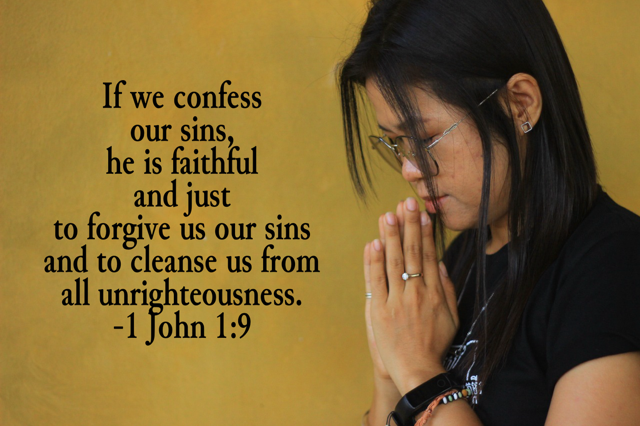
1 John 1:9

(I often link up with some of these bloggers.)

Radio Interview Tomorrow

Tomorrow morning (Tuesday, July 12), I’m scheduled for an interview with Kurt and Kate Mornings on Moody Radio Florida at 8:10 a.m. EDT. They’re the folks who interviewed me a couple of times before. They want to discuss my post on What to Do with Regret.

The top of their program page has a “Click to Listen Live” button. I’d love to invite you to tune in if you’re able and interested.

Most of all, I’d appreciate your prayers that all would go well: that the technology would work well with no glitches, that there won’t be any health issues, that God would give me what He wants me to say and help me not to blank out, and that He would be glorified and listeners would be ministered to.

Updated to add: Here’s a link to the interview, recorded by my oldest son. There was some kind of audio problem at the beginning where they couldn’t hear me, and they had me in Nashville instead of Knoxville. 🙂 But I am thankful things started working and the interview could continue.

What to Do with Regret

I regret hitting my sister.

I don’t remember our ages or the circumstances. Probably a lot of hitting occurred between the six of us siblings over the years, though I’m sure my parents discouraged it.

But I think my regret over this particular incident indicates that I was old enough to know better at the time.

I’ve accumulated a lot of regrets since then. Things I said and shouldn’t have. Things I should have said but didn’t. Wrong or thoughtless choices. Selfish actions and attitudes. Time wasted. Projects unfinished or not even started.

The regret that haunts me the most is my wrong attitude while caring for my mother-in-law. Instead of welcoming the opportunity to show love to her by caring for her at her neediest, I resented the encroachment on my own time and plans and the pervasive weight of responsibility.

Not all regrets occur because of sin. Unstarted projects, for example, are a reminder that I am limited and can’t do everything I’d like to do. Yet they can serve to remind me to seek God’s wisdom in what I spend my time on.

Some regrets are due to mistakes or not enough knowledge at the time.

There are some regrets where I still don’t know whether I was right or wrong, like my college major. I wanted to major in English, but then decided Home Economics Education was more practical. However, by the time I got to my second senior year (I crammed four years into five . . .), I knew I didn’t want to teach. I liked the imparting knowledge part, but not the discipline and inspiring uninterested students. I felt like I wasted all that time and money since I didn’t “use” my major in the expected sense. Now I wish I had majored in English for the sake of writing. Yet God has used what I learned in college. I rest in Proverbs 16:9: “The heart of man plans his way, but the LORD establishes his steps.”

All too often, though, regrets are the aftermath of sin.

Regret vs. repentance

Regret is not repentance. Judas regretted betraying Christ, but as far as we know, did not repent of it. He is an illustration of the “grief produces death” Paul mentioned in 1 Corinthians 7:10.

Peter regretted denying he knew Christ and wept bitterly over it. But he repented and was restored. His sermon and actions after Pentecost and his epistles show a changed man.

King Saul and David both said, “I have sinned.” King Saul kept going back to his murderous ways in pursuing David. David gave us Psalm 51.

2 Corinthians 7 shows how repentance changes our attitudes. Paul had written a stern letter to the Corinthians over their sin and waited to hear how they would receive his admonitions. He was comforted when Titus came with news that the Corinthians responded with longing, mourning, and zeal (verse 7). Paul notes the changes in the Corinthians produced by godly repentance. I like how the Amplified Bible explains it: “For [godly] sorrow that is in accord with the will of God produces a repentance without regret, leading to salvation; but worldly sorrow [the hopeless sorrow of those who do not believe] produces death. For [you can look back and] see what an earnestness and authentic concern this godly sorrow has produced in you: what vindication of yourselves [against charges that you tolerate sin], what indignation [at sin], what fear [of offending God], what longing [for righteousness and justice], what passion [to do what is right], what readiness to punish [those who sin and those who tolerate sin]!” (verses 10-11).

I’ve confessed my selfish attitudes to the Lord. I lean on the blessed promise of 1 John 1:9: “If we confess our sins, he is faithful and just to forgive us our sins and to cleanse us from all unrighteousness.” I’ve always been told that “confess” in that verse means to say the same thing God says about our sin. We don’t downplay it or make excuses for it. We call it what it is in all its bald-faced despicableness.

When regret lingers

But even after confessing to the Lord and being assured of His forgiveness, regret still lingers, quite heavily sometimes.

The inclination is to confess it to the Lord all over again. But if we believe His word, He forgave us the first time we confessed our sin to Him.

Another inclination is to beat ourselves up over our wrongdoing. While it’s good to note our foolishness, wrong thinking, and actions, it doesn’t help to keep self-rebuke on repeat. We usually end up discouraged but not moving forward.

So what do we do with the regret that remains?

The only solution I have found is to let that regret spur me on to different actions and attitudes now.

I received my only traffic ticket while speeding on a road that I frequently traveled. I was humiliated and embarrassed by being pulled over by the police and questioned. I paid my fine with no contest, because I knew I was in the wrong.

Every time I traveled down that road again, I slowed down when approaching the place where I got my ticket. The discomfort of the previous encounter made me want to avoid experiencing that pain again and take extra steps to make sure I was doing right.

Some years ago, I broke and dislocated my little toe when I banged it against the wall while coming out of my bathroom door. I’ve come through that door hundreds of times—I don’t know why I didn’t do so properly then. Observing the x-ray, the doctor said my toe looked like a jigsaw puzzle. You can bet I walked very carefully through that door and around corners for weeks afterward to make sure my poor, battered toe didn’t come anywhere near them. But even after the pain subsided, the carefulness remained.

The pain of regret can do the same for us, instilling a carefulness, sensitivity, and watchfulness we might not otherwise have had. Those features often expand from the particular thing we regret to our walk in general.

We need to let regret lead us to repentance. Then we need to let God’s grace and forgiveness seep down into our souls and and enable us to make whatever changes we need to make.

The regret over a missed opportunity to share Christ with someone can help us pray and prepare for the next time. Regret over lost temper and harsh words can drive us to the Scriptures and prayer for help.

My regrets over my attitudes as a caregiver remind me of my selfishness and my need to seek God’s grace to serve Him and others, not my own desires. I knew caring for my mother-in-law was the right thing to do, even though I didn’t feel glad about it then. But I can say now that I am thankful we did.

How about you? Does regret weigh you down or spur you on?

(I often link up with some of these bloggers.)