Finishing well

I just finished reading II Chronicles. Though it has a reputation for being pretty dry, it actually has many great truths in it. II Chronicles covers the history of the kings of Israel and Judah from the time of Solomon until the Babylonian captivity. Most of the kings were bad, in that they did not follow Jehovah God in the way He prescribed, and many followed idols and false gods instead. Most of the few who did start out well did not finish well. And though “finishing well” is not what “the” theme of the book probably is, it’s what stood out to me in this reading.

Solomon, for all his wisdom and all the blessings he experienced during his early reign, fell away when his many wives led him to other gods.

“Asa did that which was good and right in the eyes of the LORD his God” (II Chronicles 14:2), was marvelously helped in battle after prayer, took down idols, removed even his own mother from her position because of the image she made. But in later years he sought the help of a pagan king instead of God and even imprisoned the prophet who came to warn him (16:1-10). He ended up with diseased feet or which he did not seek the Lord at all.

“Joash did that which was right in the sight of the LORD all the days of Jehoiada the priest” (24:2), but after Jehoiada died, Joash fell away to the point of killing Jehoaida’s son (24:19-27).

Amaziah “did that which was right in the sight of the LORD, but not with a perfect heart” (25:2). He received great help from the Lord when he did things His way, yet instead of continuing to follow Him, he “he brought the gods of the children of Seir, and set them up to be his gods, and bowed down himself before them, and burned incense unto them.  Wherefore the anger of the LORD was kindled against Amaziah” (25:14-15).

Uzziah, “as long as he sought the LORD, God made him to prosper” (26:5), and “And God helped him against the Philistines” and other enemies, “and his name spread abroad even to the entering in of Egypt; for he strengthened himself exceedingly” (26:7-8). “And his name spread far abroad; for he was marvellously helped, till he was strong. But when he was strong, his heart was lifted up to his destruction: for he transgressed against the LORD his God, and went into the temple of the LORD to burn incense upon the altar of incense” (26:15-16). The NASB puts it this way: “But when he became strong, his heart was so proud that he acted corruptly, and he was unfaithful to the LORD his God.”

Josiah was one of Judah’s best kings, leading a revival after the book of the law was found during temple repairs, yet he went to battle and “hearkened not unto the words of Necho from the mouth of God” and ended up dying of wounds received in that battle.

Will I forget the things I knew, like Solomon did, and be led away by other loves, or will I keep my first love? Will I forget from whence my help comes, like Asa did, and look for help elsewhere? Will I fall away after my spitual mentors are gone, like Joash? Do I serve God with a perfect (complete) heart, or am I holding anything back, like Amaziah? Will I be lifted up with pride like Uzziah? Will I neglect to listen to wise counsel from God’s Word, like Josiah?

May I heed the warnings and lessons in these examples. May God save me from these and other failures and help me to keep my eyes on Him and to finish well.

Book Review: One Thousand Gifts

One Thousand Gifts: A Dare to Live Fully Right Where You Are by Ann Voskamp began as something of a teasing dare: a friend had named one hundred things she loved and asked Ann if she could name 1,000. Ann began keeping a notebook open in her kitchen to record things she was thankful for, little dreaming how it would impact her life.

But this is no Pollyanna-ish “glad game.” Ann discusses finding joy even through loss and pain and circumstance that don’t make sense and childish skirmishes. And giving thanks, she finds, does more than engender gratitude and praise to God, though that’s plenty: it also wards off things like anxiety, because when we’re in the habit of giving thanks, we’re in the habit of seeing evidence of God’s love and care all around us.

Ann’s writing style here is much the same as it is on her blog, and it is hard to know how to describe it: it has a poetic quality to it, somewhat ethereal, seemingly stream-of-consciousness, though it is not random: there is definite movement and flow toward a purpose and end. And it’s not fluff, for there is serious study underneath. My own writing style is more practical and straightforward: neither is right or wrong, better or worse, they’re just different, and my different way of thinking left me feeling a little lost sometimes, but other times I was moved to tears or touched to the core.

I wish I had jotted down notes from the main points in each chapter. Some of the main ones are repeated and easy to take with you from the book. But here are some quotes that I marked:

Daily discipline is the door to full freedom, and the discipline to count to one thousand gave way to the freedom of wonder…(p. 84)

Joy and pain, they are but two arteries of the one heart that pumps through all those who don’t numb themselves to really living. (p. 84).

Can it be that, that which seems to oppose the will of God actually is used of Him to accomplish the will of God? (p 88).

I am beset by chronic soul amnesia. I am empty of truth and need the refilling. I need come every day — bend, clutch, and remember — for who can gather the manna but once, hoarding, and store away sustenance in the mind for all of the living? (p. 106).

How do you open the eyes to see how to take the daily, domestic, workday vortex and invert it into the dome of an everyday cathedral? (p. 120-121).

Peace can shatter faster than glass (p. 174).

My own wild desire to protect my joy at all costs is the exact force that kills my joy (p. 178).

I wouldn’t agree with every little theological point, but that could probably be said of many books that I read, and I am not going to dissect the differences here. I will just mention a couple of things, though.

In the last chapter, titled “The Joy of Intimacy,” Ann uses what could be called sexually charged language to describe intimacy with God, such as, “I fly to Paris and discover how to make love to God” (p. 201) and “To know Him the way Adam knew Eve. Spirit skin to spirit skin” (p. 217)…and others I am not comfortable putting here. I know how she means it: she doesn’t mean anything physical or inappropriate: she’s merely discussing spiritually unfettered union and communion. There are Bible passages that speak of God as a husband, the church is called the Bride of Christ, and the last few verses of Ephesians 5 say that the marriage union is symbolic of that between Christ and the church. But still…it’s jarringly graphic, and sadly, I think a stumblingblock to many readers: some have only discussed that chapter on their blogs, and from comments there and on various book reviews, some people have laid aside the book after coming to or hearing about those passages. Personally I wouldn’t lay aside the whole book because of those references, but I would just say read cautiously and with discernment, as we should with any book. (Update: Ann comments on her use of language in this chapter in the second comment here.)

Another disturbing thing to me was a quote from Mother Teresa — not the quote itself but the regarding of her as a spiritual authority, which I don’t believe her to be for these reasons. I don’t want to offend my Catholic friends, but as I have said before, a person is not saved by or because of their denomination: we’re saved by grace through faith in Christ alone.

For these and other reasons, I couldn’t endorse the book 100%, but I did benefit from it in many ways.

There is a book club discussing this book at bloom (in) courage where two other ladies discuss the individual chapters with Ann. The videos are long, about 10-12 minutes for each chapter, and I’ve only watched five or six of them. Some of the discussions are more helpful than others, but they did help to relate to Ann better, hearing her talk in everyday language.

A little taste of the book and it’s style can be seen here in its trailer:

(See also Tim Challies’ review here.)

(This review will also be linked to Semicolon‘s Saturday Review of Books.)

Book Review: The Book Lover’s Devotional

The Book Lover’s Devotional: What We Learn About Life From 60 Great Works of Literature is compiled by various authors, one of whom is blog friend Laura Lee Groves of Outnumbered Mom.

As the title suggests, 60 different books, ranging from old classics like The Count of Monte Cristo and War and Punishment to modern works like The Boy in the Striped Pajamas and A Prayer For Owen Meany are discussed in light of their spiritual truths. Most of the books are not written from a Christian worldview, yet even secular books convey spiritual truth: as someone once said, “All truth is God’s truth.”

The format of the devotionals gives a bit of background information about the book and usually a plot summary and then something that the devotional writer gleaned spiritually from the book. Each devotional ends with a Bible verse and a couple of questions for further thought. In a few cases just a scene from the book is discussed. In many cases the spiritual viewpoint may not be the overriding theme of the book, but rather just an aspect. In many cases as well, what the devotional writer may have seen was not necessarily what the book author intended: for instance, the chapter discussing Anne of Green Gables is titled “A Father to the Fatherless” and discusses how we come to God as orphans, and as a loving Father, He takes us to Himself and adopts us as His own. From everything I have read about Montgomery’s writing of Anne, I don’t think she had that theme in mind as she wrote, but it is certainly a valid spiritual application. That’s one thing that makes discussing books enjoyable: hearing what others got from them. But overall, the spiritual take-away is more direct: Captain Ahab’s hatred for Moby Dick dragging him down, both literally and spiritually, for instance.

I was a little apprehensive of reading the devotionals for those books I had not read yet for fear of spoilers, but overall they only enhanced my desire to read the book. My to-be-read list has grown after reading this book.

This was a very pleasant read and I am glad to recommend it.

(This review will also be linked to Semicolon‘s Saturday Review of Books.)

The Week In Words

”"

Welcome to The Week In Words, where we share quotes from the last week’s reading. If something you read this past week  inspired you, caused you to laugh, cry, think, dream, or just resonated with you in some way, please share it with us, attributing it to its source, which can be a book, newspaper, blog, Facebook — anything that you read. More information is here.

Here are a few that spoke to me this week:

This is from an Elisabeth Elliot e-mail devotional taken from a a chapter called “God’s Hep For God’s Assignment” taken from the book A Lamp For My Feet:

Sometimes a task we have begun takes on seemingly crushing size, and we wonder what ever gave us the notion that we could accomplish it. There is no way out, no way around it, and yet we cannot contemplate actually carrying it through. The rearing of children or the writing of a book are illustrations that come to mind. Let us recall that the task is a divinely appointed one, and divine aid is therefore to be expected. Expect it! Ask for it, wait for it, believe that God gives it. Offer to Him the job itself, along with your fears and misgivings about it. He will not fail or be discouraged. Let his courage encourage you. The day will come when the task will be finished. Trust Him for it.

“For the Lord God will help me; therefore shall I not be confounded, therefore have I set my face like a flint, and I know that I shall not be ashamed” (Is 50:7 AV).

I’ve certainly been there; you?

This was seen at the M.O.B. (Mother of Boys) Society:

“Gratitude bestows reverence, allowing us to encounter everyday epiphanies, those transcendent moments of awe that change forever how we experience life and the world” – John Milton

This was from one of Claudia Barba’s “Monday Morning Club” newsletter:

Are you annoyed this morning by the wrench some monkey has thrown into your careful plan for today? Relax and remember: interruptions aren’t hindrances to ministry. They are ministry.

From Ann Voskamp, on being out of our comfort zones:

It’s only in the uncomfortable places that we can experience the tenderness of the Comforter.

This is from a devotional titled The Invitation by Derick Bingham. commenting on John 4:6:

Christ  experienced the limitations of human life. Here He is wearied with His journey. It is worth remembering that human life does have its limitations. We cannot, as human beings, be everywhere and do everything. Much better to understand that certain things in life are not for us and to concentrate on the things in life that are. Christ was weary in doing His Father’s will but He was not weary of it. In coming to fulfill His Father’s will He had put himself under its limitations. So must we if we would know contentment. In Christian service you can feel limited and weary in what you can do but you can also know deep contentment that nothing else can bring.

This reminded me of a post I wrote very early on my blog about Limitations and how they define rather than hinder our ministry.

If you’ve read anything that particularly spoke to you that you’d like to share, please either list it in the comments below or write a post on your blog and then put the link to that post (not your general blog link) in Mr. Linky below. I do ask that only family-friendly quotes be included. I hope you’ll visit some of the other participants as well and glean some great thoughts to ponder.

And please — feel free to comment even if you don’t have quotes to share!

Building Blocks of Trust in Marriage

E-Mom at Chrysalis hosts Marriage Monday bimonthly (click the button above for more information). I may have participated once or twice, but usually I look at the topic and can’t think of much to add. This time with the topic simply being “Trust,” at first I thought, “Well sure, we trust each other to be true to each other,” and that was about it, but then my mind started rolling — so I thought I’d jot down a few ideas.

What are some ways trust is built in marriage?

1. Commitment

We bought our first home from a young woman who lived with her boyfriend yet kept her own apartment as well. When I commented on the problems of maintaining two residences, she replied, “Well, you want to keep your options open because you never know what will happen.” That seemed so sad to me: I don’t see how there could be much stability in that kind of relationship.

On the other hand, we all have known people who have said the words, made the vows, yet did not uphold them. Commitment is more than a one time exchange of vows, though that does help to “cement” the commitment. But to maintain it you have to continually work at reminding yourselves and each other that, “You’re the only one for me.”

2. Love

It seems like that would go without saying, doesn’t it? But let’s think about love in marriage just a moment. In English we apply the word “love” to chocolate, football, cute shoes, and several human relationships. Most of the New Testament was written in the Greek language, which has three main words for love:

Eros is physical, erotic, sexual

Phileo and its derivatives indicate a tender, brotherly, affectionate love

Agape is a self-sacrificial love best described in I Corinthians 13, the kind of love that God shows us and wants us to show others, which we can only do with His help (see Vine’s Expository Dictionary for more explanation).

We all know that we need to be available to our husbands physically, and we know we need to show agape love to each other. But did you know that in Titus 2:3-5, where older women are instructed to teach younger women, among other things, to love their husbands, the word used for “love” there is Philandros, a derivative of Philos, the friendly kind of love? Our husbands should also be our friends, our best friends. And a friendship type of love is built by sharing time and experiences with each other.

3. Safety

We should feel utterly safe with each other: we should know that anything said will not be ridiculed or demeaned and will be kept in confidence. We should feel free to be completely ourselves with our husbands more than anyone else.

We should also feel safe in that we never give each other reasons to doubt each other’s love and faithfulness. Every dealing with the opposite sex should be above board. There should be no flirting with anyone other than our husbands.

The Bible mentions another kind of safety in Proverbs 31:11: “The heart of her husband doth safely trust in her, so that he shall have no need of spoil.” This seems to be a financial reference: the wife shouldn’t be a gold-digger, and should handle the family funds wisely and not deplete them for personal pleasure. Likewise the tenor of Scripture would indicate that the wife be able to trust her husband not to be a spendthrift or to jeopardize the family finances through gambling, etc.

4. Loyalty

This overlaps commitment a bit, but by loyalty I mean that we always stand up for each other. We shouldn’t put each other down to each other or to other people. What if your spouse has done something dumb? How would you want him to handle it when you do something dumb?

5. Honesty

When discussing the need for honesty, sometimes people take an extreme tack of saying every little negative thing they think: “Your hair looks awful today.” “You’re wearing that?” No, we need grace and tact and kindness with each other, but one of the quickest ways to destroy trust is by dishonesty. We need to always be truthful with each other.

6. Forgiveness

One time in our first year of marriage, I didn’t realize how much I had spent during a particular shopping expedition until I got home and added it all up. I was stunned and fearful. My father had had a bad temper which would burst forth like a sudden thunder storm, and now I feared the same reaction from my husband. This would be the first real problem in our marriage and I dreaded that my new husband was going to be really angry with me. I knew I needed to be honest: I couldn’t manipulate the facts or the situation to make my offense seem lighter or somehow not really my fault. When he came home and I told him what had happened, there were no fireworks or storms: he just quietly said, “Well, just learn from it for next time.

Elisbaeth Elliot said in her book On Asking God Why, “If a man who is a sinner chooses as a life partner a woman who is a sinner they will run into trouble of some sort, depend upon it.” Since we’re all sinners, we can expect that sometimes the other will do wrong. Knowing that the other will handle our wrongdoings large and small with grace and forgiveness goes a long way toward building trust and security with each other. That doesn’t mean these things don’t need to be discussed more thoroughly sometimes in order to learn from them and change: as one former Sunday School teacher used to say, “My wife and I don’t fight, but we do have tense discussions sometimes.” But if we handle the infractions of the other the same way we would want ours handled and forgive as we have been forgiven, that will help us handle them with grace.

7. Forbearance

Colossians 3: 12-14 speaks of “Forbearing one another, and forgiving one another.” One former pastor used to say forbearance was just “good old-fashioned putting up with one another.” You put any two people under the same roof for very long, and they’ll find irritating things about each other. Those things are fine to explain and discuss sometimes, but sometimes you just have to let them go and allow the other person to be human with his or her own foibles. Sometimes you have to allow that there is more than one way to do some things, even though you might feel your way is better. Sometimes you can have the exact opposite opinions on some things (the infamous over- or under- toilet paper roll controversy). But a constant nitpicking will erode those feelings of love, safety, and security. “And above all things have fervent charity among yourselves: for charity shall cover the multitude of sins” (I Peter 1:8).

What if you or your spouse has violated areas of trust? What if there is criticism and ridicule or a lack of commitment? None of us is perfect in all the areas and we need to be constantly growing, but if there has been a serious violation on your part, then, of course, seek to change by God’s grace and with his help, asking His forgiveness (and your husband’s, if necessary) for failure. If there is failure on your husband’s part, in some cases you might need to prayerfully, carefully, and graciously talk to him about it, but in other cases you might need to just pray and wait on the Lord to change him.

Many of the above traits feed on each other: commitment helps build trust, and trust reinforces commitment, etc. The more we work on these areas that build trust, the stronger our marriages will be.

Don’t forget to visit Chrysalis today for more thoughts about trust in marriage.

This post will also be linked to “Works For Me Wednesday,” where you can find a plethora of helpful hints each week at We Are THAT family on Wednesdays, as well as  Women Living Well.

Friday’s Fave Five

Welcome to Friday’s Fave Five, hosted by Susanne at Living to Tell the Story, in which we can share five of our favorite things from the last week. This has been a wonderful exercise in looking for and appreciating the good things God blesses us with. Click on the button to learn more, then go to Susanne’s to read others’ faves and link up your own.

Here are some highlights of the last week:

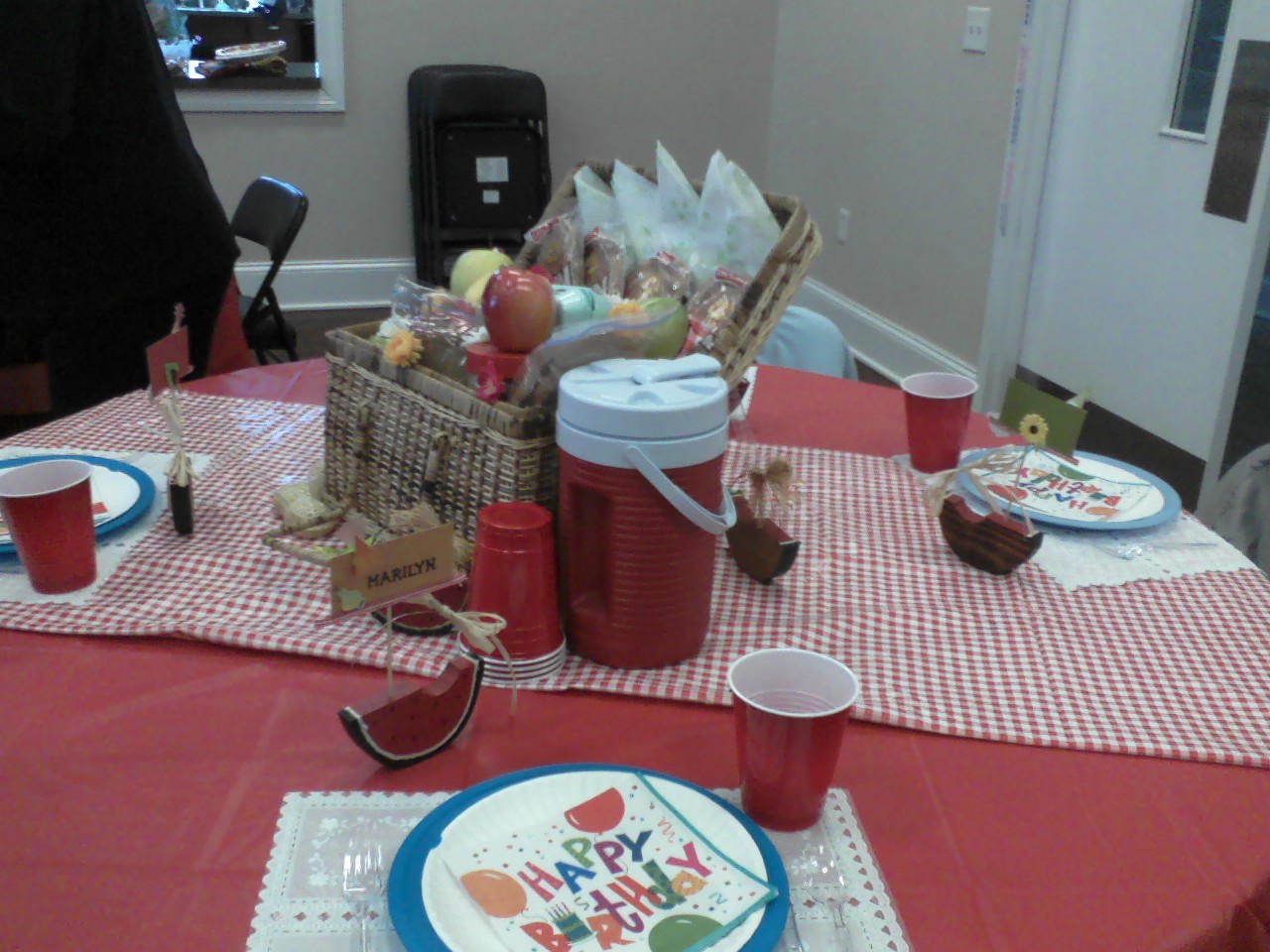
1. A Ladies’ Birthday Party! We had an activity at church last Saturday celebrating all the ladies’ birthdays at once. We signed up under the month our birthday was in, and everyone in that month got together to decide on table settings and decorations to somehow reflect that month, and the tables would be judged in a contest. (Months with not as many people were combined together). People in the different months were designated to bring different foods (finger sandwiches, pasta salads, and fruit trays).

I didn’t think to bring a camera, but took a few shots with my cell phone. Our August table had a picnic theme:

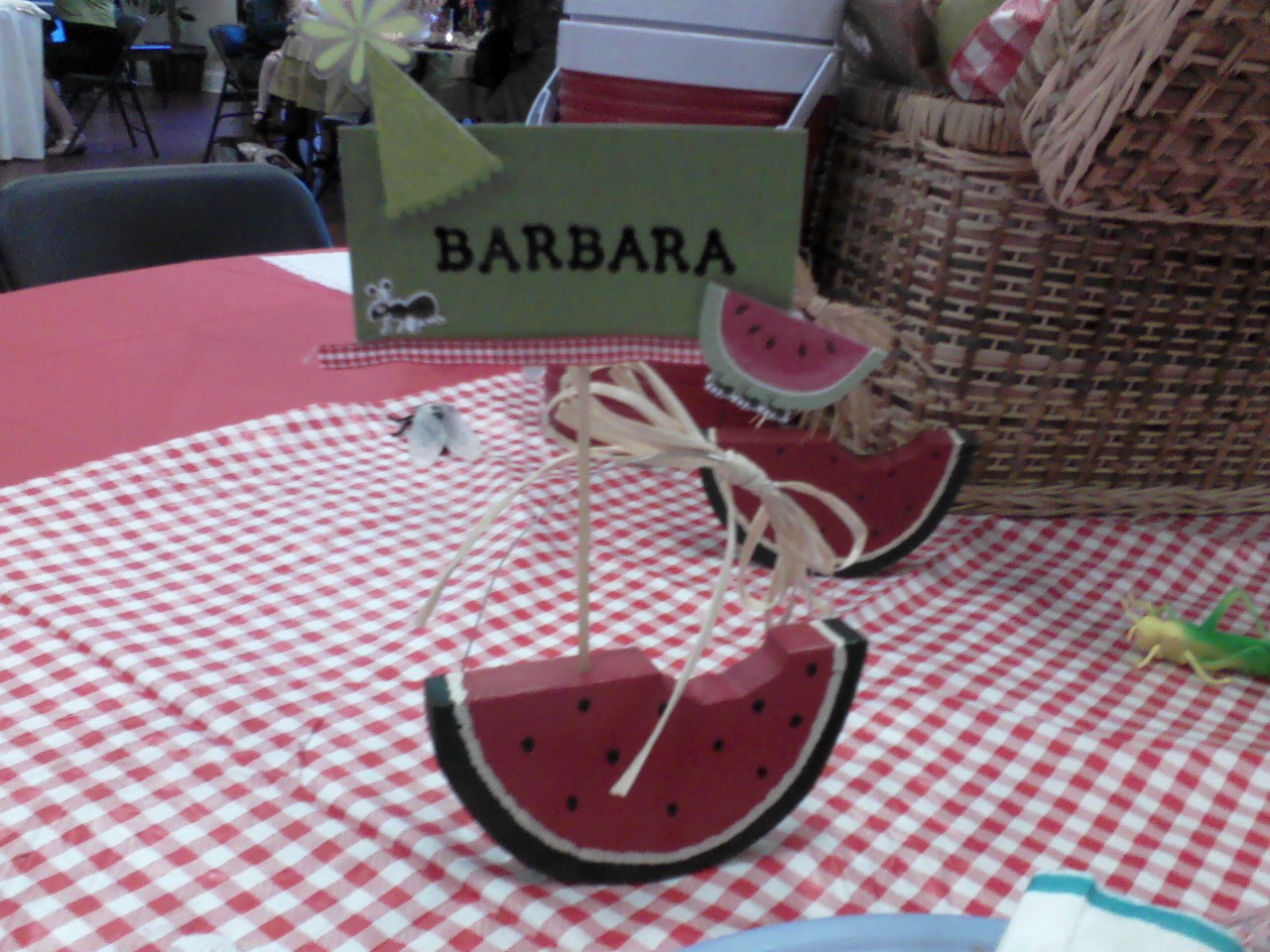
One lady made these super-cute place cards:

I didn’t get a picture of every month — some were still working on their tables when I took pictures. But here is February:

And April:

And November:

So elegant! But I have to say, I was very glad at clean-up time that our table had used paper plates. 🙂

And the winning table was May — I’m sorry this one is so blurry!

Someone made this tree and had birds and fruit in it and verses about fruitfulness.

A very talented lady made cakes that looked like gifts:

We played a few games, sang happy birthday to each other, and then two ladies gave their testimonies of their spiritual birthdays when they came to know the Lord. They were from different backgrounds — one was a “good church kid” who was doing right for the wrong reasons (approval, etc.) but didn’t trust in Christ alone for salvation til her college years. The other was from an atheistic family in another country whose brother was saved, but the family wasn’t interested. But on an internship to the States she met other Christians and was given a Bible ad eventually came to believe. It was such a blessing to hear these two accounts! The whole event was very enjoyable.

2. ISI — which in my son’s youth group stands for Iron Sharpening Iron, what they call their occasional fellowships after Sunday evening services. And every now and then they invite parents. I hate to admit that at first I didn’t want to go — I wanted to go home and kick off my shoes and grab a book and get comfy. 🙂 But I am glad I did go — it was a very enjoyable time of singing, testimonies, and information about a summer mission trip.

3. Safety during the flash flooding we had earlier this week. Thank you, Lord!

4. Signs of spring. A tree outside my mother-in-law’s window is starting to bud, and a yard in the neighborhood has a row of daffodils across the front starting to blossom. The grass is getting greener. These little flowers are the first things I saw blooming at our house:

I don’t know if they’re violets or just weeds — but they brightened up the back yard!

5. This quote from a friend’s Facebook status:

Everything can change in the blink of an eye. But don’t worry; God never blinks.”

Have a great weekend! I’m getting ready for hubby’s birthday on Sunday!

Homemaking meme

This is another post I’ve had incubating, adding to it a little at a time. Since I have to go run errands in a bit and therefore not as much time to think through some other thoughts, I decided to post this today. Feel free to use it if you like! Let me know if you do and I’ll come see your answers (or feel free to answer in the comments). And, since I created this meme, I’d appreciate a link back. 😀

1. Do you make a plan for the week? The day? Or just go with the flow?

No, I don’t, unless I have some kind of deadline coming up. I tend to work housework in around what needs to be done and when I have time to do it…and, sorry to say, when I feel like it. 🙂 But I feel like it much more often than I did years ago! I can’t stand for things to get too very cluttered or dusty for very long.

2. When is your best planning time?

Usually the night before or first thing in the morning.

3. Do you clean room by room or task by task (e.g., do you dust the whole house at one time, or do you clean the living room completely before going on to another room?)

Task by task for most things. When I have the dusting stuff out, or the vacuum, I like to do everything I have to do with it while it’s out. One exception would be bathrooms: I tend to clean the whole bathroom before going on the the next one, except that I do all the floors at one time after I’ve cleaned everything else.

4. Do you do certain tasks every day every week, like a shopping day, a laundry day, etc.?

No — see #1. I do try to avoid housework that doesn’t need to be done on Sundays, and I have to wash Jesse’s gym clothes some time between Friday afternoon and Monday morning, but otherwise I tend to attack things on an as-needed basis.

5. What’s your least favorite housecleaning task?

Probably cleaning toilets.

6. Do you have a favorite housecleaning task?

I can’t honestly say I enjoy any particular housecleaning task, but I’m okay with most once I get started, and I do like the results.

7. What do other family members do in the way of cleaning the house?

When the boys were younger we rotated different jobs — there were some done every day (dishwasher, garbage, taking recycling out, etc.) and some done weekly (vacuuming, dusting). Now Jason and Mittu take care of the dishes most nights and Jesse does whatever I ask whenever I ask — often taking our garbage and recycling and sometimes unloading the dishwasher. He also takes care of the dog as well. Jason and Jesse help bring groceries in. Since Jim works 60+ hours I rarely ask him to do anything unless I am in a real bind. I figure that’s my work while his is being the “breadwinner” (yes, we’re pretty traditional 🙂 ), but sometimes he pitches in. He takes care of anything outside. That leaves me with the laundry (though Jason and Mittu do their own), dusting, sweeping, vacuuming, bathrooms, organizing and clutter pick-up, shopping, cooking, all the extra little jobs in the kitchen, etc. — enough to keep me busy. 🙂

8. What, if anything, do you do to make housecleaning more enjoyable, (e.g., play music, set a timer, etc.).

When I was first married, I had one friend who liked to spend a lot of time on the phone — and we didn’t have cordless phones then, much less cell phones. It was popular at least in the kitchen area to have an extra-long cord so you could reach the whole room while on the phone. So sometimes I would call this friend or my mom (my mom and I rarely talked for less than an hour) while puttering around the house cleaning here and there. One of my dislikes of newer phones was that they were so small I couldn’t comfortably put them between my head and my shoulder so I could talk and use my hands for other things. These days most of us don’t talk on the phone that long any more, and many phones have gotten “hands-free” anyway.

But usually I turn on the Christian radio station or play a CD. I don’t have an iProduct. I don’t know if I’d like either headphones or earpieces. I need to borrow one of the kids’ devices and try it out to see, because sometimes I do think it would be nice to listen to an audiobook or something else. I don’t like to just sit in front of the computer to listen to anything there without doing something with my hands, so being able to take some of those things with me while I work sounds appealing.

9. What things make a room seem messy or unclean to you?

Clutter. Picking things up and establishing a sense of order does wonders for making it look cleaner.

And dust.

10. What are particular areas that are standouts to you that other people miss?

The area around the faucet on the sink. It can pretty quickly get gunky stuff around it, and in our area, even pink or black mold. Once my sister was staying with us and surprised me by cleaning the bathrooms while I was out. I think the first thing I noticed was that little gunky black line around the faucet, and it took a great deal of effort to just say thank you and not mention that.

11. How do you motivate yourself to clean when you don’t feel like it?

The biggest thing is just to get started. “Once begun is half done” as the saying goes. Another motivation is having been embarrassed a few times when someone popped in unexpectedly and the house looked like a disaster area. But then I felt really guilty one time “cleaning for company” when I thought — doesn’t my family deserve a clean home, too? Wouldn’t it help motivate them in their future to keep things clean if that’s the habit they’ve grown up with, rather than a frenzied, pressured marathon cleaning when an event is coming up? Plus I’ve learned that I just feel more peaceful and orderly in my thinking when my environment is fairly orderly. When the house is cluttered and chaotic, I just feel the same way (not to mention time and energy wasted not being able to find things when needed, etc.). And then, I have learned over the years that it is less work and takes less time to keep on top of housework than to let it slide and build up.

But probably what should be the biggest motivator for a Christian homemaker is that we’re representatives of Christ. I don’t think that means we have to keep things museum quality and can’t let our families relax in their own homes. We shouldn’t become more Martha than Mary. But “Let all things be done decently and in order” (I Corinthians 14:40), though the context is church services, surely applies in principle  to every area of life. And then of course I Corinthians 10:31 applies to all areas: “Whether therefore ye eat, or drink, or whatsoever ye do, do all to the glory of God.” If a non-Christian walked into my house unexpectedly, would a messy, unclean house or a basically clean and orderly house be a better testimony? And shouldn’t that testimony be before my own family as well, not just unbelievers? Now, I admit, I don’t think through that every time I need to clean, but every now and then getting the right perspective helps.

Sometimes collecting quotes about homemaking encourages me, too. I put several in an older post titled “Encouragement for Homemakers.” A few other homemaking-related posts are:

Wanting things to be “perfect.”

I confess: I really don’t like to cook.

Two views of housework.

Cooking style.

Thy list be done.”

ABC Homemaking Meme.

(Graphic courtesy of Fotosearch)

Parenting Teens

Some time ago I began jotting down some thoughts in regard to parenting teens as a possible post one day. It’s been incubating, because every time I think about posting it, I think I should wait because there will probably be more I’ll think of later. But this isn’t a book: it’s just a blog post, not meant to be exhaustive. So I thought I’d go ahead and share these thoughts.

Let me quick to say, though, that I am no expert, that neither my children nor their parents are perfect, and that there is room for differences of opinions in many areas. But as my boys are 26, 23, and 17 now, these are just some helpful things I’ve learned along the way.

  • Don’t dread the teen years. A wise older mom once told me never to dread any stage, whether the “terrible twos” or the teens or anything in between. If you come into it with negative expectations, that will color everything about it.
  • Don’t “expect” rebellion. Modern media makes teen rebellion sound like a given, and all you can do is hang on and hope for the best. They are journeying toward independence, and that will raise a difference of opinion sometimes, but that does not have to include rebellion and disrespect. .
  • Don’t be afraid of their questions. For many this is a time when they begin to examine what they believe, and, hopefully, when they begin making the truths they have been taught their own rather than just following along parroting what they have heard. Though scary, this can be a good thing as they come out of it stronger and more fully convinced of what and Who they believe in. Don’t be afraid to say, “I’m sorry, I don’t have an answer for that now, but I’ll get back to you on it.” Josh McDowell has some good resources for some of these types of questions.
  • Discipline in early years will carry over, but if you haven’t disciplined well til now, stop and have a frank discussion about how and why things need to change
  • Give them opportunities to try various things, yet keep balanced so as not to over-pressure and over-schedule and have both the teen and his family running ragged. On the other hand, don’t keep pushing one area that you want your teen to excel in (living vicariously through them, perhaps?) if they’re not interested.
  • Listen. Someone once said, “If you want your children to listen to you when they’re 15, you have to listen to them when they’re 5.” Listen without pouncing on things that need attention or things you disagree with. Listen without demeaning.Keep the lines of communication open.
  • Let them begin to handle situations and make decisions so they can gain experience.
  • Encourage service toward others, probably best done at first with you or with school or youth group.
  • A lot of what makes for a good relationship with your teen is built on the relationship you’ve had when they were children. Those foundations of respect and discipline are so important.
  • Don’t think they don’t need you as much. Their needs are different from when they were small, but they still need you.
  • Stress that the Christian life is not just a set of dos and don’ts: let them see the relationship you have with Christ by how you talk about Him and to Him and acknowledge Him through the day.

If you have teens or remember something helpful from your own teen years that your parents did, please share!

This post will be linked to “Works For Me Wednesday,” where you can find a plethora of helpful hints each week at We Are THAT family on Wednesdays, as well as  Women Living Well.


Flooding in Eastern TN

I was surprised to find when we moved to eastern TN that there were a lot of rivers, streams, and creeks throughout the area. Both on the way to church and to Grandma’s we see a lot of waterways of varying sizes.

That combined with a lot of low spots I mentioned a few days back meant that the rainfall yesterday resulted in a lot of areas being flooded. It was a pretty harrowing drive to Grandma’s and then to Jesse’s school, with several roads having water across them, some having a lot of water across them.

I don’t know these folks and this is in Knoxville proper, which is not where we are, but I found this searching through YouTube to give you an idea what it looked like.

A news video here shows more. It wasn’t quite as high in our area as it shows there.

The worst was when we thought we were home free after getting Jesse from school. The end of the road just before our turn had a field next to it, and water from the field was cascading like a waterfall across the road and onto the other side of the street. Standing water was bad enough, but moving water was pretty scary. I knew one other way home had been badly flooded in places when I first went that direction to see Grandma an hour earlier, and there are a lot of little side roads, but I wasn’t sure if they would be any better — they all have dips in them that were going to collect water. Thankfully traffic both ways was letting one car through at a time, and we made it home safely — skipping the grocery store visit for the day! I was pretty unnerved for a while. Thankfully our home and neighborhood weren’t flooded at all. I am so grateful God saw us home safely.

It finally stopped raining in the late afternoon, and this morning the sun has been shining brightly. There was one spot on the way to school this morning where the water was pretty high, and traffic alternated one car at a time again. One road just outside our subdivision was still closed, and I’ve been hearing the steady hum of traffic being rerouted through our subdivision all through the night and morning, but it seems to have stopped now, so hopefully the water has receded or evaporated enough to reopen the road. One school is closed and one food bank lost a lost of its wares.

So March is coming in like a lamb after February went out like a lion!