Friday’s Fave Five

Welcome to Friday’s Fave Five, hosted by Susanne at Living to Tell the Story, in which we can share five of our favorite things from the last week, a wonderful exercise in looking for and appreciating the good things God blesses us with. Click on the button to learn more, then go to Susanne’s to read others’ faves and link up your own.

It’s the last day of August! I’m looking forward to cooler fall weather, though it may be a while before we experience it here. Here are some highlights of the last week:

1. Jesse’s first week of college classes has gone well. He has been able to navigate the campus well, enjoys his classes and teachers so far, has found people to eat lunch with (I don’t know if that last one is as big a deal for guys as it is for girls. 🙂 ) All in all I think his first week has gone very well.

2. The Hope scholarship came through this week. It is not quite as much as the Life scholarship in SC was (that was one of many things that made it hard to leave SC!), but $1,000 per semester definitely helps.

3. Free audiobooks. My oldest son had an excess of Audible.com credits that he wanted to get rid of in order to go to a cheaper monthly plan. It didn’t look like it was possible to just send me the credits, but he found he could use them to send me a gift of an audiobook. There were a few I had been wanting, but they were smaller books, and I was reluctant to use my one monthly credit on a 6 hour book when I could use it on a 30 hour one. So he sent me four of those smaller books with his excess credits, a help to both of us.

4. Two events out of one housecleaning. 🙂 We had our “Dinner For Six” Friday night, and Jason and Mittu had asked if they could have theirs here Saturday night: they had eight people, one in a wheelchair, so our place worked better for them than their upstairs apartment. The nice thing about theirs, for me, was that the house was already clean for it and their group took care of the cooking. We had a fun game of Apples to Apples with their group as well.

5. An unscheduled weekend. The last few weekends have been filled with really good things, but it is nice to face this weekend with nothing on the calendar. Plus it is a long weekend as well, with everyone having Monday off.

Hope you have a great weekend!

“We Died to Sin”

“We Died to Sin” is the fourth chapter in the book The Discipline of Grace by Jerry Bridges, which we’re discussing every Thursday in the “Reading Classics Together” challenge at Challies‘ place.

The first response might be something like, “If I died to sin, why do I still have trouble with it?” Bridges says there is a different between “putting sin to death (Romans 8:13),” which he will discuss in chapter 11, and having died to sin.

This chapter studies Romans 6:1-14, but to fully understand that, we have to back up to Romans 5, where we learn that “Wherefore, as by one man sin entered into the world, and death by sin; and so death passed upon all men, for that all have sinned.” In Adam as our representative head, we all sinned, but “our old man is crucified with [Jesus], that the body of sin might be destroyed, that henceforth we should not serve sin” (Romans 6:6). It doesn’t say we won’t sin any more, because the next few verses instruct us not to yield to sin. But sin’s dominion over us has been broken. We’re able to resist it, through Christ. In Erwin Lutzer’s book How To Say No to a Stubborn Habit, he likened it to moving from one house to another, and having the old landlord come knocking on the door asking for our rent payment: we don’t owe him any more, and we don’t have to pay him.

Some have the reaction that, if we died to sin in Christ, if He paid for all of it, then we can relax and do whatever we want. Paul’s response in Romans 6:1-2: “Shall we continue in sin, that grace may abound? God forbid. How shall we, that are dead to sin, live any longer therein?” Because in Him we died to sin, and now we’re united to Christ, such a thing is impossible.

Another resulting thought might be “‘Why…if we died to the reign of sin, do we need to be exhorted not to let sin reign in our bodies?’ Basically Paul was saying…’Live out your lives in the reality of the gospel. Take advantage of and put to use all the provisions of grace God has given to you in Christ'” (p. 75). A former pastor used to say of Philippians 2:12b, “work out your own salvation with fear and trembling,” that that meant not to work for salvation (numerous other verses tell us it is by grace through faith, not out own efforts), but to work it out, like a math problem, to its logical conclusions: take those high and lofty principles and ideals and truths and work them out into your everyday life.

“The gospel is far more than ‘fire insurance’ from eternal punishment in hell. We will learn that through Christ’s death on the cross, we are given the ability to live lives that are both pleasing to God and fulfilling for ourselves” (p. 62).

In many ways, this is the most difficult chapter in the book so far, and these chapters and concepts in Scripture are difficult as well. I’m just scratching the surface here. They are not really hard to follow, exactly, but they do take concentration. But it is definitely worth the effort.

More discussion on this chapter is here.

What’s On Your Nightstand: August 2012

What's On Your NightstandThe folks at 5 Minutes For Books host What’s On Your Nightstand? the fourth Tuesday of each month in which we can share about the books we have been reading and/or plan to read.

It has been a busy month, but I’ve enjoyed getting some reading in.

Since last time I have finished (all links in this section are to my reviews):

The Horse and His Boy by C. S. Lewis

Not By Chance: Learning to Trust a Sovereign God by Layton Talbert. Excellent.

Roots by Alex Haley, audiobook, traces the boyhood and journey of Kunta Kinte and his descendants after he is brought to America as a slave. Gripping, fascinating, heartbreaking.

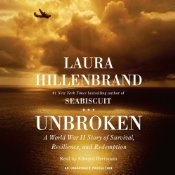
Unbroken: A World War II Story of Survival, Resilience, and Redemption by Laura Hillenbrand, audiobook. True story. Excellent.

Safely Home by Randy Alcorn. Two former college roommates, one in America and one in China, get reacquainted and are surprised at each other’s lives. Good.

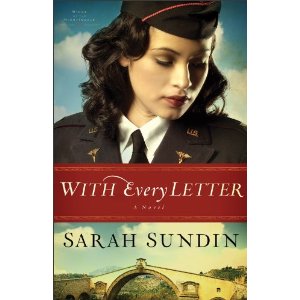
With Every Letter by Sarah Sundin. A nurse and a soldier with reasons to want their identity hidden begin an anonymous correspondence and teach each other about faith, identity in Christ, openness, and forgiveness. Excellent.

Never Again Good-bye by Terri Blackstock, audiobook. A man observes a woman seeming to stalk his daughter, has her arrested, and finds out she’s the child’s biological mother. Good, though the rest of the plot is a bit unrealistic.

The House at Riverton by Kate Morton. Not reviewed. Beautiful, excellent writing, but a sordid, soap-operaish plot-line and an unnecessary vulgar word that I just will not tolerate in fiction.

I’m currently reading:

The Disciplines of Grace by Jerry Bridges with Challies‘ “Reading Classics Together” group.

Unless It Moves the Human Heart: The Craft and Art of Writing by Roger Rosenblatt

Rare Earth by Davis Bunn

Uncle Tom’s Cabin by Harriet Beecher Stowe, audiobook, in preparation for Carrie‘s Book Club which I am hosting in October (feel free to join in!)

Next up:

The Bridesmaid by Beverly Lewis, due out in September.

The Discovery by Dan Walsh

Audiobooks of C. S. Lewis’s Space Trilogy.

Thriving at College: Make Great Friends, Keep Your Faith, and Get Ready for the Real World! by Alex Chediak, since my youngest just started college yesterday!

What’s on your nightstand? Happy reading!

Book Review: With Every Letter

Sarah Sundin was my favorite new author of 2010, and I eagerly awaited her new Wings of the Nightingale series. I pre-ordered the first book, With Every Letter, and was surprised and happy when it arrived a month before it was due!

In this book, Philomela “Mellie” Blake is a flight nurse during WWII. Her exceptional shyness is exacerbated by her unconventional (for that time) heritage and looks, making it extremely hard for her to find friends. When a morale-building program of writing anonymously to soldiers begins, she participates, at first because her supervisor wants her to, but later because of the freedom anonymity gives her.

Her corresponding soldier is a Lt. Tom MacGilliver, and anonymity appeals to him, too, because his name has been a burden to him most of his life: his father was a famous killer, and people are wary of him. He can’t let down and be real with anyone…except Mellie.

As friendship begins to blossom into something more, they both wonder whether breaking their anonymity would destroy the relationship they are building.

Though this is a romance, it isn’t just a romance. Susan has a way of integrating a lot of detail and research about the era, locale, planes, etc., without making it seem encyclopedic or dry. Her details enhance the story. But ultimately, the highlight of the story is what the characters have to learn spiritually: the willingness to open oneself up to being known and the risk of rejection and betrayal, the realization of their own faults and shortcomings, not letting those faults  keep them wallowing in the mire but letting them drive them to seek God’s mercy and grace and allowing them to work compassion for others into their hearts, and the need for forgiveness.

I thoroughly enjoyed this book and am looking forward to the next in the series.

(This review will also be linked to Semicolon‘s Saturday Review of Books.)

Book Review: Unbroken

The preface of Unbroken by Laura Hillenbrand tells of three men in a raft in the Pacific Ocean. Their plane had crashed, the rest of the crew was dead, they’d been on the raft for 27 days. Finally they rejoiced to hear a plane. They shot flares into the sky and put dye in the water to make their raft more visible. But then the plane started shooting at them: it was Japanese, not American. One of the men jumped into the water, but the sharks came toward him…

And then the author cuts away to the childhood of Louis Zamperini, one of the men in the boat. He had been on the fast track to becoming a juvenile delinquent until his brother intervened for him with the high school principal who had banned Louis from participating in sports as a punishment. The principal relented and allowed Louis to run track, where Louis found focus and purpose.

Louis did so well, in fact, that he ran in the 1936 Olympics in Berlin and was expected to be the first man to break the four-minute mile. His dream of the 1940 Olympics was shattered when they were cancelled due to WWII.

Louis joined the Army Air Force and became a second lieutenant and a bombardier. On one harrowing mission, his plane was ravaged by over 500 bullet holes, yet made it safely back to base.

But on one May day in 1943, their plane crashed into the Pacific, killing the other eight crewman. Louis and the other two survivors stayed afloat for 27 days until the event described in the preface occurred.

I had thought that would be the climax of the story, but it was just the beginning of Louis’s troubles. The crew was eventually captured by the Japanese and taken to a place off the grid from the other POW camps. It was not registered with the Red Cross, no one knew about it, the men were given up for dead, and ultimately the Japanese could do what they wanted with the prisoners with no fear of consequences.

When we think of WWII we often think of the atrocities of the Nazis, but the Japanese were uncommonly cruel. Hillenbrand explains that their concept of “saving face” makes surrender the ultimate humiliation, and the soldiers’ surrender to them gave them license, they felt, to degrade them in any way that came to mind.

At several points in Louis’s story, I thought, “How much more can one man endure?” He must have wondered the same thing at times.

Even after he returned home, his troubles did not end as he was afflicted with post-traumatic stress syndrome, severe nightmares, and succumbed to alcoholism.

But the subtitle to Unbroken is “A World War II Story of Survival, Resilience, and Redemption.” Louis’s survival, resilience, and redemption make for an exceptionally touching and inspiring book.

The story is told primarily through narrative, with very little dialogue, but it is captivating. I listened to it via audiobook, and Edward Herrman did an excellent job narrating.

There are those who would want to be forewarned that there is a smattering of bad language in it, understandable in the context, including one particularity vulgar word that could have been left out. But other than that, this is an excellent book.

(This review will also be linked to Semicolon‘s Saturday Review of Books.)

That the word of the Lord may have free course

That the word of the Lord

may have free course, and

be glorified

II Thessalonians 3:1b

Amen. May the word of the Lord be heard in many hearts and have free course this day.

Laudable Linkage

It has been a few weeks since I’ve been able to do this, but here are some interesting reads seen around the Web lately:

What I’ve Learned Along the Way, “an article about preaching that is meant to be read by non-preachers.”

To My Daughters.

Some Basic Thoughts on Manhood: Confidence and Fear. Good insight for women.

Before You Decide to Leave. Things to consider before leaving a church.

Wifely Advice. Good and bad examples from Scripture.

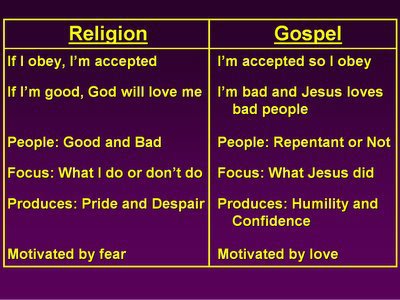
I’m Tired of Hearing “the Gospel,” HT to Challies. Thabiti Anyabwile puts into words something that has concerned me but which I haven’t been able to articulate.

A Message From a Bachelor Pastor to His Congregation Before His Wedding, on the fight to remain pure for 44 years, HT to Challies.

Joel Olsteen and Family Feud, HT to Challies. Be sure to check out the scorecard.

Aphoristic Writing Advice From Famous Authors, HT to John Piper’s Twitter feed. I especially like Elmore Leonard’s: “I try to leave out the parts that people skip.”

Seen on Facebook:

The latest I’ve seen on Steve Saint’s condition. He was able to go home a few weeks ago.

Hope you have a great weekend!

Friday’s Fave Five

Welcome to Friday’s Fave Five, hosted by Susanne at Living to Tell the Story, in which we can share five of our favorite things from the last week, a wonderful exercise in looking for and appreciating the good things God blesses us with. Click on the button to learn more, then go to Susanne’s to read others’ faves and link up your own.

It’s been another great week. I can’t believe August is almost over. Here are some of the favorite parts of last week:

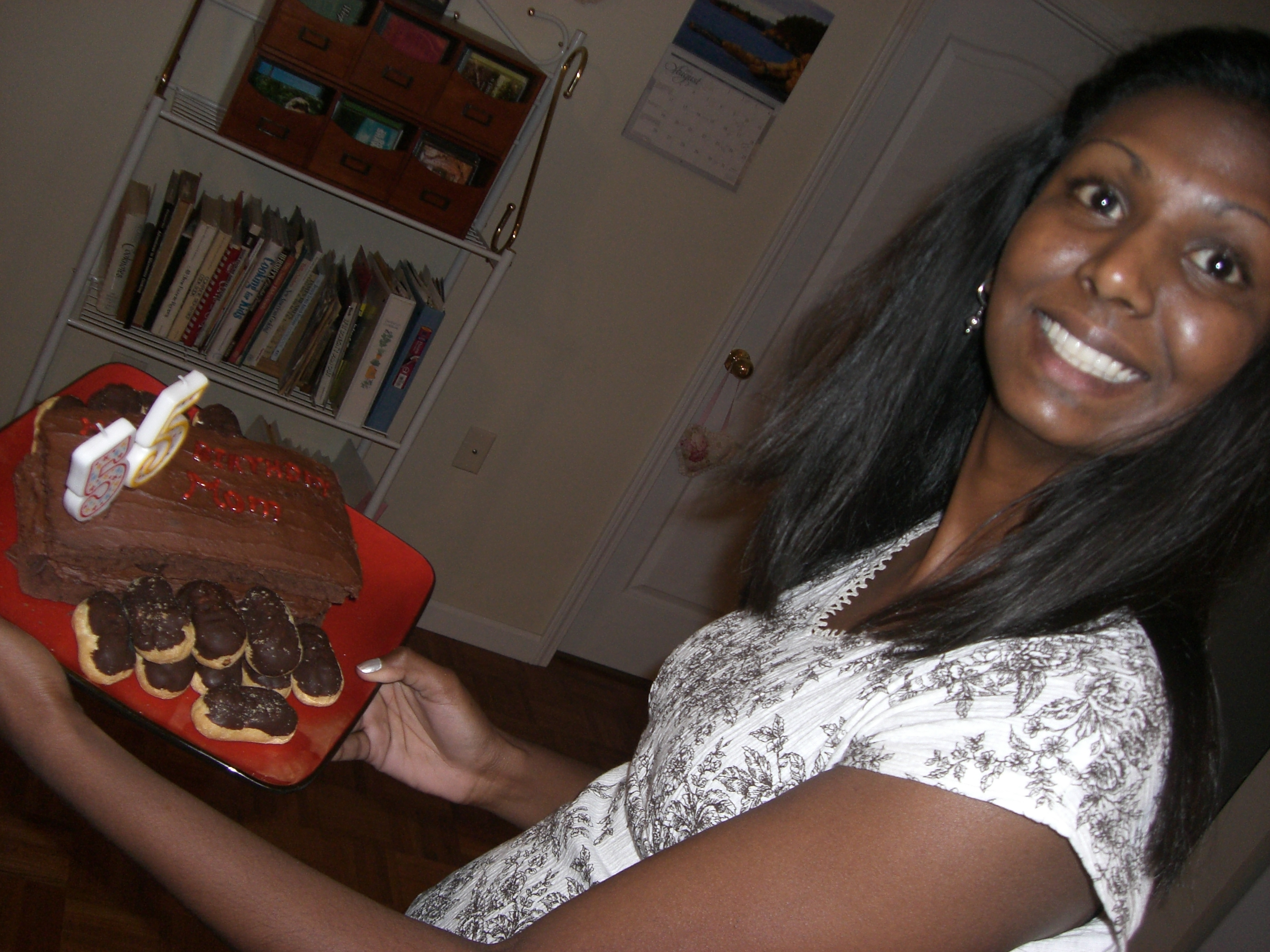
1. My birthday was Tuesday. My family took me to dinner at a nice restaurant on the river and then took me home for cake and presents.

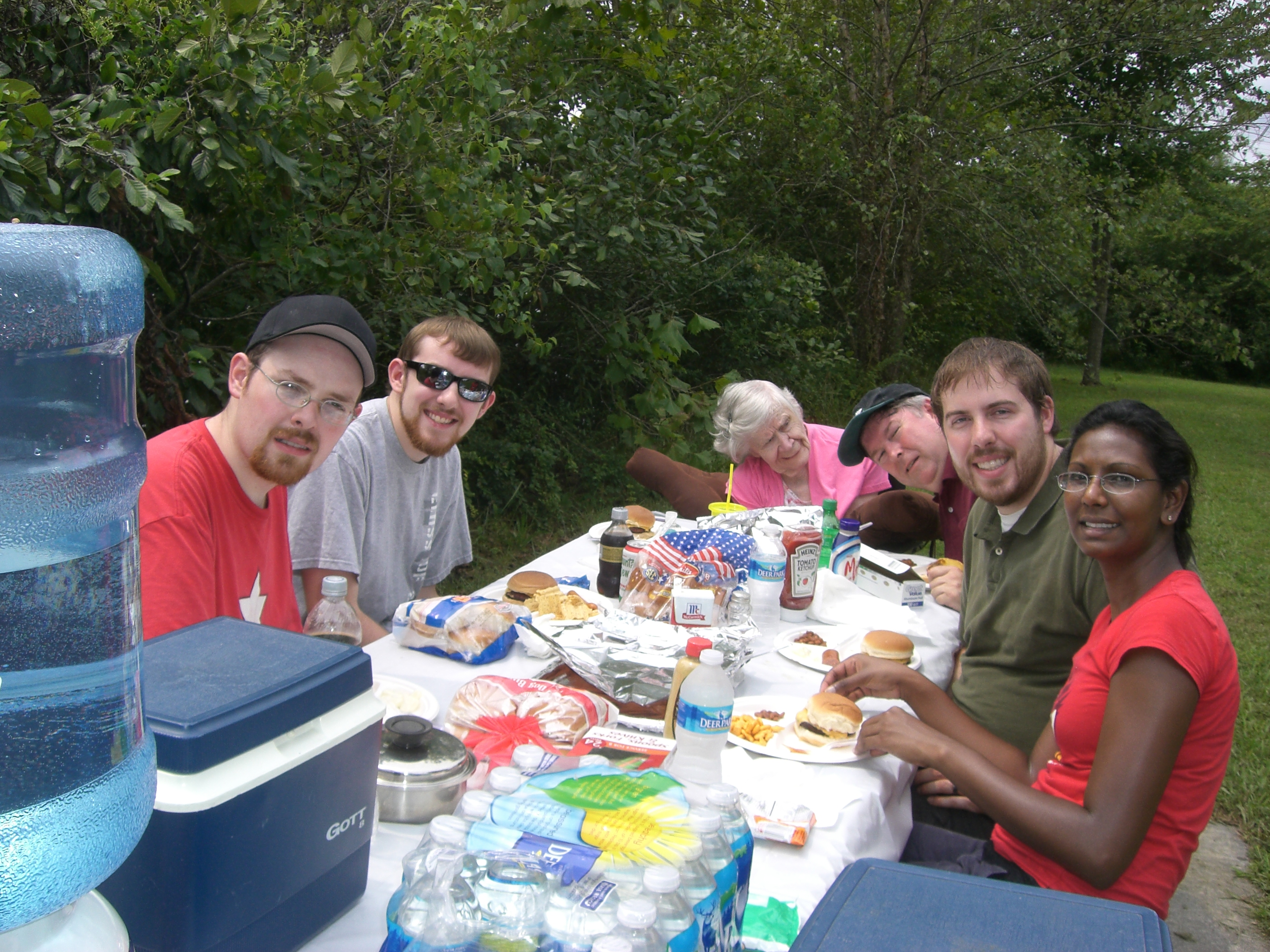
2. A picnic. Normally it seems like way too much work to me to pack up everything just to go eat somewhere else. But Jim took care of all the arrangements and the cooking. It wasn’t too hot in the shade. Jim and the boys went kayaking. Even Grandma got to come, though she slept through much of it. Then Mittu made dinner that evening. All in all it was a pretty relaxing day, for me anyway. 🙂

Because this area does not have public restrooms, Jim set up a “toilet tent” away from the picnic area.  🙂 None of us wanted to have to use it, but it was nice to know it was there if needed.

3. Starting a new stitching project, one I’ve been wanting to get to for a long while. There is not enough of it done to really show yet, but it has been good to get it started (that’s always the hardest part.)

4. Days I don’t have to go anywhere. Had one of those this week. I get so much more accomplished at home those days. If I’d get my grocery shopping more organized, I’d probably have more of those days….

5. Restaurant leftovers make for a great lunch the day after eating out.

Happy Friday!

“Preaching the Gospel to Yourself”

I’m joining in the “Reading Classics Together” at Challies‘ place, and the book currently under discussion is The Discipline of Grace by Jerry Bridges.

I wasn’t able to discuss last week’s chapter due to family activities with loved ones from out of town, but its title was “The Pharisee and the Tax Collector.” Tim summed it up nicely here, but I’ll just say, if anyone has any shred of hope in their own goodness, this chapter will trounce that idea. We think we’re ok, like the Pharisee, because we don’t do any of the “really bad,” obvious sins like murder, adultery, etc., but we overlook our “refined” sins like pride, envy, and the like. But sin is sin. And even the good we do is shot through with wrong motives and lack of faith.

It could actually be a depressing chapter, even for one who has known those truths for years. But it is necessary to remind ourselves of those things in order to see the need for God’s grace, not just for salvation, but for daily living that pleases Him.

The title of the current chapter is “Preach the Gospel to Yourself.” My former music pastor once said that the gospel is not just the first step of the Christian life, but it is the hub of the wheel that everything else in the Christian life connects to and emanates from. Bridges says “The gospel is for believers also, and we must pursue holiness, or any other aspect of discipleship, in the atmosphere of the gospel” (p. 46).

Bridges then thoroughly discuss Romans 3:19-26, bringing out the gospel truths that “no one is declared righteous before God by observing the law,” “there is a righteousness from God that is apart from the law,” “the righteousness of God is received through faith in Jesus Christ,” “this righteousness is available to everyone on the same basis because we have all sinned and fall short of the glory of God,” “all who put their faith in Jesus Christ are justified freely by God’s grace,” “this justification is ‘through the redemption that came by Christ Jesus,'” and “God presented Jesus as a sacrifice of atonement, through faith in His blood.” Those phrases are all sections of the chapter that he then discusses in more detail.

One important distinction he makes is that between “justification and mere pardon. A pardon is excusing an offense without exacting a penalty, “such as when a president or governor pardons someone even though they are guilty. “In God’s plan of justification, however, justice is not violated by a gratuitous pardon of the convicted sinner. Rather, justice has been satisfied; the penalty has been fully paid by the Lord Jesus Christ” (p. 56).

“It is not our contrition or sorrow for our sin, it is not our repentance, it is not even the passing of a certain number of hours during which we feel we are on some kind of probation that cleanses
us. It is the blood of Christ, shed once for all on Calvary . . . that cleanses our consciences and gives us a renewed sense of peace with God” (p. 58).

“To preach the gospel to yourself, then, means that you continually face up to your own sinfulness and then flee to Jesus through faith in His shed blood and righteous life. It means you appropriate again, by faith, the fact that Jesus fully satisfied the law of God, that He is your propitiation, and that God’s holy wrath is no longer directed toward you” (p. 59). Just as in salvation we depended on Jesus’s goodness and righteousness rather than our own, so we do every day of our Christian lives as well, rejoicing that our sins are forgiven and we face no condemnation since we are in Christ.

This does not mean we do not pursue holiness. Much of the latter part of the book discusses holiness. It’s not that once we’re forgiven, we sit back, relax, and live however we want til we get to heaven. Rather, out of love for God and gratitude to Him, we should be even more motivated to pursue holiness. But we need to remember “when you set yourself to seriously pursue holiness, you will begin to realize what an awful sinner you are. And if you are not firmly rooted in the gospel and have not learned to preach it to yourself every day, you will soon become discouraged and will slack off in your pursuit of holiness” (p. 60).

On a side note, I have to admit, before reading this chapter, the phrase “preach the gospel to yourself every day” grated on me a bit. Not that I didn’t believe its truths, even before reading here, but we have such a tendency to operate by catch-phrases: I kept seeing and hearing this brought up in the face of any problem or situation. Yes, if someone has financial or marital or other problems, we do apply the truth of the gospel to it and operate on the basis of the forgiveness wrought for us in Christ. But as Wendy Alsup often says, the gospel affects everything, but the gospel isn’t everything. We apply the gospel and operate from its base, but we go on to learn the whole counsel of God and apply it to our lives as well.

This chapter is very beneficial. I would even venture to say it is the key chapter of the book. More discussion of it is here.


Book Review: Safely Home

In Safely Home by Randy Alcorn, Ben Fielding is on the fast track to becoming CEO of Getz International. To increase the company’s business with China, Ben’s boss wants him to spend a few weeks there and suggests Ben stay with his old college roommate, Li Quan, to get a feel for what the “common man” in China might need from their business.

Ben has been in China many times before, is familiar with much of the culture, even speaks fluent Mandarin, but he has never looked up his old roommate. He is uncomfortable doing so now. Quan had come to college in America an atheist and became a Christian while here: Ben was a professing Christian in college, but his business goals have usurped everything else in his life. But, being put on the spot by his boss, he has little choice but to go and see Quan.

Ben is shocked that his brilliant roommate, who as a student had been asked to stay on at Harvard as  history professor, is living in such poverty. When he begins to learn about house churches and persecution of Christians, he is disbelieving, having fallen for the public relations hype fed to American businessmen and officials. But the more time Ben spends in China with Quan, the more his eyes are opened, not only to the true situation there, but also to the needs of his own heart.

Interspersed with Ben and Quan’s story are glimpses into the heavenlies as Alcorn interprets it, the great “cloud of witnesses,” the King’s care, watchfulness, and preparation for His own.

The story was inspired by Ron DiCianni’s beautiful print Safely Home, depicting a martyr being greeted home by his Savior, an angel waiting to the side with the new arrival’s white robe, the nations of earth visible below.

Knowing a couple of people who have worked in China, I do know that true Christians have to meet “underground,” have to be very careful about their words, actions, and even e-mails, and they can lose their jobs or be arrested for their faith.

We have it so relatively easy in America, we forget the hallmark of many Christians through the ages has been suffering and martyrdom. This book is a wake-up call, and it was a rebuke to me over the “little things” that I get grumbly about or the ways I fail to stand. In myself I know I don’t have it in me to face what some Christians do. But they would say they don’t either: their Savior helps them, as He will us as we walk for Him. We just need to remember that, in a world that hates Him, we often need to make a choice whether we’ll play it safe here, or do what we ought to and take the consequences; temporary safety and ease here, or being joyously welcomed Safely Home there.

A couple of my favorite lines from the book:

From the King: “They don’t understand that I am not only at work here, preparing a place for them, but I am at work there, preparing them for that place” (p. 313).

“The hands and feet of the only innocent man became forever scarred so that guilty people would not have to bear the scars they deserved” (p. 375).

My only little teensy criticism was that the story seemed a little more message-driven rather than story-driven. All writers are conveying a message, of course, and craft stories around the truths they wanted to convey or portray. It’s just a little more obvious here. But that may just be my impression — the reviews I looked through didn’t mention that, so it’s obviously not a drawback.

I do not only recommend but encourage the reading of this book.

(This review will also be linked to Semicolon‘s Saturday Review of Books.)