Book Review: Where the Red Fern Grows

Red FernI had seen the 1974 film version of Where the Red Fern Grows when my two older boys were elementary-school age, some 25 or so years ago. I enjoyed the film, but I don’t remember if I knew then it was based on a book. I wish we had read it back then! But I was glad to finally listen to it via audiobook this month.

The book begins with an adult Billy Coleman leaving work and coming upon a dogfight. When he sees the dog being attacked is a hound like one he used to have, he rescues it, takes it home, feeds it, and lets it rest, then releases it. That stirs up memories of the dogs he used to have.

Billy had grown up in a poor family in the Ozarks. There was nothing he wanted more than a dog to go coon hunting with – but not just any dog. He wanted hounds. His parents could have gotten him a mongrel dog, but they could not afford a special breed, no matter how much Billy pleaded.

I suppose there’s a time in practically every young boy’s life when he’s affected by that wonderful disease of puppy love. I don’t mean the kind a boy has for the pretty little girl that lives down the road. I mean the real kind, the kind that has four small feet and a wiggly tail, and sharp little teeth that can gnaw on a boy’s finger; the kind a boy can romp and play with, even eat and sleep with.

One day Billy found a magazine some hunters had left behind at their campground and found an ad for two Redbone Coonhounds for $50. Without telling anyone, he performed odd jobs, dug up and sold worms for bait, picked and sold blackberries, and did anything he could think of to earn money. It took him two years, and when he finally showed his savings to his grandfather and told him what they were for, his grandpa helped him order the dogs. But the dogs would be shipped to a town more than a day’s journey away. Billy took off on foot alone to pick up his dogs and bring them back, helped by a kindly station master.

The dogs were a brother and sister. Billy named the brother, who was strong and quick to react, Old Dan. The thoughtful, intelligent girl dog was named Little Ann.

Billy went to work training his dogs to hunt coons, selling coon hides and giving the money to his father, and having many adventures with his dogs. Tragedy struck a couple of times, the second occurrence shaking Billy’s faith.

This is a wonderful “boy and his dogs” and coming of age story, even if readers are not all that interested in hunting. Strong themes of loyalty, perseverance, family, and faith undergird the novel. There are a couple of gruesome parts (one boy has a hunting accident with an ax, a dog in a fight with a mountain lion is severely injured), and the author tells them realistically but not gratuitously. The ending is sad but ultimately hopeful.

People have been trying to understand dogs ever since the beginning of time. One never knows what they’ll do. You can read every day where a dog saved the life of a drowning child, or lay down his life for his master. Some people call this loyalty. I don’t. I may be wrong, but I call it love-the deepest kind of love.

Wikipedia shares the interesting background story of how Wilson Rawls wrote the story, destroyed his manuscript, then wrote it again at his wife’s urging. I also enjoyed reading 12 Things You Might Not Know About Where the Red Fern Grows. Though Rawls wrote for children, his first publisher oddly marketed the book to adults. Sales were slow until Rawls spoke at a conference for teachers and librarians who took the samples of his book back to their schools and libraries, where children loved it.

I listened to the audiobook wonderfully read by Anthony Heald. I didn’t know until just now that there was a 2003 remake of the movie. Some day I would like to see it.

(Sharing with Semicolon‘s Saturday Review of Books, Literary Musing Monday, Carole’s Books You Loved)

Our trials are not just for us

Some sermons, the gist of them or a particular point or illustration, stay with us forever. One such message for me took place some 25-30 years ago. Our pastor at that time began describing some of the creatures Ezekiel saw in his vision, like the wheel within a wheel full of eyes, and went on to detail various other heavenly beings. Then he read from Ephesians 3:

To me, though I am the very least of all the saints, this grace was given, to preach to the Gentiles the unsearchable riches of Christ, and to bring to light for everyone what is the plan of the mystery hidden for ages in God, who created all things, so that through the church the manifold wisdom of God might now be made known to the rulers and authorities in the heavenly places (Eph. 3:8-10, ESV).

The pastor probably brought several things out of that passage, but the one that most struck and remained with me was verse 10: somehow God teaches and displays to “rulers and authorities in the heavenly places” (“principalities and powers” in the KJV) something about Himself through how He deals with us.

We’re going through Job in the church we’re visiting now, and we see an example of this in the first two chapters. Though the events in this book occurred before the church itself was born in Acts, the principle is the same. “Now there was a day when the sons of God came to present themselves before the Lord, and Satan also came among them” (Job 1:6; 2:1). God’s conversations with Satan about Job seems to be before the rest of the assemblage, though they could have been private. Either way, God displayed truth to a non-human being through an earthly one.

Hundreds of years later, Jesus told His disciples:

 I will no longer talk much with you, for the ruler of this world is coming. He has no claim on me, but I do as the Father has commanded me, so that the world may know that I love the Father (John 14:30-31, ESV).

In this case, one reason for Jesus’s obedience to the Father’s command was that the world might know that Jesus loved the Father.

Some years after the sermon I mentioned, I read this from Elisabeth Elliot in Keep a Quiet Heart:

The disciples’ worst fears were about to be realized, yet He commanded (yes, commanded) them to be at peace. All would be well, all manner of things would be well–in the end. In a short time, however, the Prince of this world, Satan himself, was to be permitted to have his way. Not that Satan had any rights over Jesus. Far from it. Nor has he “rights” over any of God’s children… But Satan is permitted to approach. He challenges God, we know from the Book of Job, as to the validity of His children’s faith.

God allows him to make a test case from time to time. It had to be proved to Satan, in Job’s case, that there is such a thing as obedient faith which does not depend on receiving only benefits. Jesus had to show the world that He loved the Father and would, no matter what happened, do exactly what He said. The servant is not greater than his Lord. When we cry “Why, Lord?” we should ask instead, “Why not, Lord? Shall I not follow my Master in suffering as in everything else?”

Does our faith depend on having every prayer answered as we think it should be answered, or does it rest rather on the character of a sovereign Lord? We can’t really tell, can we, until we’re in real trouble.

Any trial we have undergone has probably fallen far short of what happened to Job or to Jesus. Even still, our first thought, our consuming thought is usually for relief. We want it to end, we want things to go back to normal, we want to be out from under whatever the pressure is.

First we need to ask God to help us learn what He is trying to teach us – usually something of His grace, provision, strength, and love in contrast to our limitations and our need to rely on Him. But we need to remember the bigger picture. Maybe our trial isn’t just for us. Maybe creatures in the heavenlies are learning something about God through His dealings with us. Maybe the world, or at least our children, family and friends, acquaintances, need to be shown, to see in action, genuine faith and loving obedience even in difficult and mysterious circumstances.

Elisabeth Elliot went on in the piece above to write:

I never heard more from the young woman [mentioned earlier in the piece]… But I prayed for her, asking God to enable her to show the world what genuine faith is–the kind of faith that overcomes the world because it trusts and obeys, no matter what the circumstances. The world does not want to be told. The world must be shown. Isn’t that part of the answer to the great question of why Christians suffer?

May God enable us as well.

IMG_0792

(Sharing with Literary Musing Monday, Inspire Me Monday, Glimpses, Tell His Story), Woman to Woman Word-filled Wednesday, Wise Woman, Writer Wednesday, Coffee for Your Heart, Porch Stories)

Laudable Linkage

IMG_0195

It’s been a little while since I have been able to share noteworthy reads found recently. Here’s my latest batch:

Oil and Dew: Two Reasons to Give Church Another Chance. “Sharing the way God’s Word is changing them, testifying to the evidence of His active presence in their circumstances, they are precious oil, for even during times when God seems silent in my own world, I am encouraged by His ‘very present help’ in their lives.”

Do I Deserve This Painful Journey?

Beware of Running Too Hard. Joni Eareckson Tada’s letter to her 30-year-old self.

There Is Nothing Trite About It! “News elicits from you a variety of opinions about which you can do nothing except to offer them as more news, about which you can do nothing.” “To say, ‘I’ll pray for you’ is to say, ‘I will speak with the Author and Creator of all things. He’s my Father and invites me to come to him any time. I will speak to him about those things. I will plead his promises. I will speak to the one Being in all the universe who has all knowledge and all power and who is perfectly good, and I will ask him to help, to intercede, to grant joy and peace and meaning.'”

Why Controversy Is Sometimes Necessary, HT to Challies. “There are times when believers are divided over serious and consequential questions, and controversy is an inevitable result. The only way to avoid all controversy would be to consider nothing we believe important enough to defend and no truth too costly to compromise.”

The Many Faces of Legalism, HT to Challies.

Seven Reason Prayer Meetings Fail, HT to Challies.

Young Christians: Set an Example. “Don’t give in to those low expectations. Elevate their expectations. ”

Parenting: What to Do When You Don’t Know the Answers.

Homeschool Will Not Save Them, HT to True Woman. “It will be Christ that moves upon the heart of a child if they are educated at home, and it will be Christ that moves upon the heart if they are not. Christ is the hero of Christian homeschool, not us parents.”

On Reading Numbers (The Book, Not the Digits)

8 Ways to Welcome People with Disabilities into Your Church, HT to Challies.

We Don’t Need To Go Back To The Early Church, HT to Challies.

What’s So Bad Abut the Passive Voice? HT to Challies. There are good times to use it.

Opening Up Christmas Shoeboxes: What Do They Look Like on the Other Side? HT to Challies. They might not be good for some countries.

And just for fun, The History of Popcorn, HT to Story Warren:

(If you can’t see the video, it is also on YouTube here.)

Happy Saturday!

Friday’s Fave Five

It’s Friday, time to look back over the blessings of the week with Susanne at Living to Tell the Story and other friends.

It’s been another good but busy week. Here are some of the best parts:

1. Attending my first writer’s conference! That was the adventure I alluded to last week. It was a great experience, and I am still processing what I learned. I am sure I will be for a very long time.

2. My dear husband encouraged me to go, made it possible for me to go, took care of his mom alone while I was gone, and offered to come get me when I got sick.

3. Pi Day. March 14 is called Pi Day because 3.14 is pi. The last few years we’ve had a pie-based meal on March 14. I planned to go to the store that morning, but my other morning activities took too long. I looked at my list and decided grocery-shopping could wait til the next day. But I had forgotten I had planned to get ingredients for either Hamburger Pie or Chicken Pot Pie, so when it came time to start dinner, I realized I didn’t have what I needed. My husband suggested pizza pie – so that’s what we got! Then I looked through supplies and saw I could make 4 Layer Dessert – usually I make a half recipe in a square pan, but I put it in a pie pan this time. So we celebrated Pi Day after all!

29216658_10215060011630722_5474425243160281088_n

4. Online grocery shopping. A few stores in town allow for shopping for your groceries online, setting a time for pick-up, and then going to the store where they have it all bagged for you and put it in your car. I tried it for the first time this week – and loved it! It saved me so much time and eliminated impulse shopping.

5. Guest-posting. I had the opportunity this week to share a couple of posts at The Perennial Gen, a blog for “mid-lifers.” Yesterday I shared thoughts on Why Older Women Don’t Serve in the church, and today I suggested Ways Older Women Can Serve.

Bonus: Friends. I had let a few friends know about my trip and asked for prayer, and then texted one when I was sick in the hotel room. She prayed for me, sent encouragement, and checked on me throughout the day. Then I asked an editing question on Facebook and got some excellent advice from some who are much more proficient at grammar than I am.

Happy Friday!


Older Women in the Church

“Why don’t older women serve in the church?”

This question, asked on a Christian message board years ago, stopped me in my tracks and stayed with me ever since.

As older Christian women, we should never have an “I served my time, let others do it” attitude.

On the other hand, we may not be able to serve in the ways we always have or even in the official ministries of the church.

Join me at The Perennial Gen where I am guest posting today on the topic Why Older Women Don’t Serve and tomorrow on Ways Older Women Can Serve.

(Sharing with Faith on Fire)

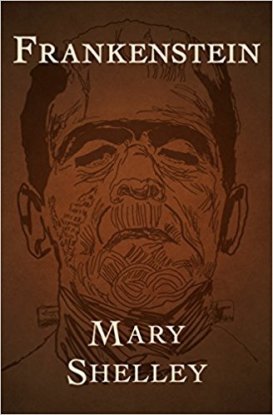
Book Review: Frankenstein

I had always associated Frankenstein by Mary Shelley with the black and white horror movies of my childhood. Since I don’t really care for horror movies, I never had an interest in reading it. But in recent years I’ve heard several people say that the book is different from the movies, that the movies provide more of a caricature than a reflection of the story. So I decided to give the book a try.

I was quite surprised! While I would never call Frankenstein nor this type of book a favorite, the story was much more compelling than I originally thought it would be. It was conceived as a result of a gathering with Mary, her lover Percy Shelley, Lord Byron, and others, when they were telling ghost stories and decided to see who could write the best scary story. Mary started this story when she was 18 and it was published anonymously when she was 20. Later editions featured her name as the author.

Frankenstein is often erroneously thought to be the monster’s name: it’s actually the name of the creator. The monster is never named.

The story actually begins with a Captain Robert Walton on a voyage writing home to his sister. He has a thirst for knowledge, a penchant for the “marvelous,” a desire to accomplish something great, and a longing for a true like-minded friend. While in an icy region Walton’s crew spies a gigantic creature driving a sledge guided by dogs across the ice. The next day they come across a man “in wretched condition” on another sledge on an ice floe. The crew brings the man onto the boat and Walton tries to help him. As they talk, the man, who introduces himself as Victor Frankenstein, recognizes in Walton the same ambition and thirst for knowledge that he’d had, so Frankenstein tells Walton his story as a warning.

Victor’s story is recorded in his own words. He had been raised by a good family  in Geneva and had an interest in the sciences. Early in his life he had come across books on alchemy (not the study of turning metals into gold, but “finding a universal solvent and an elixir of life.” according to Dictionary.com). His university studies increased his knowledge to the point that he discovered “the cause of generation and life; nay, more, I became myself capable of bestowing animation upon lifeless matter.”

With feverish excitement he decided to test this knowledge, assembling a new being from body parts of corpses he had been studying. But once the creature was made alive, Victor was repulsed and horrified.

The monster escaped and Victor fell ill. When Victor finally got better, he learned that his younger brother had been murdered, so he went home. While walking alone, Victor saw the monster and felt immediately that the monster was responsible for the murder.

In a later confrontation, the monster told Victor his own story of becoming aware, learning about himself and his world, and being met by fear and hatred from other people. He finally found an abandoned building where he could take shelter. The building was close enough to a small family that he could see their interactions, hear them, and learn from them. He grew to care for them and even did them little favors like chopping wood and setting it beside their cottage. He felt if he could introduce himself to the old, blind father and gain his sympathy, then the father could smooth the monster’s way with the rest of the family, and the creature would finally have someone to love and belong to. But that plan went awry and resulted in the monster’s being driven away.

So the monster found Victor, requested that he make a female monster, and promised that he and his mate would go away and not bother anyone. If Victor refused, the monster would take vengeance on all whom Victor loved. Victor vacillated: he was loathe to make another such creature, but if he did, he would be rid of them. But what if the female refused to go away quietly, and the two monsters wreaked havoc on the rest of the country?

I’ll leave the rest to you to discover what happened. I think my favorite section was the monster’s narrative of being nearly a blank slate and discovering his own impulses, like hunger, learning how to take care of what he needed, having a kindly attitude toward nature and mankind, feeling hurt by rejection which finally boiled over into hatred.

I was surprised to find that Victor was not a scientist as I had always thought, but a student. That explains a little bit why he didn’t have the maturity to think through his actions or to take responsibility for the monster.

Throughout the book both Victor and the monster take refuge in the beauty of nature. That’s not unusual in itself, but it is mentioned so often that I think it has to be Shelley’s contrast between the goodness of the natural and the evil of the unnatural. The fact that the final scenes take place in an icy, barren, dangerous area seems to indicate that both Victor and the monster had progressed far past the comforts of the beautiful, good, and natural.

Writing a scary story may have been Mary’s only purpose. But she may have been commentating on the dangers of pushing the boundaries of the technology of the day and the foolishness of judging by outward appearance. The original subtitle was The Modern Prometheus: in mythology, Prometheus formed humans out of clay, gave them life, and gave them fire though Zeus had forbidden it. For punishment Zeus had Prometheus chained to a rock where an eagle ate his liver: since he was immortal, every day the liver regrew and the eagle ate it again.

A new edition was published in 1831 with a new preface. Schmoop says, “Shelley wasn’t the same bright-eyed 21 year old she’d been in 1818. By 1831, she had lost her husband and two of her children, and the revised edition has a grimmer tone. In the 1831 text, nature is a destructive machine; Victor is a victim of fate, not free will…” This is the version most people are familiar with.

I had a hard time choosing between the audiobooks read by Dan Stevens (Matthew of Downton Abbey) or Derek Jacobi. I finally went with Jacobi’s narration, because I had listened to audiobooks wonderfully read by him before, and he did a superb job with this. I don’t know that I will ever read or listen to this story again, but if I do I’d like to try out Steven’s version just to hear how he handled it. The text is also available here.

(Sharing with Semicolon‘s Saturday Review of Books, Literary Musing Monday, Carole’s Books You Loved)

My First Writer’s Conference

I mentioned in Friday’s post an adventure. I spent Friday and Saturday at the Carolina Christian Writer’s Conference!

I had read about writer’s conferences, but attending one was a distant dream. I had never heard of this particular one until Mary mentioned it in a Facebook group we’re both in. I was surprised to see that the conference would take place in a city where I had lived for twelve years. That would take away the anxiety of traveling by myself to a strange new place. Plus it was just overnight, not several days. It seemed smaller than some of the others I had heard about, which would not be so overwhelming as some of the bigger ones. I didn’t think we’d be able to work around my mother-in-law’s care so that I could attend, but my husband said he could be home, and he encouraged me to go. So I did!

Authors, editors, and publisher representatives made up the faculty who presented the workshops. I had read one of the authors, heard of one other, and knew one of the publisher representatives years ago when she was on staff at my sons’ school, but everyone else was new to me. I came away with many of the faculty’s books added to my TBR list.

Four workshops divided into eight sessions each, covering topics like a writer’s social platform, managing time to write, self-editing, storytelling, plot, character arc, book proposals, publishing, and so much more. I wish I could have attended the majority of them! The one most beneficial to me was Craig von Buseck‘s “Fiction Techniques in Nonfiction Writing.” He explained that even though nonfiction informs, persuades, and inspires, it must also entertain or engage the reader, or else the reader will put it down. My writing sometimes tends to be “Just the facts, ma’am,” which might work for a Wikipedia article, but not a book. I gained both ideas and inspiration from Craig’s workshop for fleshing out my writing.

Todd Starnes was the enjoyable keynote speaker, and two panels covered editors’ pet peeves and publishing trends. Friday night after the last session we all divided into genre groups with faculty members available to answer questions.

A “Lightening Learning” session was both fun and informative. All of the faculty were stationed at various tables, and conferees went in small groups from table to table, changing tables at the blow of a whistle. Each faculty member had three minutes to share their favorite writing tip. Though all the tips were beneficial, one faculty member gave me a great idea for narrowing down my target audience.

We had an opportunity to submit an outline and the first ten pages of a manuscript for a critique before the conference, and during the conference we had a fifteen-minute appointment with the person who critiqued our work. That was a humbling experience, but then that was somewhat expected. We can’t improve our writing until we see what we’re doing wrong.

We also had the opportunity to sign up to meet with a faculty member for at least one 15-minute session just to ask questions, share our project and get feedback, etc.

Before the conference when I was trying to determine whether to spend the time, money, and emotional energy to go, I looked over the workshop topics and thought, “You know, I could read about most of this in books or online.” And though that’s true, and though I am sure I will read more, the conference sessions helped distill some of these topics down to their most important essence. Besides all the information and inspiration, one of the biggest takeaways from the conference was encouragement. It’s hard sometimes to know when or how to bring up writing in everyday conversation, but at a writer’s conference, everyone asks what you’re working on, and no one thinks you’re silly or self-promotional. Plus, at an event like this, editors and publishers are encouraging and instructive. They know we don’t know everything we need to and they’re there to help. But once you submit a manuscript to them, you’re down to business, and they expect you to know the ropes. Meeting a variety of editors and publishers gives you some sources to pursue when you do get ready for those steps. It was also encouraging to meeting others at various stages of the writing journey.

And since this was a Christian conference, two of the themes that continually emerged were prayer and responsibility. We need to seek God at every step in the writing process and ask others to intercede for us. And we need to remember that all we do is by His power and grace and for Him. If writing is a calling, we’re responsible to obey God’s call, and if it is a gift, we’re responsible to develop it for His glory.

One other plus for me was meeting Mary Hill at Maryandering Creatively! I have been participating in her Literary Musing Monday for some time now, so it was great to meet in person.

Before the conference Mary had also pointed me to Edie Melson’s The Write Conversation. Her sidebar contains a wealth of information about preparing for a writer’s conference, an invaluable help to me. Edie was also on the conference faculty, and I was sorry to miss her sessions. But I’m delighted to find her site and glean the information there.

I had let a couple of you know privately that I was going and asked for prayer: thank you! I had not traveled by myself since I had to drive from Spartanburg to Knoxville to house-hunt before our move here almost eight years ago (and since college days before that!) I am not a good traveler anyway. During the trip as well as before and after, I kept thinking, “I can’t believe I am doing this!” Excitement battled with fear, anxiety, and even dread at some points, but excitement won out, and God gave me peace. Everything about the trip itself went well: God kept me safe on the road and in parking lots. I spent all of Saturday morning sick in the hotel room, and I was sorry to miss those sessions. I had considered going home once I felt well enough to drive. My dear husband offered to drive up with my son so that he could drive me home and my son could drive his car back, but I didn’t think that would be necessary. I texted a friend to request prayer. I’m so thankful that I felt well enough to attend the Saturday afternoon sessions, as those were the best of the conference for me.

I also enjoyed just the aspect of getting away from everyday responsibilities for a while, and the quiet hotel room provided a counterbalance to all the new experiences and being with so many people. I’m so thankful to my husband for not only allowing me and providing for me to attend but encouraging me to and taking care of things at home while I was gone. It’s not easy being the sole caregiver for his mom, so I appreciate his being willing to do that for a few days.

My emotions definitely hit highs (“Maybe I really can finish a book!”) and lows (What was I thinking?!“) But I came away from the conference challenged and encouraged to move writing from the back burner. I have a lot of work to do, but I gained some good ideas, more direction, and more awareness of what needs to be weeded out. I tend to be wordy (in case you haven’t noticed… 🙂 ), so I need to tighten up in some areas and flesh concepts out in others. My head is still spinning and I am still processing much of what I learned.

If you enjoy writing, I’d encourage you attend a writer’s conference! I am already hoping to attend next year.

Special thanks go to Linda Gilden for organizing everything, for her patience with this newbie, and especially for her warm and encouraging tone in everything she did. Thanks to all the team who helped everything go so smoothly! Great job!

(Sharing with Inspire Me Monday, Literary Musing Monday, Faith on Fire)

Friday’s Fave Five

It’s Friday, time to look back over the blessings of the week with Susanne at Living to Tell the Story and other friends.

Whew – it’s been a busy week. And a colder one – we even had a little snow! Going from winter to spring is a back and forth business here. But spring is ever closer! Here are some highlights of the last week:

1. My husband’s birthday. We all enjoyed celebrating him on his special day.

IMG_0782

2. Ladies group at church. The church we’re visiting had a ladies’ gathering Saturday morning where we discussed a passage we’ve been reading together as a church and prayed together. It has been a very long time since I have been able to attend anything like that, and it was a special time.

3. Lunch at my son and daughter-in-law’s. Usually we gather at our house because of Jim’s mom’s situation and needing someone to be with her. But it worked out to go on a Saturday while her caregiver was here. It was fun!

4. Encouraging texts from friends.

5. An adventure!

Hobbit adventure

I often feel about adventures like hobbits do, but one came up this week! I’ll tell you more about it next week. 🙂


Laura Ingalls Wilder Reading Challenge 2018 Winner

Congratulations to Rebekah for winning the Laura Ingalls Wilder Reading Challenge this year! Thanks to all of those who participated. I hope you enjoyed it as much as I did! I already have plans for next year!

Book Review: Little Blog on the Prairie

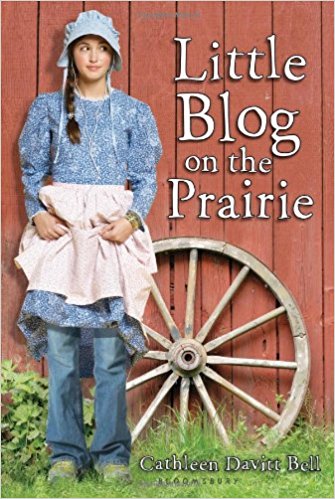
Little Blog  Little Blog on the Prairie by Cathleen Davitt Bell wasn’t on my radar at all, but the title caught my eye while I was passing through the YA section in the library.

The premise: Gen comes from a modern family where each member tends to operate mostly apart from the others. Gen’s mom, a “Little House on the Prairie addict,” decides the whole family would benefit from a vacation to “Camp Frontier,” where everyone is supposed to live like it’s 1890.

No one else in the family is happy about it. Gen only acquiesces when her mom shows her a new cell phone and tells her she can have it when they get back from vacation. But Gen smuggles the phone into camp with her, and when she can find some privacy, she texts her two best friends about how horrible everything is. The friends make a blog out of her texts, which then goes viral, which brings a news crew out to see what’s going on.

Some reviewers objected to Gen’s sarcastic, whiny attitude, but I think they missed the point that she changes during the course of the book. She realizes at one point that her attitude is ruining the experience for her mother, who had looked forward to it. She finds there is satisfaction in seeing the results of hard work. She comes to find that hastily sent words made public can come back to haunt her. It takes the family a long time, but they do learn the value of pulling together and enjoying each other’s company. But the author isn’t saying that going back to a “simpler” time is the answer to modern problems: first of all, they weren’t so simple, and second of all, people without modern conveniences had personal and family issues, too.

Gen is just finishing eighth grade as the book begins, so in my book she’s too young to be kissing a guy near the end and having him tell her that her dress is sexy. There’s mention of an obscene gesture coming from a younger girl. It’s written from a modern secular viewpoint. So for all those reasons I don’t know that I would give the book to a young teen, at least not without some discussion about those and Gen’s attitude. But it does bring out some timeless truths without being heavy-handed about it.

(Sharing with Semicolon‘s Saturday Review of Books)