Friday’s Fave Five

It’s Friday, time to look back over the blessings of the week
with Susanne at Living to Tell the Story and other friends.

It’s been a fairly quiet week. Sometimes those are the hardest in which to find something to share for FFF—not because they’re bad. In fact, I generally prefer quiet weeks! But because they’re fairly routine and ordinary, nothing stands out. But there are blessings in ordinariness.

1. Feeling good. We finally turned a corner with these colds last weekend. I’ve had worse cold symptoms, but this one seemed to last longer and the sore throat was harder to relieve than usual. We’re glad to be done with all of that, hopefully for a long time.

2. Self-serve nights. Ever since my kids were old enough to make a sandwich or run the microwave, Sunday nights have been “fend for yourself” meal nights. I make a big breakfast and lunch that day, then I am happy to be “off” the rest of the day. We often just heat up leftovers. Jason and Mittu will come over sometimes on Sunday nights and raid the freezer–I keep some gluten-free heat-and-eat meals for her and Timothy. We had such an evening last Sunday.

3. A cute new cartoon. Timothy wanted to show us a new cartoon he’s been enjoying called “Bluey.” It’s on Disney +, but there are a few episodes on YouTube. It’s about a little dog family in Australia. I thought the few episodes we saw were good. But what I enjoyed the most was that the daddy dog’s voice and personality were very much like our pastor’s. The accents are a little different–our pastor is from South Africa rather than Australia. But the whole time we watched, I kept “hearing” our pastor and chuckling over the similarities.

4. A trade. Just about the time we were going to shop for a bed for our new guest room, Jason and Mittu asked if we would like theirs, as they want to buy a larger size. We also asked them if they wanted the mini-fridge. It used to be in my mother-in-law’s room, then we kept it in Jesse’s room. But he didn’t want to take it with him when he moved. We figured they could use it downstairs for drinks and snacks or to store cold food when they were eating on the patio.

5. A storage closet. We figure most guests aren’t going to need much closet space, so our guest room closet is a place for some extra storage. I have shoeboxes of photos from pre-digital days that I need to do something with, off-season clothing, and a few other things–and still have some room. It’s been fun to get that set up and ease space in other areas.

Hope you have a great weekend celebrating your dads, husbands, or father figures!

The Adventures of Pinocchio

The Adventures of Pinocchio by Carlo Collodi was originally written in serial form for a children’s magazine in Italy in the 1880s. Collodi had ended the series with the fifteenth chapter. But readers clamored for more, so Collodi gradually added eleven more chapters. The series was published as a single book in 1883.

The story was meant to be didactic. A poor woodcarver named Geppetto begins to carve a marionette out of a piece of wood given to him by his friend. Before the puppet is even fully carved, he starts making trouble: sticking out his tongue, calling names, pulling Geppetto’s wig off. He’s wild and self-willed and won’t listen to anyone. And, of course, he gets into various kinds of trouble. Gradually he begins to be disciplined by his hardships and turns into “a real boy.”

Parts of the story are comedic, but parts are scary. Some are darker than I’d expect in a children’s book.

Pinocchio doesn’t have Jiminy Cricket as a companion. Instead a Talking Cricket tries to advise Pinocchio–and Pinocchio throws a hammer at him and kills him!

The Blue Fairy is here the Maiden with Azure Hair. Other familiar characters are the evil theater director, a shark (not a whale) that swallows Pinocchio, the friend named Lamp-wick who tempts Pinocchio to the Land of Toys. And there are several more characters I had not heard of before.

I was glad that Pinocchio didn’t change in one sudden burst of realization. Rather, he gradually learned a bit, fell back, went forward, fell back again. Most of us mature and learn that way.

The chapter titles or headings seem to me to give away much of the story. Chapter 17 is “Pinocchio eats sugar, but refuses to take medicine. When the undertakers come for him, he drinks the medicine and feels better. Afterwards he tells a lie and, in punishment, his nose grows longer and longer.” Chapter 23 is “Pinocchio weeps upon learning that the Lovely Maiden with Azure Hair is dead. He meets a Pigeon, who carries him to the seashore. He throws himself into the sea to go to the aid of his father.” Maybe that was the style then.

I was surprised to learn that Pinocchio is “the most translated non-religious book in the world.” Another surprise learned from Wikipedia is “Children’s literature was a new idea in Collodi’s time, an innovation in the 19th century. Thus in content and style it was new and modern, opening the way to many writers of the following century.”

Most of us are familiar with the Disney version of Pinocchio. I wonder if anyone, particularly if any children or families, read the unabridged original book today. By today’s standards it might seem a little too long and didactic. Then again, kids might enjoy reading about Pinocchio’s antics and seeing him get his comeuppance several times over. Personally, just when I was starting to get a bit tired of the story, Pinocchio began making some real advances.

I read this book for the classics in translation category of the Back to the Classics Reading challenge. In all honesty, I chose it mainly because it was short. I’ve read some hefty Russian tomes, like War and Peace and The Brothers Karamazov, for this category in past years. But I just didn’t feel like getting into something like those this year. However, I do also like reading the original versions of familiar stories.

I listened to the audiobook by Librivox which, as it’s read by volunteers, is a mixed bag. But it’s free. I also looked up portions on the online Gutenberg version here. Both use the translation by Carol Della Chiesa.

Have you ever read The Adventures of Pinocchio? What did you think of it? Do you think children today would like the longer original version?

The Orchard House

If you’re familiar with Louisa May Alcott’s life, you may know that one home where her family lived was called the Orchard House (though Louisa called it Apple Slump). Orchard House is beloved by Louisa’s fans not just because she lived there, but she wrote her most famous novel, Little Women, and several other books there. Orchard House is open to the public for tours and special events.

Heidi Chiavaroli wrote a time slip novel, The Orchard House, using Louisa’s time and town as the setting for one plot line.

Johanna Suhre had written to Louisa for more information about her brother, John, whom Louisa tended while a nurse during the Civil War. John had died, and Louisa featured him in her Hospital Sketches. Johanna and her mother and brother longed for any details Louisa could give them.

That’s as much as we know about the facts, but Heidi imagined Louisa’s and Johanna’s correspondence and friendship growing.

When Louisa needs someone to stay with her parents while she travels, she asks Johanna. Johanna is eager not only for something new and different, but delighted to meet her friend in person and visit the town so steeped in literary talent. Johanna had written some poems that she hoped to work up the courage to show Louisa.

While in Concord, Johanna meets the Alcott’s neighbor, Nathan Bancroft. Louisa cautions Johanna against Nathan, but she doesn’t have any specific details to warn against. After Nathan and Johanna marry, however, Johanna discovers another side to him.

The modern timeline also takes place in Concord. Taylor’s mother had abandoned her. The family of her best friend, Victoria, took Taylor in. Though Taylor appreciates the Bennetts’ kindness, she doesn’t quite fit in. Though she and Victoria rejoiced at becoming real sisters, the situation feels awkward.

Both girls enjoy writing and attending a young writer’s camp at The Orchard House. One of Taylor’s most treasured possessions, one of the few things she has left from her childhood, is a beat-up copy of Little Women.

Though Taylor never quite feels like family, she and Victoria work out their differences. At least, they had until Victoria unexpectedly betrays Taylor.

Taylor packs up her things and drives to the other side of the country. She becomes a famous author, writing under a pen name. She keeps her distance until eighteen years later, when she learns that her adoptive mother has cancer. She goes back to Concord, intending to stay for a short while. She and Victoria take tentative steps to at least be civil. Victoria would like to explain and make amends, but Taylor’s not sure she wants to hear it.

Victoria, who now works at the Orchard House, invites Taylor to speak at the young writer’s camp. Then she shares with Taylor some poems by a woman named Johanna Bancroft that were unearthed in the schoolroom. As the sisters try to unravel the mystery of who Johanna was and how Louisa knew her, they learn some things about themselves and each other as well.

I took a chance on this book when I saw it on a Kindle sale back in April. I had never heard of this author, but the story sounded intriguing. Plus the Louisa May Alcott Reading Challenge was coming up, and this would be a good choice for that.

I’m so delighted I took the chance. I enjoyed both timelines and felt for both Johanna and Taylor in their trials.

I also liked the quotes from Louisa at the beginning of every chapter. One favorite was, “All the philosophy in our house is not in the study; a good deal is in the kitchen, where a fine old lady thinks high thoughts and does good deeds while she cooks and scrubs.”

Though I wouldn’t call this book full-out Christian fiction, there were references to forgiveness, faith, and yielding to God.

I’m happy to recommend this book, and I look forward to reading more from this author in the future.

Since this is the only book I am reading for Tarissa‘s LMA challenge, I’ll let this serve as my wrap-up post as well.

What Are You Looking For?

What are you looking for as you go through life?

Peace?

Love?

Justice?

A good time?

Happiness?

We might find those in some measure. Some of them are God’s good gifts. Some are a foretaste of heaven.

But none will be perfect. This world is fraught with strife, selfishness, conflict.

And such characteristics are not just out there. They’re in our hearts as well.

Whatever troubles or pleases us about this life, none of it will last. Peter says some day “the elements will melt with fervent heat; both the earth and the works that are in it will be burned up” (2 Peter 3:10b).

If we’ve staked all our hopes and dreams on this earth, we’ll be in trouble.

Since this earth won’t last forever, what should we do? Peter goes on to say, “Therefore, since all these things will be dissolved, what manner of persons ought you to be in holy conduct and godliness, looking for and hastening the coming of the day of God, because of which the heavens will be dissolved, being on fire, and the elements will melt with fervent heat? Nevertheless we, according to His promise, look for new heavens and a new earth in which righteousness dwells. Therefore, beloved, looking forward to these things, be diligent to be found by Him in peace, without spot and blameless” (2 Peter 3:11-14, NKJV).

Others passages echo this truth:

For our conversation (citizenship) is in heaven; from whence also we look for the Saviour, the Lord Jesus Christ: Who shall change our vile body, that it may be fashioned like unto his glorious body, according to the working whereby he is able even to subdue all things unto himself (Philippians 3:20-21, KJV).

For the grace of God that brings salvation has appeared to all men, teaching us that, denying ungodliness and worldly lusts, we should live soberly, righteously, and godly in the present age, looking for the blessed hope and glorious appearing of our great God and Savior Jesus Christ, who gave Himself for us, that He might redeem us from every lawless deed and purify for Himself His own special people, zealous for good works (Titus 2:11-14, NKJV).

And as it is appointed unto men once to die, but after this the judgment: So Christ was once offered to bear the sins of many; and unto them that look for him shall he appear the second time without sin unto salvation (Hebrews 9:27-28, KJV).

Other translations say “wait for” instead of “look for,” but the Greek definitions can be translated either way. We wait with expectation, with eagerness, looking for Him.

Only with Him will we find perfection. Only in heaven will there be no sin, no sorrow, no crying, no pain–none of the negative things that taint life here.

Is this just escapism from reality? No, it’s arriving at reality. We look forward to our true reality, our true home. C. S. Lewis called this life the Shadowlands. In The Last Battle, when the children and animals realize they’re in a new Narnia, the Unicorn says:

I have come home at last! This is my real country! I belong here. This is the land I have been looking for all my life, though I never knew it til now. The reason why we loved the old Narnia is that it sometimes looked a little like this.

Aslan told the children, “The term is over: the holidays have begun. The dream is ended: this is the morning.”

It was only the beginning of the real story. All their life in this world and all their adventures in Narnia had only been the cover and title page: now, at last they were beginning Chapter One of the Great Story which no one on earth has read, which goes on forever; in which every chapter is better than the one before.

Elisabeth Elliot has quoted George MacDonald as saying, “If you knew what God knows about death, you would clap your listless hands.” I remember reading somewhere that one reason God doesn’t tell us much about heaven is that we would look forward to it so much, we wouldn’t be able to get anything else done here.

I admit, there’s much I still enjoy and look forward to in this life. There’s much I’d like to do. One of the most important things I desire is to be a positive influence in my grandson’s life, and hopefully, at some point, in the lives of future grandchildren. God has given us a strong survival instinct. One preacher once said that one reason our bodies start falling apart as we get older is to ready us to let loose of them. “So we do not lose heart. Though our outer self is wasting away, our inner self is being renewed day by day. For this light momentary affliction is preparing for us an eternal weight of glory beyond all comparison, as we look not to the things that are seen but to the things that are unseen. For the things that are seen are transient, but the things that are unseen are eternal” (2 Corinthians 4:16-18).

I need the reminder that this life isn’t all there is. Imagine a rope stretched out east and west farther than we can follow, and let it represent eternity. The piece of the rope in front of us is taped off for a few inches. That taped part would represent the whole of life on earth for all time compared to eternity. Time is short. Eternity is long.

But before we look for Him to take us there, we have to look for Him here. Jeremiah 29:13 (ESV) says, “You will seek me and find me, when you seek me with all your heart.” If you don’t have a saving relationship with Jesus, if you’re not sure of heaven, please read here.

We enjoy God’s blessing here. But we know this world isn’t all there is. Like Abraham, we “[look] forward to the city that has foundations, whose designer and builder is God” (Hebrews 11:10).

Are you looking for Him?

(I often link up with some of these bloggers)

Laudable Linkage

IMG_0195

Here are some of the noteworthy reads discovered recently.

What Changed After C. S. Lewis Came to Christ? We think mostly of Lewis’ intellect, but other areas of his life changed as well. “Lewis was always submitting his life to Christ to be changed. He was always renewing his mind. He understood the New Testament concept of the atonement as involving dying with Christ. He continually submitted habits and attitudes to be killed . . . “

Why I Stopped Calling Parts of the Bible Boring. The theologian she quotes is not my favorite, but otherwise I like this. “Scripture is history, drama, and art. And more importantly, it is the surprisingly simple story of God redeeming his creation. But if in our simplifying or systematizing we end up relegating entire portions of Scripture to boring irrelevancy, we have lost the plot of a God who chose to reveal himself to us in the form of a breathtaking story.”

Helping Our Kids Put On the Armor of God, HT to The Story Warren “Every parent yearns for their child to stand in the face of peer pressure, evil enticements, false claims, and even amidst their own disappointments and losses. Fitting them in these six pieces of spiritual armor will help equip and enable them to stand.”

Cinderella, Strong Women, and the Courage to Be Kind, HT to The Story Warren. “Most of us are strong in ways that go unlauded, and maybe we don’t see our daily routine as strength because of it, or we think we have to be fighting for something—whatever that might look like. But we are strong women when we practice virtues like kindness, when we are patient, when we show compassion and turn away wrath.”

Biblical Submission Does Not Justify Abuse (Or Even Permit It). “Her submission is not your responsibility. Loving her like Christ loved the Church is your responsibility, and abusing her in action or word is a gross violation of the direct command that God has given you. Demanding submission as a cover for acting abusively is a loathsome sin and God notices.”

Midlife, Christ Is. “In midlife, Christ is a consolation for all the things I wish I’d done differently. He doesn’t change my past, but he can redeem it. . . . In midlife, Christ is a companion through all the worries and stresses.”

God Loves Your Perimenopausal Body. “To tell you the truth, the shock as this reality began to dawn in my life left me feeling as though my body might have heard the gospel for the first time even though my heart, mind, and soul had been committed to Jesus since I was a teen. All that time, I’d gotten the message at church that my body was a problem, not a gift.”

Awesome June Activities for Kids, HT to The Story Warren. When school is out and boredom creeps in, here are lots of great things to do.

Just in time for Father’s Day, HT to The Story Warren: a “Try not to Laugh” challenge involving dad jokes:

Happy Saturday!

Friday’s Fave Five

It’s Friday, time to look back over the blessings of the week
with Susanne at Living to Tell the Story and other friends.

We’ve been a little low this week with head colds. Jim finally started feeling better mid-week, so I am hoping my turn comes soon. But there are always things to be thankful for:

1. Timothy’s end-of-first-grade party. His mom texted us that he wanted everyone to come over “for a dance party, kabobs, a Star Wars cartoon with popcorn and sugar cookies.” 😀 We didn’t have the dance party, but Mittu and Jason made kabobs that were really good. We ended up watching the first episode of The Mandalorian instead of a Star Wars cartoon. And we did have sugar cookies! We also played a couple of rounds of Earwax (Timothy’s favorite) and Facetimed with Jeremy. A fun evening!

2. Meals from my daughter-in-law. She made a couple of dishes I could just heat up for dinner this week–very helpful since I didn’t feel like cooking.

3. Meal delivery. Jim was out of town one night this week, and I had a craving for a nearby Mexican food place. But the closer it got to dinner time, the less I wanted to go out. Then I remembered this place had a meal delivery service–problem solved!

4. Cough drops and Tylenol have been my mainstay this week. I can’t take decongestants due to heart rhythm issues, so I have to make the best of it with these and rest. I also had a big pot of chicken soup made early in the week, with enough left over for several lunches.

5. Young people’s get-together. Our church is small–about 40 people. There are three young adults, with two more guys in college (one just starting this year). Someone had the idea of getting the young single adults of a few small churches together for a game night once a month or so, with the churches rotating hosting. They had the first one a couple of weeks ago, but I forgot to mention it. Jesse really enjoys games and people, so he had a good time and is looking forward to the next one. He has a lot of online friends, but I’ve been hoping for some in-person friends for him, too, especially as he lives alone now.

How was your week?

A Room With a View

In E. M. Forster’s A Room With a View, set in the early 1900s, Miss Lucy Honeychurch is traveling through Italy with her older cousin, Miss Charlotte Bartlett, as a chaperone. They’re lamenting to each other that their rooms overlook a courtyard, when they were supposed to overlook the Arno River. An older man, Mr. Emerson, overhears them and joins the conversation. He and his son have rooms with a view of the river, and they don’t particularly care about the view. They’d be happy to switch rooms with the ladies.

However, Miss Bartlett feels this won’t do, it isn’t proper, and the offerer is ill-bred, so she declines. But a short while later the ladies run into Mr. Beebe, a rector they knew in England. They tell him the situation. He feels that, even though Mr. Emerson is “peculiar,” “has no tact,” and “will not keep his opinions to himself,” he’s not a bad man and it would be all right to accept his offer.

So the switch is made. Lucy runs into the Emersons in their visits around town. Though they are not refined, she feels they are kind. Mr. Emerson is irreligious, and George seems morose because “the things of the universe . . . won’t fit.”

On one of Lucy’s rare excursions alone, she laments that she hasn’t had any adventures. “Nothing ever happens to me.” But “Then something did happen.” She witnesses a murder and faints. As she wakes up, she finds that George Emerson has carried her away from the scene.

Later, several of the English tourists go on a day trip to the countryside, There, in a field of violets, George kisses Lucy.

Miss Bartlett comes across them and is mortified. She asks Lucy not to tell her mother what happened, fearing she’ll be blamed for not chaperoning adequately. They decide to go on the next leg of their travels.

Part 2 opens at Lucy’s home in England, where she has just accepted Cecil Vyse’s proposal of marriage. Cecil, as Lucy’s mother says, is good, clever, rich, and well-connected. But he’s also snobbish, arrogant, and controlling.

When a property in the area needs new renters, who should the new tenants be but the Emersons.

Thus Lucy is pulled in two different directions–the conventional and expected or the freeing and individualistic.

I probably won’t take the time, but I’d love to go back and trace every time Forster mentions a view in this novel. It comes up quite often. Cecil even says he connects Lucy with a certain type of view, while she responds that she always pictures him in a room, like “a drawing room without a view.” Obviously, he’s presented as close-minded and unopen to change, while she’s the opposite.

This was written at the end of the Victorian era, when some of the old social order was changing. Forster doesn’t seem to be saying all conventionality is wrong–one character, Miss Lavish, is often described by others as “original,” a little more free-thinking than most. She goes with Lucy in Italy for an “adventure” and takes Lucy’s guidebook away so they can see the “real” Italy and not the prescribed tourist’s view. But then Miss Lavish sees someone she wants talk to and disappears, leaving Lucy alone in a strange country with no guidebook. Later Miss Lavish shares an incident someone told her confidentially in her new novel. So she takes things a little too far.

At one point the author has Lucy wonder:

Why? Why were most big things unladylike? Charlotte had once explained to her why. It was not that ladies were inferior to men; it was that they were different. Their mission was to inspire others to achievement rather than to achieve themselves. Indirectly, by means of tact and a spotless name, a lady could accomplish much. But if she rushed into the fray herself she would be first censured, then despised, and finally ignored.

Then later, when Lucy has an outburst, Cecil thinks:

He longed to hint to her that not here lay her vocation; that a woman’s power and charm reside in mystery, not in muscular rant. But possibly rant is a sign of vitality: it mars the beautiful creature, but shows that she is alive. After a moment, he contemplated her flushed face and excited gestures with a certain approval.

George, by contrast, tells her, “I want you to have your own thoughts even when I hold you in my arms.”

I liked this description of the Honeychurch family: “So the grittiness went out of life. It generally did at Windy Corner. At the last minute, when the social machine was clogged hopelessly, one member or other of the family poured in a drop of oil.”

One beef I have with the story is that George does not seem at all attractive. What he says about her having her own thoughts comes later in the book. At first he’s shown as moody, odd, and not terribly communicative. He’s only shown as happy twice in the book. I also felt that Mr. Emerson didn’t always make sense to me when he was pushing Lucy towards George.

Unfortunately, I could probably never see a film version of this book because there’s a scene where George, Lucy’s brother, and the rector are “bathing” in a pond when Lucy, Cecil, and Lucy’s mother come upon them unexpectedly. When George speaks to Mrs. Honeychurch, “He regarded himself as dressed. Barefoot, bare-chested . . .” So they’re not running around naked. But I’m sure filmmakers would play this scene up. In fact, I looked up the parental guidelines of the one film I was interested in, and sure enough, they take it too far.

I’m counting this for the travel or adventure classic for the Back to the Classics Reading Challenge. I’m thankful to another participant for giving me the idea. I really didn’t feel like a Jules Verne type of novel this year, and I was glad to finally become familiar with A Room with a View.


How to Read a Book

Why would an avid reader for decades pick up How to Read a Book by Mortimer J. Adler and Charles Van Doren?

I had three reasons:

  1. I’d like to retain more from my reading. Though I flag pages, underline or note important points, sometimes even outline chapters, I forget much of what I’ve read in a short while.
  2. Reading better in general should enhance one’s ability to read the Bible.
  3. I see so many people online talking past each other. I’ve wondered if that has anything to do with a lack of reading comprehension.

This book was originally written by Adler in 1940. Adler revised and updated it with Charles Van Doren in 1972. Even though 1972 doesn’t seem all that long ago to me, as far as literature is concerned, I found this book very tedious. I read a lot of old classics, so I don’t think older language is the problem here. I think it’s just Adler’s style.

It would take up too much time and space to go into Adler’s method here. But this Goodreads review goes into more detail.

Adler’s first step would be what we call pre-reading, and most of us do this to some degree, depending on the book, the author, and our familiarity with both. Many of us would look at the front cover, the back cover, look over the table of contents, read the first paragraph or two, maybe leaf through the whole thing briefly. But Adler’s method goes into much more detail and study. One of his first steps is to read the whole book once and then come back and apply these other steps.

Adler’s stages of reading are: elementary, inspectional, analytical, and syntopical. He discusses the first three in great detail and then applies his principles to various types of books. Then he has a chapter on syntopical reading, which goes beyond the reading of one book to reading several books on a given topic. He ends with a list of recommended reading and an appendix of exercises and tests for the various levels (I just glanced through the last appendix without trying any of the tests).

Honestly, I can’t see someone going through all Adler’s steps unless they’re incredibly academically minded or unless they need to know the book extremely well for a class.

Does that mean my time in the book was a waste?

No. Even though I have no desire to follow Adler’s advice for all my reading, I agreed with many points. I especially appreciated the urge to read actively, not passively. I gleaned numerous nuggets I liked. I can’t share them all here, but here are a few:

I think his evaluation of the average high school student is probably true even of many adults today:

He can follow a simple piece of fiction and enjoy it. But put him up against a closely written exposition, a carefully and economically stated argument, or a passage requiring critical consideration, and he is at a loss. It has been shown for instance, that the average high-school student is amazingly inept at indicating the central thought of a passage, or the levels of emphasis and subordination in an argument or exposition. To all intents and purposes he remains a sixth-grade reader till well along in college (p. xi.).

This was written before personal computers, much less iPhones and ebooks, but this is even more true now:

There is a sense in which we moderns are inundated with facts to the detriment of understanding. One of the reasons for this situation is that the very media we have mentioned are so designed as to make thinking seem unnecessary (though this is only an appearance). The packaging of intellectual positions and views is one of the most active enterprises of some of the best minds of our day. The viewer of television, the listener to radio, the reader of magazines, is presented with a whole complex of elements—all the way from ingenious rhetoric to carefully selected data and statistics—to make it easy for him to “make up his own mind” with the minimum of difficulty and effort. But the packaging is often done so effectively that the viewer, listener, or reader does not make up his own mind at all. Instead, he inserts a packaged opinion into his mind, somewhat like inserting a cassette into a cassette player. He then pushes a button and “plays back” the opinion whenever it seems appropriate to do so. He has performed acceptably without having had to think (p. 4).

Even though I don’t know many people who would read a whole book at an elementary level before coming back to read it analytically, I can see Adler’s point here:

We were told to consult footnotes, scholarly commentaries, or other secondary sources to get help. But when these things are done prematurely, they only impede our reading, instead of helping it.

The tremendous pleasure that can come from reading Shakespeare, for instance, was spoiled for generations of high school students who were forced to go through Julius Caesar, As You Like It, or Hamlet, scene by scene, looking up all the strange words in a glossary and studying all the scholarly footnotes. As a result, they never really read a Shakespearean play. By the time they reached the end, they had forgotten the beginning and lost sight of the whole. Instead of being forced to take this pedantic approach, they should have been encouraged to read the play at one sitting and discuss what they got out of that first quick reading. Only then would they have been ready to study the play carefully and closely, because then they would have understood enough of it to learn more (p. 37).

I thought this about propaganda was especially good:

The best protection against propaganda of any sort is the recognition of it for what it is. Only hidden and undetected oratory is really insidious. What reaches the heart without going through the mind is likely to bounce back and put the mind out of business. Propaganda taken in that way is like a drug you do not know you are swallowing. The effect is mysterious; you do not know afterwards why you feel or think the way you do (p. 198).

What about my three purposes for reading the book?

First, I did not get any information specifically about retaining more from reading, but that was not this book’s purpose. Probably one would retain more, at least for a time. Even if I did use Adler’s methods, I would still probably forget much without reviewing either the book or my notes from time to time. But I did get some ideas for improved note-taking.

Secondly, I did think that Adler’s methods would be good for Bible study. I’m an advocate of reading a book of the Bible at a time rather than cherry-picking random verses here and there.

As to my third purpose, I thought he brought up some very good points. One of his steps is ascertaining whether or not you agree with the author, and if not, why not. But you have to support your views from what the book actually said. So one can’t take things out of context, infer one’s own views, etc. Of course, our era of sound bytes and no context at all on Facebook and Twitter doesn’t really support good, meaningful communication.

Have you read Adler’s and Van Doren’s book? What do you think about any of his points mentioned here?

I counting this book for the Hobby category of the Nonfiction Reader Challenge since reading is my main hobby.

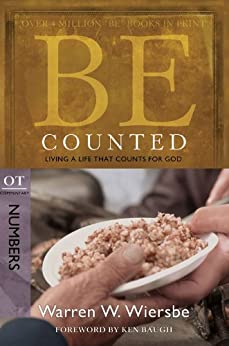
Be Counted (Numbers): Living a Life That Counts for God

The book of Numbers in the Bible covers the time that Israel headed to the promised land to the time just before they finally got there after a 40-year detour. As Warren Wiersbe said in his introduction to Be Counted (Numbers): Living a Life That Counts for God:

The book of Numbers opens with a count of all the fighting men in the camp. They were counted, but they couldn’t be counted on, because all but two of them died during Israel’s march through the wilderness. Then the new generation was counted, and they were people whom the Lord could “count on.” They trusted His Word, entered the Promised Land, and claimed it for their inheritance (pages 13-14, Kindle).

The book begins with getting ready to march to Canaan. Soldiers are numbered, the tribes are arranged in their places around the tabernacle, duties and procedures are assigned, the tabernacle is dedicated, and Passover is kept.

But the people complain about the manna God sent them. Aaron and Miriam, Moses’s own siblings, challenge his leadership. When the people send out spies to look over the land, the spies come back telling how many and how large the enemies are. Instead of trusting that God would give them the land as He promised, the people rebelled.

They looked at the people of the land and saw giants; they looked at the Canaanite cities and saw high walls and locked gates; and they looked at themselves and saw grasshoppers. If only they had looked by faith to God, they would have seen the One who was able to conquer every enemy and who sees the nations of the world as grasshoppers (Isa. 40: 22). “We are not able” is the cry of unbelief (Num. 13: 31 NKJV), but, “Our God is able” is the affirmation of faith (Dan. 3: 17; see Phil. 4: 13) (p. 74).

God pronounced that all those who refused to enter the land would die in the wilderness over the next forty years. Their children would inherit the land in their place along with Joshua and Caleb, the only two spies who urged to people to go forth and trust God.

And then: more rebellion, this time from Korah, Dathan, and Abiram. They challenged Moses and Aaron’s leadership, and God dealt with the rebels severely.

Then as the people complain once again about the need for water, Moses responds angrily. He calls them rebels. Instead of speaking to the rock as God instructed, Moses struck the rock twice.  “It was a sad demonstration of hostility by the meekest man on the earth (Numbers 12:3), showing that we can fail in our strengths as well as our weaknesses” (p. 105). God told Moses, “Because you did not believe in me, to uphold me as holy in the eyes of the people of Israel, therefore you shall not bring this assembly into the land that I have given them” (Numbers 20:12). I’ve always felt bad for Moses, but one man in our church commented that he did eventually get to see the promised Savior in the promised land when he appeared with Elijah during Jesus’s transfiguration (Matthew 17:1-8).

After a battle, more complaining, an encounter with Balaam and his talking donkey, falling into sin with the false gods of Moab, judgment, revenge against Midian, and another census, the people finally come to their second opportunity to go into the promised land. Eleazar has been appointed to take Aaron’s place and Joshua Moses’s place. Boundaries for the tribes are set. Interspersed in the narrative are some of God’s instructions for promised-land dwelling. These were encouraging reminders that they would eventually get there, that they were still God’s people, and that He would keep His promises. In fact, His faithfulness to His promise is probably the only reason the people did make it. The end of Numbers leaves Israel poised on the brink of Canaan, awaiting Moses’s last instructions to the tribes in Deuteronomy. “Though he wasn’t allowed to go in himself, Moses invested the closing weeks of his life in preparing the new generation to enter Canaan and claim the land God promised to give them” (p. 153).

What are some things we can learn from Numbers? According to Wiersbe:

We don’t have to fail as did that first generation; we can be “more than conquerors through Him that loved us” (Rom. 8: 37) (p. 14).

The more comfortable we become, the less we welcome change, and yet there’s no growth without challenge and there’s no challenge without change. Comfort usually leads to complacency, and complacency is the enemy of character and spiritual growth. In each new experience of life, one of two things happens: Either we trust God and He brings out the best in us, or we disobey God and Satan brings out the worst in us (p. 58).

So sinful is the human heart that it’s prone to forget God’s blessings, ignore God’s promises, and find fault with God’s providence. “Oh that men would praise the LORD for his goodness, and for his wonderful works to the children of men!” (Ps. 107: 8, 15, 21, 31) (p. 61).

Over these many years of ministry, I’ve learned that it isn’t enemies outside the local church who do the damage, but counterfeiters who get inside the church fellowship (Acts 20: 28–30; 3 John 9–11). These intruders might march with the church crowd and act like they are God’s people, but they don’t have an appetite for spiritual things, and eventually their true allegiance is revealed (1 John 2: 18–19) (p. 62).

The will of God is the expression of the love of God for His people, for His plans come from His heart (Ps. 33: 11). God’s will isn’t punishment, it’s nourishment (John 4: 31–34), not painful chains that shackle us (Ps. 2: 3), but loving cords that tie us to God’s heart so He can lead us in the right way (Hos. 11: 4) (p. 77).

God in His grace and mercy forgives sin, but in His divine government He allows that sin to have its sad effects in the lives of sinners (p. 78).

Be careful what you say to God when you complain, because He may take you up on it! After all, God’s greatest judgment is to let people have their own way (p. 79).

There is no substitute for faith in God’s promises and obedience to His commandments. Faith is simply obeying God in spite of how we feel, what we see, or what we think might happen. When God’s people trust and obey, the Lord delights in doing wonders for them, because they glorify His name (p. 81).

We have to be careful about judging Israel’s penchant for complaining and failure to trust God. Instead, we need to recognize those tendencies in ourselves and seek His grace to trust, obey, and follow.

(I often link up with some of these bloggers)

Giving and Receiving God’s Word

I was surprised recently to read of someone offering their support and sympathy but promising not to share Bible verses.

My first thought was, “Isn’t the Bible our main source of comfort?” Human comfort helps, but it only goes so far.

I think I know what the person meant, though. Sometimes it’s easy to pat someone on the back, quote Romans 8:28, and go on our merry way. That’s like the spiritual version of what James says about physical needs: “If a brother or sister is poorly clothed and lacking in daily food, and one of you says to them, ‘Go in peace, be warmed and filled,’ without giving them the things needed for the body, what good is that?” (James 2:15-16). We’re instructed to be quick to hear and slow to speak, to weep with those who weep, to suffer with others in the body of Christ who suffer. We’re to “Remember those who are in prison, as though in prison with them, and those who are mistreated, since you also are in the body” (Hebrews 13:3). We need to enter in to someone else’s pain rather than just offer them a bandage.

We also need to discern whether others are ready to hear. God had Elijah eat and sleep before talking with him. Nathan told David a story before confronting him with his gross sin. Jesus once told the disciples, “I still have many things to say to you, but you cannot bear them now.”

Once one of my coworkers suffered a miscarriage. This young woman was not a Christian. She told our manager that she didn’t want anyone to say anything about her situation when she returned to work. But one of the other ladies, a Christian, made it a point to speak to her about her miscarriage on her first day back. I don’t know what was said or how it was received. But it seemed unwise not to give this woman the time she asked for.

Someone has said that Job’s friends did more for him when they sat in silence than when they began to advise him. Sometimes a sorrow is so deep or so new, we should just express sympathy and share our presence and support. Pat answers and cliches don’t help.

Sometimes, too, when the person we want to comfort is a mature Christian, we can’t tell them anything they don’t already know. They know how to seek the Scriptures and lay their hearts bare before the Lord. That doesn’t mean we should never say anything comforting to them from the Word, but we just need to be led by the Spirit and not by our need to “say something” or “fix” the situation.

We need wisdom, grace, discernment, and the Holy Spirit’s leading when we share God’s Word with people. Job’s friends were sure that Job was suffering because he sinned. Since God said Job had not sinned, all his friends’ counsel was misapplied. In fact, Job called them miserable comforters.

But I have known what is it, as I am sure you have, to have someone share “a word spoken in due season.” When my mother passed away, someone shared in a card the verse that shaped my prayers for that time: “Let, I pray thee, thy merciful kindness be for my comfort, according to thy word unto thy servant” (Psalm 119:76, KJV). Often someone has shared a verse or sometimes just a thought or principle from the Bible at just the right time for whatever I was dealing with at the moment. That’s the kind of comforter and encourager I want to be. That can only come from walking closely with the Lord and spending time in God’s Word so the Holy Spirit can bring to mind what He wants us to share.

On the other side of this coin, though, as one receiving comfort or instruction, aren’t there times we just don’t want to hear it? Sometimes that’s because it’s coming from someone who hasn’t taken the time to really listen and enter in to the situation. But sometimes it’s due to other causes.

Sometimes we don’t want to hear because of our flesh. When you’re reaching for your third donut, you don’t want to hear about self-control. When you want to lash out at someone, you don’t want to hear verses about forbearing and forgiving. I’ve often prayed that God would help me look for the way to escape temptation that He promised rather than looking for an excuse to indulge.

Sometimes we don’t want to give up our pain because we want the person who caused it to suffer. Sometimes we might even be mad at God for what He allowed.

Sometimes we might not want to hear truth because we’re feeling a little dull or distracted spiritually.

The times when we least want to hear God’s Word are the times we most need it. A verse I like to pray in those times is Psalm 119:36: “Incline my heart to your testimonies.”

The Holy Spirit uses the Word of God to revive us.

  • Jesus said, “It is the Spirit who gives life; the flesh is no help at all. The words that I have spoken to you are spirit and life” (John 6:63).
  • “This is my comfort in my affliction, that your promise gives me life” (Psalm 119:50).
  • “I will never forget your precepts, for by them you have given me life.” (Psalm 119:93).

We’re still responsible for the truth we hear and read, even if the person sharing it isn’t doing so in the best way or time. Sometimes we just have to extend grace and ask God to minister to our hearts.

May God give us eager “ears to hear” His Word and make us gracious and sensitive encouragers.

. (I often link up with some of these bloggers)