The first Friday of a new month! I try to pause the swift passage of time on Friday’s to reflect on the blessings of the week with Susanne and friends at Living to Tell the Story.
1. A new calendar page. I’m not sure why, but turning the calendar to a new page each month is one of life’s little pleasures.
2. Kid’s Club costumes. The kids could dress up as a Bible character or animal this last Wednesday night. Timothy went as—Timothy! I thought the scroll was a great touch.
3. Annual family dress-up party. We started this during the Covid pandemic. Unfortunately, Jesse wasn’t feeling well and couldn’t come.
Mittu is dressed like Timothy. 🙂 Timothy is the Buc-ee’s Beaver. Jason and I are the skeleton crew. 🙂 It’s funny, mine came with a “sewing kit” to stitch up the neck opening and reuse as a tablecloth after using as a costume—if I ever have need of a skeleton tablecloth. 😀
I thought Jim’s costume was the best this year. I asked if he was a mad scientist. He said no, he was a scientist involved in a lab explosion. 🙂
4. Pumpkin decorating. We usually do this earlier in the month but just didn’t get to it until last night.
I especially liked Mittu’s:
5. Homemade caramel corn and apple cider are our usual snack foods while pumpkin decorating. Even though it takes a while to make the caramel corn, the end result is worth it. Jim says it’s “better than Cracker Jacks.”
The Edge of Belonging by Amanda Cox opens with a homeless man, Harvey James, finding a newborn baby abandoned near his camp. He cleans her up and decides to look for a nice house with toys in the yard. A family with children would know what she needed. But none of the places he sees seem suitable.
He names her Ivy for the way she wound her way around his heart so quickly.
When he stumbles upon a pantry at a church with baby supplies, he begins to wonder if he could take care of her after all. At least for a while.
Twenty-four years later, Ivy is engaged and working her dream job as a counselor in a school when she learns that her grandmother has passed away. None of her family is related by blood, but their bond is strong as if they were. She goes home for the funeral, but her fiance’s selfishness in not wanting her to go makes her realize how controlling and emotionally abusive he has been.
She receives a letter her grandmother sent before her death, asking Ivy to take care of some of her things and telling her about a journal detailing her origin.
Ivy had always been told she had been left on her adopted parents’ doorstep as a baby, and they took her in. But her grandmother indicates there was more to the story.
After breaking up with her fiance and losing her job, Ivy travels back to her grandmother’s house. But the journal is missing. Her parents and uncle won’t answer any questions about her birth, saying the past is better left behind. But Ivy feels she needs to know where she came from to determine where she should go next. She begins to piece together clues found in her grandmother’s belongings.
The story switches back and forth from the events after her birth in 1994 and the present day, with the people and circumstances in Ivy’s and Harvey’s lives slowly revealed.
I loved this book. Some of the themes involve the nature of family, healing of wounded souls, the nature of sacrificial love, reaching out to help others even when they might reject it. The book also touches on homelessness, PTSD, depression, infertility, the foster care system, sex trafficking, and more. Everyone has a story, and that’s true of all of the main characters here.
Although I enjoyed Ivy’s journey, Harvey is my favorite character. At the beginning, he’s so skittish he can barely hold a conversation. He’s been shuffled aside so many times, he’s closed off to everyone. But his love for Ivy pushes him to extend himself far beyond his comfort zone.
Ivy’s Grandma Pearl is another favorite, but I can’t tell you too much about her without spoiling the story. Though both sides of the dual timeline focus on Ivy, Pearl is in many ways the hub of the wheel that connects all the characters. She says of herself, “If the story of my life could say one thing, I’d hope it would show the importance of venturing into the highways and the hedges to let invisible people know they’re seen and loved. To invite them in.”
A couple of other sentences that stood out to me:
I’m starting to see that when I let go of my grip on my pain, I make space for new things. Things that bless me in a way I never would have imagined. I’m getting there little by little—learning how to release my disappointments and embrace the gifts I have (pp. 295-296).
It’s not about my pain versus your pain. It’s about sharing in the human experience and knowing what it is to hurt. It takes courage—stepping forward and healing when it’s so tempting, so safe, to stay and worship the altars we’ve built to our pain (p. 297).
I started out listening to the audiobook, nicely read by Leah Horowitz, which was free from Audible’s Plus Catalog. But Audible rotates titles in and out of their free offerings, and this book rotated out about a day before I could finish it, so I lost the quotes I had marked in the early part of the book. Thankfully, our library had a copy, so I could finish the book.
This book was Amanda’s debut novel in 2020. I’m looking forward to reading the books she has written since then.
I agree with Anne of Green Gables in saying I am so glad I live in a work with Octobers. We’ve had beautiful color in the area and mostly moderate temperatures. I love this respite between the extremes of summer and winter.
I mentioned at the end of September that we had a few more social occasions than usual on the calendar for October. A couple of them fell through for various reasons–the illness of one friend and another traveling from OH to SC had to take a different route due to damage from Hurricane Helene in NC.
We did have one couple from church over along with Jason, Mittu, and Timothy. And Jason’s family and my youngest son, Jesse, went with us to the Medieval Faire about an hour a way. It was the first time we had done that, and I enjoyed it a lot.
Otherwise, it’s been a fairly quiet month.
Partly due to anticipating company, I got some little “extra” jobs done around the house that felt good to accomplish.
A year ago this month, Jim had prostate surgery which turned into a bigger ordeal than we had planned when the doctors found an undiagnosed hernia in his abdominal wall with some of his intestines poking through. (He had felt a bulge there and asked two doctors about it, but they said it was just a fatty deposit.) He had a long, uncomfortable recovery, but, thankfully, has not had any long-term problems since then.
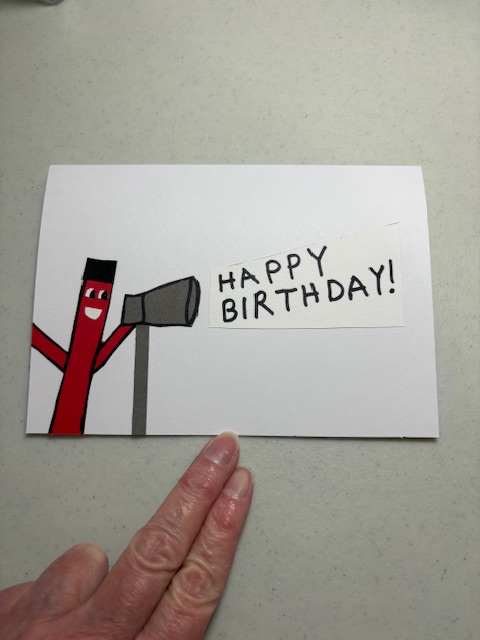
We didn’t have any family birthdays this month, so I didn’t make any cards. So I’ll plunge right into this month’s reading round-up.
Reading
Since last month, I’ve completed (titles link to my reviews):
Tending Roses by Lisa Wingate, fiction. Kate goes to hold down the fort and keep things safe at her forgetful grandmother’s house until the rest of the family can come for Christmas and make arrangement for Grandma’s care. But Kate begins to wonder if they are making a mistake.Very good.
Mrs. Tim of the Regiment by D. E. Stevenson, fiction, audiobook. A fictionalized diary of an army wife in the 1930s. Amusing in places.
Written on the Wind by Elizabeth Camden, fiction, audiobook (This was finished at the end of September but not reviewed until October). A man heading the Trans-Siberian Railway project witnesses violent crime at the hands of soldiers, and escapes from Russia to share with the world what happened. The only person he cam trust is the woman at the bank in New York that has been financing the project. Very good.
I’m currently reading:
2 Corinthians for You by Gary Millar with our ladies’ Bible study
Ezekiel: The God of Glory by Tim Chester
Write a Must-Read: Craft a Book That Changes Lives—Including Your Own by A. J. Harper. Making progress!
What’s a Disorganized Person to Do? by Stacey Platt. Reading this in spurts.
The Collected Letters of C.S. Lewis, Volume 3: Narnia, Cambridge, and Joy, 1950 – 1963, compiled by Walter Hooper. I’m just reading a few pages of this at a time.
After the Storm. Thoughts on the destruction of the hurricane.
To Confront or Cover? Scripture tells us sometimes to confront people when they sin against us, and other times to cover over an offense. How do we know when to do which?
Jesus, Our Example and More. Jesus is more than just a good example, but there are places the Bible holds Him up as an example to follow.
I’ve started another piece for Christian Devotions, but have not gotten back to my manuscript’s rough draft. Since I’m in the stage of revising my first draft, I feel like I need a large swath of time available to work on it. But then I can only do that kind of revising for an hour or so before decision fatigue sets in.
However, I did listen to a few writing-related videos.
Living by Design hosted a Zoom call as well for training in writing for the internet (for their site specifically, but much of the instruction would apply generally as well).
Thankfully, both these Zoom meetings were recorded. I wasn’t able to to attend either “live,” so I appreciated being able to watch them later.
I had bought a course on Writing Nonfiction on sale from Serious Writer some time ago, but had not watched it yet. They sent a notice that they were closing down that side of their organization, so we’d need to finish courses before the end of the month or lose them.
So I made time to watch them. I was a little disappointed. The course had eleven different “modules,” but each was only two to six minutes. The material could have been put in a couple of blog posts–and, honestly, I would have preferred it that way. But it did have some helpful information.
Looking ahead to November, it looks like it will be a fairly quiet month until Thanksgiving week. I have an eye doctor appointment and the last of our church’s “Connect Four” get-togethers (where we divide up into groups of four women each and meet once a month over four months to get to know each other. So far, we’ve met for lunch each time). I also hope to get together for lunch with my friend who had to cancel earlier this month.
How was your October? Are you looking forward to anything in November?
My husband and I aren’t rah rah people. I didn’t care for pep rallies in school. We cheer at games, especially when our kids are playing. But otherwise, we’re pretty quiet people.
I’ve cringed when I’ve occasionally heard preachers rebuke people for being more excited at a football game than at church. I understand their point, but I’ve thought, “Do you really want the cacophony of a ball game in here?”
So I was encouraged when our Sunday School teacher recently pointed out a verse about silence.
She said that translations vary in how they render the first verse of Psalm 65. The ESV says, “Praise is due to you, O God, in Zion, and to you shall vows be performed.”
But many other translations mention silence, like the NASB: “There will be silence before You, and praise in Zion, God, And the vow will be fulfilled for You.”
The difference seems to be in the word “awaits,” which means, in the Greek, “A silence, a quiet waiting, repose” (according to the bottom of this page).
Worship in silence.
Personally, I feel most worshipful in silence before the Lord. I resonate with David in another psalm when he says, “For God alone my soul waits in silence; from him comes my salvation. He alone is my rock and my salvation, my fortress; I shall not be greatly shaken” (Psalm 62:1-2).
But sometimes silence results not just from personality, but from awe. Job understandably cries out about his suffering and wonders what God is doing in his life for multiple chapters of the book bearing his name.
And then God speaks. He doesn’t answer Job’s questions. But He reveals his power and care over all His creation.
Job responds, “Behold, I am of small account; what shall I answer you? I lay my hand on my mouth. I have spoken once, and I will not answer; twice, but I will proceed no further.”
The only response to such majesty, power, and greatness was humility and silence. There are just no words. As God said in Habakkuk 2:20: “But the Lord is in his holy temple; let all the earth keep silence before him.”
Sometimes silence before the Lord comes from depth of feeling, as when “the Spirit helps us in our weakness. For we do not know what to pray for as we ought, but the Spirit himself intercedes for us with groanings too deep for words” (Romans 8:26).
Sometimes we’re silent in God’s presence because we have no excuses. We know we’ve done wrong and deserve whatever chastisement we’re experiencing. We understand the author of Lamentations when he says, “The Lord is good to those who wait for him, to the soul who seeks him. It is good that one should wait quietly for the salvation of the Lord. It is good for a man that he bear the yoke in his youth. Let him sit alone in silence when it is laid on him; let him put his mouth in the dust—there may yet be hope” (3:25-29). He reminds himself just a few verses later, “For the Lord will not cast off forever, but, though he cause grief, he will have compassion according to the abundance of his steadfast love” (3:31-32).
We also need silence to listen and learn. As many a teacher has said, “You can’t listen while you’re talking.”
Worship with shouting.
But, as Ecclesiastes says, there is “a time to keep silence, and a time to speak” (3:7).
David goes on in the psalm our class was studying, Psalm 65, to talk about the blessings of answered prayer, forgiveness, and God’s presence. He exalts God for His “awesome deeds,” for creation, for God’s care of all He has made. And then he mentions shouting: “You make the going out of the morning and the evening to shout for joy” (verse 8b).
Be glad in the Lord, and rejoice, O righteous, and shout for joy, all you upright in heart! (Psalm 32:11).
Shout for joy in the Lord, O you righteous! Praise befits the upright (Psalm 33:1).
Though I am not a shouter by nature, the closest I get to that exuberant joy that can’t be contained, that has to burst out somehow, is when someone is baptized.
Worship with singing.
Psalm 65 closes with singing in verse 13: “The meadows clothe themselves with flocks, the valleys deck themselves with grain, they shout and sing together for joy.”
Perhaps we associate singing with worship more than any other activity, though all of a church service and all of our lives can be acts of worship if done as unto the Lord.
Of course, there are a plethora of verses that talk about worshiping the Lord through song:
Oh sing to the Lord a new song; sing to the Lord, all the earth! Sing to the Lord, bless his name; tell of his salvation from day to day (Psalm 96:1-2).
But let all who take refuge in you rejoice; let them ever sing for joy, and spread your protection over them, that those who love your name may exult in you (Psalm 5:11).
But I have trusted in your steadfast love; my heart shall rejoice in your salvation. I will sing to the Lord, because he has dealt bountifully with me (Psalm 13:5-6).
Let the word of Christ dwell in you richly, teaching and admonishing one another in all wisdom, singing psalms and hymns and spiritual songs, with thankfulness in your hearts to God (Colossians 3:16).
I will tell of your name to my brothers; in the midst of the congregation I will sing your praise (Hebrews 2:12).
I especially love passages that say God is our song, like Isaiah 12:2: “Behold, God is my salvation; I will trust, and will not be afraid; for the LordGod is my strength and my song, and he has become my salvation.”
Psalm 65 starts with silence and ends with shouting and singing. Sometimes our silent worship and contemplation of God’s word and character will erupt into boisterous praise. Sometimes singing God’s songs with other believers will give us something to take home and think about in silence. Some days, and some seasons of life, lend themselves to silence, others to loud praise. Whether we come before the Lord in silence or with singing and shouting, we know He is with us and will hear us.
Why, My Soul, Are You Dejected? HT to the Story Warren. “Some people beat themselves up for feeling sad. Recently, an older Christian shared with me the many ways they do this. They said, ‘I know it’s bad, I should be happier if I have faith in God, right?’ They treated their sorrow with gut punches of shame. Some medicate it with distractions. Some do all they can to avoid it. Sadness surprises and embarrasses them. It shouldn’t.”
God Brings Us Bad to Give Us Best, HT to Challies. “When God lobs a hand grenade into life and rattles our faith to the core, we wonder how he’ll work the pieces of shrapnel together for our good. What does good mean, anyway?”
Why We Should Expect Witnesses to Disagree, HT to Knowable Word. “No two people are alike, so no two people experience an event in precisely the same way. If you’ve got three witnesses in a murder case, expect three slightly different versions of the event. Don’t panic, that’s normal. In fact, when three different witnesses tell me the exact same thing, I start to get suspicious.” J. Warner Wallace then applies this to the gospels and explains why variations between them don’t make them unreliable.
Are You Scattering Bad Seed? “Every day good seeds are being sown into the lives of the people around us, the people we love and are called to serve. And every day we are tempted to plant thorns among them, to sow weeds among the wheat and tares among the crops.”
The Trouble with Competitiveness, , HT to Challies. “Competitiveness comes in many forms, which is part of its sneakiness. And because of its prevalence in our culture, we can easily deceive ourselves into thinking that it’s really not such a big deal. Author Jerry Bridges names competitiveness as one of our ‘respectable sins.’ And this respectable sin may seem fun for the moment, but it’s anything but harmless.”
The Procrastination Spiral. How procrastination becomes cyclic, discussion about whether or not it is a sin, and tips for breaking the cycle.
What Pastoral Productivity Can and Cannot Do For You, HT to Redeeming Productivity. Even though this article is aimed at pastors, I found the principles helpful as well. “Although the benefits of productivity can change your life and maybe your ministry, life in a fallen world means the benefits of productivity are limited. . . Although productivity can help you fulfill your purpose, productivity should not be your purpose.”
When you think of what you are, and despair; think also of what He is, and take heart. –Charles H. Spurgeon
I’m joining Susanne and friends at Living to Tell the Story to share some blessings from the week.
1. A Medieval Faire. I’ve wanted to go to one of these for years. This one was about an hour away from us, but so much fun. It had a Robin Hood theme, Human Battle Chess with characters from Robin Hood lore, a (very fake, but fun to watch) jousting tournament, various performers, and vendors. Many of those who came dressed up as well.
2. Medical phone calls done. I don’t know why I hate these so much. 🙂 They don’t take long to accomplish. But it felt good to take care of them in one sitting. I’m still waiting for a reply to one . . . but at least the ball is in their court.
3. French toast for one. I rarely make this, as it’s a little more involved and a little much for a regular breakfast. But I was in the mood for something different and came up with this. It was just for one because Jim usually eats breakfast before I do.
4. Connect Four group. Our group of four ladies from church had our third get-together, this time at Zaxby’s. I enjoyed the conversation immensely.
5. Early voting. There was a pretty long line, but not as long as it will be on election day, and it moved quickly.
Bonus: Beautiful fall color. It’s been rumored that the fall leaves would be not quite as vibrant this year because the weather has been so dry (minus the hurricane). But as we were out and about yesterday, I drank in the beauty of many trees.
In the foreword of the reprinting of Mrs. Tim of the Regiment, author D. E. Stevenson says the book came about in the 1930s when a friend’s daughter was about to marry an officer in the Highland Regiment. The family wondered what military life would be like. Stevenson lent them her diary from her days as a young military wife. The friend returned it, saying her family had laughed heartily over it, and if she “pepped it up a bit,” she could publish it as a novel.
So Stevenson did expand and “pep up” the story. Two volumes that were originally published were combined as one in Mrs. Tim of the Regiment. Three more volumes followed over the next few years.
The book is written in a journal format, Mrs. Tim, or Hester, having received a new diary for Christmas. Her husband is an officer and they have two children, Brian and Betty. Although they have a cook, a governess, and a few servants, they talk all the time about how financially strapped they are.
The first part of the book doesn’t actually have a plot per se. It’s more a recording of Hester’s encounters with friends, run-ins with servants, and happenings with her children. In the second half (which was originally a separate book), Hester and her daughter, Betty, spend two weeks with a friend on holiday in Scotland.
At the center of it all is Hester’s wry observations and likeable personality. As a senior officer’s wife, she visits the other wives and children to encourage them. She’s not timid, but has a hard time standing up to her cook and others.
On interviewing a headmistress of a school for her daughter, and saying that Betty’s governess found her very quick, Hester is told, “Quickness is more often than not a sign of of a superficial brain.” Hester writes, “I relapse into a species of jelly but still have sufficient strength to say that I think she will find Betty is a good child and very reasonable.”
One of my favorite sentences in the book: “The oldest antiquity whose beard is quite white–or was, previous to the tomato soup–pricks up his ears.”
Sometimes Stevenson waxes poetic, especially when describing scenery:
The rolling hills give place to mountains which stand back in sullen splendor and allow us pass. The cattle become sheep, snowy lambs with black wobbly legs and cheeky little black faces interrupt their breakfast to stare at the train. Streams leap down the hillsides among the rocks and dive beneath the wheels to emerge on the other side in beds of gravel and yellow stones.
Of course, I don’t expect secular authors to have Christian values, but I still like to see how they think and write about spiritual things. There’s mention of an occasional prayer and going to church, with comments like, “The singing was good but the sermon was dull.” One “hellfire” type of sermon seems to have shaken Hester, but is brushed off by the other church members.
There are a few “damns” and occasionally a gossipy, negative attitude towards some people. One family friend seems to fall in love with Hester, though she is too “hedged with innocence” to realize it. (One thing I found odd about those times was that it was thought wrong for a woman to go around by herself, but no one had a problem with a married woman and single man going off to have picnics or visits sites alone together.)
I found the book mildly amusing. I didn’t like it quite as well as I did the Barbara Buncle books and Amberwell and it sequel, Summerhills. Those earlier books had a homey feel about them, somewhat in tone like Little Women or Anne of Green Gables (though written in a different style and era). I didn’t get quite that same feeling until near the end of this book.
I listened to the audiobook narrated by Christine Rendel. I’ll listen to the next book in the series, since I have it free via Audible‘s “Plus catalog,” then decide whether to read the other Mrs. Tim books.
Almost every day, I pray for rulers and authorities according to 1 Timothy 2:1-2. Recently I had occasion to look up that passage, and was stunned to find I had forgotten a key point.
First of all, then, I urge that supplications, prayers, intercessions, and thanksgivings be made for all people,for kings and all who are in high positions, that we may lead a peaceful and quiet life, godly and dignified in every way.
The word I had overlooked?
Thanksgiving.
Thanksgiving?
How can we be thankful for rulers who don’t rule well (speaking generally across a lifetime of elected officials), who oppose God’s moral law, who stand for things we’re against?
Well, at the time Paul wrote this letter to Timothy, they were under the reign of Nero—not the most moral of leaders, and certainly not friendly to Christians.
Even the worst rulers keep some sort of order. Without them, we’d have total anarchy or mob rule, neither of which is good.
For rulers are not a terror to good conduct, but to bad. Would you have no fear of the one who is in authority? Then do what is good, and you will receive his approval,for he is God’s servant for your good. But if you do wrong, be afraid, for he does not bear the sword in vain. For he is the servant of God, an avenger who carries out God’s wrath on the wrongdoer.Therefore one must be in subjection, not only to avoid God’s wrath but also for the sake of conscience (Romans 13:3).
But besides that, the Bible says that rulers are appointed by God.
Let every person be subject to the governing authorities. For there is no authority except from God, and those that exist have been instituted by God (Romans 13:1).
For not from the east or from the west and not from the wilderness comes lifting up,but it is God who executes judgment, putting down one and lifting up another (Psalm 75:6-7).
He changes times and seasons; he removes kings and sets up kings; he gives wisdom to the wise and knowledge to those who have understanding (Daniel 2:21).
The Most High rules the kingdom of men and gives it to whom he will and sets over it the lowliest of men (Daniel 4:17b).
How can God set up ungodly rulers?
Habakkuk wondered that in the book that bears his name. He complained to God about the sin, violence, strife, and destruction all around him. “The law is paralyzed, and justice never goes forth.For the wicked surround the righteous; so justice goes forth perverted” (1:4).
How did God answer? He was sending the “dreaded and fearsome” Chaldeans, known for their violence, “whose own might is their god.“
If Habakkuk lived in our day, he might have said, “Wait—what?” He protests, and then God elaborates. Their conversation is too long to share here, but I encourage you to read it. God was judging Israel, but He would judge the Chaldeans, too. Habakkuk asks God to “in wrath remember mercy,” and though he trembles, he trusts and will rejoice in God.
God doesn’t always share His reasons for what He does. Sometimes He appoints wicked rulers as a judgment. Sometimes we’re more prayerful when a candidate we’re opposed to wins an election. When “our guy” is in office, we tend to trust him rather than God. Sometimes He has other purposes in mind. But rulers don’t have a free pass just because God appointed them. They are accountable to Him as well.
And even when wicked rulers are in power, God is still on the throne. Statements and evidences of this are all over Scripture, but one clear example is in the book of Esther. God’s name is not mentioned in Esther, but His fingerprints are everywhere. Despite a heathen king and a wicked enemy, God spared His people.
The United States will hold elections in a couple of weeks. Whether our preferred candidates win or not, we should:
Remember God is still on the throne.
Obey authorities unless they ask us to disobey God. “We must obey God rather than men” (Acts 5:29); “Remind them to be submissive to rulers and authorities, to be obedient, to be ready for every good work, to speak evil of no one, to avoid quarreling, to be gentle, and to show perfect courtesy toward all people” (Titus 3:1-2).
Pray for them. “First of all, then, I urge that supplications, prayers, intercessions, and thanksgivings be made for all people, for kings and all who are in high positions, that we may lead a peaceful and quiet life, godly and dignified in every way (1 Timothy 2:1-2).
Thank God for them (1 Timothy 2:1).
Respect them. Honor everyone. Love the brotherhood. Fear God. Honor the emperor (1 Peter 2:17).
Serve God. Be subject for the Lord’s sake to every human institution, whether it be to the emperor as supreme, or to governors as sent by him to punish those who do evil and to praise those who do good. For this is the will of God, that by doing good you should put to silence the ignorance of foolish people. Live as people who are free, not using your freedom as a cover-up for evil, but living as servants of God (1 Peter 2:13-16).
Human government is, in one sense, God’s gift to help maintain order in the world, so that the church may minister the Word and win the lost to Christ (1 Tim. 2: 1–8). We should pray daily for those in authority so that they might exercise that authority in the will of God. It is a serious thing for a Christian to oppose the law, and he must be sure he is in the will of God when he does it. He should also do it in a manner that glorifies Christ, so that innocent people (including unsaved government employees) might not be made to suffer (p. 64).
Speaking evil of others is a great sin, and the people of God must avoid it. We may not respect the people in office, but we must respect the office, for all authority is God-given. Those who revile government officials in the name of Christ ought to read and ponder Titus 3: 1–2: “Remind them to be subject to rulers, to authorities, to be obedient, to be ready for every good deed, to malign no one, to be peaceable, gentle, showing every consideration for all men” (NASB). When Daniel refused the king’s food, he did it in a gracious way that did not get his guard into trouble (Dan. 1). Even when the apostles refused to obey the Sanhedrin’s order that they stop preaching in the name of Jesus, they acted like gentlemen. They respected the authority, even though they disobeyed the order (p. 65, emphasis mine).
What can we pray for elected officials?
Wisdom. “Give your servant therefore an understanding mind to govern your people, that I may discern between good and evil, for who is able to govern this your great people?” (1 Kings 3:9).
Justice. “May he judge your people with righteousness, and your poor with justice! May he defend the cause of the poor of the people,give deliverance to the children of the needy,and crush the oppressor!” (Psalm 72:2, 4).
Peace; opportunity to live a godly life. “That we may lead a peaceful and quiet life, godly and dignified in every way” (1 Timothy 2:2)
Right counsel, that wrong counsel will be unheeded. “And it was told David, ‘Ahithophel is among the conspirators with Absalom.’ And David said, ‘O Lord, please turn the counsel of Ahithophel into foolishness” (2 Samuel 15:31).
Truth; salvation. Joseph, Daniel, Peter, Paul, and others had opportunities to share God’s truth with the leaders of their day.
No earthly ruler or authority will be perfect, yet God uses them for His own purposes. It matters that we use the voice God has given us through voting as wisely as possible. But then we trust Him for and through the results. And because we trust Him, we can thank Him.
Updated to add: I will not approve any comments pro or against any candidate. My point is that ALL Christians are under obligation to respect, obey, pray for, and thank God for whichever candidates are elected.
I have a fairly long list of good online articles discovered this week. Perhaps a few will be of interest to you.
Gone Are the Dark Clouds, HT to Challies. “If communicating the gospel appears daunting, remember that Christ commissions and accompanies us. Through Jesus’s work on the cross we are reconciled to God, not abandoned. We can talk about this with genuine care and love for people.”
Why Does God Say No to Good Things, HT to Challies. “We understand why God would reject requests contrary to his revealed will (e.g., for provisions to rob a bank successfully) or purely materialistic requests (e.g., to win the lottery). But why would God say no to something good—seemingly consistent with his desires?”
Satan Loves Social Media. “Every other video on the internet seems to be trying to convince women to be dissatisfied with their lives. I’m not just talking about people displaying gorgeous homes and inspiring jealousy. I’m not even talking about the vast array of ads and influencer posts that convince us we aren’t allowed to age or sport any type of physical imperfections. I’m talking about reel after reel of men and women explaining to women specifically and in great detail why we should be unhappy.”
Great Gifts but Little Faithfulness. “I have known Christians who have great gifts but low faithfulness. God has given them much and it is apparent that they are making little of it. . . . I have also known men who have few gifts but great faithfulness. God has given them little and it is apparent that they are making much of it.”
No Little People. No Little Places, HT to Challies. “As Francis Schaeffer would say, ‘No little people, no little places.’ Everything God gives us to do is big and beautiful and of eternal significance. So let’s not miss out on the chances God gives us every single day to make a difference to someone.”
A Key Discipline: Observe Without Judgment. “It can be jarring to worship in a church that adheres to an unfamiliar tradition. Customs may be strange and patterns may differ from what I am accustomed to. And it is at the point of such differences that I immediately find myself tempted to pass judgment.”
Stretching Joy: 10 Ways to Notice God’s Everyday Mercies, HT to Challies. “I’ve been considering lately how to amplify singular moments of joy or beauty that God gives me. I want them to be longer-lasting, more durable experiences of thanksgiving that coexist with ongoing hardship, sorrow, or struggle with sin.”
The Glory of Good Work, HT to Redeeming Productivity. “Watching someone do good work brings joy. So does hearing someone talk about how they do something difficult that’s worth doing for the good and enjoyment of others. Proverbs 22:29 says, “Do you see a man skillful in his work? He will stand before kings; he will not stand before obscure men.” God made us to enjoy seeing people who are good at their work.”
Grace and Peace in an Election Year. “In an election year, loving our politically-other neighbor may feel more costly than airfare with an extra baggage fee! Our toughest cross-cultural assignment may be extending grace to a colleague or fellow church member whose opinions seem incomprehensible to us.”
“If we really want God’s will to be done and His kingdom to come, the chances are pretty good that my will is going to have to be undone every once in a while.” –Elisabeth Elliot
Another Friday marks another opportunity to pause for a moment and cultivate gratitude for the blessings of the week. We share those blessings with Susanne and friends at Living to Tell the Story.
1. Dinner guests. A couple from our church loves India and has been there several times. Mittu invited them over for Indian food but asked if we could meet at our house. The wife of the couple has back and hip problems, and our house is on one level while Jason and Mittu’s front door opens to steps going up to their living room. It worked out well that Mittu did the cooking and I did the cleaning. 🙂 We had a wonderful time of fellowship.
2. An Amazon gift card. I received it for my birthday but was saving it until I knew what I wanted to do with it. It was nice to extend a birthday gift for several months.
3. A denim jacket. It may sound silly, but I have been wanting one for a while. The ones I had seen were a little more than I wanted to pay. I found one at a pretty reasonable price on Amazon, and that’s one of the things I used my gift card for.
4. Central Heat. We had a cold spell this week—nights in the 30s, days in the 60s. It’s so nice to just push a button to switch from AC to heat.
5. Fall color is starting to show on the leaves in earnest now.