Unknown's avatar

About Barbara Harper

https://barbarah.wordpress.com

Friday’s Fave Five

Whew! It’s been a busy week. But a good one, overall. I’m sharing blessings from the week with Susanne and friends at Living to Tell the Story.

1. My last college yearbook. I was in college five years instead of four. During my second senior year, my husband and I were full time students first semester, got married over Christmas break, and then were part-time students second semester. Neither of us received a yearbook that year because only full-time students both semesters got one. I looked at someone else’s and saw I was in one of the candid photos–the only time in five years that happened.

I saw a while back on the university’s alumni page that old yearbooks could be ordered from the school. I finally got around to that a couple of weeks ago, and only had to pay $13. It turned out to be a used yearbook, but that’s fine. It was fun to look through it and to find “my” picture. And even though I was still listed under my maiden name there, my class picture and my husband’s were on the same row across the page. As I put the yearbook on the shelf, it just felt complete to have it there.

2. Connect Four. Every fall, the ladies group at church organizes “Connect Four” groups. All who want to participate are divided into groups of four who get together once a month over the next four months for whatever they might like to do. Our group met at McAllister’s last Sunday. I knew one of them from my care group, but had only met another and didn’t know our youngest member at all. There are always a few butterflies going to a meeting like that, but it was a lot of fun.

3. A nice gesture. As our group left McAlister’s, I stopped by the restroom and then went back to the counter for a cookie. The guy behind the counter, who wasn’t the same person who originally waited on us, saw me reach for a cookie and said, “Oh, wait–we have some fresh ones.” He went back and got a just-made cookie for me.

4. Jesse’s birthday. My youngest son turned thirty-two! Jason and family came over as well and we Facetimed Jeremy.

Jesse birthday

As a bonus blessing–I faced that cake with fear and trembling. 🙂 Some years ago Mittu made this Lemon Blueberry cake, but with gluten-free flour. Jesse loved it and has asked for it for his birthday ever since. The first time I tried it, it left me in tears–a number of things went wrong in the process of making it, and Mittu had to come rescue me and fix it. She made it for the next several years. 🙂 But her oven hasn’t been acting right since they installed a new heating element, and she didn’t want to chance making the cake there.

So with much prayer and trepidation and reading the recipe over several times, I got started (I had bought a yellow GF cake mix just in case this one didn’t turn out right). It took all afternoon, but the layers came out nicely–praise the Lord!

But I am not good at cake decorating. I got started with this one, and when the icing in the middle started leaking out, I sent Mittu an emergency text.

Cake help text

She came and did a beautiful job decorating it.

Lemon blueberry cake

4. Answered prayer. For some reason, I get frazzled when the schedule is full, even if I am looking forward to the events. I mentioned last week that we had something going on four days in a row this week. God blessed in allowing me to have some productive days last week, which helped immensely. This week, I asked God to help me remain calm and take each day and event as it came. He did.

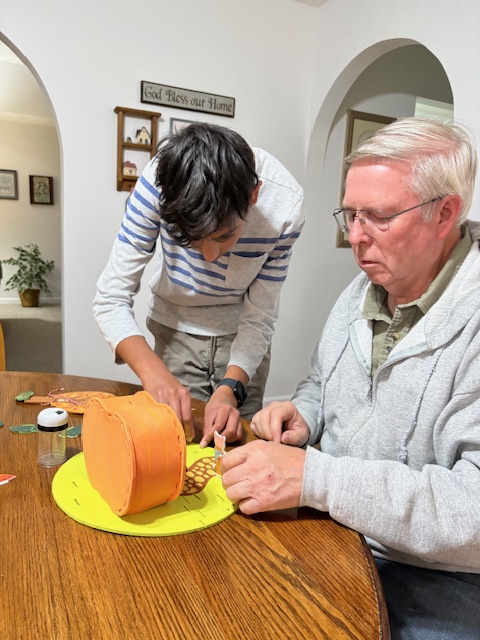
5. Time with Timothy. Jason and Mittu are helping with a new ministry at church, and Friday was their first event. Child care was offered, but Timothy wanted to spend the time with his grandparents. 🙂 Jim had recently sorted through some old video games and got out one for Xbox sports. He and Timothy played through bowling, track and field, volleyball, and other options. Here they’re boxing. 🙂

Xbox boxing

I’m thankful for God’s grace through a busy week, and I am looking forward to a quieter coming week, hopefully.

How was your week?

Review: Little Lord Fauntleroy

Little Lord Fauntleroy has never been on my to-read lists. But I was looking through Audible‘s Plus Catalog of free books they rotate in and out, and this title caught my eye. I saw that the novel was written by Frances Hodgson Burnett, who also wrote The Little Princess, which I loved, and The Secret Garden, which I had mixed emotions about. I decided to give it a try.

Cedric Errol is a little boy living with his mother in “genteel poverty.” His father had been the third son of an earl in England. When he came to America, he fell in love and married. His father hated Americans and felt this one was just after his son’s money. So he cut his son off from his inheritance and position.

Cedric’s parents lived happily together for several years until his father became sick and died. Cedric calls his mother “Dearest” because that’s what his father had always called her, and it seems to make her happy.

Cedric is seven years old at the story’s beginning. “He had never heard an unkind or uncourteous word spoken at home; he had always been loved and caressed and treated tenderly, and so his childish soul was full of kindness and innocent warm feeling.” He’s special friends with the grocer, Mr. Hobbs, a young bootblack named Dick, and the “apple woman.” Even when winning a race with another boy, he encourages him by saying he only won because he’s three days older and his legs are a little longer.

Then one day a stranger from England, a lawyer named Mr. Havisham, arrives at Cedric’s home. Cedric’s father’s brothers have all died, and Cedric is the heir to his grandfather’s estate. His grandfather wants Cedric to come to England, live with him, and learn how to become an earl. He would become Lord Fauntleroy. His mother is invited, too, but the earl doesn’t want to see her. She’s be provided another home nearby so she and Cedric can visit every day.

Cedric’s mother believes his father, who loved his home in England, would have wanted Cedric to accept this invitation. She doesn’t want Cedric to start out with bad feelings against his grandfather, so she doesn’t tell him why his grandfather won’t see her.

The earl is described as “sitting in his great, splendid, gloomy library at the castle, gouty and lonely, surrounded by grandeur and luxury, but not really loved by any one, because in all his long life he had never really loved any one but himself; he had been selfish and self-indulgent and arrogant and passionate.” Everyone is intimidated by him. But Cedric’s mother said he was kind and generous. So Cedric approaches him without fear, which impresses the earl.

He wants Cedric to realize the riches at his disposal, so he gives instructions that Cedric can have anything he likes (perhaps not realizing that this was what ruined his two older sons). Instead of indulging himself, Cedric wants to use the money to help others.

Just when I thought the book was going to be fairly predictable, an unforeseen crisis arises.

Cedric is almost too good to be true. I haven’t found anything to explain why Burnett wrote the book: this was her first children’s book, though she had written for adults before. Perhaps she wanted to give children an example to follow. It’s interesting to trace the development of characters in her children’s books (at least the three I have read). Sarah in A The Little Princess is ideal as well, but not so perfect. Mary in The Secret Garden is spoiled and nasty.

Wikipedia says this book was as popular as Harry Potter in its day, and it started a fad of boys wearing the long curls and white frilly shirt that Cedric was known for.

Virginia Leishman did a nice job narrating the audiobook. It’s free through September to Audible subscribers, and only about six and a half hours long. I also got the Kindle version for 99 cents, which includes some of the original illustrations, which were fun to see. I don’t know why the newer cover shows Cedric with dark hair when the book repeatedly mentions his golden curls.

Even though Cedric and his mother are somewhat idealized, this was a sweet story that I enjoyed very much.

Review: The Island Bookshop

The Island Bookshop

In The Island Bookshop by Roseanna M. White, Kennedy Marshall has a career she loves in the Library of Congress. But when her sister back in North Carolina’s Outer Banks has a serious fall from a ladder, Kennedy travels to help care for her sister and run their grandmother’s island bookshop.

Kennedy hasn’t been home in a while. She loves the island, her sister, and the bookshop. But she’s avoiding Wes Armstrong. They’ve been friends since childhood, but Kennedy had deeper feelings. Then Wes married her friend Britta. Though Britta passed away, Kennedy knew too many of her secrets–secrets she can’t bear that Wes should know.

Wes’s family has built a successful business on the island, but a development group has offered to purchase the business. The money would help, but the business has been Wes’s life. He struggles with knowing what he should do.

When Kennedy’s sister’s recovery takes longer than expected, Kennedy faces some difficult decisions.

When a question comes up about a different name on the lease of the bookshop than Kennedy’s grandmother, Kennedy searches for information among county records and old boxes in the attic. She finds a number of editions of The Secret Garden in various languages as well as some old letters with surprising news.

Interspersed between the modern-day chapters are scenes from Kennedy’s great-grandmother’s life. Ana is pregnant when she comes to the US during WWII from Dalmatia in Croatia, which at that time was part of Italy. Her husband, Marko, had come earlier to get a job and find a home. But he doesn’t come to meet her when she arrives. Italian-looking immigrants were viewed suspiciously at that time, and Ana doesn’t receive much help or direction. Finally a sea captain gives her a bit of information which leads her to the wife of the man who hired Marko for his fishing boat. The wife graciously takes Ana in, though she has to deal with anti-Italian sentiment from some of the neighbors.

But her friend’s daughter is enamored with Ana. They both love books, and Ana shares her favorite, The Secret Garden.

Then tragedy strikes. Ana doesn’t know what she will do in a new country with a newborn daughter.

I enjoyed both the modern-day and the historical stories. I hadn’t realized Croatia had been part of Italy. At the time, most people in the US weren’t interested in the difference–Italy was Italy and was ruled by Mussolini, so Italians were suspect. It was hard enough to adjust to a new country without that added layer.

I don’t usually read seasonally except at Christmas. But it was fun to read a “beachy” story at the end of the summer.

Themes of faith, forgiveness, and second chances are woven well through both narratives. Roseanna is one of my favorite authors, and this book is a lovely addition to her body of work.

Are You Full?

Are you full?

Nearly every time I come to the table for lunch, the napkin holder needs to be refilled. I guess it makes sense that we use a similar number of napkins each day, so they need to be refilled around the same time. Yet I sometimes find myself irked that I need to stop and get napkins from the pantry before I can eat.

It seems like many things constantly need to be refilled: the salt and pepper shakers, paper towel holders, toilet paper holders, tea pitcher, ice trays, liquid soap dispensers, countertop hot water dispenser. On a larger scale, the dishwasher, washer and dryer, pantry, freezer, refrigerator.

I used to cringe when media called us consumers. But after becoming an adult and managing my own household, it didn’t take too long to understand why that description stuck. We’re constantly using and replacing supplies.

I could reframe my irritated thoughts more positively by being thankful I have things like napkin holders and salt shakers that make life more comfortable, and I have the means to keep refilling them.

I began to think of the immaterial ways we need to be filled.

We fill our minds with knowledge–not that we use it up, but there are constantly new things to learn.

We fill our souls with beauty and inspiration.

And most importantly, our spirits need to be filled with:

The Holy Spirit. “And do not get drunk with wine, for that is debauchery, but be filled with the Spirit” (Ephesians 5:18). We receive the Holy Spirit when we’re saved, but the Bible records numerous instance of people being filled with His Spirit multiple times. 

The knowledge of His will. “That you may be filled with the knowledge of his will in all spiritual wisdom and understanding” (Colossians 1:9). 

The fruit of righteousness. “Filled with the fruit of righteousness that comes through Jesus Christ, to the glory and praise of God” (Philippians 1:11).

Praise to God. “My mouth is filled with your praise, and with your glory all the day” (Psalm 71:8).

Goodness. “I myself am satisfied about you, my brothers, that you yourselves are full of goodness, filled with all knowledge and able to instruct one another” Romans 15:14).

Joy and peace. “May the God of hope fill you with all joy and peace in believing, so that by the power of the Holy Spirit you may abound in hope” (Romans 15:13; also Psalm 16:11).

Joy in prayer. “Until now you have asked nothing in my name. Ask, and you will receive, that your joy may be full” (John 16:24).

Joy in His presence. “You make known to me the path of life; in your presence there is fullness of joy; at your right hand are pleasures forevermore” (Psalm 16:11).

Joy in obeying and abiding in Him. “These things I have spoken to you, that my joy may be in you, and that your joy may be full” (John 15:1-11).

Strength. “A wise man is full of strength, and a man of knowledge enhances his might (Proverbs 24:5).

Assurance of understanding. “That their hearts may be encouraged, being knit together in love, to reach all the riches of full assurance of understanding and the knowledge of God’s mystery, which is Christ, in whom are hidden all the treasures of wisdom and knowledge” (Colossians 2:2-3).

Assurance in the will of God. “That you may stand mature and fully assured in all the will of God” (Colossians 4:12).

Assurance of hope. “And we desire each one of you to show the same earnestness to have the full assurance of hope until the end, so that you may not be sluggish, but imitators of those who through faith and patience inherit the promises” (Hebrews 6:11-12).

Assurance of faith. “Let us draw near with a true heart in full assurance of faith, with our hearts sprinkled clean from an evil conscience and our bodies washed with pure water” (Hebrews 10:22).

The fullness of God. “To know the love of Christ that surpasses knowledge, that you may be filled with all the fullness of God” (Ephesians 3:19).

Thankfully, God doesn’t complain about filling us, and He’ll never tire of refilling us. Jesus said, “Blessed are those who hunger and thirst for righteousness, For they shall be filled” (Matthew 5:6, NKJV). 

Mary E. Maxwell expresses this so well in her hymn “Channels Only”:

How I praise Thee, precious Savior,
That Thy love laid hold of me;
Thou hast saved and cleansed and filled me
That I might Thy channel be.

Refrain:
Channels only, blessed Master,
But with all Thy wondrous pow’r
Flowing through us, Thou canst use us
Every day and every hour.

Just a channel full of blessing,
To the thirsty hearts around;
To tell out Thy full salvation,
All Thy loving message sound.

Emptied that Thou shouldest fill me,
A clean vessel in Thy hand;
With no pow’r but as Thou givest
Graciously with each command.

Witnessing Thy pow’r to save me,
Setting free from self and sin;
Thou who boughtest to possess me,
In Thy fullness, Lord, come in.

Jesus, fill now with Thy Spirit
Hearts that full surrender know;
That the streams of living water
From our inner self may flow.

Matthew 5:6

(I often link up with some of these bloggers.)

Laudable Linkage

Laudable Linkage

I hope you have a great Saturday! There are a few good reads here if you have time.

Four Prayer Responses to the Murder of Charlie Kirk, HT to Tim Challies, who has curated several posts on different aspects of Kirk’s murder here.

I don’t often link to Facebook posts, but this one shared by a friend from author Tricia White Priebe points out how rejoicing over Charlie Kirk’s murder shows society’s lack of value of human dignity.

O Lord, Heal Our Land. “Anyone who lived through the late 1960s and early 1970s, as I did, can see the parallels between then and now. And yesterday’s assassination of Charlie Kirk on a college campus in Utah has left us all stunned, wondering about our own future as a nation.”

Bible Reading as a Blessing, Not a Burden, HT to Challies. “I loathe the times I’m distracted by a screen, or a crick in the neck, or an overly groggy eye. Or even worse, when the pillow seems more pleasing. I suspect I’m not alone in my laments and loathes. And I bet you want to hang on the word of God, too.”

How to Rightly Train Your Affections, HT to Challies. “While human preferences for food or favorite football teams may be value neutral, preferences are not always so. We are commanded by God to prefer certain things. Or to shift again to the language of affections, God calls his people to rejoice in, love, and desire certain things and to despise other things. Our affections, in other words, are not always value neutral. We are responsible for training them according to the revealed will of God.”

Making Space for Others, HT to the Story Warren. “Let’s scoot over.  Make room. Here, take this spot and sit by us. If you are walking into a space as a new student, neighbor, or church visitor, those can be some of the kindest words ever spoken. As a woman in my mid-fifties, I’m shocked that the awkwardness of junior high floods back so quickly when I am in a new situation. And, as a ministry leader who usually runs the room, I can forget how it feels to walk into an unfamiliar one.”

Go Ahead, Bring a Knife to a Gunfight. “God calls each one of us to battle for the right and against the wrong, and it’s a simple fact that many of us are not equipped with the kind of weapon we would prefer to carry into such a conflict. Many of us look at the weapons wielded by others and wish we had theirs instead of ours. Yet in the battle for God’s cause, he always means for us to put to use the weapon we have on hand with the conviction that he will bless our efforts, no matter how weak or paltry those weapons may seem.”

The Good Always the Enemy of the Best. “Somewhere along the way, despite our desire to give our children the best, we can find ourselves spending vast amounts of time, energy, and money pursuing the good instead. How does this happen? We become deceived. Deceived by culture. Deceived by our well-meaning friends. Deceived, sometimes, even by Christians.”

The Most Exasperating and Least Rewarding. I’ve been pondering similar thoughts recently. “If you move to a new town and search for a new church, it’s unlikely you will find one that offers everything you’d prefer a church to offer—every doctrine, every emphasis, every association, every ministry, every preference. You may love the music, but wish there was a greater emphasis on liturgy. You may appreciate the effort that goes into evangelism, but lament the lack of effort that goes into youth ministry. The preaching may be just what you are after, but the small-group ministry is sputtering. Yet churches are bundled—you have to weigh the weaknesses against the strengths and the desirable qualities against the undesirable. Perfection isn’t an option.”

Journaling God’s Faithfulness: 10 Questions to Develop This Faith-Building Habit. If you’d like to keep a spiritual journal, this post has a lot of good suggestions for what to write about.

Is Being Pro-Life Really Just “Pro-Forced Birth?” HT to Challies. No, and this article explains why. “When it comes to moral issues, like abortion, we must always be alert for the word games, rhetorical ploys, and manipulative language that distort the truth and make something evil look good.”

Don’t Do Everything for Your Kids, HT to Challies. It’s interesting that I have seen this theme in a number of blog posts lately. “What I’d like to suggest today is that just as important as giving your kids opportunities to play soccer or violin or go to that birthday party or go to the park or do that activity or play that game with them is to allow yourself time to read the Bible or a book or to spend time with your spouse. It’s possible to give too much to your children, sacrificially, at the expense of your wellbeing and the relationship with your spouse (if you have one). And that will not serve your children, yourself, or your marriage well.”

Close to Shepherd

The closer we are to the Shepherd,
the safer we are from wolves.
Unknown

Friday’s Fave Fives

Friday's Fave Fives

On Friday’s, I intentionally exercise gratefulness for the week by sharing highlights of it with Susanne and friends at Living to Tell the Story. This has been one of those weeks where I sit down at the computer to write this post and think, “Okay, what did happen this week?” It’s gone by in a blur. But let’s see if I can come up with five things.

1. A few very productive days. I have things going on four days in a row next week, so I wanted to get as much done ahead of time as possible so I wouldn’t get stressed then. Thankfully, the first few days of this week went really well.

2. Ladies’ Bible study at church. We’re in Exodus from now until December. I am often amazed at what new observations pop out at me from well-known passages. Studying with others helps bring out even more from the text.

3. Lunch with Jason’s family Sunday after church at that Kern’s Food Hall again. As a bonus, that place has a really good donut vendor. Since I am trying to keep sugar under control, I don’t get donuts very often. I almost never get a whole package of them–that would be too much temptation. To bring one home with my decaf coffee for dessert felt like a wonderful indulgence.

4. White cheddar mac and cheese. We tried this from Arby’s along with our sandwiches one night this week. So good.

5. Comfort. Like most of us, I was shocked by the murder of Charlie Kirk this week, and dismayed to learn that people on the other side of the political fence were actually rejoicing over it. I don’t know what happened to the free exchange of ideas in this country and everyone’s right to free speech. Whatever disagreements we have with each other, they should never result in violence, especially murder. These things should spur us on to more prayer. I was helped by the Scripture truths that came to mind in this post as well as others I read yesterday.

When Evil Gets Worse

When Evil Gets Worse

The murder of Charlie Kirk yesterday, recent senseless shootings, the remembrance of the 9/11 attack today, all have me echoing Andrew Peterson’s beautiful song, “Is He Worthy?”:

Do you feel the world is broken?

We do.

Do you feel the shadows deepen?

We do.

But do you know that all the dark won’tStop the light from getting through?

We do.

Do you wish that you could see it all made new?

We do.

Last night, I was pondering how to pray about yesterday’s shooting. We pray for justice for the murderer, comfort and grace for the family, for God to turn hearts to Himself through this. But I wanted to pray, “Please make this stop.”

A phrase from a verse about evil men getting worse kept coming to mind, so I looked it up. It’s from 2 Timothy 3:12-13: “Indeed, all who desire to live a godly life in Christ Jesus will be persecuted, while evil people and impostors will go on from bad to worse, deceiving and being deceived.”

Earlier in the chapter, Paul writes this:

But understand this, that in the last days there will come times of difficulty. For people will be lovers of self, lovers of money, proud, arrogant, abusive, disobedient to their parents, ungrateful, unholy, heartless, unappeasable, slanderous, without self-control, brutal, not loving good, treacherous, reckless, swollen with conceit, lovers of pleasure rather than lovers of God, having the appearance of godliness, but denying its power. Avoid such people. For among them are those who creep into households and capture weak women, burdened with sins and led astray by various passions, always learning and never able to arrive at a knowledge of the truth. (2 Timothy 3:1-7).

That sounds like our day, doesn’t it? And the Bible says it’s only going to get worse until Jesus returns. 

So what did God inspire Paul to write to Timothy in light of the increasing evil in the world?

But as for you, continue in what you have learned and have firmly believed, knowing from whom you learned it and how from childhood you have been acquainted with the sacred writings, which are able to make you wise for salvation through faith in Christ Jesus. All Scripture is breathed out by God and profitable for teaching, for reproof, for correction, and for training in righteousness, that the man of God may be complete, equipped for every good work (2 Timothy 3:14-17).

Keep on reading, studying, living out Scripture. The written Word is light (Psalm 119:105) that teaches us of the living Word, Jesus, the light of the world (John 8:12). Evil doesn’t obscure that light; it proves it and points to the need for it. Evil shouldn’t shake our faith in God’s truth, but should make us cling to it and share it even more. 

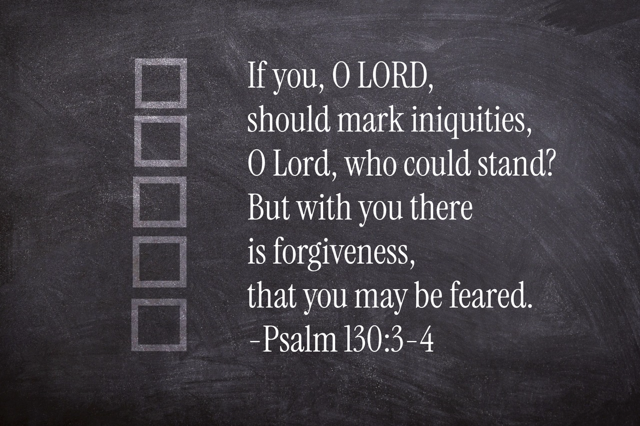
Someday Jesus will return and set all things right, make the crooked things straight. Until then, we join with the psalmist in saying, “I wait for the LORD, my soul waits, and in his word I hope” (Psalm 130:5). 

Psalm 130;5

(Note: This post is not an endorsement of everything Kirk has ever said: I don’t know all he said. I only recently learned who who he was. But I know he was a professing Christian who tried to stand up for truth the best he knew how and should not have been murdered because of a difference in politics. The main point of this post is to point us to God’s light in an increasingly dark world.)

(I often link up with some of these bloggers.)

Review: A Face Illumined

A Face Illumined

In A Face Illumined by Edward Payson Roe, Harold Van Berg is an artist attending a concert when he sees a striking young woman in the audience. He thinks her almost perfect face is so beautiful that he would love to paint it. But as he observes her, he finds that she is shallow and flirtatious. He’s disturbed that such beauty is ruined by her demeanor.

He overhears that she and her mother are going to a certain resort for the next few weeks. He decides to take his painting gear and go to the same resort. He wants to see if he can possibly awaken “thought, with womanly character and intelligence” in her.

He attempts his project first of all by expressing silent disapproval, which the girl, Ida, senses immediately. Rankled by his judgment, she determines to get back at him. But she realizes her usual way of handling men won’t work with him.

Then a pretty, sweet, kind teacher named Jenny comes to the resort. Isa sees how Harold, as well as others, respond to Jenny. She hears Jenny’s praises sung. She believes Harold is falling in love with Jenny. In fact, he seems to have forgotten Ida altogether.

Ida realizes her faults, but not knowing how to be any way other than what she is, she’s driven to despair and almost tragedy. Fortunately, a kind older man in a garden points her to One who loves her and can change her.

And Harold is stunned along the way to discover some of his own imperfections. “His confidence in his own sagacity received the severest shock it had ever experienced” (p. 203).

Edward Payson Roe was a Presbyterian pastor in the 1800s who also wrote fiction and horticulture books. I first read and loved He Fell In Love with His Wife by him when a friend mentioned it. I found some of his other books free for the Kindle app, but just got around to this one.

Of course, the language is old-fashioned. Some of the sentences are excessively long. I like to read books from this era partly so as not to lose the ability to.

The plot might seem a little odd in our day. We would notice that someone seems shallow, but I don’t think many of us would set ourselves a mission to try to improve that person n the way Harold did.

But setting all that aside, this ended up being a tender, lovely story.

Some of the quotes I marked:

He was less versed in human nature than art, and did not recognize in the forced and obtrusive gayety the effort to stifle the voice of an aroused conscience  (p. 31, Kindle app). 

Beauty without mind is like salad without dressing (p. 55).

The number of those who rise above their circumstances with a cheery courage are but few (p. 71).

A genuine man, such as she had not seen or at least not recognized before, had stepped out before the gilt and tinsel, and the miserable shams were seen in contrast in their rightful character (p. 106).

What a heaven it would be to look up into the eyes of a man I could trust, and who honored me (p. 120).

What an unknown mystery each life is, even to the lives nearest to it! (p. 150).

Mr. Mayhew was a tired, busy man, who visited at his own home rather than lived there (p. 154).

Was she not seeking to make her life an altar on which she laid as a gift to others the best treasures of her woman’s soul? (p. 160).

It is a fearful thing to permit a child to grow up ignorant of God, and of the sacred principles of duty which should be inwrought in the conscience, and enforced by the most vital considerations of well-being, both for this world and the world to come (p. 180).

When the storm was loudest and most terrible, his hand was on the helm, and now I am entering the quiet harbor (p. 194).

It was our imperfection and wickedness that brought Christ to our rescue, and yet you have been made to believe that your chief claim upon our Divine Friend is a hopeless barrier against you! (p. 210).

The hopeless fools are those who never find themselves out (p. 245).

Roe says in his preface that seeing a “beautiful but discordant face” at a concert some years earlier became this story, though he doesn’t know that person’s fate. Also, “The old garden, and the aged man who grew young within it, are not creations, but sacred memories.” He writes his earnest wish is “That the book may tend to ennoble other faces than that of Ida.”

The Only Bloodline That Matters

Th Only Bloodline That Matters

Bloodlines used to mean a great deal in society. Many a Regency-era romance involves a highborn person who falls hopelessly in love with someone who is wonderful and kind, but off-limits because of their low birth. Even now we speak of someone being from “a good family.”

I’ve often been curious about my ancestry, but I’ve never investigated how to research family history. I don’t know much about relatives who lived before my grandparents. It’s fun to hear others talk about what kind of people they came from. Well-thought of ancestors can make us feel good about ourselves. But it’s embarrassing to find out we come from a criminal or some otherwise unfavorable lineage.

Recently someone reminded me of John Harper, one of the men on the Titanic who died in the icy waters of the North Atlantic Ocean. He was a Scottish pastor who spent his last hours clinging to wreckage from the ship, sharing the gospel with everyone within earshot, refusing rescue so others who weren’t ready to die could have more time to be saved.

I think one of my husband’s relatives once told us we were related to John Harper. I found myself hoping we were, as if something of his character could rub off on our family through his bloodline.

In Keep a Quiet Heart by Elisabeth Elliot, she shared this from her grandfather, Philip E. Howard, from his book, Father and Son:

Do you remember that encouraging word of Thomas Fuller’s, a chaplain of Oliver Cromwell’s time? It’s a good passage for a father in all humility and gratitude to tuck away in his memory treasures:

Lord, I find the genealogy of my Savior strangely checkered with four remarkable changes in four immediate generations.

Rehoboam begat Abijah; that is, a bad father begat a bad son.
Abijah begat Asa; that is, a bad father begat a good son.
Asa begat Jehoshaphat; that is, a good father begat a good son.
Jehoshaphat begat Joram; that is, a good father begat a bad son.

I see, Lord, from hence that my father’s piety cannot be entailed; that is bad news for me. But I see also that actual impiety is not always hereditary; that is good news for my son.

A godly heritage is a blessing in many ways, but godliness isn’t passed through our bloodlines. The family we come from doesn’t guarantee heaven for us. We can’t coast on their faith. We have to repent of sin and believe in Jesus as our Savior and Lord for ourselves. We need to read and love His Word and develop our own personal relationship with Him.

A bad family is a problem in many ways, but it doesn’t doom us for life and eternity. God’s grace is available to all who will receive it.

Genealogies have a purpose in the Bible, but not as a predictor of who will or won’t believe on the Lord.

It’s not whose blood flows through our veins that determines our characters or our destiny. It’s whose blood flowed on the cross.

None of us is highborn in a spiritual sense. We’re all sinners to some degree. Some are worse than others, but we’re all sinful enough to receive hell.

Only the sinless Son of God could live a life of perfect righteousness before His Father. How amazing that He took our sinfulness on Himself so His righteousness would count for us. What a wonderful Savior to love us even when we were His enemies and sacrifice so much so we could be saved and transformed.

1 Peter 1:23

(I often link up with some of these bloggers.)

Laudable Linkage

Laudable Linkage

Some of the good reads found this week:

When Will Meta Stop Trying to Hurt Children? HT to Challies. This is disturbing. “Why would Meta provide AI chatbot guidance for its chatbots with the rationale: ‘It is acceptable to engage a child in conversations that are romantic or sensual?‘ It’s really as simple as it is disgusting: more engagement = more money. Let me explain.”

Are You Correctable? HT to Challies. “When someone corrects me, I automatically feel a little defensive. I think of all the reasons why I’m right and why the situation is more complicated than it appears. I want to come out looking like I’m not so bad, and that others would understand if they were in my shoes. I’m not alone. It’s not easy to receive correction from others. But being correctable is essential to our maturity and growth.”

Significant Others: Living Selfless While Single. “As a single woman, the sting of feeling unseen, unvalued, or overlooked can feel enormous. When you watch others receiving what you long for—and then go home to an empty house with no significant other to meet you at the door—it’s easy to feel . . . well, insignificant. But Scripture shows that true significance doesn’t come from being at the center of someone’s world.”

Seven Reasons (Almost) Every Man Should (Try to) Get Married, HT to Challies. I’ve seen a lot lately on how our shallower and more impersonal online tendencies seem to be eroding our propensity for deeper, long-term relationships. This article gives reasons why marriage, a particular type of deeper relationship, is a good thing.

The Better Way of Christian Parenting, HT to Challies. “Rather than grant your child’s every desire, your job as a parent is to use your God-given authority to redirect those desires toward righteousness (love of God and neighbor) and to train your child to righteously handle the common human experience of coping with the disappointment of unfulfilled desires.”

In a similar vein, Do You Love Your Children Enough to Displease Them? HT to Challies. “One of the hardest parts of parenting is displeasing our children. This often happens when we tell our kids ‘no’ or hold them accountable for their actions. We naturally want to please our children and give them good gifts, which reflects the character of our giving God (Matt. 7:11). However, this good desire can go too far and cause damage without proper boundaries.”

Parents, We’re Doing Too Much. “We’re too often in constant contact with our children. They don’t have any opportunities to learn critical thinking skills because they text us every question in their brains to get quick advice about what to say, which door to walk through, which paper to fill out, and on and on forever. Our kids need chances to assess situations for themselves, to reason through even very complicated scenarios, to rely on the Lord more than they rely on us. Kids need to have chances to make mistakes, to get embarrassed, to deal with drama, to learn that they can handle life.”

Is Spoiling Your Grandkids Blessing Them? “‘Grandchildren are the crown of the elderly’ (Prov. 17:6). Few things in life compare to the privilege of being a grandma, of holding in your arms a baby that was born to your own son or daughter. It really does feel like winning a crown! All other interests are set aside when there is an opportunity to spend time with that darling baby. Being a grandmother is truly a privilege. But have you ever stopped to think, Christian grandmother, about the huge responsibilities that come with this privilege?”

Spurgeon on motive for holiness

“I cannot trifle with the evil that killed my best Friend. I must be holy for His sake. How can I live in sin when He has died to save me from it?”–Charles Spurgeon.