Book Review: Farmer Boy

Farmer BoyFarmer Boy by Laura Ingalls Wilder is the second book published in her Little House series and deals with the childhood of her husband, Almanzo. If I remember correctly, I think I read thatย  Little House in the Big Woods and this book were all that were planned originally, and when they became so popular, then Laura went on to write other books about her growing up. Since Almanzo doesn’t appear in the rest of the series until a few books later, his story can really be read just about anywhere along the way.

The book covers a little over a year, beginning when Almanzo was almost nine years old. His father was a farmer and his family more prosperous than the Ingalls’ family, but they were very frugal as well. In this book Almanzo was the youngest of four children, though another boy was born to the family some years later.

Farming at this time involved the whole family. Almanzo and his brother Royal helped their father with the everyday chores like milking and cleaning out the animal stalls, and his sisters Eliza Jane and Alice helped their mother in the house, though Alice sometimes helped outside with planting and harvesting (in hoop skirts!) and Almanzo had to help inside sometimes during spring cleaning or other busy times.

Farmers were not busy just in planting and harvesting, though those, especially the latter, might be the most pressured times. They also made repairs, made equipment, broke horses, trained cattle, sheared sheep, cut ice, and many other tasks, while their wives spun thread, wove fabric, sewed, knitted, made hats, made (and sold) butter, etc. etc.

And the children were to participate in it all, both to learn by doing and to learn to pull together as a family. But the children had plenty of fun times as well. They attended school, though the boys could stay home when needed for certain tasks (which Almanzo preferred).

The children were no angels, but I’d say they were pretty normal. When their parents went away for a week, they slacked off on what they were supposed to do and ate a horrendous amount of sweets, then had to scramble to catch up the day before their parents were to come home. Almanzo got into a fight with his cousin (from a literary point of view, he had it coming for a long time: from a Christian and moral point of view, no, that’s not what he should have done) and threw a blacking brush (used on the stove) at his sister, which left a black splotch on the wallpapered wall of Mother’s for-company-only pristine parlor.

I mentioned before that Almanzo’s parents were frugal even though they were considered pretty well off. I remember when I had a job for a while cleaning in the home of a lady whose husband was the vice president of a large company. One day she fussed at me for washing the whole glass door when there was only one spot that needed to be taken care of. Inwardly I kind of rolled my eyes and thought, “As if you need to worry about a few cents worth of cleaner being wasted!” But then I thought, prosperous people don’t get where they are by being wasteful. At an Independence Day celebration, Almanzo was goaded by his cousin into asking his father for a nickel for lemonade. Almanzo was nine and had never asked his father for such a thing before. His father pulled out a half-dollar and asked Almanzo what it was. When all Almanzo could identify it as was a half-dollar, his father said, “It’s work, son. That’s what money is; it’s hard work.” He asked Almanzo a series of questions about growing, harvesting, and selling potatoes, remarked that half a bushel sold for a half-dollar, held up the coin, and then said, “That’s what’s in this half-dollar, Almanzo. The work that raised half a bushel of potatoes is in it.” Then he gave it to him and told him he could either spend it in lemonade or, he suggested, he could buy a little pig and raise it to have more pigs to sell for 4 or 5 dollars apiece. I’ll let you guess which Almanzo did.

One of the major take-aways from this book is what a tremendous lot of work such a life was. It sounds almost idyllic here, but it seemed almost constant. No one complained about it: that’s just how life was. There is something neat about knowing how to use all the parts of a butchered animal (some was frozen in the shed or attic for future use, some was saved for sausage, some parts were used in making soap and candles, the hide was saved for making shoe leather) and which trees were good for what (one kind was used for making sleds and carts, another kind for runners for the sled, another kind for withes or straps for baling hay, etc), and I admire it, but I don’t know that I’d want to go back to those days.

When Almanzo helped his father thresh wheat and asked why his father didn’t buy a threshing machine, his father said, “‘That’s a lazy man’s way to thresh. Haste makes waste, but a lazy man’d rather get his work done fast than do it himself. That machine chews up the straw til it’s not fit to feed stock, and it scatters grain around and wastes it. All it saves is time, son. And what good is time, with nothing to do? You want to sit and twiddle your thumbs, all these stormy winter days?’ ‘No!’ said Almanzo. He had enough of that on Sundays.” Yet they did use some machinery. I guess it depended on what the machine did and whether it helped or wasted goods.

There is a bit of contrast between the Almanzo’s family and his cousins, who live nearer town and wear store-bought clothes, and the shopkeepers who have to “cotton to people,” while farmers are considered (by the farmers, at least) to be “free and independent.” Almanzo’s parents dislike that Royal wants to be a storekeeper. I hadn’t thought of this aspect until I saw it mentioned in a couple of reviews I skimmed through, but town cousins and shopkeepers may have represented the changing society away from being farm-based to being more centered around towns and other goods and services.

Something else that stands out in the book is the way children were treated. It was definitely not a child-centered era. Some of it might come across as harsh by today’s standards, yet the parents were not unkind. Children were not to speak until spoken to at the table or when the parents were talking with other adults and, as I mentioned before, were expected to participate in most of the family work. I don’t think the latter is a bad thing, though these days we wouldn’t require quite so much of it. I don’t remember if I ever read this book to my boys – I should have –ย  but I do remember telling them, when they fussed over having to vacuum and dust every other Saturday, that there were some kids who had to milk cows and muck out barns every day. ๐Ÿ™‚ I do think it is good for children to work around the house, for several reasons: they learn by doing, they learn to be givers and not just takers, they learn to pull together as a family, they learn responsibility and (hopefully) the value and satisfaction of a job well done which will carry through not just in their own homes but in their jobs as well. I get frustrated with sentimental poems that seem to indicate you can have a clean house or you can be a good mom, but not both, or that you’re a bad mom if you don’t stop what you’re doing every time your child wants you to play with him. We do get distracted, with both work and our own “play,” and we need to be reminded not to get caught up in all of that and neglect our children, but there is just as much value (maybe more) in working together with them as there is in playing together. And it doesn’t hurt children to learn to wait for things, either, whether it’s waiting for their parents to finish a conversation before asking them something, or waiting, as Almanzo did when he wanted a colt, for his parents to be sure he was really ready. Though I wouldn’t want to totally go back to how things were in that day, I think there is some good balance between that extreme and the mindset these days.

There were also interesting forays into how some things were done, such as having a cobbler come to the house for a week or two to make the family shoes, how they sheared sheep and made bobsleds and threshed wheat, etc. Sometimes there was a bit too much detail, but overall it was interesting.

I remember not liking this book as well as the others in the series in previous readings, but I liked it quite a lot this go-round.

I read this book for my Laura Ingalls Wilder Reading Challenge and for Carrieโ€™sย  Reading to Know Classics Book Club as well as the Back to the Classics Challenge.

(This will also be linked toย Semicolonโ€˜s Saturday Review of Books.)

This also completes one of my requirements for theย  Back to the Classics Challenge hosted by Karen at Books and Chocolate.

classics2014

What’s On Your Nightstand: February 2014

What's On Your NightstandThe folks at 5 Minutes For Books host Whatโ€™s On Your Nightstand? the fourth Tuesday of each month in which we can share about the books we have been reading and/or plan to read.

For a short month, this February sure has seemed like a long one! The Olympics impinged on my reading time a bit, but that’s okay.

Since last time I have completed:

Ida Scudder: Healing Bodies, Touching Hearts by Janet and Geoff Benge, reviewed here.

The Woman in White by Wilkie Collins, reviewed here.

Iโ€™m currently reading:

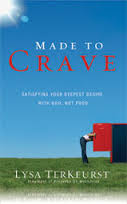
Made to Crave: Satisfying Your Deepest Desire With God, Not Food by Lisa TerKeurst along with a online Bible study using Made to Crave hosted by Proverbs 31 Ministries. Should be finished with that by the end of the week.

Walking From East to West: God in the Shadows by Ravi Zacharias

Crowded to Christ by L. E. Maxwell

Farmer Boy by Laura Ingalls Wilder for my Laura Ingalls Wilder Reading Challenge and for Carrieโ€™sย  Reading to Know Classics Book Club. Almost done!

Bleak House by Charles Dickens via audiobook.

Next up:

The Little White Horse by Elizabeth Goudge forย Carrieโ€™sย  Reading to Know Classics Book Club. I have never read Goudge but have heard good things from those who have.

The House Is Quiet, Now What? Rediscovering Life and Adventure As a Empty Nester by Janice Hanna and Kathleen Yโ€™Barbo.

The Great Divorce by C. S. Lewis

I’m longing for a couple of Christian fiction books waiting patiently for me on the book shelf, but I feel I should chip away at the books I’ve decided on for the various reading challenges I’ve signed up for first. But maybe, if I get all the ones listed here done, I’ll take a break with one of them.

Happy reading!

Book Review: The Woman in White

Woman in WhiteI had never heard of Wilkie Collins until a few years ago. When I first started listening to audiobooks, I’d scroll through the listing of classics, and his The Woman In White would come up often. I thought, “How can this be a classic if I have never heard of it?” ๐Ÿ˜ณ I read the description, but it didn’t sound all that interesting. Then last year his book No Name was chosen as one of the books forย Carrie’s Reading to Know Book Club. I looked at the description for it and wasn’t interested in it enough to commit the needed time to it, so I skipped that one as well. But then everyone who read it thought it was really good. So when I decided to participate in the Back to the Classics Challenge, one of the categories was “an author you’ve never read before,” and I thought this would be an opportune time to try out Mr. Collins and chose The Woman in White.

I am so glad I did. It was a totally enthralling story. I can understand now why there is not much description of his books on sites that sell them: you can’t tell much about the story without revealing surprises and clues it would be better for the reader to discover in context.

The story is laid out in a series of testimonies. Within them, at least that of the major characters, the narrative is in more of a story form, although one takes the form of a journal.

The story begins with Walter Hartwright, a drawing teacher who finds himself “out of health, out of spirits, and out of money.” A friend fortuitously comes across an opportunity for Walter to teach two young women from a prestigious family in the country, and though Walter has misgivings, he has no good reason to refuse and every reason to accept, so he does. On the eve of his departure, as he walks home from his mother’s house late one night, he is startled by a young woman totally dressed in white who asks him the way to London. There are several things strange about her manner and the whole situation, and most surprising of all is that as they discuss where Walter is headed, this woman knows the very family he is going to. Walter is at first unsure of what to do, but he not only points her in the right direction; he also escorts her to a cab and sees her off. Within minutes a carriage comes by containing two men who are looking for a woman in white.

Where they are from and why they are looking for her is a major factor in the story, so I won’t share it here and ruin the surprise, but as this woman is the title character, obviously her presence and influence will come up again.

The beginning of the book says it is a story of “what a Woman’s patience can endure, and what a Man’s resolution can achieve.” It’s noted as one of the first detective stories written as Walter, though not a professional detective, uses many such techniques to get at the truth of the conspiracy, deceit, and betrayal that arise later in the story.

Collins was a good friend of Charles Dickens, and this book was first printed in installments in one of Dickens’ magazines, but his style is quite different from Dickens’.

Though the story is perhaps a little more drawn out than a modern novel would be, I never felt the story got bogged down. I listened to it via audiobook with several narrators taking the different testimonies of the story, and by the last few chapters I was carrying my phone around with me everywhere to listen and find out how it was all going to end. I had an idea of a couple of things that were going to happen (the foreshadowing of a terrible event pointed to either one of a couple of people because those people hadn’t given any testimony yet), but I didn’t guess exactly how things would work out. I did get a library copy of the book as well to go back and look through some passages a little more closely, but there is a free (at this time) Kindle version of it. And, of course, if you’d like to know more of the plot, including a lot spoilers, there is always Wikipedia.

I’m definitely planning on exploring more of Collins’ books in the future.

Have you read The Woman in White? What did you think?

(This will also be linked toย Semicolonโ€˜s Saturday Review of Books.)

This also completes one of my requirements for theย  Back to the Classics Challenge hosted by Karen at Books and Chocolate.

classics2014

Reading Challenge Update

2014tbrbuttonRoof Beam Reader, who hosts the 2014 TBR Pile Challenge, has check-in points around the 15th of each month so we can summarize how we’re doing.

Of the 12 books I’ve listed here, I’ve completed Ida Scudder, am about halfway through Made to Crave and Walking From East to West, and am a few chapters into Crowded to Christ. So I think I’m pretty much on track there.

classics2014I might as well update the other challenges, too: for the Back to the Classics Challenge, I’ve completed two from the required categories of my list (The Blue Castle by L. M. Montgomery and The Scarlet Pimpernel by Baroness Orczy), and am about 3/4 of the way through The Woman in White by Wilkie Collins (which I am finding riveting!) From the optional categories I’ve completed A Study in Scarlet by Sir Arthur Conan Doyle and am about 1/4 of the way through Farmer Boy by Laura Ingalls Wilder. That leaves me three from the required and two from the optional lists, so I think I am in good shape there, too.

The Blue Castle by L. M. Montgomery was also read in connection with Carrie’sย  L. M. Montgomery Reading Challenge and Reading to Know Classics Book Club and Farmer Boy is part of my Laura Ingalls Wilder Reading Challenge. Crowded to Christ is also part of the The Cloud of Witnesses Challenge. And Crowded to Christ, Made to Crave, Ida Scudder and Walking From East to West are all eligible for the Nonfiction Reading Challenge in which I am aiming to read 11-15ย  nonfiction books.

It’s funny how just having made these lists is spurring me on to more purposeful reading. And now I am going to have to read more Sherlock Holmes and Wilkie Collins when I get done with these challenges!

Book Review: Ida Scudder: Healing Bodies, Touching Hearts

Ida Scudder grew up in India as a sixth child and only Scudderdaughter of missionary parents in the late 1870s. Her father was a doctor in a poor section of the country where frequent famines and epidemics took their toll. Ida decided early on that she did not want to live in India. The smells, the poverty, the diseases all seemed too much, especially after Ida’s family went back to the US on furlough. When her parents went back to India, Ida was left with an aunt and uncle, but when they decided to go to India, too, Ida was sent to a boarding school. Though she felt lonely and abandoned, she became known for her pranks.

She had to withdraw before graduating because her mother was ill and her parents needed her help in India. Ida was determined that she wouldn’t stay longer than necessary. One night someone came to the door seeking medical assistance for his wife, who was in labor and was having trouble. Ida had answered the door and went to send for her father, but the man stopped her. In their culture at that time, a man would not be allowed to attend a woman in labor, not even a doctor. The man asked Ida to come, but she was untrained and couldn’t help. The man turned away. That was hard enough, but the scenario was repeated two more times that night with two different men. Ida learned the next morning that all three women had died during the night. Ida was deeply affected and realized that her plans and dreams were trivial. She told God that if He wanted her to, she would spend the rest of her life in India helping these women.

She returned to the US, but finances were a problem. Medical school at that time would cost about $150 a year, and she only had $10. It had only been about fifty years since the first woman doctor had begun practice, so it was still a new idea to people. Even churches were hesitant, but one Woman’s Auxiliary Board, after hearing about the night that three women died for lack of female help, decided to support Ida. She enrolled in the Woman’s Medical College of Pennsylvania, but when Cornell University opened its doors to women medical students, she transferred and graduated from there.

She returned to India with dreams of helping her father in his practice, but his life ended unexpectedly due to cancer. It took a while for people to open up to Ida, but eventually they did. She established what she called roadside clinics to go out to where the people were diagnose and treat them. She eventually became convinced that she needed a school to help train women to be nurses, and then another school to train women doctors. How God provided funds through a Depression and two wars was miraculous.

Ida was active throughout her life. Once when a friend wanted her to take a real vacation to relax, she decided to go hiking through mountains, and loved it. She received many awards for her medical work and initiatives and remained in India until she died in 1960 just before her 9oth birthday.

I had first read of Ida years ago, but I couldn’t remember which book: I think it was probably The Story of Dr. Ida Scudder of Vellore by Dorothy Clarke Wilson, because the church library that I used at that time had other books by Wilson that I had read. I had wanted to talk about her story for my 31 Days of Missionary Stories, but all I could really remember was that one night when the three men came for help, and that Ida had gone on to become a doctor. I wanted to reacquaint Ida Scuddermyself with her life, so this time I read Ida Scudder: Healing Bodies, Touching Hearts by Janet and Geoff Benge both because it was a shorter book and because it is part of a Christian Heroes Then and Now series for children that I wanted to check out. I’d still like to go back to Wilson’s book some time, but this one is a good resource.

(This will also be linked toย Semicolonโ€˜s Saturday Review of Books.)

The Third Laura Ingalls Wilder Reading Challenge

Welcome to the third annual Laura Ingalls Wilder Reading Challenge! We hold it in February because her birthdayย  (February 7, 1867) and the day of her death (February 10, 1957) both occurred in February, so this seemed a fitting time to commemorate her.

Many of us grew up reading the Little House books. I donโ€™t know if there has ever been a time when there wasnโ€™t interest in the Little House series since it first came out. They are enjoyable as childrenโ€™s books, but they are enjoyable for adults as well. Itโ€™s fascinating to explore real pioneer roots and heartening to read of the family relationships and values.

Some of Laura’s other writing has been bundled into books, as well: her newspaper columns have been compiled in Little House in the Ozarks: the Rediscovered Writings of Laura Ingalls Wilder by Stephen Hines, and some of her letters have been compiled in West From Home and other books (links are to my reviews).

Then, of course, there are any number of biographies and books about Laura or the Ingalls family. Let the Hurricane Roar by Laura’s daughter, Rose Wilder Lane, and isa fictionalized account of some of her grandparentโ€™s experiences. The Wilder Life: My Adventures in the Lost World of Little House on the Prairie by Wendy McClure, Laura fan extraordinaire, is unique in that it is one woman’s attempt to capture as many “Laura moments” as she can by doing some of the activities Laura did (like churning butter) and going to some of the sites where Laura lived. I Remember Laura by Stephen W. Hines is a collection or articles and interviews of people who actually knew Laura. Those are just a few that I’ve read: there are many more out there I’d like to get to some day. I listed a few others under Books Related to Laura Ingalls Wilder, but that list is by no means exhaustive.

For the reading challenge in February, you can read anything by, about, or relating to Laura. You can read alone or with your children or a friend. You can read just one book or several throughout the month โ€” whatever works with your schedule. If youโ€™d like to prepare some food or crafts somehow relating to Laura or her books, that would be really neat too.

Let us know in the comments whether youโ€™ll be participating and what you think youโ€™d like to read this month. That way we can peek in on each other through the month and see how itโ€™s going (thatโ€™s half the fun of a reading challenge). On Feb. 28, Iโ€™ll have another post where you can share with us links to your wrap-up post. Of course if you want to post through the month as you read, that would be great. You donโ€™t have to have a blog to participate: you can just leave your impressions in the comments if you like. And Iย just may have a prize at the end of the month for one participant. ๐Ÿ™‚

My own plans are to read The Farmer Boy about Almanzo’s childhood. I may go on to By the Shores of Silver Lake, but I haven’t decided yet – I’m participating in so many other reading challenges this year, I want to be careful to pace myself.

Feel free to grab the button for the challenge to use in your post:

Laura Ingalls Wilder Reading Challenge
<div align="center"><a href="http://wp.me/p1mPv-32b" title="Laura Ingalls Wilder Reading Challenge"><img src="https://barbaraleeharper.com/wp-content/uploads/2011/11/liw.jpg"   alt="" width="144" height="184""" alt="Laura Ingalls Wilder Reading Challenge" style="border:none;" /></a></div>


Reading to Know - Book ClubBy the way, Carrieย  chose Little House on the Prairie as her Classics Book Club selection for February to dovetail with this challenge, so if you’d like to read that book you can complete something for two challenges with one book. ๐Ÿ™‚

Whatโ€™s On Your Nightstand: January 2014

What's On Your NightstandThe folks at 5 Minutes For Books host Whatโ€™s On Your Nightstand? the fourth Tuesday of each month in which we can share about the books we have been reading and/or plan to read.

Usually I anticipate the Nightstand posts and have them ready, but for some reason this month I completely forgot about it until I saw Nightstand posts listed on several of my friends’ blogs in my Feedly! So I’m going to whip this one together.

It has been a good month for reading!

Since last time I have completed:

Unglued:ย Making Wise Choices in the Midst of Raw Emotions by Lysa TerKeurst, reviewed here.

Jennifer: An Oโ€™Malley Love Story by Dee Henderson, short review here.

Unspoken by Dee Henderson, reviewed here.

The Blue Castle by L. M. Montgomery, reviewed here. for Carrie’s January selection for her Reading to Know Classics Book Club her L. M. Montgomery Reading Challenge.

Lost and Found by Ginny Yttrup, reviewed here.

The Incorrigible Children of Ashton Place: Book IV: The Interrupted Tale by Maryrose Wood, short review here.

A Study in Scarlet, the first Sherlock Holmes book by Sir Arthur Conan Doyle, audiobook, reviewed here.

The Scarlet Pimpernel by Baroness Orczy, audiobook, reviewed here.

A Tale of Two Cities, audiobook, by Charles Dickens for Carrieโ€™s Reading to Know Book Club for December.

Bonhoeffer: Pastor, Martyr, Prophet, Spy by Eric Metaxas was finished months ago but I just reviewed it here.

Two devotional books I read through last year were A Quiet Place: Daily Devotional Readings by Nancy Leigh DeMoss and One Year Christian History by E. Michael and Sharon Rusten, both reviewed just briefly here.

I also listed my top ten books read in 2013 here.

Iโ€™m currently reading:

Made to Crave: Satisfying Your Deepest Desire With God, Not Food by Lisa TerKeurst along with a online Bible study using Made to Crave hosted by Proverbs 31 Ministries. I will probably post a general review of the book here when I finish it, but I’m blogging about the individual chapters on my I Corinthians 10:31 blog under the label Made to Crave study.

Walking From East to West: God in the Shadows by Ravi Zacharias

Crowded to Christ by L. E. Maxwell

Ida Scudder: Healing Bodies, Touching Hearts by Janet and Geoff Benge

Next up:

The Woman in White by Wilkie Collins. I’ve never read him before but he was a contemporary of Dickens and all reviews of thisย  book are high.

Farmer Boy by Laura Ingalls Wilder for my Laura Ingalls Wilder Reading Challenge (more on that below).

Other than that I am not sure, but it will be something from the book challenges I am participating in here and here. Those challenges are really spurring me on!

I invite you to participate in the Laura Ingalls Wilder Reading Challenge which runs through February, where we read books by or about or somehow related to LIW. I’ll have a post up Feb 1. where you can share what you plan to read and check out what others are reading.

Laura Ingalls Wilder Reading Challenge
Happy reading!

Book Review: The Scarlet Pimpernel

PimpernelThe Scarlet Pimpernel by Baroness Orczy is the forerunner of the heroes with a secret identity genre, at least according to Wikipedia. It was originally published as a play in 1903, then as a novel in 1905.

A scarlet pimpernel is a small red flower in England, and it’s also adopted as the name and sign of an English man who dons different disguises to help rescue those slated for the guillotine in France during the Reign of Terror of the French Revolution in 1792. He is rumored to have 19 men under his command, and his exploits have made him the talk of England, with everyone wondering about his true identity.

Citizen Chauvelin is an agent who has come from France specifically to find out the identity of the Scarlet Pimpernel and to stop him. He calls on an old friend, Lady Marguerite Blakeney, a Frenchwoman married to the very rich but very foppish English Sir Percy Blakeney. Chauvelin is convinced that in the circles in which Marguerite moves, she is sure to hear something that might be helpful to him. To ensure her cooperation, he threatens the safety of her brother with papers that show that he is in league with the Scarlet Pimpernel and therefore in danger of his life.

Marguerite wrestles with her conscience: she is as enamored of the Scarlet Pimpernel as everyone else and does not want to be the downfall of a brave man. Though she is French, she feels her countrymen have gone way too far in the Revolution. On the other hand, her she loves her brother dearly, and he is her only remaining family member.

She considers turning to her husband for help, but they have been estranged since the first days of their marriage, although they put up a good front for everyone else. Marguerite had once spoken out againstย the Marquis de St. Cyr, unwittingly causing him to be arrested and sent to the guillotine. Her husband can’t forgive her for that and doesn’t trust her. Besides, he’s slow, lazy, and dimwitted, so she doesn’t feel she can confide in him.

I’ll leave the plot there so as not to spoil it. I wouldn’t say Baroness Orczy is the best writer – there are places in the book that are tedious, other places a bit overwrought – but this is certainly an exciting book, with intrigue, suspense, danger, and everything we love about heroes in disguise.

Scarlet PimpernelI first came across this story years ago as a film starring Jane Seymour and Anthony Andrews (and a young Ian McKellen [Gandalf] as Chauvelin), which I loved. There is a good bit more swashbuckling and derring-do in the film than in the book, and the film shows the audience who the Scarlet Pimpernel is right off the bat, whereas the book slowly unfolds it. The film is based not only on the book The Scarlet Pimpernel but also Eldorado (which I haven’t read), which includes more about Marguerite’s brother and the rescue of the captive Dauphin. Many of the details are changed or in a different order, but they did keep the overall story arc the same, and they especially captured the angst of Marguerite and Percy’s love for each other that they each keep hidden at first because of their misunderstandings.

For those who would want to know, there is smattering of “damns” and “dems” and “demmed.” There are also what I did not recognize as minced oaths, but when I looked them up I saw that they were. I wish those weren’t there. :-/ But otherwise this is a fun story.

I listened to the audiobook read by a Mary Sarah, who was not the best narrator, but the book was still enjoyable.

(This will also be linked toย Semicolonโ€˜s Saturday Review of Books.)

This also completes one of my requirements for theย  Back to the Classics Challenge hosted by Karen at Books and Chocolate.

classics2014

Book Review: The Blue Castle

Carrie chose as the January selection for her Reading to Know Classics Book Club The Blue Castle by Lucy Maud Montgomery of (Anne of Green Gables fame), which dovetails nicely with her L. M. Montgomery Reading Challenge also held in January. This book is one of the few LMM wrote for adults and the only one set totally outside Prince Edward Island. It was originally published in 1926.

Blue CastleThe Blue Castle opens with a very depressed Valancy Stirling. It’s her 29th birthday, and she has no friends, has never had a boyfriend or anyone even remotely interested in being one, and she is surrounded by a large and eccentric family, including a domineering mother who goes into “fits” of silent treatment over the slightest perceived violation of her wishes. Her actions are hemmed in by what her gossipy clan would say and whether her uncle might cut her out of his will if she displeases him. With no hope of anything ever changing for the rest of her life, no wonder she’s depressed.

She gets just a bit of a respite by reading books primarily about nature by author John Foster (when her mother will let her), but usually she escapes to her blue castle, the place in her daydreams where she’s beautiful and pursued by handsome princes.

This 29th birthday isn’t helped by the fact that it is raining relentlessly, but that at least saves her from the anniversary picnic of her aunt and uncle. She has been having occasional pains in her chest, and she chooses this day to sneak out to a local doctor (not the family-approved one) to see about it. The doctor is called away on a family emergency just after her exam, but he writes her to tell her that she has angina, probably only has a year to live, and should avoid stress and strain. Thus changes everything for Valancy. No longer does she have to worry about being cut out of anyone’s will or following the same dreary, monotonous routine for the rest of her life. She begins saying exactly what she thinks and doing exactly what she wants, to the point that her family thinks she is losing her mind. Then when poor disgraced Cissy Gay, daughter of the town drunk, is dying, Valancy scandalizes her family by going to live with them to be a housekeeper, cook, nurse, and companion to Cissy. Worse, she takes up with that Barney Snaith, whom everyone is convinced has a sordid past.

When Cissy dies, Valancy does not want to return home, so she proposes to Barney Snaith, telling him she only has a year to live. She loves him but does not expect him to love her. He takes her up on her offer, and they move to his island, which reminds Valancy very much of her blue castle.

They spend the next year exploring the island, getting to know one another, and being very happy. The writing here sounds more like the LMM I know and love, with her descriptions of nature and their wanderings and their happiness at home.

Then, when a year is about up….well, I won’t spoil the story for you. ๐Ÿ™‚ Let’s just say it takes an unexpected twist.

I had a hard time liking the book at first. The first part was so depressing, and then when Valancy started to assert herself, she went overboard (though that’s not entirely surprising considering how long and severely she was repressed). But somewhere during the time she went to take care of Cissy and then her marriage I started enjoying it more, and I really liked how it ended. I did guess who Barney really was earlier in the book, but his family connections totally surprised me.

There almost seems to be an anti-religious tone in the book, as all the Stirlings are upstanding church members despite their gossip and harshness (even their minister is harsh and judgmental), but Valancy does tell Roaring Able (Cissy’s father) that there are good people in both their churches, and she does find a little church back in the woods whose pastor is simple and sincere and interested in ministering to people. I’d disagree with Barney that their happy life on the island was “what it must be like to be born again,” at least not in the Biblical sense, but he probably meant it along the lines of springtime renewal.

Thanks, Carrie is for choosing this book for the Classics Book Club! I don’t know when I would have come across it otherwise.

Reading to Know - Book Clubย ย ย  L. M. Montgomery Reading Challenge

(This will also be linked toย Semicolonโ€˜s Saturday Review of Books.)

This also completes one of my requirements for theย  Back to the Classics Challenge hosted by Karen at Books and Chocolate.

classics2014

Made to Crave Bible Study

Made to CraveSome months ago I saw that Made to Crave: Satisfying Your Deepest Desire With God, Not Food by Lisa TerKeurst was free or only a couple of dollars for Kindle apps at the time. I had seen many around the Internet say good things about it, so I bought it, and it lay languishing with all my other Kindle purchases. ๐Ÿ™‚ But I saw a note on my friend Kim’s blog that the Proverbs 31 Ministries was hosting a Bible study using Made to Crave beginning this week, so I signed up for it as a way to motivate myself to get into the book.

Several years ago I started a different blog, I Corinthians 10:31, to deal with weight loss issues because I didn’t want that subject to take over here. I decided to post my thoughts or things that stood out to me in each chapter of Made To Crave over there, again, so it doesn’t take up so much space here (we’re doing three chapters this first week; I don’t know if we’ll keep that pace throughout). I will probably post a general review of the book here when I finish it, but if you’re interested in following along with the individual chapters, they’re there under the label Made to Crave study.

I don’t think it’s too late to join in the online Made to Crave study at Proverbs 31 Ministries if anyone is interested – we’re only on the second chapter today. I’m not sure if I will stay with the study there, as there is a little more hoopla than I like, but I know some people go for that. The “extras” – Twitter parties and such – are not required to participate in the study: they’re just there for people who want those extras. But whether I continue with that particular venue or not, I will continue with the book and jotting notes on each chapter at I Corinthians 10:31.