Books Read in 2013

booksflr

At the end of the year I like to look back at what I’ve read during the year. In the next post I’ll be picking out my top 10 or so from this list. I’ve divided them up into categories without much description or commentary. I decided to list the audiobooks with the other books by type rather than in a separate category.

Non-fiction:

Classics:

  • Daniel Deronda by George Eliot, reviewed here.
  • Emily of New Moon by Lucy Maud Montgomery reviewed here.
  • Fahrenheit 451 by Ray Bradbury, audiobook, reviewed here.
  • Island of the Blue Dolphins, by Scott O’Dell, reviewed here.
  • The Last Battle by C. S. Lewis, reviewed here.
  • Little Women, audiobook, linked to a previous year’s review.
  • The Magician’s Nephew by C. S. Lewis, reviewed here.
  • Northanger Abbey by Jane Austen, audiobook, linked to an earlier review here
  • On the Banks of Plum Creek by Laura Ingalls Wilder, reviewed here
  • The Picture of Dorian Gray by Oscar Wilde, reviewed here.
  • Pride and Prejudice by Jane Austen, audiobook.
  • The Scarlet Letter by Nathaniel Hawthorne, reviewed here,
  • Sense and Sensibility by Jane Austen. audiobook, linked to an earlier review here
  • A Tale of Two Cities by Charles Dickens, audiobook, linked to an earlier review here.

Christian Fiction:

Other Fiction:

I wasn’t sure whether to put Jan Karon with the classics (though her books probably haven’t been around long enough to be called classics, but I think of them that way) or Christian fiction (though there is a definite Christian current in her books, I don’t think they were marketed as Christian fiction). I finally settled for “other.”

A couple of them, like the New American Standard Bible and With the Word by Warren Wiersbe, were completed this year but were begun long before.

By my count that’s 75 books. I’m surprised that I read more non-fiction than usual, and that I didn’t read as much from my favorite category, Christian fiction. many of the classics were rereads, which is why they’re linked to earlier reviewed of them.

There are a handful of these that I didn’t enjoy or even had some serious problems with, and there are a handful that were not bad but didn’t really do much for me. Most are good in some way or another, and there are a few standouts that I really benefited from and enjoyed. I’ll talk about the standouts in the next post.

I’ll be linking up on Saturday with Semicolon’s Saturday Review of Books, where this week she is inviting us to share our book lists for 2013.

What’s On Your Nightstand: December 2013

What's On Your NightstandThe folks at 5 Minutes For Books host What’s On Your Nightstand? the fourth Tuesday of each month in which we can share about the books we have been reading and/or plan to read.

December has been a busy month with not as much reading as usual, but that’s ok – January will be a good time to snuggle in and catch up!

Since last time I have completed:

The Healer’s Apprentice by Melanie Dickerson, reviewed here.

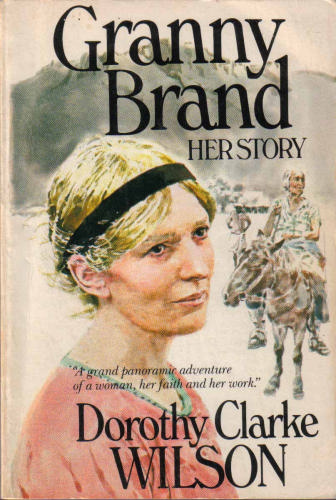
Granny Brand, Her Story, missionary to India and the mother of Paul Brand, by Dorothy Clarke Wilson, reviewed here.

Save Me From Myself: How I Found God, Quit Korn, Kicked Drugs, and Lived to Tell My Story by Brian Welch, reviewed here.

Praying for Your Addicted Loved One by Sharron K. Cosby, recommended by Joyful Reader, reviewed here.

When Mother Was Eleven-Foot-Four by Jerry Camery-Hoggatt, reviewed here.

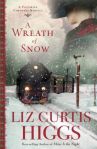
A Wreath of Snow: A Victorian Christmas Novella by Liz Curtis Higgs, reviewed here.

The Women of Christmas: Experience the Season Afresh with Elizabeth, Mary, and Anna by Liz Curtis Higgs, reviewed here.

Well, I actually got more done than I thought!

I’m currently reading:

A Tale of Two Cities (audiobook) by Charles Dickens for Carrie’s Reading to Know Book Club for November.

Throughout the year I have been reading devotional books A Quiet Place by Nancy Leigh DeMoss, One Year Christian History by E. Michael and Sharon Rusten, and Daily Light on the Daily Path, and I haven’t felt the need to mention them month to month, but I’ll finish them by the end of the year.

Next up:

Lost and Found by Ginny Yttrup

Jennifer: An O’Malley Love Story by Dee Henderson (I’ve had these two books on my TBR list for months – hope to get to them this month!

Ten Fingers For God about Paul Brand by Dorothy Clarke Wilson

Traveling Toward Sunrise by Mrs. Charles E. Cowman, given to me by a friend.

The Blue Castle by L. M. Montgomery for Carrie’s Reading to Know Classic Book Club and her L. M. Montgomery Reading Challenge in January.

If I should get through all of those…I have plenty more stacked up!

What are you reading?

Book Review: The Women of Christmas

I like to read something devotional about Christmas during December, with the Scripture passages regarding Advent themselves and/or a devotional book. I’ve enjoyed Come, Thou Long Expected Jesus, compiled by Nancy Guthrie, a number of times and thought about picking it up again this year, but I kind of wanted something new and different. Then my friend Kim mentioned she was enjoying Liz Curtis Higgs’ book The Women of Christmas: Experience the Season Afresh with Elizabeth, Mary, and Anna.  I have read several of Liz’s novels, but never one of her non-fiction books, so on Kim’s recommendation I decided to give this one a try.

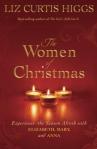
Women of ChristmasIt was just what I wanted this year. The book takes us thoughtfully through the Christmas passages of Scripture, focusing mainly, as the title indicates, on three women: Elizabeth is older, beyond the usual childbearing years, but finds herself miraculously expecting the forerunner of Christ. Mary is a young teenager, a virgin, yet she is told she will bear the Son of God. Anna is elderly yet still serves God with all her heart and life. Though Zacharias, Joseph, and Simeon are discussed as well, the main focus of the book is on how God worked in the lives of these women.

It’s obvious that Liz has put a wealth of study behind this book, but it’s not what I would call a technical book. She touches on some of the controversies and questions of the Christmas story but wisely doesn’t spend a lot of time speculating on that for which we have no answers. She brings and out meditates on the truth we can find from what God has told us in His Word and provides an opportunity to get a fresh viewpoint from passages so familiar that we can sometimes zip through them without stopping to think about the real implications for the real people in these real stories.

For instance, I never thought to wonder before why Mary went to see Elizabeth right after learning that she was going to bear Jesus. We can’t tell from the text how well they knew each other or whether they were close, though they are cousins. Elizabeth was quite a distance away from Mary. Yet when the angel, in his announcement to Mary, told her that her barren older cousin was pregnant, that must have been an encouragement to her that the God who did this impossible thing for Elizabeth could and would do the impossible thing the angel foretold for her as well. But it also provided her with someone who would understand something of what she was going through. There is no record that Mary told anyone about the angel’s announcement. We assume she told Joseph, though we don’t really know. But Elizabeth was the one person who would believe her about an angelic visit and a miraculous pregnancy.

A few quotes that stood out to me:

“Now consider this: the first person to hold the newborn Christ was Mary of Nazareth, and the first person to touch the newly risen Christ, however briefly, was Mary of Magdala. God placed himself in a woman’s care when he came to earth, then entrusted a woman to announce his resurrection when he came back to life.

“When I hear women rail that the Bible is misogynistic, I wonder if we’re reading the same book. God loves women, redeems women, empowers women – then and now. On the day we call Christmas, he could simply have arrived on earth, yet he chose to enter through a virgin’s womb. On the day we call Easter, he could have appeared first to his beloved disciple John, yet he chose as his first witness a woman set free from seven demons” (p. 122)

(On Mary’s bearing a child in a stable), “Given the circumstances, it’s surprising what we don’t find in the passage. She whined. She complained. She demanded better accommodations. Not our Mary. Even after giving birth to the Savior of the world, she didn’t insist on special treatment, didn’t fuss about there being ‘no space for them in the living-quarters'” (p. 124).

“On that day in Bethlehem, absolute abasement was bathed in breathtaking glory. Born the lowest of the low, the infant Jesus was the highest of the high” (p. 125).

(On the announcement by the angels to the shepherds), “We’ve seen countless Christmas cards and tabletop Natvity scenes with Jesus as a ‘newborn baby’ (CEB) dressed in ‘swaddling-clothes’ (KNOX) and ‘lying in a feeding trough’ (ERV). But we’ve had a lifetime to embrace that reality. Think of these men hearing it for the first time” (p. 130).

(After the shepherds told everyone about the baby on their way back to their sheep), “What about Mary? Did she run around Bethlehem, telling everyone about God’s Son? She did not. ‘But Mary treasured up all these things and pondered them in her heart.’ Luke 2:19. Mary focused on caring for her baby while she stored all she’d seen and done ‘like a secret treasure in her heart’ (NIrV). Some women like to talk their way through experiences; others prefer the Mary approach: ‘weighing and pondering’ (AMP), ‘mulling them over’ (CJB), and ‘trying to understand them’ (ERV)” (p. 136).

Note in the last quote that she didn’t say this was a better approach: just that it contrasted with the reaction of the shepherds and then later Anna. That was a blessing to me in this year of having read and heard a lot about introverts and extroverts: neither is better, God made both, and He works in and through both in different ways for His glory.

I’m so glad I read this book this year. It provided me with many quiet, meditative moments during the mornings of this Christmas season. I’m sure I’ll be using it again in years to come.

Save

Book Review: A Wreath of Snow

Wreath of SnowIn Scotland during the Victorian era, a “wreath” meant not just a circular decoration for your front door, but a drift, like a snowdrift. In A Wreath of Snow: A Victorian Christmas Novella by Liz Curtis Higgs, a wreath, or giant snowdrift, has not only stopped but also damaged the train leaving the small town of Stirling. An invisible wreath of mistakes, pain, and deception has halted and damaged the lives of two of its passengers.

One of them, Meg Campbell, had fled from home in a hurry after an altercation with her brother, who had become churlish, moody, and demanding after an accident that left him without much use of his legs years ago. Now she will have to go back home and face him again.

Gordon Shaw is a newspaper man passing through Stirling. He used to live there but a thoughtless and harmful act on his part hurt someone else there several years ago, and he has been living under its shadow ever since.

At first Meg and Gordon do not recognize each their or their shared histories, and once they do, they feel it best to cover it all up again with lies to Meg’s family. But deception never leads to healing. Is there any chance this wreath, this impasse, in the lives of all involved can be removed?

This book was a perfect Christmas read. Since it is a novella, it’s not overly long or involved, but the characters and plot are well-developed. The ending is what you would hope, without being sappy. This season when we sing of peace on earth and goodwill to men can be fraught with conflict and a long history of hard feelings, and the truths of this story encourage readers to seek peace with each other.

Book Review: Granny Brand

Granny BrandI first came across Granny Brand by Dorothy Clarke Wilson some 25-30 years ago after reading the same author’s biography of “Granny’s” son, Paul Brand,  Ten Fingers For God. At that time the ladies’ group of the church we attended had an extensive collection of missionary biographies that we could check out at the monthly ladies’ meetings. It was through that venue that I read both books, so I did not own them. I thought about both of them when I was doing the 31 Days of Missionary Stories, but it had been so long since I had read them, I thought it would be better to wait to discuss them til I had a chance to read them again. I found used copies and enjoyed revisiting Granny’s life. The book about Paul was actually written first, and the author met his mother in the course of her research and wanted to write about her, too. Granny agreed at first, and then changed her mind and started to write her own book, and finally gave permission but asked the author to wait until her death.

Granny Brand began life as Evelyn Harris. She was born the ninth of eleven children into a strict but loving well-to-do Christian family in 1879. She had “the eyes and soul of an artist,” and all through her life would stop to paint or sketch beloved sites. But though she loved her art, it didn’t fully satisfy. She had been raised doing charitable works, but she wanted to do more. Various events turned her eyes towards missions, especially a booklet by a young missionary named Jesse Brand, who ministered in India. Not coincidentally, that very same Jesse Brand came to speak at her church. She was over 30 when she told her father she was called to missions. He had wanted to keep at least some of his daughters close by and brought forth various arguments as to why she should stay, but finally, “He understood. It was his own stern creed of obedience to a higher Will that she was determined to follow” (p. 34).

Though at her farewell party someone remarked that “She looks more like an actress than a missionary” (p. 35), it didn’t take her long to lay aside her finery and immerse herself into the work and life in India. There she unexpectedly met up again with Jesse Brand, though he was assigned to another area. When they parted, they began a correspondence which blossomed into love, and when he proposed, she agreed to join him in marriage and his work.

Their wedding night was typical of her response to life: they started on a long journey to Jesse’s home, first 5 miles in wagon drawn by a pony, then in a dholi. I tried to find an image online to share, but none of them looks like the picture in the book, which shows a long length of canvas with poles through openings on both sides, which were carried by four men. The passenger would recline along the length of the fabric and be jostled up and down, back and forth, hanging onto the poles while the men walked…or ran…up and down steep mountain paths. First the heat wilted her clothing, then a deluge drenched her, the higher mountain air chilled her (no one had told her she might need warmer clothing there). Then they walked over a narrow trail with thorns tearing her skirt and branches slapping her face. Finally they trekked across a muddy rice field, and when they arrived, she thought, “Life is not going to be easy. It’s good all this happened. I may as well know it now.” “But she had not come here for an easy time. She had come for love of God, and of these hill people, and of the man whose strong arms were now lifting and carrying her over the threshold” (p. 48).

Jesse was a man of many talents, with skill in medicine, building, and planting, all put to use in ministering to the people and helping them improve their lives. Evelyn’s medical skills were more homeopathic, but they worked together smoothly. One boy was saved early on, but it was six long years later before any other converts. A priest who had actively opposed their message and work became ill and asked them to take his children when he died, as they would otherwise be left to die. His own “swamis” deserted him in his hour of need, and he now believed “Yesu-swami” was the one true God. His conversion and the Brands’ care of his daughter began to crack the door open for the gospel, and eventually more believed and a church was started.

Jesse and Evelyn took in many more children, had two of their own, and had many fruitful years in the “mountains of death,” until, nearly 14 years after their marriage, Jesse contacted malaria, which turned into blackwater fever, and died.

Evelyn was devastated and, after making arrangements for the work, went back to England for a time. But she was called to India, not just to Jesse, and wanted to go back. There were five mountain ranges that she and Jesse had dreamed of bringing the gospel to, and she wanted to continue on.

The mission board had a policy against sending a missionary back to a field that another missionary had taken over because of the understandable rifts that could arise, but Evelyn argued that this work was begun by herself and Jesse and much of their own money had been poured into it. They had built it up with their own hands. The board relented and let her go, and though she loved being back in her beloved hills, and the people loved having her, indeed “this five-year term…was filled with tensions and frustrations.” The missionary couple who came to take over the work “were capable and dedicated, but they were not Jesse Brand, and of course their methods were there own. It was inevitable that differences of opinion should arise between them and one who for sixteen years had been co-creator, co-manager, co-builder of every enterprise in the beloved complex – one who, moreover, could be neither meek nor silent when she felt a principle was at stake” (p. 113).

Meanwhile Evelyn did want to press on to the other ranges. She took camping trips to scout them out. Long used to simple, even stark living, all she could see was the exciting possibilities, while some of those she took with her could only see the hardships. But she persevered. The board wanted her to retire at 68, but after a year she resigned from the board and remained in India independently. She was 84 when she moved to her third mountain range. She continued taking in children, caring for the sick, fighting the production of kanja (marijuana), riding a pony from village to village, and sharing the gospel. She added two more mountain ranges to the original five she wanted to reach. Somewhere along the way people started calling her “Granny Brand,” though she scoffed at the thought of being old until relatively late in life.

She experienced sicknesses, broken bones from falls, and when carriers accidentally knocked her head against a rock and she never regained her balance afterward, she walked with the aid of two long sticks. Whenever she was in the hospital, she disobeyed orders to stay in her bed and went from room to room via wheelchair or pulled herself along the floor to visit other patients, share the gospel, and encourage them.

When her 95th birthday was approaching, she was afraid people would praise her for continuing to work at her age. She wrote to her son, Paul: “I am not wonderful.  I am just a poor, old, frail, and weak woman.  God has taken hold of me and gives me the strength I need each day.  He uses me just because I know that I have no strength of my own.  Please tell the people to praise God, not me.” God took her home before that birthday, but those words would continue to express her desire.

She wasn’t perfect and never would have claimed to be. She was opinionated, feisty, independent, and strong-willed, all qualities which can good but can also be a problem in some situations. But because she yielded herself to God, He transformed her and used her to touch many lives for His glory, in her lifetime and still today.

(This will also be linked to Semicolon‘s Saturday Review of Books.)

Book Review: When Mother Was Eleven-Foot-Four

eleven foot fourWhen Mother Was Eleven-Foot-Four by Jerry Camery-Hoggatt caught my eye when it was free for the Kindle app at the time. I didn’t realize it was a children’s book, but as I think C. S. Lewis said, the best children’s books are enjoyable to adults as well, and this one definitely is.

This is the story of the Christmas of 1963 for the author’s family. His mother was a tiny woman, only four-foot-eleven and about 100 lbs., but when she drew herself up to her full height, she seemed eleven-foot-four. One full-height moment was when she stared down a black-clad, tattooed biker who was making threats against her: “He blinked first.”

Mother loved everything about Christmas: the multitudes of ornaments, with a story behind every one, the symbols and meanings of everything they did for the season. She was romantic and extravagant, because she believed God was. Father  was a realist because he believed God was. Father was a man of principle, inflexible because, after all, how can a man of principle compromise his principles? And some of his strongest principles revolved around Christmas: he felt it was too commercial and that Santa’s list-keeping of good boys and girls gave the wrong idea that gifts were earned. So every year they clashed over Christmas, ending with Father compromising for Mother…

…Until one Christmas, when everything changed. Poverty and grief hung heavily over the family, and it looked like there would be no Christmas celebrating. That’s when Mother’s boys learned what Christmas giving really meant, and learned that both parents were right.

I can’t tell you much more than that, because it’s a very short book, but it’s very sweet and not at all sappy like some of the made-for-TV Christmas movies. I especially loved the author’s last couple of pages of reflections.

I just discovered the hardback version, which is apparently out of print, but the glimpse of its illustrations made me seek out a used copy. I think this book is going to become a yearly tradition.

(Updated to add: there was one aspect of the story that bothered me that I couldn’t really put into words until a day or so after posting the review. Though traditions are important, I did have trouble with Mother in the story fighting with Father over them and then going beyond what he compromised to say she could do. It sounded like, with their two strong personalities and different views, this was a regular thing, not just at Christmas, which is probably what led to the father leaving (which is what caused the grief mention that one Christmas). The mother did say later that she wished she had done better by him, so maybe she realized that as well (though of course the fault for the marriage break-up wasn’t entirely hers). As this is a story from a child’s point of view about learning to give at Christmas, the author doesn’t go into analyzing all of that: he appropriately just mentions what is necessary to this particular story.)

(This will also be linked to Semicolon‘s Saturday Review of Books.)

Book Review: Save Me From Myself: How I Found God, Quit Korn, Kicked Drugs, and Lived to Tell My Story

save me Save Me From Myself: How I Found God, Quit Korn, Kicked Drugs, and Lived to Tell My Story by Brian Welch wasn’t on my radar. I had heard of Korn, but I was never into metal music, never heard them, and did not know any of the band members’ names. But this book caught my eye when it was on sale for a low price for both the Kindle and audiobooks versions, so I thought I’d check it out. I was wary at first about how explicit he might have been about his former life, but Amazon reviews assured that he wasn’t graphic about it.

Brian grew up as an ordinary kid in Bakersfield, CA, who had a passion for music and was a part of several bands before Korn came together and exploded onto the music scene. He first tried drugs at the age of eight with a friend but didn’t get into them heavily until later on. By young adulthood he drank heavily, was addicted to meth, and sometimes tried other drugs. He says that meth was considered a “dirty’ drug but Xanax and prescription drugs were more respectable. He describes an ER doctor bringing drugs to the band, getting high with them all night, and then getting ready to go back to work at the ER the next morning (I would have hated to have been that guy’s patient).

Though he attained his childhood dream of becoming a rock star and loved performing, he found he was unsatisfied. There was an undercurrent of anger in his life beginning with his father’s “Mr. Hyde” moments and his own insecurities from being bullied as child. That was an aspect that caught me by surprise: I think we sometimes think of drug addicts as into it for pleasure and partying and don’t realize that they want the same things everyone else does: a home, a family, someone to love. When relationships fail and when life’s problems surface, it hurts them as deeply as anyone else, and they try to deal with the pain by anesthetizing it with drugs. But the drugs wear off, leaving them depressed, and they know they should stop, but they’re hooked. I also hadn’t realized that meth could leave a user severely depressed as they came off of it, perpetuating a vicious cycle of taking the drug again to numb the pain.

Brian quit several times, but after a time would try it again “just once,” and then “once in a while,” and before long he would be using regularly again. And before we scowl at that, we need to remember how often we’ve decided we need to “cut down” on sweets or TV or social media or whatever, only to pick it all back up again at the slightest provocation. It’s hard enough to break any habit, but when a drug is tailor-made to be physically and mentally addicting, getting off of it for good seems hopeless.

When Brian heard his five year old daughter singing around the house one of Korn’s songs about being addicted to sex, he felt something had to change, but he was so foggy from drug use that he couldn’t think clearly. He was suicidal much of the time that he wasn’t on drugs and felt that the drugs would do him in at some point, but he felt powerless to change anything.

Then God created a perfect storm to draw him to Himself: a real estate business partner who was a Christian shared a Scripture verse with him that spoke to his heart (Matthew 11:28: “Come to me, all who labor and are heavy laden, and I will give you rest”), he began to run into old friends who had become Christians, he attended a church service with a friend, and he gradually came to a point of believing for himself on the Lord Jesus Christ for salvation. I was almost in tears at this part of the book.

Around the same time he felt he should quit Korn to focus on raising his daughter, and the rest of the book tells of his early “baby steps” as a Christian, his growth, trips to Israel and India, and working on new music.

Sometimes when a celebrity professes faith, we can be wary because we don’t know exactly what they’ve heard or why they’re responding, but as far as I can tell, Brian’s faith is the real deal. Do I agree with every little thing he wrote and has done since? No. 🙂 Some things he wrote caused me to think, “Wow, that’s some good insight,” but then a few paragraphs later I’d wince a bit. He had only been a believer for a couple of years or so when he wrote this, so I pray he will continue to grow in the Lord.

I know some of you would want to be forewarned that there is a bit of bad language scattered through the book. Most of you who have read here long know that the “f word” is usually a deal-breaker for me in books and films, particularly when it is thrown in gratuitously. It’s not just that I don’t like it (though I don’t: I loathe it), but I don’t want words like that floating around in my brain that can then come to the forefront at an inopportune moment, and the more I read them, the more likely it is that they’ll do just that. On the other hand, I have relatives who use such words, and I have to delete about every other post of theirs on Facebook because I don’t want that language on my screen and in my mind, but I can’t unfriend them, because they’re family, after all. I don’t want to be aloof from them and make them feel like they have to clean up their act before I’ll interact with them: that is the complete opposite of the grace of Jesus Christ. Sometimes we have to take people where they are. Brian did say at some point in the book that God was working on him about cussing, and hopefully as he grows in the Lord, God will speak to him about the language of Christians.

There is another issue I wanted to comment on mainly because I feel a responsibility when I mention a book here, because sometimes people have bought books on my recommendation, and I don’t want anyone to get the mistaken idea that I am promoting something in a book that I’m not. That issue in this book is speaking in tongues. The pastor and church Brian was initially under were not charismatic, but later he came under some charismatic teaching and followed it. I know there are good people on both sides of this issue: some of our relatives that we are closest to in other doctrinal issues we would differ from in this. I don’t doubt anyone’s salvation or sincerity if they speak in tongues (though we have had people doubt ours because we don’t), but I personally believe there is a good case for believing that some of the miraculous “sign” gifts like tongues, prophecies, etc., ceased once the Bible was completed. I wrestled with this a lot in my early Christian days after reading The Cross and the Switchblade and being exposed to some charismatic television. I even called in to the TV show one day, and I don’t remember if the person on the line asked me if I was saved or believed in the Lord: they asked me if I had spoken in tongues. They tried to get me to come out with a few syllables to get things going. Alone in my room I prayed that if this was something God had for me, that He would allow it to happen, and I was disappointed when nothing happened. It took me a while to realize He answered my prayer, and that He didn’t have that for me. I don’t think that the modern charismatic movement is much like the tongues-speaking in the book of Acts: there was no trying to work it up by mouthing a few syllables there, and according to Acts 2, the tongues were actual languages that the speaker didn’t know but the hearer did. I do agree with Brian when he writes that God is not going to love you more if you do or don’t speak in tongues.

I would also say to him, if I could, that though I understand his frustration over factions of Christians fighting over doctrinal issues, that doesn’t mean they’re not important and that we can chuck them overboard. The Bible has much to say about sound doctrine, and the apostles spent a lot of time correcting false doctrine. We are all at different stages of our understanding level and maturity level, so there are going to be differences of opinion. I’ve mentioned ere before that years ago when I read 50 People Every Christian Should Know by Warren Wiersbe, I was struck by the fact that many of the people he mentioned were on opposites sides of the fence on some issues, yet God mightily used all of them. That doesn’t mean those issues aren’t important: each of us is responsible to study them out before the Lord. But people can differ on some side issues and still be friends and love God and be greatly used by Him.

Brian’s style of writing is conversational and easy to read. I was immensely blessed by hearing how God brought Brian to Himself. I was a little dismayed to read that in recent years he has gone back to playing with Korn, in that the lifestyle as well as the lyrics of their old songs (at least what little I know of them from what he says of them) do not seem conducive to Christian life and growth. I hope he’s not setting himself up for a fall. Yes, as he said in an interview, Jesus did hang out with sinners, but the Bible also tells us there are some things to flee and some things to follow. But I do pray he continues to grow in the Lord and to shine for Him, and I wish him all the best.

(This will also be linked to Semicolon‘s Saturday Review of Books.)

Book Review: The Healer’s Apprentice

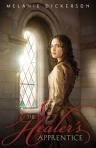
healersapprentice The Healer’s Apprentice by Melanie Dickerson is something of a Christian fiction retelling of Sleeping Beauty based in medieval Germany (forgive me, I think I have been saying Cinderella. The story made a lot more sense once I realized it was based on Sleeping Beauty. 🙂 ) There are some changes to the original story but some elements remain the same.

Rose is the daughter of a woodcutter and is an apprentice to the town healer. One day one of her patients is none other than Lord Hamlin, son of the duke. They are attracted to each other, but as they are from different classes of society, they can’t think of a relationship. Even if they could, he is engaged in an arranged marriage to someone he has never met, whose parents have her in hiding because an evil sorcerer is after her. It becomes Lord Hamlin’s job to find the evil sorcerer and do away with him before the wedding, but he can’t quite catch him.

Rose, meanwhile, is pursued by Lord Rupert, the younger son of the duke. He’s a bit of a rake, but tries to convince Rose that his love for her has changed him and his intentions are honorable. She doesn’t love him but is flattered by his attentions and believes his promises of change.

Rose soon has to face two disappointments: she discovers Lord Rupert is indeed a rake, and the couple who raised her are not her real parents. Plus she is not so good at the job she is apprenticing for and is dismayed at facing a long, lonely future in it.

Knowing this is based on Sleeping Beauty, you can guess who Rose really is and how it all turns out after a few more bumps in the road, including encounters with the sorcerer.

(Spoiler alert in this paragraph): Since this story is written without the benefit of fairy godmothers and true love’s kiss that overcomes a sleeping spell, the author had to come up with a different dilemma for the duke son’s to rescue Rose from, and this is the part that is a little off for me. One of the reviews on Amazon says that the sorcerer sends demons into Rose, and I would have had a problem with that since Rose is a believer. But that is not what he does, yet it does involves demons that Lord Hamlin then has to cast out from where they are.

I have to say I didn’t enjoy this quite as much as The Merchant’s Daughter, based on Beauty and the Beast. This is Melanie’s first book, but if I had read it first I probably would not have gone on to read the others, so I am glad I read The Merchant’s Daughter first, and I am looking forward to The Fairest Beauty based on Snow White. Nevertheless I did enjoy the story to a degree and appreciated especially Lord Hamlin’s character. Both Rose and Lord Hamlin learn to do the right thing despite feelings and to wait on God’s timing.

(This will also be linked to Semicolon‘s Saturday Review of Books.)

Book Review: Praying For Your Addicted Loved One

Praying For Addicted Loved OneI first saw Praying for Your Addicted Loved One by Sharron K. Cosby mentioned  by Joyful Reader, and it caught my eye because we have had loved ones on both sides of our family struggle with various kinds of addictions.

The book is a series of 90 devotionals set up along the lines that in 12-step recovery programs, when people first start they are supposed to attend 90 meetings in 90 days as a help in breaking their old habits, forming new ones, and finding support. The author’s own son was addicted to drugs for years with various successes and relapses along the way, and her son says where he was once a “hopeless dope addict,” he now calls himself a “dope-less hope addict.”

That’s what stood out to me the most in this book: hope. If someone close to you has ever been addicted to drugs, you know how hopeless it can seem some times. You can’t reason with them because their addiction messes up their thinking. Even if they agree that drugs are destroying them and vow to stop, it takes very little to draw them in again.

“With man this is impossible, but with God all things are possible” (Matthew 19:26). Sharron shares that hope in the midst of dark and despairing times, through all of the problems and heartache that go along with having an addicted loved one. She also shares some good advice for interacting with them and encouraging hope in them and assuring of your love while not enabling them further in their addiction.

While a promise in Scripture that God will bring Israel back from the land of their captivity is not a direct promise that He will deliver an addicted loved one, verses like Jeremiah 30:10 do give hope: “Then fear not, O Jacob my servant, declares the Lord, nor be dismayed, O Israel; for behold, I will save you from far away, and your offspring from the land of their captivity. Jacob shall return and have quiet and ease, and none shall make him afraid.” Calling wanderers back, releasing captives, setting prisoners free is what He loves to do. Jesus said, “The Spirit of the Lord is upon me, because he has anointed me to proclaim good news to the poor. He has sent me to proclaim liberty to the captives and recovering of sight to the blind, to set at liberty those who are oppressed, to proclaim the year of the Lord’s favor” (Luke 4:18-19).

I can heartily recommend this book to anyone with a loved one snared in any kind of addiction.

(This will also be linked to Semicolon‘s Saturday Review of Books.)

What’s On Your Nightstand: November 2013

What's On Your NightstandThe folks at 5 Minutes For Books host What’s On Your Nightstand? the fourth Tuesday of each month in which we can share about the books we have been reading and/or plan to read.

Wow, I don’t know where November went. Unfortunately I don’t have a lot of reading to show for it…but then it has been a busy month.

Since last time I have completed:

The Chance by Karen Kingsbury was actually finished last time but not reviewed yet. That review is here.

A Severe Mercy by Sheldon Vanauken, about his love story with his wife, how they went from atheism to Christianity, her illness and death, and their friendship and correspondence with C. S. Lewis, reviewed here.

Little Women for Carrie’s Reading to Know Book Club for November. I did read (or listen to it) this month, but since I just reviewed it last December, I’m going to link to that review.

I still haven’t gotten to review Bonhoeffer: Pastor, Martyr, Prophet, Spy by Eric Metaxas, which I finished a couple of months ago. I had a lot of notes marked in it but may just write my thoughts and impressions rather than trying to sort through so much material.

In addition I posted a list of missionary biographies I have read and can recommend to you, along with some thoughts about reading missionary biographies, and a list of children’s missionary books.

I’m currently reading:

The Healer’s Apprentice by Melanie Dickerson

Granny Brand, Her Story, missionary to India and the mother of Paul Brand, by Dorothy Clarke Wilson. Almost done and should have a review up soon.

Save Me From Myself: How I Found God, Quit Korn, Kicked Drugs, and Lived to Tell My Story by Brian Welch. This was not at all on my radar but I saw both the Kindle and Audible version on sale and decided to see what it was all about. I am not sure what I think of it yet – I’ll let you know.

Praying for Your Addicted Loved One by Sharron K. Cosby, recommended by Joyful Reader. Very nearly done with this as well and like it a great deal.

Next up:

Lost and Found by Ginny Yttrup

Jennifer: An O’Malley Love Story by Dee Henderson

A Tale of Two Cities by Charles Dickens for Carrie’s Reading to Know Book Club for November.

Ten Fingers For God about Paul Brand by Dorothy Clarke Wilson

I like to read at least one Christmas book during December but don’t have one picked out yet. I have several books to read on my shelf and even more downloaded into my Kindle app. Maybe I’ll get some reading time next month – or maybe not. 🙂