Book Review: 7 Steps to Get Off Sugar and Carbohydrates:

I had read a few blog posts by Susan Neal on some writing blogs, so I got her book: 7 Steps to Get Off Sugar and Carbohydrates: Healthy Eating for Healthy Living with a Low-Carbohydrate, Anti-Inflammatory Diet.

I confess I went into the book not planning to get off sugar completely—I mainly wanted to keep sugar consumption under better control. Plus, nutritional studies can be confusing because many of them contradict each other. For instance, it seems like one year, studies say caffeine is bad for you. Then another study another year will say it’s beneficial. And back and forth it goes. But even though I wasn’t sure what to believe about all the facts Susan shared, I knew I generally need to eat more healthy foods and less sugar and fewer carbs.

Susan goes into why sugar is so addicting. For one thing, consuming sugar releases the feel-good chemical dopamine which can lead to addiction. And probably for some people, sugar needs to be eliminated completely.

Susan also goes into why wheat causes so many problems for people today. It has been crossbred to resist drought and changed so much in the process that the body doesn’t recognize it as food. On the other hand, some people seem to eat it with no apparent problem, so perhaps some are more sensitive to it than others.

In addition,

These crops are genetically engineered to be resistant to the carcinogen glyphosate, which is the primary ingredient in the herbicide Roundup. Farmers who produce Roundup Ready crops are free to spray Roundup on their fields throughout the growing season, as the plants are resistant to this herbicide. In the United States most of the nation’s corn, wheat, oats, soy, and sugar beets are Roundup Ready crops.

My son had also found this news about Roundup in his research after his wife and son became gluten-intolerant.

Besides all that, many foods today are so processed and developed for a longer shelf life that little nutrition is left.

Susan recommends eating foods that are as close to their original form as possible and as few processed foods as possible. She acknowledges that this probably can’t be done all the time due to eating out, visiting others, and considering other family members’ choices.

Susan also deals with the spiritual side of fighting temptation to eat the wrong food by encouraging the use and memorization of Scripture and dependence on the Lord. Though we agree in many areas, I think we must come from different faith traditions, especially in the area of spiritual warfare. I wouldn’t agree with everything in this section of the book, I very much appreciated the spiritual emphasis.

Susan shares a multitude of studies, tips, facts, outside resources, and recipes.

I also read through Susan’s Christian Study Guide for 7 Steps to Get Off Sugar and Carbohydrates. It’s designed for a group study accompaniment to the original 7 Steps book, but it can also be used by individuals.

Overall, this is a good source of information and encouragement toward more healthy eating.

(Sharing with Carole’s Books You Loved)

Book Review: Be Amazed

Be Amazed (Minor Prophets): Restoring an Attitude of Wonder and Worship is Warren W. Wiersbe’s commentary on Hosea, Joel, Jonah, Nahum, Habakkuk, and Malachi. He covers the rest of the twelve minor prophets in two other books. As I said in an earlier review of Be Concerned, these books are considered “minor” only because they are much shorter than the “major” prophets.

And, as with the previous book, Wiersbe gives a little background of each of these prophets, the times they lived, the kings who were in power at the time, and the prophets’ major messages and concerns, a suggested outline of the books, and his commentary.

There are commentaries much longer and more detailed than Wiersbe’s “Be” series, but these are a nice size, easy to use with one’s Bible study.

Wiersbe says in his introduction:

We should be amazed as Hosea describes God’s jealous love and Joel pictures God’s glorious kingdom. Jonah and Nahum both deal with the wicked city of Nineveh and amaze us with God’s gracious long-suffering. Habakkuk watches the enemy approaching and invites us to be amazed at God’s righteous judgment. Malachi amazes us with his revelation of God’s contemptuous people, weary of serving the Lord.

Too many sleepy saints have lost their sense of wonder. The Minor Prophets shout at us to awaken us and invite us to open our eyes and be amazed at what God is doing in this world.

The Lord Jesus admonishes us “to believe all that the prophets have spoken” (Luke 24: 25), and that includes the Minor Prophets. May we be faithful to receive and believe their messages and to obey what God tells us to do.

I won’t get into any more of the individual books than that, since there are six of them. But here are a few of the many quotes I highlighted:

One of the greatest judgments God can inflict on any people is to let them have their own way.

The essence of idolatry is enjoying the gifts but not honoring the Giver.

Until people experience the guilt of conviction, they can’t enjoy the glory of conversion.

In their trials, they turned to God for help, but in their prosperity, they became proud and turned away from God to idols.

Idols are dead substitutes for the living God (Ps. 115). Whatever people delight in other than God, whatever they are devoted to and sacrifice for, whatever they couldn’t bear to be without, is an idol and therefore under the condemnation of God.

But wrestling with these challenges is the only way for our “faith muscles” to grow. To avoid tough questions, or to settle for half-truths and superficial pat answers it to remain immature, but to face questions honestly and talk them through with the Lord is to grow in grace and in the knowledge of Christ (2 Peter 3: 18).

When God’s people deliberately disobey Him, they sin against a flood of light and an ocean of love.

The one thing that encourages us to repent and return to the Lord is the character of God. Knowing that He is indeed “gracious and compassionate, slow to anger and abounding in love” (Joel 2:13 NIV) ought to motivate us to seek His face.

This sounds eerily like our times:

Their concern was for healing and not for cleansing. They saw their nation in difficulty and wanted God to “make things right,” but they did not come with broken hearts and surrendered wills. They wanted happiness, not holiness, a change of circumstances, but not a change in character.

I’m thankful once again for Dr. Wiersbe’s insights into these books.

(Sharing with Booknificent Thursday, Carole’s Books You Loved)

Book Review: Candleford Green

Candelford Green is the third installment of the Lark Rise to Candleford series, Flora Thompson’s semi-autobiographical account of growing up in a small English village.The books take place in the 1880s and 1890s, and Flora writes as an adult looking back at simpler times and the changes that happened since.

In the first book, Lark Rise, Flora’s alter-ego, Laura, is the oldest daughter in her family, living in the small village of Lark Rise. In the next book, Over to Candleford, Laura spends a lot of time with her relatives in Candleford Green, a slightly bigger village some eight miles away.

In this third book, Candleford Green, Laura works as an assistant in the post office. Young girls often went into service as maids or mother’s helpers at this time. Laura’s mother didn’t feel she was suited for either of those jobs. But when a friend of the Candleford relatives invites Laura to help her out in the Post Office, her family agrees to let her go.

Like the first two books, there’s no real plot. The book is mostly Laura’s observations of how the people lived, worked, celebrated, decorated their homes, etc. Along the way are little vignettes of some of the individuals who make up the village.

Some of the quotes that caught my eye:

Few would care to take that trouble for the sake of a few spoonfuls of jelly in these days. . . it was thought a waste of time in many households. On the face of it, it does seem absurd to spend the inside of a week making a small jelly, and women were soon to have other uses for their time and energy, but those who did such cookery in those days looked upon it as an art, and no time or trouble was thought wasted if the result were perfection. We may call the Victorian woman ignorant, weak, clinging and vapourish—she is not here to answer such charges—but at least we must admit that she knew how to cook.

At fourteen it is intolerable to resign every claim to distinction. Her hair was soft and thick and brown and she had rather nice brown eyes and the fresh complexion of country youth, but those were her only assets in the way of good looks. ‘You’ll never be annoyed by people turning round in the street to have another look at you,’ her mother had often told her, and sometimes, if Laura looked dashed, she would add: ‘But that cuts both ways: if you’re no beauty, be thankful you’re not a freak.’

And she had her own personal experiences: her moments of ecstasy in the contemplation of beauty; her periods of religious doubt and hours of religious faith; her bitter disillusionments on finding some people were not what she had thought them, and her stings of conscience over her own shortcomings. She grieved often for the sorrows of others and sometimes for her own.

‘You’ve got to summer and winter a man before you can pretend to know him’ was an old country maxim much quoted at that time.

This about two single women taking care of elderly parents while trying to run a shop:

No wonder the Pratt girls looked, as some people said, as if they had the weight of the world on their shoulders. They must in reality have carried a biggish burden of trouble, and if they tried to hide it with a show of high spirits and simpering smiles, plus a little harmless pretension, that should have been put down to their credit. Human nature being what it is, their shifts and pretences only served to provoke a little mild amusement.

The new vicar, according to Laura, didn’t mention heaven or hell or sin or repentance, but his sermons made “you feel two inches taller.” The people were what I’d call God-fearing in a general sense, but it doesn’t sound like the gospel was proclaimed except for one or two of the townspeople.

I found the first book sometimes hard to wade through. I didn’t have any problems with the last two: maybe I grew more used to Thompson’s style.

Nowadays, the books are usually packaged together under one title, Lark Rise to Candleford. My copy looks like the one here.

I hope to be able to watch the series, Lark Rise to Candleford. I know some things will be different. Laura is just a teenager in this last book and younger than that in the first two books. Dorcas, the postmistress, doesn’t appear until halfway through the second book, but I understand she’s there at the beginning of the series.

Overall, these were pleasant reads. I’m glad to finally be acquainted with Laura and the villagers.

(Sharing with Booknificent Thursday Carole’s Books You Loved)

Book Review: The Red Door Inn

In The Red Door Inn by Liz Johnson, Marie Carrington has been betrayed in the worst way. She flees to Prince Edward Island because she fell in love with the place when she read Anne of Green Gables. Just when her money is about to run out and she doesn’t know what to do, a chance meeting lands her a job decorating a soon-to-open bed-and-breakfast. Now, if only she can conquer her panic attacks, she can start her new life.

Jack Sloane had come to the island fifteen years ago with his beloved wife, Rose. She loved the area and always dreamed of opening a bed-and-breakfast there. She had passed away, but Jack meant to fulfill her dream. He was woefully inept with colors and decorations and furnishings, so he was glad when Marie came along. Besides, the kid looked like she could use help.

Jack’s nephew, Seth, is helping him get the inn ready. Seth is at a low point since his former fiance conned him and cleaned out his bank account. Because he has so recently been burned, and because Marie is not forthcoming about her background, he doesn’t trust her.

Of course, you can guess that Marie and Seth will be mutually attracted even though wary of each other. But can they work past their mistrust and painful pasts?

It took me a long time to warm up to Seth—he seemed extremely harsh at first, even considering his background. But that and his protectiveness of his uncle are good reasons for him to be suspicious.

A couple of the secondary characters—an antique shop owner and a baker—are quirky and delightful.

One thing Marie has to work through is her concept of God as a father. Her own father had failed her in many ways, and Marie can’t seem to disassociate her idea of God as a father from the characteristics of her own father. But she sees another example of a father in Jack, even though he never had his own children.

Overall, I found this to be a sweet story.

(Sharing with Books You Loved, Booknificent Thursday)


Book Review: The Phantom of the Opera

Born in 1868, Gaston Leroux was a French court reporter and newspaper drama critic who liked Edgar Allan Poe and Arthur Conan Doyle. He started writing detective stories which were serialized in the newspaper. He became intrigued with the Palais Garnier opera house in Paris, which had an underground lake and suffered a famous chandelier crash. Leroux wove these details into Le Fantôme de l’Opéra, or The Phantom of the Opera.

Leroux lays the plot out as a detective sharing the details of his investigation into rumors of an “opera ghost.”

Two new managers have taken over the opera house, and the old managers showed them a memorandum book with the ghost’s requirements of a certain sum of money each month and Box 5 to be always available for his use. The new managers think the old ones are pulling their leg, so they ignore the instructions despite increasing threats.

During one performance, the lead singer, Carlotta, is too ill too sing. Her understudy, Christine Daaé, performs the role beautifully. The Vicomte Raoul de Chagny was in the audience and recognizes Christine as his old playmate from childhood. Raoul tries to see Christine after the performance, but goes into a jealous rage when he hears another man talking in her dressing room.

However, Christine and Raoul do meet later. She tries to keep aloof from Raoul, but falls in love with him. She tells him that the man he heard is her teacher, the Angel of Music that her father promised to send her when he died. But the Angel of Music—also known as the Opera Ghost or O. G. or Erik—is very jealous and dangerous.

The O. G. continues leaving instructions for the new managers. He wants Christine to sing the lead in Faust. When Carlotta sings instead, she starts croaking during her aria. Then the great chandelier falls, killing one person.

Now the new managers are angry, believing that someone is trying to extort them.

Christine begins to seek a way to be with Raoul. She plans to sing one last time for Erik and then escape with Raoul. But at the height of her aria, everything goes dark for an instant. When the light comes back on, Christine is gone.

Raoul, of course, goes to search for her and learns more about O. G. in the process.

So, though the format is a crime story, the novel also has several elements of a gothic romance. Parts of it reminded me of Beauty and the Beast and Frankenstein.

As you’re probably aware, there was a famous 1925 movie based on the book with Lon Chaney as the Phantom. Andrew Lloyd Weber wrote a successful musical based on the story in the 1980s which is still being performed today and which was turned into a movie in 2004.

I had read this book several years ago, but forgotten much of it. Though gothic romances aren’t my favorite genre, and parts of this one are a little overwrought, overall I enjoyed getting reacquainted with the story.

I read, or rather listened to this for the Classics in Translation category of the Back to the Classics Reading Challenge.

Have you read Phantom? What did you think?

(Sharing with Books You Loved, Booknificent Thursday)

Book Review: Hurricane Season

In Hurricane Season by Laura K. Denton, Betsy and Jenna grew up as very different sisters. Their parents were both professionals and distant. Betsy was the responsible one who did all the right things. Jenna was free-spirited, willful, and apt to make a mess of things. But they loved each other fiercely, and Betsy was Jenna’s greatest advocate and protector.

As adults, Betsy married dairy farmer Ty, and they work together to make a go of the business and home that had been passed down through generations in Alabama. Their biggest sorrow is their inability to have children.

Jenna is a single mom to two young girls and a coffee shop manager. An old friend urges Jenna to go to an artist’s retreat in Florida to revive her dormant love of photography. At first it seems impossible. But a scholarship and her sister’s agreement to watch the girls for two weeks enable Jenna to go.

Betsy’s fragile peace with her childlessness is threatened by having two children full time, but she thinks she can hold on for two weeks. But then Jenna calls. She has an opportunity to stay past the initial two weeks, possibly even for the rest of the summer.

Besides the potential storms brewing  internally, a hurricane threatens the Gulf of Mexico.

The point of view shifts back and forth between Betsy, Ty, and Jenna. Their current circumstances and their past histories are shaped by their perspectives and personalities. Probably no one person has the entire perspective of a family. We need each other’s viewpoints and narratives to understand the whole.

I enjoyed each sister’s bumpy journey. My mind raced ahead to different ways the plot might go, but it ended up working our differently than I had thought it would—a good thing!

When I bought this book, I thought it was Christian fiction. Though there are a few mentions of God, prayer, church, etc., I can’t say a faith message was overt. For that reason, I’d label it inspirational fiction.

This is the second of four novels by USA Today best-selling author Denton. Have you read any of her work? What did you think?

(Sharing with Books You Loved, Booknificent Thursday)

Book Review: If We Make It Home

If We Make It HomeChristina Suzann Nelson’s debut novel, If We Make It Home: A Novel of Faith and Survival in the Oregon Wilderness, was named “debut of the month and one of the Best Books of 2017 by Library Journal” according to Amazon. I can see why.

A university building used for student housing is about to be torn down, and those who lived there are invited for a reunion. Four former roommates find their way back to Carrington, Oregon. They used to be close but they haven’t spoken in 25 years.

Hope James stayed in the area, running a coffee shop. She was considered the quiet glue that kept them connected while they were students.

Ireland Jayne used to be the one that called them to prayer. But she has walked away from her faith and turned her concerns towards environmentalism and activism. She is a professor, but her job is presently hanging by a thread. She has not seen her son in years.

Jenna Savage has been a stay-at-home mom, but her triplets just fled the nest. She had cried and prayed and tried so long to become pregnant, and then loved her three so much, that she doesn’t know what to do with herself now that they’re gone. She has a penchant for food and not for exercise.

Vickie Cambridge has a worldwide ministry and TV show for women, but she has neglected her own family.

Somehow the latter three end up on a survival trip in the Cascades with an older woman named Glenda, described by one as a “mountain woman.” Jenna wants the challenge. Ireland and Vicky want the escape.

None of them has any experience, and the trip is rougher than expected. (When Glenda vetoes Vicky’s butane curling iron, Vicky quips, “This must be what persecuted missionary wives feel like.”)

But then a series of disasters tests them beyond their limits and brings out the best and worst in each one.

The chapters alternate between the different women’s points of view, giving us a window into their inner struggles and their differing views of their situations and each other.

One thing this book taught me: I do not ever want to go on a survivalist trip into any wilderness or forest of any kind. Even without the disasters.

But besides that, I thought the women’s stories and journeys were so well told. I ached with each of them in their troubles and rooted for them in their triumphs.

I loved Christina’s phrasing:

The sun beats down on us and makes me feel like a loaf of over-kneaded bread in the oven.

Vicky snivels on the other side of me. I’m in an emotional sandwich. And it’s making me swirl with unease. The lightning looks like a safer companion.

Saving nature and surviving it are two very different things. We are not saviors in the wilderness. We are intruders.

The next thing she says is a muffle of grunts. Great, we’ve lost the perky one. We’re doomed.

“How do you think the pioneers got their soap?” “They bought it before they left.”

Maybe this is God’s provision. It never looks like I imagine.

I also like that the story doesn’t end with their getting out of the woods, but continues on with the aftermath of everything that happened.

All in all, a great book. I look forward to reading more by Christina.

(Sharing with InstaEncouragement, Grace and Truth, Global Blogging, Senior Salon,
Books You Loved, Booknificent Thursday)

Book Review: Billy Budd

Billy Budd MelvilleHerman Melville’s last novel, Billy Budd, was set on an English ship in the late 1700s. Billy had worked on a merchant ship, but was impressed—forced—into the British navy. He went willingly and cheerfully, however. Billy was young, good-looking, well-liked, and basically a moral, upright man.

The master-at-arms on the ship, John Claggart, took an instant dislike to Billy. The biggest factor was probably envy, but Melville seems to attribute Claggart’s dislike to his own nature, which was bent toward evil.  Billy, bent toward good and a little naive, didn’t recognize the signs of Claggart’s dislike and didn’t believe it when told.

Billy accidentally kills Claggart. His captain is put in a hard position. He believes Billy was the better man and didn’t kill Claggart on purpose. But naval laws at that time were strict in the wake of a couple of severe mutinies. Justice had to be meted out swiftly and decisively to maintain order and serve as a warning.

Billy Budd was unfinished at Melville’s death, and his wife and biographer tried to piece his work and guess his intentions. Their attempts were largely considered inferior. A later biographer was given the original manuscript and notes and came up with a better version. But different versions are still circulating. I listened to the audio version at Libravox which didn’t identify which manuscript was used. But it must have been an older one, because it had a different name for the ship, and the online version includes a preface which Wikipedia says was cut in later versions.

Because Melville hadn’t finished the book, it’s hard to know his intent in writing it. Was it a basic good vs. evil conflict, in which the good doesn’t always win out in this life? Was it a reaction against naval laws, a warning that they needed clarification? It’s hard to say. it’s interesting that Billy’s old ship was named The Rights of Man, and as Billy leaves it, he calls out, “Goodbye to you, old Rights of Man.” Perhaps this is symbolic.

Billy is presented as innocent to the point that, when the chaplain calls on him, Billy listens out of politeness but doesn’t “receive” the message. The chaplain concludes that “innocence was even a better thing than religion wherewith to go to judgment”  and leaves off. But no man is so innocent that he can face judgement without Christ.

I chose this book for the Abandoned Classic category (one you started but never finished) of the Back to the Classics challenge. Reading Billy Budd was an assignment for a college class, but I never finished it—odd, since it’s a short book. I was docked points for not finishing the reading assignment, and have rarely thought about it since. But it was one of only two classics that I could remember not finishing.

It was an interesting story. Many consider it a masterpiece for Melville second only to Moby Dick. It’s not the type of story I’d generally gravitate to. But that’s one thing I like about the Back to the Classics challenge: it expands my reading horizons. I’m glad to be acquainted with Billy story which, as most classics do, provides much food for thought.

Have you ever read Billy Budd? What did you think.

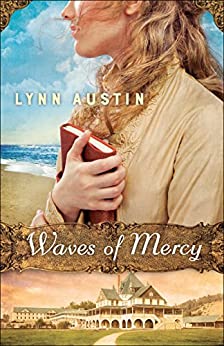
Book Review: Waves of Mercy

In Lynn Austin’s novel, Waves of Mercy, 67-year-old Geesje de Jonge is asked to write some of her experiences immigrating from the Netherlands for Holland, Michigan’s 50th anniversary celebration. She’s reluctant to delve back into the hardships and struggles of faith that accompanied her journey, but her son and neighbor finally persuade her to.

Meanwhile, young socialite Anna Nicholson had accidentally stumbled into a Chicago church that was unlike any she had known before, which stirred up questions about faith and God. But her fiance had not approved of this new church and forbid her to go back to it. Their disagreement was so severe that they broke up. Anna gets away to a hotel on Lake Michigan with her mother to think and recover. A storm on the way causes a recurring nightmare to resurface in which she and her mother fall into the sea during a storm.

On her long walks on the beach, Anna meets a young seminary student who tries to answer her questions. Her mother is no help at all, since she doesn’t think polite people talk about such things as religion. Her fiance wants to get back together, and her parents encourage their reunion. But Anna feels she needs to get some things settled in her heart first.

As the Amazon description says, “Neither Geesje nor Anna, who are different in every possible way, can foresee the life-altering surprises awaiting them before the summer ends.”

I enjoyed this book a lot. The Netherlanders had left their home to escape religious persecution arising from their wanting to pull away from the state church. America was a land of freedom and opportunity. They knew it would be hard to build a community from scratch, but they were willing to work for their and each other’s freedom.

However, they had no idea the difficulties and heartbreak that would be involved. Anna often struggled with despair, even rage. While I agree that we can be honest with God about our feelings, doubts, and questions, I disagree with Geesje telling someone who had suffered a loss, ““You have every right to be angry with God right now.” However, she does go on to tell this person, “No matter what, don’t ever stop trusting Him. I believe that God is as grieved . . . as we are.”

I enjoyed Anna’s story as well. She’s often tempted to give up her questions and go along with the pressure of her parents’ and fiance’s expectations. But something keeps propelling her forward.

The sequel to this book, Legacy of Mercy, continues Anna and Geesje’s stories. I’m putting it on my birthday wish list!

(Sharing with Global Blogging, Senior Salon, Books You Loved, Booknificent Thursday.
Links do not imply 100% agreement)

Book Review: Be Concerned

Be Concerned commentary on minor prophetsThere are twelve minor prophetical books in the Bible. They are not called minor because they are any less important than the major prophets: they are just shorter books. Warren Wierbe divides his “Be” commentaries on the minor prophets into three different books. He didn’t group them in the order in which they are listed in the Old Testament. Be Concerned (Minor Prophets): Making a Difference in Your Lifetime covers Amos, Obadiah, Micah, and Zephaniah.

Wiersbe gives a little background of each of these prophets, the times they lived, the kings who were in power at the time, and the prophets’ major messages and concerns. Then he offers a suggested outline of the books and his commentary.

A few words about each of these prophets:

Amos was a shepherd and caretaker of sycamore trees. He was a layman, not a member of the religious establishment. For those reasons, he would not have been respected or easily accepted. At this time, Israel and Judah were abounding in luxury, but also in sin and injustice. They performed religious rituals that did not touch their heart. Amos had to warn them that judgment was coming if they didn’t turn from their ways.

Obadiah’s book is short, just one chapter of 21 verses. He prophecies mostly to Edom, the nation that descended from Esau, Jacob’s brother. God deals with them about their treatment of Israel (Jacob’s descendants).

Micah’s preaching helped lead to a reformation under Hezekiah (Jeremiah 26:18-19). But at this time, some of the wealthy of the land were buying up the smaller lands of the poor in defiance of Jewish law. Micah rebuked them, foretold the coming judgment under Assyria, and called the Israelites back to true worship of their God. But they didn’t repent. Micah 7 is one of my favorite chapters in the OT, especially verses 8-10 and 18-20. Micah’s name means “Who is like the LORD,” and that’s echoed in 7:18: “Who is a God like you, pardoning iniquity and passing over transgression for the remnant of his inheritance? He does not retain his anger forever, because he delights in steadfast love.”

Zephaniah mainly preaches about the day of the Lord, a time of coming judgment. Many of the prophets do, but this day is a major theme in Zephaniah and Joel. Zephaniah 3:17 is another favorite passage.

One advantage of a commentary like this is the background information it provides that you wouldn’t pick up just from reading the text. For instance:

Eight times Amos used the phrase “for three transgressions and for four,” a Jewish idiom that means “an indefinite number that has finally come to the end” (Location 135).

Micah used a series of puns based on the names of the cities similar in sound to familiar Hebrew words. For example, “Gath” is similar to the Hebrew word for “tell.” Thus he wrote, “Tell it not in Gath.” Beth Ophrah means “house of dust.” Thus he wrote, “Roll in the dust.” The people of Shaphir (“ pleasant, beautiful”) would look neither beautiful nor pleasant as they were herded off as naked prisoners of war (Location 1438).

The prophets call people to repentance from their oppression, hypocrisy, idolatry:

To seek the Lord doesn’t mean simply to run to God for help when our sins get us into trouble, although God will receive us if we’re sincere. It means to loathe and despise the sin in our lives, turn from it, and seek the fellowship of God and His cleansing. “A broken and a contrite heart—these, O God, You will not despise” (Ps. 51: 17 NKJV) (Location 679).

Wiersbe warns, “Whenever a prophet foretold the future, it was to awaken the people to their responsibilities in the present. Bible prophecy isn’t entertainment for the curious; it’s encouragement for the serious (Location 1672).

It’s true in our day as well as theirs that “It’s indeed a great privilege to have God speak to us, but it’s also a great responsibility. If we don’t open our hearts to hear His Word and obey Him, we’re in grave danger of hardening our hearts and incurring the wrath of God. ‘Today, if you will hear His voice, do not harden your hearts’ (Heb. 3: 7–8 NKJV; see Ps. 95: 7–11)(Location 321).

The way we treat God’s Word is the way we treat God, and the way we treat God’s messengers is the way we treat the Lord Himself (John 15: 18–21). “God … has in these last days spoken to us by His Son. … See that you do not refuse Him who speaks” (Heb. 1: 1–2; 12: 25 NKJV) (Location 642, emphasis mine).

Most of the prophets say that, despite fierce and righteous judgment coming on God’s people, He will leave a faithful remnant. Wiersbe concludes with a chapter titled “The Company of the Concerned,” with advice for the faithful in our day.

Malachi 3: 16 is a good description of the kind of “company” God is looking for: “Then those who feared the LORD spoke to one another, and the LORD listened and heard them; so a book of remembrance was written before Him for those who fear the LORD and who meditate on His name” (NKJV) (Location 2341).

I’m not talking about people motivated by anger so much as by anguish. Certainly there’s a place for righteous anger in the Christian life (Eph. 4: 26), but anger alone may do more harm than good. “For the wrath of man does not produce the righteousness of God” (James 1: 20 NKJV). When righteous anger is mingled with compassion, you have anguish; and anguish is what the “company of the concerned” feel as they behold the moral and spiritual decline of the nation. “Rivers of water run down from my eyes, because men do not keep Your law” (Ps. 119: 136 NKJV). “Trouble and anguish have overtaken me, yet Your commandments are my delights” (v. 143 NKJV) (Location 2311).

As always, I appreciate Wiersbe’s help in understanding these books.

(Sharing with Books You Loved, Booknificent Thursday)