Books Read in 2018

I like to read with some intentionality rather than picking books up at random through the year, but I also need flexibility for the unplanned. I enjoy chipping away at the books already on my shelf and Kindle app, but it’s fun to get in on the buzz of a favorite author’s new release or a book currently making the rounds. This year I felt that I hit the perfect reading balance between all those factors. Some of the reading challenges I participated in helped me read with purpose, but I left room this year to incorporate new finds or whims along the way.

I’ll probably finish a couple more books before the end of the year, but I wanted to get my list finished in time for Semicolon‘s last Saturday Review of Books, in which we can post our end-of-year book lists. Today I’ll share all the books I read this year: tomorrow I’ll choose the top 10 or 12 or so. The titles link back to my reviews.

Classics:

Adam Bede by George Eliot

Ben-Hur: A Tale of the Christ by Lew Wallace

The Christmas Hirelings by Mary Elizabeth Braddon

The First Four Years by Laura Ingalls Wilder

Frankenstein by Mary Shelley

He Fell in Love With His Wife by Edward Payson Roe

The Hunchback of Notre Dame by Victor Hugo

Journey to the Center of the Earth by Jules Verne

The Man Who Was Thursday by G. K. Chesterton

The Secret Garden by Frances Hodgson Burnett

20,000 Leagues Under the Sea by Jules Verne

Villette by Charlotte Bronte

Where the Red Fern Grows by Wilson Rawls

Nonfiction:

Alvin York: A New Biography of the Hero of the Argonne by Douglas V. Mastriano

Amazing Grace: William Wilberforce and the Heroic Campaign to End Slavery by Eric Metaxas

Classics of British Literature by John Sutherland was not a book, but a series of lectures about British literature. But since a PDF of his lectures was also provided, and I consulted them frequently, I’m going to count this as a book.

Come Back, Barbara by C. John Miller and Barbara Miller Juliani

Conscience: What It Is, How To Train It, and Loving Those Who Differby Andrew David Naselli and J. D. Crowley

Daily Light on the Daily Path compiled by Samuel Bagster, not reviewed, read yearly for decades now.

Drawing Near to the Heart of God: Encouragement for Your Lifetime Journey by Cynthia Heald

Finding Christ in Christmas by A. W. Tozer

Full Assurance by Harry A. Ironside

Gospel Meditations for Mothers by Chris Anderson, Joe Tyrpak, Hannah Anderson, and others

Ghost Boy: The Miraculous Escape of a Misdiagnosed Boy Trapped in His Own Body by Martin Pistorius

Helen Roseveare: On His Majesty’s Service by Irene Howat

Heaven Without Her: A Desperate Daughter’s Search for the Heart of Her Mother’s Faith by Kitty Foth-Regner

The Highly Sensitive Person by Elaine N. Aron

Homebody by Joanna Gaines

Invincible Louisa by Cornelia Meigs, a biography of Louisa May Alcott

More Than These: A Woman’s Love for God by June Kimmel

Overcoming Your Devotional Obstacles: 25 Keys to Having Memorable Devotions by John O’Malley

Reading People: How Seeing the World through the Lens of Personality Changes Everything by Anne Bogel

Reclaim Your Life from IBS: A Scientifically Proven Plan for Relief without Restrictive Diets by Melissa G. Hunt

Reshaping It All: Motivation for Physical and Spiritual Fitness by Candace Cameron Bure

The Scars That Have Shaped Me: How God Meets Us in Suffering by Vaneetha Rendall Risner

A Small Book About a Big Problem: Meditations on Anger, Patience, and Peace by Edward T. Welch

A Spectacle of Glory: God’s Light Shining Through Me Every Day by Joni Eareckson Tada

The Story of My Life by Helen Keller

Susie: The Life and Legacy of Susannah Spurgeon, Wife of Charles H. Spurgeon by Ray Rhodes, Jr

30 Days of Hope When Caring for Aging Parents  by Kathy Howard

Trust: A Godly Woman’s Adornment by Lydia Brownback

Women of the Word: How to Study the Bible With Both Our Hearts and Our Minds by Jen Wilkin

Christian fiction:

Anchor in the Storm by Sarah Sundin

Another Way Home by Deborah Raney

The Austen Escape by Katherine Reay

Back Home Again: Tales from the Grace Chapel Inn by Melody Carlson

Before We Were Yours by Lisa Wingate

Borders of the Heart by Chris Fabry

The Christmas Bride by Melanie Dobson

The Christmas Heirloom: Four Holiday Novellas of Love through the Generations by Karen Witemeyer, Kristi Ann Hunter, Sarah Loudin Thomas, and Becky Wade

Coming Unglued by Rebeca Seitz

Emma’s Gift by Leisha Kelly

Florian’s Gate by Davis Bunn

Fly Away by Lynn Austin

Hidden Places by Lynn Austin

I’ll Be Home For Christmas: Four Inspirational Holiday Novellas by Lenora Worth, Belle Calhoune, Jill Kemerer, and Allie Pleiter

The Illusionist’s Apprentice by Kristy Cambron

Homeless for the Holidays by P. S. Wells and Marsha Wright

Julia’s Hope by Leisha Kelly

Looking Into You by Chris Fabry

The Lost Castle by Kristy Cambron

The Mountain Between Us by Charles Martin

My Hands Came Away Red by Lisa McKay

My Father’s House by Rose Chandler Johnson

The Pattern Artist by Nancy Moser

Perfect Piece by Rebeca Seitz

Scrapping Plans by Rebeca Seitz

Sins of the Past by Dee Henderson, Dani Pettrey, and Lynette Eason

Someday Home by Lauraine Snelling

The Song of Sadie Sparrow by Kitty Foth-Regner

Tea With Emma by Diane Moody

Twelve Days at Bleakly Manor by Michelle Griep

When the Morning Glory Blooms by Cynthia Ruchti

Other Fiction:

The Incorrigible Children of Ashton Place: Book VI: The Long-Lost Home by Maryrose Wood

Little Blog on the Prairie by Cathleen Davitt Bell

A Long Fatal Love Chase by Louisa May Alcott

The Guernsey Literary and Potato Peel Pie Society By Mary Ann Shaffer and Annie Barrows

Mozart’s Sister by Nancy Moser

I dipped into, but did not read completely Foods That Harm, Foods That Heal by the editors of Reader’s Digest, The Christian Writer’s Market Guide-2018 edited by Steve Laube, Elements of Style by William Strunk and E. B. White.

I laid aside two books I had started, but found enough objectionable content that I did not want to finish.

By my count, that’s 78 books. I’ll have to double check, but that may be a record! Usually I am in the 50-60 range.

It’s been a wonderful year for reading!


Book Review: Finding Christ in Christmas

Tozer ChristmasTozer wrote the words contained in Finding Christ in Christmas, but he didn’t actually write the book. Someone pulled together quotes relating to Christmas and the Advent season from Tozer’s other writings. Thus there’s no flow of logical thought from one entry to the next, (at least, I didn’t pick up on it if it was there). Each is taken out of context, and some leave the reader hanging a bit. Whoever compiled these did not note what writings each of the entries comes from, so there is not a way to look up the context of the entry unless you google a phrase and find a reference online.

Despite those failings, the book contains some nuggets worthy of consideration. I’ve never found Tozer to be a warm, cozy devotional speaker. Rather, he makes us think with his incisive rhetoric. And that, to me, is what gives this book value.

Here are just a few samples:

Thousands each year find their desire for salvation and holiness becoming too acute to bear, and turn to the One who was born in a manger to die on a cross. Then the fleeting beauty that is Christmas enters their hearts to dwell there forever. For who is it that imparts such beauty to the Christmas story? It is none other than Jesus, the Altogether Lovely.

He sacrificed many pure enjoyments to give Himself to the holy work of moral rescue…He pleased not Himself but lived for the emergency; and as He was so are we in this world.

The Law was given by Moses, but that was all that Moses could do. He could only “command” righteousness. In contrast, only Jesus Christ produces righteousness. All that Moses could do was to forbid us to sin. In contrast, Jesus Christ came to save us from sin. Moses could not save anyone, but Jesus Christ is both Savior and Lord.

[On Isaiah 53:2 portraying the Messiah being “a root out of dry ground] Had Israel been like a young woman at the peak of her reproductive powers, the rising of such a prodigy as Jesus from within her might have had some logic in it; but He was born of Israel when her powers had waned and her strength had withered. By no stretch of fancy could anyone who knew Israel in that day have visioned Jesus as her offspring. Israel was dry ground —politically, morally and spiritually effete.

The theology of Christmas too easily gets lost under the gay wrappings, yet apart from its theological meaning it really has none at all.

Though we are keenly aware of the abuses that have grown up around the holiday season, we are still not willing to surrender this ancient and loved Christmas Day to the enemy.

Man is lost but not abandoned. Had men not been lost, no Savior would have been required. Had they been abandoned no Savior would have come.

In our mad materialism we have turned beauty into ashes, prostituted every normal emotion and made merchandise of the holiest gift the world ever knew. Christ came to bring peace and we celebrate His coming by making peace impossible for six weeks of each year. Not peace but tension, fatigue and irritation rule the Christmas season. He came to free us of debt and many respond by going deep into debt each year to buy enervating luxuries for people who do not appreciate them. He came to help the poor and we heap gifts upon those who do not need them. The simple token given out of love has been displaced by expensive presents given because we have been caught in a squeeze and don’t know how to back out of it. Not the beauty of the Lord our God is found in such a situation, but the ugliness and deformity of human sin.

The editors ended the compilation with the last quote, which, though convicting, ends the book on a note of condemnation. I wish they had ended with a quote of hope.

There are readings for December 1 – 25, and each day’s reading ranges from just a paragraph to little more than a page. So the selections are easily readable.

Despite the frustrations I mentioned, I found the book highly beneficial.

(Sharing with Semicolon‘s Saturday Review of Books, and Carole’s Books You Loved)

Book Review: The Christmas Bride

Christmas Bride The Christmas Bride by Melanie Dobson is based on her own ancestors five generations back who were married by lot. That’s how things were done in the Moravian community, known then in the 1750s as the Unity of the Brethren under Count Nicolaus Zinzendorf. If a man wanted to marry, he went to the brethren with his request. They consulted the lot, which, for them, was a tube with three pieces of paper in it. One said “Yes,” one said “No,” and one was blank, indicating “Wait.” If the answer was yes, the woman still had the opportunity to accept or decline. Sometimes the couple knew each other beforehand and were in love: other times they did not know each other or didn’t really have a relationship, but the man needed to marry to participate in certain forms of ministry. Melanie writes in her afterword that many women were reluctant to marry in this way but accepted it as the will of God. Her own ancestors were married for fifty-eight years. The couple in her book were not based entirely on her ancestors, as she did not know much else about them, but she researched the Moravian customs at the time and represented them faithfully.

This story opens with the wedding of Susanna and Christian Boehler – and several couples in a group wedding. Susanna had seen Christian from afar and admired him, but she did not know him. She was excited about their upcoming ministry to Indians in Pennsylvania and willing to accept marriage as part of God’s will. She was understandably concerned about what her relationship with her husband would be like, but she was willing to be a good wife. Yet, at the end of the ceremony when Christian simply nodded to her and left the building, she was disappointed. What she didn’t know was that Christian had loved another, who was marrying someone else in the same ceremony.

Married couples in the Brethren did not live together at this time in Moravian history. The community was divided into “choirs” – not singers, but groups divided by gender and marital status. the single woman lived in one house, the married women in another, etc. Married couples had the opportunity for a one-hour private meeting once a week in a room for that purpose. Children live in the community nursery.

At first Christian and Susanna were married in name only and lived much as they has as singles. They’re awkward with each other, and Susanna is dismayed when she’s too ill to accompany Christian on his first mission. He’s gone for more than six months, but she finds ways to be useful. She befriends an Indian woman in the community, begins to learn the language, and enjoys visiting the children in the nursery.

Most of the Indians that the Moravians visit are not interested in their message. Some are friendly: others are openly hostile, not just due to a message about a different religion, but because of other issues with the French and British. The Moravians aren’t associated with the fighting and practices of the other white men, but it’s hard for the Indians to distinguish between them. But a few do believe – an individual or a handful here and there.

The rest of the book details the growing ministry to the Indians with its problems and blessings, Christian and Susanna’s getting to know each other amidst fits and starts, and a subplot with Susanna’s friend, Catherine, who comes from a more refined family and has trouble adjusting the the hardships of their life – and who, unbeknownst to Susanna at first, was the woman Christian originally loved.

Melanie’s afterword shares that the separation of families only lasted for about twenty years altogether. The purpose of that separation was so that people couple serve the Lord and community without the problems and distractions of family life. But, as Melanie shows, that separation strained family relationships, and some began to wonder at the wisdom of it.

I don’t know much about Zinzendorf. I heard bits and pieces from his life in a presentation on BBN Radio produced by Moody Bible Institute, but not enough to have a firm grasp of it. From what I understand, he preached and taught the gospel. But I would differ from him in many aspects, family living being a major one.

The physical side of the Boehler’s relationship is an issue in the story, because there was none at first. When they finally do come to love each other in that way,  there’s just a bit more description leading up to it than I care for, but nothing explicit.

This book was originally published under the title Love Finds you in Nazareth, Pennsylvania. Melanie graciously offered the Kindle version of it free under its new title to subscribers of her newsletter.

It was interesting to learn of this background of the Moravians, and I enjoyed the different plotlines. I especially enjoyed the way Christian and Susanna and Catherine grew in their faith through their circumstances.

Book Review: The Christmas Hirelings

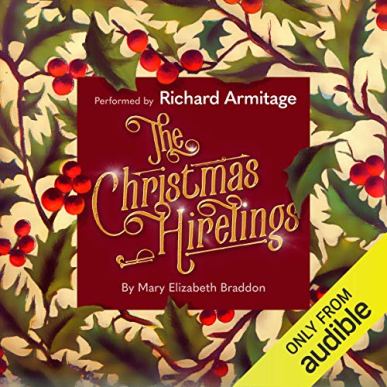
Christmas Hirelings I had never heard of The Christmas Hirelings, written in 1894 by Mary Elizabeth Braddon, but an audiobook of it was Audible‘s free Christmas gift to members, so I tried it out. I loved it! Braddon is known for more “sensational” writings: from what I understand, this is the only story of its kind that she wrote. But it hits all the right notes for a classic Victorian Christmas tale.

The story opens with Sir John Penlyon, his niece Adela, and his good friend Danby. As Sir John grouses about how boring Christmas is, Danby says “Nobody knows how to enjoy Christmas if he has no children to make happy. If one has no children of one’s own, one ought to hire some for the Christmas – week.” He then proposes to do just that, with Sir John’s permission. There’s much discussion about what kind of children should be brought, and Sir John finally tells Danby he can do anything he likes as long as he doesn’t bother Sir John about it.

Then the author switches to Sir John’s backstory and how he came to be a gruff old man alone in his mansion, and his story unexpectedly touched my heart. He was no Scrooge: he was generous and kind, unless crossed. But life’s circumstances had sapped all the joy from his life. At one point he said, “My life was barren, but peaceful. What more did I want?” Much later in the book, Danby said one reason he proposed this experiment was to prove to Sir John that he did indeed have a heart.

The children and Sir John get off on the wrong foot at first until the youngest, four-year-old Moppet, bravely attaches herself to him. One of my favorites of their exchanges:

Moppet: “Little girls sit on their fathers’ knees, don’t they ?”

Sir John: “Sometimes.”

“I mean good little girls. And that isn’t being forward, is it ?”

“No, Moppet, no. Fathers are made to be sat upon.”

The joy of having children around and doing for them enlivens the whole house and all its occupants, until tragedy strikes.

I had an idea where the story was going and who the children actually were by chapter three, but I still enjoyed seeing if I was right (I was) and how everything would play out (not like I expected!)

Oddly, there’s not a Kindle version, but the text is online here. The audiobook was superbly read by Richard Armitage (Thorin Oakenshield in Peter Jackson’s Hobbit movies). I nearly forgot at one point that one man was voicing all the characters. Here’s a bit of background for Audible’s recording with Armitage:

Another free audiobook is available from Librivox. Although the narration can’t compare to Armitage’s, it does have the advantage of a preface from Braddon telling how the book came to be and who Danby and Moppet are based on. The Librivox narration is also on YouTube here.

Thanks so much to Audible for introducing me to this lovely story.

(Sharing with Semicolon‘s Saturday Review of Books and Carole’s Books You Loved)

Book Review: I’ll Be Home for Christmas

Home I’ll Be Home For Christmas: Four Inspirational Holiday Novellas by Lenora Worth, Belle Calhoune, Jill Kemerer, and Allie Pleiter contains, as the title suggests, four stories that involve coming “home” in some way.

In A Hope Valley Christmas by Belle Calhoune, Mallory Jefferson is visiting her family over the holidays. The one person she hopes she doesn’t run into is Colton James. She’d had a serious crush on him back in the day, and her youthful exuberance and infatuation had led to some pretty embarrassing attempts to get his attention and show him her feelings. Yet who should walk into her father’s mechanic shop, just when she’s helping out, disheveled, and greasy, but Colton. Her father suggests she give Colton a ride home. As Colton and Mallory talk, Colton tells her his grandfather isn’t doing well. His grandfather wants to see Colton happy and settled with someone he loves. To ease his grandfather’s mind, Colton told him he did have a girlfriend. Then Colton gets the bright idea that Mallory can stand-in as his pretend girlfriend at an upcoming family dinner. Reluctantly, Mallory agrees, and they get to know each other as they are now, and not as they were in their high school memories.

In Sugarplums and Second Chances by Jill Kemerer, Chase McGill is a former NFL star trying to recover from mistakes in his past. In a fit of vengeance he had assaulted his wife’s killer and served time. Now he’s trying to make up for lost time with his son as well as help out another young man. Courtney Trudesta is the widow of his former teammate and wrote him regularly to encourage him while he was in prison. Courtney stops by on her way to a new job to visit with Chase for a few days. As they try to help each other deal with their losses and find their purpose in life, they wonder if those purposes might include each other.

In A Brilliant Christmas by Allie Pleiter, Zoe Walters’ passion is the community arts center that she runs. She has mixed feelings about the new artist-in-residence for the next six weeks: Nigel Langdon, a famous animator who has fallen from Hollywood graces. Besides the fact that he’s not currently popular, his gruffness doesn’t promise good things for his time with “her kids.” His first session does get off to a rocky start. But Zoe begins to fathom the hurt and the heart underneath his crusty exterior, and her devotion to her kids and program opens his eyes.

Seashell Santa by Lenora Worth is a different kind of Christmas in Key West, Florida. Navy Seal Rick Houston‘s beloved grandfather, Pappy, has died and requested that Rick come to his old cabin at Christmas and disperse his ashes. Who else should show up at the cabin but Willa Kincaid, Rick’s ex-girlfriend, who had received the same request. Realizing Pappy’s trick, they decide to put aside their differences to honor his wishes. In the meantime, as their arguing gives way to further discussion, they each realize they didn’t know everything about the other’s motives for their previous actions.

I’m not a fan of romances in general, both because of the silliness of tingling sensations and such, descriptions of kisses, and the end-all of romances being the declaration of true love (when, in real life, that’s just the beginning.) However, I do like when the characters have to learn or overcome something in the process of coming into a relationship, and that happens in each of these stories. Some of the stories have more of a faith element than the others. A couple of them contain characters from the authors’ other series, but the stories were complete enough in themselves that I didn’t feel I was missing pieces.

My favorite was Allie Pleiter‘s Brilliant Christmas. Both the story itself and the writing were refreshingly different. I’ll be looking up more of her work in the future. My favorite line from the book came from her story:

Our job is to bring out whatever talent or self-expression is there. Help them see that picking up a paintbrush might just be more powerful than picking up a knife. Get their emotions out in ways that don’t involve sending each other to the emergency room.

My least favorite line in the book came from Lenora’s story, about a character who “put out feelers to the Big Guy in the sky.” Big Guy in the sky? Seriously?

This collection is not showing up on Amazon anymore, but Sugarplums and Second Chances and A Brilliant Christmas are available individually. I’ve not read any of these authors, but I used to follow a blog that Lenora contributed to, so that’s probably what prompted this purchase. All in all it was a nice Christmas read.

(Sharing with Semicolon‘s Saturday Review of Books, Literary Musing Monday, and Carole’s Books You Loved)

Two Reading Challenge Wrap-ups

I have been finished with these two challenges for months, but just have not written the wrap-up posts for them until now.

Karen at Books and Chocolate hosts the Back to the Classics Challenge for reading classics at least 50 years old.

I enjoy this challenge because I was not exposed to many classics as I grew up, and this challenge inspires me to expand my horizons and explore books I might not otherwise read. I’m happy to report that I have read all 12 classics on my list (I actually read 13, but no extra points for extra books. 🙂 ). The titles link back to my reviews:

  • A 19th century classic. Villette by Charlotte Bronte (1853)(Finished 6/30/18)
  • A 20th century classic (published before 1968). The Story of My Life by Helen Keller (1903)(Finished 3/31/18)
  • A classic by a woman author. Adam Bede by George Eliot (Mary Anne Evans)(1859)(Finished 5/19/18)
  • A classic in translation (Any book originally written published in a language other than your native language.) 20,000 Leagues Under the Sea by Jules Verne (1870)(Finished 1/26/18)
  • A children’s classic. The Secret Garden by Frances Hodgson Burnett (1911)(Finished 2/3/18)
  • A classic crime story, fiction or non-fiction, which she goes on to say can be a detective or spy novel. The Man Who Was Thursday by G. K. Chesterton. (1908)(Finished 1/18/18)
  • A classic travel or journey narrative, fiction or non-fiction. Journey to the Center of the Earth by Jules Verne (Finished 2/17/18)
  • A classic with a single-word title (no articles). Frankenstein by Mary Shelley (Finished 3/12/18)
  • A classic with a color in the title. Where the Red Fern Grows by Wilson Rawls (1961)(Finished 3/17/18)
  • A classic by an author that’s new to you. He Fell in Love With His Wife by Edward Payson Roe (1866)(Finished 4/8/18) and Invincible Louisa: The Story of the Author of Little Women by Cornelia Meigs (1933) (Finished 6/25/18)
  • A classic that scares you (due to its length or it intimidates you in some way). The Hunchback of Notre Dame by Victor Hugo. (1831)(Finished 8/4/18).
  • Re-read a favorite classic. Ben-Hur: A Tale of the Christ by Lew Wallace, (1880)(Finished 4/17/18)

Karen allows for three children’s classics, and I am counting Where the Red Fern Grows, The Secret Garden, and Journey to the Center of the Earth for those. I’m not counting 20,000 Leagues Under the Sea because nothing I read about it indicated it was written for children.

Karen likes for us to let her know how many entries we earned for her drawing: I earned three. She also requests an email here: mine is barbarah06 (at) gmail (dot) com.

I enjoyed all of these except Journey to the Center of the Earth, but I think my favorite is He Fell in Love With His Wife. Adam Bede would be a close second. Frankenstein was the biggest surprise.

2018tbrbutton
Adam at Roof Beam Reader hosts the TBR Pile Challenge to encourage us to get to those books on our shelves, Kindles, or TBR lists. For this one we had to name the books we were going to read, along with two alternates (in case we couldn’t get through a couple on our list). The books for this challenge had to have been published 2016 and earlier.

I read thirteen books altogether. Titles link back to my reviews.

  1. The Secret Garden by Frances Hodgson Burnett (Finished 2/3/18)
  2. The Man Who Was Thursday by G. K. Chesterton (Finished 1/18/18)
  3. Frankenstein by Mary Shelley (Finished 3/12/18)
  4. Where the Red Fern Grows by Wilson Rawls (Finished 3/17/18)
  5. Adam Bede by George Eliot (1859)(Finished 5/19/18)
  6. He Fell in Love With His Wife by Edward Payson Roe (1866, Finished 4/8/18)
  7. 20,000 Leagues Under the Sea by Jules Verne (1870, Finished 1/26/18)
  8. Journey to the Center of the Earth by Jules Verne (Finished 2/17/18)
  9. Ghost Boy: The Miraculous Escape of a Misdiagnosed Boy Trapped Inside His own Body by Martin Pistorious (2013, Finished 1/8/18)
  10. Going Like Sixty by Richard Armour. Set this one aside, disappointed in the content.
  11. Sins of the Past by Dee Henderson, Dani Pettrey, and Lynette Easton (2016, Finished 3/28/18)
  12. Another Way Home by Deborah Raney (2015, Finished 4/16/18)

Alternates: Anchor in the Storm by Sarah Sundin (2016, Finished 5/7/18) and Mozart’s Sister by Nancy Moser (2006)(Finished 1/28/18)

I enjoy both of these challenges and plan to participate in them again next year. Karen already has the 2019 Back to the Classics Challenge categories here.

I’m still working on the Mount TBR Challenge and the Literary Christmas Challenge.

Book Review: Twelve Days at Bleakly Manor

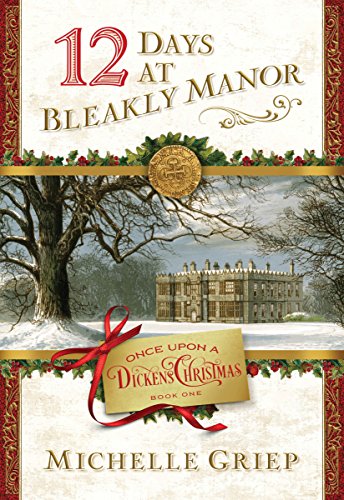
BleaklyTwelve Days at Bleakly Manor by Michelle Griep is the first in her Once Upon a Dickens Christmas series set in Victorian England.

Clara Chapman’s family has lost its fortune, and the person seemingly to blame was her former fiance, Benjamin Lane. Not only did Ben abscond with the family fortune, but he left her at the altar with no explanation. She’s been living with an aunt, trying to survive in reduced circumstances.

Out of the blue Clara receives an invitation from an unnamed host to Bleakly Manor. If Clara can stay the entire twelve days of Christmas, she’ll receive 500 pounds. At her aunt’s urging, Clara accepts the invitation.

Clara finds no host at Bleakly Manor, but she is surprised to see an assortment of people there who have all been promised various rewards if they will stay twelve days. A late and most startling arrival is none other than Ben!

As the participants get to know one another, personalities clash. The host remains absent. And odd occurrences begin happening: one person’s jewels go missing, strange foods are served at mealtimes, accidents happen that turn out not to be accidents. And then the group is informed that only one of them will win what they were promised.

This book started out as a cozy mystery, dragged just a bit in the middle for me, and then took a darker turn as the “accidents” increased in intensity.

I had to look up my review of Dickens’ Bleak House to remind myself of the characters there and see the parallels. This story is not meant to be a point-for-point retelling, but it does contain elements of the plot and some characters.

All in all an enjoyable Christmas read.

(Sharing with Semicolon‘s Saturday Review of Books, Literary Musing Monday, and Carole’s Books You Loved

Book Review: Susie: The Life and Legacy of Susannah Spurgeon

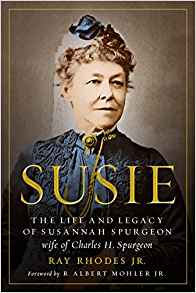
SusieSusie: The Life and Legacy of Susannah Spurgeon, Wife of Charles H. Spurgeon is a new biography by Ray Rhodes, Jr. Susannah’s life can’t be told apart from apart from her husband’s, but Rhodes doesn’t describe her just in relation to Charles. He tells her own story fully.
Susie, as she was called because her mother and an aunt were also Susannah, “shared a lifetime” with Queen Victoria. “Susie was five when Victoria was crowned, and she died two years after Victoria’s death.” She was a city girl, living in London all her life and traveling often to Paris.

She became a Christian at about age 21, but experienced a lot of doubts for a while thereafter. She was not impressed with Pastor Spurgeon at first. He came from a rural background, and:

Charles violated her preconceived notions of what was appropriate for a polite young man in Victorian times, and a preacher at that. Susie found Charles’s hair, suit, mannerisms, and his provocative preaching style offensive. Later, reflecting on her earlier sentiments, she wrote:

Ah! How little I then thought that my eyes looked on him who was to be my life’s beloved; how little I dreamed of the honour God was preparing for me in the near future! It is a mercy that our lives are not left for us to plan, but that our Father chooses for us; else we might sometimes turn away from our best blessings and put from us the choicest and loveliest gifts of His providence.

Charles’ counsel and gift of Pilgrim’s Progress helped Susie. It wasn’t long before his pastoral concern turned romantic. The sections about their courtship are sweet, but Susie had a cold splash of reality one day. Charles was asked to preach somewhere and Susie accompanied him. They got separated in the crowd, but Charles never noticed. Lost, alone, and upset, Susie went home. Her mother “wisely reasoned that my chosen husband was no ordinary man, that his whole life was absolutely dedicated to God and His service, and that I must never, never hinder him by trying to put myself first in his heart.”

Charles and Susie married and enjoyed home life, travel, and togetherness. They had twin sons, Charles and Thomas. But both Charles and Susie developed health problems. He suffered from gout, kidney problems, and depression. It’s not known exactly what Susie’s health issues were, but severe endometriosis is suspected. She had surgery at one point but spent much of her life in pain. Sadly, she usually could not accompany Charles to places he was advised to go for his health. But he wrote to her every day, and their letters to each other are often delightful. In one of his letters from before they were married, Charles wrote:

I shall feel deeply indebted to you if you will pray very earnestly for me. I fear I am not so full of love to God as I used to be. I lament my sad decline in spiritual things. You and others have not observed it but I am now conscious of it; and a sense thereof has put bitterness in my cup of joy. Oh! what is it to be popular, to be successful, to have abundance, even to have love so sweet as yours, if I should be left of God to fall and to depart from His ways? I tremble at the giddy height on which I stand, and could wish myself unknown, for indeed, I am unworthy of all my honors and my fame. I trust I shall now commence anew and wear no longer the linsey-woolsey garment; but, I beseech you, blend your hearty prayers with mine, that two of us may be agreed, and thus will you promote the usefulness and holiness and happiness of one whom you love.

Once Susie wished aloud that one of Charles’s books could be sent to poor pastors who could not afford a much-needed library. Charles said, not in these words but to this effect, “What are you going to do about it?” That was the beginning of Susie’s book fund, which grew far beyond what she envisioned at the beginning. In one particular month, Feb. 1883, Susie received 657 letters. In 1886 she distributed 9,941 volumes. Correspondence as well as packaging, sending books, and seeking donations was a blessed ministry yet took time and energy. This ministry spawned others, like a pastor’s aid society for sending money and clothes, an auxiliary book club for lay preachers, and the Home and Foreign Sermon distribution. She said, “It is the joy of my life thus to serve the servants of my master.” She felt that the confinement necessitated by her illness enabled her to minister in these ways.

Though Susie knew some congregations were themselves poor and could not provide for their pastors, she encouraged those who could to do so in her book Ten Years of My Life in the Service of the Book Fund:

Keep your minister’s table well provided, and you shall be fed with the finest of the wheat; see that his earthly cares do not press on him painfully, and your own hearts’ burdens will be lifted by his heavenly teachings; supply him with this world’s needful comforts, and he will not fail to bring you solace and consolation in the time of your extremity. If he has sown unto you spiritual things, is it a great thing if he shall reap your carnal things?

Susie did a fair amount of her own writing, and, after Charles’s death, was instrumental in planting a church and edited The Sword and the Trowel magazine.

I’ve read Mrs. C. H. Spurgeon by Charles Ray several times, and this book draws heavily from that one. But Ray’s book was written in 1903, not long after Susie’s death. I’m sure more resources were available to Rhodes than Ray might have had, plus over 100 years of perspective adds to Rhodes’ book.

I did get just a bit frustrated at times with how the book was laid out. Though Susie’s life is covered chronologically, at each point Rhodes goes backward and forward in time to pull details about that point. So there’s a lot of back-and-forth and repetition. It helped to think of the book as a documentary. I listened to the audiobook, but I think this book would be better read than listened to.

Nonetheless, this is a great resource. I enjoyed so much hearing again the parts of Susie’s life that I knew and learning what I did not know. I appreciated the historical context, something Ray’s book could not have given as effectively since it was written in the same era. I especially enjoyed both Charles and Susie’s letters. And I was blessed by her heart and her walk with God. One phrase that stood out in many of her writings was “the glory of God.” Everything she did was ultimately for His glory.

(Sharing with Semicolon‘s Saturday Review of Books, Literary Musing Monday, and Carole’s Books You Loved)

Book Review: Homeless for the Holidays

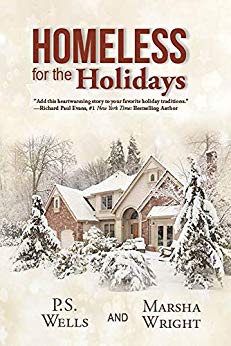
HomelessIn the novel Homeless for the Holidays by P. S. Wells and Marsha Wright, Jack Baker’s future looks bright. He has a lovely family, a great job, and expectations of a good Christmas bonus and possibly a promotional. His boss is a bit demanding, calling him nights, weekends, even Thanksgiving. But if Jack can hang on til he gets the promotion, everything will be better – so he tells his wife.

As the Bakers prepare for Christmas, they stuff shopping carts, max out credit cards, competitively search for the last of the “hot” toys. And when encountered by a child seeking donations for a charity or a Salvation Army bell ringer, Jack begrudgingly hands over the spare change in his pocket and gripes about people who don’t work for a living.

Then the unthinkable happens. A mistaken label on one of Jack’s company’s products creates a hazard. To save face, Jack’s boss makes Jack the fall guy, placing the responsibility for the fiasco on his shoulders and firing him. Jack’s boss promises Jack that once the hoopla has died down, Jack can have his job back.

In the meantime, Jack’s search for a job proves fruitless and bills start piling up. One by one his family loses services, then their car, then their home.

The book’s tag line says, “One family learns what is truly important when they lose it all and find they have everything.”

Overall it is an enjoyable book. You feel the characters’ fear and angst as the walls close in and the losses pile up and then as they discover that having all the “stuff” doesn’t matter as much as time for each other, humility, faith, and compassion. There’s a telling exchange when Jack’s wife tries to apply for food stamps and runs into all kinds of weird rules.

The one factor that keeps this story from being just another “learning the true meaning of Christmas” tale is that it is based on true events from the life of scriptwriter George Johnson. George eventually produced a movie based on his experience called Homeless for the Holidays, which released in 2009. In the back of the book George tells about his own situation and how the movie came to be.

(Sharing with Semicolon‘s Saturday Review of Books and Carole’s Books You Loved)


Book Review: Come Back, Barbara

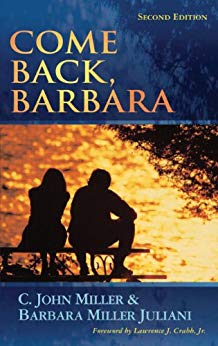
Come backFather and daughter C. John Miller and Barbara Miller Juliani team up to share Barbara’s prodigal daughter story from both sides in Come Back, Barbara. In each chapter John – also known as Jack – shares situations from his point of view at the time, then Barbara shares hers.

Miller and his wife, Rose Marie, thought they had a fairly normal Christian family until Barbara suddenly announced at eighteen that she wanted nothing to do with their rules and their Christianity any more. She wanted freedom on every level. The Millers were stunned. They had caught Barbara in a few lies over the years but thought those were isolated incidents. Her outward conformity for most of her life had fooled them into believing her heart was right as well. They realized they had been mistaken in not looking below the surface.

For a time they puzzled over comparing what they had always thought about her and the “new Barbara” emerging now. It just didn’t seem to fit – she had seemed like a genuine Christian. They thought at first that perhaps she was just going through a rebellious phase and would hopefully come out of it soon. Gradually they realized that her rebellion and deception went further than they had ever guessed. They had to accept, by her words and actions and reactions, that she was not a Christian, though she had once professed to be.

There’s no five-step foolproof plan to winning back a prodigal, but Jack shares some of what he learned. First, he had to realize he was truly powerless. All his efforts backfired. Often control is the first weapon against rebellious children. Of course, some degree of control is necessary in raising children, but parents “have to confront your own manipulative techniques of consolidating power” (p. 160).

Many fathers and mothers are simply more satisfied with a child’s conformity and less concerned with the youngster’s motivation and hidden desires, with what the Bible calls “the thoughts of the heart.” Often unconsciously, the self-centered parent labors to form an orderly child who performs well in public and does not shame the family by disturbing the status quo. The problem, of course, is not with the orderliness of the child, but with the shaping of a person with a desensitized conscience, a performer who has never learned to love God or people from the heart (pp. 160-161).

He had to give up control to God and depend on Him to draw Barbara to Himself. He also had to confront his own sins, realizing the irony of God’s using a rebellious child to show him his own heart.

And he had to genuinely apologize to Barbara. Even though he felt wronged and wounded, he could not hold on to victim status. He had to confess his wrongs whether she did or not. And that humility and honesty was a step in the right direction in their relationship.

The constant practice of forgiveness leaves no room for self-righteousness. Frustrated condemnation of others and treasuring of old wrongs are not part of the artillery of God, but the slithering, slimy, deadly creatures of the Prince of Darkness (pp. 79-80).

Jack and his wife wrestled for a long time over whether Barbara had apostatized and how to respond if she had. Finally they just had to accept that she was not a believer and treat her as they would any other unbeliever. They just had to show her Christ’s love. That didn’t mean accepting everything she did, but she knew where they disagreed. They asked that some things not be done in their house.

Showing such love in the face of disdain and rebellion is exactly what God has done for us. “God demonstrates His own love toward us, in that while we were yet sinners, Christ died for us” (Romans 5:8, NASB). Drawing from His love and grace enabled them to show love and grace to Barbara.

We were facing the death side of the Christian life, but there was a resurrection waiting to take place as we stepped into the grave. Today it is my conviction that no matter how heavy the blow inflicted by circumstances, each negative experience is part of the heavenly Father’s perfect plan for each believer. He allows the hour of destruction for the purpose of building something better in its place. Our part is not to run away from the pains but to walk through the briars and thorns and let Christ teach us how to turn each scratch into positive learning about the depths of God’s love (p. 67).

There is no more impenetrable barrier to God’s love than the sense of being right. So often self-righteousness controls a parent’s attitudes toward a rebellious offspring (p. 150).

He’s not saying to ignore right and wrong: they had to stand up for right and truth often. But they had to “speak the truth in love,” not from a sense lofty condescension.

Many parents tend to turn out an erring child, and sometimes indeed that’s the only option. The prodigal in Scripture left his father’s house in rebellion, and Barbara did that for a while, too. But Jack and his wife felt they needed to be open to Barbara, and when she moved back in their area, the Millers welcomed Barbara and her friends in their home, to show love and kindness to them as Jesus did with “tax collectors and sinners.”

At one point Barbara had “come back” in the sense of “settling down,” becoming responsible, not engaging in destructive behaviors. But she still was not a believer. As Jack pressed that point, it led to a major battle between him and Barbara.

Barbara, meanwhile, began “groping for the light while still resisting it” (p. 139). “Many painful things happened to me during this period, but the work of the Holy Spirit was to gently lead me from darkness to light” (p. 167). She described it like walking into a large, dark room, turning on the nearest lamp, moving to another area and turning on another lamp, continuing until there’s enough light to clearly see. She didn’t think she could have stood it if God had turned all the lights on at once. “Instead, God showed me the truth about myself bit by bit, in pieces I could handle” (p. 167.) One “light” was the realization that the things she thought would bring her happiness and allay her insecurities and anxiety could not. She was still unhappy, anxious, and insecure though at one time she had everything she thought she wanted. Another “light” was realizing her tendency to deceive and blame-shift. One by one God opened her eyes to the needs of her own heart and to His love.

I’ve noticed that C. John Miller has written some other books, but I don’t know anything about his theology other than what is in this book. One aspect that I was a little wary of was what he called “praying with authority.” In my experience, people using that kind of terminology advocate “demanding” answer to prayer, which to me seems to contradict the humility and surrender manifested in Scripture. But from what’s said in this book, that didn’t seem to be what they were talking about. Jack’s wife had said in the beginning of their troubles that she felt like an orphan. But gradually she realized she could come to God as a child to her Father, basing her requests on Scriptural truths. If that’s what they mean by praying with authority, then, yes, I agree. I was also a bit cautious when they talked about “claiming” certain things, associating that with the “name it and claim it” culture. But, again, in the context here that doesn’t seem to be what they are referring to.

I found this book on a sale table at a Christian bookstore years ago: the name in the title caught my eye. 🙂 I don’t know why I haven’t gotten to it before now, but I am glad I finally did. I marked many more places in the book than I have space and time to share here. I’d highly recommend it to anyone with a prodigal friend of family member or anyone who wants to read how God worked in lives to bring people to Himself.

(Sharing with Carole’s Books You Loved, Semicolon‘s Saturday Review of Books, Literary Musing Monday)