Literary Christmas Reading Challenge

e7f96-a-literary-christmas-banner-2017

Tarissa hosts the Literary Christmas Challenge in December: actually, it started in November, but I like to hold off on Christmas reading til after Thanksgiving. The main rule: read Christmas books! And link up your posts about them (via a blog, Goodreads review, etc.).

Here’s what I am planning to read this month:

Finding Christ in Christmas by A. W. Tozer (99 cents for the Kindle app as of this writing. Tozer always makes one think.)

Tozer Christmas

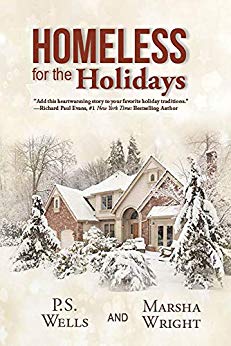
Homeless for the Holidays by P. S. Wells and Marsha Wright.

Homeless

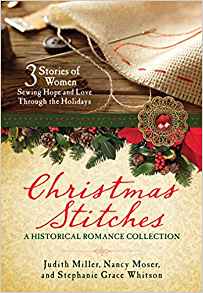
Christmas Stitches by Judith Miller, Nancy Moser, and Stephanie Grace Whitson. I’ve read many of Judith and Nancy’s books, so I am looking forward to this Christmas collection.

Stitches

Baby, It’s Cold Outside by Susan May Warren

Cold Outside

I’ll Be Home For Christmas: Four Inspirational Holiday Novellas by Lenora Worth, Belle Calhoune, Jill Kemerer, and Allie Pleiter. This is not showing up on Amazon anymore, but you can read more about it on Goodreads here. I’ve not read any of these authors, but I used to follow a blog that Lenora contributed to, so that’s probably what prompted this purchase.

Home

If I should finish all these and I’m not tired of Christmas stories at that point, I’d love to get Terri Blackstock’s Catching Christmas and Michelle Griep’s Once Upon a Dickens Christmas series, Twelve Days at Bleakly Manor and A Tale of Two Hearts. I’m trying to read what I have already accumulated through sales before I add any more.

And that’s it for this year! Do you plan to do any Christmas-themed reading this month?

Book Review: Florian’s Gate

FlorianIn T. Davis Bunn’s novel, Florian’s Gate, American Jeffrey Sinclair is bored in his job. His mysterious uncle, Alexander Kantor, has a glowing reputation in the antiques business in London. Alexander never reveals where his exquisite pieces come from, but their high quality always fetches good prices and willing buyers. When Alexander invites Jeffrey to become his assistant, Jeffrey jumps at the chance, quickly learning both the details and the instincts needed.

Jeffrey hires a part-time helper who rapidly becomes a valuable assistant, Katya. Jeffrey falls head over heels for her, but she is guarded around him. He senses her past contains pain, but she’s not willing to reveal it to him yet. Plus she is a believer, but he has turned his back on God after a family tragedy.

When Alexander asks Jeffrey to take a trip to Poland, Jeffrey is thrilled to be trusted enough to be asked. There he meets Alexander’s brother, Gregor, and begins to learn some of Alexander’s sources. Poland is still reeling from being trampled underfoot by WWII and then Soviet occupation. At first Jeffrey thinks everyone looks sad and depressed, understandably. But he soon finds an underlying resilience in their character. Alexander, Jeffrey, and Gregor visit some of the most unlikely places to find some of the poorest people with great treasures they’ve been holding on to for years but are now in desperate enough straits to sell.

Surprisingly, Alexander comes face to face with his own painful past, which Jeffrey learns of for the first time. When Alexander is incapacitated for while, Katya comes to assist and translate. What Jeffrey learns through all these experiences helps him understand his uncle and Katya and helps him come to grips with his own past as well.

A few quotes from the book:

Dissatisfaction tends to lift one’s eyes toward the horizon. Those who are comfortable rarely make the effort to search out something better. They may yearn for more, but they do not often receive it. They are too afraid of losing what they already have, you see, to take the risk. And there is always risk involved, Jeffrey. Always. Every major venture contains a moment when you must step off the cliff and stretch your wings toward the sky.

Even in the darkest of hours, people have a choice. They can turn toward self, or they can turn toward God. They can turn toward hate, or they can turn toward forgiveness and love.

The world says there is no greater tribute you can grant yourself than to say, I can make it on my own. My perspective says there is no greater deception. The power within our own will and our own body and our own confined little world is comfortable, and it is tempting. It gives us a wonderful sensation of self-importance. Thus most of us will try to live outside of God until our own strength is not enough. Yet the way of the cross is the way of inadequacy. We need what we do not have, and therefore we seek what is beyond both us and this world.

There are an infinite number of lessons to be drawn from the cross, my boy….All human hope lies at the foot of the cross. In the two thousand years since it first rose in a dark and gloomy sky, it has lost none of its luster, none of its power, none of its divine promise.

Normally Bunn’s stories involve quick-moving plots and page-turning intrigue. There was intrigue here, but a different sort than I am used to from him. His mother’s former ownership of an antiques gallery and management of others informed his knowledge of antiques. He says at the beginning of the book that each piece he describes is real. The different Polish people and stories that he shares are based on real people and situations in his wife’s family in Poland.

I thought the story ended somewhat abruptly, but then I found that this book is the first of three in the Priceless Collection series. So maybe some day I’ll find out what’s next for Jeffrey, Katya, and the others.

(Sharing with Semicolon‘s Saturday Review of Books, Literary Musing Monday, Carole’s Books You Loved)


What’s On Your Nightstand: November 2018

Nightstand82

The folks at 5 Minutes For Books host What’s On Your Nightstand the last Tuesday of each month in which we can share about the books we have been reading and/or plan to read.

A few sick days this month afforded more reading time than usual.

Since last time I have completed:

Alvin York: A New Biography of the Hero of the Argonne by Douglas V. Mastriano (audiobook), reviewed here. How a Christian conscientious objector stopped an onslaught of the Germans in WWI, captured 132 of them, and won the Medal of Honor. Well-researched, good true story.

Amazing Grace: William Wilberforce and the Heroic Campaign to End Slavery by Eric Metaxas, reviewed here. Good.

Perfect Piece by Rebeca Seitz, fiction, reviewed here with the rest of the series about four grown adopted sisters of different ethnicities. Good.

Fly Away by Lynn Austin, fiction, reviewed here. A disgruntled retiree crosses paths with an unbeliever with a terminal diagnosis. Loved this one.

Hidden Places by Lynn Austin, fiction, reviewed here. A young widow struggles to support herself and her children when a mysterious stranger arrives to lend a hand. Very good.

Someday Home by Lauraine Snelling, fiction, reviewed here. A widow opens her home to share with two other ladies. Okay.

Florian’s Gate by Davis Bunn. Review coming soon.

I’m currently reading:

Reading the Bible for Life: Your Guide to Understanding and Living God’s Word by George Guthrie.

Christian Publishing 101: by Ann Byle

Susie: The Life and Legacy of Susannah Spurgeon, Wife of Charles H. Spurgeon by Ray Rhodes, Jr., audiobook

Come Back, Barbara by C. John Miller and Barbara Miller Juliani

Homeless for the Holidays by P. S. Wells and Marsha Wright

Up Next:

In the next few days I’ll be rustling up a list of Christmas reads for Tarissa’s Literary Christmas Challenge. I’ll also need to choose a new audiobook soon but have no idea which one yet. (Update: My Christmas reading picks are here.)

Happy reading!

Book Review: Amazing Grace: William Wilberforce and the Heroic Campaign to End Slavery

WilberforceA few years ago a video titled Amazing Grace and a companion book, Amazing Grace: William Wilberforce and the Heroic Campaign to End Slavery by Eric Metaxas, were published to commemorate the 200th anniversary of the abolition of the slave trade in Great Britain.  I saw and enjoyed the film, but somehow was not aware of the book until this year.

Wilberforce did not accomplish abolition single-handedly, of course, but he was the driving force behind abolition and a host of other social causes.

William was born into a well-to-do family. He was always small, with poor eyesight and stomach issues (modern historians think he suffered from ulcerative colitis all his life). But he had a sparkling wit, an entertaining personality, and loads of ambition.

As a boy he stayed for two tears with an aunt and uncle to attend school nearby. Unbeknownst to William’s parents, these folks were Methodists whose frequent guest was John Newton. Methodists were thought at the very least to carry religion too far, as evidenced by the nickname used for them, Enthusiasts. Others thought they were radicals. Newton and Wilberforce seemed quite fond of each other, but William’s mother whisked him away as soon as she became aware of the religious climate of her relatives’ home.

Before long William forgot his early religious leanings and became the life of many parties. If he wasn’t hosting, he was a frequent guest. Deaths of his grandfather and uncle had left him wealthy. His friend William Pitt, who was planning to enter into politics (and eventually became Prime Minister), urged William to enter politics as well. William became a Member of Parliament (MP) as an independent at the age of 21. Then he set his sights on “the most coveted seat in all of Parliament” (p. 42), Yorkshire, and was elected to it at the age of 24.

That same year, William was on a holiday with friends and spent most of the journey with the brilliant Isaac Milner. As they traveled, they read and discussed The Rise and Progress of Religion in the Soul by Phillip Doddridge. William had a tendency to think through every aspect of a decision before making it. He came to an intellectual agreement of Christianity’s doctrines first, then heart and will yielded to what he thereafter called “the Great Change.”

At first he thought such a change would necessitate his leaving government. John Newton encouraged him to “stay his post” and assured him God could use him where he was. Newton wrote to his friend, William Cowper, of Wilberforce: “I hope the Lord will make him a blessing both as a Christian and a statesman. How seldom do these characters coincide!! But they are not incompatible” (p. 61).

As William began to be convicted with how he used his resources and time, his attention was drawn to those in need. Slavery was just a given fact in Britain then. The entire economy was built upon it. Because most of the slaves were in the West Indies, they were hardly thought of. But as word began to get out of their harsh and inhumane treatment, various individuals began to call for action on their behalf. Writers and poets like Hannah More and William Cowper used their pens. Artist and industrialist Josiah Wedgwood, of Wedgwood pottery fame, produced medallions with a cameo of a slave kneeling and asking, “Am I not a man and a brother?” People who had been aboard slave ships reported their findings. Others circulated and signed petitions. They thought Wilberforce should be their voice in Parliament, and after giving the matter his characteristic thorough consideration, he agreed.

They thought it would be an easy victory. Who, after all, would disagree with their cause? The ones who benefited from the slave trade, first of all, not only opposed any reforms but used lies and other tactics to sway public opinion. Then when the French Revolution broke out, anything smacking of liberty and equality was decidedly unpopular.

It was twenty long years before legislation passed to outlaw the slave trade. But even then there was still work to be done in enforcing it, dealing with smugglers who would fly other countries’ flags so as not to be stopped, etc. Those fighting for abolition realized they could not stop there: they needed to fight for emancipation.

Abolition of slavery was one of two main objectives in Wiliiam’s life: the other was the “reformation of manners.” By “manners” he did not mean etiquette and politeness. The Clapham Sect or society was a group of people who want to change some of the cruelties common in society then, like hangings for small offenses, public dissection of criminals’ bodies, and even bull-baiting and bear-baiting. Wilberforce financed schools for the poor run by Hannah More and her sisters even though society at large thought their education would either be fruitless or would upset “the order of things.” He was involved in penal reform, improving conditions for laborers, and a host of other causes. Yet he felt he had not done enough. He wrote to a friend:

I am filled with the deepest compunction from the consciousness of my having made so poor a use of the talents committed to my stewardship. The heart knows its own bitterness. We alone know ourselves the opportunities we have enjoyed, and the comparative use we have made of them…. To your friendly ear… I breathe out my secret sorrows. I might be supposed by others to be fishing for a compliment. Well, it is an unspeakable consolation that we serve a gracious Master, who giveth liberally and upbraideth not…. I always spoke and voted according to the dictates of my conscience, for the public and not for my own private interest…. Yet I am but too conscious of numerous and great sins of omission, many opportunities of doing good whether not at all or very inadequately improved.

In his later years he turned his attention to India and the East India Company’s abominable practices like keeping underage mistresses (what we would call a child sex trade today, only it was legal at the time) and the country’s inhumane practices like burning widows at their husband’s funeral pyres.

By the end of his life, most of his wealth was gone. He had heavily invested in his oldest’s son’s business venture, which failed. But before that he had given much to various causes and needs. He had to sell his home and take turns living with his two other sons.

Though most of the book focuses on Wilberforce’s public life, the author gives us glimpses into his private life as well. William married later in life, but was absolutely smitten once he found his wife. Visitors to the Wilberforce home would find the family in the midst of mild but happy bedlam with children and animals running around indoors and out.

Wilberforce was sometimes called the moral conscience of the nation. He did not ask for that position nor think of himself that way, but his character was such that, when he saw a wrong he could help to right, he felt obligated to do so.

My only complaints with the book were with some aspects of the author. Though Wilberforce is an admirable man, and even Lincoln and Frederick Douglass cited him as inspiration, Metaxas laid the praise on a little thick at times. Plus I felt too conscious of Metaxas as the author: usually in a biography the author does not insert himself into the subject’s story so much. Part of that insertion was evidenced in seeming attempts to be witty and clever. Plus, everything I have ever read about writing encourages using recognizable words, not in an attempt to “dumb down” the text, but to make it more accessible to the average reader. But this author sprinkled his narrative with words like uxoriousness that did increase my vocabulary but interrupted the text while I looked them up.

Oddly, Metaxas does not have a list of footnotes or endnotes with citing the sources he used, though he does close with a list of other worthy Wilberforce biographies.

However, overall I thought this was a very good book. I knew a bit about Wilberforce from the Amazing Grace film, Hannah More‘s biography, and assorted other references, but I was glad to hear about the rest of his life and to have a fuller picture of the character of the man himself. He is an example for all of us to use our resources and influences to help others.

(Sharing with Semicolon‘s Saturday Review of Books, Literary Musing Monday, Carole’s Books You Loved)

Book Review: Someday Home

Someday HomeIn the novel Someday Home by Lauraine Snelling, Lynn Lundberg is adjusting to widowhood. She loves that her home is the central gathering place for the children and grandchildren who all live nearby, but otherwise it’s too large for just one person. She reads about a concept called house sharing in which rooms are rented out to others and everyone shares responsibilities. After doing some research and convincing her children that the idea is a good one, she begins to seek two other ladies to share her home.

She finds one through her son’s friend. His mom, Angela, was blindsided by her husband’s request for a divorce. She had spent years remaking herself into the kind of wife he wanted, even weighing less than she did in high school – but all for naught since he found someone else. Needing a place to stay, heal, and figure out her next steps, she accepts Lynn’s offer.

A chance meeting leads to another tenant. Judith spent all of her adult life caring for her ailing father, setting aside college and other dreams. Upon his death, she learns he willed the family home not to her, but to the historical society to be made into a public venue. So she also needs a quiet place to stay and time to decide what to do next.

Naturally there are some bumps along the way. Lynn is used to being the family matriarch and has to learn that independent middle-aged women don’t appreciate being “mothered.” The other ladies have not had their own voice for years and have to learn how and when to use it. They all have anger issues and wrestle with the need to forgive those who have wronged them. But ultimately they learn to work together and appreciate each other’s differences.

This story caught my eye both because it was a Kindle sale, plus I had read some of this author’s historical fiction. I enjoyed the aspects of each of these women learning to live together and having to determine in their middle years what to do with the rest of their lives and in

But there are a number of awkward sentences, like this one:

Fighting back the tears—again, she stumbled through her morning routine—and after dressing (which took some serious self-talk; the bed had looked so inviting, or at least oblivion did), she made her way down the split-log stairs and into the kitchen, where the cat was sniffing the dog dish, water bowl, and then looking out the window to the deck.

Thankfully there are only a half-dozen or so, but they are a bit jarring. I don’t remember coming across that kind of thing in her other books, but then it has been a long time since I read them. I thought at first perhaps they were all connected with Lynn, who is in the throes of menopause: maybe this was supposed to reflect her scattered thinking. But they don’t seem to be limited to her scenes.

Other than that, and one minor theological quibble in one sentence, I thought the writing, the characters, and the story were all good.

(Sharing with Semicolon‘s Saturday Review of Books, Literary Musing Monday, Carole’s Books You Loved)
Book Review: Sisters, Ink Series

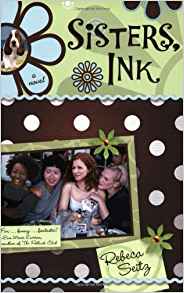
The Sisters, Ink series (also called the Scrapbooker’s series) by Rebeca Seitz is made up of four books focusing on four sisters of different ethnicities adopted by Jack and Marian Sinclair in the small town of Stars Hill, TN. The sisters are adults now and Marian passed away ten years ago. Their father, a pastor, is seeing a new lady named Zelda, but the sisters are having a hard time accepting her, not only because they don’t want their mother replaced, but Zelda is so unconventional and different from their mother. That subplot and others carry over each of the four books, but each focuses on one particular sister. The girls call a “scrapping night” in a room set up for that purpose in their father’s home when they need to talk and solve problems.

Sisters

 Sisters, Ink. spotlights Tandy, a lawyer living in FL. She had been adopted after spending her first eight years on the streets with a junkie parent. I read this book several years ago, but for whatever reason did not review it. But her story involved an extended leave at work, visiting TN, running into and clashing with an old flame. The sisters decide to turn their love of scrapbooking into an online business called Sisters, Ink.


Unglued Coming Unglued focuses on Kendra, an African-American woman who is an artist and sometimes jazz singer. She was also adopted at the age of 8 from a mother whose addiction was men. Because she has her mother’s genes and because some of those men molested her as a child, Kendra struggles with self-worth. She’s dating a great guy named Darin, but she feels that if he really knew her background, he’d drop her in  flash. When a married man at a jazz club is attracted to her, she struggles with knowing that relationship is not right, but feeling flattered by it and  wondering if that’s all she’s good for, if she has no right to rise higher.

On one hand I had a hard time being patient with Kendra as she kept deciding not to see the married guy yet kept being drawn back. But, then, we all do that with different things, don’t we? “I need to cut down on sugar” on Monday, and by Tuesday, “What can a couple of cookies hurt?” So we each struggle with our particular temptations. And people do wrestle with that mindset of being “damaged goods” and “not good enough.”

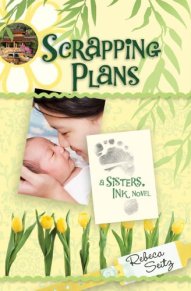
Scrapping Scrapping Plans features Chinese sister Joy. Joy was left on the door of an orphanage in China as a baby and doesn’t know anything of her family and background. She’s the ultimate hostess and most organized of the group, described as a Martha Stewart rival. She and her husband have been trying to have a baby for over a year with no success, and her husband is resistant to testing. She and her husband take a trip back to China to explore her roots.

I liked the play on words with the title, fitting into the scrapbooking theme yet also illustrating the need to realize that God’s plans might be different from ours. I also appreciated the facets of Joy’s experience in grieving over not conceiving, then becoming obsessed with the desire to have a child, and how that impacted her husband.

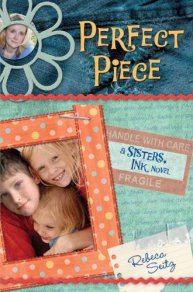
Perfect Piece brings the story back to Meg, the oldest, married the longest, with three kids. Meg was always the quiet but steady influence of the group. But she has been struggling with headaches through everyone else’s story. In this book, she is diagnosed with a brain tumor. Since the tumor is in an area of the brain that affects personality, everyone is warned that Meg may not be the same after surgery, whether the tumor is benign or malignant. Even knowing this, her husband, Jamison, has a hard time with the bitter, angry Meg that emerges on top of the stress of her illness, taking care of the house, dealing with the children, etc. A breakfast at a diner to get away by himself for a bit results in a pleasant conversation with a waitress which leads to regular meetings.

 I thought the sisters might have been a little too up in each other’s business. I have four sisters, and though we love each other and would do anything we could to help each other, I don’t think we’d confront each other like these did. But we’re different personalities and don’t live in the same town, so that makes a difference. I thought the girls were way too harsh concerning Zelda. I understand the issues involved in getting used to a new step-mom, but they all evidenced a lack of grace in dealing with her, until they came to an understanding in the end. Though there were no explicit scenes, there was a bit too much reference to some of the couples’ sexual lives for my tastes. I also didn’t like repeated references to older women in the church as “bluehairs.” It’s sad that there are rampant gossipers in the church and no one ever deals with that, but I doubt every older woman in one church would be gossipy. There seems to be a fundamental disrespect to older people in general except the girls’ parents.

But I liked several themes that emerged through the series: being there for each other, helping each other, adjusting lives and thinking to align with God’s Word. I liked several instances when seeing a situation from a different viewpoint, or understanding the circumstances instead of assuming them, diffused misunderstandings. So, all in all I enjoyed the series.

(Sharing with Semicolon‘s Saturday Review of Books)


Book Review: Hidden Places

Hidden PlacesIn Lynn Austin’s novel Hidden Places, Eliza Wyatt is a young widow with three children in the 1930s. After her husband’s death she had stayed on with her intractable father-in-law at Wyatt Orchards. But now he has died as well. She’s not sure how she is going to manage, but she wants to keep the house and orchards, the only true home she has ever known. With the Depression, she couldn’t sell it, anyway.

One night while doing chores outside she is startled by a hobo. She’s not opposed to helping hobos, so she invites him in and feeds him. Then she discovers he has a nasty gash on his leg and ends up tending him through a nearly fatal infection. In the meantime, her husband’s Aunt Betty – usually called Aunt Batty because she seems to have some mental issues — ends up moving in with Eliza when Betty’s roof caves in during a heavy snowfall. But Aunt Batty turns out to be an able hand around the house, and Eliza soon relies on her help. The hobo, Gabe, offers to stay on and help to pay back what Eliza has done for him.

Gabe proves an able hand as well, but seems to have an uncanny familiarity with the farm and its needs. She is drawn to him, but afraid of the past he is not revealing to her. Yet she hides her own past, too: not even her husband knew her background.

It turns out Aunt Batty has a hidden past as well, and an unexpected underlying wisdom.

One theme or motif throughout the book is that of angels, from an opening admonition to “Be not forgetful to entertain strangers: for thereby some have entertained angels unawares” (Hebrew 13:2), to Aunt Batty’s prayer for God to send a guardian angel to Eliza, to other references. Harsh, self-willed fathers turn up in a number of families, and several characters have to learn to follow their dreams despite such fathers and other obstacles. “Hidden places” in each heart come to light eventually, and, by God’s grace, are healed.

A couple of favorite quotes:

“Why did God have to make our lives so fragile and so short?” Walter thought for a moment before answering. “Because life is very precious to Him. He treasures each life He created and He wants us to treasure it, too—like fine porcelain china. God knows what it’s like to live and die in a frail human body like ours. His Son suffered physical death, Betsy, so that you and I can face it without ever being afraid.”

“All these troubles you’ve been having aren’t a punishment from God. He wants to use them to draw you closer to himself.”

Lynn’s writing and characterizations here are stellar. I was drawn in to each character’s story and ached with them through their trials and rejoiced in their triumphs. Excellent book overall.

(Sharing with Semicolon‘s Saturday Review of Books, Carole’s Books You Loved)

Book Review: Fly Away

Fly AwayIn the novel Fly Away by Lynn Austin, Wilhelmina Brewster faces forced retirement after teaching music at a Christian college all her adult life. She’s depressed and doesn’t know what to do with herself. She never married, never had any other hobbies or interests.

She volunteers playing piano at a cancer center sometimes, and one day there she runs into Mike Dolan – and they got off very much on the wrong foot.

Mike is a widower and a pilot who still flies for the business that he started and his son now runs. But Mike has just learned that he has cancer with a life expectancy of only three months. He doesn’t want to put his family through the same agony they experienced when his wife died, so he plans not to tell them. When the cancer gets too bad, he plans to fly – “and forget to land.”

Somehow he ends up telling Wilhelmina his plans, and she is horrified, especially when she learns he is not a Christian. But she has never witnessed to someone in her life. She talks to her pastor, but he feels like she should be the one to talk to Mike, since she knows him. She talks to her pastor brother, but he has someone over the evangelism department in his church and is not much help. She appeals to her professor brother, and he gives her several detailed arguments from Christian apologetics that she knows she won’t remember and doesn’t think Mike would respond to anyway. No one seems to know how to simply tell a dying man about the Savior and hope of heaven.

Wilhelmina tries to give Mike some tracts, but her efforts are thwarted. Somehow, though they keep finding reasons to see each other, and a tentative relationship begins. Mike feels sorry for her when he learns she has been retired against her will and tries to think of things to cheer up up – like a kite-flying contest with his grandchildren, something Wilhelmina never thought in a million years that she would do.

She learns that Mike isn’t just a project. And even though he’s dying, he knows how to enjoy life much more than she does.

My favorite line in the book comes from advice Wilhelmina’s father gives to a friend: “We have two choices, you and I; we can lose ourselves in despair or find ourselves in Christ” (p. 170).

My thoughts:

I loved this story. I could identify with Wilhelmina’s personality so much. There were so many comical moments, yet serious ones, too. The book blurb says one of them is “figuring out how to live, the other how to die.” Lynn’s notes in the book share that this was one of the first books she wrote. The story takes place in 1987, later than her many historical books, but too far back to be called contemporary. It was published in 1996 and went out of print, but has since been reprinted, keeping the 1987 references, which I enjoyed. I am so glad it was reprinted. I would have hated to miss this story.

(Sharing with Semicolon‘s Saturday Review of Books, Literary Musing Monday, Carole’s Books You Loved)
Book Review: Alvin York: A New Biography of the Hero of the Argonne

Alvin York: A New Biography of the Hero of the Argonne by Douglas V. Mastriano is the newest biography of York and will, I am sure, be the definitive resource on him for years to come.

Alvin York was the third of eleven children born to a farming family in Pall Mall, TN in the late 1800s. The children had very little education because they were needed to help at home. Alvin was the oldest child at home when his father died, so he took on the responsibility to care for the family. He was a hard worker, but he was prone to drinking and fighting even though he was a church-goer. In his late twenties he was saved at a revival service in his church, and his life turned around.

When Alvin was drafted at the age of 29, he tried to register as a conscientious objector. He believed, as did his church, that “Thou shalt not kill” included war. His application and an appeal were rejected because the church did not have an official policy against war. Once in the Army, Alvin kept his feelings quiet as long as he could because he knew the taunts and accusations of cowardice he would receive from the other men. Finally he told his superior officers, Captain Danforth and Major Buxton. He had proved himself as a hard worker and a steady character, so both officers felt he was in earnest. Both were Christians, and one suggested they talk it out not as private and officers, but as Christian brethren. In a thoroughly cordial conversation, Alvin brought up verses that seemed to oppose military action while the others brought up verses that support it. Alvin asked for a leave to think and pray and went home for ten days. After a considerable time at a particular mountain where he liked to go and pray, he went back to the Army at peace about being a soldier.

On October 8, 1918, Alvin, a corporal at this point, fought the Germans with his battalion in the Argonne forest in France.  They were fired at by a German machine gun. Of the seventeen Americans, six were killed and three were wounded. York was the ranking officer left standing. York, a crack shot from years of hunting, took out the machine gun operator, six Germans coming at him with bayonets, and ended up capturing 132 German soldiers as prisoners of war. Later he was promoted to sergeant and was awarded the Medal of Honor.

When York came home to fame and acclaim, he did not want to make a profit off his service. “This uniform ain’t for sale,” he would say.

York returned to his farm in TN and married the girl who had waited for him, Gracie. With his eyes opened from his travel and experience, York wanted to make improvements for his people. He advocated for paved roads into the area and built schools. He accepted invitations to encourage troops and the war effort and to talk about his faith, but he didn’t like to talk about his exploits, which was what most people wanted to hear. He only relented when doing so might help earn money for the schools he was building: he never profited from such money for himself. Jesse Lasky was a movie producer who pursued York for 23 years, trying to get the rights to his story to make a film. When events were steaming up before WWII, York was one of the advocates for the US entering the fray. He felt Hitler needed to be stopped, as soon as possible. Many Americans, including influential ones like Charles Lindbergh, felt that the US should stay out of the fighting. Lasky finally convinced York that a film about his life would not only help young men who faced some of the same struggles he had, but it would inspire patriotism that would help support the WWII effort. York agreed and used the proceeds to fund an interdenominational Bible school. The film Sergeant York was Lasky’s most successful film, earning Gary Cooper an Academy Award for his portrayal of York. I enjoyed reading some of the background information about the film and the differences between the film and real life.

Some of York’s most inspiring words were spoken at the Tomb of the Unknown Soldier, May 1941:

There are those in our country who ask me…”You fought to make the world safe for Democracy. What did it get you?” Let me answer them now. It got me twenty-three years of living in an America where humble citizens from the mountains of Tennessee can participate in the same ceremonies with the president of the United States. It got me twenty-three years of living in a country where liberty is stamped on men’s hearts. By our victory in the last war, we won a lease on liberty, not a deed to it. Now after 23 years, Adolf Hitler tells us that lease is expiring, and after the manner of all leases, we have the privilege of renewing it, or letting it go by default….we are standing at the crossroads of history. Important capitols of the world will either be Berlin and Moscow or Washington and London. I for one pref Congress and Parliament to Hitler’s Reichstag and Stalin’s Kremlin. And because we were for a time side by side, I know this unknown soldier does too. We owe it to him to renew that lease of liberty he helped us to get.

I’m surprised that the concept of having a lease on liberty, which has to be renewed from time to time, rather than a deed, has not been quoted more often.

Mastriano goes into detail concerning York’s early life in Pall Mall, his struggles, his service, and the events in his life after the war. Some stories in York’s time exaggerated his efforts, claiming that his victory was single-handed, or at least nearly so. Neither York nor the Army made these claims, and York credited the other soldiers for their efforts and ultimately God for His enabling and protection. But the attention on him caused pushback from others. Some thought he seemed too good to be true and suggested his exploits were created or exaggerated by the military for propaganda purposes. Mastriano, a military man himself, takes great care to detail and substantiate everything concerning York. His efforts even extended to traveling to France and making an extensive search over the area where York fought on October 8, 1918. Even though the location and details were substantiated before York’s Medal of Honor, some have argued that the lack of the known spot where York fought raised a question mark over the validity of the claims made in his behalf. A wrong map that was discredited yet still placed in the archives contributed further confusion. Mastriano spent twelve years and thousands of hours researching York, traveling, and even searching for artifacts in the Argonne. His findings were scientifically studied and authenticated, resulting in the Sergeant York Historic Trail and Monument.

Though I have never seen the Sergeant York film, I had heard of it and was aware of the barest details of York’s story. My interest was piqued by hearing a series on York on the Adventures in Odyssey radio program, which I like to listen to while doing dishes. When I searched for a biography, I was delighted to find this one. I listened to the audiobook, but if I had been thinking, I would have gotten the print version for the pictures and maps and such. Usually when you purchase a book from Audible, you can get the Kindle version at a lesser price, but the Kindle version of this book is the most expensive I have ever seen. I just now found it in our library system, so I’ll look for it next time I go there.

York’s is an inspiring story not just for his military victory, but for his character. I’m happy to have read and learned more about him.

(Sharing with Semicolon‘s Saturday Review of Books, Literary Musing Monday, Carole’s Book’s You Loved)


What’s On Your Nightstand: October 2018

Nightstand82The folks at 5 Minutes For Books host What’s On Your Nightstand the last Tuesday of each month in which we can share about the books we have been reading and/or plan to read.

Here we are near the end of another month, and it’s time to look over my reading activity.

Since last time I have completed:

Emma’s Gift by Leisha Kelly, reviewed here. Two women in a close neighborhood pass away, and one women owns their property. The remaining families not only deal with their grief, but also the uncertainty of whether they’ll keep their homes. Very good.

The Lost Castle by Kristy Cambron, reviewed here. A moment of clarity for Ellie’s grandmother leads Ellie to a lost castle in France where she uncovers stories of strong women in two different timelines. Very good.

My Hands Came Away Red by Lisa McKay, reviewed here. A group of teens on a backpacking mission trip get caught up in village fighting and have to hike three weeks to safety. Excellent.

Borders of the Heart by Chris Fabry, reviewed here. A farmhand near the border of Arizona and Mexico comes across a dehydrated, injured woman and, instead of calling border patrol, decides to help her, leading them both into danger. Okay.

Women of the Word: How to Study the Bible With Both Our Hearts and Our Minds by Jen Wilkin, a reread, reviewed here. Loved it just as much as the first time through.

Classics of British Literature by John Sutherland was not a book, but a series of lectures about British literature. Reviewed here. Very informative.

Coming Unglued and Scrapping Plans by Rebeca Seitz. I’ll review them together with the last book in the series when I finish it.

I’m currently reading:

Reading the Bible for Life: Your Guide to Understanding and Living God’s Word by George Guthrie.

Alvin York: A New Biography of the Hero of the Argonne by Douglas V. Mastriano (audiobook)

The Elements of Style by William Strunk and E. B. White

Christian Publishing 101: by Ann Byle

Perfect Piece by Rebeca Seitz

Fly Away by Lynn Austin

Up Next:

There’s a Reason They Call It GRANDparenting by Michele Howe, recommended by Michele Morin.

Amazing Grace: William Wilberforce and the Heroic Campaign to End Slavery by Eric Metaxas

Close to Home by Deborah Raney

Katie’s Dream by Leisha Kelly

Are you reading anything good?