Louisa May Alcott Reading Challenge

LMA-button2018

Tarissa at In the Bookcase hosts the Louisa May Alcott Reading Challenge this month. You can find details and prize information here.

I’d like to read at least two books for the challenge.

  • A biography,  Invincible Louisa by Cornelia Meigs
  •  A Long Fatal Love Chase by Louisa. This was one of her “sensational novels” that she, like Jo in Little Women, wrote for quick money. It was recently rediscovered and printed. It will be interesting to see that side of Alcott.

I may also try to listen to Little Women again. I have read it several times and listened an audiobook of it at least once. I recently watched the new PBS remake, and I know they arranged some parts out of order, but for others I am not sure if I am remembering the book or the 1994 film. At any rate, I am hankering to go through the book again. I am making good time on my Back to the Classics challenge, so I think I have time for a detour. 🙂 But we’ll see.

What’s On Your Nightstand: May 2018

Nightstand82The folks at 5 Minutes For Books host What’s On Your Nightstand the last Tuesday of each month in which we can share about the books we have been reading and/or plan to read.

I enjoy this monthly opportunity to share what we’re reading.

Since last time I have completed:

Adam Bede by George Eliot, reviewed here. Excellent.

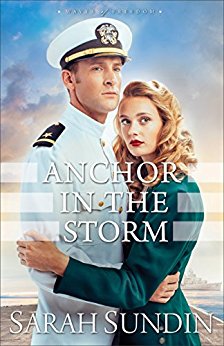
Anchor in the Storm by Sarah Sundin, WWII story and mystery, reviewed here. Very good.

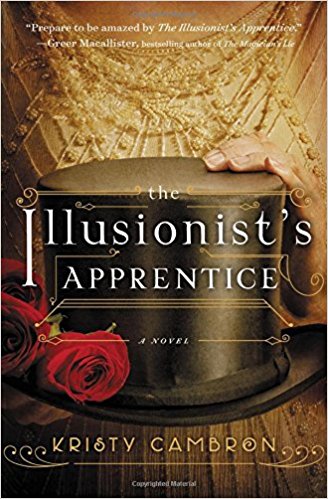
The Illusionist’s Apprentice by Kristy Cambron, reviewed here. Excellent.

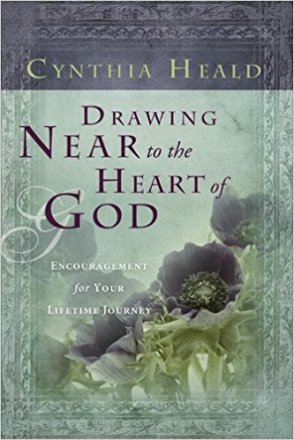
Drawing Near to the Heart of God: Encouragement for Your Lifetime Journey by Cynthia Heald, reviewed here. Good.

I’m currently reading:

Heaven Without Her: A Desperate Daughter’s Search for the Heart of Her Mother’s Faith by Kitty Foth-Regner

The Highly Sensitive Person by Elaine N. Aron. Mixed emotions about this one.

Villette by Charlotte Bronte

A Small Book About a Big Problem: Meditations on Anger, Patience, and Peace by Edward T. Welch

Gospel Meditations for Mothers by Chris Anderson, Joe Tyrpak, Hannah Anderson, and others

Up Next:

The Hunchback of Notre Dame by Victor Hugo

Christian Publishing 101 by Ann Byle

The Song of Sadie Sparrow by Kitty Foth-Regner

Overcoming Your Devotional Obstacles: 25 Keys to Having Memorable Devotions by John O’Malley.

Tarissa at In the Bookcase hosts the Louisa May Alcott Reading Challenge in June. I’d like to read a biography,  Invincible Louisa by Cornelia Meigs, and possibly A Long Fatal Love Chase by Louisa. The latter was one of her “sensational novels” that she, like Jo in Little Women, wrote for quick money. It was recently rediscovered and printed. It may be too sensational for me – we’ll see.

I also made a list of books I’d like to reread…someday.

Read anything interesting this month? Do you have big reading plans for the summer?

Book Review: The Illusionist’s Apprentice

Illusionist On New Year’s Eve in 1926, a medium in Massachusetts advertises that he will raise a man from the dead.  Though someone does rise from the newly unearthed coffin, he immediately falls down dead. The FBI treat the case as a homicide, and their investigation takes them to other vaudevillian performers, particularly Wren Lockhart. Wren is an illusionist who apprenticed under Harry Houdini. But interest in her goes beyond her stage work: the dead man had the name of Jennifer Charles in his vest pocket, Wren’s real name which she has tried to keep buried. FBI agent Elliot Matthews works with Wren to gain more information helpful to the case, but Wren reveals as little as possible, wary of bringing her past to light.

When Wren and Agent Matthews are chased and shot at in a car, the case expands from the one magic trick gone wrong on New Year’s Eve. Is someone after Wren to gain Houdini’s secrets? Or is someone wreaking revenge for the part Houdini and Wren played in debunking a medium’s claims? Or has someone uncovered Wren’s carefully buried secrets?

The Illusionist’s Apprentice by Kristy Cambron kept me on the edge of my seat with multiple twists and turns and the revelation of new information along the way. Wren’s history is told in flashbacks which jumped around to different parts of her life. They could have been confusing, but I made it a point to look at the date beginning every chapter to try to keep on track.

Besides the mystery and suspense elements, I loved Wren’s development through the story as she slowly learns to trust Matthews. I also enjoyed that there were several layers to the story. The faith element first shows up in Wren’s insistence that only one man ever raised anyone from the dead and that her profession wasn’t magic but illusion. After that her faith is more undercurrent than overt, but its expression becomes more vivid near the end.

One of my favorite quotes from the book:

There cannot be dark without the light that will overcome it. Whatever darkness there is, God’s light shines brighter. It has to. He’s the Hero in every story–especially this one.

Kristy’s first two books were set during WWII, the third one took place in a circus, and now this one centers around illusionists and vaudeville. Though I also enjoy authors who write in particular time eras or niches, I love that Kristy’s subject matter is unexpected and often largely unexplored until now.

(Sharing with Semicolon‘s Saturday Review of Books, Literary Musing Monday, Carole’s Books You Loved)



Book Review: Adam Bede

Adam Bede Adam Bede is a solid, hardworking, salt-of-the-earth kind of man in the novel that bears his name by George Eliot (aka Mary Ann Evans, sometimes seen as Marian Evans). He lives in a pastoral community known as Hayslope in 1799 England. Adam is a carpenter and lives with his mother and brother, Seth. His closest friends are the Poysers, who run the nearby dairy farm, and Arthur Donnithorne, the young squire just coming of age who will inherit the estate when his grandfather dies. Adam is so well regarded at the carpenter shop that the owner not only wants Adam to take over when the owner retires; he also wants Adam to marry his daughter, Mary.

Adam, however, is in love with Hettie, the Poysers niece who has been living with them since she was orphaned. Sadly, Hettie is not the girl Adam thinks she is. She’s pretty, but she is also shallow, selfish, and vain. She wants out of her boring lifestyle. When Arthur visits the dairy and flirts a little with her, she begins to think that perhaps he will fall in love with her and make her a fine lady one day.

Seth, meanwhile, is in love with Dinah, a niece of Mrs. Poyser. Dinah doesn’t plan to marry, though, because she feels her calling is to preach God’s Word. Dinah and Hettie are set up as opposites. One night in their adjoining rooms, Hettie is trying on earrings and a shawl, parading up and down her room, admiring herself in a mirror, while Dinah is looking out the window, admiring the landscape and then praying. Dinah tries to befriend Hettie, but without success at first.

Brief descriptions of the book hint at a tragedy that occurs as a result of the love triangle, but it’s not the tragedy I was expecting. My jaw literally dropped at what happened. Some descriptions also mention the word “seduction,” which made me a little wary of the book. But I liked Eliot’s Daniel Deronda and Middlemarch so much, I decided to take a chance. I am glad I did. There is not a seduction per se in the novel. It’s more like an unwise falling into temptation. Elliot is quite discreet about it: similar to David and Bathsheba’s sin in the Bible, there are no sordid scenes, just the tragic results.

Arthur, in fact, is kind of a study in a lighthearted, likeable man who drifts into temptation by excuse:

No young man could confess his faults more candidly; candour was one of his favourite virtues; and how can a man’s candour be seen in all its lustre unless he has a few failings to talk of? But he had an agreeable confidence that his faults were all of a generous kind—impetuous, warm-blooded, leonine; never crawling, crafty, reptilian. It was not possible for Arthur Donnithorne to do anything mean, dastardly, or cruel. “No! I’m a devil of a fellow for getting myself into a hobble, but I always take care the load shall fall on my own shoulders.” Unhappily, there is no inherent poetical justice in hobbles, and they will sometimes obstinately refuse to inflict their worst consequences on the prime offender, in spite of his loudly expressed wish.

He could no more believe that he should so fall in his own esteem than that he should break both his legs and go on crutches all the rest of his life. He couldn’t imagine himself in that position; it was too odious, too unlike him.

He was getting in love with Hetty—that was quite plain. He was ready to pitch everything else—no matter where—for the sake of surrendering himself to this delicious feeling which had just disclosed itself. It was no use blinking the fact now—they would get too fond of each other, if he went on taking notice of her—and what would come of it? He should have to go away in a few weeks, and the poor little thing would be miserable. He MUST NOT see her alone again; he must keep out of her way…He wondered if the dear little thing were thinking of him too—twenty to one she was. How beautiful her eyes were with the tear on their lashes! He would like to satisfy his soul for a day with looking at them, and he MUST see her again.

No man’s conduct will bear too close an inspection; and Poyser was not likely to know it; and, after all, what had he done? Gone a little too far, perhaps, in flirtation, but another man in his place would have acted much worse; and no harm would come—no harm should come, for the next time he was alone with Hetty, he would explain to her that she must not think seriously of him or of what had passed. It was necessary to Arthur, you perceive, to be satisfied with himself. Uncomfortable thoughts must be got rid of by good intentions for the future.

It was the last weakness he meant to indulge in; and a man never lies with more delicious languor under the influence of a passion than when he has persuaded himself that he shall subdue it to-morrow.

No man can escape this vitiating effect of an offence against his own sentiment of right, and the effect was the stronger in Arthur because of that very need of self-respect which, while his conscience was still at ease, was one of his best safeguards. Self-accusation was too painful to him—he could not face it. He must persuade himself that he had not been very much to blame; he began even to pity himself.

Though the love triangle forms the main plot and conflict, there are a plethora of other unique characters and subjects that come up during the course of the book.  One subject is the nature of religion. Adam views using one’s gifts to do one’s best at one’s work as an act of worship and a practical display of faith. He preferred the pastor who was not the best preacher, but had a heart for his people, as opposed to a later minister who excelled at “doctrines and notions” without warmth and personal care of his church. It’s sad that Eliot later rejected Christianity: she seemed to have a good understanding of its main points here.

Another major theme is the effect of suffering. A couple of times Adam stoutly rejects the notion that good can come out of bad. But his suffering does soften him from the good but hard and slightly proud man he was to a more kindhearted and sympathetic version.

Eliot’s strength is getting into the minds of her characters and revealing them to us. Even though this was her first novel, she displayed that skill well. I ached along with several of them.

A few favorite quotes:

What greater thing is there for two human souls, than to feel that they are joined for life–to strengthen each other in all labor, to rest on each other in all sorrow, to minister to each other in all pain, to be one with each other in silent unspeakable memories at the moment of the last parting?

We must learn to accommodate ourselves to the discovery that some of those cunningly-fashioned instruments called human souls have only a very limited range of music, and will not vibrate in the least under a touch that fills others with tremulous rapture or quivering agony.

Her little butterfly soul fluttered incessantly between memory and dubious expectation.

In a mind where no strong sympathies are at work, where there is no supreme sense of right to which the agitated nature can cling and steady itself to quiet endurance, one of the first results of sorrow is a desperate vague clutching after any deed that will change the actual condition. Poor Hetty’s vision of consequences, at no time more than a narrow fantastic calculation of her own probable pleasures and pains, was now quite shut out by reckless irritation under present suffering, and she was ready for one of those convulsive, motiveless actions by which wretched men and women leap from a temporary sorrow into a lifelong misery.

Mrs. Poyser, known for speaking her mind, when asked by the squire why she was leaving his grandson’s birthday party so early:

Oh, Your Honour, it’s all right and proper for gentlefolks to stay up by candlelight—they’ve got no cheese on their minds. We’re late enough as it is, an’ there’s no lettin’ the cows know as they mustn’t want to be milked so early to-morrow mornin’.

In chapter 17, the narrator or author addresses the reader directly on the issue of why one character was not drawn more ideally.

Certainly I could, if I held it the highest vocation of the novelist to represent things as they never have been and never will be. Then, of course, I might refashion life and character entirely after my own liking; I might select the most unexceptionable type of clergyman and put my own admirable opinions into his mouth on all occasions. But it happens, on the contrary, that my strongest effort is to avoid any such arbitrary picture, and to give a faithful account of men and things as they have mirrored themselves in my mind. The mirror is doubtless defective, the outlines will sometimes be disturbed, the reflection faint or confused; but I feel as much bound to tell you as precisely as I can what that reflection is, as if I were in the witness-box, narrating my experience on oath.

She goes on to say that in real life, there are people with whom we have to do who are flawed in major and minor ways, and the novelist does us a disservice by creating an ideal world when what we really need is to better view and interact with our real one:

These fellow-mortals, every one, must be accepted as they are: you can neither straighten their noses, nor brighten their wit, nor rectify their dispositions; and it is these people—amongst whom your life is passed—that it is needful you should tolerate, pity, and love: it is these more or less ugly, stupid, inconsistent people whose movements of goodness you should be able to admire—for whom you should cherish all possible hopes, all possible patience. And I would not, even if I had the choice, be the clever novelist who could create a world so much better than this, in which we get up in the morning to do our daily work, that you would be likely to turn a harder, colder eye on the dusty streets and the common green fields—on the real breathing men and women, who can be chilled by your indifference or injured by your prejudice; who can be cheered and helped onward by your fellow-feeling, your forbearance, your outspoken, brave justice.

I listened to the audiobook wonderfully narrated by Nadia May. If I have a choice of narrators, and May is one, I choose her! I also dipped into the written text online at Project Gutenberg and through a library copy.

(Sharing with Semicolon‘s Saturday Review of Books, Literary Musing Monday, Carole’s Books You Loved)

Book Review: Drawing Near to the Heart of God

Heart of GodI had read a number of Cynthia Heald‘s Bible studies in my early married days, but I couldn’t remember much about them. So when I came across Drawing Near to the Heart of God: Encouragement for Your Lifetime Journey (previously published as A Woman’s Journey to the Heart of God), I gave it a try not just for the content, but also to reacquaint myself with Heald’s writing.

Heald frames the Christian life as a journey. The first section covers “Essentials for the Journey,” like “Traveling Light” (things to set aside), “Righteous Clothing” (holiness), “The Guidebook” (the Bible), “Fellowship With Our Guide” (abiding in Christ), and others. Section Two focuses on “The Destination: God’s Heart” and spends time on some of His attributes. The last section. “Enjoying the Journey,” covers “Bearing His Fruit,” “Experiencing His Rest,” “Living for the Eternal,” and “Bringing God Glory.”

Heald writes in an easily understood style. She particularly handles Biblical stories well, drawing the reader right in to what the character was probably feeling without a lot of extra-biblical conjecture.

A few of the many quotes that stood out to me:

My journey to the heart of God does not begin tomorrow; the choices I make today determine whether I move towards Him or toward self and the world (p. 20).

[Re the Israelites failure to obey God and go into the promised land the first time] The people decided to focus on the potential risks instead of the promised blessings (p. 47).

My definition of abiding is “consistently sitting at the feet of Jesus and continually depending upon Him by listening to His words with a heart to obey” (p. 68).

When you fear God, you will be freed to listen to His “fear nots” (p. 87).

We cannot expect to make steady progress on our spiritual journey if we insist on taking little side trips away from the highway of holiness (p. 110).

Since we can do nothing to captivate [God’s] love, we can do nothing to lose it (p.136).

God has His time schedule, and He uses what we call delays to produce in us patience and trust and to accomplish His purposes in establishing His kingdom (p. 234).

To understand the difference between living for heaven and demanding that life here on earth be like heaven is an important lesson in learning to live for the eternal (p. 241).

I disagreed with her in a few spots, like when she said the Bible is “one of the best ways to hear God speak” (p. 244). It’s not just one of the best – it is the primary way we hear from God, some would say the only way. She speaks of “hearing God’s voice” in a couple of places, but I don’t think she means it in terms of an audible voice or extra-biblical revelation. This would have concerned me more if she had written anything doctrinally questionable. I also wouldn’t endorse everyone she quotes.

But for the most part, this is a fairly solid explanation of how to grow in the Christian life. Even though I was already familiar with these truths, it was good to go over them again.

(Sharing with Semicolon‘s Saturday Review of Books and Literary Musing Monday, Carole’s Books You Loved)

Books I’d Like to Reread

So little time

Over a year ago Cathy shared a list of books she would like to reread. I enjoyed looking at her list and thought I’d make my own some day.

I’ve reread some books multiple times: Little Women and its two sequels by Louisa May Alcott, the Little House on the Prairie series by Laura Ingalls Wilder, the Chronicles of Narnia by C. S. Lewis, Jane Eyre, some of Jane Austen’s and Dickens’ books, the Anne of Green Gables series by L. M. Montgomery, Jan Karon’s Mitford series, biographies like Through Gates of Splendor by Elisabeth Elliot, Goforth of China and Climbing by Rosalind Goforth, Amy Carmichael of Dohnavur by Frank Houghton, By Searching and In the Arena by Isobel Kuhn, Evidence Not Seen by Darlene Deibler Rose, and others. I wrote here about reasons to reread, but the chief reason is that I glean more from the books each time I read them.

Books I want to read

But there are so many new books I’d love to read, I don’t get to reread the old ones as much as I’d like. Maybe I ought to set a goal to reread at least one a year – at least I’d get to some that way.

So here are some that I’d like to reread some day:

A Chance to Die: The Life and Legacy of Amy Carmichael by Elisabeth Elliot. I love both of these ladies, but I’ve only gotten to this book once.

Mere Christianity by C. S. Lewis. I have read this a couple of times, but there is so much to it, I could probably reread it every year and still learn something new.

Knowing God by J. I. Packer. I just read this for the first time 2 1/2 years ago. Somehow I missed it all the years I heard people raving about it. But I’ve already forgotten so much, I’d like to read it again.

When God Weeps by Joni Eareckson Tada and Stephen Estes is one of the best books on suffering I have read (A Path Through Suffering by Elisabeth Elliot and Rose From Brier by Amy Carmichael are two more). I’ve read the others 2-3 times but somehow hadn’t gotten back to this one. But I’d love to.

Spiritual Depression by Martyn Lloyd-Jones. I’ve also read this a couple of times, but it has been too long. It deeply impacted me on my first reading.

Women of the Word by Jen Wilkin. This one is not as old as the others I have listed, but it was an instant favorite.

The Fruitful Wife: Cultivating a Love Only God Can Produce by Hayley DiMarco. This is also a newish one, discussing the fruit of the Spirit particularly in relation to marriage. But it’s another that I would benefit from rereading regularly.

Mark of the Lion series, Francine Rivers. This fictional trilogy about life just after the time of Christ was riveting.

Les Miserables by Victor Hugo. I first read it nine years ago, and at 1440+ pages, it will be a major undertaking if I ever read it again. But it became one of my top three favorite novels (Jane Eyre and A Tale of Two Cities being the other two).

The Lord of the Rings series by J. R. R. Tolkien. This would be another massive undertaking. But they’re so good.

Janette Oke books. Janette started my love for Christian fiction. It’s been ages since I read these, and I’d love to revisit them and see how they come across to me now.

Now that I’ve gotten the ball rolling mentally, several others are coming to mind. But these would be at the top of the list.

How about you? Are there any books you’d love to reread but haven’t gotten to? Or favorites that you’ve read several times?

Keep the ideas

(Sharing with Literary Musing Monday)

Book Review: Anchor in the Storm

AnchorIn Anchor in the Storm by Sarah Sundin, Lillian Avery looks forward to her first job as a professional pharmacist in Boston in 1941. Her new boss had not wanted to hire a woman, but a male pharmacist wasn’t available. He’s also aggravated about employing a “cripple,” though Lillian’s wooden leg doesn’t hinder her work in the least.

While Lillian sets out to prove her value at work, she fends off attention from her brother’s best friend, Arch Vandenberg. Arch is rich and good-looking, but Lillian feels these attributes are hindrances rather than attractions. Besides, for reasons of her own, she doesn’t trust any man and will never allow herself to be weak.

Arch is an Ensign recently assigned to a destroyer along with Jim Avery, Lillian’s brother. Jim and Arch had survived an attack on their previous destroyer, but Arch has been battling flashbacks, shaking hands, and a fear of being trapped below decks. He can’t tell anyone, though, both because he is an officer, and because he might be ejected from the Navy.

Arch hates his family’s wealth and plans to give his inheritance away when he gets it. He’s tired of girls who only show interest because of his family’s money. Lillian seems different, but they get off to a wrong start. Arch decides to just befriend her with the hopes that eventually she’ll be open to him as more than a friend.

While Lillian notices some odd prescriptions at the pharmacy, Arch notices odd behavior on the ship: men acting groggy, almost drunk, and not performing their duties well. Lillian tries to alert a detective to her suspicions, but he doesn’t believe she has enough evidence. Lillian and Arch decide to investigate together and compare notes. But their findings might be just as dangerous as the war.

My thoughts:

I don’t like to read romance just for the sake of romance, especially giddy, silly romances.  Sarah’s stories have much more to them, and I love that. They are neither silly nor giddy. Lillian and Arch have much to work through, mentally as well as spiritually, and the plot line involves more than their romance. I always love the way Sarah includes a lot of historical data about WWII but without becoming stuffy or didactic. The mystery plot line was well-done and the faith element was natural and realistic. I enjoyed the book very much.

This book is the second in the Waves of Freedom series, the first being Through Waters Deep. Though some characters from the first book appear in the second, and it’s enjoyable to read both, the second can be understood well as a stand-alone book.

(Sharing with Semicolon‘s Saturday Review of Books, Literary Musing Monday, Carole’s Books You Loved)

What’s On Your Nightstand: April 2018

Nightstand82The folks at 5 Minutes For Books host What’s On Your Nightstand the last Tuesday of each month in which we can share about the books we have been reading and/or plan to read.

I’m glad a friend posted her Nightstand post a day early: otherwise I would have forgotten all about it! This month, the last Tuesday comes up with almost a week still left in the month, so I wasn’t even thinking about my Nightstand post yet. But, thankfully, now I am!

Since last time I have completed:

The Story of My Life by Helen Keller, reviewed here. Helen wrote this when she was in her twenties, so it only covers the first part of her life. The editor supplemented with copies of her letters and her teacher’s.

Ben-Hur: A Tale of the Christ by Lew Wallace, reviewed here. Good story set in the time of Christ.

Sins of the Past by Dee Henderson, Dani Pettrey, and Lynette Eason, reviewed here. Three mystery novellas connected by the theme of an incident in the protagonists’ past causing problems in their present. Good.

Reading People: How Seeing the World through the Lens of Personality Changes Everything by Anne Bogel, reviewed here. Good overview of various personality frameworks.

He Fell in Love With His Wife by Edward Payson Roe, reviewed here. A very sweet old story about a marriage of convenience between two wounded souls who find respite with each other. Loved this.

Another Way Home by Deborah Raney, reviewed here. A young couple battles fertility issues, which puts a strain on their marriage when nothing works. The husband refuses to consider adoption. The wife starts volunteering in a women’s shelter to occupy her thoughts and time and gets involved with a woman and her son there. Very good Christian fiction.

I’m currently reading:

Adam Bede by George Eliot

Drawing Near to the Heart of God: Encouragement for Your Lifetime Journey by Cynthia Heald

The Highly Sensitive Person by Elaine N. Aron. My interest in this was sparked by a chapter of this title in Reading People.

Up Next:

The Hunchback of Notre Dame by Victor Hugo

Anchor in the Storm by Sarah Sundin

Christian Publishing 101 by Ann Byle

Adorned by Nancy DeMoss Wolgemuth

As always, I have a stack of unread books on my bookcase and loads of them in my Kindle app, so I have no shortage of books to read. It’s just hard to decide which one to read next!

Book Review: Ben-Hur: A Tale of the Christ

Ben-HurTwo young men sat in a garden in first century Judea. They had been close childhood friends, but now they realized they must come to a parting of the ways. Their culture, religion, education, and training pitted them against each other. One was a Roman, Messala; one was a Jew, Judah Ben-Hur.
But their parting signaled more than the loss of friendship. A procession of the Roman governor and his guard passed by Judah’s house one day. As Judah and his sister leaned over the parapet to watch, his hand accidentally loosened a roof tile, which fell and hit the official, knocking him off his horse. The guards stormed the house, and Judah was accused of attempted assassination by none other than Messala. Judah’s mother and sister were seized and taken away, the Hur home was confiscated by the Roman government, and Judah was made a galley slave in a Roman ship.

In Judah’s third year as a galley slave, Quintas Arrius took over the ship to combat pirates. Arrius noticed Judah and asked about him. He was stunned to learn that Judah was the son of someone he had known, a prince in Judea. When a sea battle wrecked the ship, Judah saved the life of Arrius. Arrius adopted Judah as his son, had him trained in Roman fighting, and left him all his wealth.

Judah had two aims in life: to find his mother and sister, and to exact revenge on Rome in general and Messala in particular. He found opportunity to face Messala in a chariot race.

In his travels, Judah heard of a man named Jesus who was the source of much controversy. Some thought Jesus was the promised Messiah, arrived to set up his kingdom. Most thought the kingdom would be an immediate physical one, unseating and defeating the Romans. A few thought the Messiah’s kingdom would be a spiritual one. Judah threw all his influence and training into getting an army ready for the day Jesus would announce himself as King. But Judah also pondered Jesus’s teaching and wonders who he really was.

The subtitle of Ben-Hur by Lew Wallace is A Tale of the Christ. Although Christ is physically in the plot a short amount of time, He is a subject of consideration for much of the book. The story actually begins with three wise men meeting in the desert, discussing their backgrounds and how they came to faith in the one true God and were led by a star. Then they journeyed together to find the newborn king. Some twenty years later, the lone surviving magi, Balthasar, came back to Judea to see the now adult King take His place. This was the first novel with Jesus as a major character, and though Wallace made up scenes, descriptions, and actions involving Christ, as an author he respectfully did not put words in Jesus’s mouth. The only words Christ speaks in the story come from the Bible.

This story was spurred by a conversation Wallace had on a train with noted atheist Robert Ingersoll. Though Wallace wasn’t particularly religious, he felt Ingersoll was wrong. Wallace felt ashamed that he did not know more. He decided to research Christianity, eventually came up with the idea of framing the story and teaching of Jesus in a novel, and became something of a believer himself in the process. His novel became an all-time best-seller.

Many are familiar with the 1959 film starring Charlton Heston as Ben-Hur. The book, of course, goes into much more detail, and there are a few differences in some plot details between the two. (One interesting tidbit – but don’t read if you don’t want too much of a spoiler! In the film, Messala cheated in the chariot race by having spikes on his wheels with which he attacked Ben-Hur’s chariot. In the book, however, it was Ben-Hur who clipped Messala’s wheel in a slight action unnoticed by the crowd, causing the latter’s chariot to wreck. Though Ben-Hur was out for revenge, this isn’t treated as cheating in the book – in preparing for the chariot race, Ben-Hur noted the need to be alert to the Romans’ tricks. In fact, earlier in full sight of the crowd, Messala used his whip to strike Ben-Hur’s horses, causing them to leap forward. So it seems like this kind of thing was part of the race and not penalized.)

One of my favorite passages in the book comes after Messala tried to upset Ben-Hur’s horses and throw them off course:

The four sprang forward affrighted. No hand had ever been laid upon them except in love; they had been nurtured ever so tenderly; and as they grew, their confidence in man became a lesson to men beautiful to see. What should such dainty natures do under such indignity but leap as from death? Forward they sprang as with one impulse, and forward leaped the car. Past question, every experience is serviceable to us. Where got Ben-Hur the large hand and mighty grip which helped him now so well? Where but from the oar with which so long he fought the sea? And what was this spring of the floor under his feet to the dizzy eccentric lurch with which in the old time the trembling ship yielded to the beat of staggering billows, drunk with their power? So he kept his place, and gave the four free rein, and called to them in soothing voice, trying merely to guide them round the dangerous turn; and before the fever of the people began to abate, he had back the mastery.

Ben-Hur’s time rowing as a galley slave, which he probably thought of a lost period of his life, gave him the strength and training to handle this.

I watched the film and read the book some years ago. I enjoyed reading it again, although I found it rather wordy and overly descriptive (naturally, since it was published in 1880), which I don’t remember thinking the first time. But I enjoyed it, though I wouldn’t take my theology from it, especially the frequent grouping of “love, faith, and good works” as a way to “win heaven.” Wallace did a lot of research and explained a lot of history, and he gives a realistic description of the Jewish and Roman cultures and what Jews in that day might have been expecting. There is an interesting article here about Lew Wallace’s life and career.

I mostly listened to this audiobook version but read parts in the Kindle version. The narrator sounded a little bored in places, but did a good job in others. I listened to samples of other narrators, but none of the others sounded any better. The sound quality is one of the worst I have ever received in a book by Audible – there are several places where it sounds like it was a recording of a cassette tape that had been pinched or bent in places.

I recently learned that Wallace’s granddaughter, Carol, read his book for the first time and enjoyed it, but thought it needed to be rewritten in less “stilted” language, so she did so. I’d be interested to read that some time.

A 2016 remake of the film changes the plot in many places (making Ben-Hur and Messala adopted brothers, for instance), so I am not interested in seeing it.

(Sharing with Semicolon‘s Saturday Review of Books, Literary Musing Monday, Carole’s Books You Loved)

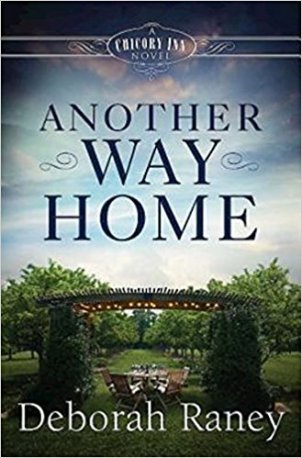
Book Review: Another Way Home

Another Way Home Another Way Home by Deborah Raney is the third in her Chicory Inn series involving the family of empty nesters Grant and Audrey Whitman, who have turned their family home into a bed and breakfast. (The first was Home to Chicory Lane; the second, Two Roads Home.) Though the whole family of their adult children, sons- and daughter-in-law, and grandchildren are in every book, each book in the series focuses on one particular child and his or her family.

This time the spotlight shines on middle daughter Danae and her husband Dallas. They have been trying to conceive for years with no results except tension in their marriage and resentment and hurt on Danae’s part. She’s particularly stung when sister Corrinne becomes pregnant – again – unexpectedly without even trying. Danae can’t keep her resentment from showing, and Corrinne feels guilty and unsure when to even announce her news to the family. Though the family empathizes and tries to be sensitive,  Danae resents their well-meaning questions and concerns and sympathy. Dallas especially feels he has to constantly walk on eggshells around Danae. Dallas won’t even discuss the possibility of adoption, for reasons which he won’t share, even though he himself was adopted and raised by a loving family.

Danae decides they should stop fertility treatments and the quest to have a baby for a while. To try to occupy herself, she responds to an announcement at church asking for volunteers at a women’s shelter. There she becomes friends with another older volunteer, Bertha, and gets involved in the lives of one of the women there and her son.

I don’t want to say any more than that so as not to give the story away.

I love how Deborah doesn’t sugarcoat any of the facets of the story. All of the characters’ struggles are gritty and realistic while they seek for God’s direction, provision, and grace.

(Sharing with Semicolon‘s Saturday Review of Books, Literary Musing Monday, Carole’s Books You Loved)