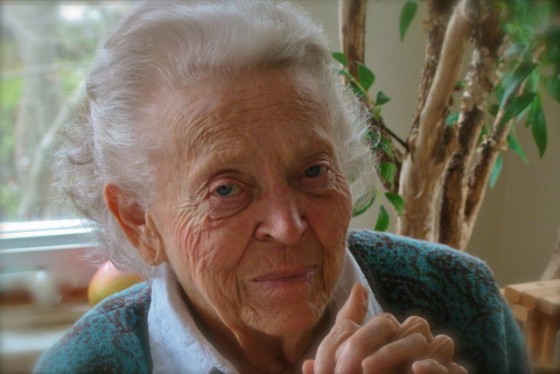
Elisabeth Elliot in heaven

Elisabeth Elliot

Just this morning, Elisabeth Elliot passed through the “gates of splendor” into glory. She has been one of my heroes of the faith for almost 40 years. I first read her first book, Through Gates of Splendor, in college. It tells how her husband and five other men with their families came as missionaries to Ecuador and were burdened to reach a tribe of killers known then as the Aucas, now as the Waorani. The men devised ways to reach out to them, and then to meet them, and although the reception seemed friendly, later all five men were speared to death. Later Elisabeth, her young daughter Valerie, and Rachel Saint, sister to one of the slain men, were invited to go live with the Aucas, and many of them became believers in Christ as Savior and laid down their spears.

That book started me on a lifetime of reading missionary books and reading Elisabeth Elliot. Her commitment to simply reading the Bible, obeying it, and trusting God no matter what the circumstances were an inspiration.You know, it shouldn’t be: that should be normal Christian life for all believers. But sometimes having someone go before us and call back that though sometimes He calls us to go through deep waters and dark valleys, it’s ok, because He is with us, someone who knows those dark valleys by experience…well, there’s just nothing like it.

Besides her commitment to God and His Word, her views of what it means to be a Christian woman shaped my own thinking. Let Me Be a Woman was pivotal for me. The Shaping of a Christian Family influenced my own, Keep a Quiet Heart kept my focus where it needed to be. A Path Through Suffering was one of the books that helped me wrestle through questions on that subject. On Asking God Why was another favorite. The first chapter of The Savage My Kinsman, in which she talks about going on as a widow and quotes William Cullen Bryant’s poem “To a Waterfowl” has endeared that poem to me forever, especially the line: “He, who, from zone to zone, Guides through the boundless sky thy certain flight, In the long way that I must tread alone, Will lead my steps aright.” Back to the Bible used to send out daily e-mail devotionals taken from her books: I think I have kept a copy of most of them.

Just a few of my favorites of her quotes:

Don’t dig up in doubt what you planted in faith.

The fact that I am a woman does not make me a different kind of Christian, but the fact that I am a Christian makes me a different kind of woman.

Faith does not eliminate questions. But faith knows where to take them.

This job has been given to me to do. Therefore, it is a gift. Therefore, it is a privilege. Therefore, it is an offering I may make to God. Therefore, it is to be done gladly, if it is done for Him. Here, not somewhere else, I may learn God’s way. In this job, not in some other, God looks for faithfulness.

Obedience to God is always possible. It is a deadly error to fall into the notion that when feelings are extremely strong we can do nothing but act on them.

The secret is Christ in me, not me in a different set of circumstances.

To me, a lady is not frilly, flouncy, flippant, frivolous and fluff-brained, but she is gentle, she is gracious, she is godly and she is giving. You and I have the gift of femininity… the more womanly we are, the more manly men will be and the more God is glorified. Be women, be only women, be real women in obedience to God.

How can this person who so annoys or offends me be God’s messenger? Is God so unkind as to send that sort across my path? Insofar as his treatment of me requires more kindness than I can find in my own heart, demands love of a quality I do not possess, asks of me patience which only the Spirit of God can produce in me, he is God’s messenger. God sends him in order that he may send me running to God for help.

Leave it all in the Hands that were wounded for you.

This video shows a few clips from the documentary Beyond the Gates of Splendor (which I encourage you to see if you ever have a chance):

World Magazine reported in an article just last year that she “handled dementia just as she did the deaths of her husbands. ‘She accepted those things, [knowing] they were no surprise to God,’ Gren said. ‘It was something she would rather not have experienced, but she received it.'”

I was sorry to hear she passed away this morning. We’ve lost one of the greatest lights of the Christian world here, but I’m happy that now she is beyond the reach of dementia and old age. I pray for comfort for her family and the many who will miss her influence. May we each shine His light faithfully in the sphere of influence He gives us.

I am sure many articles and blog posts will be popping up about her over the next few days, but two I’ve read so far are:

From The Gospel Coalition: Elisabeth Elliot (1926-2015)

From Christianity Today: Missionary Pioneer Elisabeth Elliot Passes Through Gates of Splendor

From John Piper (love how he captures some of her personality): Peaches in Paradise.

From Nancy Leigh DeMoss: She Trusted and She Obeyed.

When the message isn’t for me

Courtesy offreedigitalphotos.net

Courtesy of freedigitalphotos.net

A week or two ago I came across a blog post that got me to thinking about how we respond when a meeting, church service, or even a Bible passage seems to apply to someone other than myself. When there is an ordination service or a Mother’s or Father’s Day message or children’s program, do I skip them because I am not a part of any of that?

I don’t think so. Here’s why:

1. “All scripture is given by inspiration of God, and is profitable for doctrine, for reproof, for correction, for instruction in righteousness: That the man of God may be perfect, thoroughly furnished unto all good works.” II Timothy 3:16-17. It is all profitable for me in some way even if the particular passage doesn’t seem to apply to me.

Some years ago the pastor of the church where we were at the time read a few verses from Exodus with instruction about oxen. He asked, “Do any of you own an ox?” No one raised their hands.

He then asked, “How many of you have even seen an ox?” One or two raised their hands.

“So,” he said, “We should just turn the page and skip this passage, right?” No, we didn’t think so, but what do we do with that passage?

He then brought out several applications from the passage. For instance, someone who owned an ox that was known for trying to push people with its horn was more liable if it injured someone. So if we have, say, a dog with a tendency to bite, we are even more responsible to keep it from people it could hurt. Or, to apply it further, if our tail lights are out on our car, we’re liable if someone crashes into us because they didn’t know we were stopped or slowing down to turn, so it behooves us to keep up with those things.

2. It helps us understand our brothers and sisters in the Lord. I may not be a pastor or a husband or a mother, but the passages that talk about them help me understand their roles, not so I can form a checklist and note when they’re not getting it right, but so that I can pray for them, understand their problems, needs, and temptations, and encourage them. The Bible says the church is the body or Christ, and “If one member suffers, all suffer together; if one member is honored, all rejoice together.” (I Corinthians 12:26).

3. Their position is under attack. Satan is not omnipresent, but he does get around, and he seeks to undermine everything God calls good. Any role or function within the church, home, or family as designed by God is under attack in some way or another. The blog post I mentioned at the beginning was complaining, in part, that the focus on married women and mothers in some women’s ministries left single ladies out. I do think that is a valid point: not all women are called to be married, not all mothers are able to stay home, and we need to find ways to minister to the whole scope of womanhood. However, there are particular ways marriage and motherhood are being particularly attacked and undermined in the world today, so we need to help support those roles.

4. I can learn something that applies to me even though the particular focus of the passage or sermon is for someone else. Loving one another as Christ loved the church is something that applies to us all, not just husbands, so I can take an illustration that may be particularly about husbands and learn something I need in loving others. Years ago in college we were encouraged to read a particular book about leadership which I gleaned a lot from even though I was not a leader at the time (and still don’t naturally feel inclined to be now).

This is not to say that I should attend every focus group within the church since we’re all part of the body of Christ. Some of those were created to handle specific concerns in a smaller group setting. But when a Bible passage or sermon or ladies’ meeting seems to apply to someone else, there is still much I can learn and benefit from if I have ears to hear and a heart to receive.

The Quiet Person in the Small group

A church’s small groups or Bible studies can help people to get to know one another and provide a more interactive approach than the main preaching service. I’ve seen a number of articles and blog posts about how to help one’s small group function at its best, and one item that always comes up is what to do about the quiet person who doesn’t say much.

The usual advice is to call on that person by name during the discussion time with a direct question, such as “Mary, what do you think?” May I say on behalf of quiet people everywhere: please don’t do that. Asking the group members to “turn to their neighbor” to discuss one on one a question from the study isn’t much better.

People may be quiet for any number of reasons. Maybe they’re introverts, shy, lacking in confidence to speak out, or just a quiet personality. All of those things don’t necessarily go together: introverts are not always shy and quiet people aren’t always lacking in confidence. But all of them cringe at being put on the spot, especially in front of others.

Small group leaders should naturally make leading their group a matter of prayer, part of which would be asking for wisdom in how to minister to the various personalities in the group and facilitate the best kinds of interaction.

Some people may not feel comfortable about speaking out in a group. I’m not talking butterflies in the stomach nervousness: I’m talking full-blown anxiety. Calling on them will only increase that fear and make them unlikely to come next time. It helps that person to be friendly and talk with them before or after the group: maybe over time she’ll feel comfortable enough to speak out. If she does share something while talking alone with the group leader, perhaps the leader can say something like, “That’s a great thought, Susan. Would you mind of I shared that with the others during discussion time, or would you like to, perhaps?”

Some may be mulling things over. Introverts in particular take a while to process what they hear and learn. That person honestly may not have an answer for you, or she may still be thinking about something from two questions ago. It might help someone like that to ask at the end of the discussion if anyone has any thoughts on anything discussed that day: that way she can feel comfortable bringing up a thought from earlier without feeling like she’s holding up progress for everyone else. Or, at the beginning of the next session the leader could ask if anyone has any thoughts from last week’s discussion: if someone has been processing the discussion through the week, she’ll be more likely to have something to say about it after some extending time to think about it.

Some might not contribute to the discussion due to fear of saying the wrong thing, especially in a Christian discussion. While we don’t need to let a falsehood pass just to be nice, we can handle it in a gracious way: “I can see how you might come to that conclusion. But consider this aspect…” People are more likely to contribute to the discussion if they feel safe doing so.

Some of my blog friends have mentioned their small groups getting together socially apart from their regular study, perhaps after one study and before beginning another. This is a great way for group members to feel more comfortable with each other and might facilitate more interaction in the regular group meetings. A quiet person is not likely to be the life of the party even in a purely social setting, but she may get to know one or two people a little better, and that’s progress.

Naturally small groups work best if there is a good deal of balanced interaction. Some translate that into thinking their group time has been a “success” only if everyone has participated, i.e., spoken and shared something with the group, every time. But may I suggest that’s putting form above function. It can breed thoughts like, “I have to think of something to say so people don’t think I’m unspiritual,” which adds even more pressure to the quiet person. A person may be benefiting greatly from her time there, yet never say a word, at least during the group discussion. After all, listening is participating.

OK, you might say, she might be getting something, but what is she giving? Maybe nothing to the group that day except her presence. But maybe she takes the truths she has learned and applies them in her own life, or teaches them to her children, or discusses them with a close friend, or expands on them in a blog post.

Sometimes one aspect of wanting to see everyone participate is wanting to see results, and those are not always for us to see: sometimes we just have to trust that God is using His Word in people’s lives even if they don’t tell us about it.

I’m not suggesting that everyone reading this opt for silence during the next Bible study or small group get-together, nor am I suggesting that quiet people should never extend themselves (perhaps a topic for a separate post some time). They We should. But they’ll we’ll be more likely to without the artificial pressure of trying to come up with something to say just because it is expected.

How Not to Become an Old Biddy

Crabby-Old-Lady

After I was married but before I had children, I worked for some years at a fabric shop. We had a variety of customers of all ages, but some of the ones that stood out to me were the older ladies. Some were very sweet. I remember one, after I had spent a great deal of time helping her (to choose some buttons, if I remember correctly), saying, “You’ve been so kind – here, let me buy you a cocoa” while she put some change on the counter. I don’t remember what I did in response: I remember thinking I probably shouldn’t take her money, but I didn’t want to offend her, either.

On the other hand, other older ladies were…cantankerous, to put it nicely. Really, all customers could fit into either of these categories, but somehow they seemed sharper and more focused in old age.

I remember thinking that I hoped when I became an old lady, I’d be one of the nicer ones. Then, of course, it dawned on me that I was in the process of becoming the kind of older lady I would be, and I needed to start working on that now.

Now I am in my “middle years,” but with “old age” looming some time in the future (when exactly it starts keeps getting pushed back further and further 🙂 ), I’ve started to think in a more concentrated manner about becoming the right kind of older lady. So I thought I’d preach to myself a little bit in preparation. You’re welcome to read along. Keep in mind I am preaching to myself, not older ladies – that’s not my place.

Avoiding the wrong kind of old age:

Having a know-it-all attitude. Years and experience can provide more wisdom, but we should never get to the place where we can’t humbly receive what someone else has to say.

“The way we always did it” syndrome. Every new generation brings with it new vocabulary, new technology, new methods. Older people can help younger ones discern between new methods and old truth and try to keep the latter from sliding into oblivion, but we shouldn’t insist that everything be done the way we always did it (or gripe when it isn’t).

Being busybodies. Many years ago, an older lady in our church at the time told one young mom of seven that she was having too many children too close together, and another young married lady, who with her husband wanted to wait until he was out of school before starting a family, that she needed to get busy and start having children. You can imagine that both women were hurt and offended. I am sure that was not the older woman’s intent and that she thought she was helping others with the benefit of her accumulated wisdom, but she overstepped. Before sharing advice, we really need to seek the Lord about whether it is really needed and how and when it should be shared.

Being quick to judge.

Gossiping.

Impatience. You would think a person would increase in patience over the years, but I have not found that to be the case for myself. This is one area I know I especially need to work on.

Forgetting what it is like to be young, to have small children. etc.

Sharp words.

Being caught up in our physical issues. I have mixed emotions about this one. One does start having more physical issues the older one gets, and we shouldn’t expect older people to try to cover that up: we need to listen and empathize. We know how we feel now when we’re ill or hurting for a few days or weeks: imagine if that was the norm and not the occasional occurrence. On the other hand, if I expand my horizons a little bit, it will probably help my own outlook as well as give me something else to talk about.

Developing into the right kind of old age.

Keep in the Word of God. If you’ve read it through several times during your life, you may feel like you’ve got it all down. But we always have room to learn and grow spiritually: we always need fresh communion with our heavenly Father.

Take an interest in others. One serious problem for older people in our churches, as they wane in energy or start having physical problems and can’t attend as often, is that we tend to forget them. Or we hope they’re doing ok but neglect taking the time to make contact, especially if they don’t have e-mail or aren’t on Facebook where we can do so easily. As we age we may get to a place where we can’t contact others, but until then, as much as possible we can take the initiative to make a phone call or send a note.

Look for ways to serve others. You may not be able to head VBS or organize a banquet or serve in the ways you used to, but you can look for ways you can serve in your present capacity.

Don’t stop learning and growing.

Come to terms with a failing body. I don’t mean that we stop taking care of ourselves, but we realize that our physical bodies come with a limited shelf life. Years ago I heard a radio preacher say that one reason God lets our bodies start failing us as we get older is to make us more willing to give them up when the time comes. Each aging problem is a reminder that I won’t live on this earth forever, and I need to be prepared for eternity.

Don’t be bitter. People have failed us and will continue to. “Let all bitterness, and wrath, and anger, and clamour, and evil speaking, be put away from you, with all malice: And be ye kind one to another, tenderhearted, forgiving one another, even as God for Christ’s sake hath forgiven you.” (Ephesians 4:31-32).

Seek God’s will and wisdom in sharing advice. The Bible does say one thing older women are supposed to do is teach the younger (Titus 2:3-5), but it’s not always easy to know how to go about it. Dispensing unwanted advice right and left is not usually received well, especially, when it is done with harshness and impatience and a superior attitude. We need to pray much and be sensitive to the Holy Spirit’s leading in speaking to others.

Remember God has a purpose for your being here. I’ve heard older women wonder why they are still here when many of their loved ones have passed on and they can’t do much any more. Perhaps God wants you to minister in prayer for others or to be a godly example in your circumstances: perhaps He want to bless and grow others as they care for you.

Throughout my life, from my teens until now, God has placed older women at the stage just ahead of where I am whose example I can learn from. From single college girls to young wives to young parents to parents of older kids and then teens, and now facing the almost empty nest years and “middle age,” I’ve had godly examples to look to. I was inspired by one older lady where we used to live who was put into a frustrating situation of having to retire earlier than expected from a job she loved. She could have become bitter at the situation, but she came to terms with it and went on to find other ways to serve. I watched her make a point to welcome new people at church and invite them to sit with her, have other women two or three at a time over to her house for lunch, and visit with a couple of ladies in assisted living a few times a month. A couple of older ladies in our church now are consistently cheerful and take an active interest in others. One writes notes to my mother-in-law and gets together regularly with another older lady (neither of them drives, but the daughter of one takes them to a restaurant and then picks them up when they’re done).

My own mother-in-law has been a great example to me. I used to say I wanted to live until I was 100: after seeing what she has gone through in the last several years, I’ve amended that to “I want to live until I’m 100 if I can live in my own home, go to the bathroom by myself, and take care of myself.” I hope that will be the case, but God may allow something different in my life as He has in hers. So often when we’re changing her or positioning her or giving her a shower, I think, “You know, I would hate this – I would hate having other people have to handle me and take care of my most intimate needs and not be able to do anything for myself.” She probably would have felt the same way: everyone wants to be able to take care of themselves. But now that she is in this situation, she doesn’t complain (except maybe when our hands are too cold or when we have to wash a contracted hand that hurts) and is usually upbeat and cheerful. She thanks us for the least little thing we do for her. I remind myself that God gives grace for what we need when we need it: I don’t have the grace for old age now, but whatever situation God puts me in at that time, He will provide the grace then for it.

The Bible does have specific instruction for older women:

The aged women likewise, that they be in behaviour as becometh holiness, not false accusers, not given to much wine, teachers of good things; That they may teach the young women to be sober, to love their husbands, to love their children, To be discreet, chaste, keepers at home, good, obedient to their own husbands, that the word of God be not blasphemed. Titus 2:3-5

A godly example of an older lady is found in I Timothy 3:9b-10:

…having been the wife of one man. Well reported of for good works; if she have brought up children, if she have lodged strangers, if she have washed the saints’ feet, if she have relieved the afflicted, if she have diligently followed every good work.

Some of the older women in the Bible that stand out to me are Elisabeth, Mary’s cousin; Anna, who served God in the temple and told others about the coming Messiah; Lois, Timothy’s grandmother, whose “unfeigned faith,” along with that of his mother Eunice, surely influenced him.

And there is specific encouragement for that time of life:

Cast me not off in the time of old age; forsake me not when my strength faileth. Psalm 71:9

Those that be planted in the house of the Lord shall flourish in the courts of our God. They shall still bring forth fruit in old age; they shall be fat and flourishing; To shew that the Lord is upright: he is my rock, and there is no unrighteousness in him. Psalm 92:13-15

And even to your old age I am he; and even to hoar hairs will I carry you: I have made, and I will bear; even I will carry, and will deliver you.  Isaiah 46:4

Can you think of any other truths we need to keep in mind for our old age? Have you had any godly examples of older ladies in your life?

Repost: The Back Burner

I’ve had some other obligations this week that have taken much of my computer time: I’ve been thinking about and working on some other posts, but they need to incubate a while longer. Meanwhile, this morning this post came back to mind, and I thought I’d share it again. Sometimes I chafe that there are still things on the back burner that I thought I’d be able to get to when my children got older. I have to accept that the circumstances God has me in are His will for me now, and if those other desires are truly from Him, He’ll make a way for them in His time. So even though the major thrust of this article has to do with parenting, it applies in any area where God wants us to wait on His timing.

This is one of the few articles I’ve had published. It appeared in Frontline magazine’s July-August 2005 issue. I wrote to Frontline asking permission to reprint the article here in January of 2008, which they granted: I am going to assume that permission extends to this repost as well.

IMG_1031

The Back Burner

Every mother, particularly one who has very small children, can get discouraged sometimes. Even though a woman has looked forward to being a mother all her life and delights in her child, there are those days when she feels she is accomplishing nothing beyond wiping noses and changing diapers, when she feels her mind is turning to mush after reading Dr. Seuss and Curious George all day, when she longs to do something “important.” Certain intellectual and creative pursuits have to be put on the back burner because there are only so many hours in the day. Even some ministry opportunities have to wait until the children are a bit older. It is easy to lament what we can’t do.

Of course, young mothers are not the only ones who have to put things on the back burner. Newlyweds, new teachers, students, young singles getting started in a career, middle-aged children taking care of an elderly parent, and any number of other life situations will cause us to have to focus on the business at hand and delay other pursuits. But motherhood is the area through which the Lord taught me about the back burner.

Some 15-20 years ago I read something in a secular women’s magazine that greatly encouraged me and has stayed with me ever since. Unfortunately, I can’t remember even what magazine it was, much less what author. The writer was talking those things that have to be put on the back burner. But, she wrote, what is usually on the back burner when we are cooking? Isn’t it something that has to simmer awhile, that is all the richer in flavor for the time it spent there on the back burner? The meat gets tender, the flavors blend, the smell wafts though the house, and we can hardly wait until dinnertime.

Oh, dear mother….what you are doing is vitally important. Your little one may not remember the specific things you did together or all your loving care in their early childhood, but those loving ministrations laid the foundation for your future relationship. The time you spend together reading, playing, rocking, feeding, nurturing a new little life that God has given to you to care for is precious.

As the children get older, their need of your care is still vital, though it is different from when they were small. Instead of feeling isolated at home, you may feel you are nearly living out of your car with all the places you have to take your children to. We have to keep a balance between giving them opportunities and spreading everyone too thin, but some of those times in the car can be precious as well. One of my sons does not open up to me if I sit across the table from him and ask him how things are going in his life, but a casual conversation or observation made while we are out and about can give me glimpses into his heart. Sometimes children feel a little freer to open up while we’re driving.

Someone once said, “With children, the days are long, but the years are short.” That is all too true. You have heard it before, but they do grow up so fast. You always have a ministry with them and an influence on them, but your main years of training them are when they are little. Redeem the time and enjoy it to the hilt.

Don’t worry about those things on the back burner. Give them a stir every now and then. Perhaps you can skim over the newspaper headlines or watch some of the evening news with your husband, or spend 15 minutes or so a day reading a good book to stimulate your mind. Buy a craft kit, take a class, jot down story ideas, or somehow “stir the pot” of whatever your areas of interest are. Take advantage of opportunities to get together with other ladies for fellowship. Explore what ministry opportunities you can within the constraints of your situation, but remember that ministry doesn’t only take place within the four walls of the church: getting to know your neighbor, inviting another mother from the baseball league to church, baby-sitting for another mother for a doctor’s appointment, giving a tract to the repairman are all outlets through which the Lord can use you as well as being an example to your children.

Then, as you stir those things on the back burner from time to time, perhaps you can take a small taste to test the readiness of it. After all, if you start to write the next great novel, and find the timing still isn’t right, you can let it simmer a little longer.

Don’t get discouraged if other women seem to have all their burners going at once, accomplishing things right and left. I used to lament that I couldn’t do as much as some other ladies til I finally had to come to grips with the fact that God made us with different capacities, abilities, and personalities.

Ultimately we have to entrust those back burner issues to our loving Lord and ask His guidance as to when and how to proceed with them. There may be some things He wants us to relinquish completely, and here our back burner analogy breaks down: there are some things He never intended for us to pursue, and we have to set aside what was a personal desire that was not His will. We have to remind ourselves that, no matter how strong and even good a desire was, if it is not God’s will, it would not have been good for us and may actually have been harmful and taken away from what He did have for us to do. On the other hand, we can’t let the back burner become a place of excuses and, due to laziness or fear, place things there that the Lord does want us to pursue now. How can we know the difference? By walking with him day by day, seeking His guidance, asking Him to open doors He wants open and close doors He wants closed. When it is His timing to finally serve one of those “back burner” dishes, it will indeed be “just right.”

Who Is He?

Who is He in yonder stall
At Whose feet the shepherds fall?
Who is He in deep distress,
Fasting in the wilderness?

Refrain:

’Tis the Lord! O wondrous story!
’Tis the Lord! the King of glory!
At His feet we humbly fall,
Crown Him! crown Him, Lord of all!

Who is He the people bless
For His words of gentleness?
Who is He to Whom they bring
All the sick and sorrowing?

Refrain

Who is He that stands and weeps
At the grave where Lazarus sleeps?
Who is He the gathering throng
Greet with loud triumphant song?

Refrain

Lo! at midnight, who is He
Prays in dark Gethsemane?
Who is He on yonder tree
Dies in grief and agony?

Refrain

Who is He that from the grave
Comes to heal and help and save?
Who is He that from His throne
Rules through all the world alone?

’Tis the Lord! O wondrous story!
’Tis the Lord! the King of glory!
At His feet we humbly fall,
Crown Him! crown Him, Lord of all!

~ Ben­ja­min R. Han­by, 1866

31 Days of Inspirational Biographies: Rosalind Goforth Learns Submission

I mentioned in yesterday’s post a little book by missionary Rosalind Goforth called Climbing, one of my all-time favorites. She and her husband were missionaries to China from1888-1936. She had written his biography, and then by request wrote Climbing about missionary life and furlough from her perspective. I think one thing missionaries would want us to know is that they are not “super-Christians,” but rather people “of like passions” as we are, and this humorous incident in Rosalind’s life illustrates not only that but also the importance of being consistently in God’s Word so it can speak to you.

The following is the most notable incident connected with this habit of memorizing Scripture. I give it, for, judging by the effect it has had upon men and women to whom I have told this story, it touches a vital point in the relation of husband and wife. It certainly brought to my husband and myself a lesson never forgotten.

Our children were all away at school. We were together carrying on aggressive evangelism at a distant out-station. The room given to us was dark and damp, with the usual mud floor. The weather, had turned cold, and there was no place where one could get warm. I caught a cold. It was not a severe one, but enough to make me rather miserable. The third or fourth day, when the meetings were in full swing and my organ was taking an attracting part, I became possessed by a great longing to visit my dearly loved friend, Miss H., living at the Weihuifu Station, some hours run south on the railway. But when I told my husband what I had in mind, he strongly objected and urged against my going. I would not listen, even when he said my going would break up at least the women’s work. But I was determined to go and ordered the cart for the trip to the railway. As the cart started and I saw my husband’s sad, disappointed, white face, I would have stopped, but I wanted to show him I must have my way sometimes!

Oh, what a miserable time I had till my friend’s home in Weihuifu was reached! Miss H. gave one glance at my face and exclaimed: “Whatever is the matter, Mrs. Goforth! Are you ill?”

My only answer was to break down sobbing. Of course I could not tell her WHY. Miss H. insisted on putting me to bed, saying I was ill! She made me promise to remain there until after breakfast.

The following morning, while waiting for breakfast, I opened my Testament and started to memorize, as usual, my three verses. Now it happened I was at that time memorizing the Epistle to the Ephesians and had reached the fifth chapter down to the twenty-first verse. The twenty-second, the first of the three to be memorized that morning, read: “Wives, submit yourselves unto your husbands as unto the Lord.” I was, to say at the least, startled! Somehow I managed to get this bravely memorized. Then going on to the twenty-third verse, these words faced me: “For the husband is the head of the wife even as Christ is the head of the church: and he is the Saviour of the body.”

For a moment a feeling of resentment, even anger, arose. I could not treat this word as a woman once did, putting it aside with the remark: “That is where Paul and I differ.” I believed the Epistle to the Ephesians was inspired, if any portion of Scripture was. How could I dare cut out this one part to which I was unwilling to submit? How I managed to memorize that twenty-third verse I do not know, for all the while a desperate mental struggle was on. Then came the twenty-fourth verse: “Therefore as the church is subject unto Christ, so let the wives be to their own husbands in everything.”

I could not memorize further: my mind was too agitated. “It just comes to this,” I thought, “Am I willing, FOR CHRIST’S SAKE, to submit my will (in all but matters of conscience) to my husband?” The struggle was short but intense. At last I cried, “For CHRIST’s sake, I yield!” Throwing a dressing gown about me, I ran to the top of the stairs and called to my friend, “When does the next train go?”

“In about half an hour,” she replied, “but you couldn’t catch it and have your breakfast.”

“Never mind; I’m going to get that train!”

My friend insisted on accompanying me to the station; we ate as we almost ran. With what joy I at last found myself traveling northward!

On reaching my destination, imagine my surprise to find my husband, with a happy twinkle in his eye, standing on the platform!

“Why, Jonathan,” I cried, “how did you know I was coming?”

His reply was simply a happy, “Oh, I knew you would come.”

Later I told my husband frankly all I had passed through. What was the result? From that time, he gave me my way as never before, for does not verse 25 of the chapter quoted go on to say: “Husbands, love your wives, even as Christ also loved the church, and gave himself for it.” A new realization of the need of yieldedness came to us both, which brought blessed results in our home life.

I don’t think she is saying at the end that her little adventure “paid off,” but rather that God used the incident and their conversation together to open both their eyes to each other’s needs.

Though I am sure it wasn’t funny at the time, I always find this story humorous and I am glad she “told on” herself in her book. But beyond the incident itself, it shows how the Lord can guide and correct us when we are regularly in His Word.

(You can find this book on sale at Amazon and various places, but the text is also online here.)

photo 3(2)

For the 31 Days writing challenge, I am sharing 31 Days of Inspirational Biography. You can find others in the series here.

31 Days of Inspirational Biography: Mrs. C. H. Spurgeon

Some years ago a friend mentioned that she had never read anything by C. H. Spurgeon because she thought his writings would be over her head. Her husband, a student in Bible college at the time, assured her that would not be the case, so she began to read some of his books. She was happily surprised to find that he was very readable and down to earth. Her remarks intrigued me because I had felt the same way about Spurgeon. I began to read some of his books and made the same happy discovery myself.*

spurgeonmrsSome years after that I came across a biography of his wife titled Mrs. C. H. Spurgeon by Charles Ray. It is out of print, but used copies are available online, and it looks like the text is online here. Originally published in 1905, the language is very old-fashioned to modern ears, but it is easily readable and gives a sweet picture of a godly lady well suited to her husband as well as glimpses of their home life.

Susannah wasn’t impressed by Spurgeon at first, though. She had believed on the Lord Jesus Christ but was in a state of coldness and indifference when she first heard him speak as a guest at her church. She had heard good things about him, but she was shocked at his youth and “countrified” manner. She wrote later:

“Ah! how little I then thought that my eyes looked on him who was to be my life’s beloved; how little I dreamed of the honor God was preparing for me in the near future! It is a mercy that our lives are not left for us to plan, but that our Father chooses for us; else might we sometimes turn away from our best blessings, and put from us the choicest and loveliest gifts of His providence. For, if the whole truth be told, I was not at all fascinated by the young orator’s eloquence, while his countrified manner and speech excited more regret than reverence. Alas, for my vain and foolish heart! I was not spiritually-minded enough to understand his earnest presentation of the Gospel and his powerful pleading with sinners; – but the huge, black satin stock, the long badly-trimmed hair, and the blue pocket handkerchief with white spots which he himself has so graphically described, – these attracted most of my attention and I fear awakened some feelings of amusement.”

He was called to be her pastor, and she kept going to hear him. Eventually she changed her mind not only about him, but about the spiritual state of her own heart.

Not many months later they were with a large group of friends watching the opening of the Crystal Palace, he pointed out a passage in a book he was reading and asked her what she thought. The title of the passage was “On Marriage,” and the quote:

“‘Seek a good wife of thy God, for she is the best gift of His providence; Yet ask not in bold confidence that which He hath not promised: Thou knowest not His good will; be thy prayer then submissive thereunto; And leave thy petition to His mercy assured that He will deal well with thee. If thou art to have a wife of thy youth, she is now living on the earth; Therefore think of her and pray for her well!’

“‘Do you pray for him who is to be your husband?’ said a soft, low voice in my ear, – so soft that no one else heard the whisper. I do not remember that the question received any vocal answer; but my fast-beating heart, which sent a tell-tale flush to my cheeks, and my downcast eyes, which feared to reveal the light which at once dawned in them, may have spoken a language which love understood. From that moment a very quiet and subdued little maiden sat by the young Pastor’s side, and while the brilliant procession passed round the Palace, I do not think she took so much note of the glittering pageant defiling before her, as of the crowd of newly-awakened emotions which were palpitating within her heart.”

She did have to learn how to share her husband with an adoring public and how to encourage him when public sentiment turned against him, how to respond well when he was sometimes distracted or busy with sermon preparations and other duties.

They had twin sons, Charles and Thomas. Susannah never regained her strength and at times was pretty much an invalid, unable to go with Spurgeon to his speaking engagements. In one sweet testimony of one of her sons, he said,

“I trace my early conversion directly to her earnest pleading and bright example. She … taught me to sing, but to mean it first, – ‘I do believe, I will believe, That Jesus died for me; That, on the cross, He shed His blood From sin to set me free.’ My dear brother was brought to Christ through the pointed word of a missionary; but he, too, gladly owns that mother’s influence and teaching had their part in the matter. By these, the soil was made ready for a later sowing.”

One of her major ministries was a book fund for preachers. It came about this way:

Incredible as it may seem, the state of things revealed when the Book Fund was started was so bad that many ministers had been unable to buy a new book for ten years. “Does anybody wonder if preachers are sometimes dull?” was C. H. Spurgeon’s comment on this fact. Like most other important works, the Book Fund grew from a very simple beginning, and there was no idea at the first of the wonderful way in which the movement would develop. In the summer of 1875 Mr. Spurgeon completed the first volume of his “Lectures to my Students,” and, having given a proof copy to his wife, asked her what she thought of the book. “I wish I could place it in the hands of every minister in England,” was the reply, and the preacher at once rejoined, “Then why not do so: how much will you give?” This was driving the nail home with a vengeance. Mrs. Spurgeon was not prepared for such a challenge, but she began to wonder if she could not spare the money from her housekeeping or personal account. It would necessitate pressure somewhere, she knew, for money was not plentiful just then. Suddenly a flash of memory made the whole way clear. “Upstairs in a little drawer were some carefully hoarded crown pieces, which, owing to some foolish fancy, I had been gathering for years whenever chance threw one in my way; these I now counted out and found they made a sum exactly sufficient to pay for one hundred copies of the work. If a twinge of regret at parting from my cherished but unwieldy favorites passed over me, it was gone in an instant, and then they were given freely and thankfully to the Lord, and in that moment, though I knew it not, the Book Fund was inaugurated.

In the next edition of his publication of The Sword and the Trowel, Spurgeon mentioned the need, and people began to send in both donations and used books (the latter not always of use to preachers, though, like French Grammar and Exercises).

She was also a skilled writer and wrote a variety of things in her later years, including a biography of her husband.

One delight in this book are the many excerpts of letters between the Spurgeons. Here are a few:

“God bless you,” wrote the husband on one occasion [when he had to travel for rest}, “and help you to bear my absence. Better that I should be away well, than at home suffering – better to your loving heart, I know. Do not fancy, even for a moment, that absence could make our hearts colder to each other; our attachment is now a perfect union, indissoluble for ever. My sense of your value and experience of your goodness are now united to the deep passion of love which was there at the first alone. Every year casts out another anchor to hold me even more firmly to you, though none was needed even from the first. May my own Lord, whose chastening hand has necessitated this absence, give you a secret inward recompense in soul and also another recompense in the healing of the body! All my heart remains; in your keeping.”

“I had two such precious letters from you this morning, worth to me far more than all the gems of ancient or modern art. The material of which they, are composed is their main value, though there is also no mean skill revealed in its manipulation. They are pure as alabaster, far more precious than porphyry or verd antique; no mention shall be made of malachite or onyx, for love, surpasses them all.”

Charles Haddon Spurgeon looked upon the writing of these letters as more than a loving duty to, his wife. Knowing how pressed he was with other correspondence that had to be attended to, and with literary work, she often used to urge him to write less often to her, so as to get more rest for himself, but this he would not hear of, and except when taking a long railway journey, he used to write a letter to his wife every day that he was absent from her. “Every word I write,” he says in one note, “is a pleasure to me, as much as ever it can be to you; it is only a lot of odds and ends I send you, but I put them down as they come, so that you may see it costs me no labor, but is just a happy scribble. Don’t fret because I write you so many letters; it is such a pleasure to tell out my joy.”

At another time, when sending some pen and ink sketches which he had made of the women’s head-dresses in Italy, he writes, “Now, sweetheart, may these trifles amuse you; I count it a holy work to draw them, if they cause you but one happy smile.”

This note seems to sum up his estimation of her value to him.

“None know how grateful I am to God for you. In all I have ever done for Him you have a large share, for in making me so happy you have fitted me for service. Not an ounce of power has ever been lost to the good cause through you. I have served the Lord far more and never less for your sweet companionship”

photo 3(2)

For the 31 Days writing challenge, I am sharing 31 Days of Inspirational Biography. You can find others in the series here.

* Though I have benefited very much from reading Spurgeon, I am not a Calvinist, so would differ from him on some of those points.

(This will also be linked to Semicolon‘s Saturday Review of Books.)

31 Days of Inspirational Biography: Margaret Baxter, Puritan Wife Of Like Passions As We Are

A few years ago I reviewed In Trouble and In Joy by Sharon James, which features four different women of God: Margaret Baxter, Sarah Edwards, Anne Steele, and Frances Ridley Havergal. Of Margaret Baxter I wrote:

Margaret Baxter was a rebellious, glamorous, well-to-do teen-ager who became a Christian under the preaching of her Puritan pastor, Richard Baxter. Though he was twice her age, Margaret fell in love with him, and in time her feelings were reciprocated, and they married. The union was a step down for Margaret socially and financially (Richard took care to arrange their finances in such a way that he did not have access to her money so it would not be thought he married her for her money), but  she had found her purpose in life and blossomed. This was a time when “Non-conformists” were persecuted, and when Richard was imprisoned for a while, Margaret voluntarily joined him. Both were, like all the rest of us, very human. Margaret was known for being generous, cheerful (Mrs. James notes, “It is simply not true that the Puritans went around looking miserable. Indeed, Richard Baxter wrote, “Keep company with the more cheerful sort of the godly; there is no mirth like the mirth of believers” [p. 49]), industrious, competent, capable, patient, supportive — and anxious, fearful, perfectionist, and over-zealous. Yet she was aware of and grieved by her faults, and it was her desire to live a holy life for God.

In the July/August 2002 issue of Frontline Magazine is an article by my former pastor, Dr. Mark Minnick, titled “’Dear Companion’ — A Husband’s Loving Tribute” about Richard Baxter’s now out-of-print book about his wife, A Breviate of the Life of Margaret, which appears to be online here. Richard Baxter was perhaps one of the better known Puritan preachers and writers. The Baxters lived in the 1600s. He was 47 and she was 26 when they married. One of their earliest marital adjustments was that he thought “so much ado about cleanliness and trifles” and keeping “stairs and rooms…as clean as dishes” was a “sinful eccentricity.” He did change his mind, however, and “left [such things] to her discretion.”

He writes of her “utter selflessness,” her charitable acts, her cheerfulness in hard times, her desire for the conversion of others, and many other aspects of her life. But the one thing I want to focus on in this short space is her fears. She was naturally “of too timorous and tender a nature,” and Baxter writes that her “diseased fearfulness” was “the great infirmity which tyrannized over her…against which she had little…free will or power.” “’Anything that had suddenness, noise, or fierceness in it’ upset her.” Dr. Minnick remarks that there may have been very good reason Margaret was this way: “Nearly her entire life was shot through with calamity. Her home had been stormed by soldiers when she was just a girl…plundered…and set on fire, [they] killed some of the household, and then stripped the very clothing from those they spared.“ She had nearly died from one illness; “there had been fires near her lodgings, the near collapse of the floor of an upper gallery…while Baxter was preaching” once; her mother’s death, her husband’s illnesses, dreams of “fires and murders.”

“For our encouragement and learning, this natural timidity displays that Margaret’s fearlessness before persecution was not simply the courage of a bold spirit. It was, Baxter wrote, ‘an evidence of the power of grace that so timorous a person…was more fearless of persecution, imprisonment, or losses and poverty thereby, than I or any that I remember to have known’” (emphases mine). She was a woman “of like passions” as we are, yet God’s grace strengthened her and caused her to triumph.

“Her husband’s troubles, care of the poor, and conscientious life all cost [her] dearly… Baxter reflected that perhaps her conscientious intensity contributed to her untimely death [after just nineteen years of marriage]. ‘She set her head and heart so intensely upon doing good that her head and heart would hardly bear it. Her knife was too keen,’ he observed, ‘and cut the sheath.’”

photo 3(2)

For the 31 Days writing challenge, I am sharing 31 Days of Inspirational Biography. You can find others in the series here.

31 Days of Inspirational Biography: Ann Judson, Brave and Faithful

Every missionary has to have dedication and has to be willing to make sacrifices, even in our day. But the amount of dedication and sacrifice and willingness to step into the unknown displayed by Adoniram and his wife and the small group who stepped out with them just amazes me. His wife, Ann Hassletine (also called Nancy) is one of the bravest women I have ever read of, going into the great unknown as she did and facing all that she did in later years. The letter Adoniram wrote to ask her father for her hand in marriage in July of 1810 is an atypical proposal, but frank:

I have not to ask, whether you can consent to part with your daughter early next Spring, to see her no more in this world; whether you can consent to her departure, and her subjection to the hardships and sufferings of missionary life; whether you can consent to her exposure to the dangers of the ocean; to the fatal influence of the climate of India; to every kind of want and distress; to degradation, insult, persecution, and perhaps a violent death. Can you consent to all this, for the sake of Him who left His heavenly home and died for her and for you; for the sake of perishing immortal souls, for the sake of Zion, and the glory of God?

He was not being melodramatic: he was being realistic. It says a lot about Nancy that she accepted such a proposal, especially as it was written only a month after they had met. It took her two months to respond.

Adoniram and Ann were among the first missionaries that we know of that America sent out. I wrote about Adoniram’s biography, To the Golden Shore, last year, but this time I want to focus on Ann.

Ann had come to saving faith in Christ as a teenager, and since that time had developed a strong sense of reverence and dedication to God and a desire to be useful in His service. She would not have taken such an offer as Adoniram’s lightly. She consented and married him more than a year later.

Theirs is one of the most fascinating and, in many ways, heartbreaking stories in Christendom. They sailed for India with a few others. They left as Congregationalists, but during their months at sea their study of baptism in Scripture led them to become Baptists. This step of what they felt was obedience was also a step of faith, as it meant they would no longer be supported by the Congregationalists. Whatever your feelings about modes of baptism and denominations, it says a lot about their character that they would follow through with what they believed to be right as a matter of conscience even though it would cost them in many ways.

Through a variety of circumstances too long to tell here, they ended up in Burma (now known as Myanmar) rather than India. During they voyage Ann had delivered a baby which died and was buried at sea. They labored for six years without a convert and worked on translating the Bible into the native language. Within a year after that first convert, they had baptized 18 Christians. Ann opened a school for women and children. Another son was born and died.

Adoniram was imprisoned for a year and a half due to circumstances too long and detailed to go into here, but involved the Burmese misunderstanding of Adoniram’s banking situation, and they thought they money he was receiving for support from the British, with whom they were at war, meant he was a spy. Ann faithfully visited, bribed the guard so she could see Adoniram, brought him food and encouragement, smuggled his Bible translation work to him a hard pillow, repeatedly appealed for his release, and did what she could to relieve the suffering of the other prisoners as well. When Adoniram and other prisoners were forced to walk barefoot 8 miles to another prison, Ann took her baby daughter and followed. She wrote to her brother around this time, “But the consolation of religion, in these trying circumstances, were neither ‘ few nor small!’ It taught me to look beyond this world, to that rest, . . . where Jesus reigns and oppression never enters.” She fell severely ill with smallpox and spotted fever, and Adoniram was able to nurse her back to health when he got out, though she remained weak. Some time later she contracted another fever she could not fight off. She died at the age of 36, and her baby daughter died soon after.

She had wanted to be  “useful,” and God certainly did use her throughout her life and since. After her death God worked through a book she had written about the early mission work in Burma to inspire interest in missions. He works through her biographies today to encourage us to a closer walk with God and closer dedication to Him. To the Golden Shore naturally has much about her as well as Adoniram, and My Heart In His Hands: Ann Judson of Burma by Sharon James tells Ann’s life story primarily through her journals and letters. Unfortunately it is not in print, but used copies can be found for just a few dollars (somebody needs to work on getting some of these books on Kindle!) Some years ago I read The Three Mrs. Judsons by Cecil Hartley, but I don’t remember much about it. It is available online here. In looking for that one I came across Lives of the Three Mrs. Judsons by Arabella Stuart that is free for the Kindle: I haven’t read it but just ordered it. It is also available online here.

The title from Sharon’s book comes from a journal entry of Ann’s after she accepted Mr. Judson’s proposal:

If nothing in providence appears to prevent, I must spend my days in a heathen land. I am a creature of God, and he has an undoubted right to do with me, as seems good in his sight… He has my heart in his hands, and when I am called to face danger, to pass through scenes of terror and distress, he can inspire me with fortitude, and enable me to trust in him. Jesus is faithful; his promises are precious. Were it not for these considerations, I should sink down with despair…But whether I send my days in India or America, I desire to spend them in the service of God, and be prepared to spend an eternity in his presence. O Jesus, make me to live to thee, and I desire no more.

photo 3(2)

For the 31 Days writing challenge, I am sharing 31 Days of Inspirational Biography. You can find others in the series here.